One of my favourite trails within Algonquin Provincial Park is the Peck Lake trail, because it circles a lake, offering a variety of habitats with their various inhabitants. Edge habitat (habitat that is at the edge of habitat types, such as coastlines or riversides) is often more diverse than core habitat (the center of a habitat range, eg. The middle of a forest), for obvious reasons: the edges of a habitat type contain representatives from the habitats surrounding it and species that are unique to the edge itself. So there are ecological reasons that this sort of habitat would be especially diverse in species and I have certainly found a large complement of creatures along this trail on my visits through the years. 2023 was no exception.
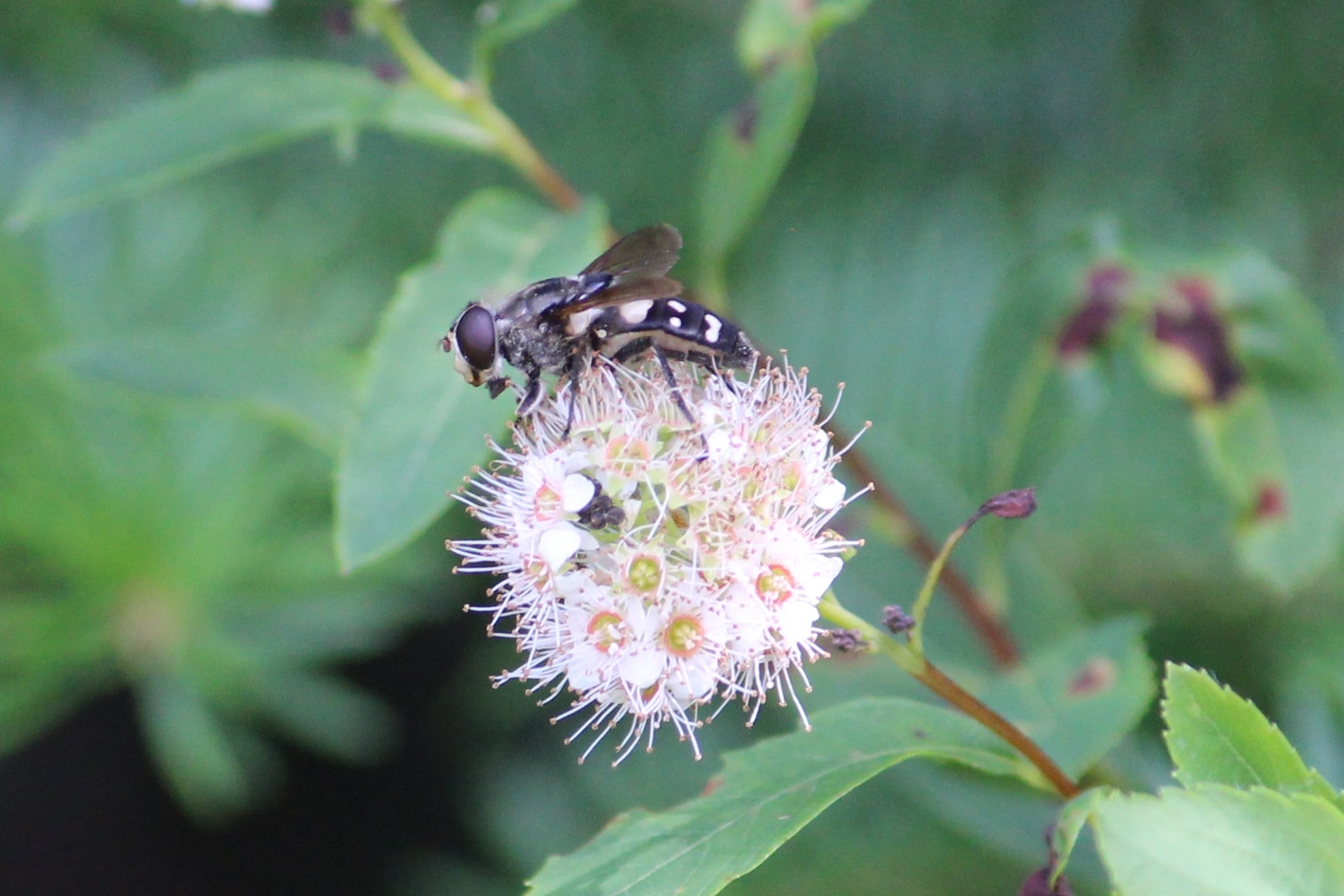
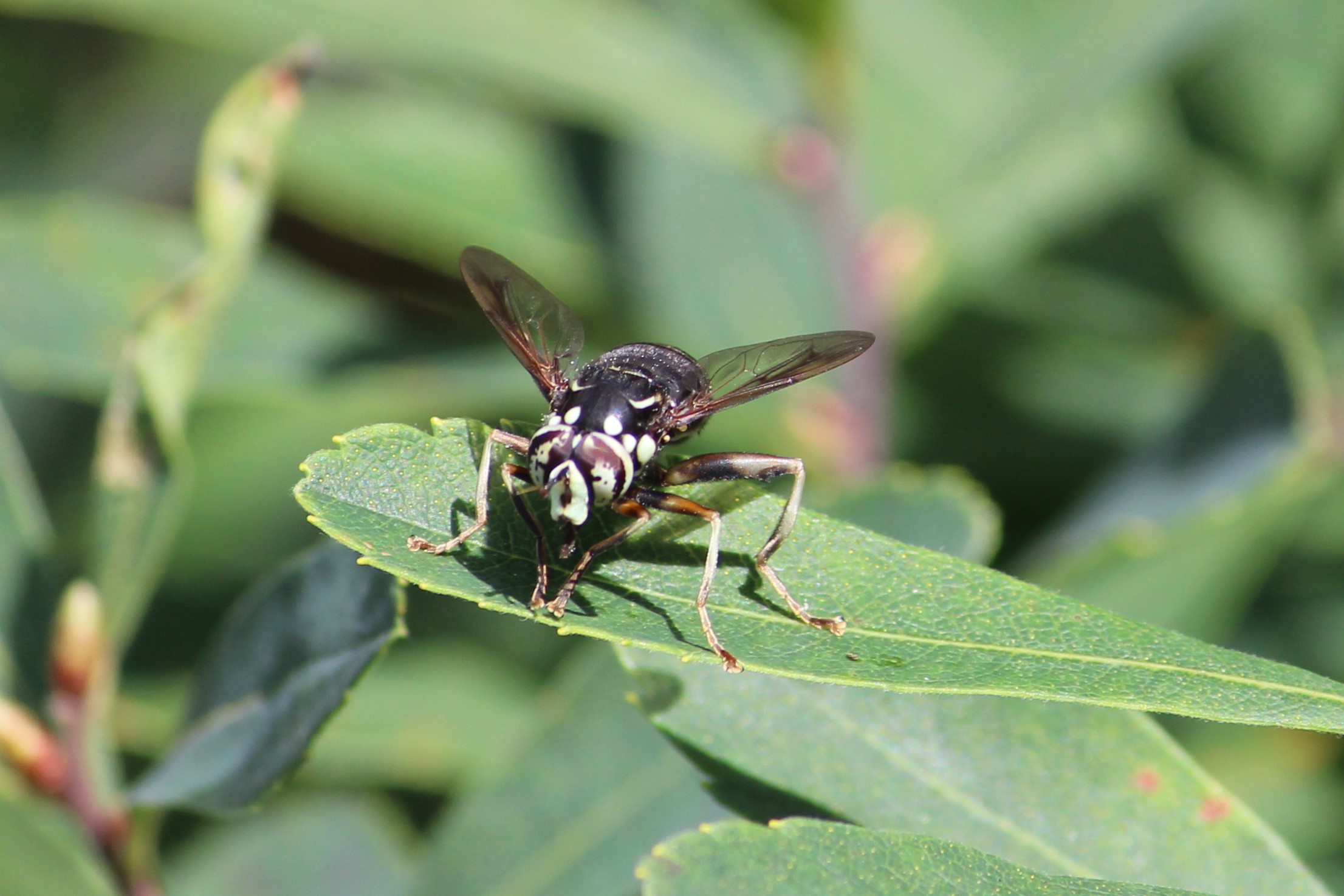
Bordering the lake were several patches of flowers, which were visited by many wasps, bees and flies (many of which resembled wasps or bees themselves). Bumblebees were abundant, and there were a few wasp-mimicking flies among them. Both pictured below are members of the Flower Fly family (Syrphidae).
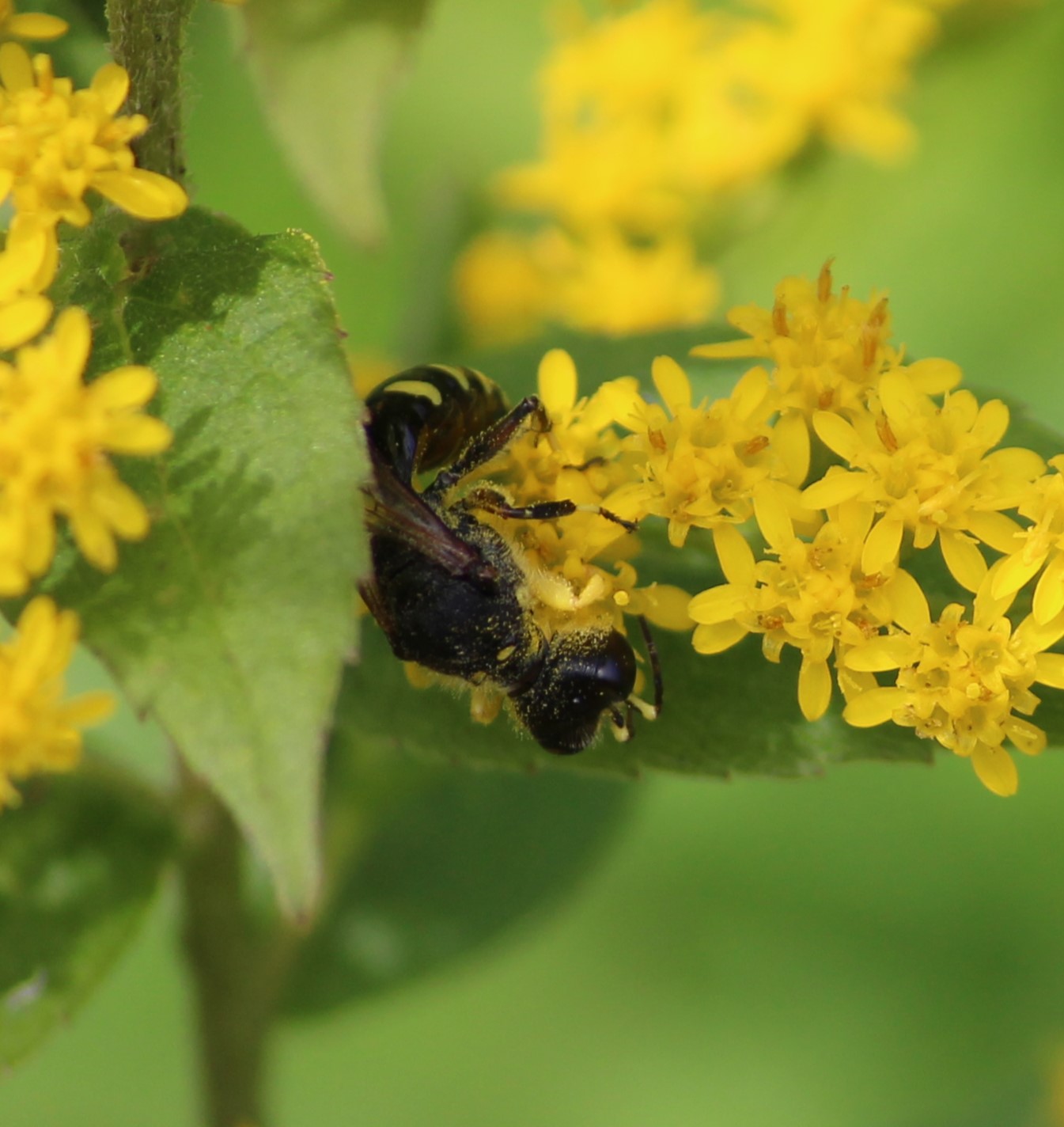
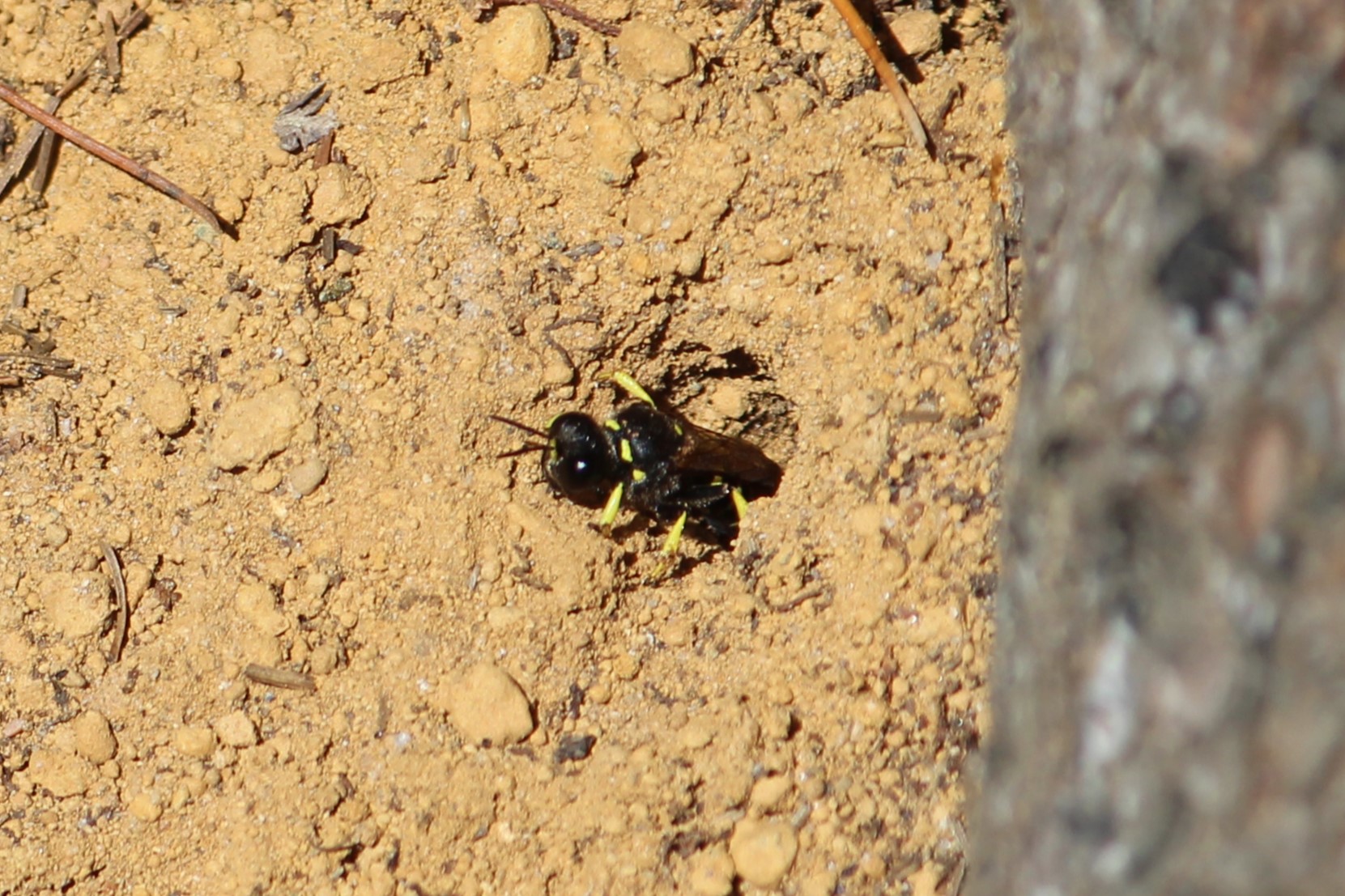
Of course, not all flower visitors were wasp mimics, many were the real thing. A crabronid of the genus Ectemnius was seen visiting a flower and another crabronid was seen emerging from its burrow at a different part of the trail. When I was first reviewing my photos I assumed that both members of the family Crabronidae that I observed dug into the ground for their nest burrows. Crabronidae is associated in my mind with “burrowing solitary wasps”. But Ectemnius wasps actually often nest in dead wood or plant stems (Holm 2021).
Another flower-visiting wasp was the intriguingly named “Parasitic Aerial Yellowjacket” (Dolichovespula arctica). As you might have guessed, this species is parasitic… and if you know how social parasitism works, then you could have guessed its host: another member of the Dolichovespula genus (Bald-faced hornets, D. arenaria or D. alpicola) (Holm 2021). After a non-parasitic wasp nest is beginning in Spring, a queen of this species will join and start laying her own eggs. She doesn’t produce workers like her hosts, but instead produces female and male reproductives only and through social aggression she forces the host’s workers to rear her young (Holm 2021). After some of her young are reared, she will kill the host queen and the nest will start to collapse (as yellowjacket/hornet nests do every year in the fall), workers will lay their own eggs which will hatch into reproductive male wasps (Holm 2021). After mating, the D. arctica queens will find hibernation sites in order to wait out the winter and start the cycle of revolution all over again next spring.

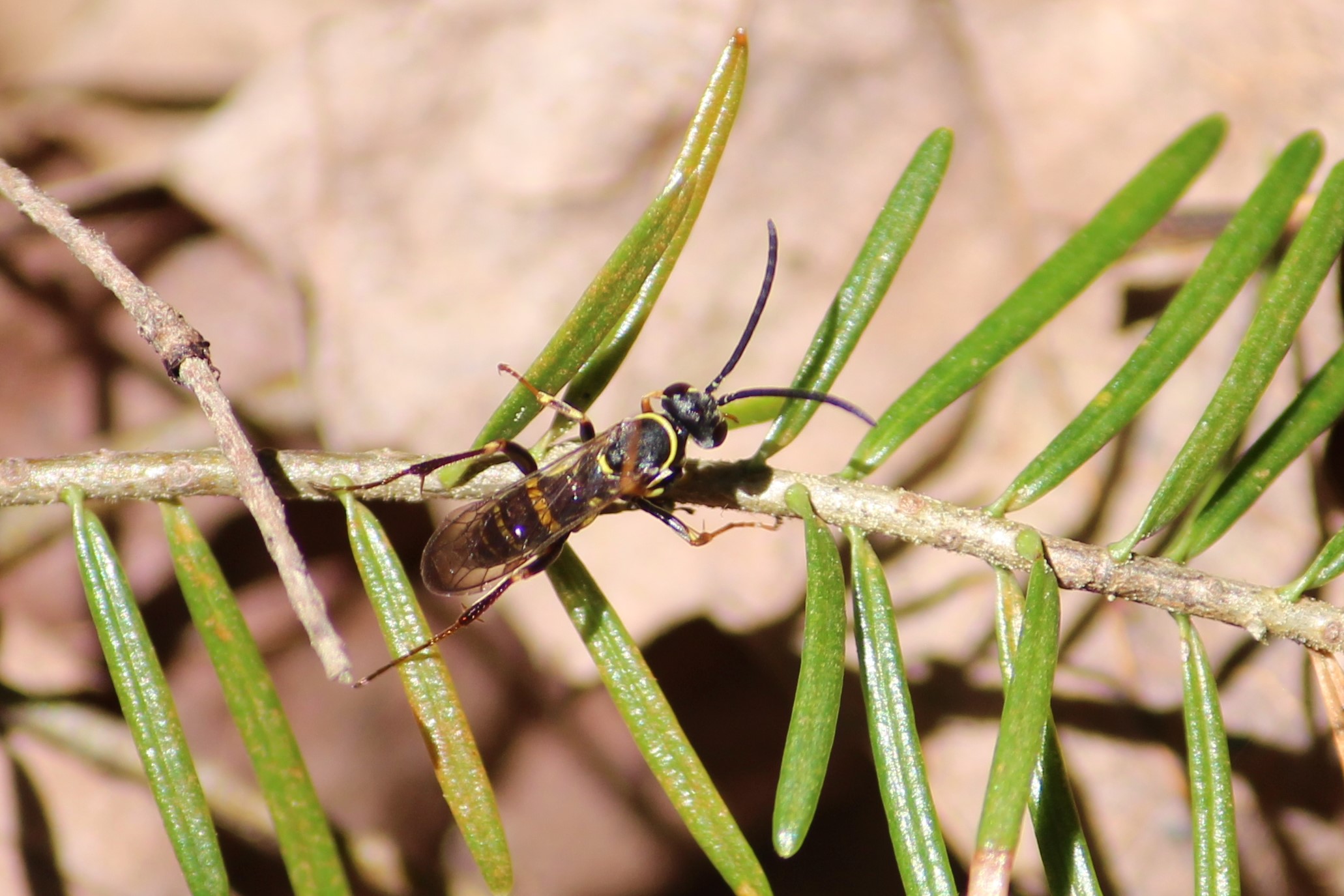
One other wasp was observed not on a flower, but on the branch of a tree, its bold coloration catching my eye. The Spotted Cuckoo Spider Wasp (Ceropales maculata) is another wasp which doesn’t create its own nest. Like the Parasitic Aerial Yellowjacket described above, this wasp usurps the nest of another related wasp, this time a non-parasitic Spider Wasp (Pompilidae). C. maculata lays an egg in the host’s captured prey (a spider) before the host buries her prey along with her own egg. Within the host’s burrow, the Cuckoo Spider wasp egg hatches and the hungry larva consumes the host’s egg and the captured spider (Holm 2021).
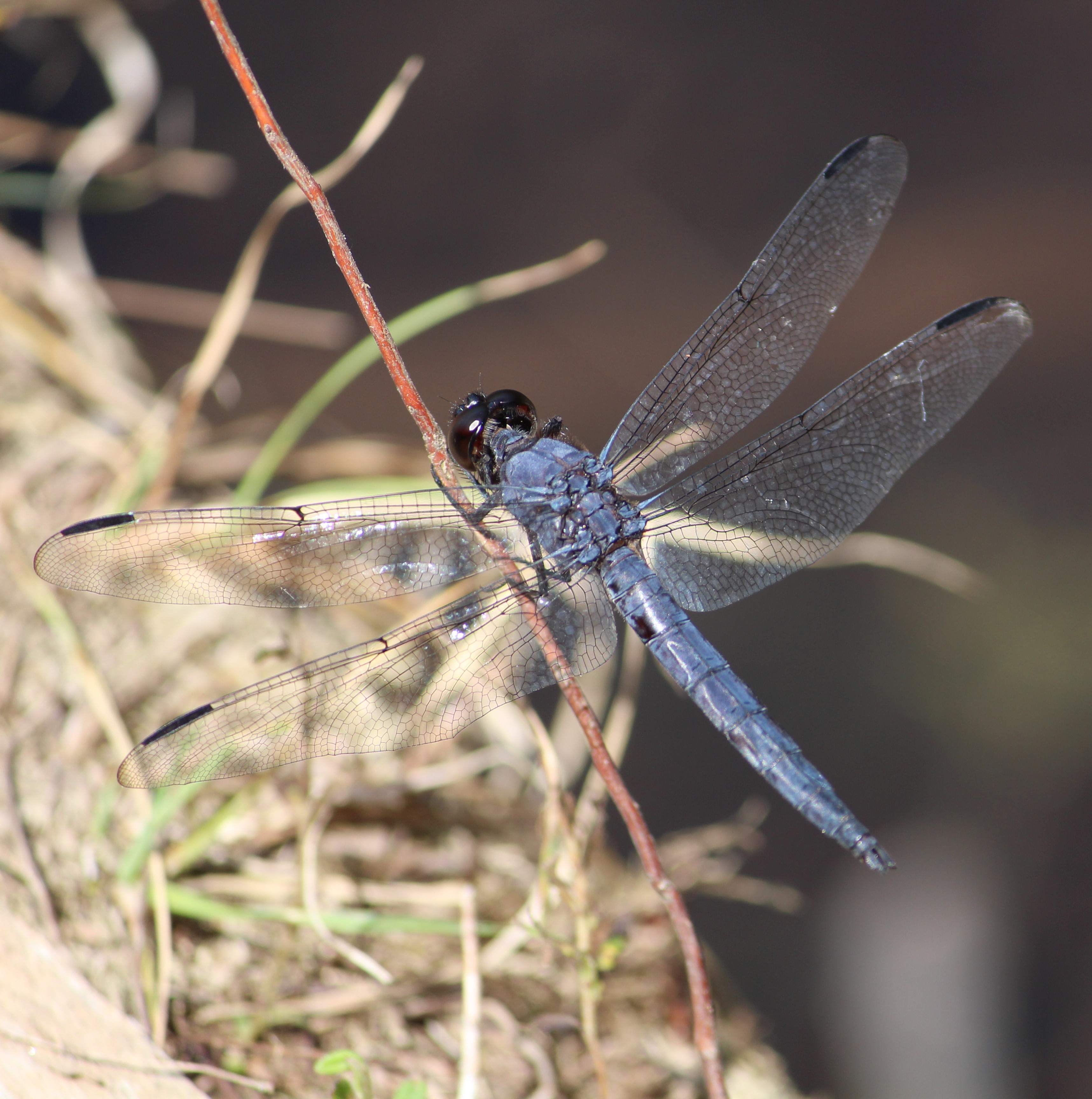
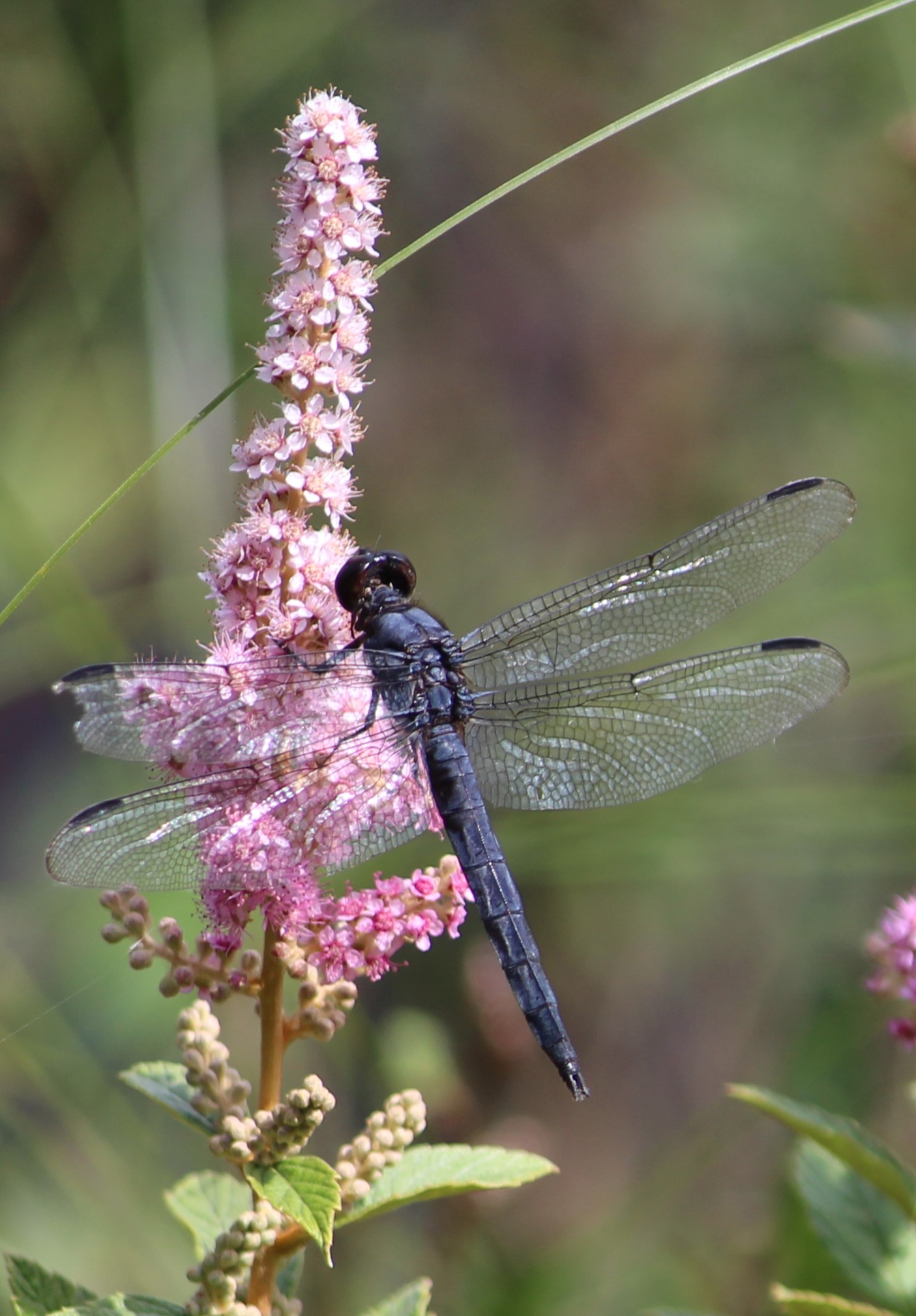
The Hymenopteran and Dipteran flower visitors were likely foraging in the flowers themselves for nectar and/or pollen, whereas other larger flower perchers were merely looking for a place to alight. Large and beautiful Dragonflies spread their wings in the morning sunlight while resting on lakeside flowers. The powdery blue bodies of the Slaty Skimmers (Libellula incesta) were particularly common and striking. These dragonflies were most obliging for my photographs, often allowing me to get quite close to their resting forms.
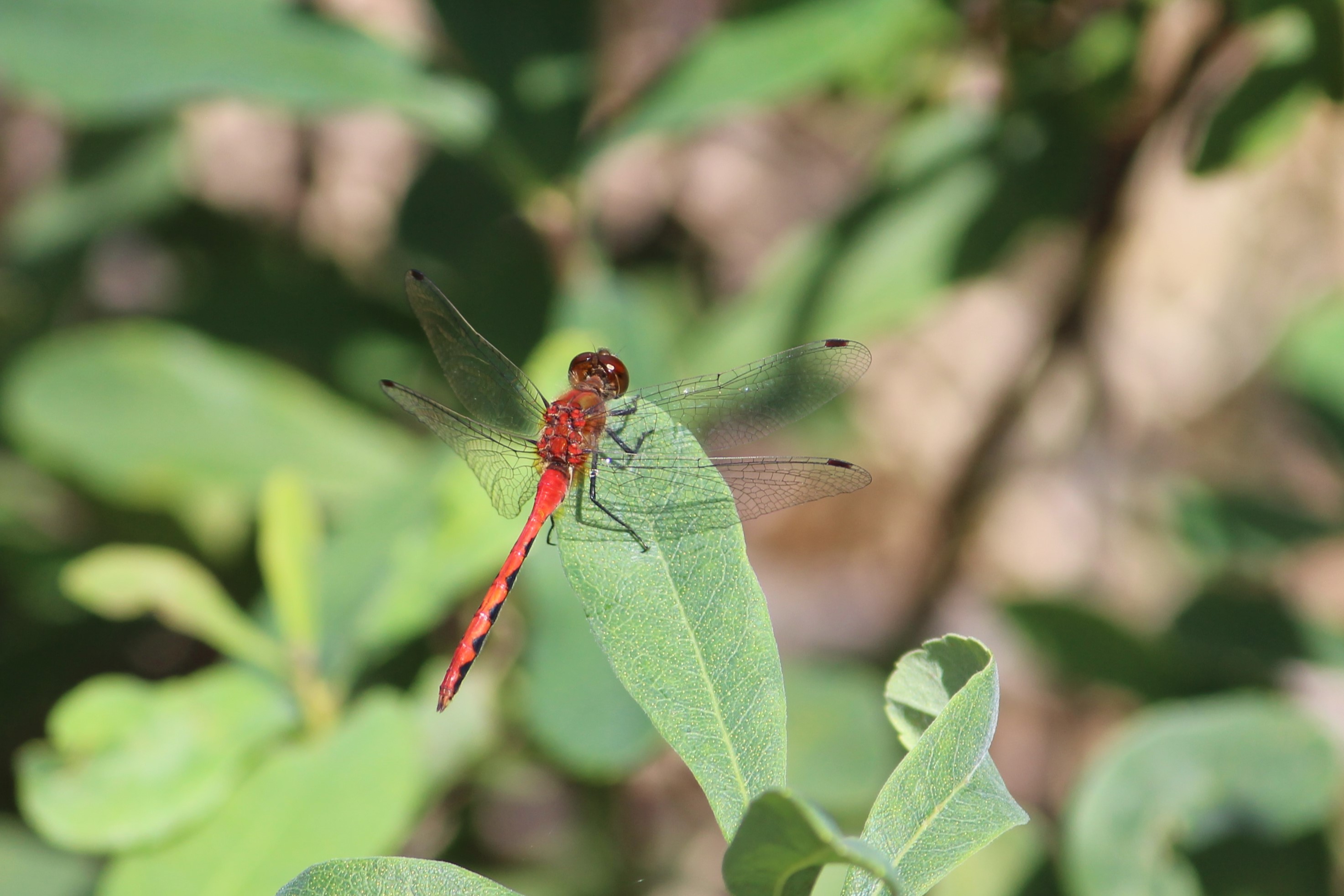
The sharp red of Meadowhawks (Sympetrum sp.) were also common along the lakeshore foliage.
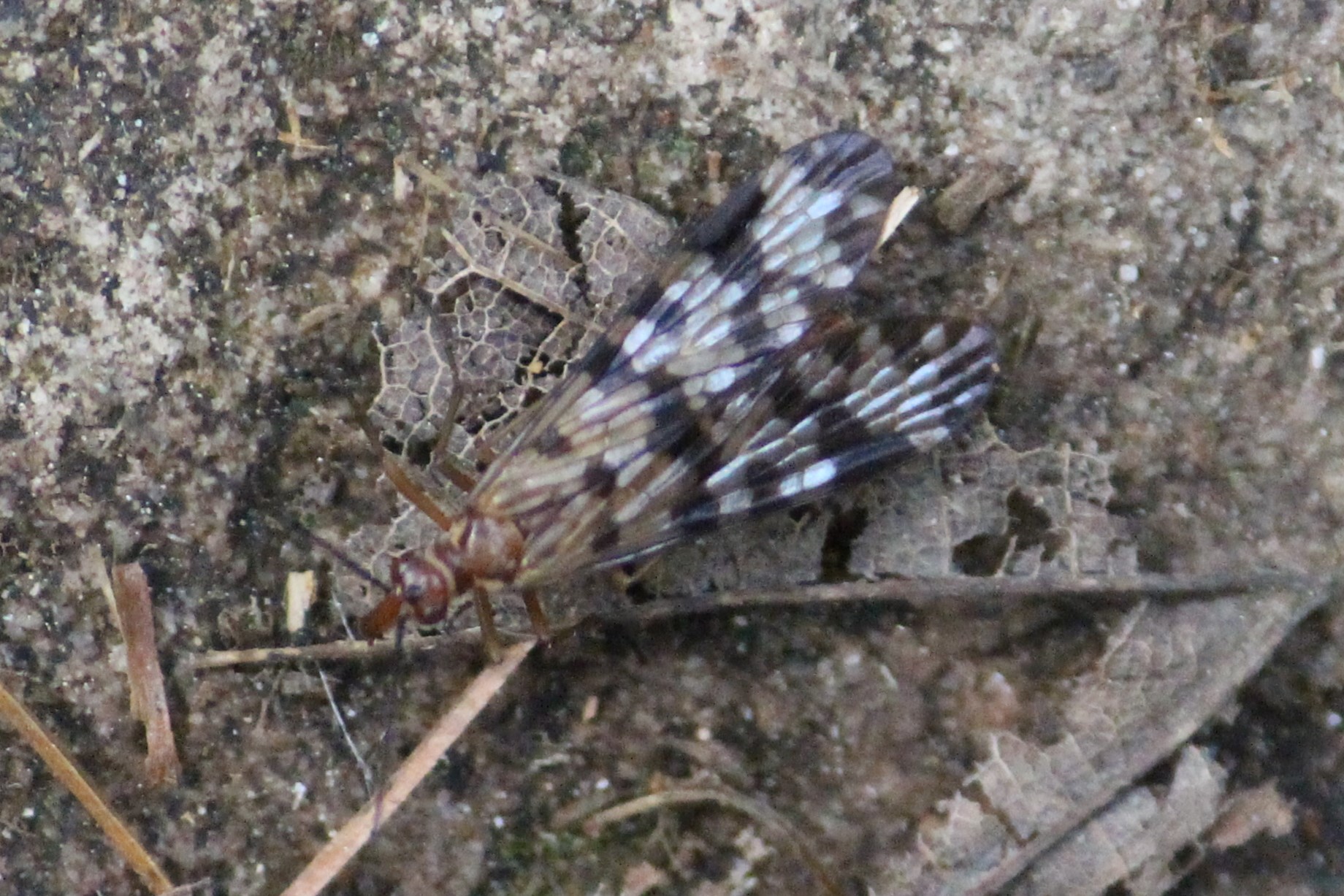
Rounding out the insect observations was a Scorpionfly (Panorpa sp.) which I spotted among the leaf litter.
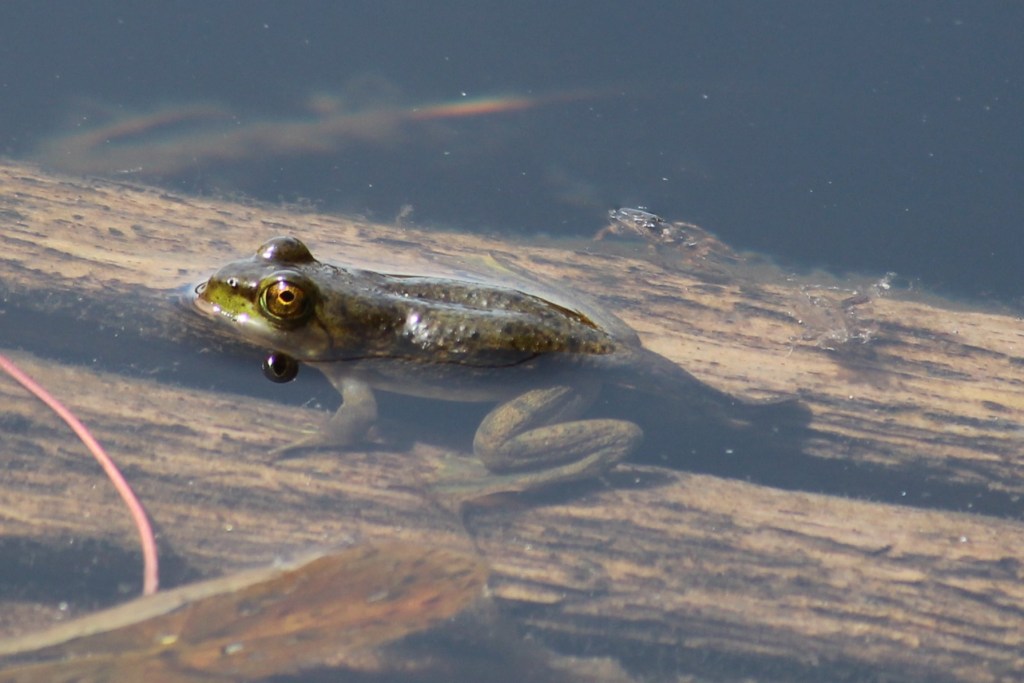
Within the lake itself, I spotted many frogs, and one was quite interesting in being at the penultimate stage of its ‘tadpole’ life, neither tadpole nor fully frog, this was a transitory creature.
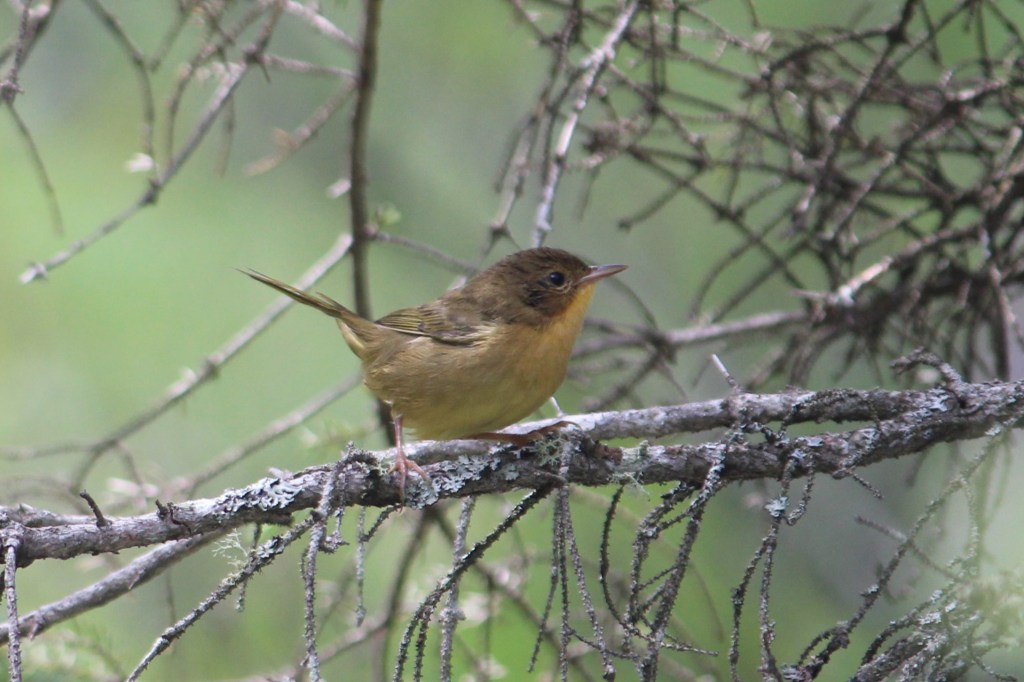
Among the branches above, I encountered two more wood-warbler species, not seen at the warbler river in Pog Lake (See Warbler River (Algonquin Observations August 2023, Part 3)). The Common Yellowthroat (Geothlypis trichas) is a bird that I associate with the wetlands of Long Point, not the woodlands of Algonquin, but Ron Tozer in Birds of Algonquin Park (2012), states “Probably the most widespread warbler, it is common in wet brushy habitats, weedy fields, and marshes through most of North America.”
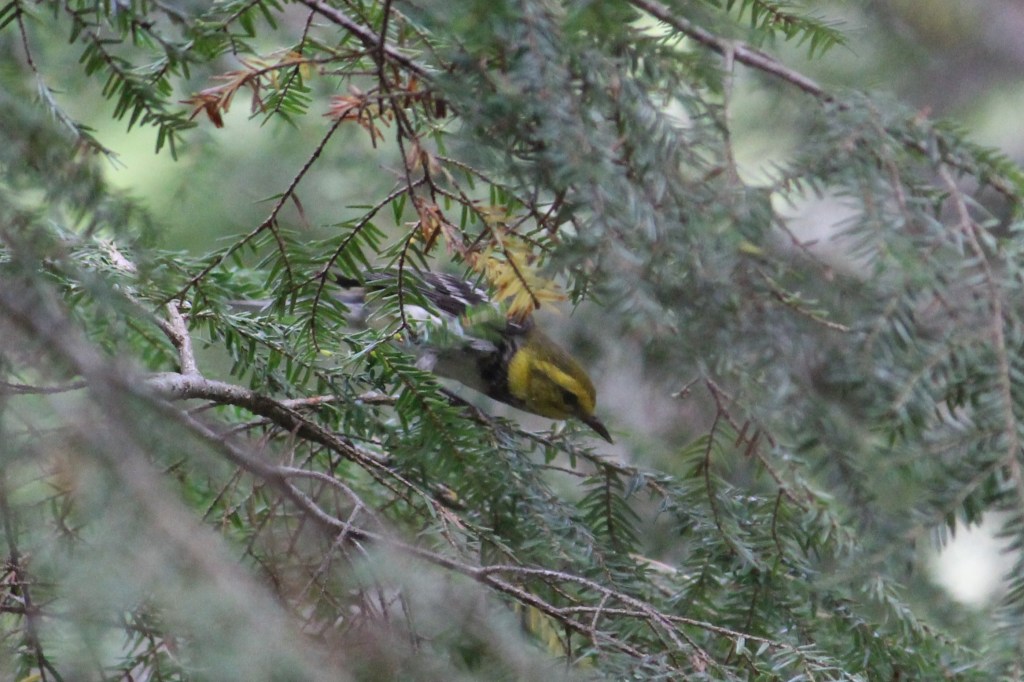
Another new Warbler for the trip was the Black-throated Green Warbler (Setophaga virens) darting among the conifer branches.
Perhaps surprising, given my usual focus on insects and birds, my most striking observation on this trail walk was a plant.
One of the habitats merging with the edge of the lake was a small marshy area* which contained the dragonflies and frogs you might expect. But there was also a bog plant that I have never observed in the wild before and that struck me as particularly exciting: Round-leaved Sundew (Drosera rotundifolia).
*I will not get into the sinkhole that is wetland characterization… bog/marsh/swamp and other names in this vein are technically different things but ecologists often disagree what the parameters are for each or how to really define them. Although non-scientists might find it amusing, the controversy/discussion arises out of the importance in science of imposing definitions on the world in order to be able to dissect and discuss discrete entities and the real world often defies such limitations because it is just too complex of a system.
Round-leaved Sundews have highly modified leaves which sprout droplets which glisten in the sun. These droplets are sticky and insects which land on them are slowly entrapped by the folding leaves. Once an insect is trapped, the sundew secretes enzymes to digest its prey. The consumption of insect prey takes about a week or more (Eastman 1995). I was overjoyed to spot this amazing carnivorous plant, flourishing in its habitat within Algonquin Park.

References:
Eastman, John. 1995. The Book of Swamp and Bog. Stackpole Books.
Holm, Heather. 2021. Wasps. Pollination Press.
Tozer, Ron. 2012. Birds of Algonquin Park. The Friends of Algonquin Park.
For Previous Algonquin Observation posts, see:
–Warbler River (Algonquin Observations August 2023, Part 3)
–Lakeside Lives (Algonquin Observations August 2023, Part 2)
–Campsite Companions (Algonquin Observations August 2023, Part 1)
–Canada Jay (Perisoreus canadensis)
–Algonquin Observations, Part 5 – Spruce Bog: The Reckoning
–Algonquin Observations, Part 4 – Spruce Bog Speedrun and the Logging Museum Trail
–Algonquin Observations, Part 3 – Peck Lake Trail
–Algonquin Observations, Part 2 – Opeongo Road
–Algonquin Observations, Part 1 – Pog Lake Campground
Discover more from Norfolk Naturalist
Subscribe to get the latest posts sent to your email.

 Norfolk Naturalist
One reply on “Peck Lake Trail (Algonquin Observations August 2023, Part 4)”
[…] “Warbler River”. My final post in this series was all about the creatures I observed on the Peck Lake Trail, including carnivorous plants and dazzling […]
LikeLike