I took a weekend trip to Point Pelee area, renowned for birding and I was amazed at the abundant and diverse birdlife passing through or permanently residing. There were quite a few non-bird surprises along the way and I’ll discuss them as well. I think for this adventure, I’m going to break it up into discussions by species rather than a more chronological approach I’ve used before for nature encounters on a trip. So we’re going to move through the Avian tree of life, family-by-family because not only did I encounter and photograph many different species of birds but I was surprised to find that most of them come from different bird families, representing a diversity of form and behavior.
We’re going to begin with the bird family I encountered first and most frequently throughout the trip: the Swallows (Hirundinidae). These acrobatic aeronauts were abundant wherever spaces were made available for them to construct their nests. I saw 3 different species of Swallows, of the 84 species worldwide (Elphick 2019).
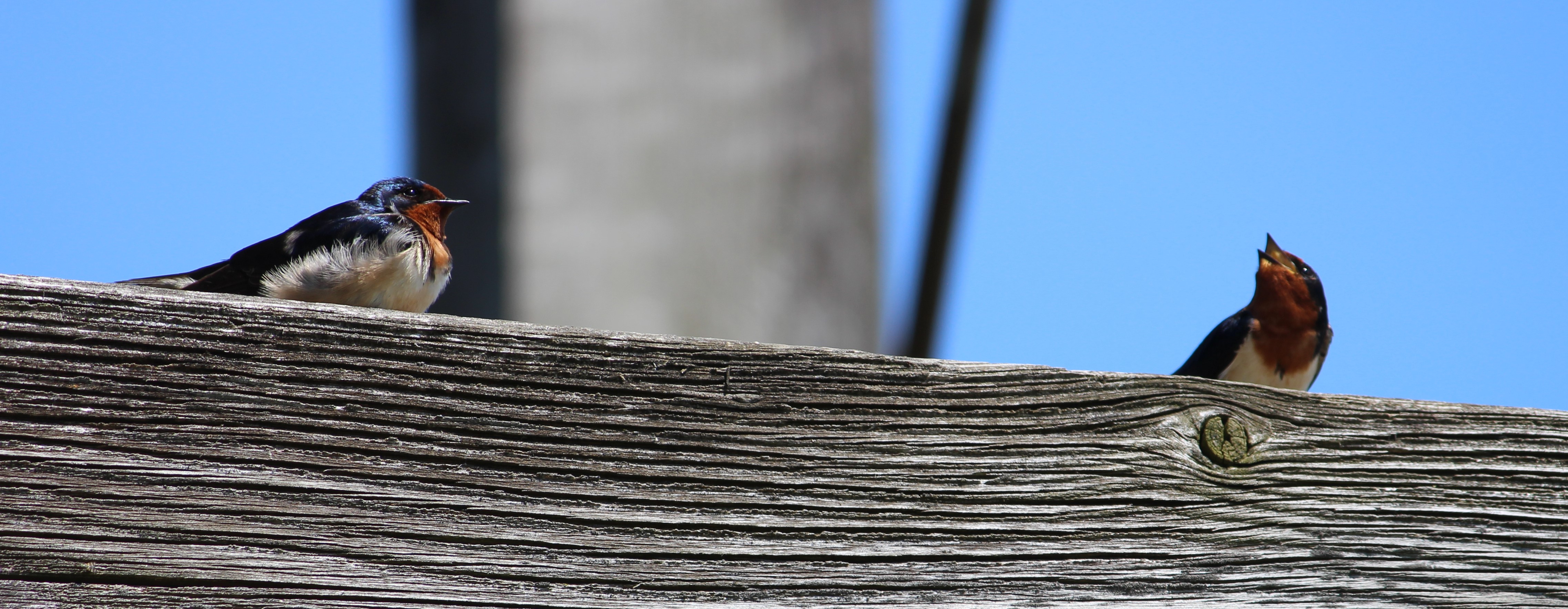
Barn Swallow (Hirundo rustica):
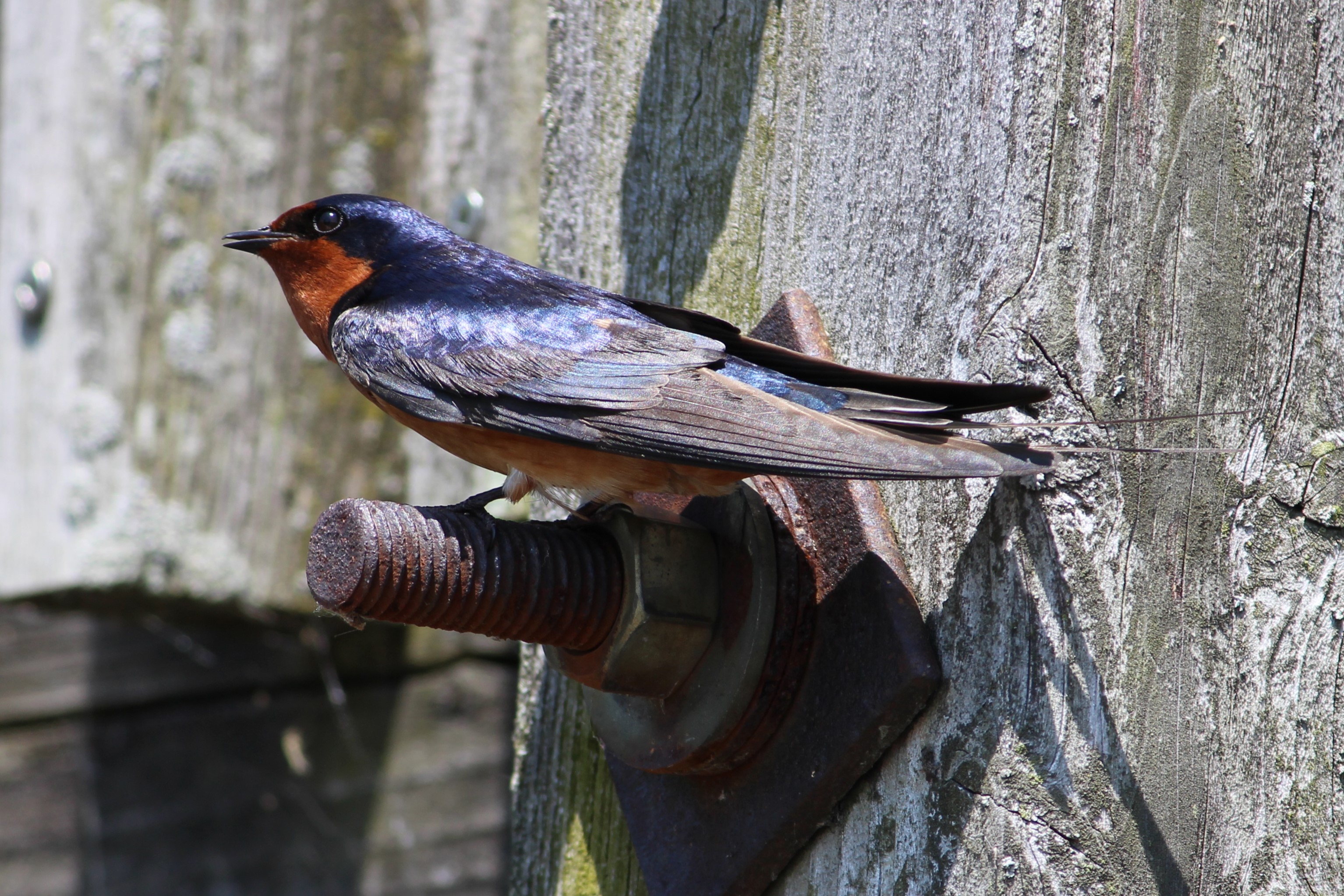
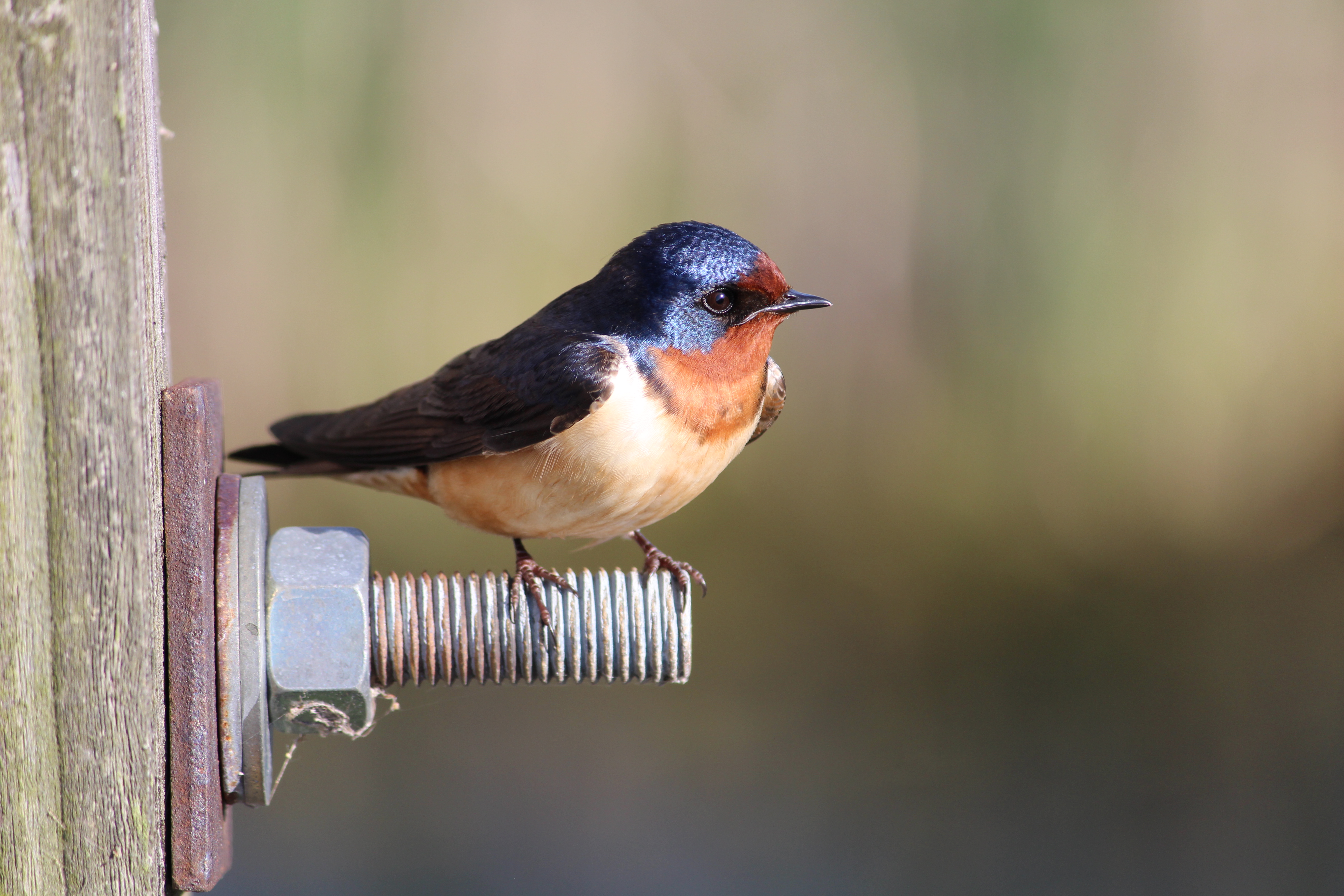
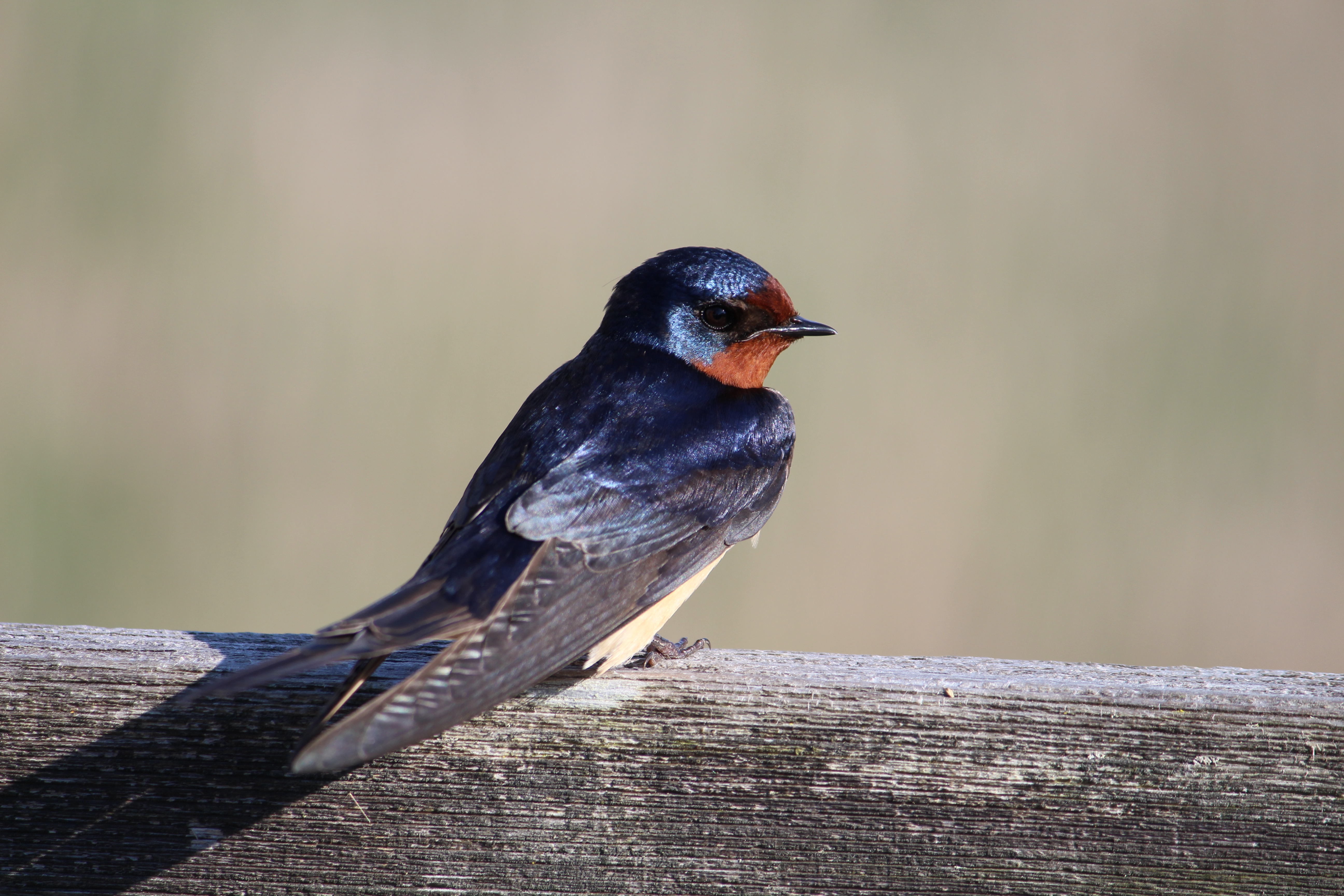
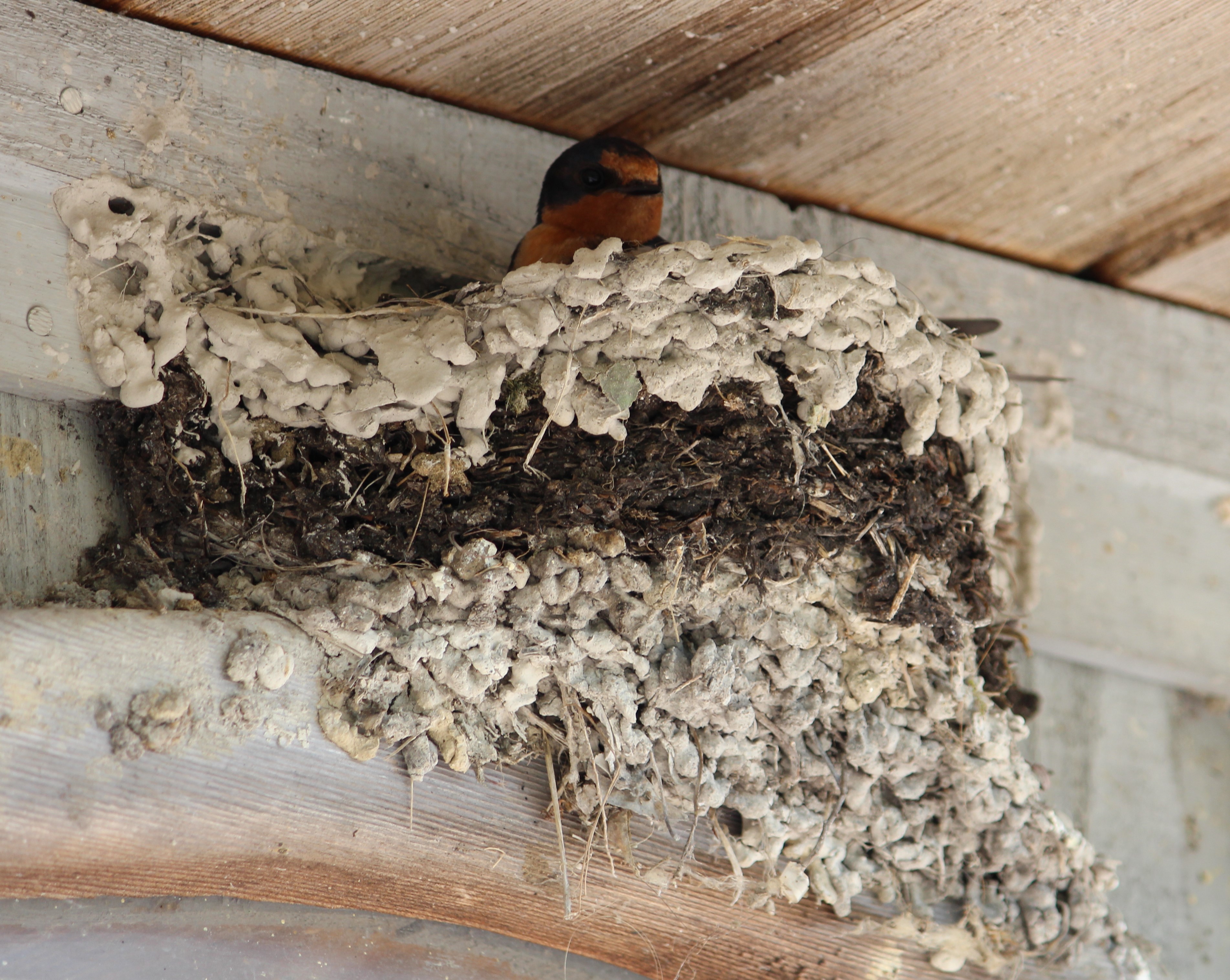
Most semi-enclosed overhangs were populated by the mud nests of Barn Swallows. These beautifully patterned and colourful birds swooped in and out of their nest locations, snatching insects from the air, skimming shockingly close to a water surface for a drink, or gathering mud to bolster their constructions. The chattering darts of Barn Swallows gave a frenetic energy to the buildings within Point Pelee National Park, some passing close enough to startle you. Never once did one dive at my head, like the divebombing behaviour I had experienced at the claws of a Red-winged Blackbird in Long Point. There were so many energetic birds coming and going, creating the impression of small, busy cities of mud.
Cliff Swallow (Petrochelidon pyrrhonota):
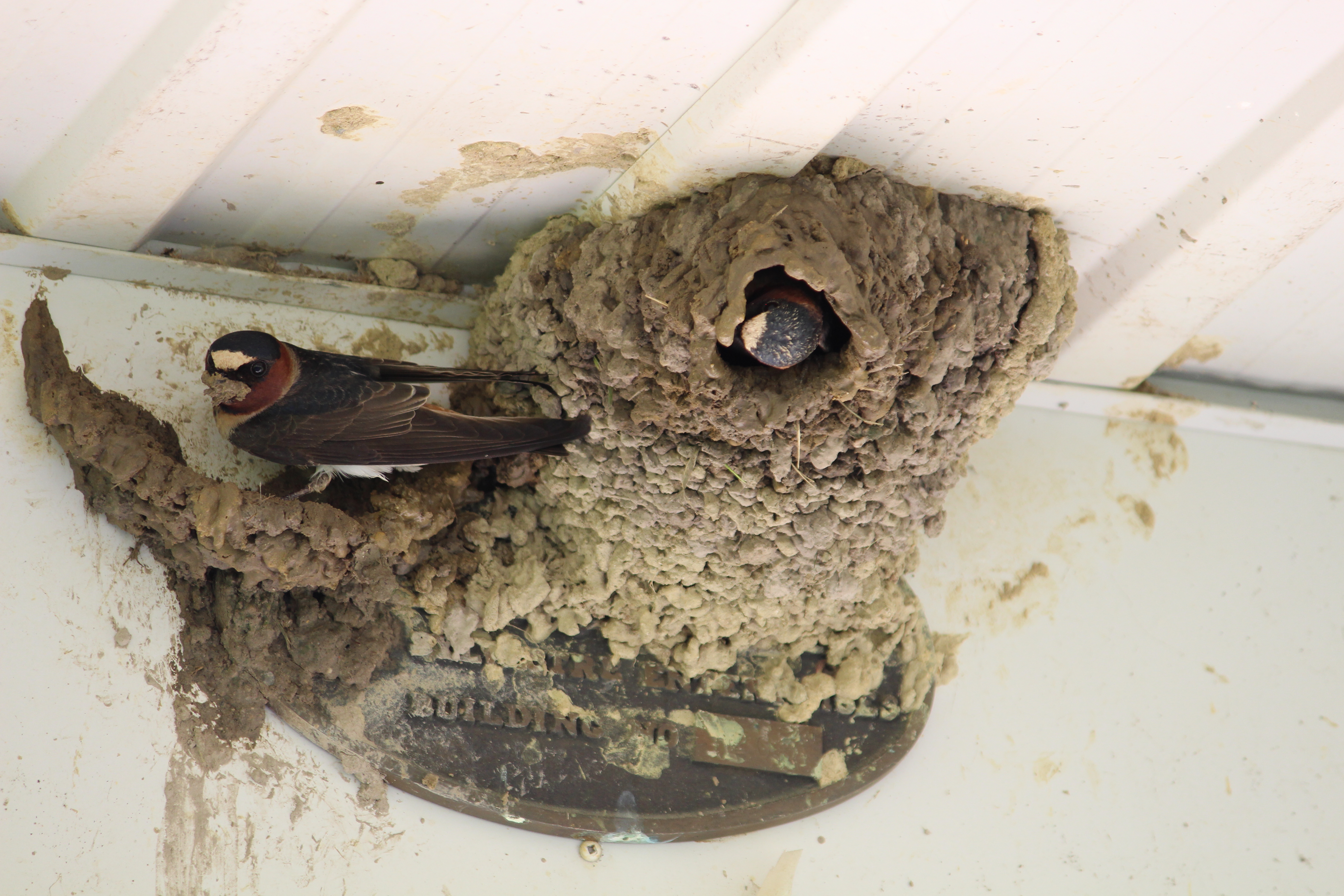
Cliff Swallows appear very similar to Barn Swallows in their nest construction, location and their physical appearance. Cliff Swallow nests are similar mud nests, but have a downward facing entrance rather than an open bowl like the Barn Swallow nest. Cliff Swallows will occasionally use the remains of Barn Swallow nests as a beginning point for their own constructions (del Hoyo et. al. 2004). Like all the swallows I saw, and all Hirundinids in Ontario, these birds arrive in Spring, breed and then depart in the Fall. As Swallows are dependent on insects (especially flying insects) for food, they can’t stay within northern areas during the winter when insects rarely if ever fly and most are hidden away and dormant.
Tree Swallow (Tachycineta bicolor):
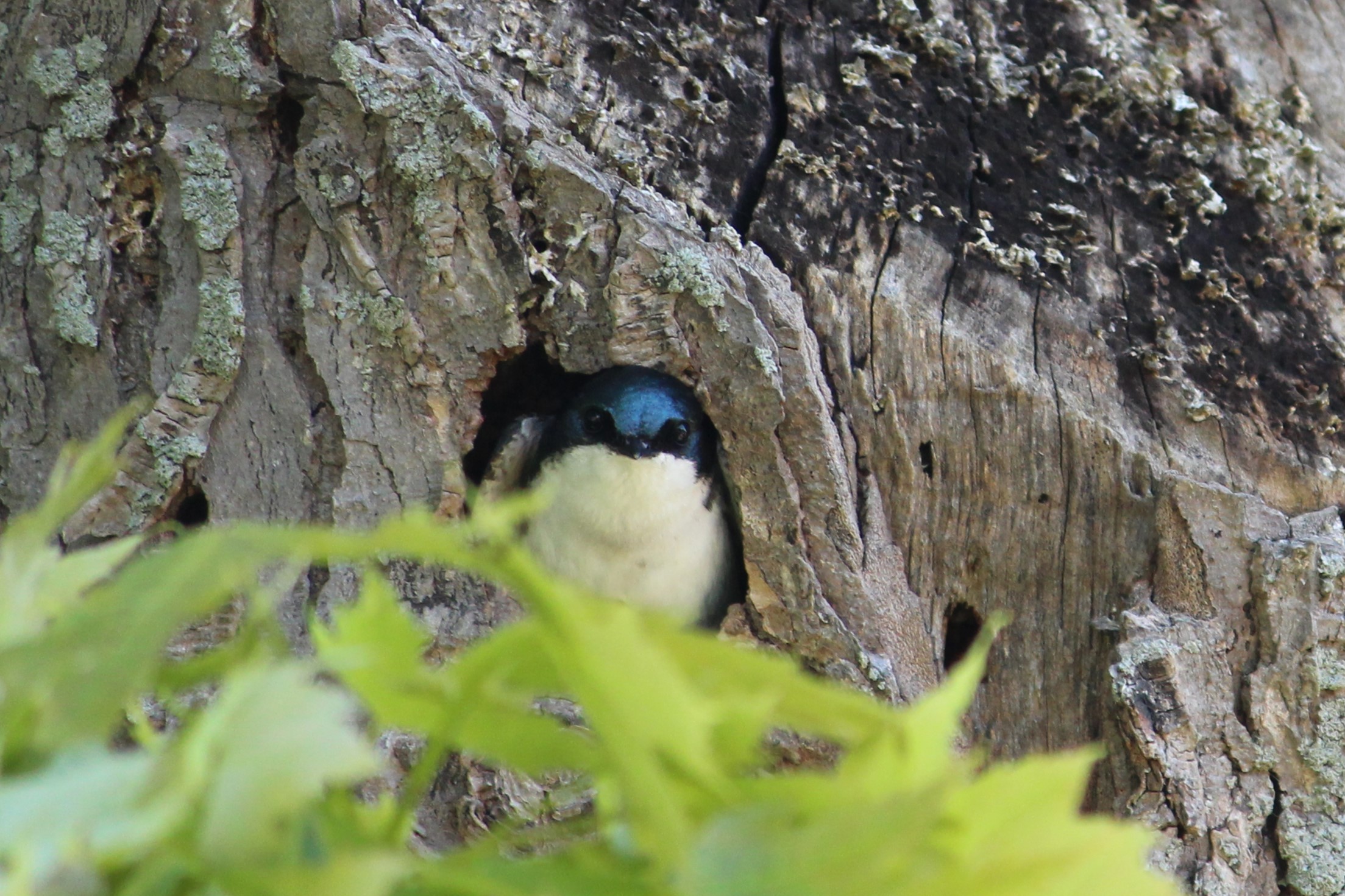
Contrasting sharply with the other two swallow species observed, the Tree Swallow does very little in the way of nest construction. Tree Swallows nest in tree holes but they do not make the holes, and they will readily nest in human-made nestboxes or other artificial cavities as well (del Hoyo et. al. 2004). They will add some nesting material to the tree hole, but this preparation pales in comparison to the mud constructions of the Barn and Cliff Swallows.
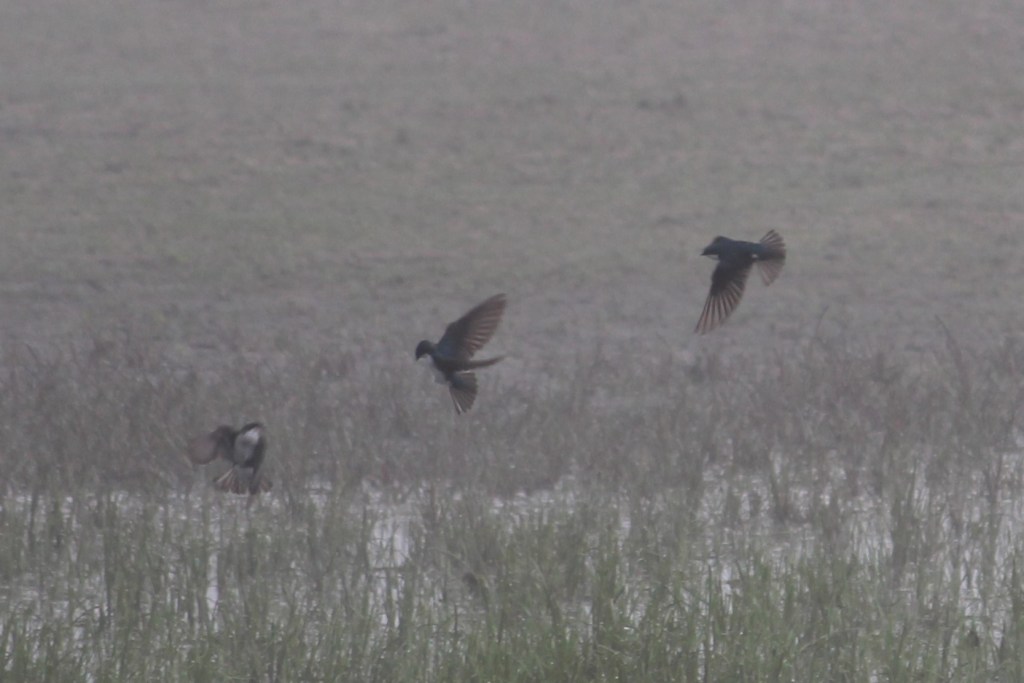
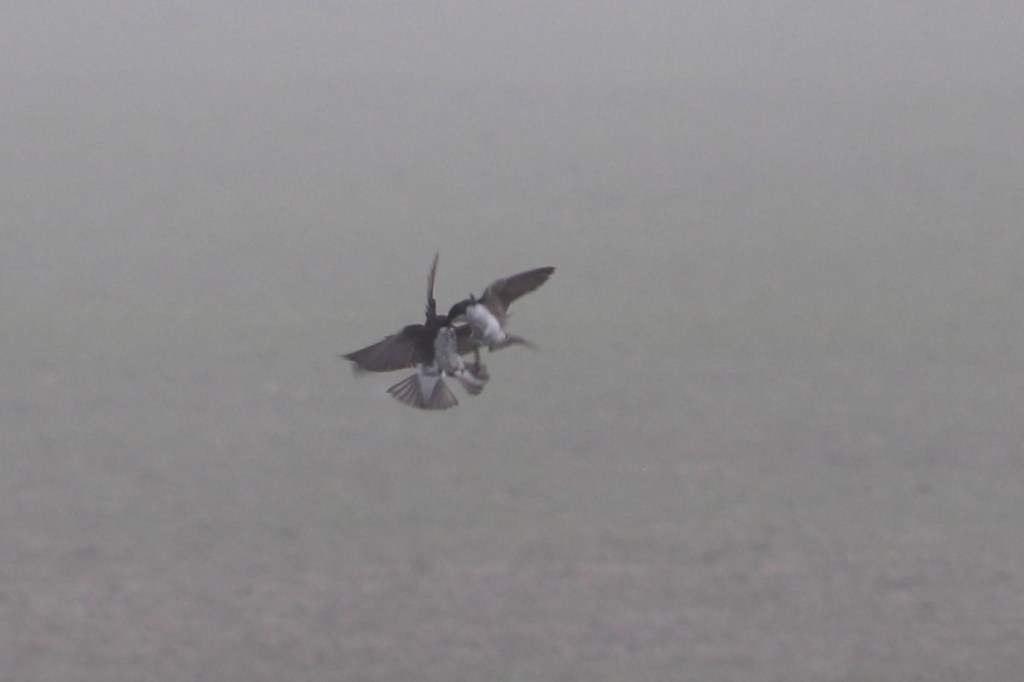
Tree Swallows having some sort of aerial battle in the Hillman Marsh Conservation Area, Essex County.
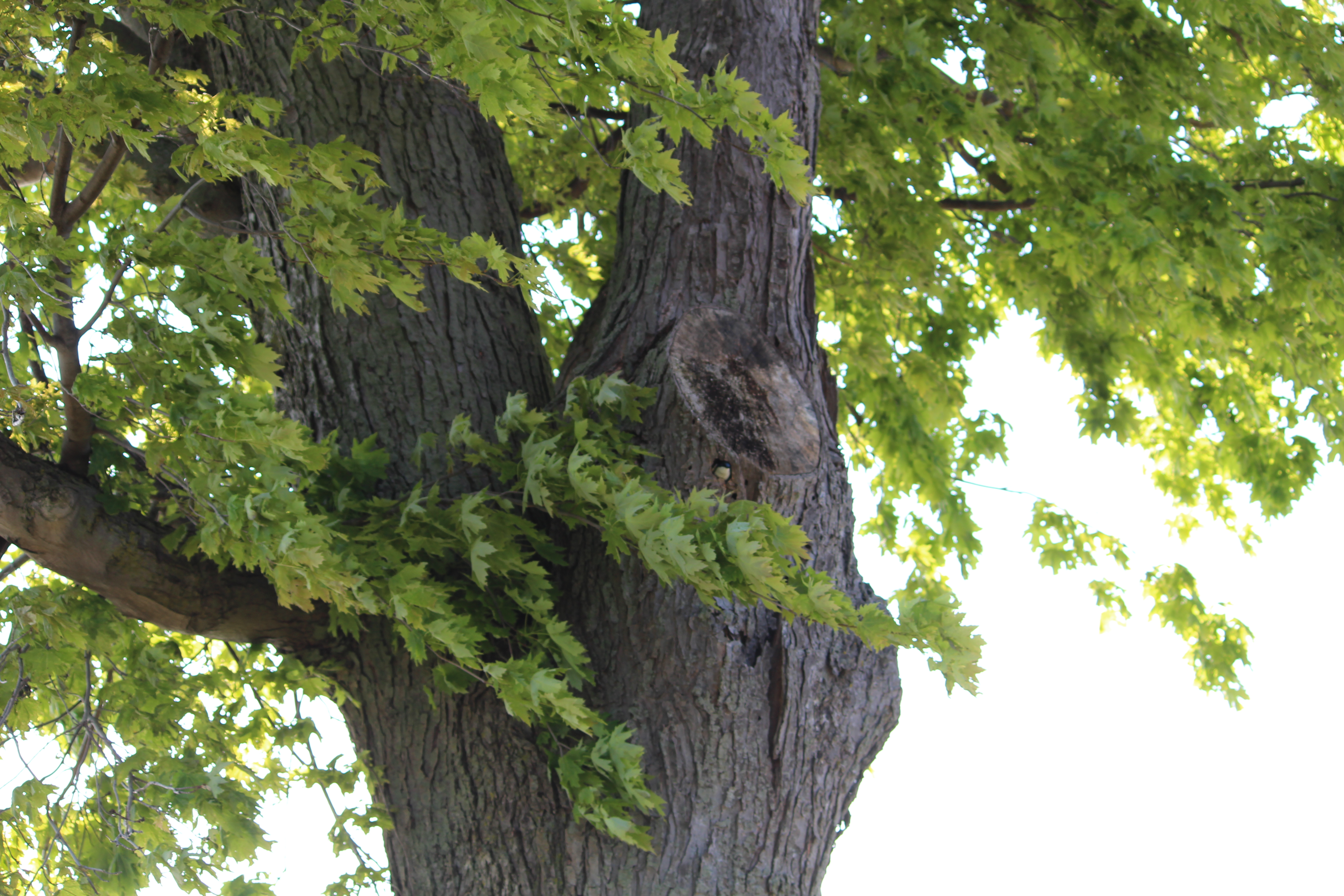
I was excited to discover a Tree Swallow was staying on the property where I was staying for this eventful birding weekend. Throughout my stay, I would occasionally check on the treehole where I had seen the inquisitive face staring out at me. Sometimes the beak would be open, chittering away, sometimes the bird would cock its head to the side as if examining the world outside its snug abode, and other times there would be no face filling the cavity, only a dark entrance to a hidden nest.
Swallows are incredible birds, and only one of the many bird families observed on my recent trip. Check in next time for another abundant and noisy bird family.
References:
del Hoyo J., Elliott A., & Christie D. A. eds. 2004. Handbook of the Birds of the World Vol. 9: Cotingas to Pipits and Wagtails. Lynx Edicions.
Elphick, Jonathan. 2019. The Handbook of Bird Families. Firefly Books.
For similar posts about bird observations, see:
–Warbler River (Algonquin Observations August 2023, Part 3)
–Port Burwell Observations, July 2023
–The American Woodcock in Literature and in Life
–Terns, by David Cabot and Ian Nisbet
–A Green Heron Stalks the Shallows
–3. Canada Jay (Perisoreus canadensis)
Discover more from Norfolk Naturalist
Subscribe to get the latest posts sent to your email.

 Norfolk Naturalist
2 replies on “Birding Bonanza, Part 1: Hirundinidae”
[…] –Birding Bonanza, Part 1: Hirundinidae […]
LikeLike
[…] plan to do a couple non-bird posts too) but so far I have only posted about 2 of the bird families: Hirundinidae (the Swallows and Martins) and Icteridae (New World Blackbirds). Stay tuned for more of these bird observations to […]
LikeLike