This was originally posted on my old blogsite April 2018.
We took a day-trip to Pinery yesterday, and aside from the fascinating species of birds flitting and calling among the trunks of the trees and the underbrush, we encountered something quite ordinary, and yet, as I hope to demonstrate, quite beautiful.
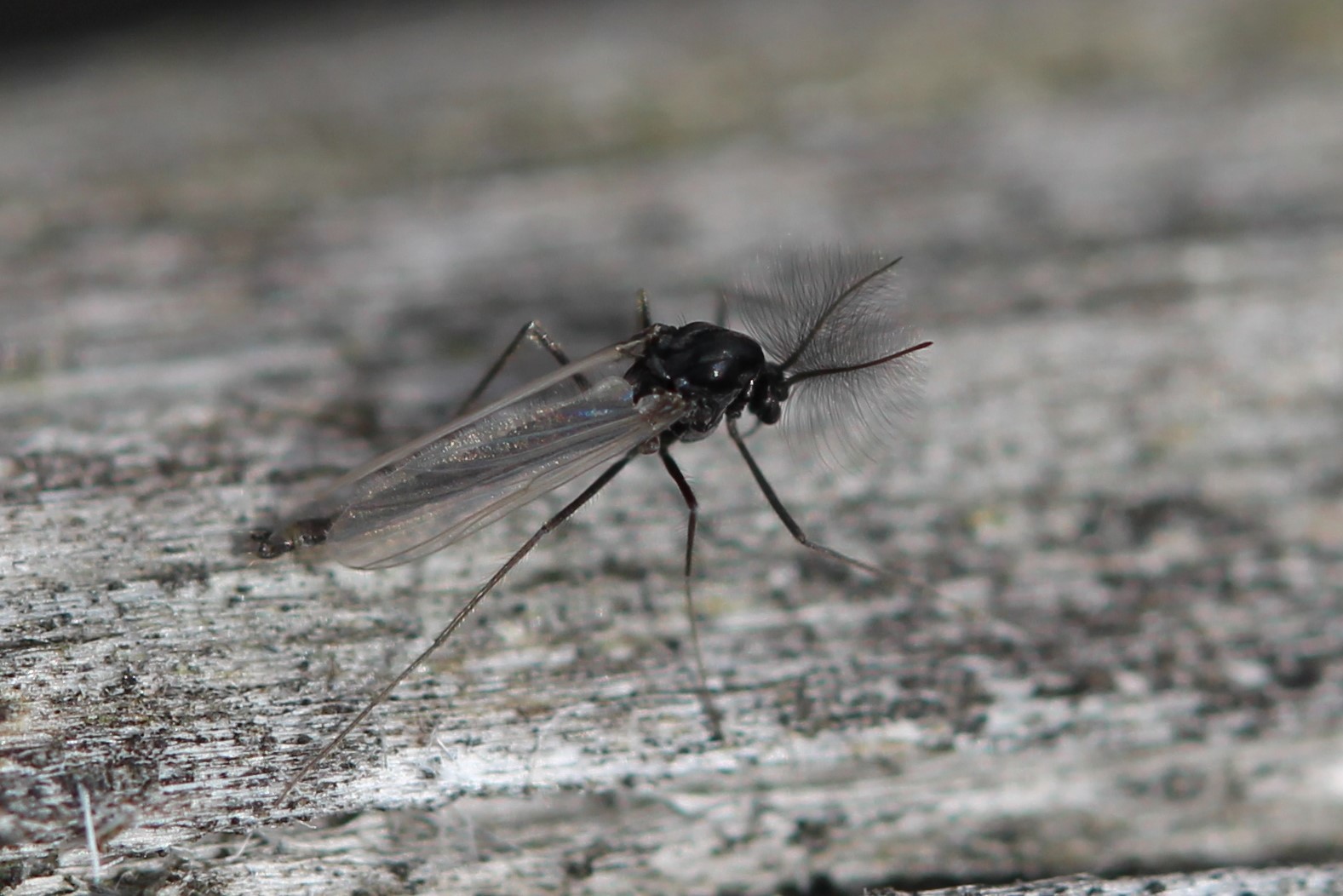
While walking along the trails by the river, we saw clouds of swirling insects. These tiny flies were creating their own signal, for potential mates. You’ve probably encountered their kind before, creating a smoke-like cloud above your head as you walked. Even though we are much larger than them, we certainly take notice of their swarms, which are made up of male midges.
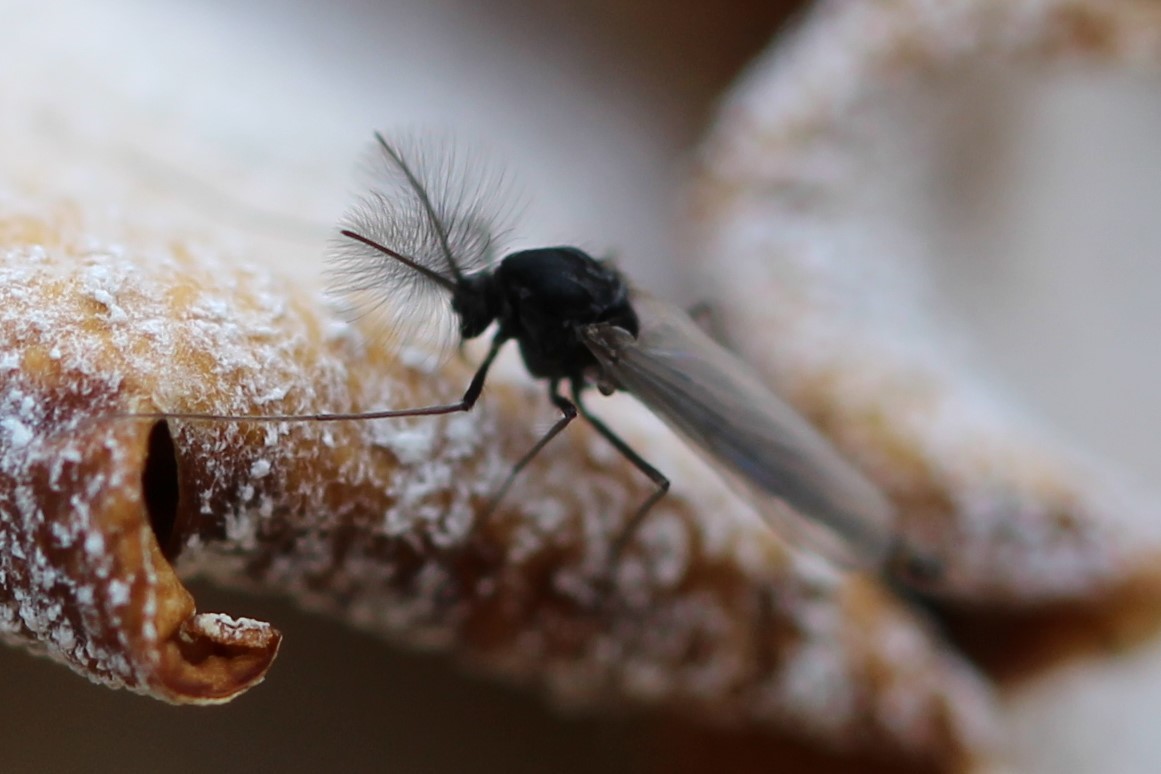
These particular insects were of the Family Chironomidae (the common, nonbiting midges). They may look like mosquitoes, but they won’t bite or seek blood. As such, you can see they don’t have the needle-like mouthparts that a mosquito uses to probe beneath skin. And you can even tell that these midges were male, because they had delicate feathered antennae atop their heads. With these, the male midges seek out female mates.
These midges most likely developed in the river, as small worm-like larvae, to become the graceful adults that we encountered. Because they are so numerous in and out of the water, they are incredibly important pieces of food chains and can also contribute to pollination of various plant species. These small and delicate insects may seem to be a nuisance, but they won’t bite and are a beautiful component of the world’s fauna.
Several of the midges landed on some fungi near the water.
Using a magnifying hand lens, or a macro camera lens opens up whole worlds of detail and diversity unappreciated by the naked eye. One of these worlds is that of the Springtails.
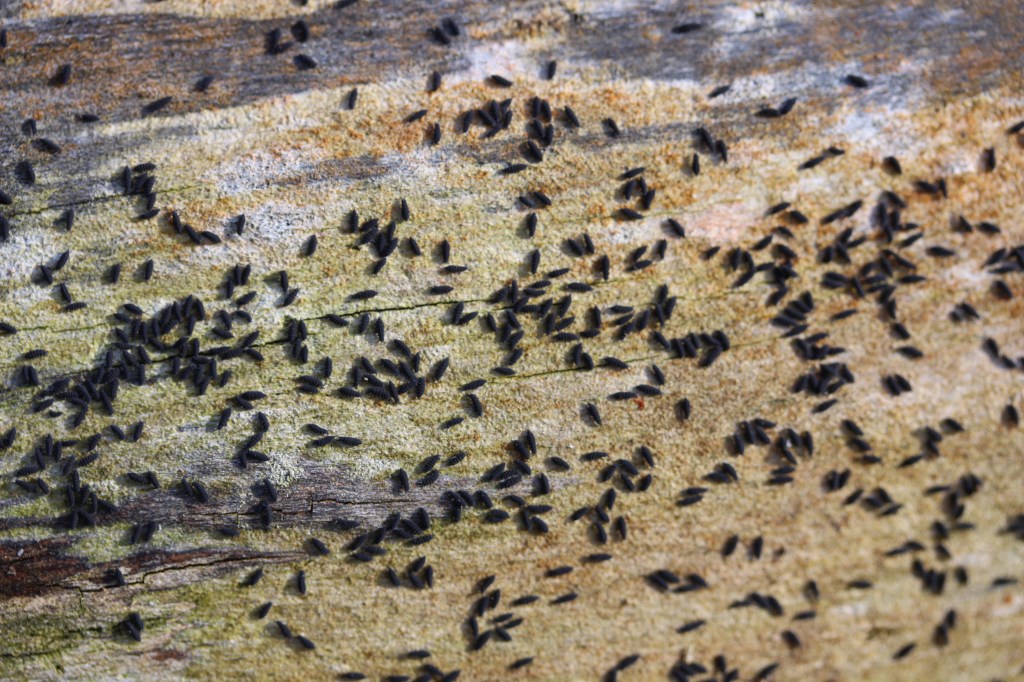
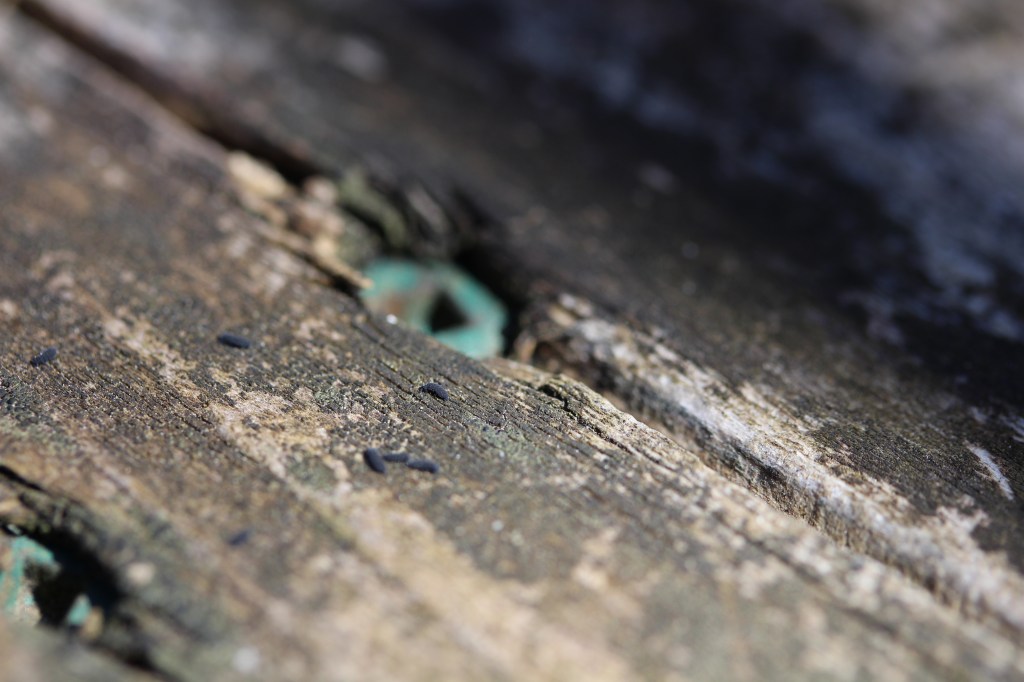
A group of Springtails on the Lynn Vally Trail on a log.
This past winter* I encountered them where they are most often seen, even without any sort of magnifying equipment: bounding by the millions atop the snow. While at Algonquin’s Mew Lake Campground, I observed these tiny pinpricks of dark life in stark contrast against the bright white snow. In this context, these Springtails are called “snow-fleas”, and it’s easy to see why. The tiny creatures are about the size of fleas and hop about with amazing ability. Springtails are not fleas, and leap about not by their legs but by a “spring-like tail” that curves under their body and can launch them through the air.
*This was originally written and posted on my tumblr blog in April 2018, so the winter referred to was 2017-2018.
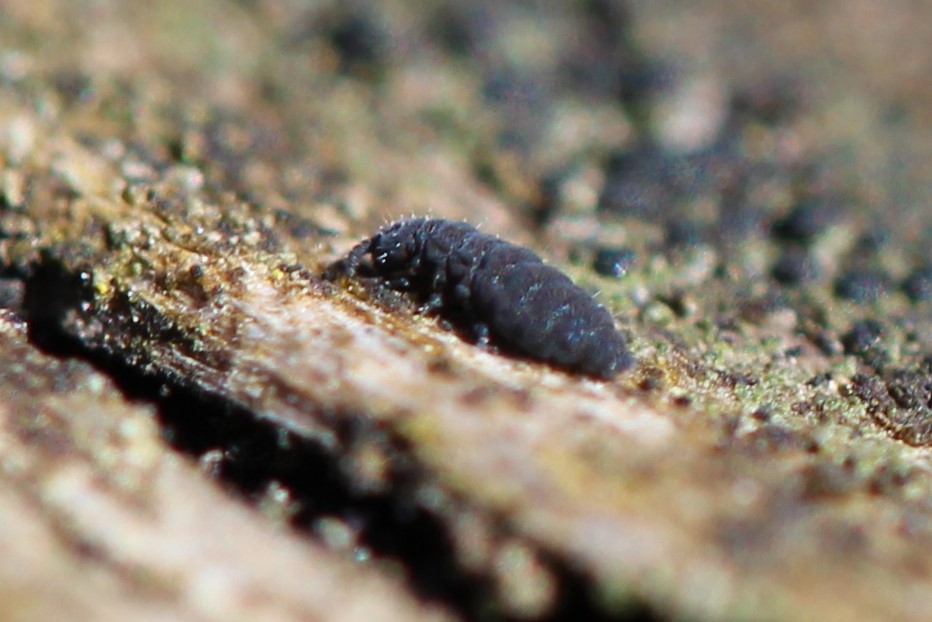
They are actually part of a group known as Collembola, which is not quite under the group Insecta. They are not true insects, but are closely related. I had the privilege of being able to observe Springtails several times since our Algonquin trip and it is an incredible pleasure to be able to resolve something so tiny (about 1-3 mm long) into an individual animal, complete with legs, head, and antennae.
Even though they are quite numerous, they are small, and many Springtails spend most or all of their time belowground. This makes them difficult to study, and little is known about these amazing creatures.
Some closer views of individuals.To give some more context on their size: the green blurred object in the background is the head of a screw on the bridge, and the Springtails are the bluish-grey specks in the focus.
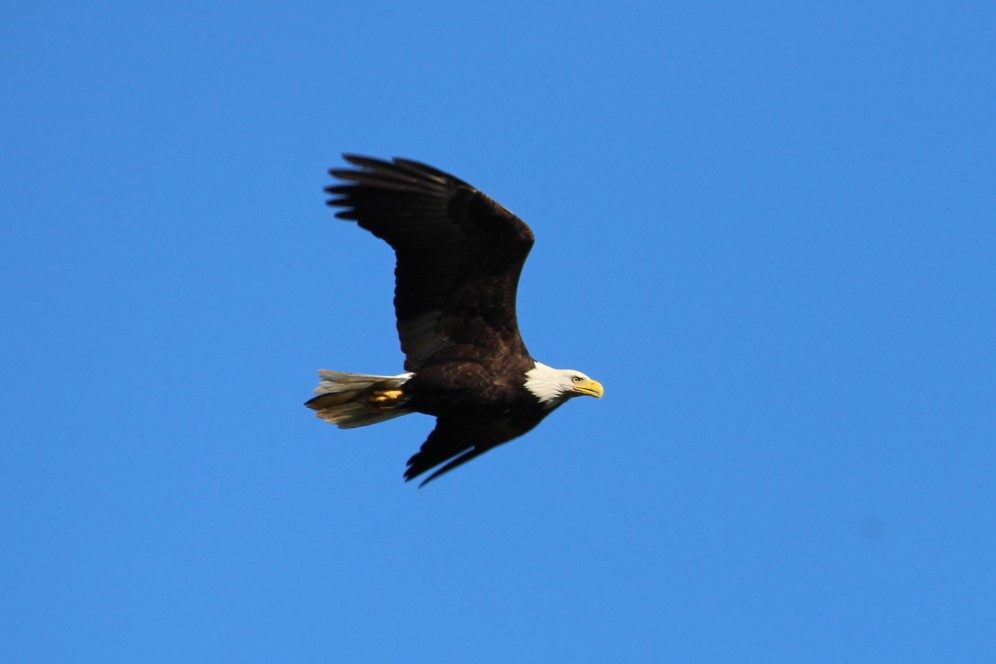
Bald Eagle photographed in Pinery Provincial Park, September 2021.
Here’s another repost from my old tumblr blog norfolknaturalist.tumblr.com. I’ve added some newer photos of the species involved but otherwise unchanged. Much of this article was inspired by my reading of the book Life Everlasting: The Animal Way of Death, by Bernd Heinrich. I thought the subject and title were appropriate for Halloween season.
Just as we were about to turn into my parents’ driveway last weekend (in April 2018), we saw probably the most iconic bird in North America less than 100 metres away from us down the road. A Bald Eagle (Haliaeetus leucocephalus) was dining on a Raccoon roadkill in clear sight.
Perhaps it’s surprising that a bird of such noble renown was seen stooping to consuming carrion, something that we often see as repulsive. The truth is that the line between ‘predator’ and ‘scavenger’ is often a very blurred one. Most animals that eat other animals are willing to eat one that has already died or been killed. To the predator, it contains the same nutrients that it would obtain from its own kill but with much less effort (valuable time and energy) on their part. This isn’t to say that eating pre-killed remains is without risk for a predator or a scavenger. Besides the conflicts with other hunters over the resource, there is an omnipresent and invisible threat to all dead flesh.
Bacteria: organisms that are so tiny they are dwarfed by individual cells of our bodies. Despite being so small, and unseen without a powerful microscope, bacteria operate everywhere in the natural world and one of the most profound activities they perform is nutrient recycling and breakdown. While they disassemble cells and consume dead flesh, bacteria proliferate. Bacteria are the reason that predators can’t eat an animal body that’s been dead for too long. They are the reason dead things go “rotten” and become unpalatable by almost any animals. They are the unseen “competitor” with the visible and charismatic predators.
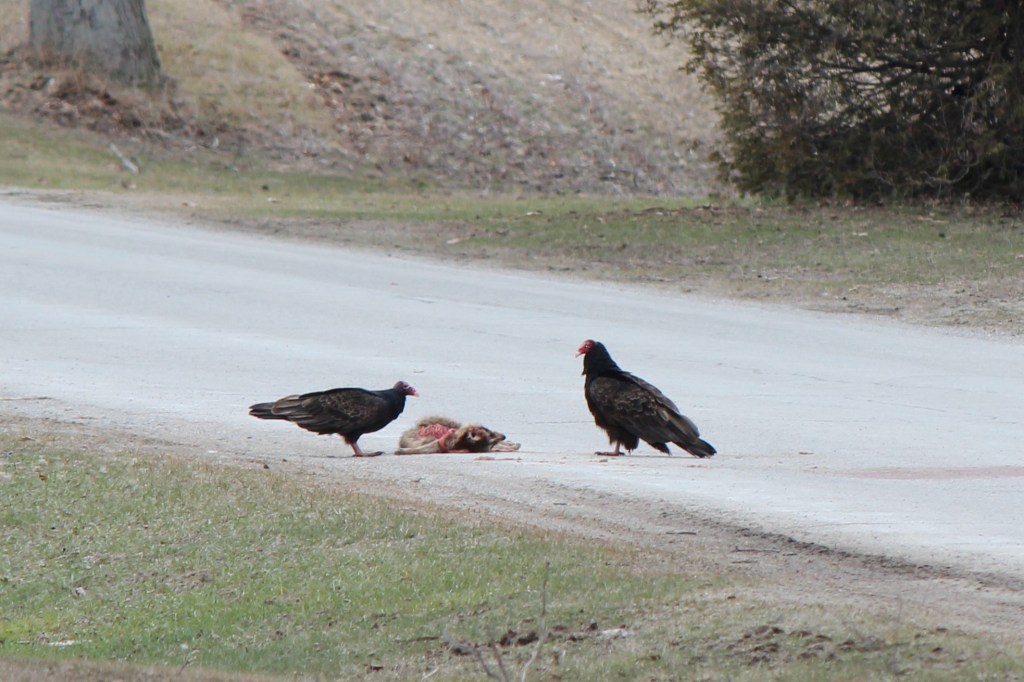
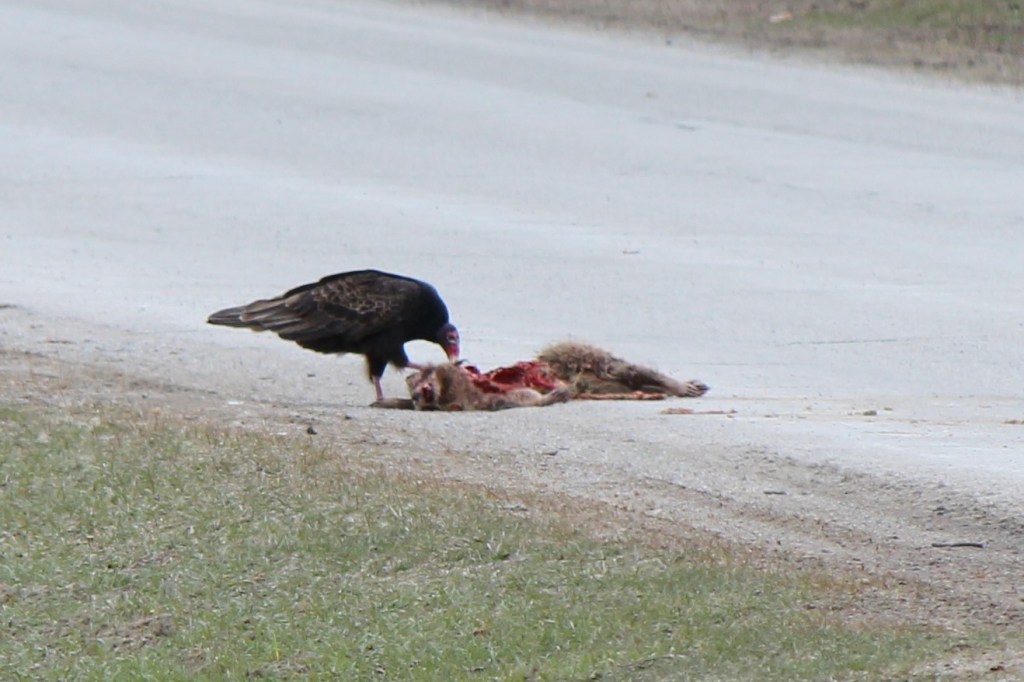
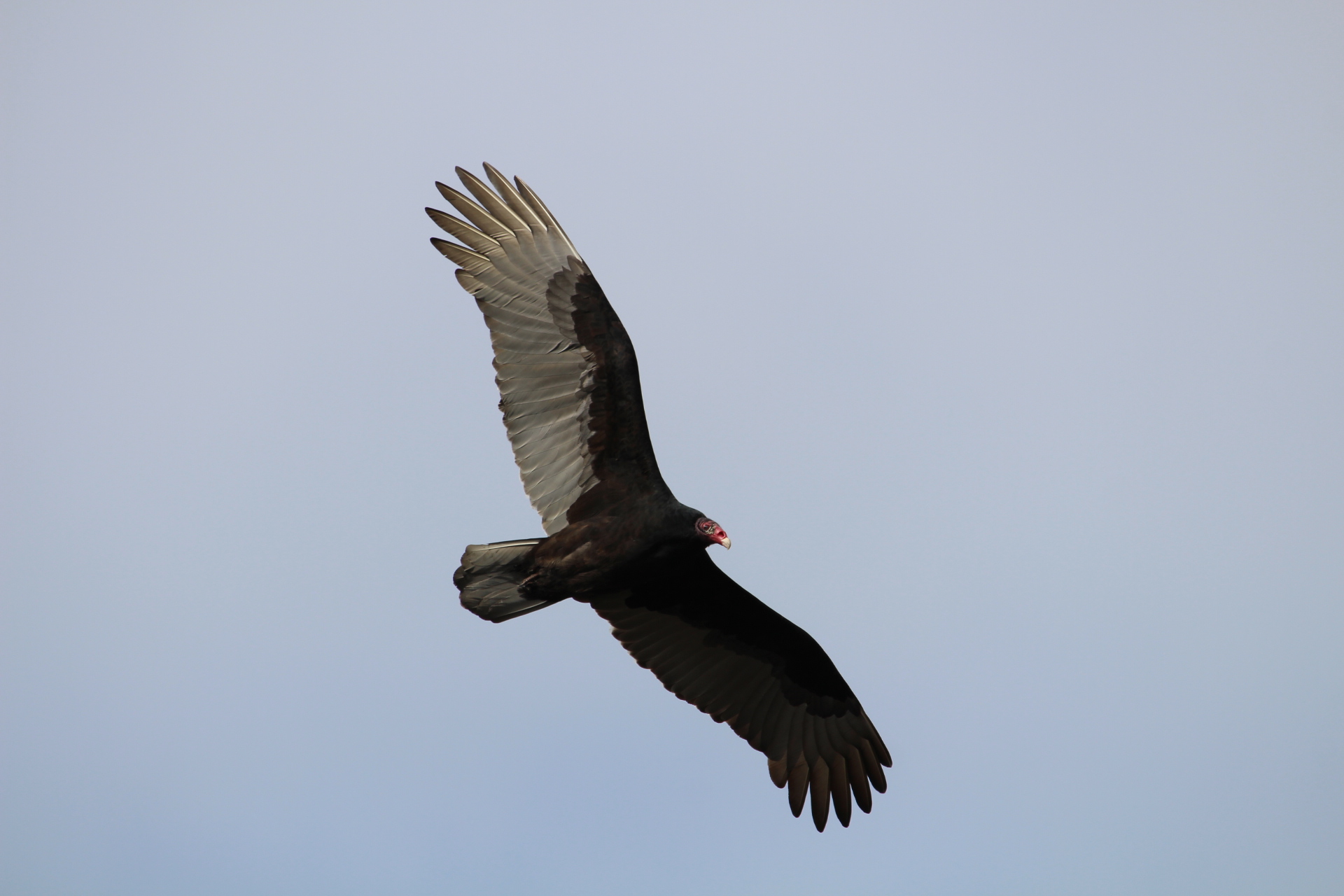
After at least an hour of feeding, and the frequent interruptions of cars passing, the eagle flew off and left the dead Raccoon. That is when the Turkey Vultures (Cathartes aura) moved in, creatures much more commonly associated with scavenging. And for good reason. Turkey Vultures have the most powerful sense of smell of any bird, and can detect a dead animal from over a mile away. What’s more, they can eat flesh that other creatures would turn down as too far gone. Their digestive system is able to break down the toxins of the ever-present bacteria, making them capable of consuming rotten flesh, where others cannot.
It may be a grisly business, the consumption of the dead, but it is an essential (and amazing) part of ecosystems around the world.
Turkey Vulture photographed in Long Point, October 2021.
Once again, I’m going to repost one of my tumblr blog posts, this time from May of 2018.
On May 18-21, 2018, we took a trip to MacGregor Point Provincial Park. Today’s post is going to be a highlight of the animal observations/encounters that we had that weekend.
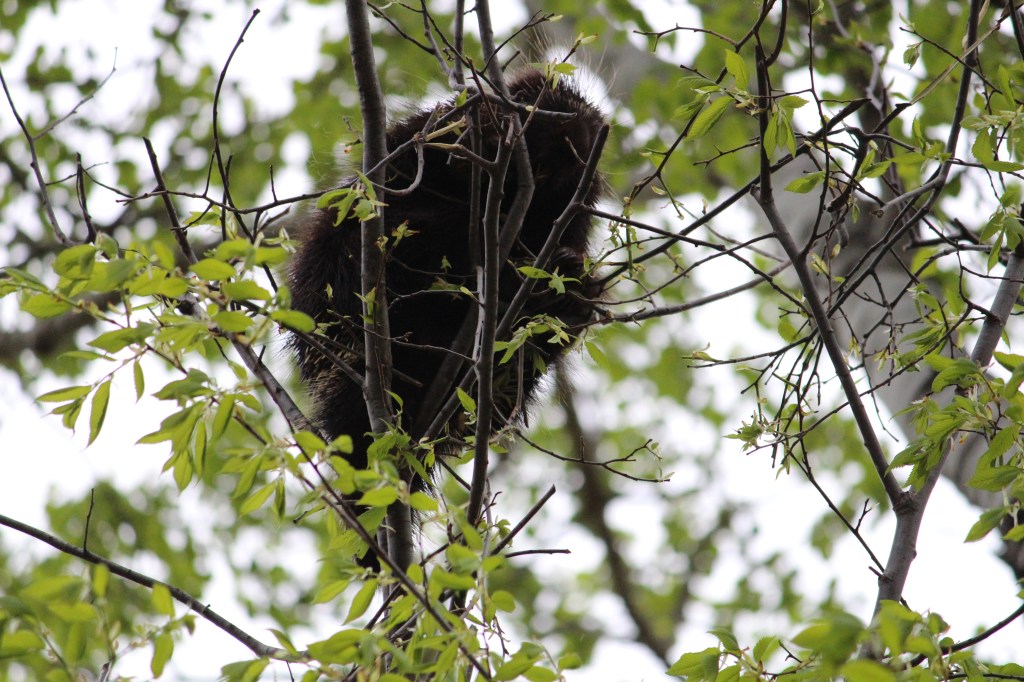
We awoke early the first morning of our stay and looked at the grey skies that promised rain. Hoping to spot some wildlife beneath the somber dawn sky, we set off on the Tower Trail. Our early start was rewarded with the sight of a strange animal resting in a tree.
It was a mammal with spines, and the second largest rodent in North America (only beaten by the Beaver): a North American Porcupine (Erethizondorsatum). After consuming some buds and plants that it foraged in the night it found a perch to rest in for the day, one that seemed awfully thin for the size of the animal.
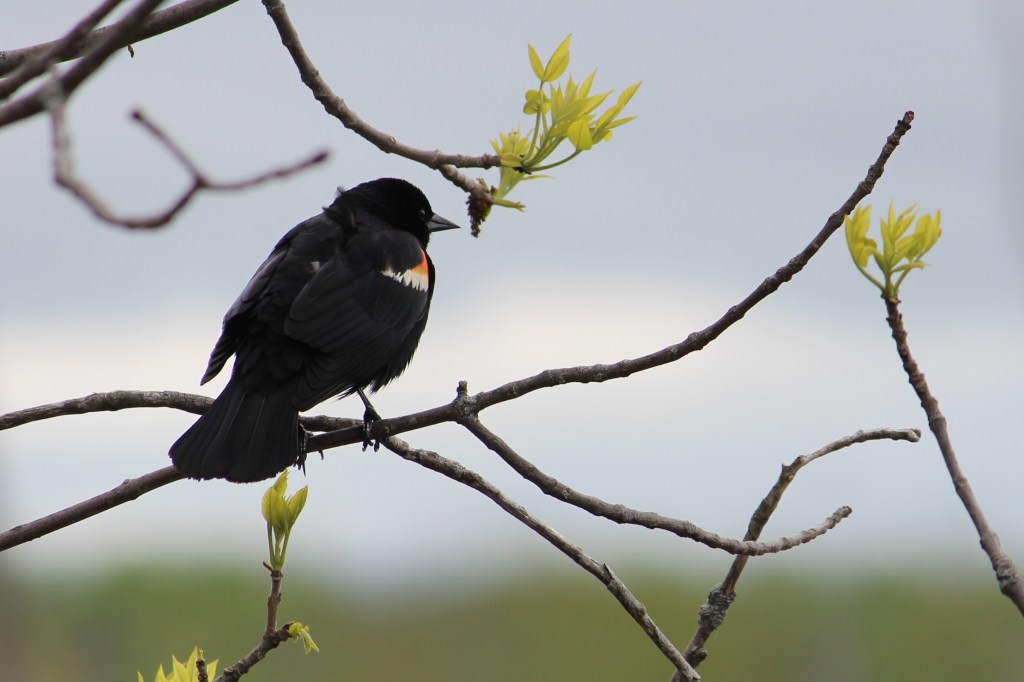
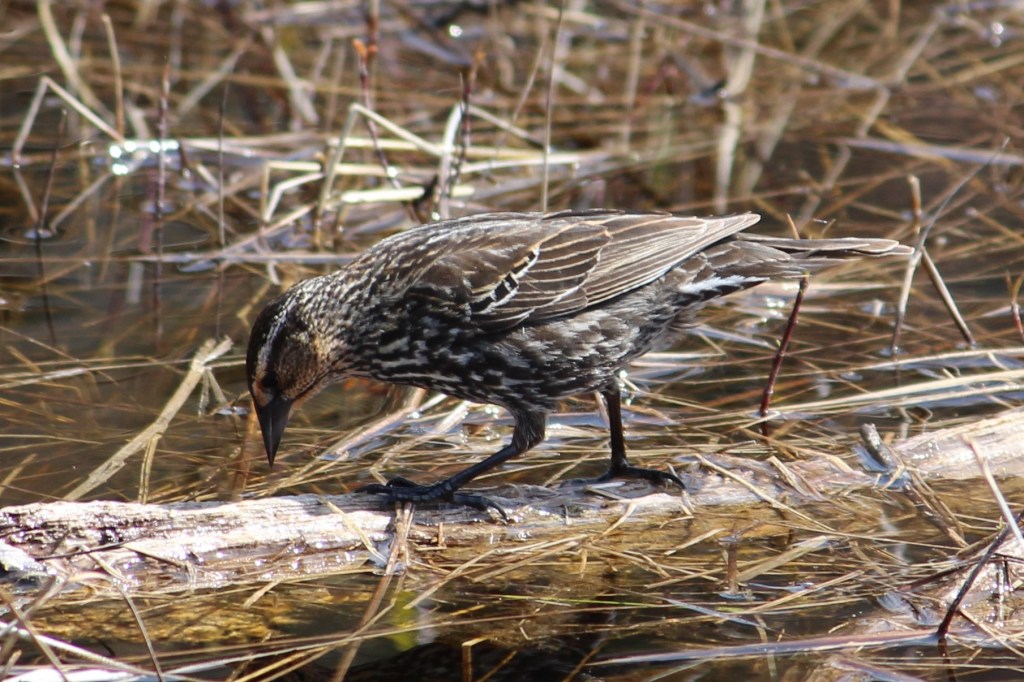
Further down the trail, we moved through various ponds until the horizon opened into spreading wetlands filled with reeds and bordered by grasses and trees. Here, the red-winged blackbirds (Agelaius phoeniceus) were in abundance, uttering their O-ka-leeeee calls from their various perches. We saw males with their velvet black plumage offset by epaulets of red-and-yellow, and we also occasionally spotted the much more camouflaged females. On our last morning camping, we saw one of the females and believed it to be a different species of marsh-bird, but later came to the realization that it was a female red-winged blackbird.
Male (top) and Female (bottom) Red-winged Blackbirds (Agelaius phoeniceus).
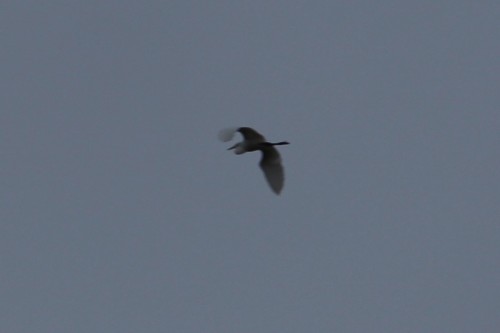
Mixed with the sounds of the blackbirds, were the trumpeting calls of the Canada Geese (Branta canadensis), always the loudest birds present. As we were leaving the wetlands, we heard a strange call and a bird departing the marsh. We were able to snap a quick picture of it and now believe it’s a Great Egret (Ardea alba).
Our fleeting glimpse of a Great Egret (Ardea alba).
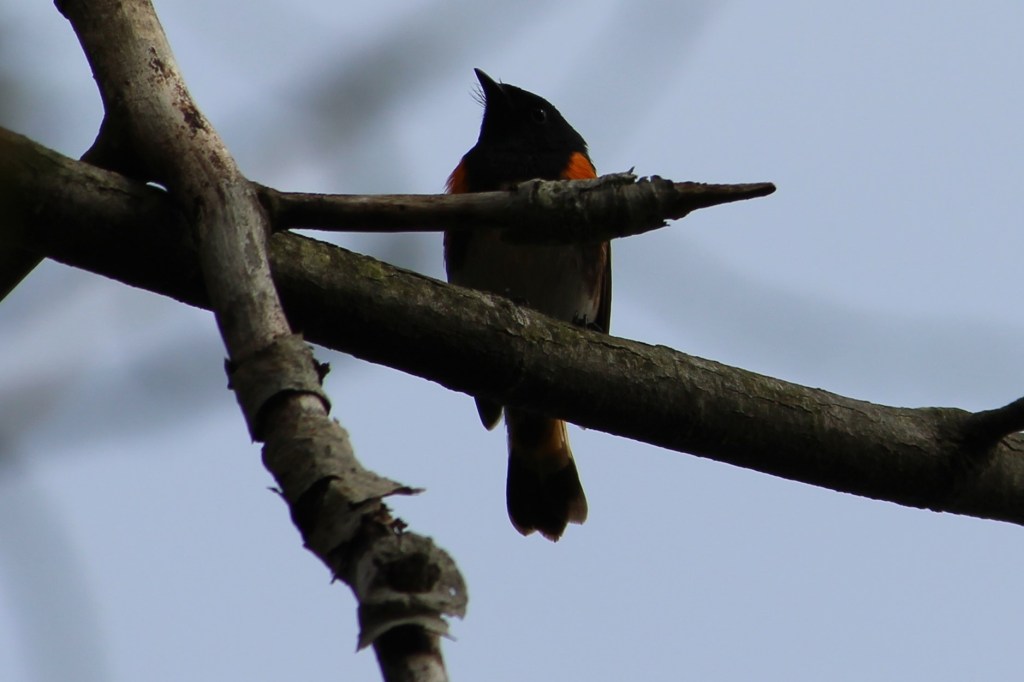
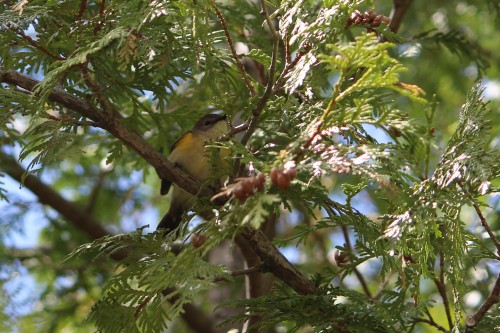
Throughout our stay, our campsite was host to several small, flitting birds that would rarely sit still. Every time the eyes caught one in full view the birds would then dart off again, a streak of orange flickering through the branches of the tree like an avian fire. We were barely able to take some pictures of these quick warblers foraging among the branches. They were American Redstarts (Setophaga ruticilla), who had returned from their wintering grounds in Central America and northern South America. Like the Red-wings, the male and female birds look very different- the male sporting a dark coat with orange dashes on the wings and chest, and the female a gray-white with yellow patches on the sides.
Male (top) and Female (bottom) American Redstarts (Setophaga ruticilla). The pictures unfortunately do not capture their boundless energy.
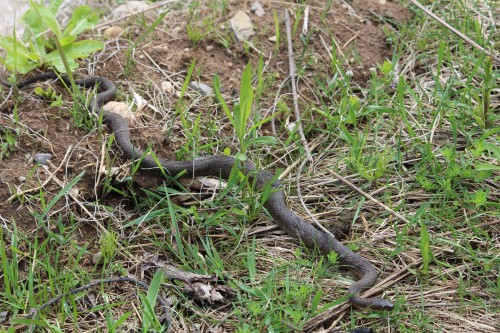
Beneath clear skies the next day, we set off on the Tower Trail once more, hearing and seeing the blackbirds again. On our way through the wetlands trail, we spotted another creature enjoying the warmth and sun: a Northern Watersnake (Nerodia sipedon).
Northern Watersnake (Nerodia sipedon) basking in the sun.
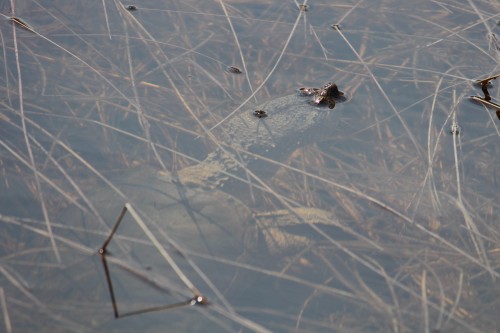
While visiting the trail near the Visitor’s Centre, we were in the right place to see a creature that resembles a mythical beast: a swimming Snapping turtle (Chelydra serpentina). Snapping turtles are beautiful creatures and the one we saw moved very stealthily. Despite the clear waters, and the size of the reptile, it was difficult to keep track of its scaly skin among the water-plants as it slowly and gracefully swam through.
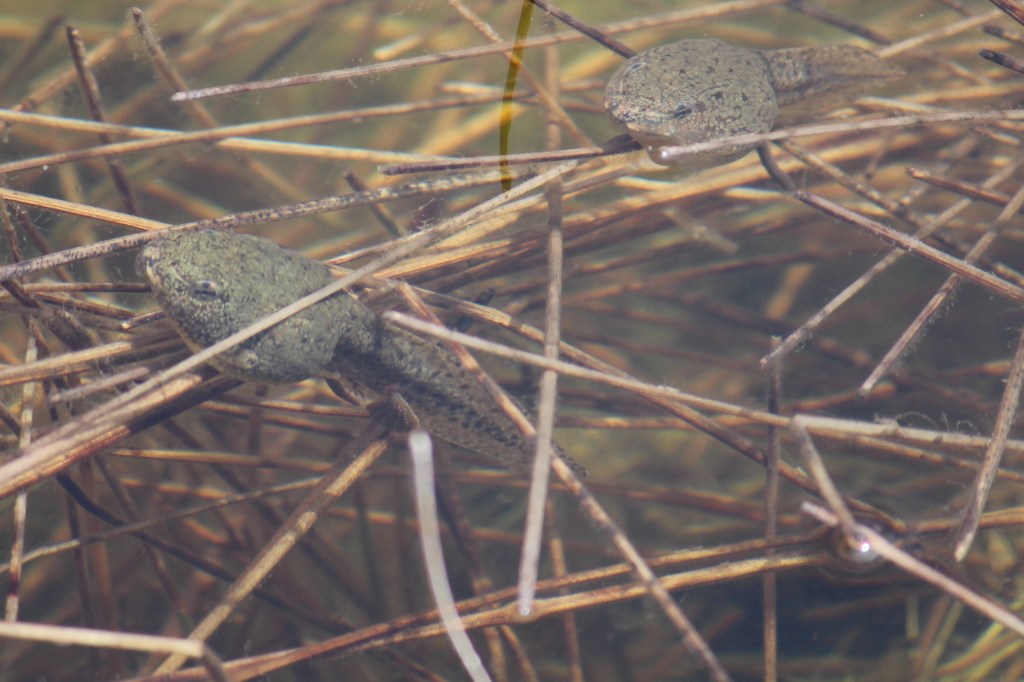
Also moving through the waters of the marsh were large tadpoles, with heads the size of a toonie or larger. Some were beginning to display the stubs of legs, but continued to swim in wriggling pollywog fashion, so unlike the athletic strokes of their adult frog legs.
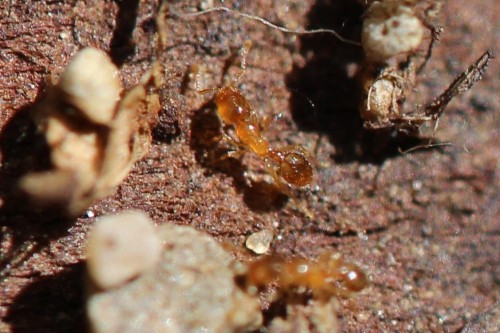
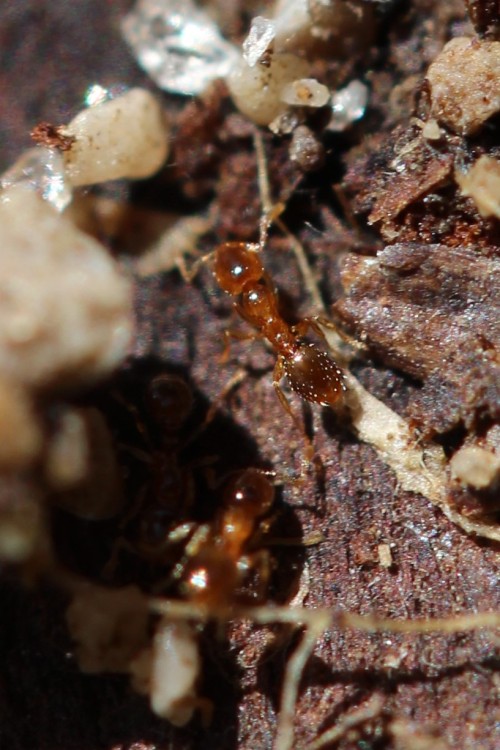
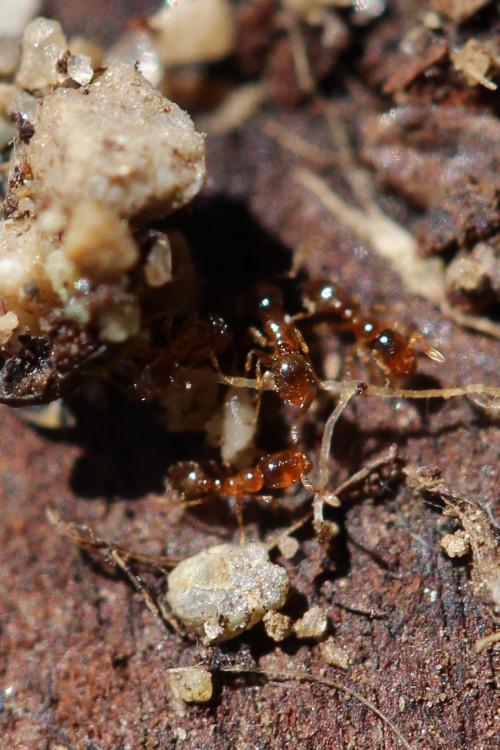
Once back at our site, I had an itch to use my macro lens to capture some of the tiny creatures that abounded there. Turning over a piece of bark on the gravel of our site, no larger than my palm revealed a portion of a miniature society. Tiny orange-brown ants scurried frantically about. They were Temnothorax ants, which are also known as “acorn ants” because some species of Temnothorax house their entire colony within an acorn.
Temnothorax ants, tiny workers under a piece of bark.
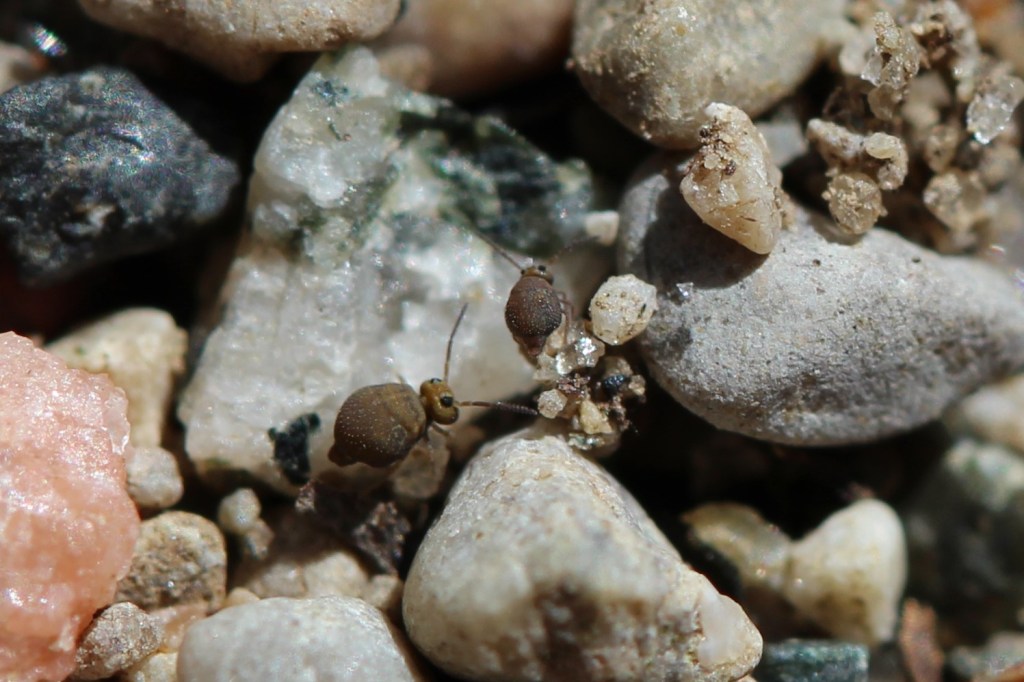
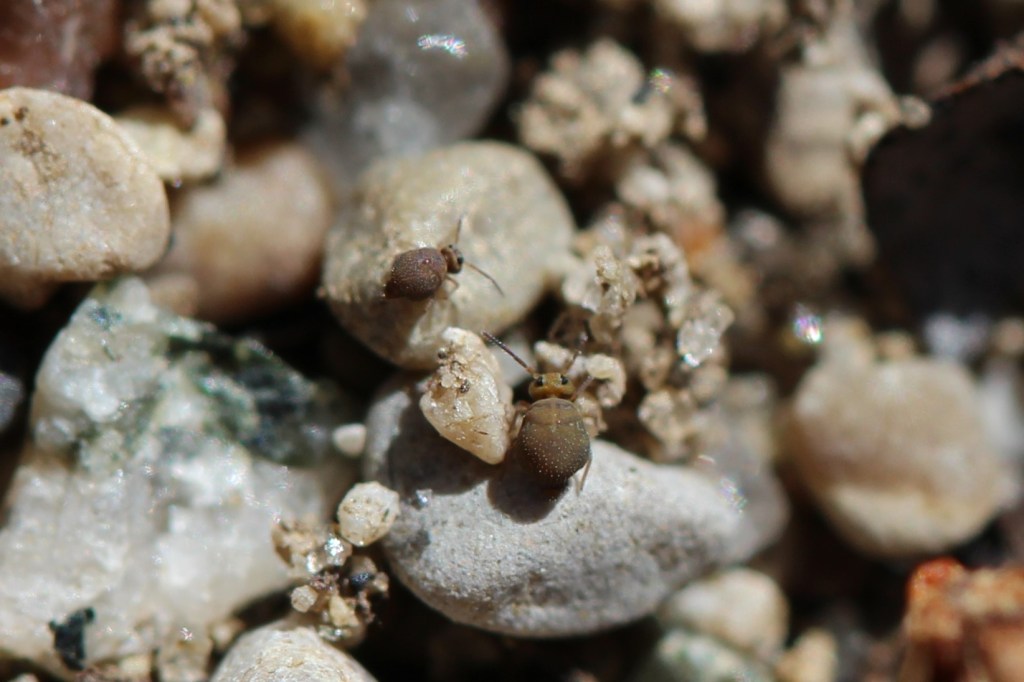
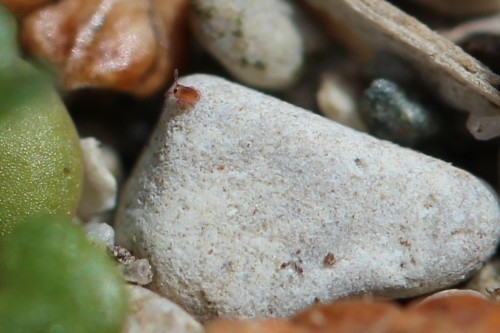
I turned my gaze on equally tiny, but even more numerous inhabitants of our site. Everywhere one looked in the sun, dark specks that slowly moved or hopped about on the gravel, could be seen. To see them in their full was a delight to me. The specks were Springtails, and these were a quite different kind to the ones I had seen before in the snow and on the trail by our house. These Springtails were like tiny rabbits when one could view them up-close. They were Globular springtails (Order Symphypleona) and I’m fairly sure the species was the Garden Springtail (Bourletiella hortensis) or something closely related:
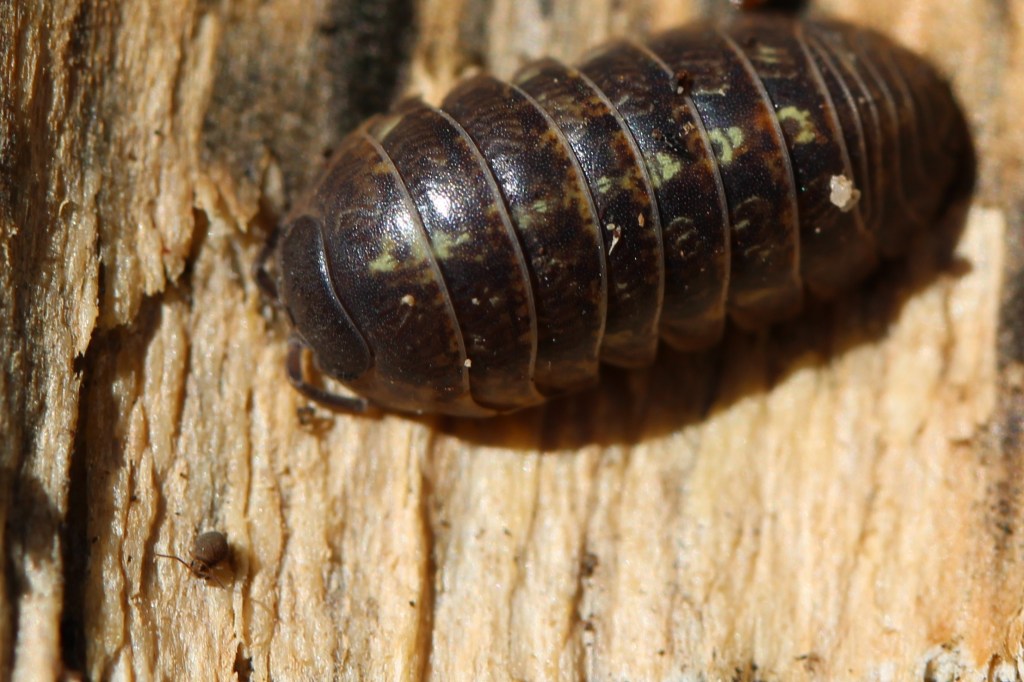
For size context, see the following picture of a Woodlouse (Armadillium vulgare). In the bottom left corner, there is one of the little Springtails:
In my quest to focus the macro lens on these miniature creatures I inadvertently took a picture of something even smaller than an adult Springtail: a baby Springtail!
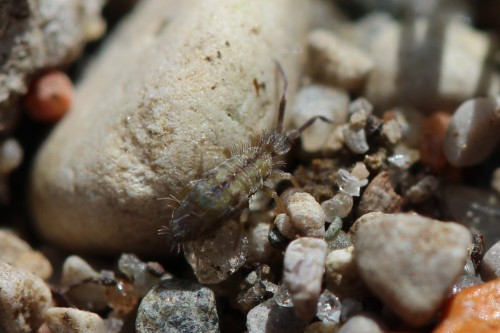
As if to demonstrate fully the diversity of these tiny almost-insects, an entirely different species of Springtail was also rushing through the gravel: a member of the genus Orchesella, one of the Elongate Springtails:
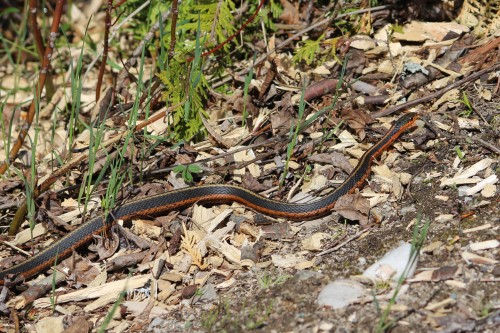
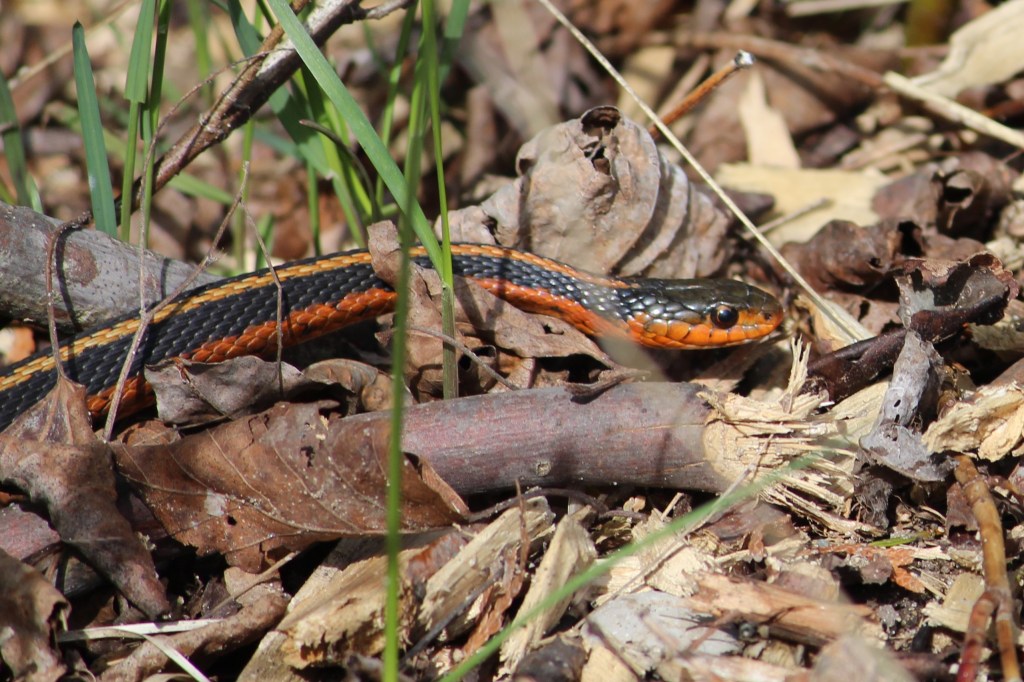
Right at the edge of our site, my friend Marshall sighted a beautiful snake with orange underbelly and stripes along its dark body. We thought it must be a rare species but it turned out to be a variant of the diverse Eastern Garter Snake (Thamnophus sirtalis), which did nothing to diminish its beauty or wonder.
A beautiful Eastern Garter Snake (Thamnophis sirtalis).
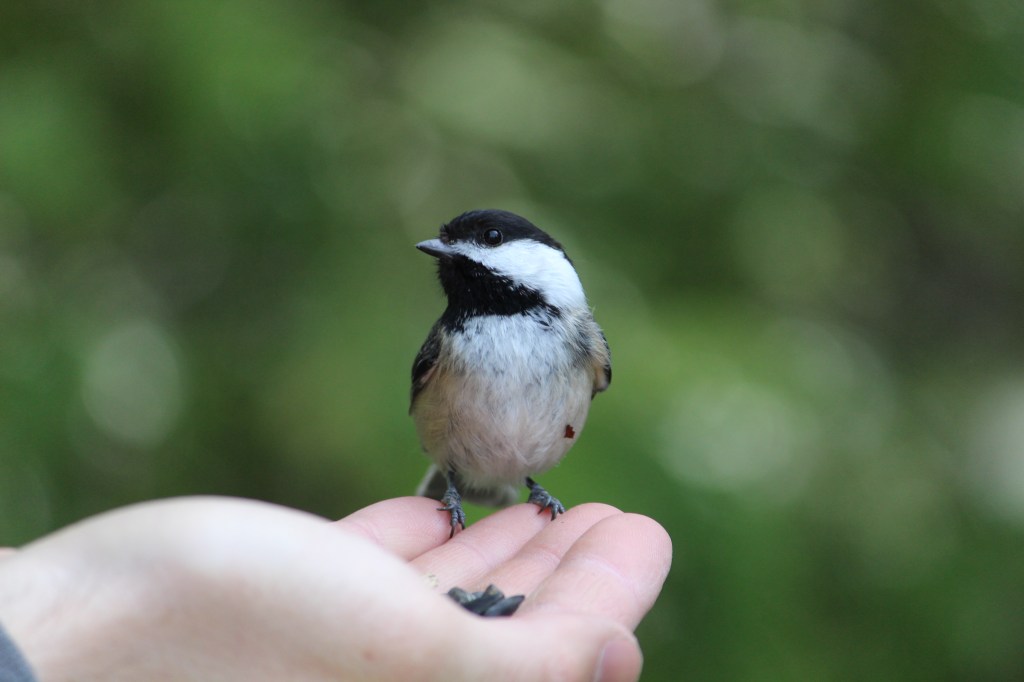
On our last day we went to the Visitor Center trail to feed the Chickadees (Poecile atricapillus) from our hands, along with the occasional red-breasted Nuthatch (Sitta canadensis). Despite some of the rain and cloudy weather, we observed a variety of wild organisms at MacGregor Point and marveled at their diversity and beauty.
In the interests of my own personal goals to post at least once a month, I’m going to re-publish my very first post on my first iteration of the Norfolk naturalist blog, which was on tumblr. I’m planning to re-post all of my articles that I wrote on my tumblr on this site at some stage (possibly with some slight updates/alterations) since I would like them all in one place, and my own website seems like the best place to have that. So here is my first Norfolk Naturalist post, originally published on my tumblr back in 2018 (over 4 years ago!):
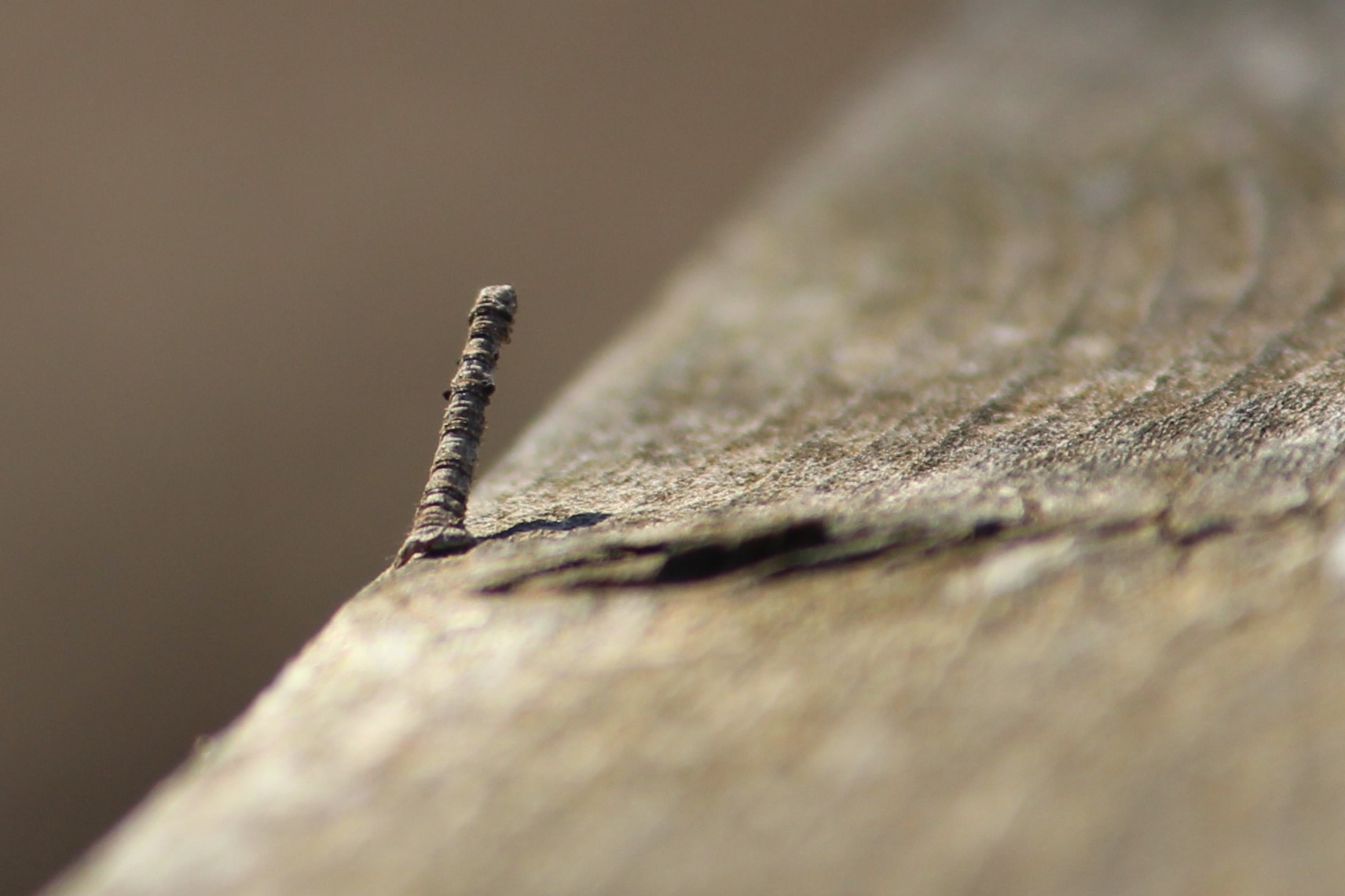
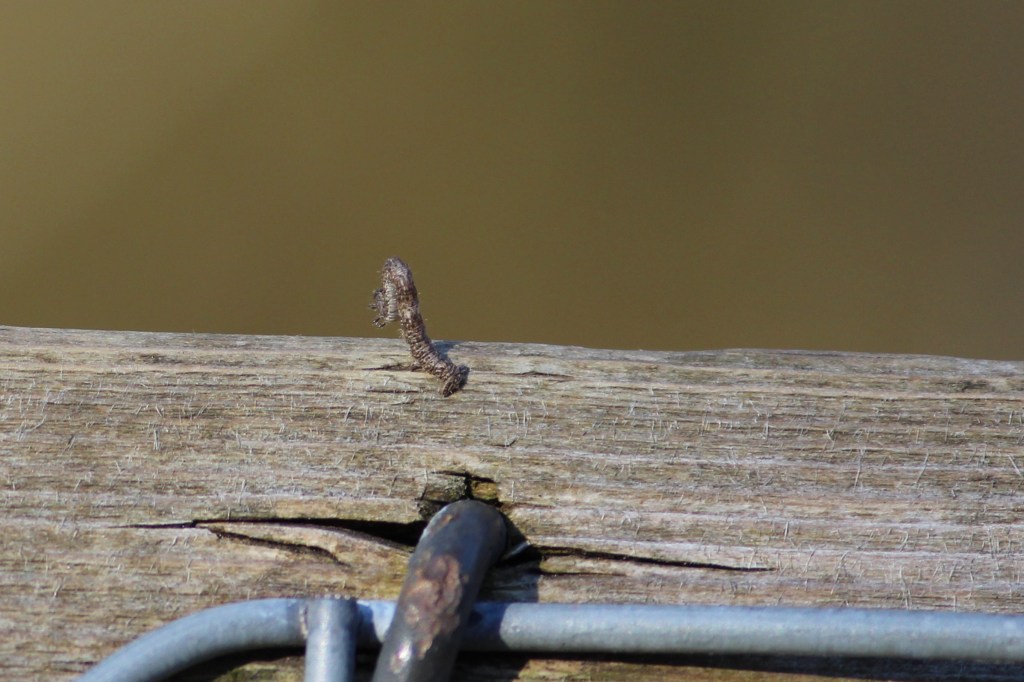
While walking the trail near my house, I spotted a twig in an unlikely spot. Instead of forming the final split of a growing or dead branch, the tiny twiglet (just larger than my fingernail) was jutting out into the air from the railing of the bridge. Something strange was going on. On closer inspection, it turned out not to be a twig at all. Rather, a caterpillar had chosen a poor and rather conspicuous spot to hide.
If this caterpillar had chosen a better location, it surely would have fooled me. Even where it was, it was extremely difficult to spot. The coloration and shape of its back was a perfectly mottled gray-brown, and its posture was that of a twig. It was thin-bodied and elongate, only about a millimeter around.
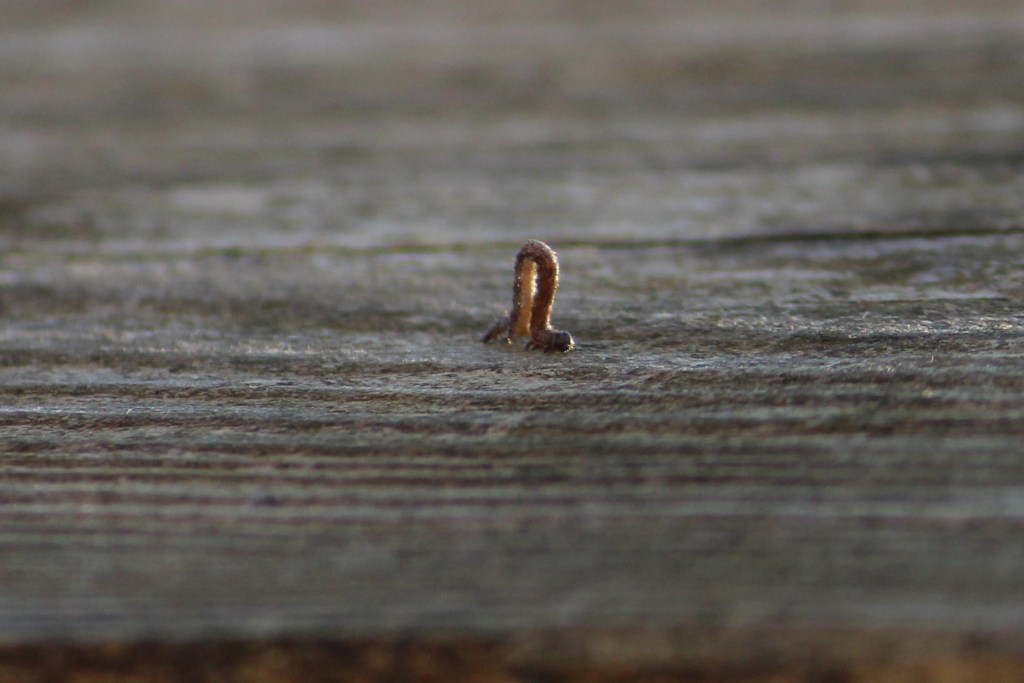
The caterpillar’s odd shape is provided by it having a large space between what are its true legs (the six legs just behind the head) and its ‘prolegs’ which are fleshy stubs coming off of its abdomen. This large space also causes these caterpillars to move in a unique fashion. They lift the front group of legs and extend it forward, reaching ahead and securing themselves there. Then they lift their rear group of legs and move them forward to reconnect with the front legs. Once together, the rear legs hold their place and the caterpillar once more reaches forward with its front legs. This “inching along” process provides this group of caterpillars with their name: the Inchworms (Family Geometridae).
A caterpillar’s main predators are birds which hunt visually. If the caterpillar appears to be something other than a morsel to a hungry bird, then it has succeeded and survived another moment. This type of behavior has a technical name: “crypsis” or “cryptic behavior”, which just sounds amazing. It strikes this cryptic pose when threatened, and so effectively disappears from a hunting bird’s search. I suppose it must have assumed this position when I walked near, thinking me to be hunting it for food. In reality, I was hunting only for a few pictures.
I hope you enjoyed that “repost” from the older version of norfolk naturalist blogging. I promise I’m still working on My Top 20 Nature Photos of 2013-2020 series and I also have several other posts about more recent nature sightings in the works. Hopefully April will be a more productive writing month!


 Norfolk Naturalist