Categories
Algonquin August 2023

Campsite Companions (Algonquin Observations August 2023, Part 1)

In August of 2023, I returned to one of my favourite places: Algonquin Provincial Park. While there, I photographed and encountered varied organisms and I’d like to take the opportunity to explore and describe these nature observations in a series of blogposts, as I often do.

When first arriving at our campsite, I observed not a living thing itself, but rather the mark of a living thing on its environment: I found a bird nest. According to iNaturalist it is likely the creation of a Vireo (genus Vireo, who said Scientific names were hard to remember?). The most common Vireo in Southern Ontario is the Red-eyed Vireo (Vireo olivaceus), so this was likely constructed by a member of this species. A description of their nest construction is appropriate here: “The female spends 4 to 5 days constructing a nest of bark strips, grasses, pine needles, wasp-nest paper, twigs, and plant fibers that hangs below the branch. She glues the materials (some of which are provided by the male) together and to the branch fork with spider-web adhesive, occasionally supplemented with spider egg cases and sticky plant fibers.” (Cornell Lab of Ornithology 2019). I love thinking of the time and effort that went into this small nest. Just think of the spiders’ webs and egg cases that went into this architecture.

Small eye-level nest of a songbird, likely a Vireo of some sort.

While exploring our campsite, a very different organism was in the process of creating a nest, a crabronid wasp female. This tiny black-and-yellow wasp was investigating the ground of our campsite for a location to create a  burrow. The wasp landed several times and dug a little bit into the sandy soil then hovered for a while, circling the area before dropping to the ground once more. At one point, it entered the firepit and dug rapidly into the ashes within, crafting itself a very easily constructed but frightfully unwise burrow. It put me in mind of the parable of the man building a house on sand, perhaps there is a Hymenopteran equivalent about “digging one’s burrow in ashes”. In any case, I don’t think the wasp was settled on the firepit as its burrow location because after forming these temporary exploratory burrows, she flew off and wasn’t seen the rest of the day.
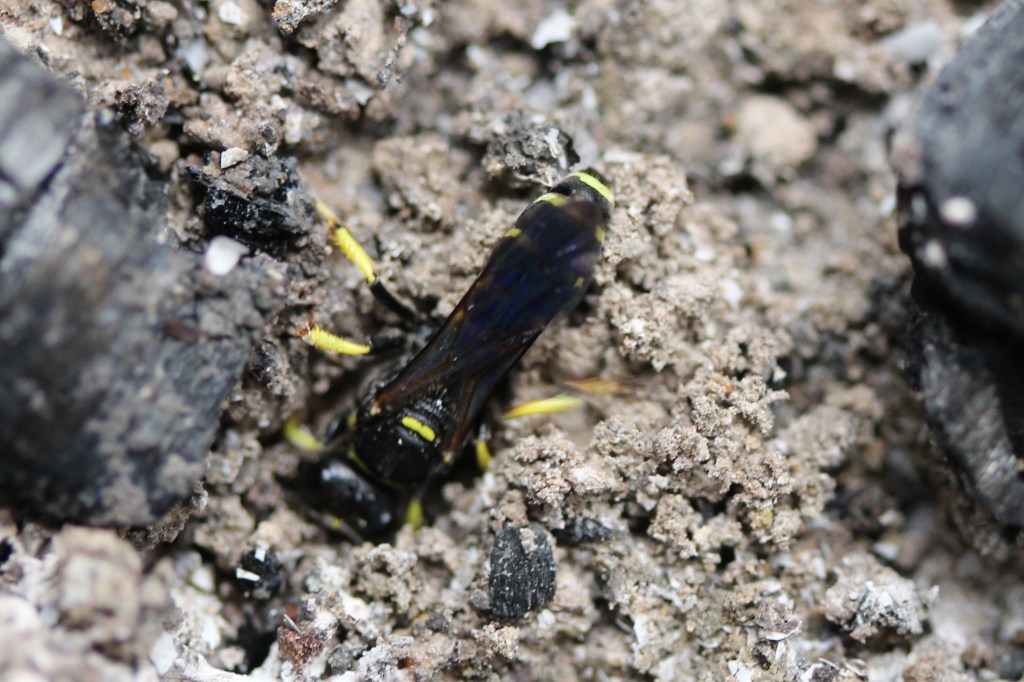
“Do not dig your burrow in ash” – ancient Hymenopteran proverb.

A few days later, I spotted her hovering form once more, this time accompanied by a prey item. Dragging below her was a corpse larger than herself, that of a Horse Fly (Tabanidae). I never witnessed the end of her journey, I’m not sure if she found a good spot to bury her large prey to feed her young. But I hope that she did.

Crabronid wasp dragging her larger horse fly prey below herself.

Another Hymenopteran was looking to provision for its young, although its prey was far larger than a horsefly. The creature was a Black-and-red Horntail (Urocerus cressoni) and its prey was a tree. Horntails (Suborder Symphyta) lay their eggs inside the trunks of trees and the larvae feed within. Urocerus cressoni larvae feed inside of Pine trees and their relatives (Marshall 2023).
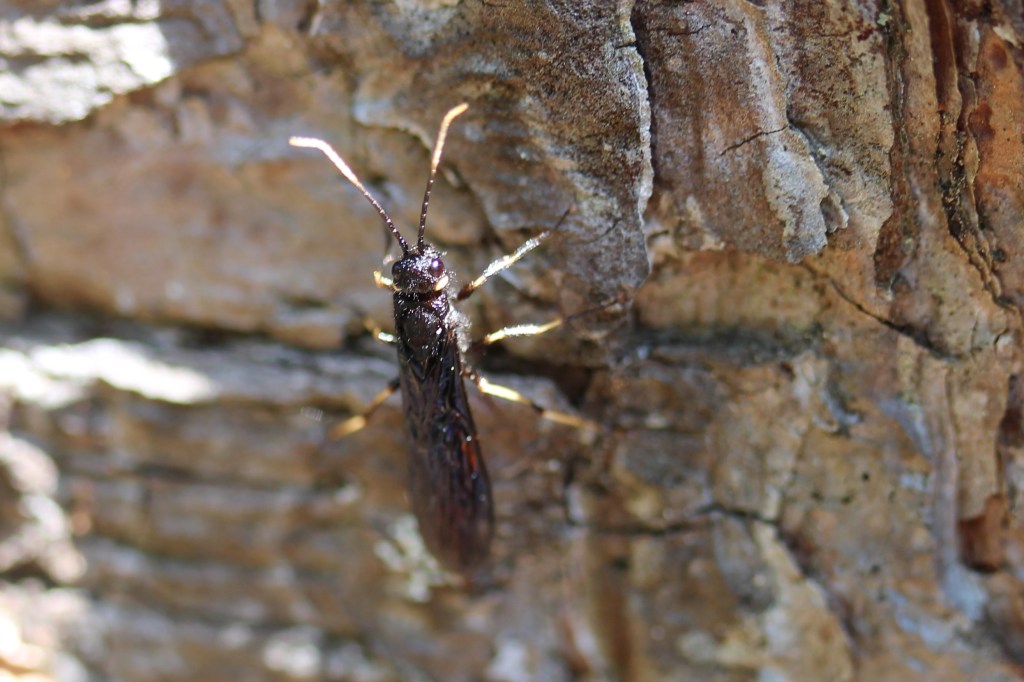
Black-and-Red Horntail (Urocerus cressoni) resting on the trunk of a tree, likely searching for a place to lay her eggs.

Many other insects were observed on the trees, plants and litter of our campsite and the surrounding areas of the Pog Lake Campground. Some True Flies (Order Diptera) caught my attention. A bright and shiny Dolichopus skittered about in the leaf litter, and an elongate Robber Fly (Genus Machimus) was spotted on fallen pine needles.

Dolichopus Fly.
Robber fly of the genus Machimus.

Some of the most beautiful insects found in the Pog Lake campground were the Dragonflies (Order Odonata). A strikingly large Dragonfly of the genus Aeshna was basking in the sun on the trunks of trees and (when I was able to take its photo) on our dining tent entrance.

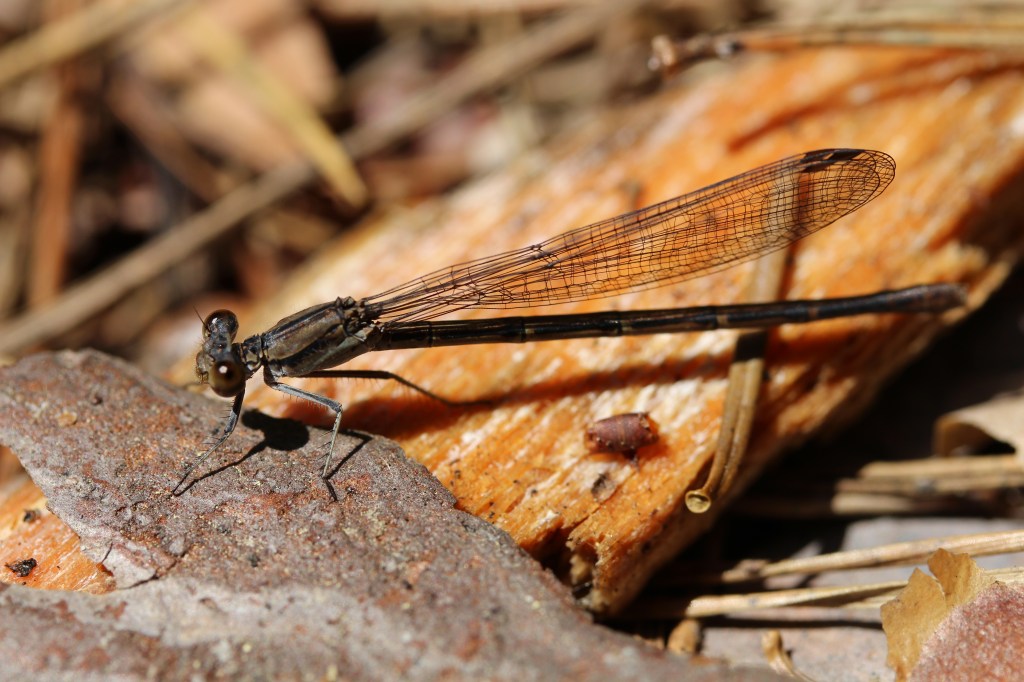
A much more easily missed odonate was the Variable Darner (Argis fumipennis), a smoky grey presence among the pine needles and fallen bark.
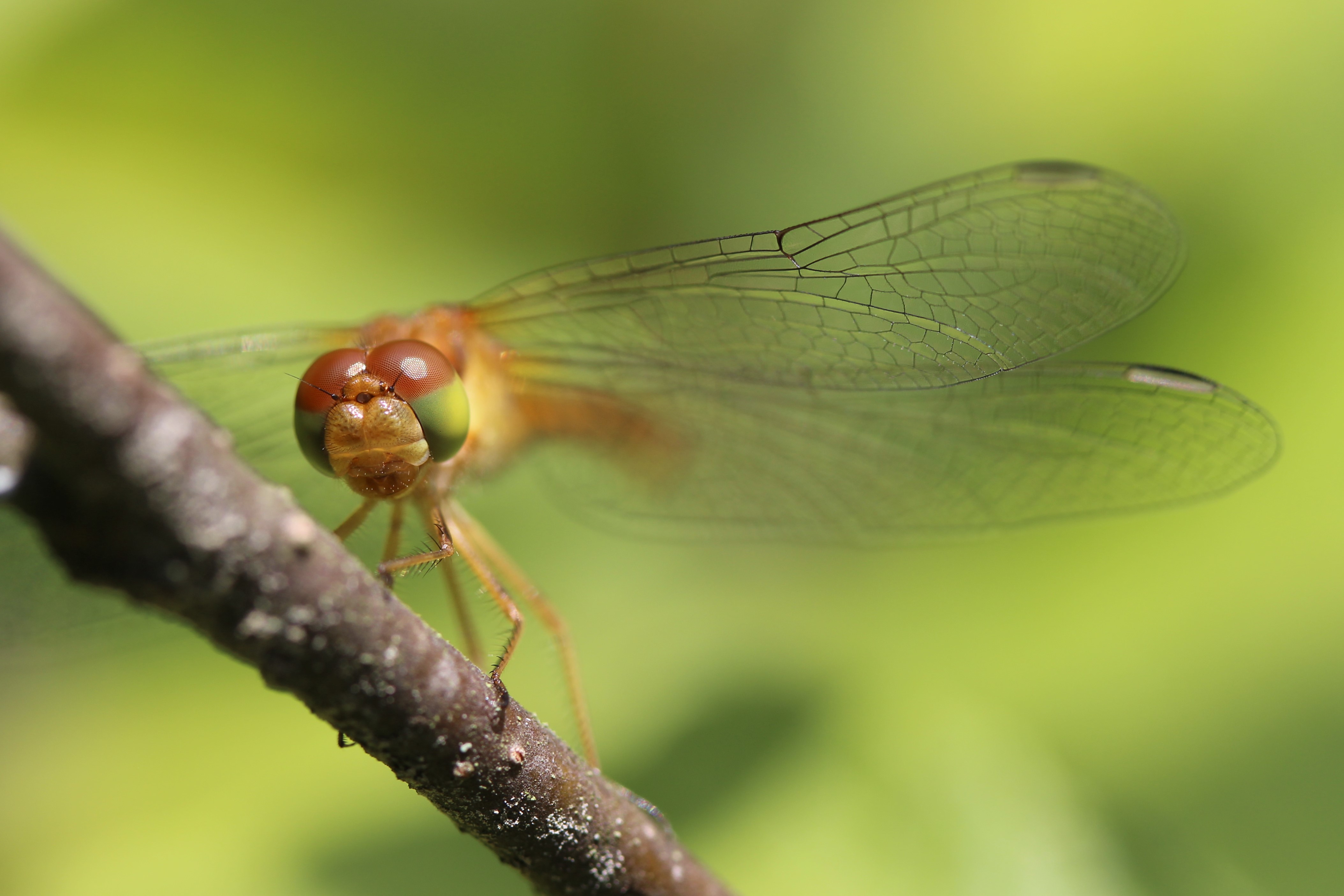
Resting along a branch was a beautiful Autumn Meadowhawk (Sympetrum vicinum), in a colour phase that I hadn’t observed before. Males of this species are a bright red with a rusty-red thorax, but females (like the one I encountered) are yellowish. I was able to get very close to this dragonfly and was rewarded with some beautiful photographs.

We didn’t just hang out by our campsite in Pog Lake, but we spent quite a bit of time at the campground beach and that will be the focus of my next blogpost.

References:

Cornell Lab of Ornithology. 2019. All About Birds. Cornell Lab of Ornithology, Ithaca, New York. https://www.allaboutbirds.org/guide/Red-eyed_Vireo/lifehistory#nesting Accessed on [1/24/24].

Marshall, Stephen A. 2023. Hymenoptera

For Previous Algonquin Observation blogposts, see:

Robber Fly Hunting Queen Ant

Algonquin in August

Canada Jay (Perisoreus canadensis)

Moose (Alces alces) Family

Algonquin Observations, Part 5 – Spruce Bog: The Reckoning

Algonquin Observations, Part 4 – Spruce Bog Speedrun and the Logging Museum Trail

Algonquin Observations, Part 3 – Peck Lake Trail

Algonquin Observations, Part 2 – Opeongo Road

Algonquin Observations, Part 1 – Pog Lake Campground

Categories
Nature Observations

Port Burwell Observations, July 2023

At the beginning of July, my family and I were camping in Port Burwell Provincial Park. While there, as I usually do when camping, I took some photos of the creatures I encountered and I’d like to explore some of them and what I can find out about them here. So here goes…

On my first night there I found myself sitting alone with a book and a small clip-on reading light in a dining tent (which was open to the outside, for at least part of the night). My tiny beacon of light attracted several insect investigators and I quickly became distracted from my reading*.

*If you must know (as I would want to know if I was the blog’s reader), I was reading a collection of sci-fi short stories: Galaxy: Thirty Years of Innovative Science Fiction, edited by Frederik Pohl, Martin H. Greenberg, and Joseph D. Olander.

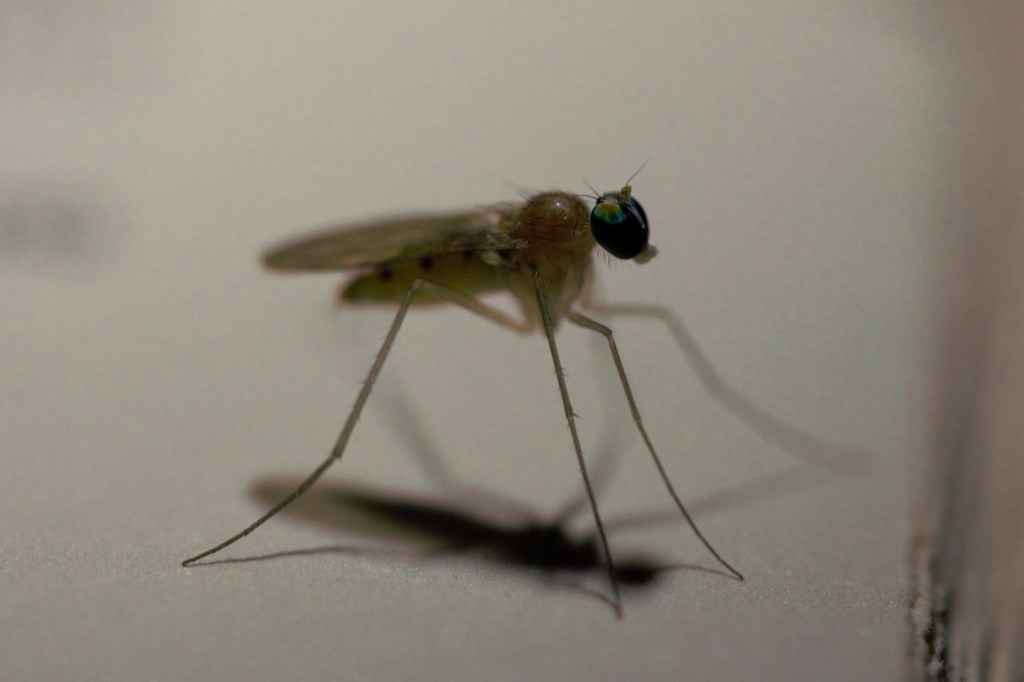
The most abundant insects alighting on my illuminated pages were members of that vast insect Order: Diptera, the Flies. Two that I photographed were likely the same species, and I suspect were male and female representatives. I have tentatively identified them as members of the genus Neurigona based on iNaturalist. They are certainly long-legged dance flies (Family Dolichopodidae). Dolichopodids are diverse flies (there are around 7000 species in the world (Marshall 2012)) which often hunt other flies and springtails as adults. There are about 150 species in the genus Neurigona (Marshall 2012).

Long-legged Dance Fly (Family Dolichopodidae) attracted to my reading light, possibly of the genus Neurigona.

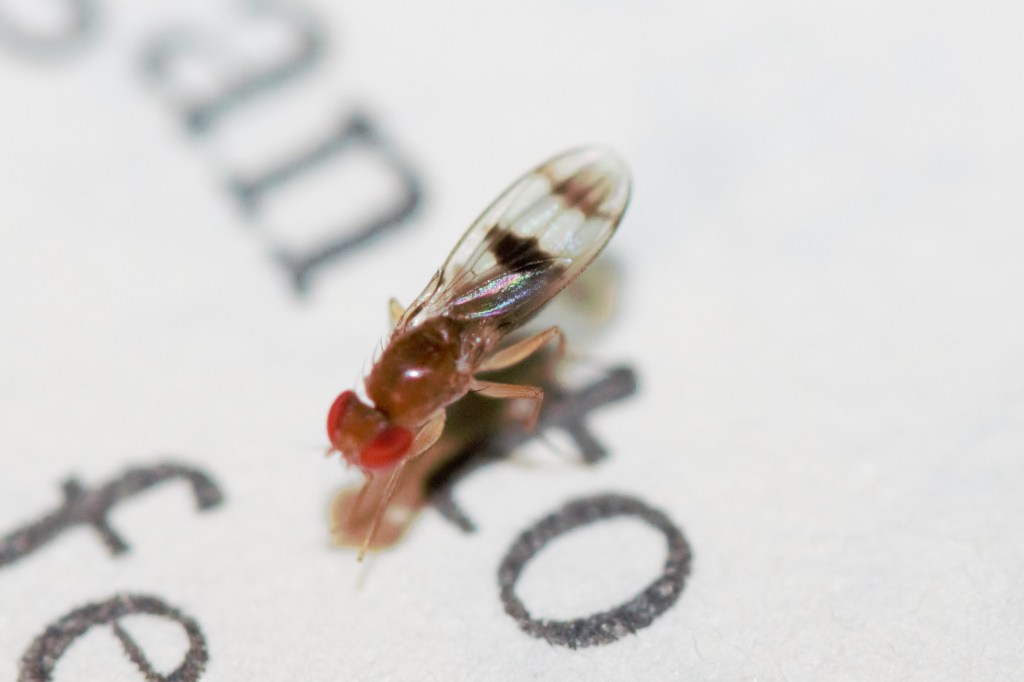
A beautiful little vinegar fly (a member of the Family Drosophilidae) graced the pages of my book as well: Chymomyza amoena. This species, along with the other members of its genus are “almost invariably present on fallen or wounded trees” (Marshall 2012 p. 477).

Chymomyza amoena, a member of the Family Drosophilidae, of which the most famous member is the Common Fruit Fly Drosophila melanogaster, ubiquitous in kitchens and laboratories the world over.

Two notable non-Flies made their appearance amid the glowing reading light. A tiny pale yellow leafhopper was just barely noticeable among the typed letters on the page, a member of the genus Edwardsiana

Tiny tiny leafhopper of the genus Edwardsiana.

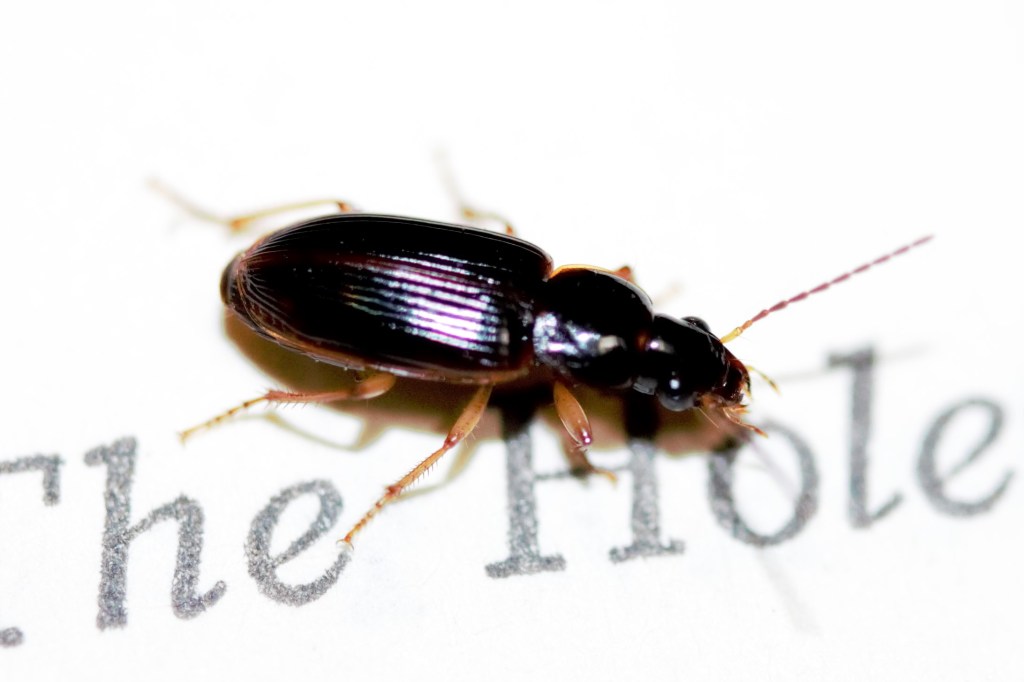
A dark beetle also scuttled across the words of my reading material, which I believe to be a Ground Beetle (Family Carabidae), possibly of the genus Bembidion.

Ground Beetle scurrying across the title of the sci-fi story I was reading, “The Holes Around Mars” by Jerome Bixby.

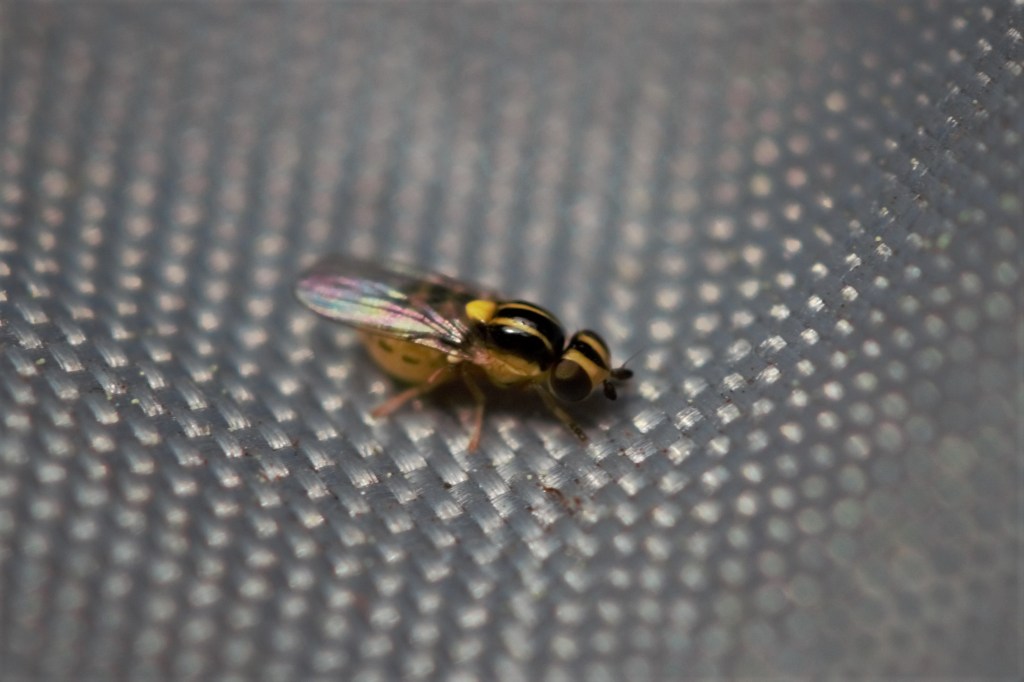
The next day, I did a tour of the campsite with my camera in order to find more subjects to photograph and identify. One creature located on my dining tent was another beautifully patterned fly: Thaumatomyia. This genus of flies contains some species which feed on aphids as larvae and others which bore and feed within grass stems (Marshall 2012).

Chloropid fly in the genus Thaumatomyia.

Nearby was a prowling spider which is possibly the False Pirate Spider (Platnickia tincta):

Sliding slowly across the leaf litter was a pale orange slug of the genus Arion:

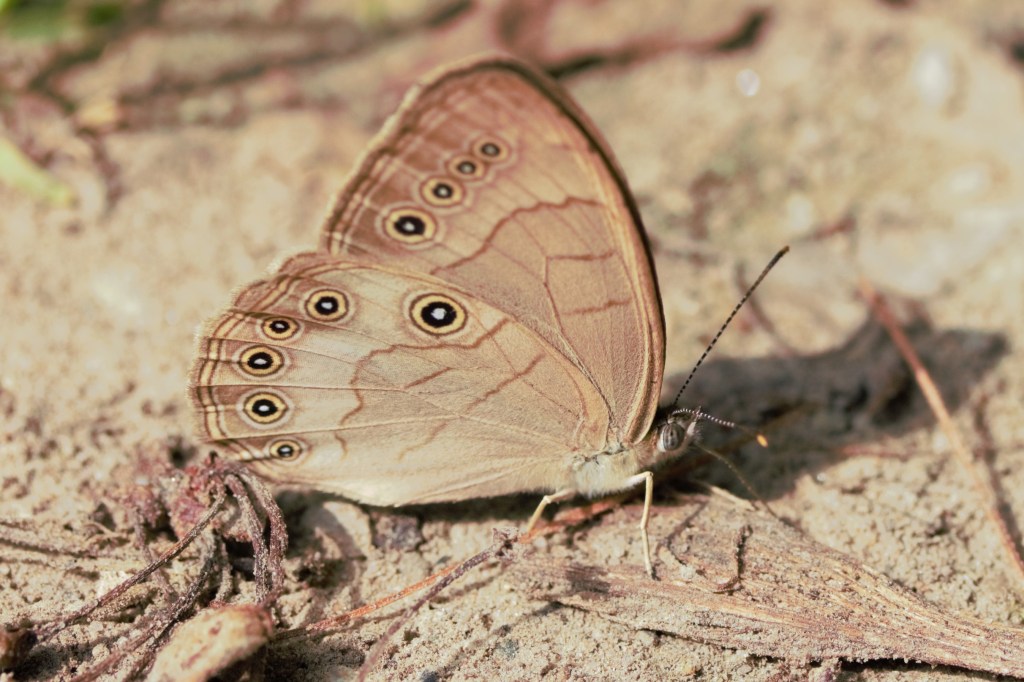
I was just able to capture this amazing butterfly that landed for a few moments on the ground, an Appalachian Brown (Lethe appalachia). Appalachian Brown caterpillars feed on sedges (Carex spp) and spend the winter in the caterpillar stage (Hall et. al. 2014).

Appalachian Brown Butterfly (Lethe appalachia).

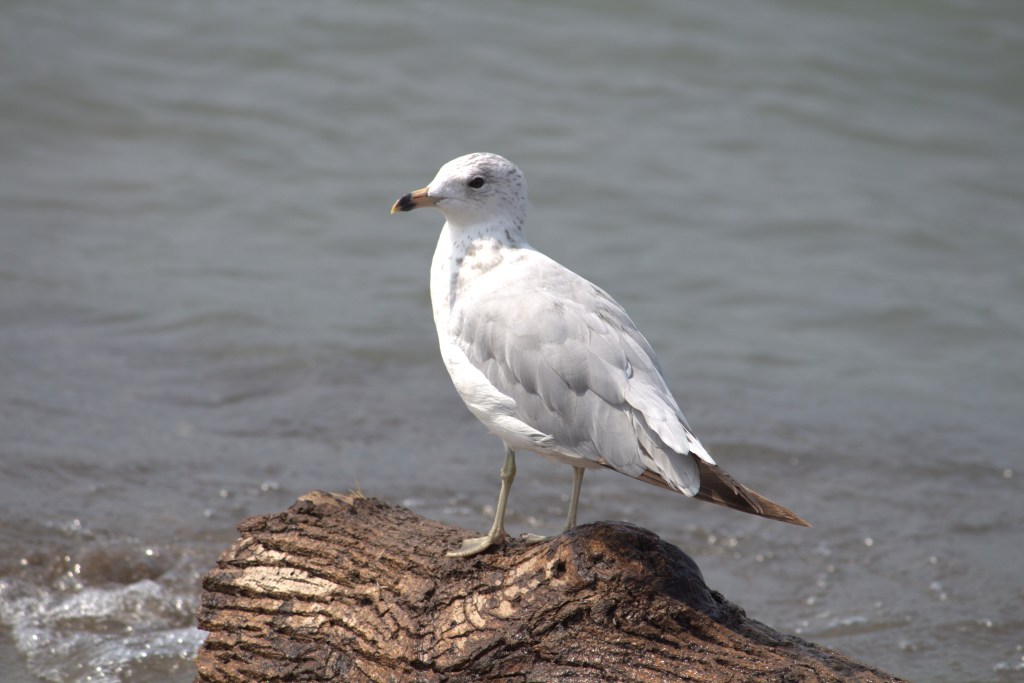
On the walk to the beach there were plenty of insects worthy of attention but I didn’t want to block the path of water-seeking pedestrians by crouching with my macro lens, so I decided to photograph birds there instead. There were swallows darting above the sands (more evidence of insect abundance) but they proved impossible to photograph. I took several photos of what I believed to be 2 different gull species. While reviewing my photos and posting them on iNaturalist it became clear that despite the contrast between the large brown-feathered birds and the sleek grey-and-white ones the birds were all members of the same species: the Ring-billed Gull (Larus delawarensis). 

Ring-Billed Gull (Larus delawarensis) panting in the heat to keep cool.
Another Ring-billed Gull, lacking the sharp white-and-grey plumage of the individual photographed panting above.
All of the birds in this photo are Ring-billed Gulls (Larus delawarensis) despite the one in the background appearing larger and in a very different plumage, the mottled brown look is that of a 1-2 year old bird before they acquire the more clearly defined gray and white feathers.

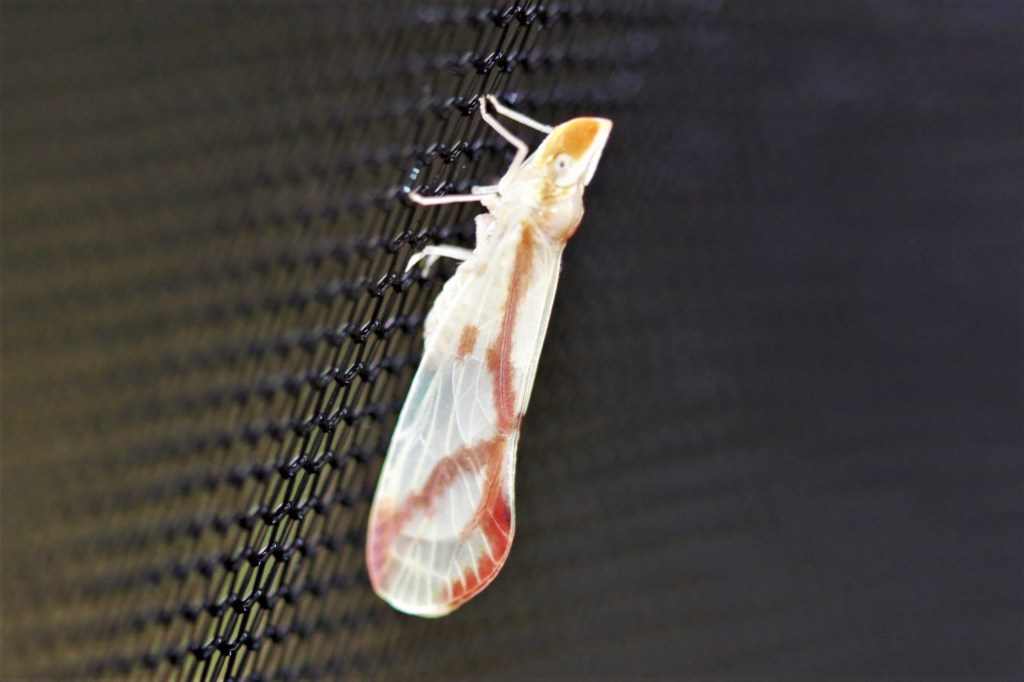
My final observation of the trip was a beautiful tiny leafhopper resting on a dining tent: Otiocerus coquebertii. This species is associated with Beech, Maple and Oak, possibly feeding on fungal hyphae (the underground microscopic portions of fungi) as nymphs (Bartlett 2020).

Otiocerus coquebertii, a tiny and beautiful leafhopper.

References:

Bartlett, C. R. 2020 (and updates). Planthoppers of North America (accessed August 12, 2023). https://sites.udel.edu/planthoppers/north-america/north-american-derbidae/genus-otiocerus-kirby-1821/

Hall, Peter, Jones, Colin, Guidotti, Antonia, and Hubley, Brad. 2014. The ROM Field Guide to Butterflies of Ontario. Royal Ontario Museum.

Marshall, Stephen. 2012. Flies: The Natural History and Diversity of Diptera. Firefly Books.

For other related blogposts, see:

MacGregor Point Observations (May 2018)

Port Burwell Observations

Categories
Nature Observations Tumblr Repost

MacGregor Point Observations (May 2018)

Once again, I’m going to repost one of my tumblr blog posts, this time from May of 2018.

On May 18-21, 2018, we took a trip to MacGregor Point Provincial Park. Today’s post is going to be a highlight of the animal observations/encounters that we had that weekend.

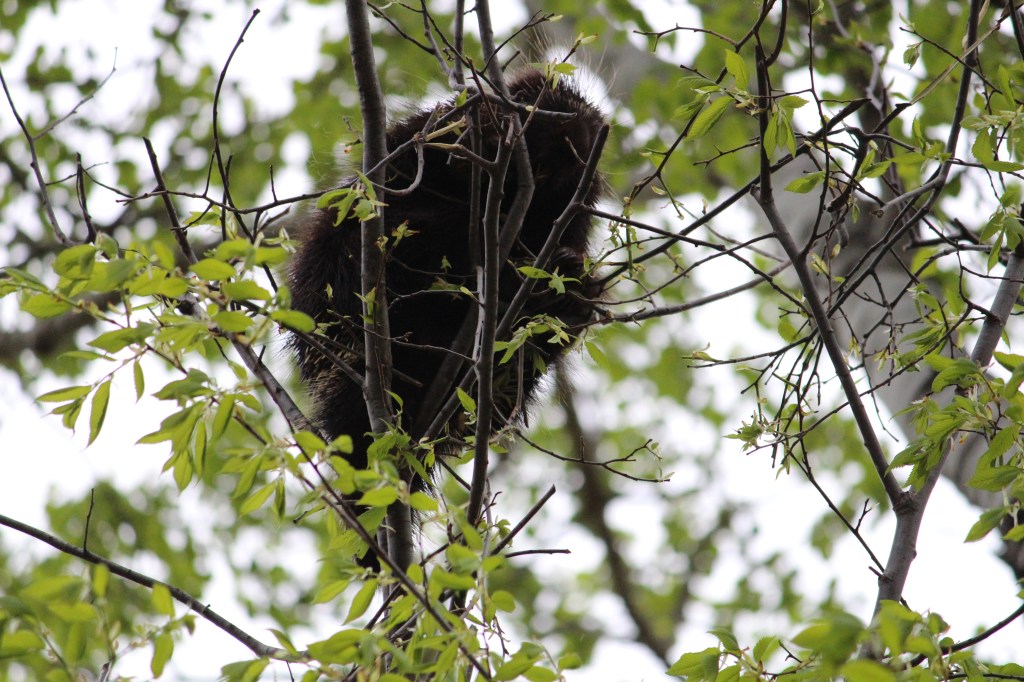
We awoke early the first morning of our stay and looked at the grey skies that promised rain. Hoping to spot some wildlife beneath the somber dawn sky, we set off on the Tower Trail. Our early start was rewarded with the sight of a strange animal resting in a tree.

image

It was a mammal with spines, and the second largest rodent in North America (only beaten by the Beaver): a North American Porcupine (Erethizon dorsatum). After consuming some buds and plants that it foraged in the night it found a perch to rest in for the day, one that seemed awfully thin for the size of the animal.

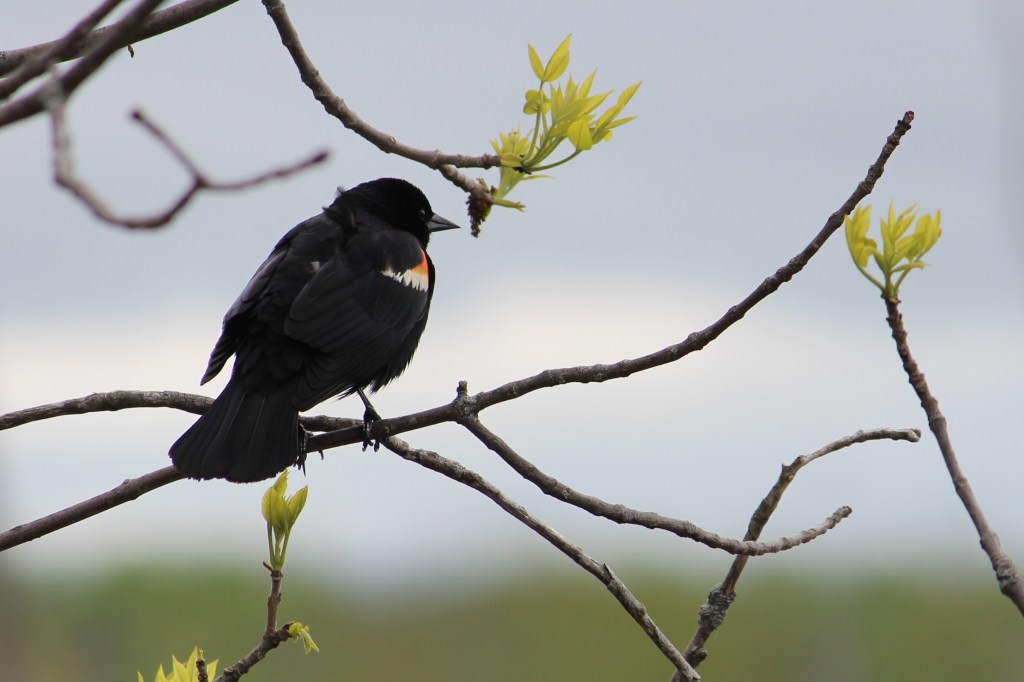
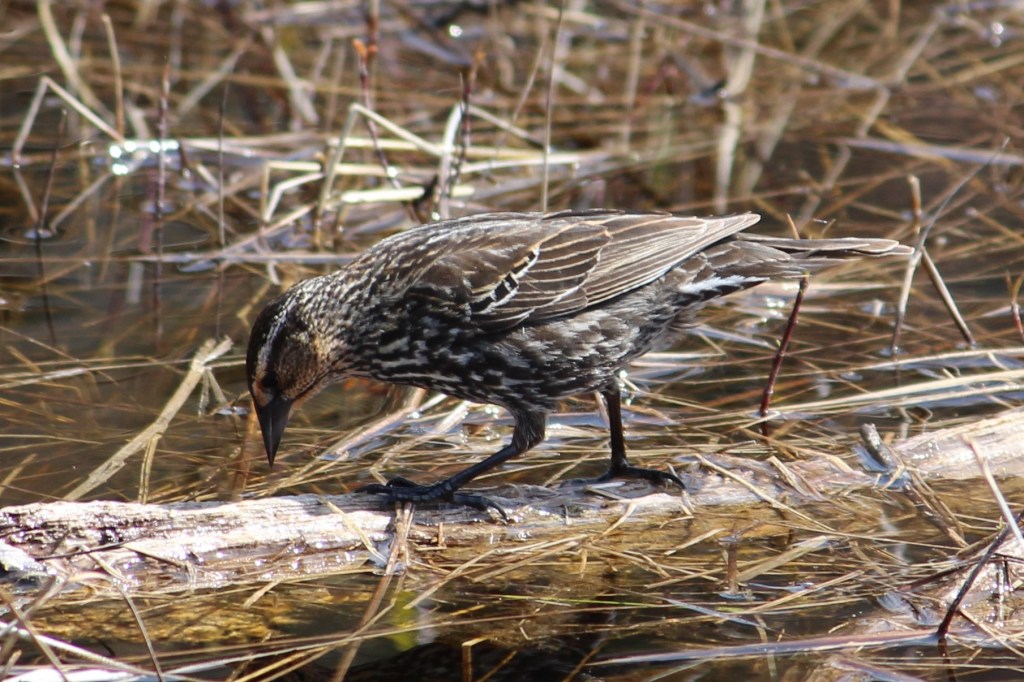
Further down the trail, we moved through various ponds until the horizon opened into spreading wetlands filled with reeds and bordered by grasses and trees. Here, the red-winged blackbirds (Agelaius phoeniceus) were in abundance, uttering their O-ka-leeeee calls from their various perches. We saw males with their velvet black plumage offset by epaulets of red-and-yellow, and we also occasionally spotted the much more camouflaged females. On our last morning camping, we saw one of the females and believed it to be a different species of marsh-bird, but later came to the realization that it was a female red-winged blackbird.

image
image

Male (top) and Female (bottom) Red-winged Blackbirds (Agelaius phoeniceus).

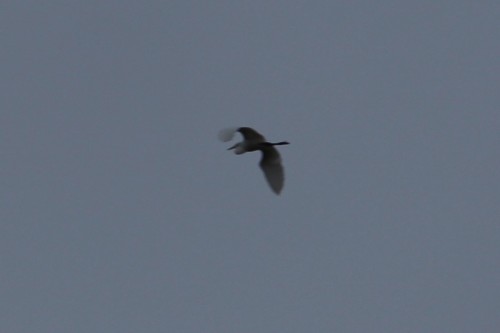
Mixed with the sounds of the blackbirds, were the trumpeting calls of the Canada Geese (Branta canadensis), always the loudest birds present. As we were leaving the wetlands, we heard a strange call and a bird departing the marsh. We were able to snap a quick picture of it and now believe it’s a Great Egret (Ardea alba).

image

Our fleeting glimpse of a Great Egret (Ardea alba).

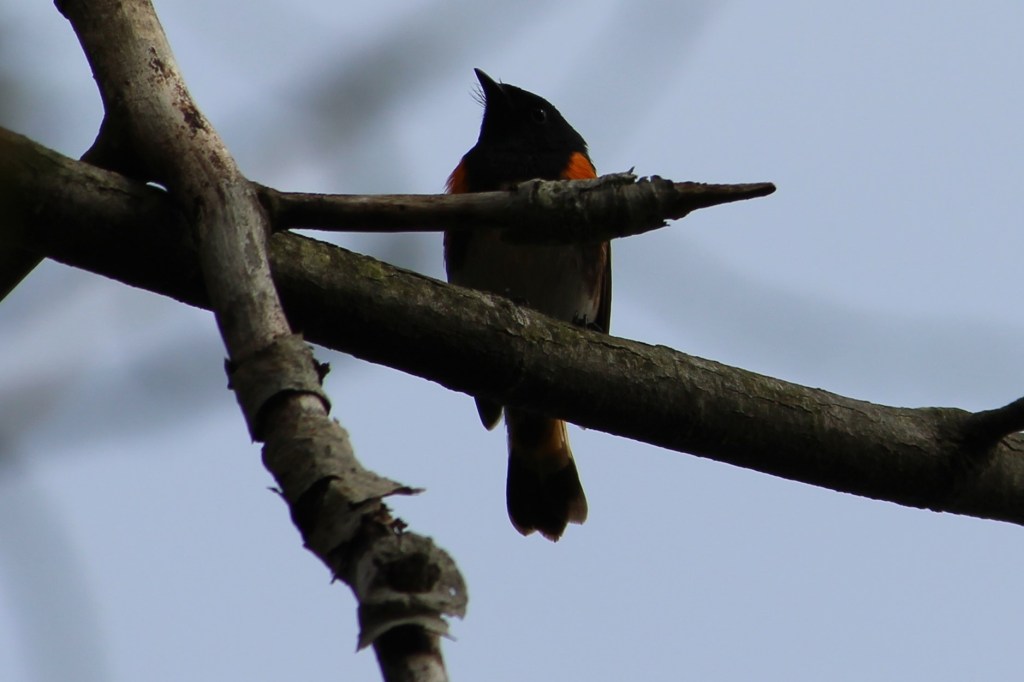
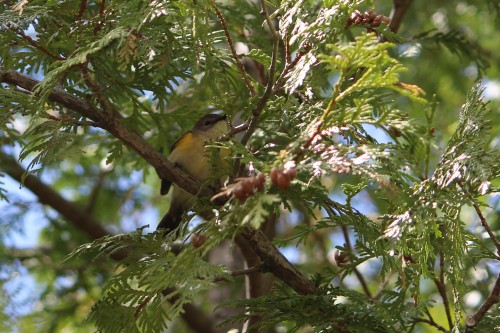
Throughout our stay, our campsite was host to several small, flitting birds that would rarely sit still. Every time the eyes caught one in full view the birds would then dart off again, a streak of orange flickering through the branches of the tree like an avian fire. We were barely able to take some pictures of these quick warblers foraging among the branches. They were American Redstarts (Setophaga ruticilla), who had returned from their wintering grounds in Central America and northern South America. Like the Red-wings, the male and female birds look very different- the male sporting a dark coat with orange dashes on the wings and chest, and the female a gray-white with yellow patches on the sides.

image
image

Male (top) and Female (bottom) American Redstarts (Setophaga ruticilla). The pictures unfortunately do not capture their boundless energy.

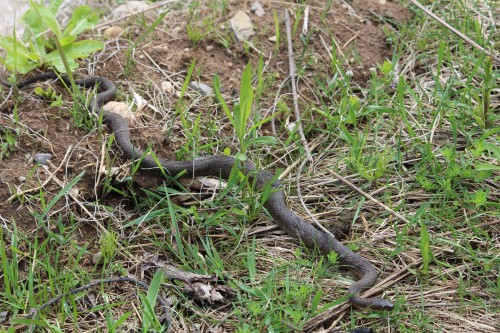
Beneath clear skies the next day, we set off on the Tower Trail once more, hearing and seeing the blackbirds again. On our way through the wetlands trail, we spotted another creature enjoying the warmth and sun: a Northern Watersnake (Nerodia sipedon).

image

Northern Watersnake (Nerodia sipedon) basking in the sun.

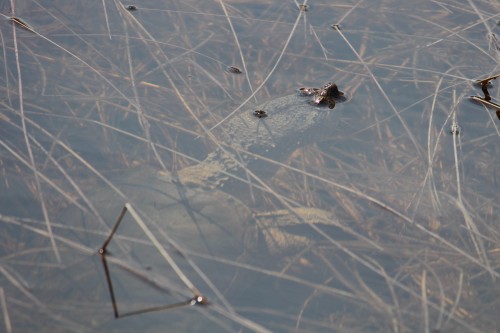
While visiting the trail near the Visitor’s Centre, we were in the right place to see a creature that resembles a mythical beast: a swimming Snapping turtle (Chelydra serpentina). Snapping turtles are beautiful creatures and the one we saw moved very stealthily. Despite the clear waters, and the size of the reptile, it was difficult to keep track of its scaly skin among the water-plants as it slowly and gracefully swam through.

image

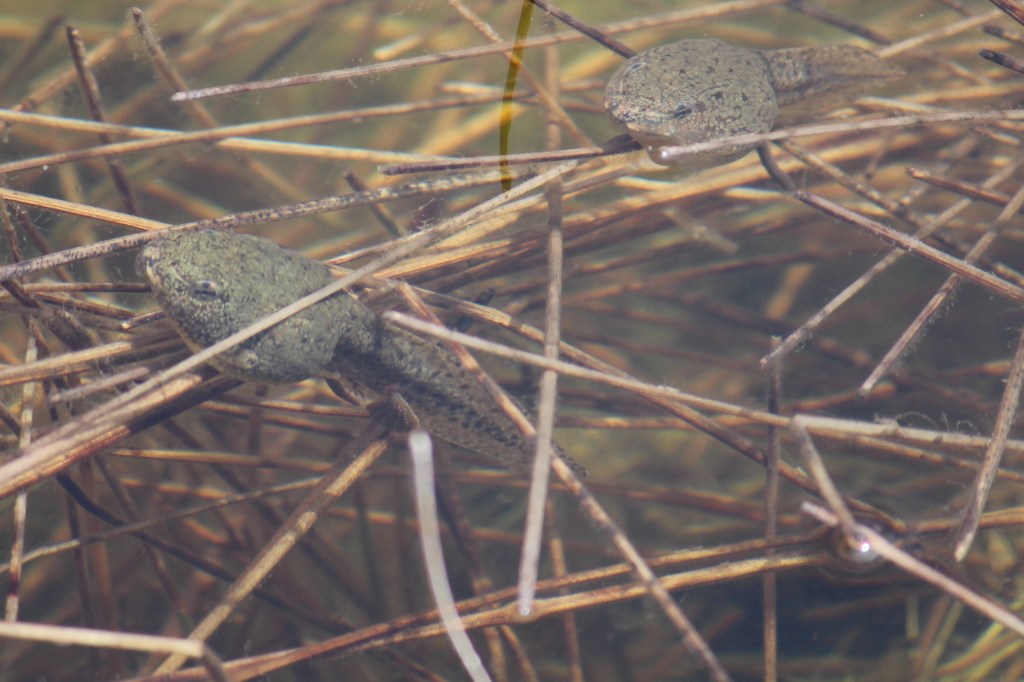
Also moving through the waters of the marsh were large tadpoles, with heads the size of a toonie or larger. Some were beginning to display the stubs of legs, but continued to swim in wriggling pollywog fashion, so unlike the athletic strokes of their adult frog legs.

image

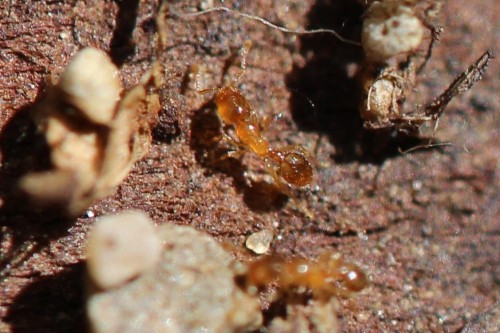
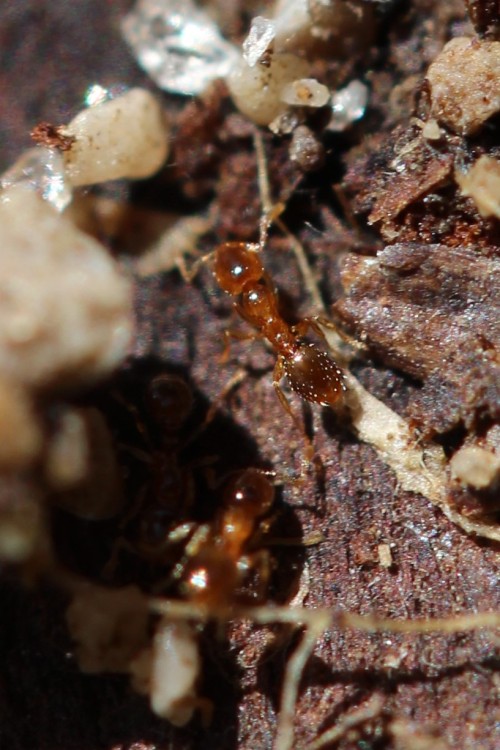
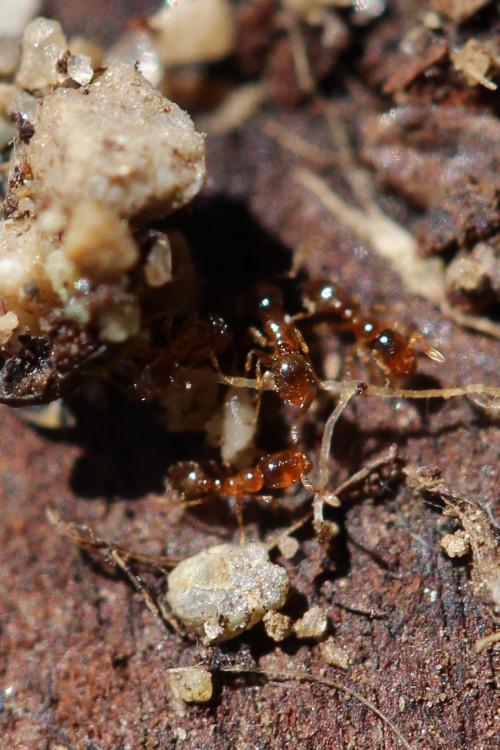
Once back at our site, I had an itch to use my macro lens to capture some of the tiny creatures that abounded there. Turning over a piece of bark on the gravel of our site, no larger than my palm revealed a portion of a miniature society. Tiny orange-brown ants scurried frantically about. They were Temnothorax ants, which are also known as “acorn ants” because some species of Temnothorax house their entire colony within an acorn.

image
image
image

Temnothorax ants, tiny workers under a piece of bark.

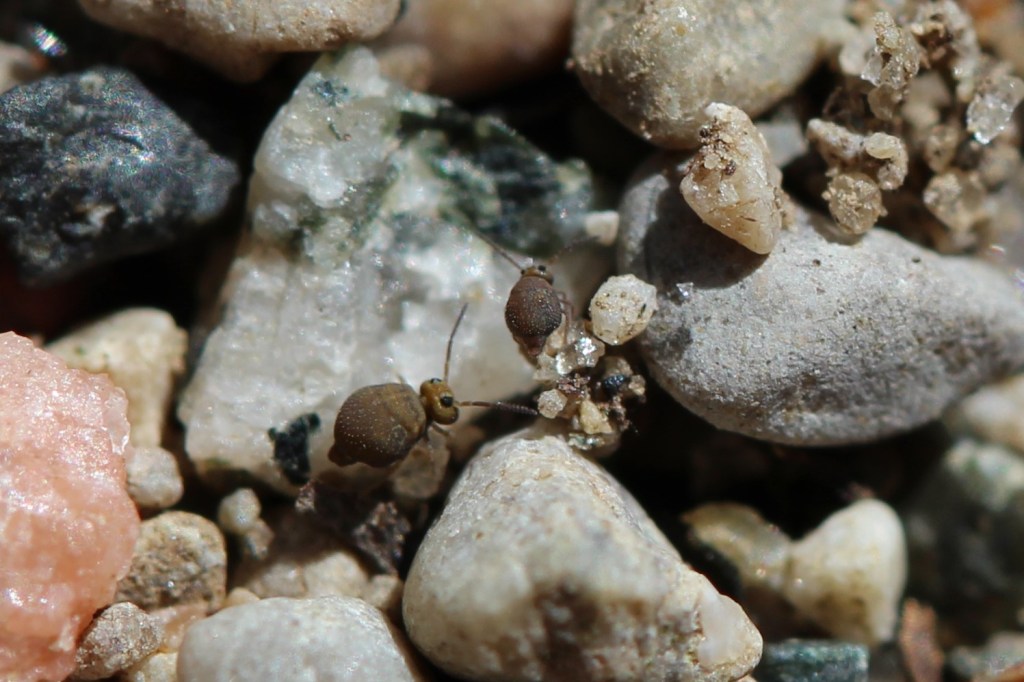
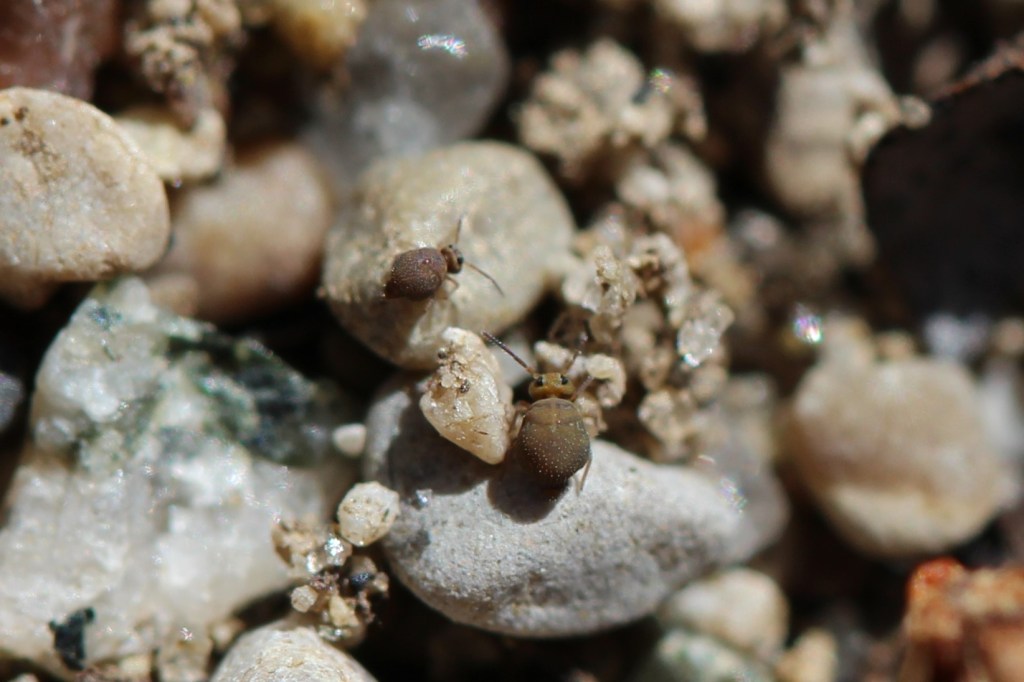
I turned my gaze on equally tiny, but even more numerous inhabitants of our site. Everywhere one looked in the sun, dark specks that slowly moved or hopped about on the gravel, could be seen. To see them in their full was a delight to me. The specks were Springtails, and these were a quite different kind to the ones I had seen before in the snow and on the trail by our house. These Springtails were like tiny rabbits when one could view them up-close. They were Globular springtails (Order Symphypleona) and I’m fairly sure the species was the Garden Springtail (Bourletiella hortensis) or something closely related: 

image
image

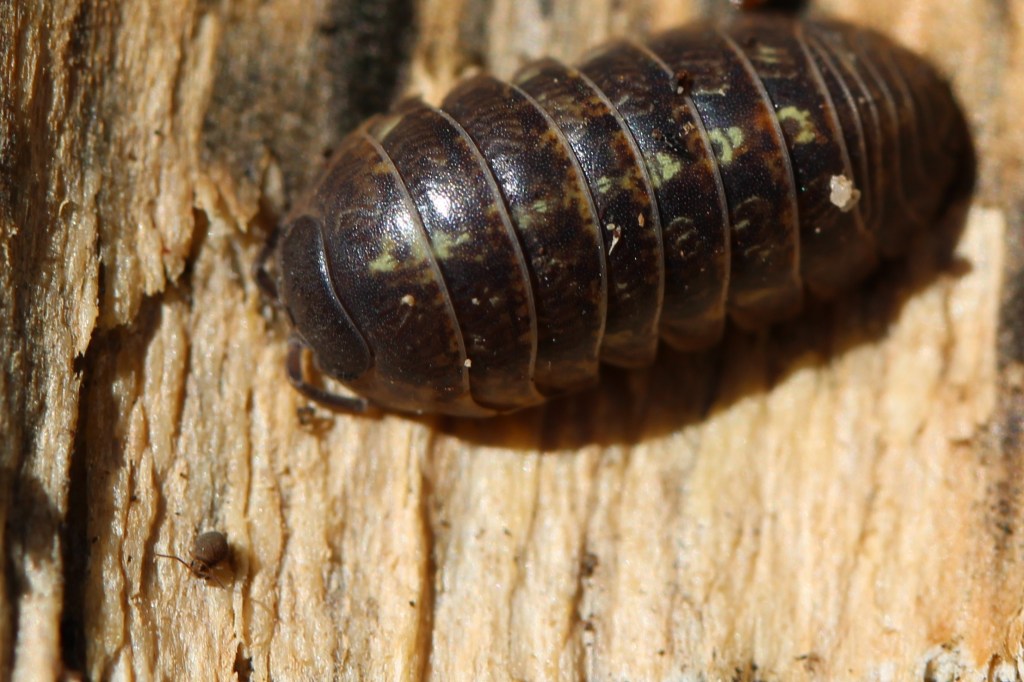
For size context, see the following picture of a Woodlouse (Armadillium vulgare). In the bottom left corner, there is one of the little Springtails:

image

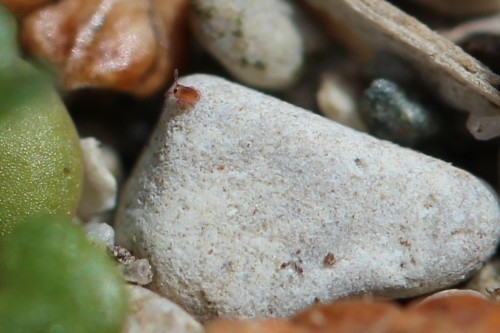
In my quest to focus the macro lens on these miniature creatures I inadvertently took a picture of something even smaller than an adult Springtail: a baby Springtail! 

image

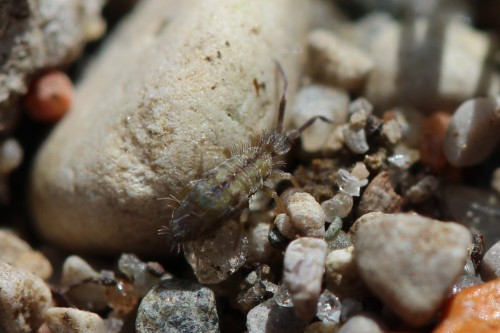
As if to demonstrate fully the diversity of these tiny almost-insects, an entirely different species of Springtail was also rushing through the gravel: a member of the genus Orchesella, one of the Elongate Springtails: 

image

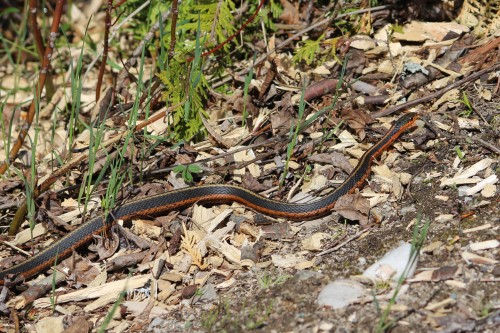
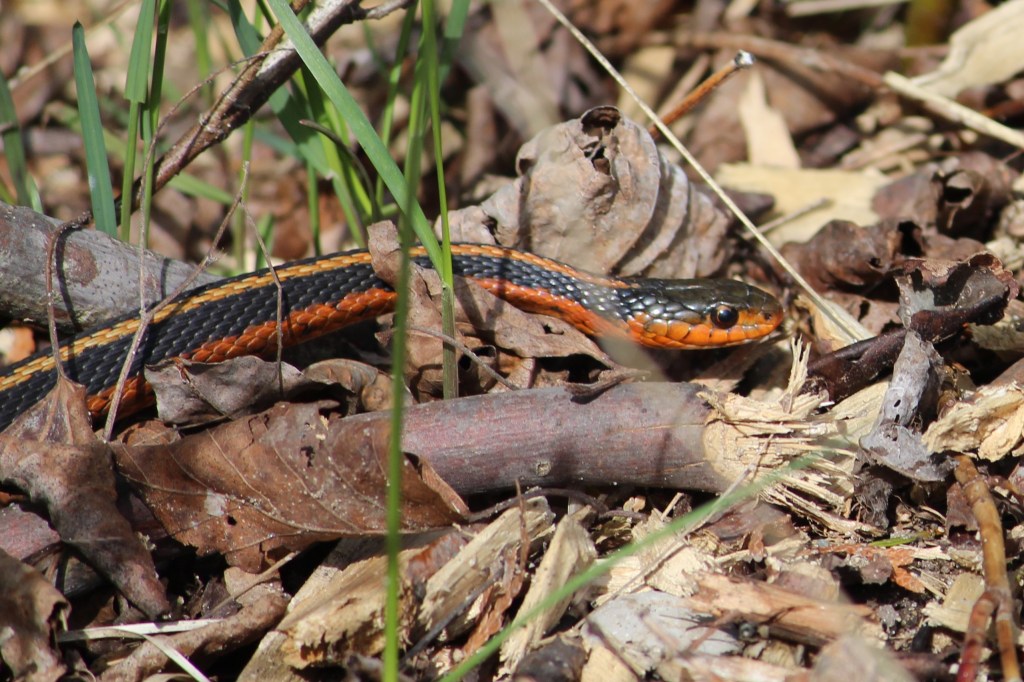
Right at the edge of our site, my friend Marshall sighted a beautiful snake with orange underbelly and stripes along its dark body. We thought it must be a rare species but it turned out to be a variant of the diverse Eastern Garter Snake (Thamnophus sirtalis), which did nothing to diminish its beauty or wonder.

image
image

A beautiful Eastern Garter Snake (Thamnophis sirtalis).

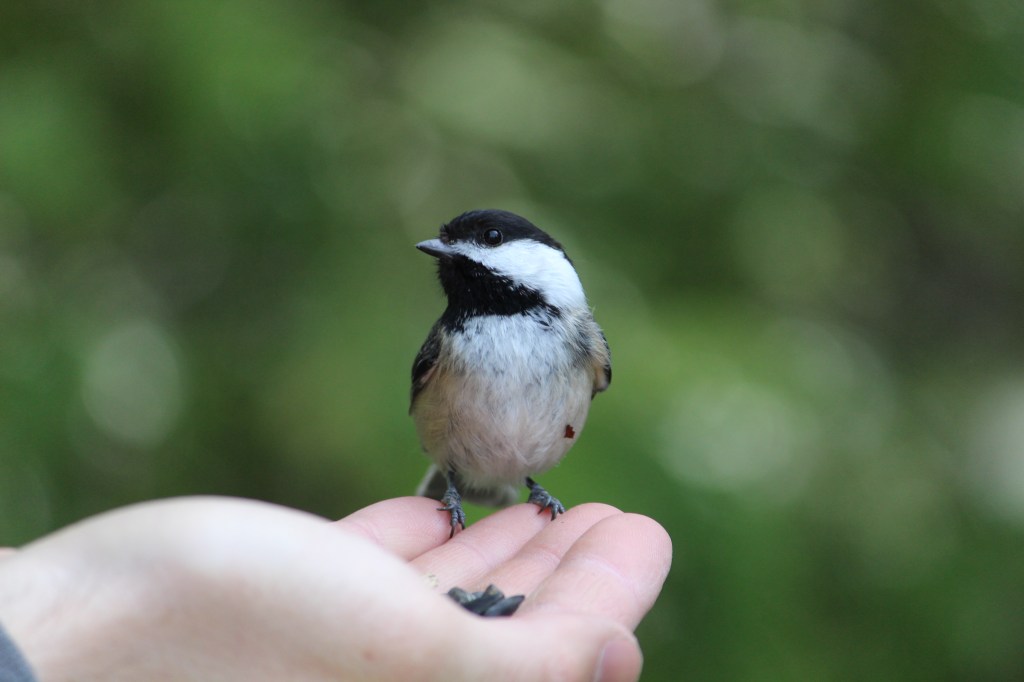
On our last day we went to the Visitor Center trail to feed the Chickadees (Poecile atricapillus) from our hands, along with the occasional red-breasted Nuthatch (Sitta canadensis). Despite some of the rain and cloudy weather, we observed a variety of wild organisms at MacGregor Point and marveled at their diversity and beauty.

image