Using a magnifying hand lens, or a macro camera lens opens up whole worlds of detail and diversity unappreciated by the naked eye. One of these worlds is that of the Springtails.
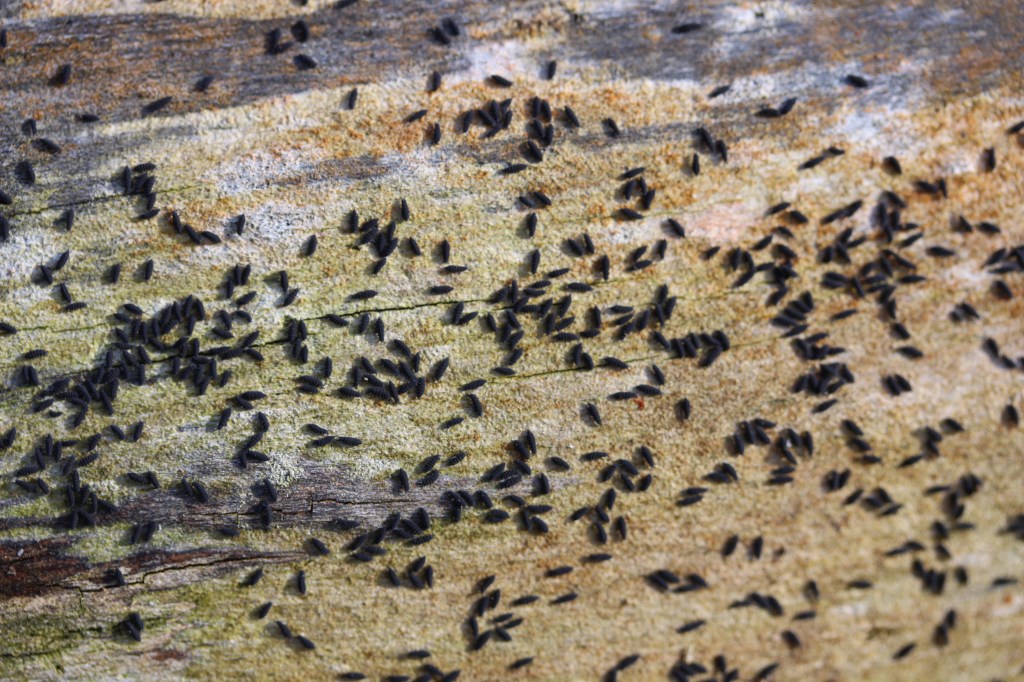
A group of Springtails on the Lynn Vally Trail on a log.
This past winter* I encountered them where they are most often seen, even without any sort of magnifying equipment: bounding by the millions atop the snow. While at Algonquin’s Mew Lake Campground, I observed these tiny pinpricks of dark life in stark contrast against the bright white snow. In this context, these Springtails are called “snow-fleas”, and it’s easy to see why. The tiny creatures are about the size of fleas and hop about with amazing ability. Springtails are not fleas, and leap about not by their legs but by a “spring-like tail” that curves under their body and can launch them through the air.
*This was originally written and posted on my tumblr blog in April 2018, so the winter referred to was 2017-2018.
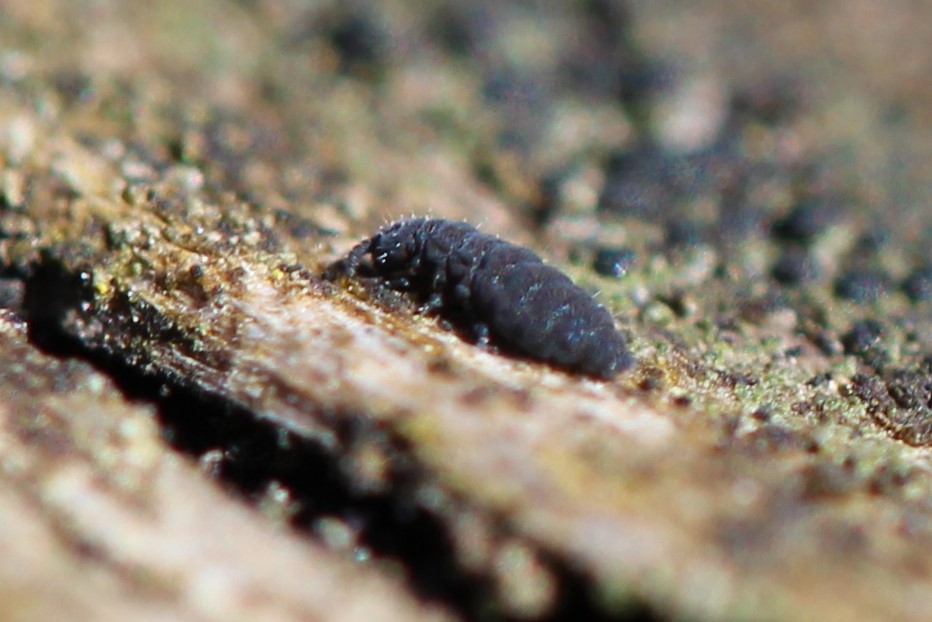
They are actually part of a group known as Collembola, which is not quite under the group Insecta. They are not true insects, but are closely related. I had the privilege of being able to observe Springtails several times since our Algonquin trip and it is an incredible pleasure to be able to resolve something so tiny (about 1-3 mm long) into an individual animal, complete with legs, head, and antennae.
Even though they are quite numerous, they are small, and many Springtails spend most or all of their time belowground. This makes them difficult to study, and little is known about these amazing creatures.
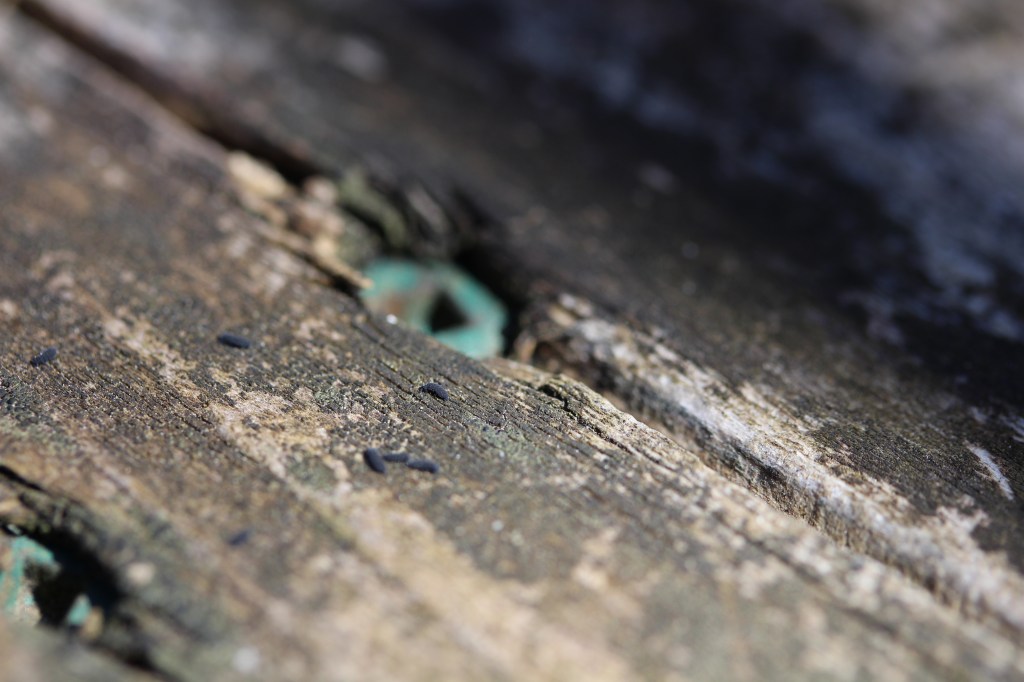
Some closer views of individuals.To give some more context on their size: the green blurred object in the background is the head of a screw on the bridge, and the Springtails are the bluish-grey specks in the focus.
At the beginning of July, my family and I were camping in Port Burwell Provincial Park. While there, as I usually do when camping, I took some photos of the creatures I encountered and I’d like to explore some of them and what I can find out about them here. So here goes…
On my first night there I found myself sitting alone with a book and a small clip-on reading light in a dining tent (which was open to the outside, for at least part of the night). My tiny beacon of light attracted several insect investigators and I quickly became distracted from my reading*.
*If you must know (as I would want to know if I was the blog’s reader), I was reading a collection of sci-fi short stories: Galaxy: Thirty Years of Innovative Science Fiction, edited by Frederik Pohl, Martin H. Greenberg, and Joseph D. Olander.
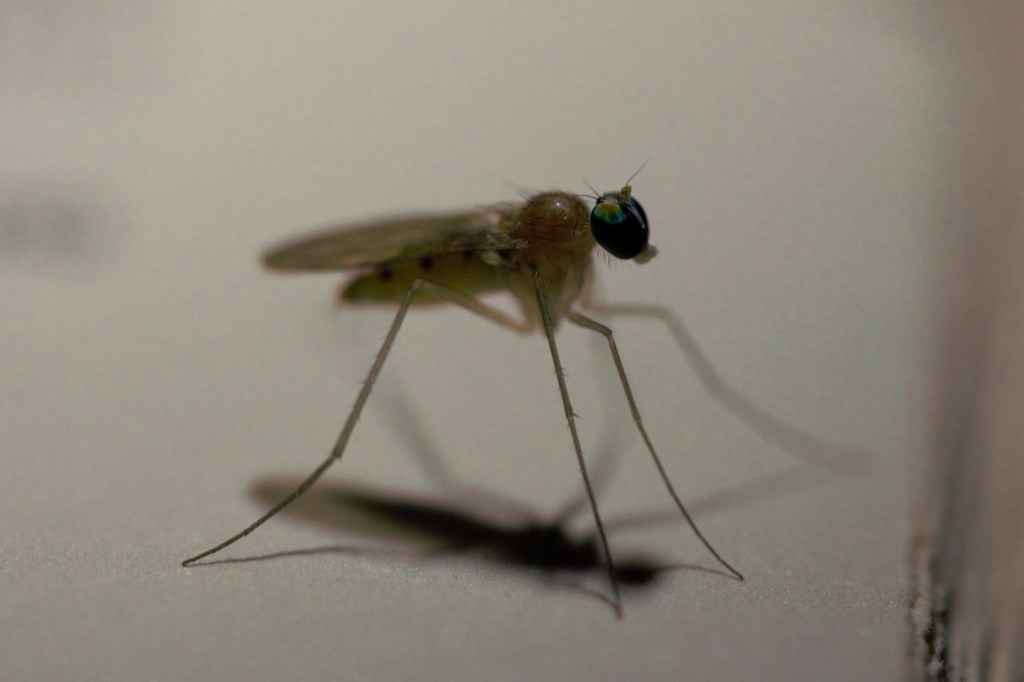
The most abundant insects alighting on my illuminated pages were members of that vast insect Order: Diptera, the Flies. Two that I photographed were likely the same species, and I suspect were male and female representatives. I have tentatively identified them as members of the genus Neurigona based on iNaturalist. They are certainly long-legged dance flies (Family Dolichopodidae). Dolichopodids are diverse flies (there are around 7000 species in the world (Marshall 2012)) which often hunt other flies and springtails as adults. There are about 150 species in the genus Neurigona (Marshall 2012).
Long-legged Dance Fly (Family Dolichopodidae) attracted to my reading light, possibly of the genus Neurigona.
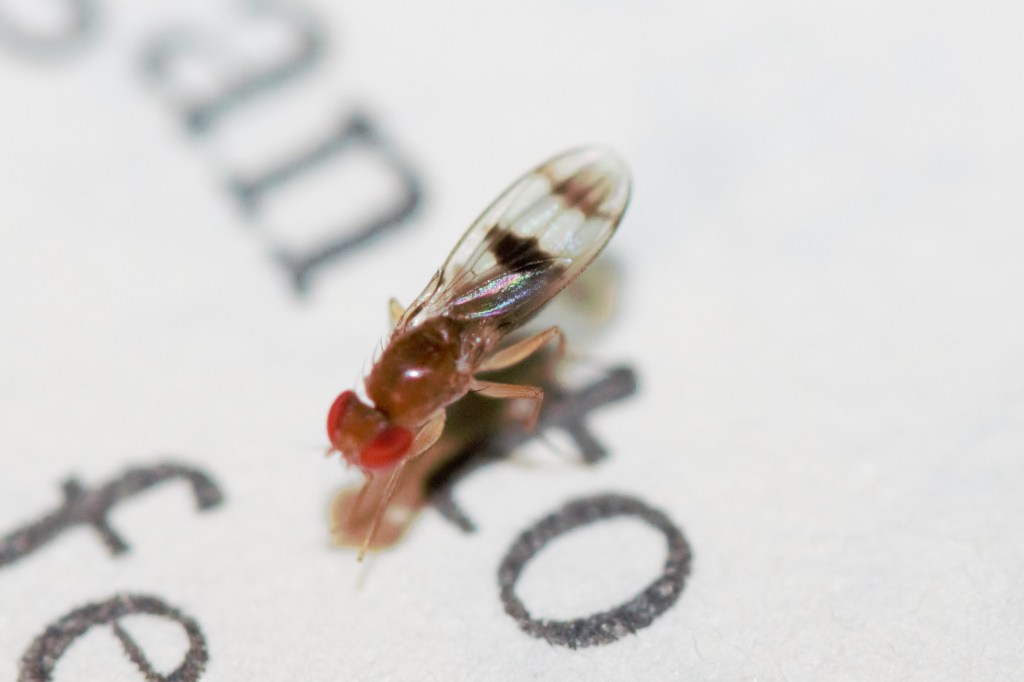
A beautiful little vinegar fly (a member of the Family Drosophilidae) graced the pages of my book as well: Chymomyza amoena. This species, along with the other members of its genus are “almost invariably present on fallen or wounded trees” (Marshall 2012 p. 477).
Chymomyza amoena, a member of the Family Drosophilidae, of which the most famous member is the Common Fruit Fly Drosophila melanogaster, ubiquitous in kitchens and laboratories the world over.
Two notable non-Flies made their appearance amid the glowing reading light. A tiny pale yellow leafhopper was just barely noticeable among the typed letters on the page, a member of the genus Edwardsiana.
Tiny tiny leafhopper of the genus Edwardsiana.
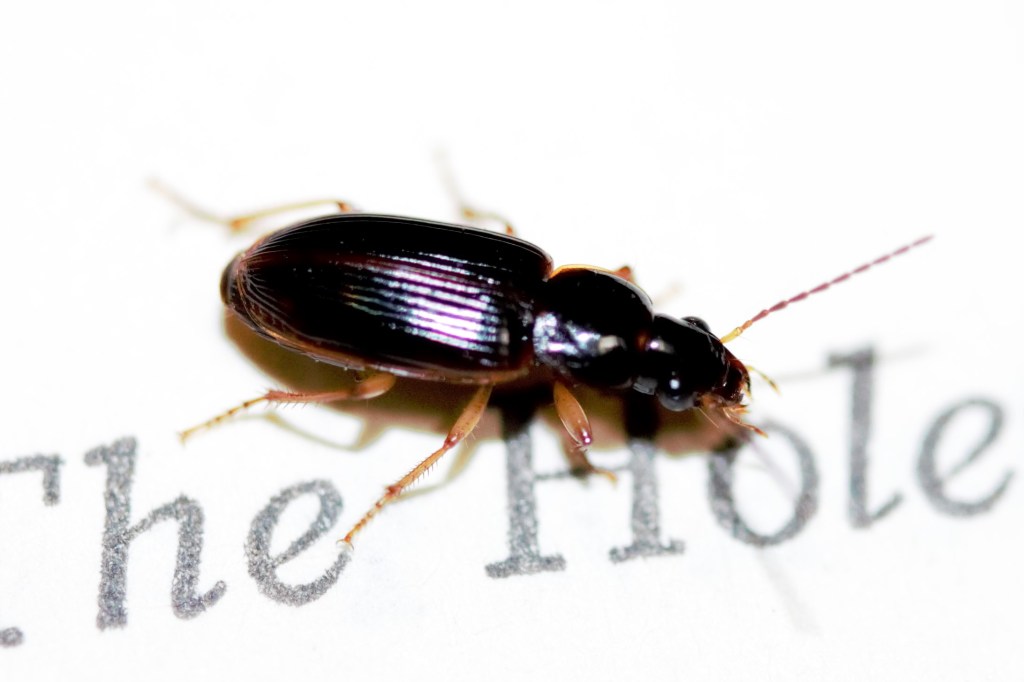
A dark beetle also scuttled across the words of my reading material, which I believe to be a Ground Beetle (Family Carabidae), possibly of the genus Bembidion.
Ground Beetle scurrying across the title of the sci-fi story I was reading, “The Holes Around Mars” by Jerome Bixby.
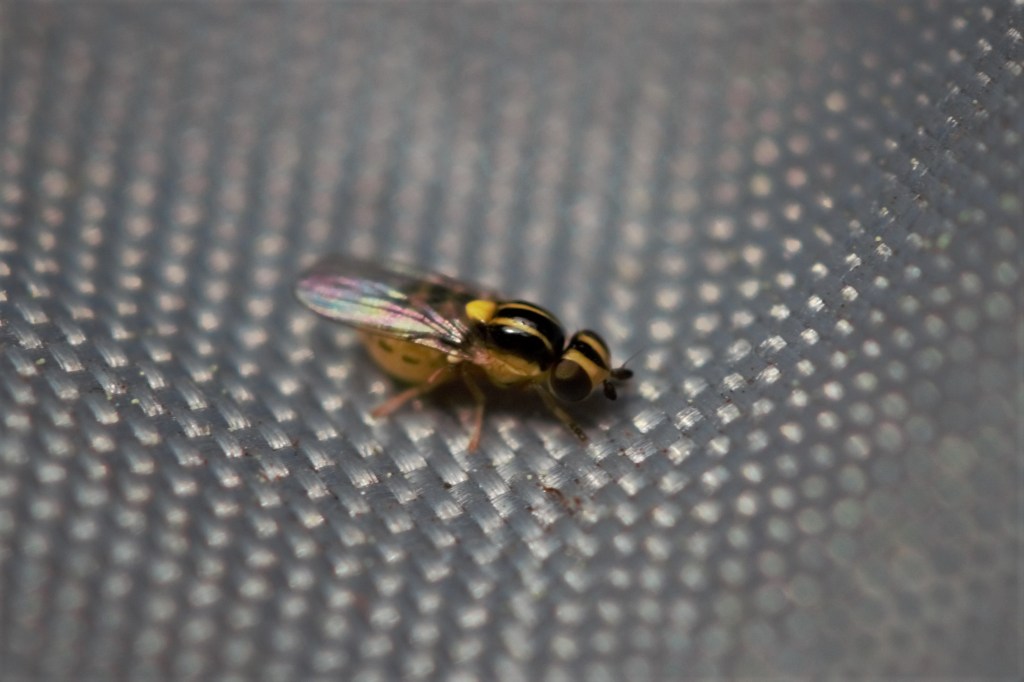
The next day, I did a tour of the campsite with my camera in order to find more subjects to photograph and identify. One creature located on my dining tent was another beautifully patterned fly: Thaumatomyia. This genus of flies contains some species which feed on aphids as larvae and others which bore and feed within grass stems (Marshall 2012).
Chloropid fly in the genus Thaumatomyia.
Nearby was a prowling spider which is possibly the False Pirate Spider (Platnickia tincta):
Sliding slowly across the leaf litter was a pale orange slug of the genus Arion:
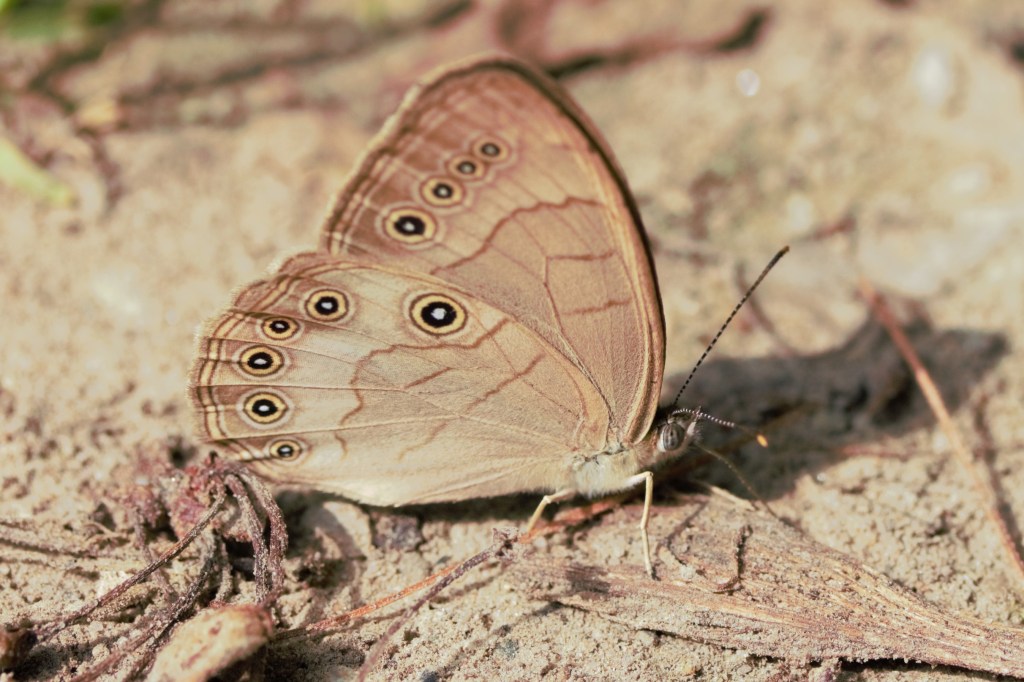
I was just able to capture this amazing butterfly that landed for a few moments on the ground, an Appalachian Brown (Lethe appalachia). Appalachian Brown caterpillars feed on sedges (Carex spp) and spend the winter in the caterpillar stage (Hall et. al. 2014).
Appalachian Brown Butterfly (Lethe appalachia).
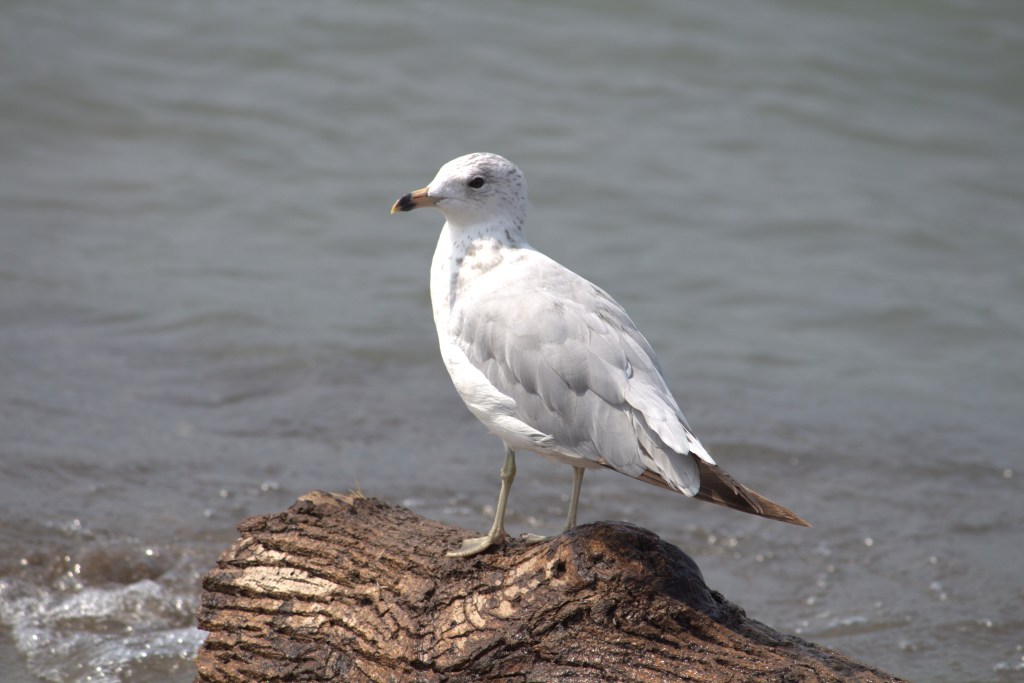
On the walk to the beach there were plenty of insects worthy of attention but I didn’t want to block the path of water-seeking pedestrians by crouching with my macro lens, so I decided to photograph birds there instead. There were swallows darting above the sands (more evidence of insect abundance) but they proved impossible to photograph. I took several photos of what I believed to be 2 different gull species. While reviewing my photos and posting them on iNaturalist it became clear that despite the contrast between the large brown-feathered birds and the sleek grey-and-white ones the birds were all members of the same species: the Ring-billed Gull (Larus delawarensis).
Ring-Billed Gull (Larus delawarensis) panting in the heat to keep cool.Another Ring-billed Gull, lacking the sharp white-and-grey plumage of the individual photographed panting above.All of the birds in this photo are Ring-billed Gulls (Larus delawarensis) despite the one in the background appearing larger and in a very different plumage, the mottled brown look is that of a 1-2 year old bird before they acquire the more clearly defined gray and white feathers.
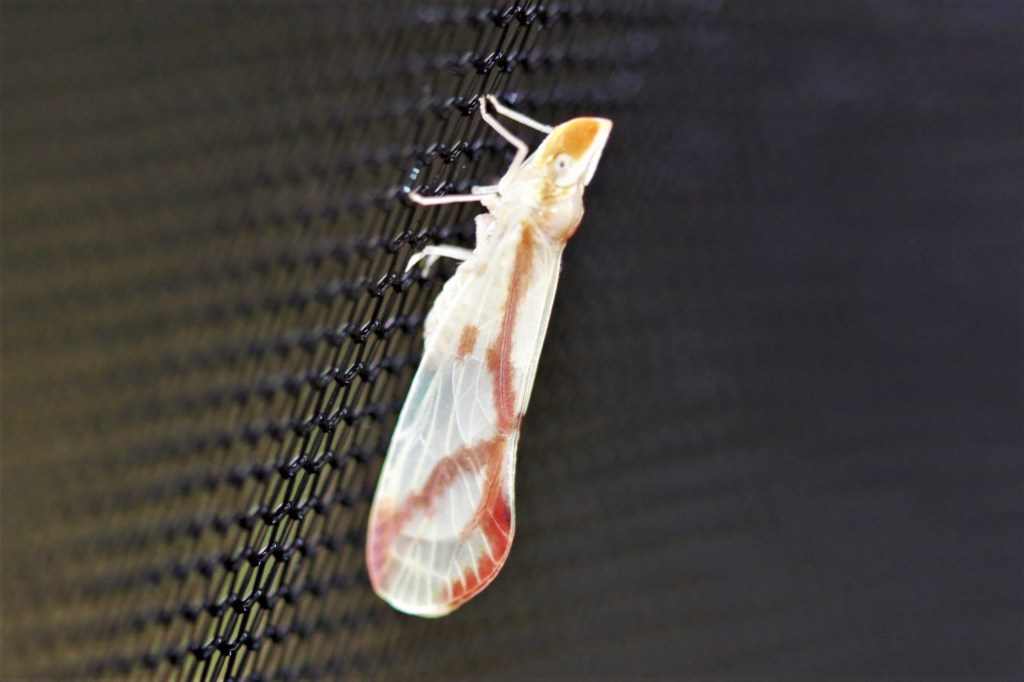
My final observation of the trip was a beautiful tiny leafhopper resting on a dining tent: Otiocerus coquebertii. This species is associated with Beech, Maple and Oak, possibly feeding on fungal hyphae (the underground microscopic portions of fungi) as nymphs (Bartlett 2020).
Otiocerus coquebertii, a tiny and beautiful leafhopper.







 Norfolk Naturalist