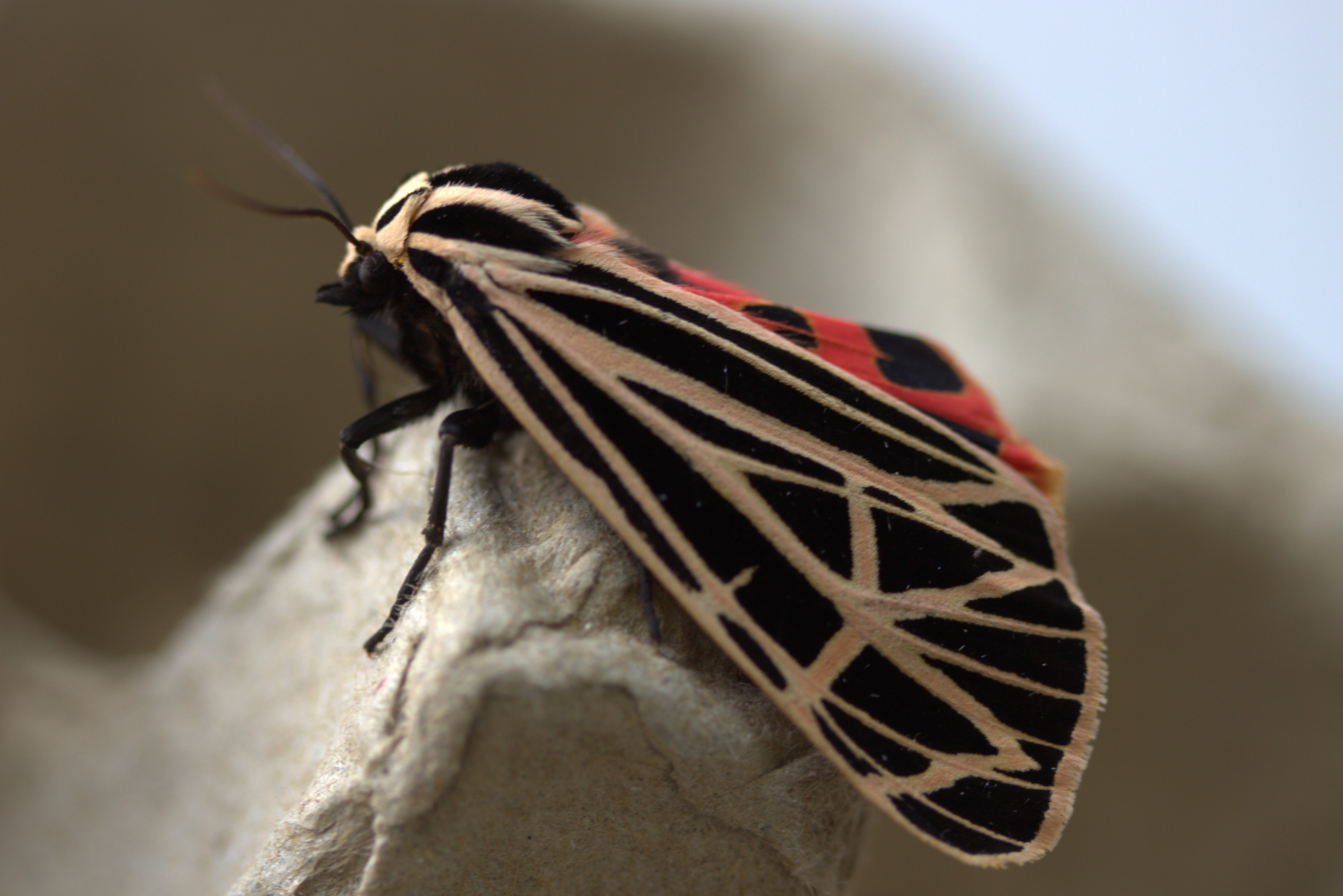
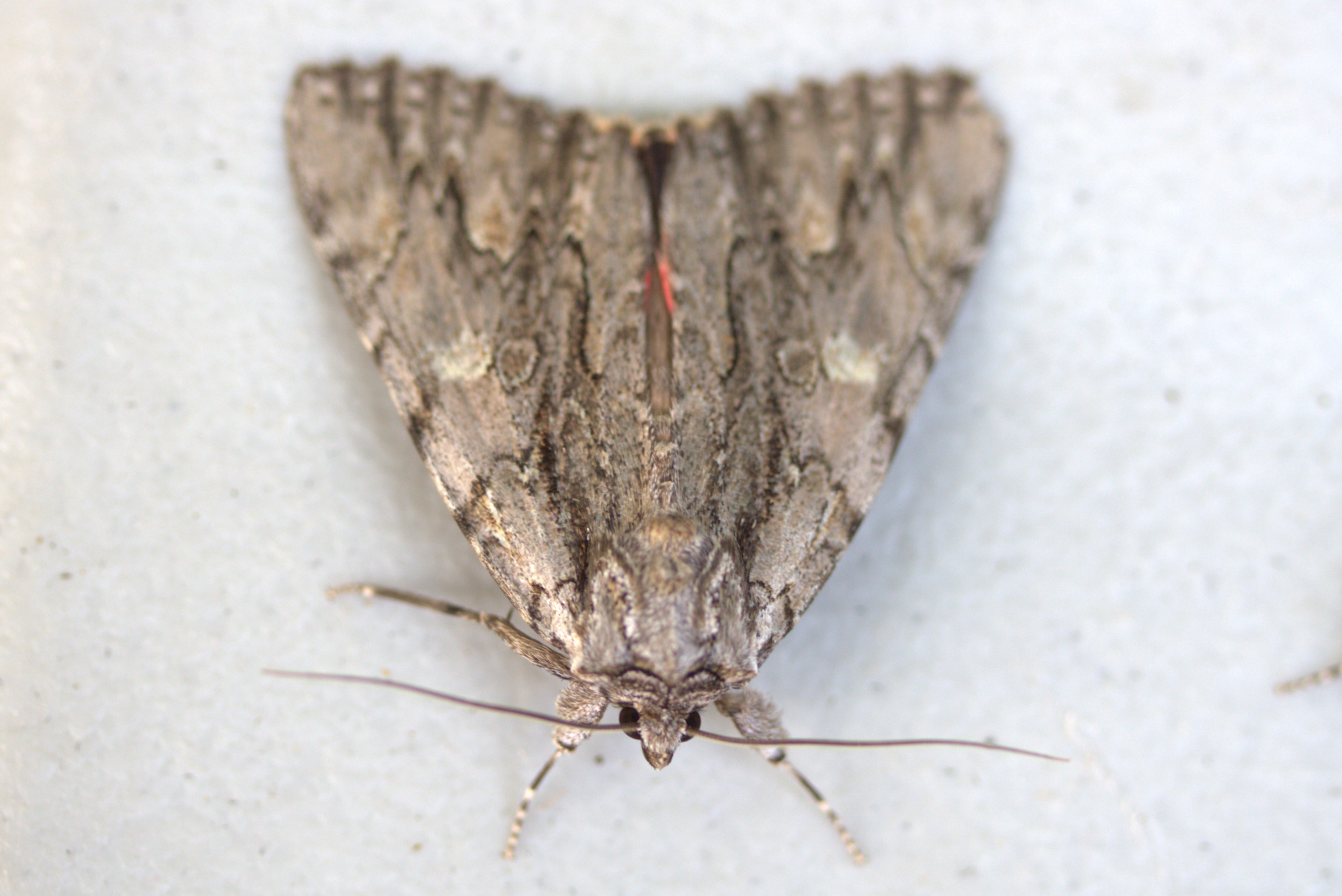
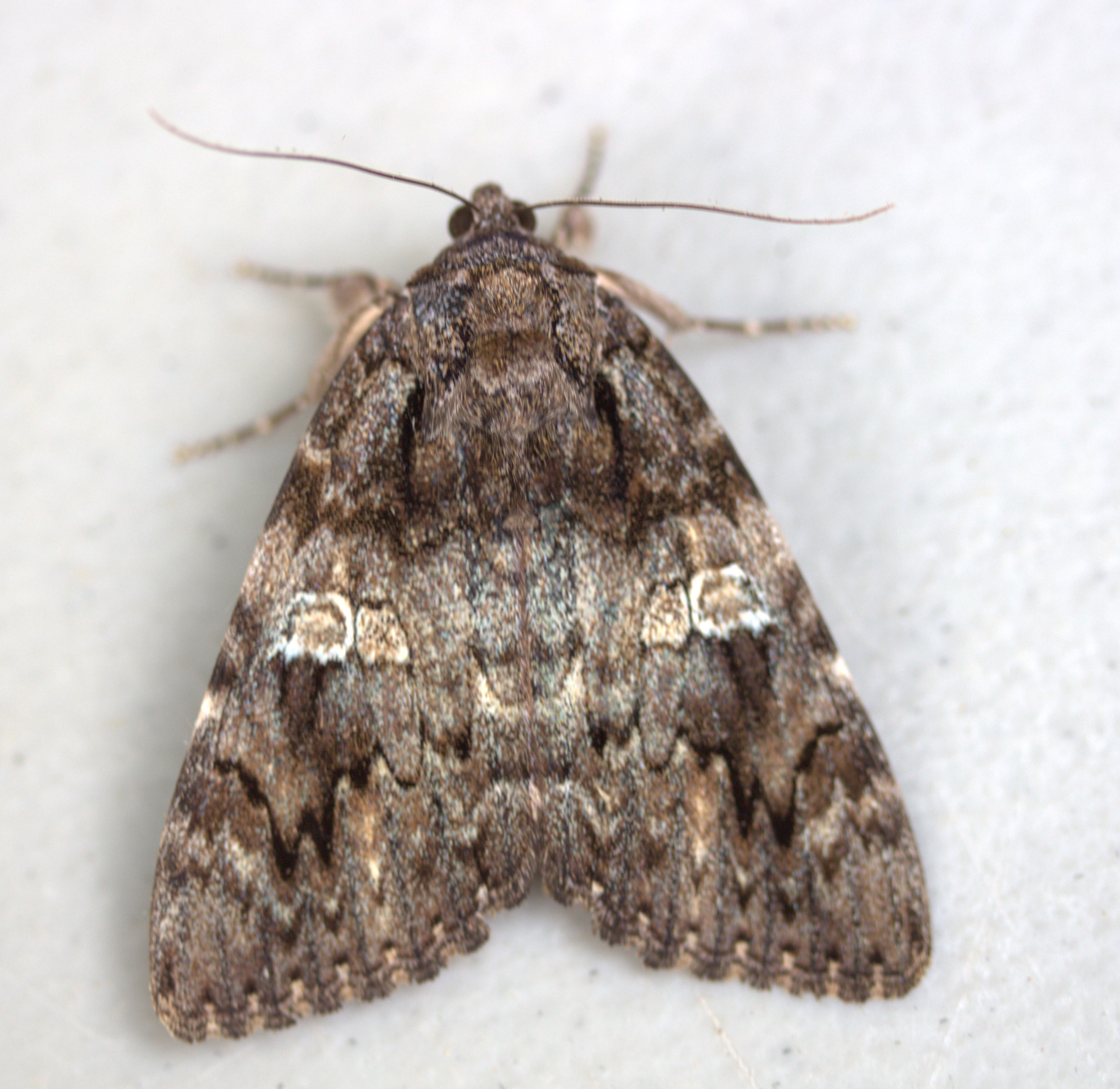
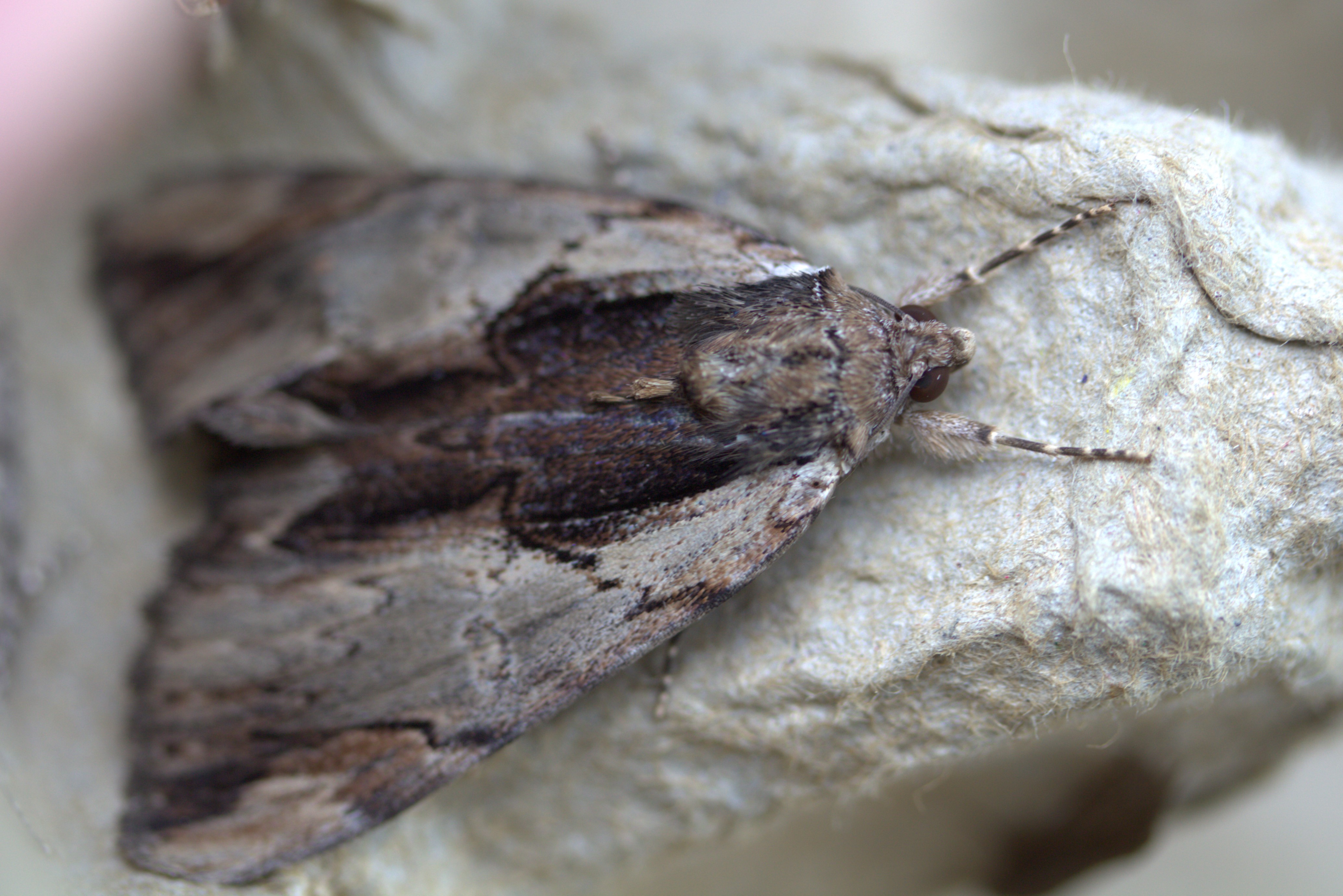
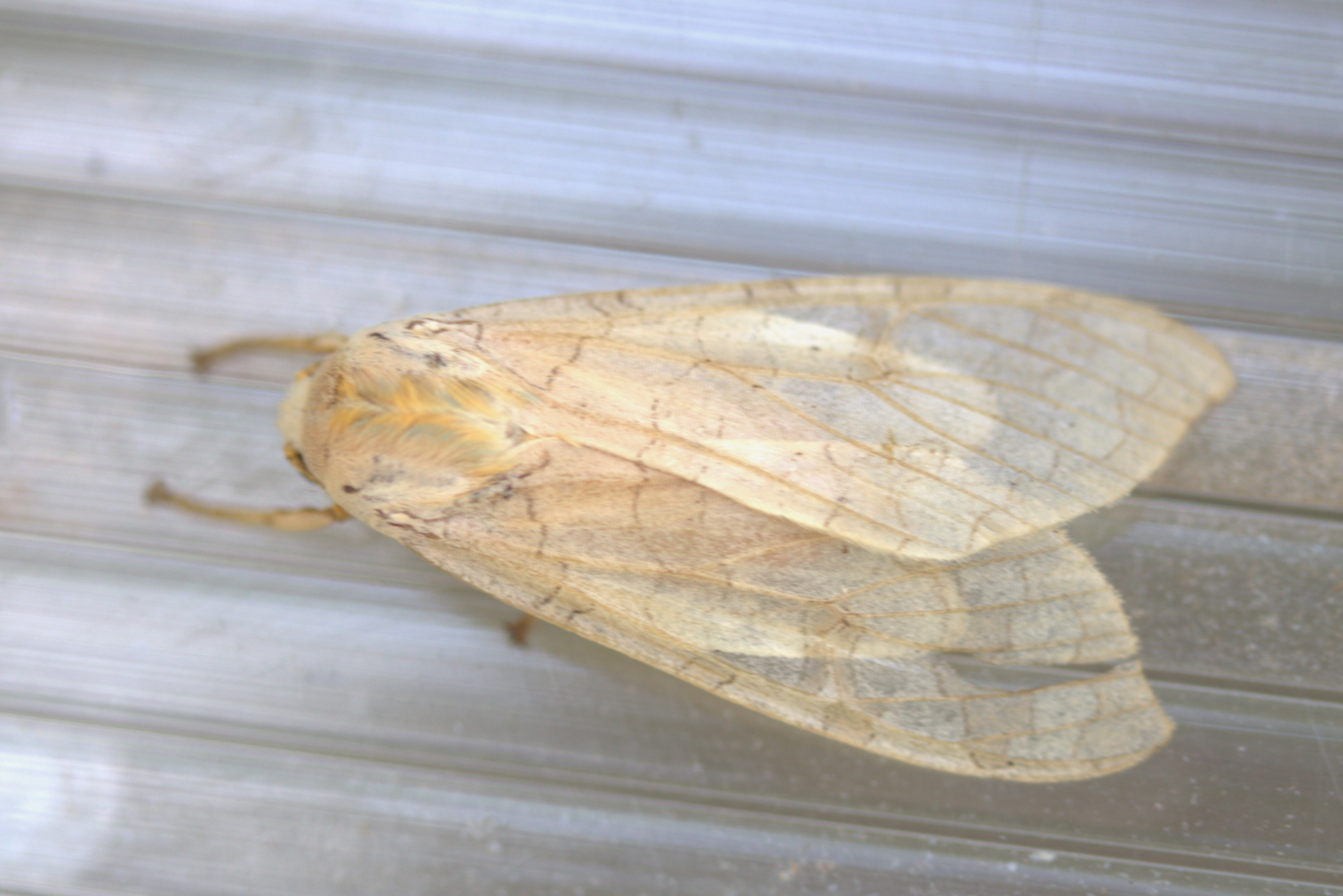
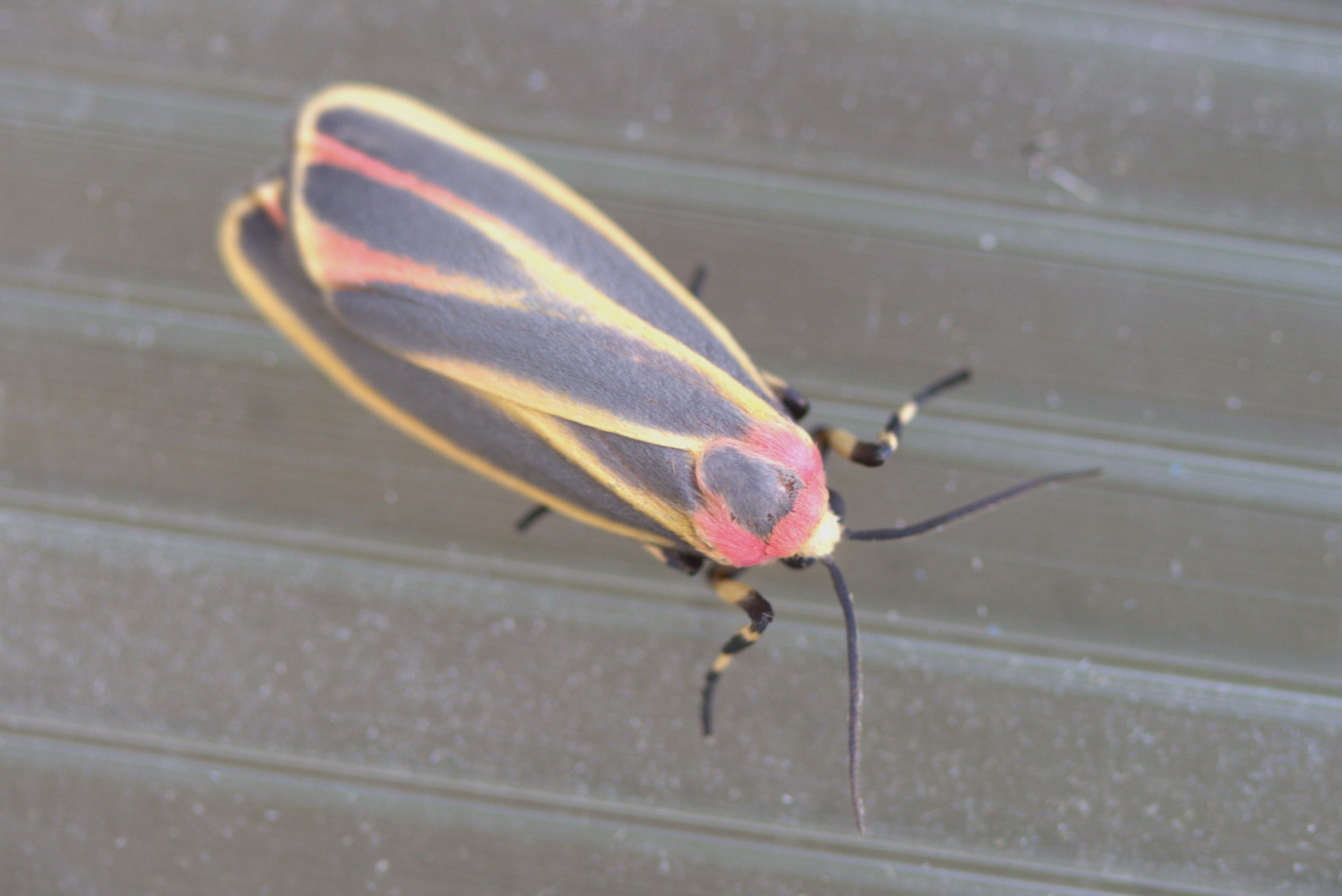
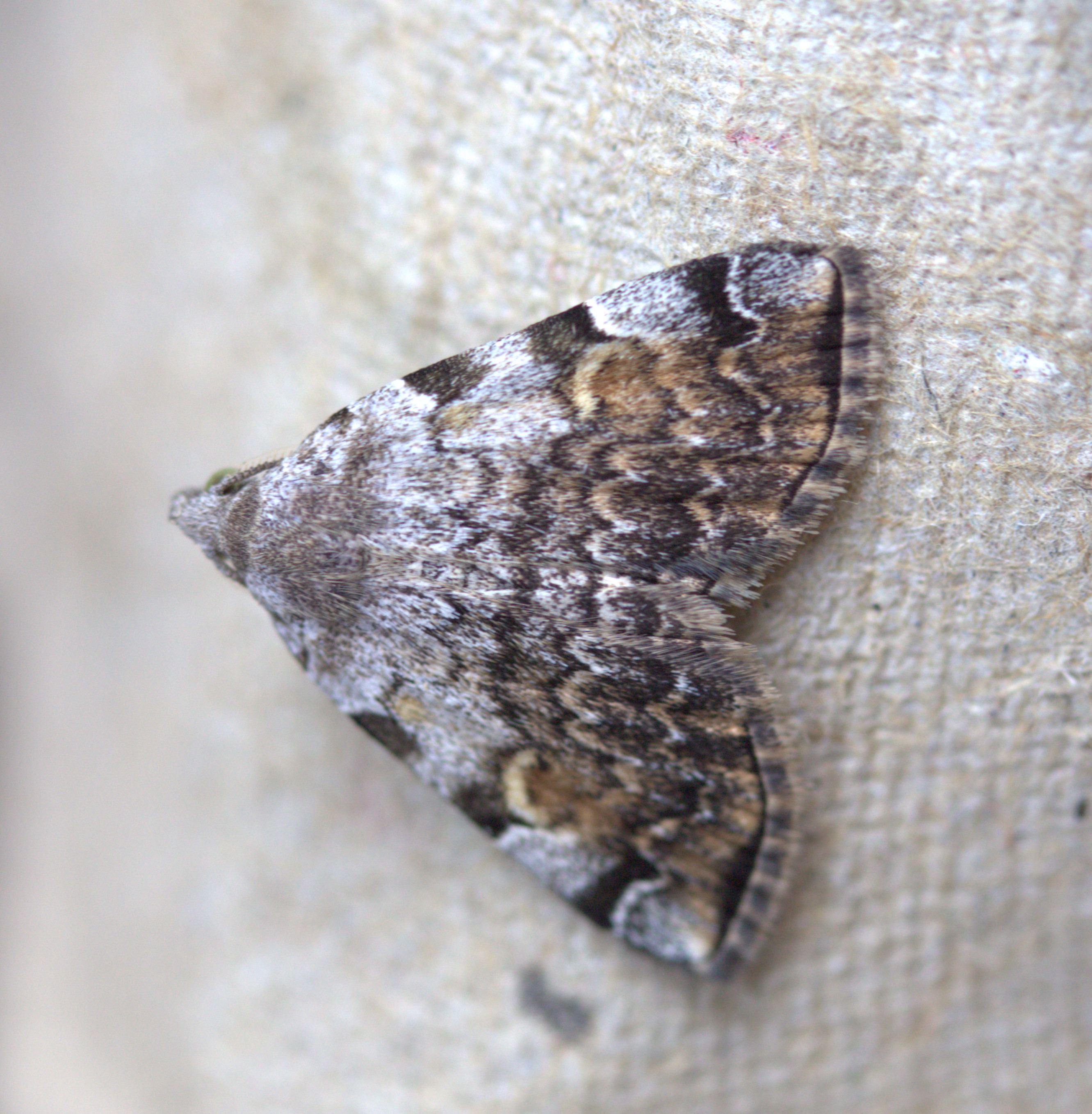
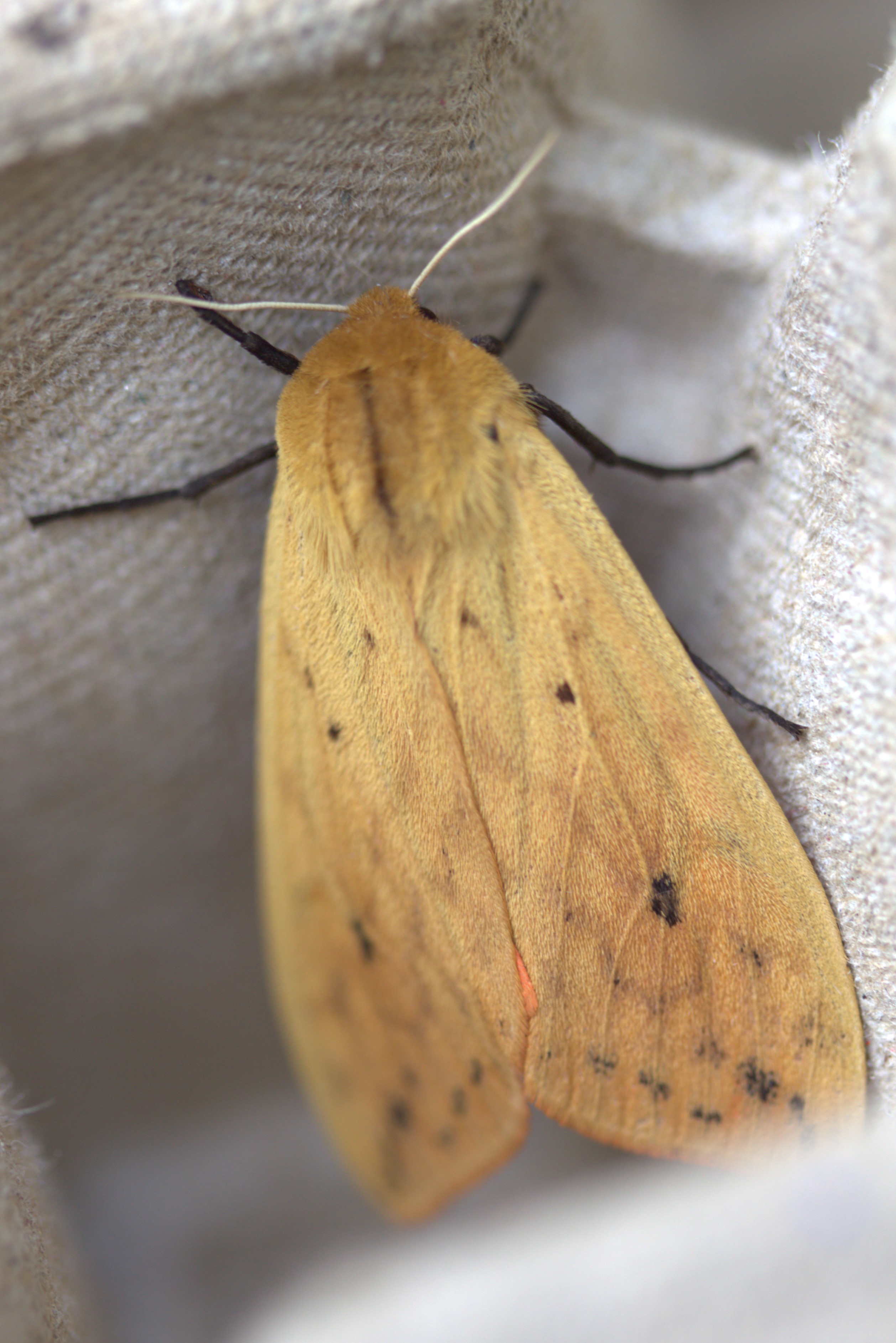
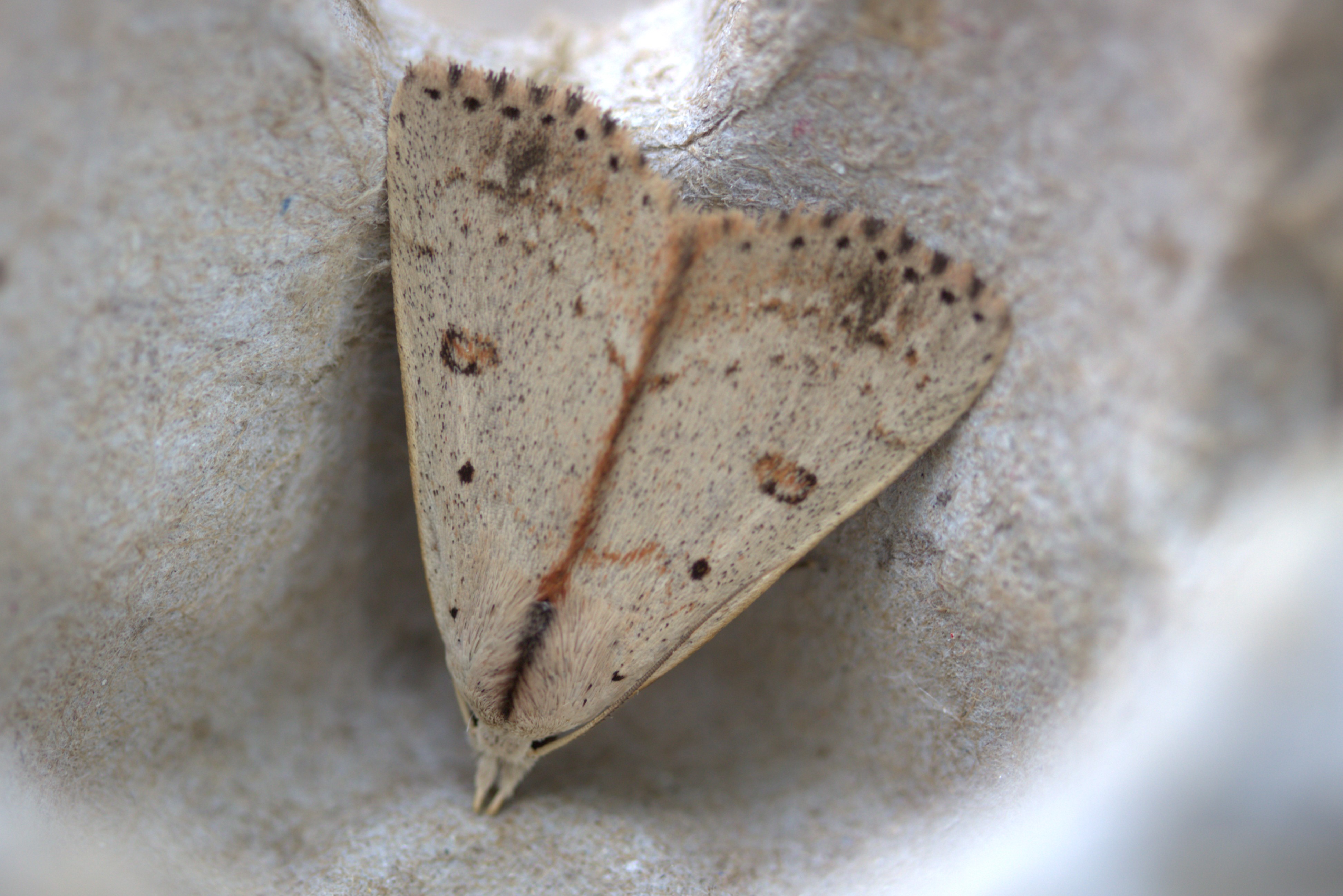
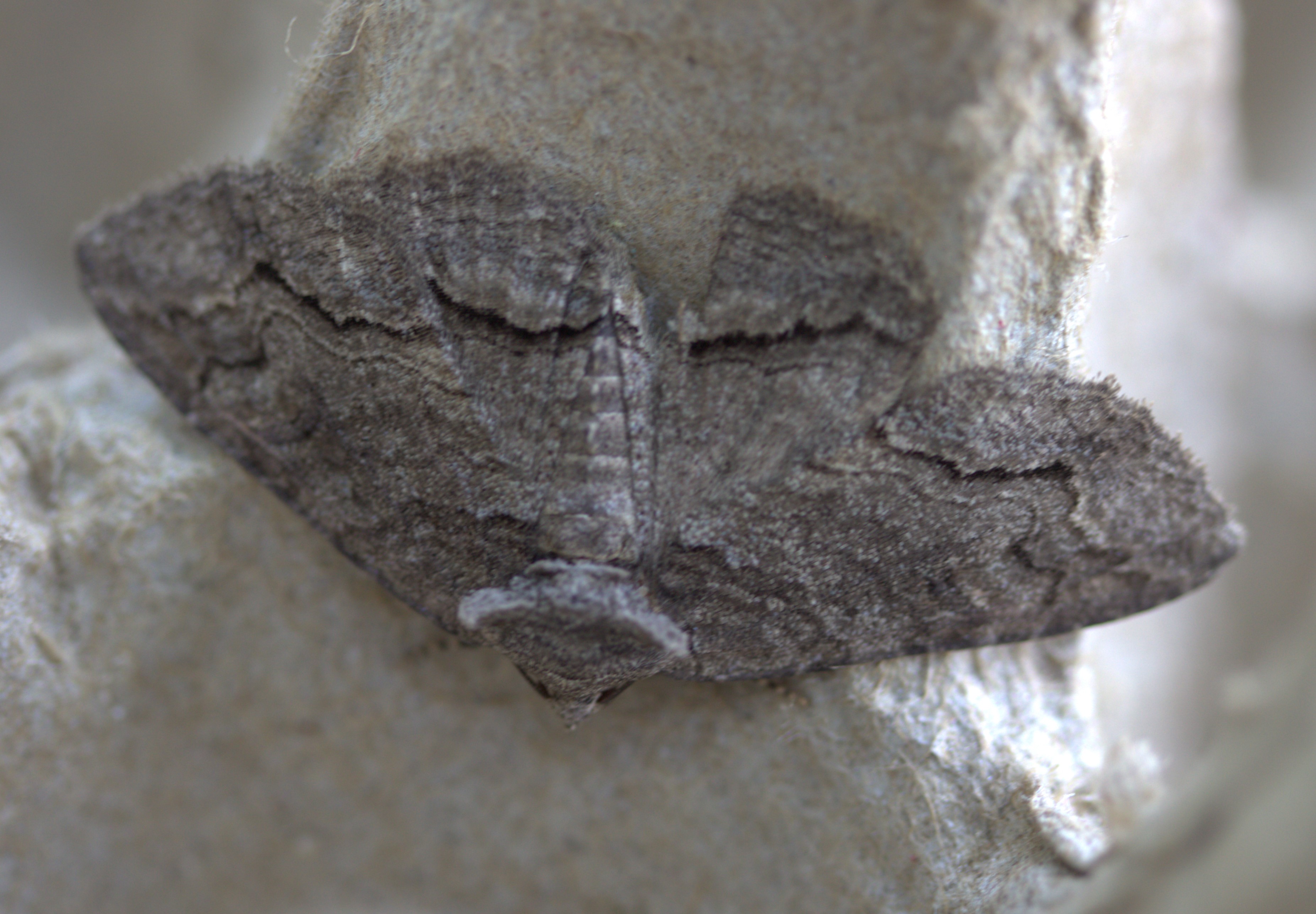
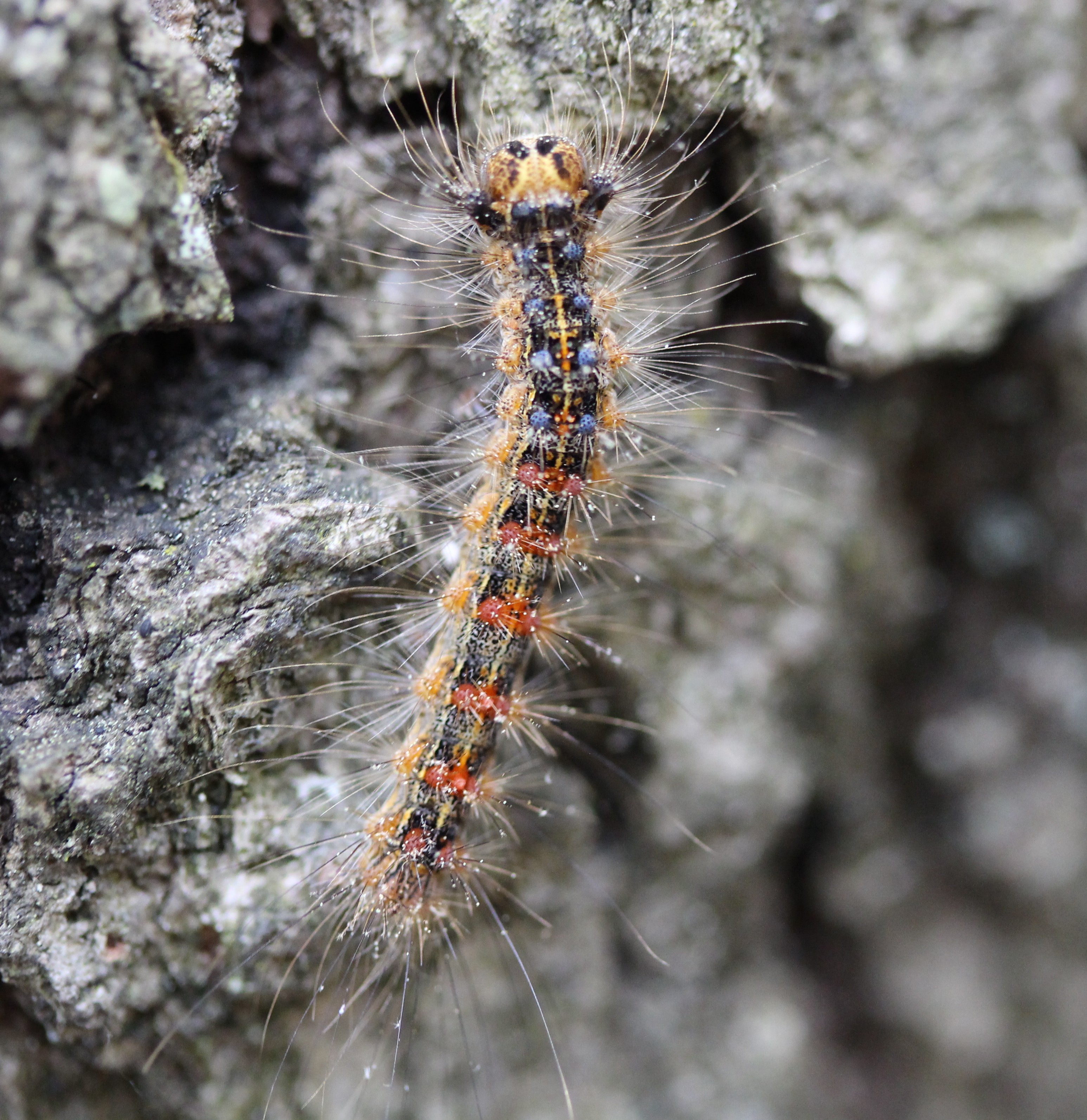
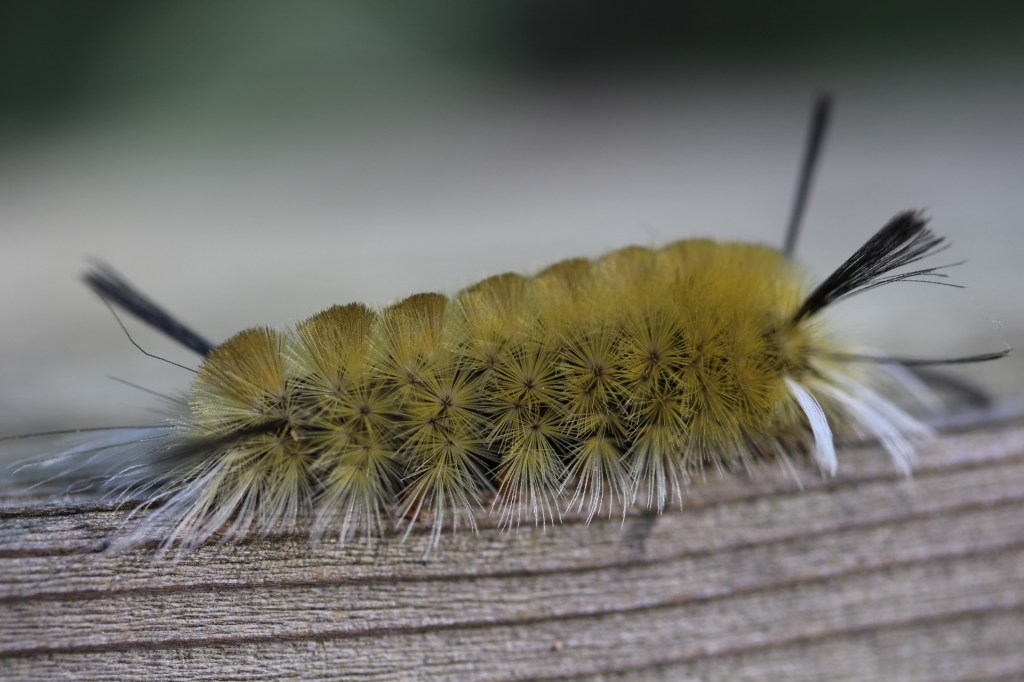
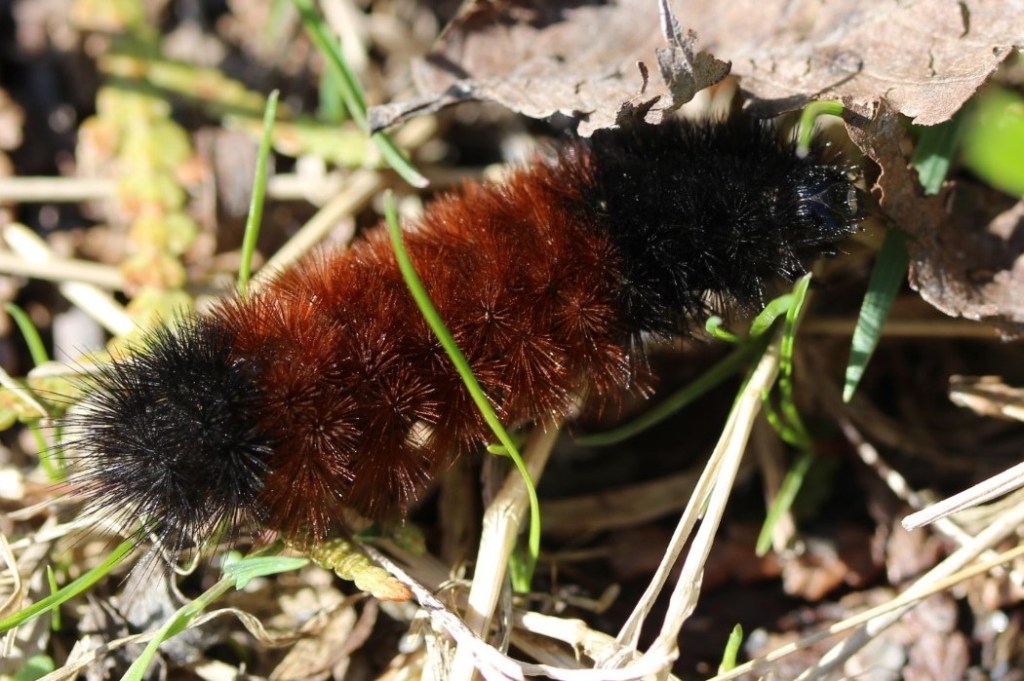
Moths in the Family Erebidae are widespread and diverse (in fact, they are the most speciose family of moths, with over 24,000 described species). They are some of the most colourful and fantastic night fliers, some of the most familiar and exotic moths. Perhaps the most commonly encountered Erebid moth in North America is the Spongy Moth (Lymantria dispar), because of its incredibly invasive caterpillars that have spread across the continent. Spongy Moths are part of the Tussock Moth group, known for their spiky caterpillars covered with long ‘tussocks’. One such moth is featured below, the Banded Tussock Moth. Another incredibly common Erebid caterpillar is the trundling Woolly Bear caterpillar, the adult moth is featured below (known in its winged form as the Isabella Tiger Moth). Another group of Erebids are known as Lichen Moths because their caterpillars feed on lichen. Another lichen-feeding species is featured below: the American Idia, a drab grey moth in contrast to the colourful pastels of its lichen-feeding cousin the Painted Lichen Moth. The Virgin Tiger Moth and the Giant Leopard Moth are two of the larger and more striking of the Erebid moths that I photographed. Other moths in this group are striking for their evocative names such as “The Herald Moth” or “Deadwood-borer Moth”. Another subsection of this family are known as “Underwings” because they have often brilliantly coloured wings concealed beneath their often drab forewings, the better to startle predators with when discovered.
EREBIDAE GALLERY:




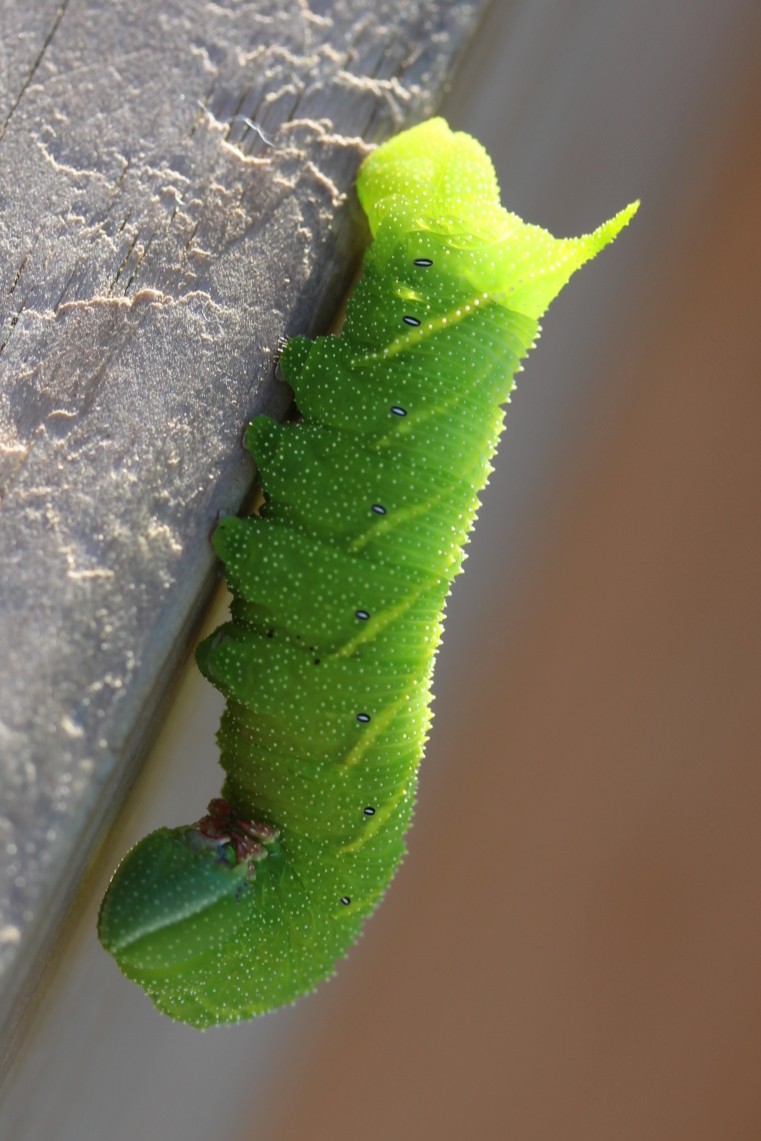
BONUS EREBIDAE LARVAE GALLERY:
References:
Beadle, David and Leckie, Seabrooke 2012. Peterson Field Guide to Moths of Northeastern North America. Houghton Mifflin Harcourt.
For the first post in this series, see:



 Norfolk Naturalist