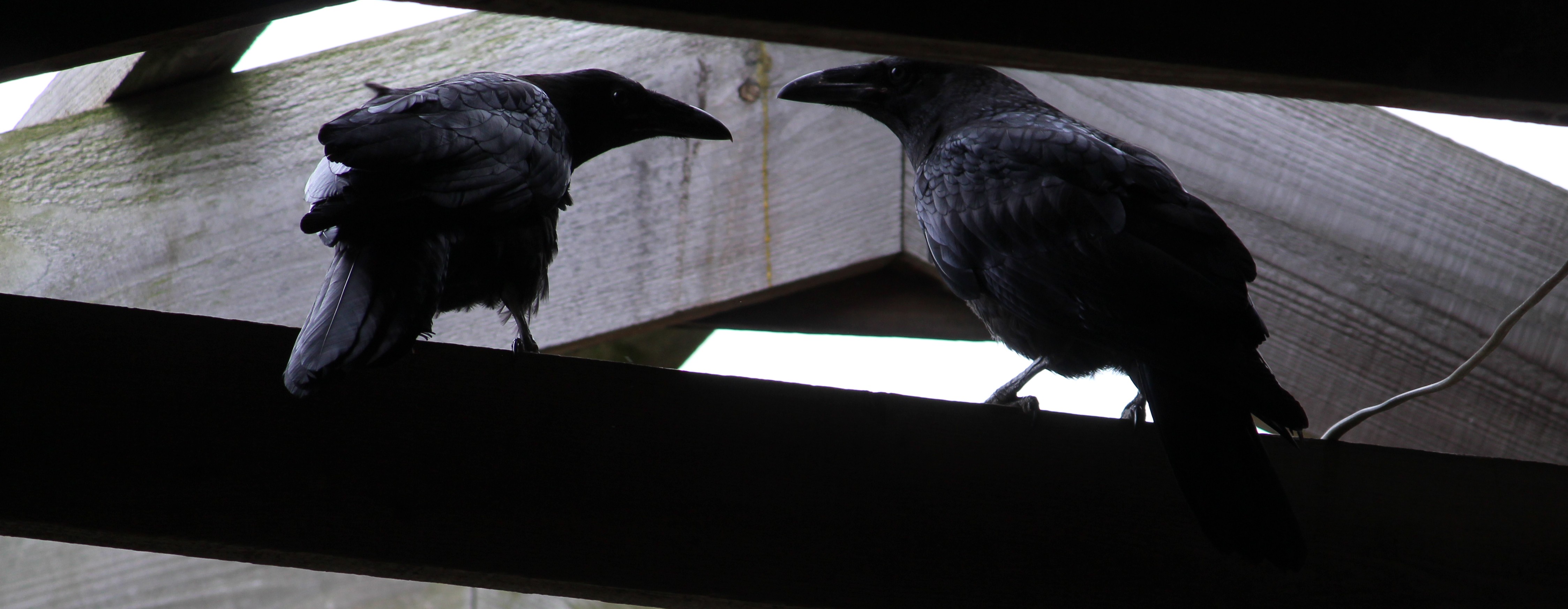
The ominous photo above was taken in my parents’ barn, host to Ravens these past few years (see my article about this here: Return of the Ravens). You could almost imagine they were Odin’s Ravens, Huginn and Muninn (Thought and Memory), perfect to herald a look back at this past blogging year. It’s time for my anniversary article to summarize my year’s writing and reading. This year I was much less productive on the blog than I have been in previous years, but we’ll see how next year goes!
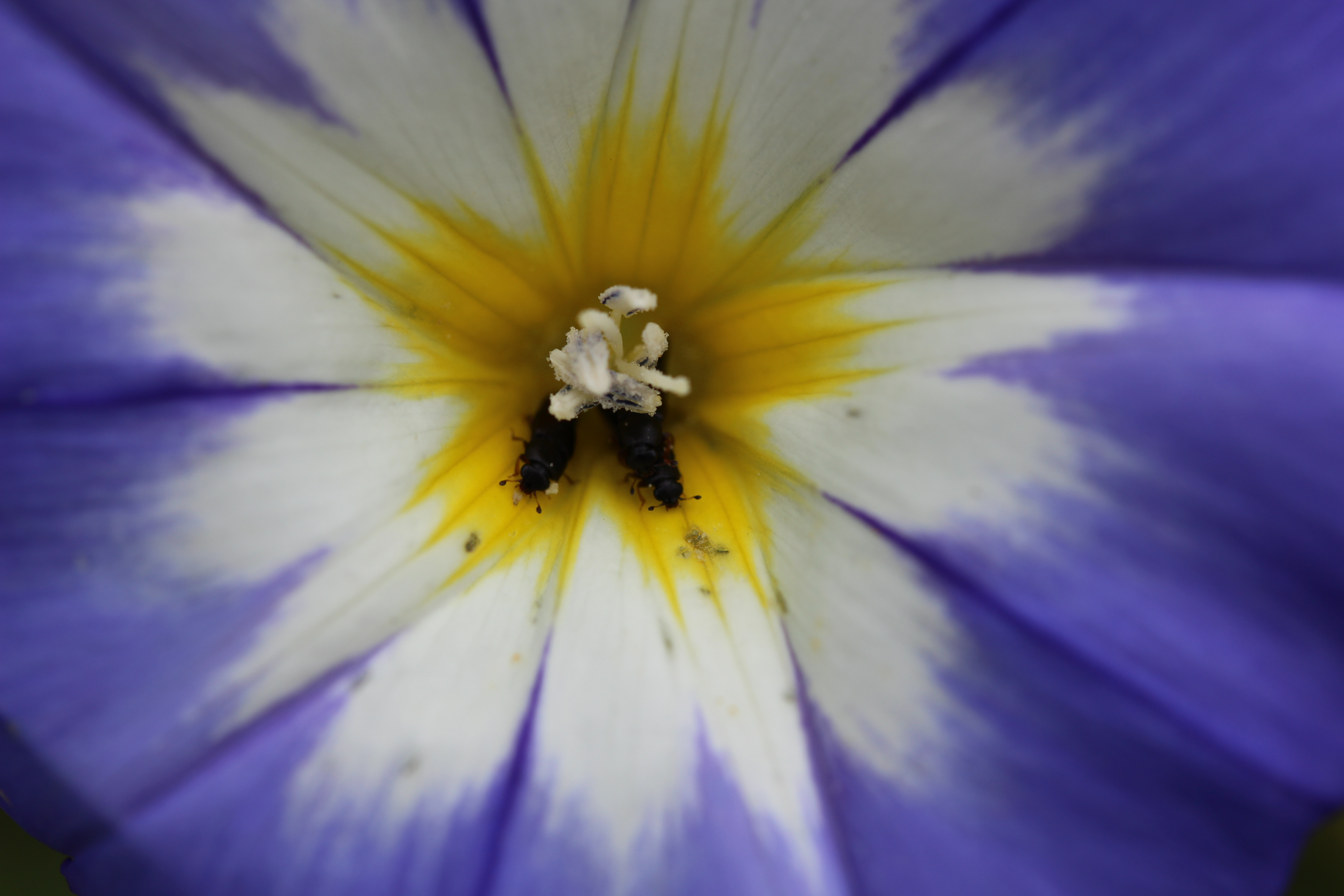
Some Conotelus beetles peering out of a flower in my backyard, July 2025, likely pollen-feeders.
This past year, I only published 4 blogposts, and some of those were rather short. The first was my now-annual Year in Photos post (I am currently working on this year’s edition). And the following three cover some of the amazing moths that I observed at an event 2 years ago: Sphingidae, Erebidae, and Limacodidae. I have such a backlog of observations/writings that I would like to see posted on my blog and I will get to them… eventually…
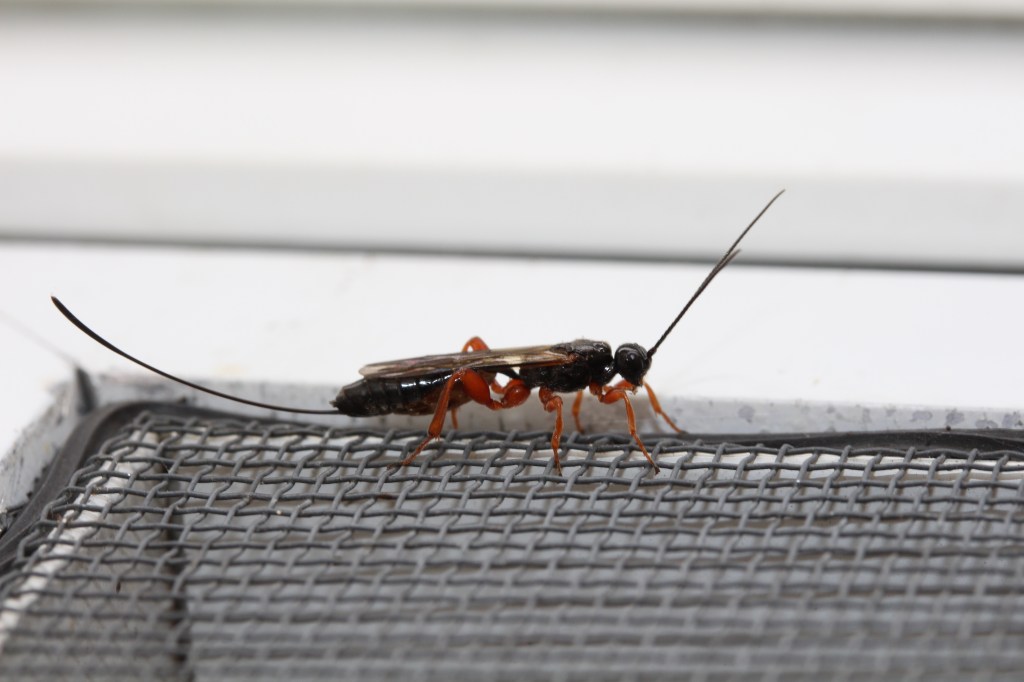
Parasitoid wasp (ichneumonoid of some sort) observed at my parents’ house in September 2025.
Let’s take a look at what nature books I’ve read this past year with a brief review and thoughts:
Marine Life of the Pacific Northwest: A Photographic Encyclopedia of Invertebrates, Seaweeds and Selected Fishes, by Andy Lamb and Bernard Hanby:
Excellent photographic overview of the diversity of coastal marine life in the Pacific Northwest. The text is not meant to be comprehensive for identifying or comprehensive for life history attributes, more a selection of interesting facts or occasional anecdotes about the species covered. I really enjoy these types of books for driving home once more that there is so much biodiversity out there.
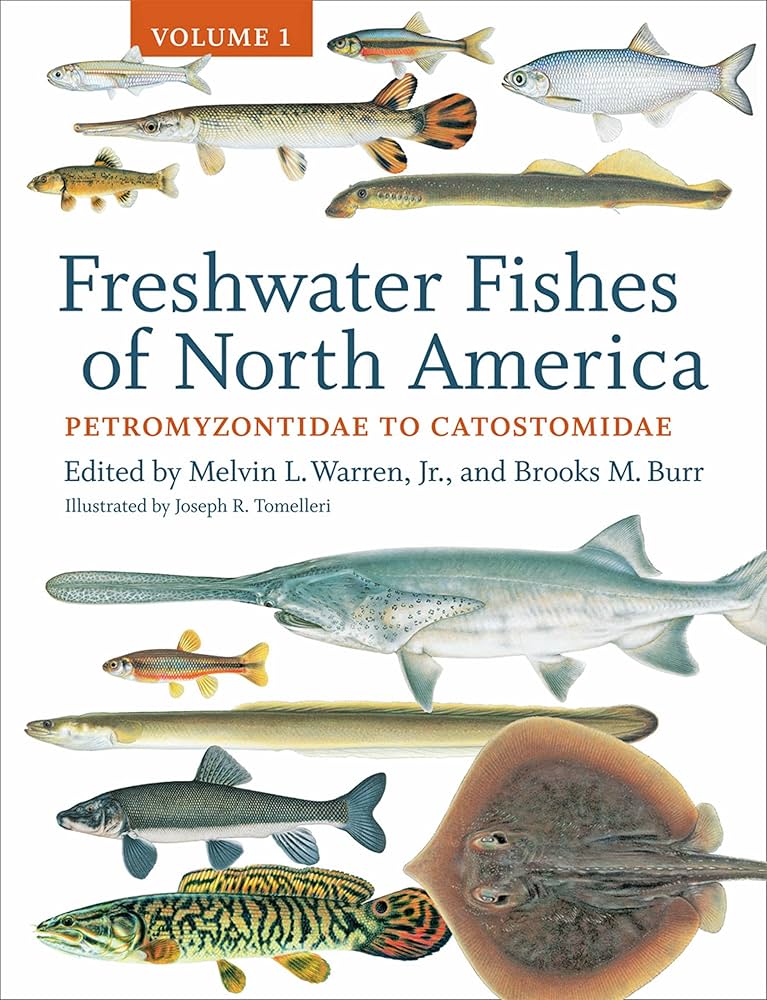
Freshwater Fishes of North America: Volume 1: Petromyzontidae to Catostomidae, by Melvin Warren and Brooks Burr, Illustrated by Joseph Tomelleri:
Very in-depth look at a selection of fish families of North American freshwaters. The focus is on behaviour, ecology, physiology, and giving a family-level overview of the diversity of fishes in North America that inhabit fresh water.
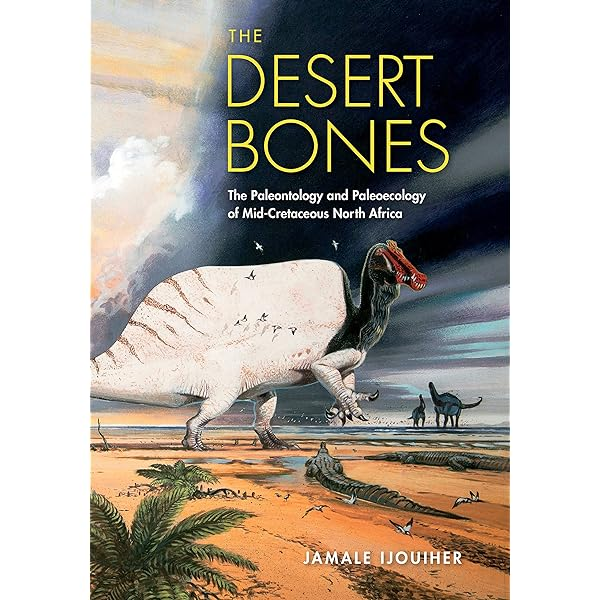
The Desert Bones: The Paleontology and Paleoecology of Mid-Cretaceous North Africa, by Jamale Ijouiher:
An overview of an ancient ecosystem, mostly listing the inhabitants with excellent artistic reconstructions for almost all of the vertebrate genera mentioned and even many invertebrates.
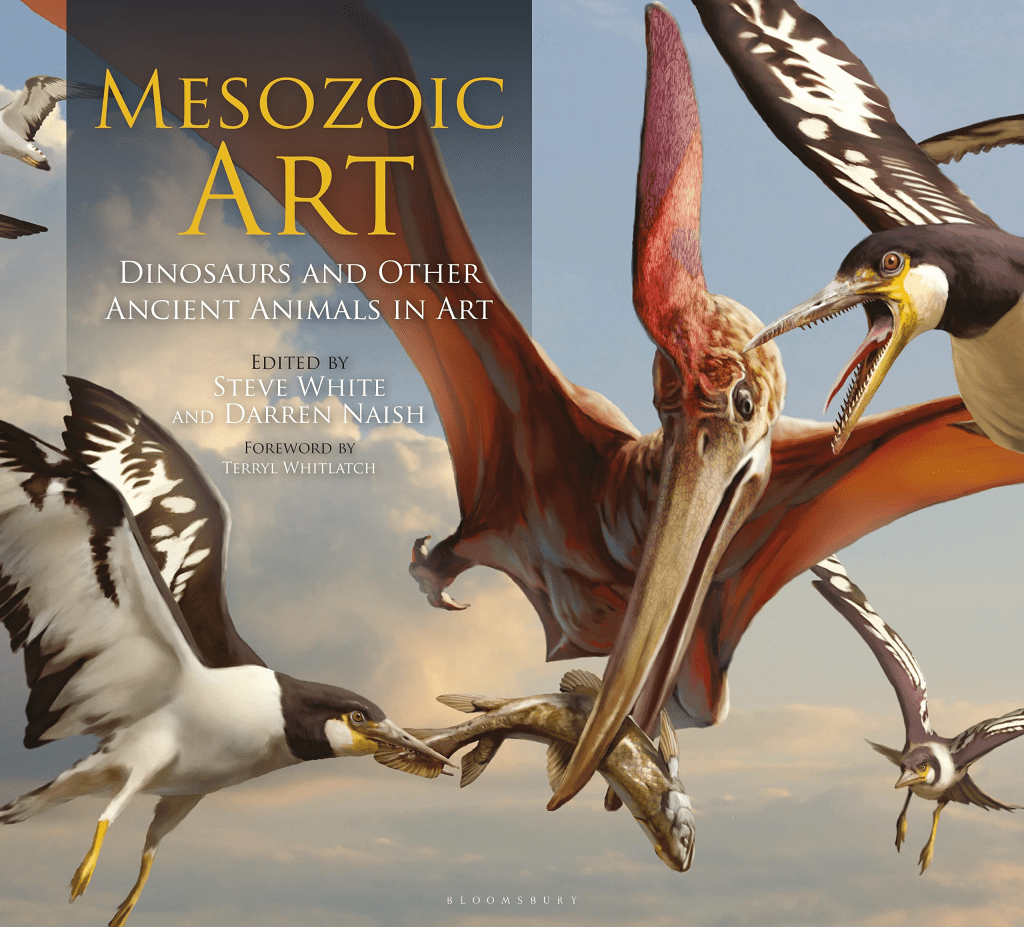
Mesozoic Art: Dinosaurs and Other Ancient Animals in Art, Edited by Steve White and Darren Naish:
Beautiful art portfolios showcasing the diverse artistic talent in the Paleoart world. Wonderful windows into lost worlds of the past, with excellent context supplied by Darren Naish. A book I will read and flip through many times in the future.
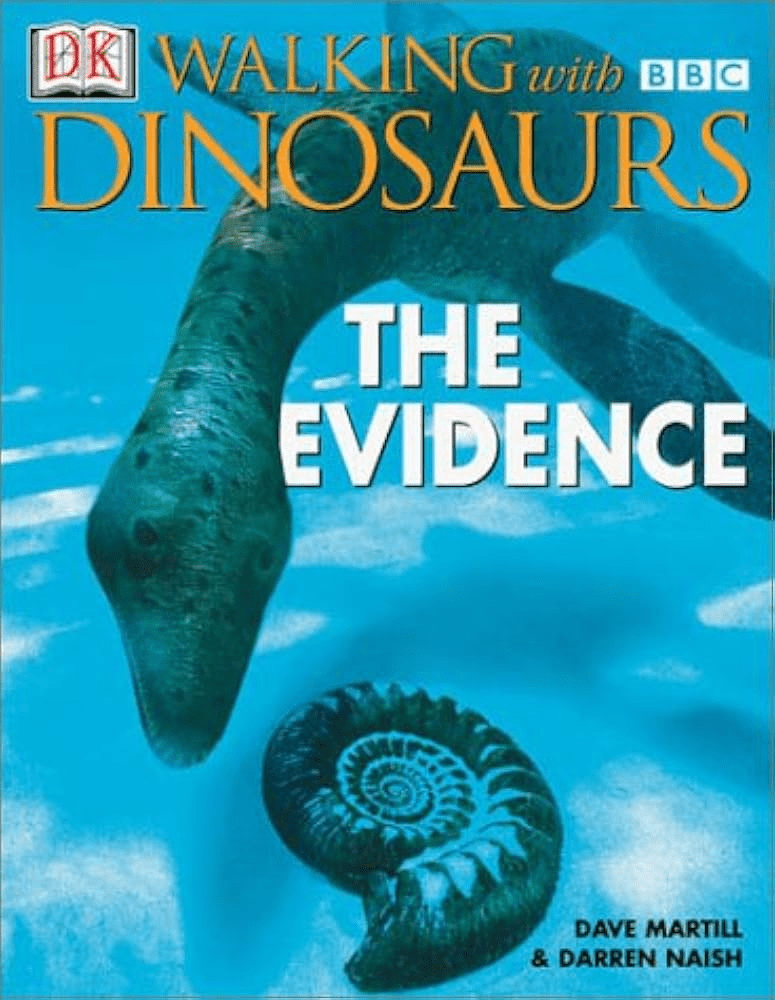
Walking With Dinosaurs: The Evidence, By Dave Martill and Darren Naish:
This was a really fun read, all about the fossil evidence that was behind the Walking With Dinosaurs BBC documentary (which I recently rewatched). Fascinating how much and how little we know about the lost world of the dinosaurs.
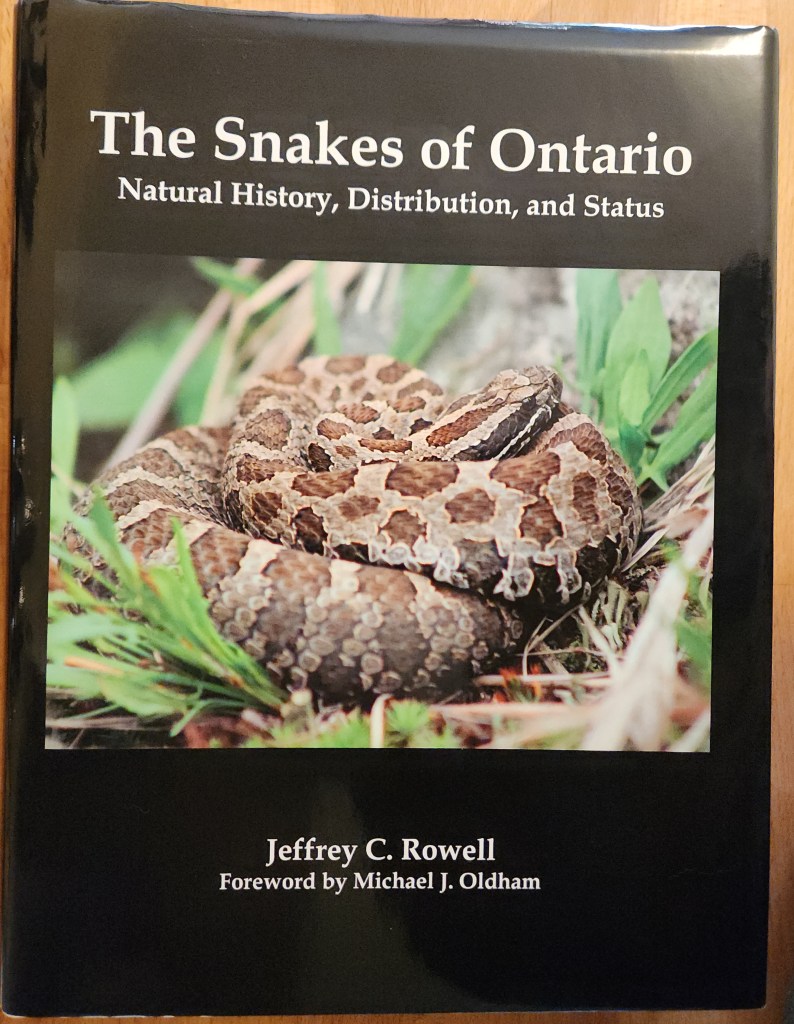
The Snakes of Ontario: Natural History, Distribution, and Status, by Jeffrey C. Rowell:
Amazing to read a book like this with such a narrow focus both taxonomically (Snakes) and geographically (the Province of Ontario). It’s not a field guide, though it gives many details to help distinguish snake species from each other. It is an in depth overview of Snake natural history in Ontario, an excellent reference work.
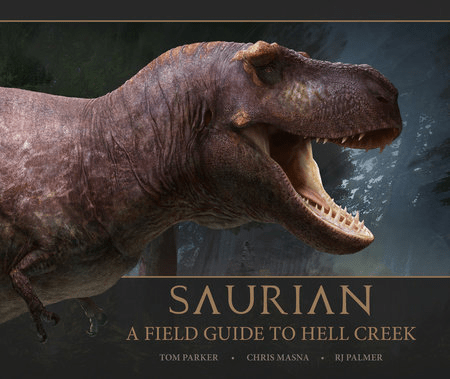
Saurian – A Field Guide to Hell Creek, by Tom Parker, Chris Masna, and R. J. Palmer:
Beautiful artwork, love the window onto a vanished ecosystem. I especially loved the guest artwork pages at the end because it gave the feeling of varied artists visiting this extinct ecosystem and creating pictures from their observations.
And… that concludes this blogversary article. For previous blogversary posts, see:
It’s that time of year again, when I review the past year of blogging and reading, as well as the last year of photos. The photos will be showcased in the next blog post, sometime in December. This post will be all about my past blogging year (Dec 2022-Nov 2023) since this is the anniversary of my first blogpost on this site. Here we go!
Garter Snake on the Lynn Valley Trail.
The first article after last years blogversary article was the start of a new tradition, my blogging year top photos! (Norfolk Naturalist Year in Photos (Dec 2021-Nov 2022)) I plan to do the same thing this year, so keep an eye out for my next photo roundup post sometime in December.
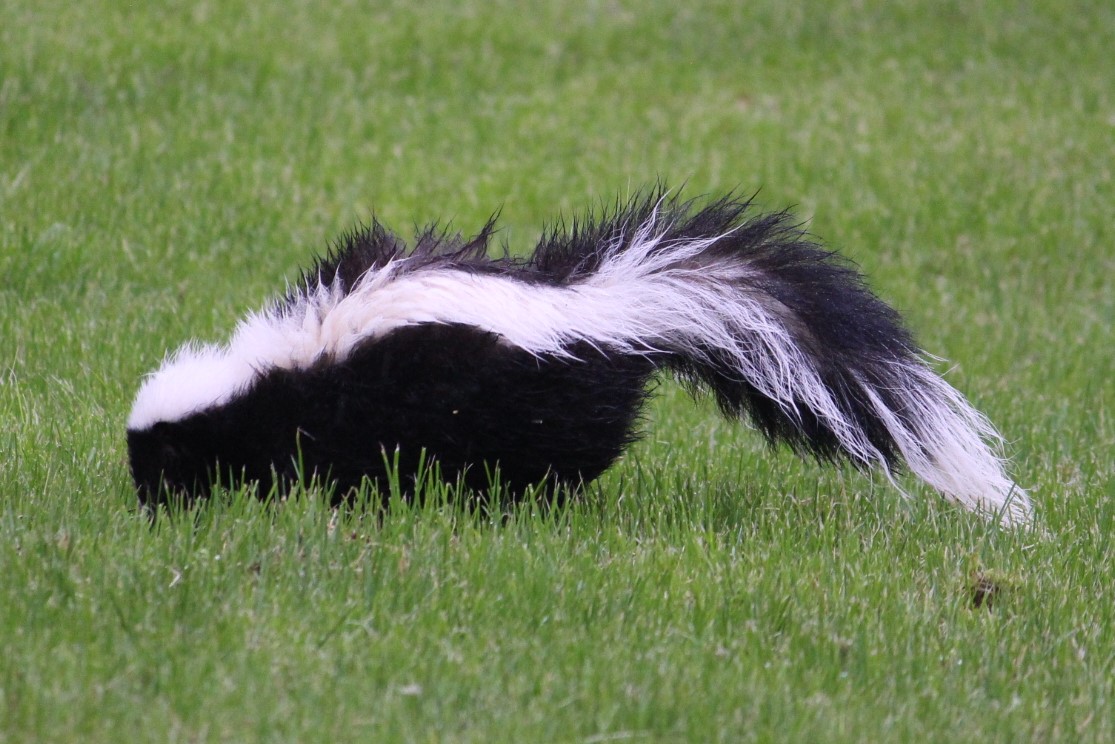
Striped Skunk in my backyard, affectionately named by my son, “Jam”.
In August 2022, I went on a night hike to listen to bats and it was an incredible experience. So incredible that I wrote a post about it: Flying Creatures of the Night. Then I wrote a post about one of the two bat species we observed on that night hike, Big Brown Bat.
Slug on the Lynn Valley Trail, affectionately named by my son, “Trail”.
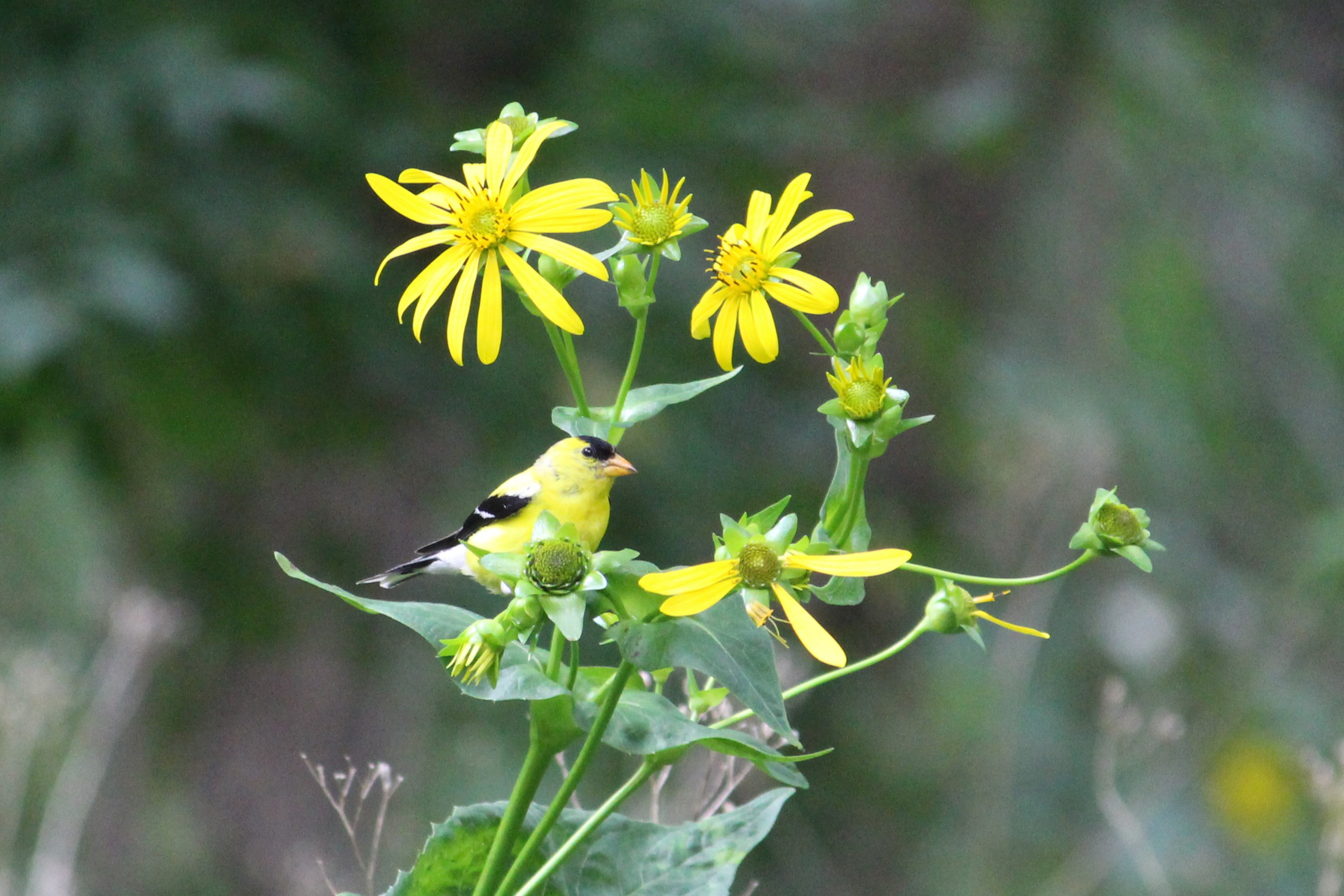
Goldfinch at the Royal Botanical Garden trails in Hamilton.
Between these, I published an article about my observations on one of my camping trips this past summer, to Port Burwell. I went on 2 other significant camping trips, one to Algonquin and another to Pinery Provincial Park. I’d like to write up my observations on both of those trips as well (I saw lots of neat creatures as always), but haven’t finished writing about them yet.
American Toad, in the RBG trails.
In September, I finished a post that I have been working on in the background for a long time, about the beautiful fly genus: Callopistromyia, the Peacock Flies. And in October, I reposted one of my tumblr blog posts: Hidden Worlds, a post about some of my early explorations with my macro lens and the world of springtails.
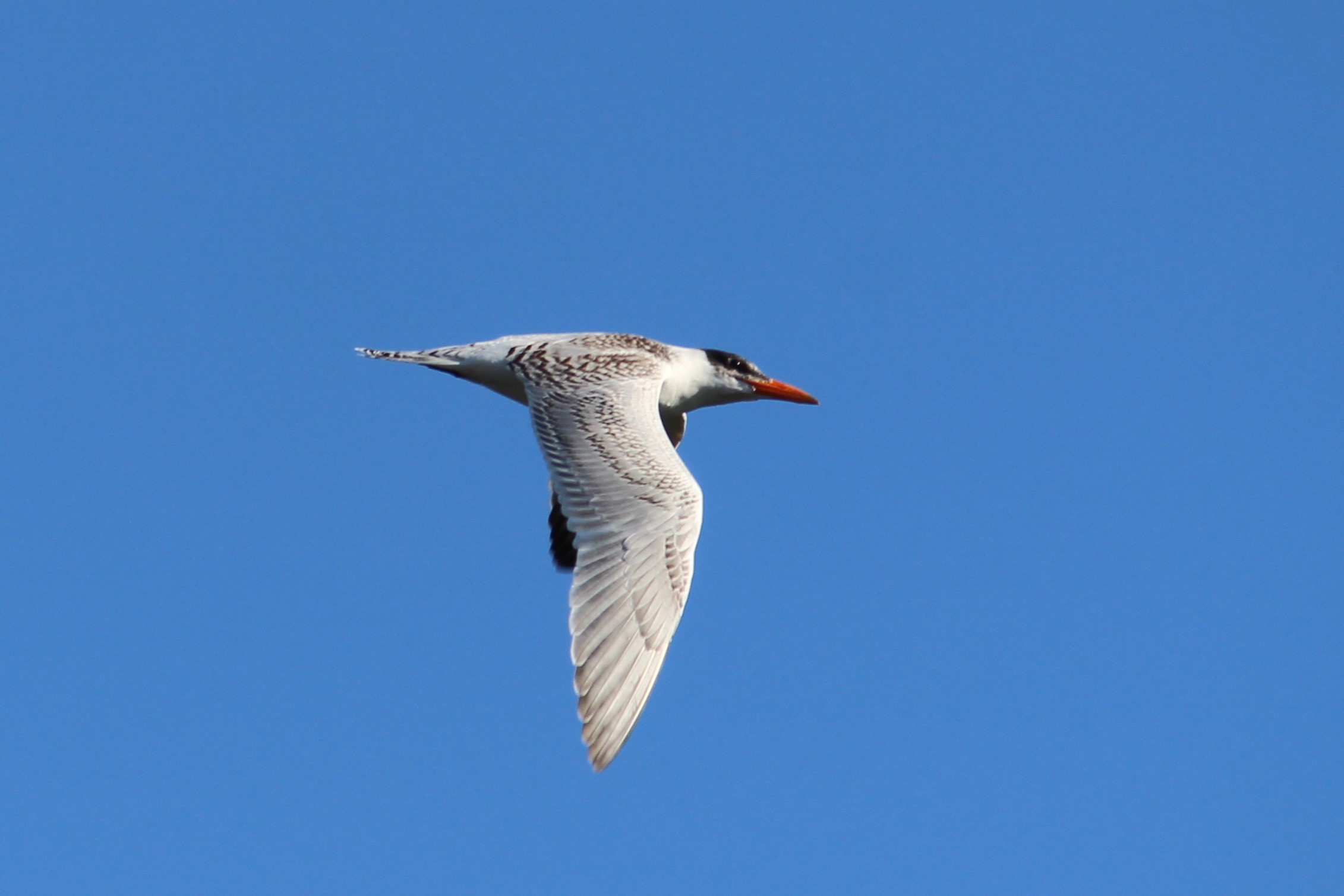
Caspian Tern, at Waterford Ponds.
And as usual, here is a list of the nature-related books that I read during the past blogging year, with short reviews/thoughts:
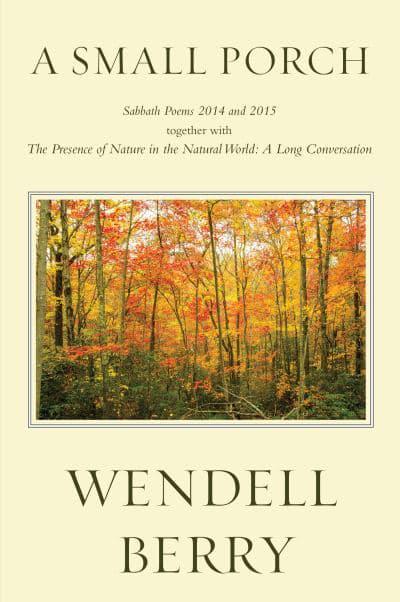
A Small Porch, by Wendell Berry:
In this collection of poetry, some were quite beautiful, the ones which invoked a sense of being outside in nature experiencing the curiosity and wonder of trees and birds and flowers, and the turning of seasons. The Essay which makes up a third of this collection was quite fascinating with lots to think about and much to challenge the way we think about land use. Powerful stuff that I will certainly be thinking about into the future.
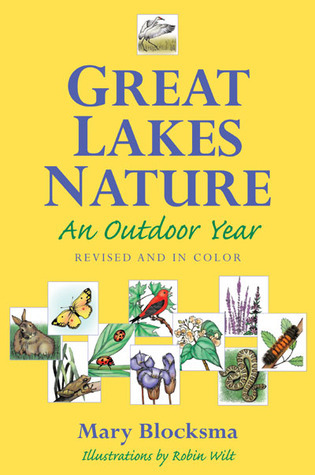
Great Lakes Nature: An Outdoor Year, Revised and in Color, by Mary Blocksma:
Very nice short articles about different nature observations throughout the year, with nice small illustrations and with a focus on identification. No scientific names, which was a negative for me (because I like scientific names). For someone just getting into an awareness of the natural world around them I would say this book is an excellent way to make nature observation and identification a habit. For myself, already having established nature observation as a habit I didn’t find it as interesting or useful.
The Guests of Ants: How Myrmecophiles Interact with Their Hosts, by Bert Holldobler and Christina L. Kapwich:
Wonderful exploration of the fascinating world of Ant Guests, those organisms that have made their way into ant colonies (or in/on the ants themselves). There are detailed case studies, tantalizing avenues for further study, and marvels on every page. The images are incredible and the stories of the myrmecophiles are often jaw-dropping. More of a sequel to “The Superorganism” in style and coverage than “The Ants”.
The Handbook of Bird Families, by Jonathan Elphick:
Excellent at conveying the global diversity of birds (there are almost 11 000 species named and I found myself encountering genera and families that I had never heard of before on a regular basis within). The photographs are excellent, though often small. The text is also very small print, which could be a challenge to some readers.
Each family of birds receives at least 1 or two paragraphs of broad overview as well as a fact-box with quick stats, some families which are hyper-diverse being allotted 3-5 pages of text. The text mainly catalogues diversity, by describing which subfamilies the family is divided into, how many and which genera are in what parts of the world and brief snippets of natural history and behaviour throughout.
There were editorial errors on a regular basis unfortunately… it felt like paragraphs had been reassigned to different Bird Families after being written because of taxonomic changes or as though they were pieces of a previous book, shifted into a new context without being thoroughly proofread. This caused some confusion, but not too much, and overall the amount of information within about bird diversity was absolutely worth the occasional re-read of a confusing paragraph. I think it could have used a more thorough editor but overall a very good book cataloguing the world’s avi-fauna.
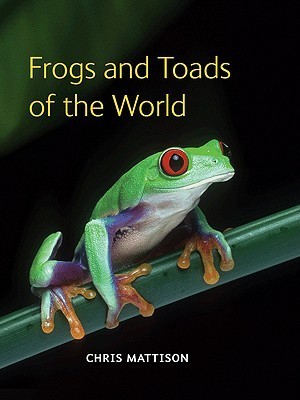
Frogs and Toads of the World (2011), by Chris Mattison:
Amazing tour through the diversity of Frogs and Toads throughout the globe. With a species count of 5000+ this 200 page book can only serve as an introduction to the true diversity of the group, but as such an introduction it works well, full of excellent photos and informative text.
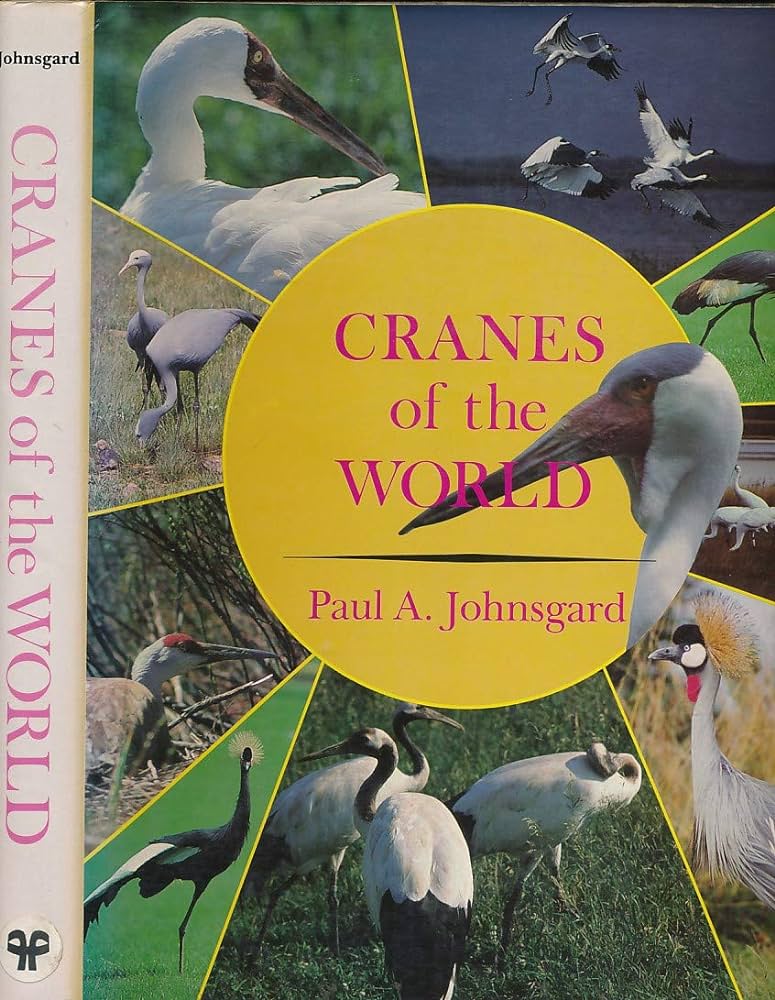
Cranes of the World, by Paul Johnsgard:
While dated, this book provided an excellent summary of what was known about Cranes (fascinating birds of the Family Gruidae) throughout the world in the 1980s. I uncovered many interesting facts about these beautiful birds within. I found the species accounts (which make up the majority of the book) to be somewhat dry but the book is designed to be a reference work, so I can’t blame it for laying out the facts systematically. It remains the only book of its kind as far as I can tell and it’s freely available online: https://digitalcommons.unl.edu/cgi/vi… So if you’re interested in Cranes, check it out!
The Best Of The Raven: 150 Essays From Algonquin Park’s Popular Newsletter, by Dan Strickland and Russ Rutter:
I read these natural history essays while camping at Algonquin Park (2 trips), and thoroughly enjoyed them. Full of information that brings you deeper into the fascinating natural world surrounding you in Algonquin Park, amazing.
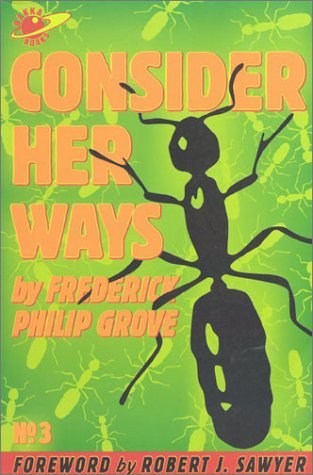
Consider Her Ways, by Frederick Philip Grove:
This book was so much fun. An expedition of leafcutter ants goes forth into the unknown continent of what we call North America. Along the way they encounter new species of ants with new ways of living and document their astounding discoveries into the world of humanity and ant-kind.
The journey is epic, the philosophies discussed by the ants are fascinating and relevant, and there is even an amazing ‘cameo’ by a famous myrmecologist. The format of the book is so much fun, with footnotes lending the document a verisimilitude that I loved (for example the human discoverer of the document mentions his confusion at certain phrases but opted to leave them in for completeness). The ending was rather abrupt and I was a little disappointed that the main encounters and discoveries discussed were limited to ants and humans rather than any other species that the ants would have encountered.
Overall, a very fun read, a tour through the world of ant diversity told from the perspective of some ants themselves. Amazing.
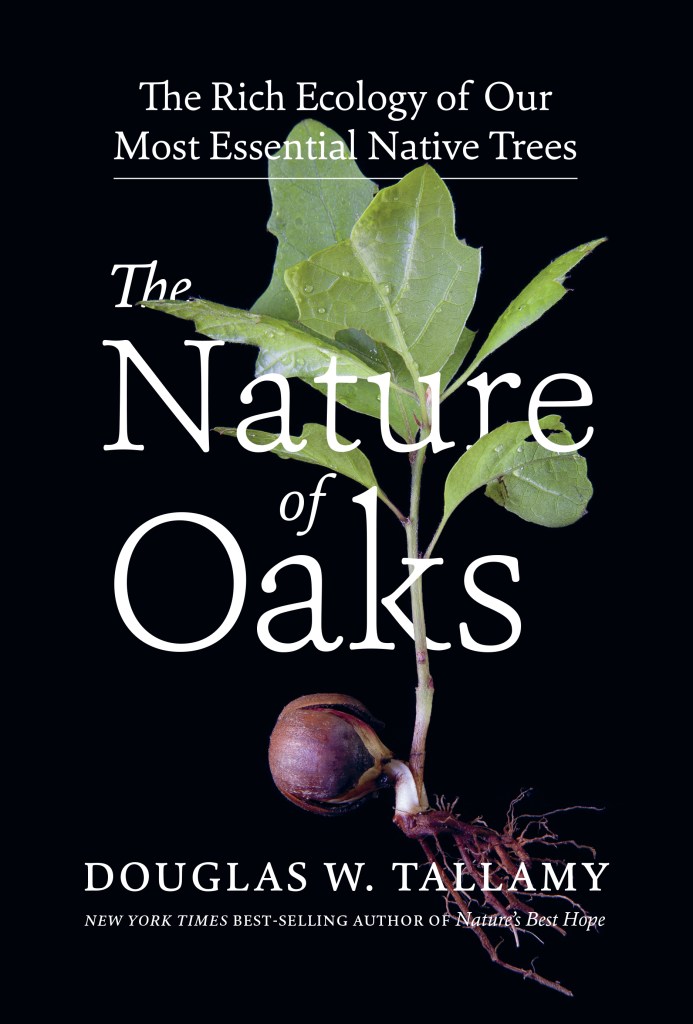
The Nature of Oaks: The Rich Ecology of Our Most Essential Native Trees, by Douglas W. Tallamy:
The book moves through the year month by month describing the various ecological happenings on oak trees during those months. So I read through the book in that way, reading each month as it was happening around me. Interesting, learned lots, and I now pay more attention to Oak trees when I find them.
That wraps up my blogversary article for this year! Hope you enjoyed the brief tour of my nature writing/reading year. Next up will be my roundup of top nature photos from this past year, stay tuned!
3 Years of Blogging at norfolknaturalist.ca have passed and it’s time to look back at the past year of my naturalist adventures and reading/writing. Let’s go!
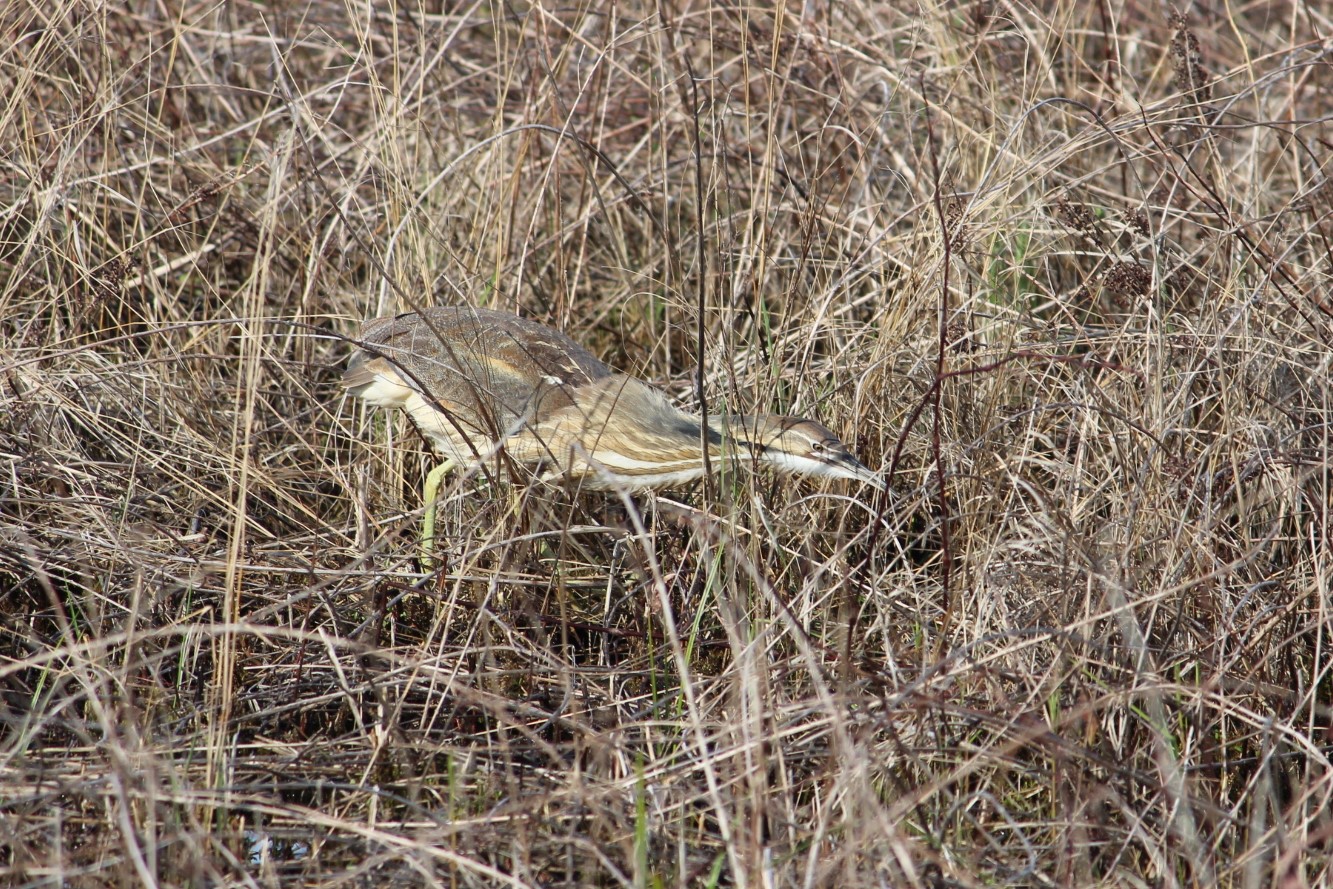
Look closely and you’ll see one of my most amazing bird sightings this year, a stealthy American Bittern (Botaurus lentiginosus) in Long Point, May 2022.
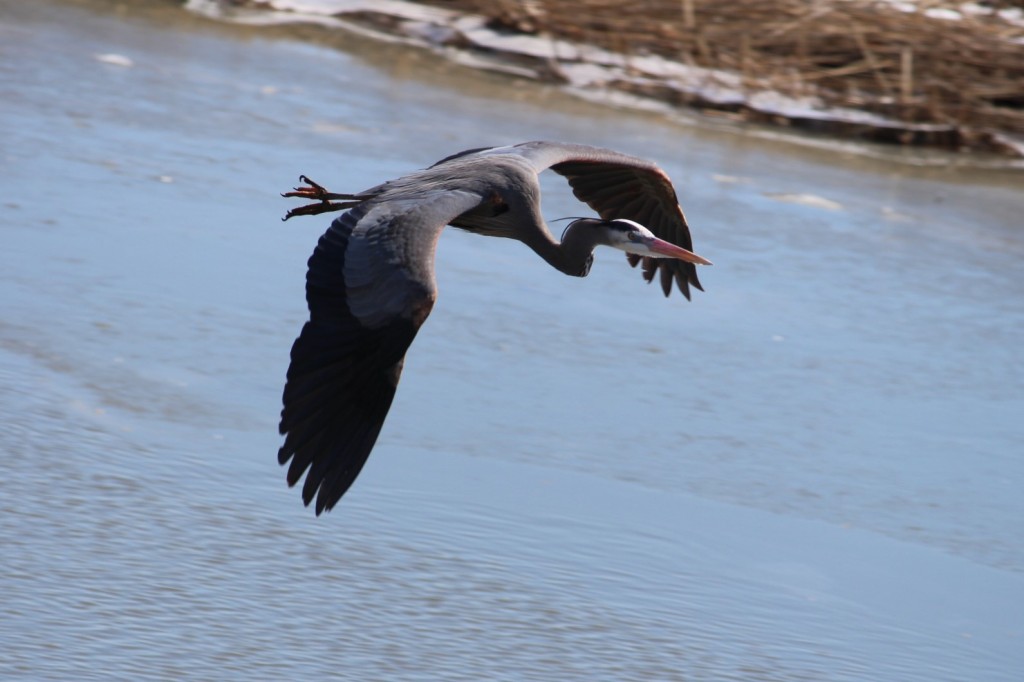
A close encounter with the Heron I usually see, the Great Blue (Ardea herodias).
In March of this year, I reposted my original blogpost (Cryptic Caterpillars) from my tumblr blog (anorfolknaturalist.tumblr.com) because I hadn’t finished any other blogposts for the month and I also want to repost all of my original tumblr blogposts on this website, with occasional minor edits and updating. I reposted another tumblr post in May (MacGregor Point Observations (May 2018)) And in October, I reposted yet another, this time with a Halloween theme: Eaters of the Dead.
In April I was amazed and delighted to find that Ravens were nesting on my parents’ property (specifically on their silo), so I wrote a post about my observations and their significance.
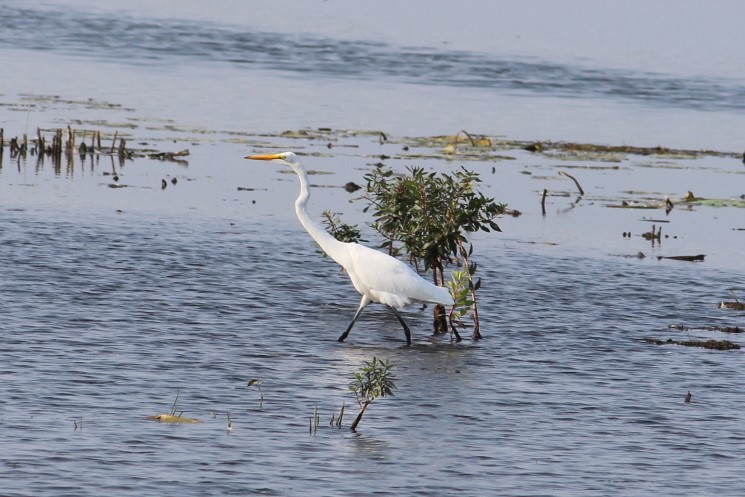
Great Egret (Ardea alba), in Long Point, September 2022.
In June I went to see Jurassic World: Dominion, the latest film in the Jurassic Saga. I wouldn’t say it’s a great film, but I did really enjoy it, especially with the theatre experience. I wrote a blogpost about my personal interactions with the Jurassic books/films/videogames and some paleontological things because they were on my mind a lot at the time. You will see that some of the books I read over the blogging year (overviewed below) were also inspired by my dinosaur obsession which comes and goes quite often.
Some of my most exciting observations this year were of birds that I encountered in Long Point. And some of the most exciting birds were members of the Heron Family (Ardeidae). Usually I see and take photos of Great Blue Herons (Ardea herodias) which is great but it was amazing to encounter several other members of this charismatic group of birds this year. My close encounter with a Green Heron (Butorides virescens) was so striking that I wrote it up into a blogpost: A Green Heron Stalks the Shallows.
Two other blogposts feature some of my Long Point observations. One is sort of a tour through a variety of observations I made during March 2022: Bullfrogs and Buffleheads. Another is more like the Green Heron post mentioned above, as it focuses on a specific bird that caught my attention. In this case, it was the Green-winged Teal (Anas carolinensis): The Teal Tale Teale Told.
During August, we took a trip to one of my favourite places: Algonquin Provincial Park. While there, I made some nature observations and took some photos, sharing them in my blogpost here: Algonquin in August.
And that wraps up my writing this year. Below, we will take a tour through the books I read this past year (that are nature/science related) and discuss them briefly.
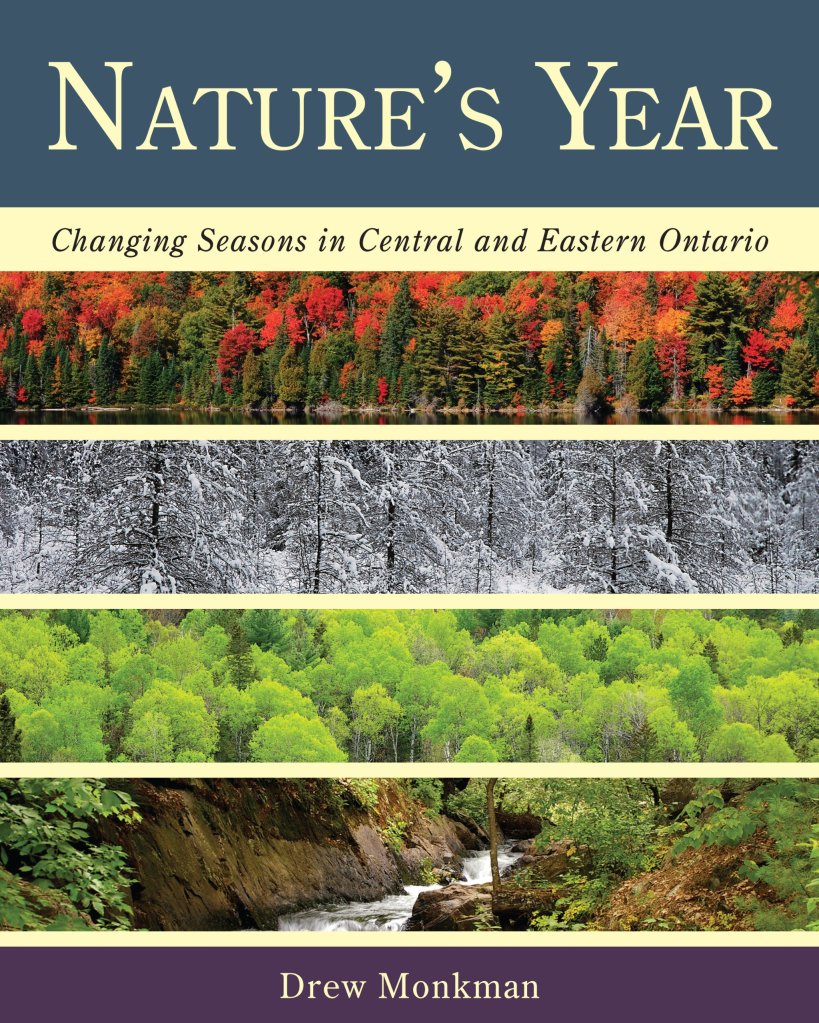
Nature’s Year: Changing Seasons in Central and Eastern Ontario, by Drew Monkman:
Although the book is not directly focused on my local area (Norfolk County falls outside of the books focal range), the close proximity of the areas documented mean that many of the natural phenomena described within are of relevance to the seasons around me as well. I really appreciated the layout of the book. Each month is divided into sections based on organism type: “Plants and Fungi”, “Reptiles and Amphibians”, “Mammals” and so on. Beneath each of these sub-headings, interesting happenings are described, some in point-form and others in detail (full page or two). It was great to witness the natural events mentioned in the book, to read along as each month progressed as I did in 2021. Reading the book through the year prepares your mind to see the natural events it describes. An advantage of the layout is that it also works well as a reference because you can flip to a certain month and type of organism to see what notable species or events are occurring.
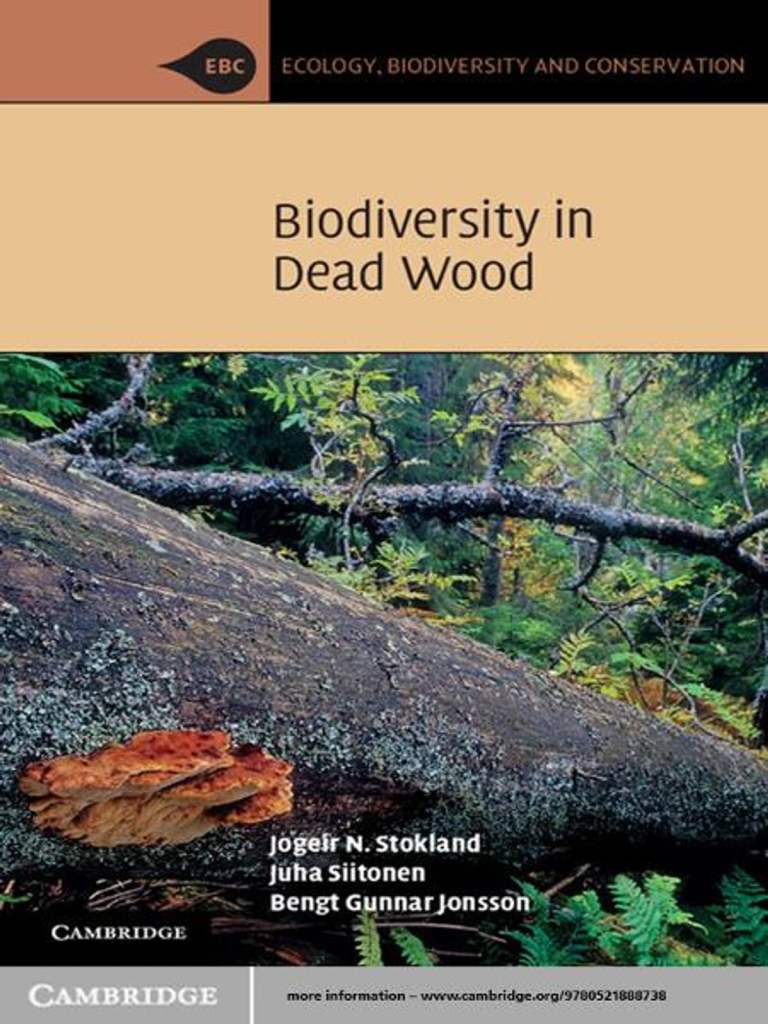
Biodiversity in Dead Wood, edited by Jogeir N. Stokland, Juha Siitonen, and Bengt Gunnar Jonsson:
A new favourite book of mine, this volume opened up the mysterious biome of decaying wood and explored the diversity of life within, from bacteria to birds. The interactions of organisms with each other and their environment is the heart of ecology and it’s clear from my reading that species are interconnected in fascinating and complex ways.
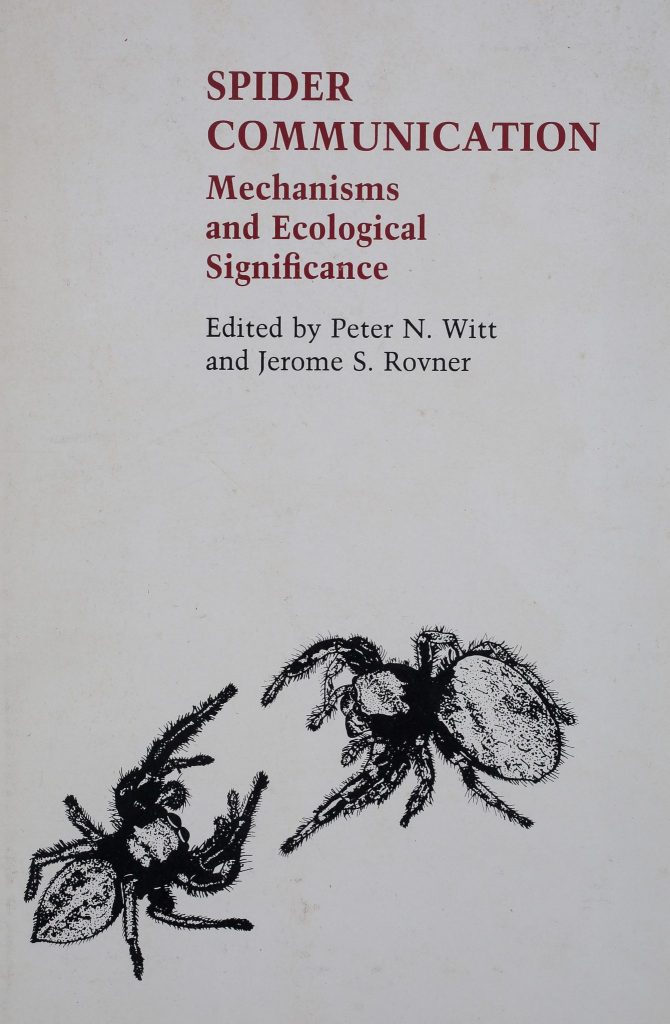
Spider Communication: Mechanisms and Ecological Significance, edited by Peter N. Witt and Jerome S. Rovner:
The title of this book drew me to it as I am always fascinated by animal behaviour and Spiders seem to me unlikely subjects of a volume dedicated to communication. Reading the book offers a new perspective on spider interactions with each other through their silk and body movements and even acoustics! They also communicate with predators and prey,
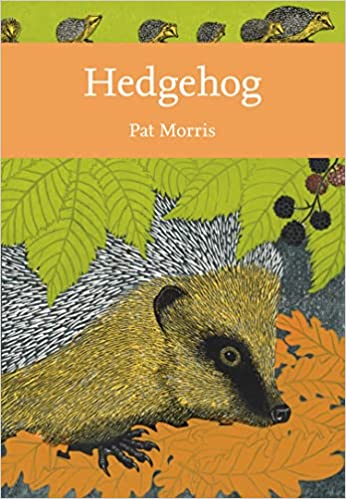
Hedgehog (Collins New Naturalist), by Pat Morris:
I didn’t really know anything about Hedgehogs before reading this book. And there was no need, as this volume summarizes in entertaining fashion most anything anyone would want to know about British Hedgehogs.
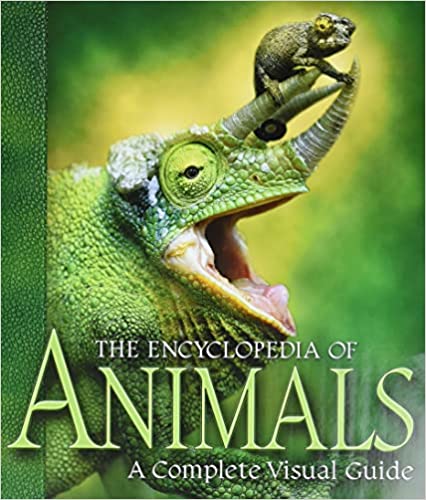
The Encyclopedia of Animals: A Complete Visual Guide, edited by George Mckay:
I read through this book slowly, as it is not really meant to be read straight through. This book serves best as a flip-through book, showcasing the diversity of animals around the world. The illustrations are at times a bit strange (I believe many are stock illustrations) and don’t seem to match with the animal they depict, but others are quite beautiful and the diversity they portray is fun to look at. The text is very cursory as would be expected with a popular “flip-through” tome like this. My major gripe with this book is something I used to harp on about all the time growing up as an insect enthusiast: Invertebrates are barely represented. Mammals get the majority of pages devoted to them, and Birds are close behind. Mammals and Birds are fascinating, and far more diverse than one would assume if you have only watched nature documentaries (which focus on the same set of species rather than showcasing the variety that are actually out there). Even still, they are a fraction of the diversity of the animal kingdom, which is more appropriately ruled in species numbers by the Arthropods or Mollusks. Despite this (a very common problem in overview books) I really had fun slowly reading through this book, taking in a page or so of variety a day. I wouldn’t say it is the best or most comprehensive of animal encyclopedias, but it serves as a good introduction as long as one is well aware of the classic hairy or feathered vertebrate bias.
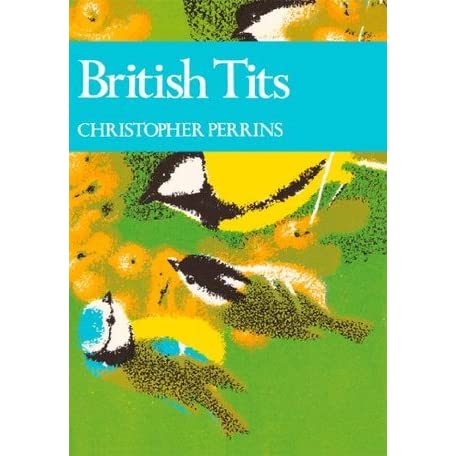
British Tits (Collins New Naturalist), by Christopher M. Perrins:
British Tits have always struck me as beautiful chickadees, which indeed they are. I was always jealous of Britain having the wonderful cheery birds I know from my backyard, but with more vibrant colour. Tits are fascinating birds, with life histories and behaviour to match their beautiful exteriors. This book was an excellent overview of the species of Parulidae that occur in the British Isles.
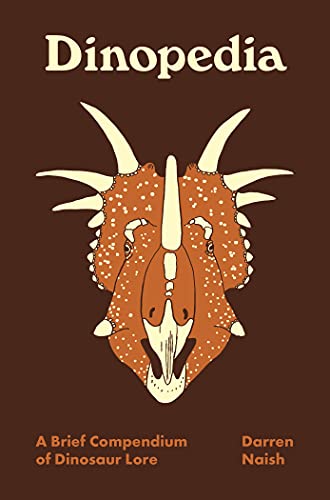
Dinopedia, by Darren Naish:
A compact and great little book filled with tidbits about the history of dinosaur research, some of the paleontologists who conducted said research or influenced the field of dinosaur study, and brief summaries on dinosaur groups. My personal tastes lie with this last group of entries, but each entry was interesting in its own way, supplying concise facts and summaries and highlighting areas of interest within the world of dinosaur research. I greatly enjoyed the illustrations by the author which really enhance the book.
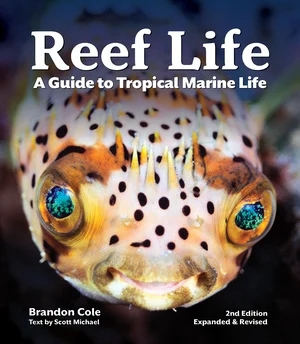
Reef Life: A Guide to Tropical Marine Life, by Brandon Cole and Scott Michael:
A delightful photo-focused tour through the world of coral reefs and tropical sea life. The focus is on fishes, while smaller sections describe and display some representative invertebrates. Styled something like a field guide, but with plenty of ecological and biological information throughout, this book gives a taste of the diversity of coral reefs and the interconnected lives of the species that create and depend on them.
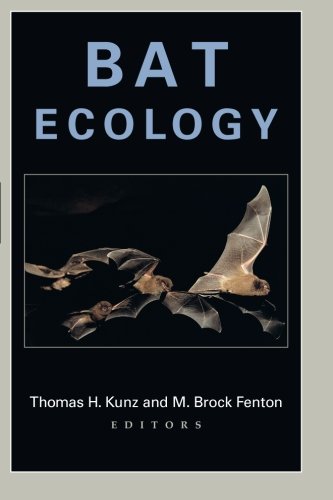
Bat Ecology, edited by Thomas H. Kunz and M. Brock Fenton:
Bats are fascinating, and I learned a lot about them from this book. Because of the book’s focus on Ecology, there was no real overview of Bats as a group which would have been nice for myself to have some sort of general idea before diving into specifics. Not a fault of the book, just something to note if you’re unfamiliar with bats from a scientific point of view. The chapters are each written by different authors and cover a wide range of topics, and as such there were excellent and enjoyable chapters (for myself the chapter on Roosting sites and the chapter on Pollination were particularly fascinating) and some chapters that were less so. Not a fault of the book, but my personal point of view and knowledge base left me struggling through the chapters on Sperm Competition and Patterns of Range Size. Those two chapters in particular felt like specific scientific studies rather than reviews of a subject area which the other chapters felt like. So, while mixed, the interest I have in Bats has certainly been increased and I have certainly learned a lot about some of the diverse ecologies that bats have around the world, while still wanting more.
This Day: New and Collected Sabbath Poems 1979-2012, by Wendell Berry:
In the preface, Wendell Berry remarks that the poems should be read outside in similar circumstances to when they were written. And I originally envisioned doing so. When I began to read them in very different circumstances, I found that instead of diminishing the power of the poetry by contrast, the poetry brought the beauty and wonder of nature into my less-than-ideal setting (usually indoors in winter or at work).
Owls of the Eastern Ice: A Quest to Find and Protect the World’s Largest Owl, by Jonathan C. Slaght:
Although I will always want a book like this to have more focus on the animals themselves (in this case Blakiston’s Fish Owls) I thought this was a very interesting listen (I had the audiobook). Lots of adventures and misadventures in the Russian wilderness, as well as strange and intriguing people that the author encounters. And there was quite a bit about how the field research actually worked and the sorts of things I really was looking for: info and descriptions of the wildlife encounters including the focal species. Overall, a good read about an animal I didn’t know much about before and the efforts to research and protect it.
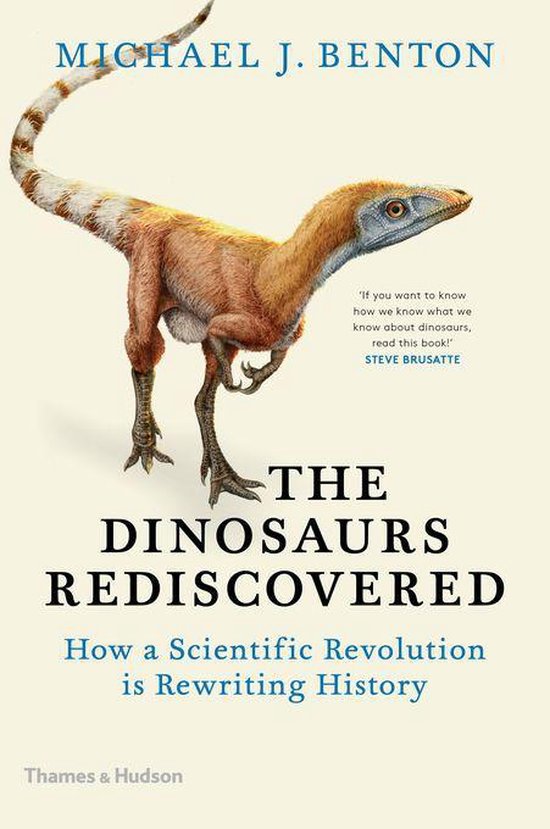
Dinosaurs Rediscovered: The Scientific Revolution in Paleontology, by Michael J. Benton:
I picked up this book from the library, inspired by my recent viewing of Jurassic World: Dominion, and found this book to be a mixed bag. I enjoyed some of the stories behind discoveries or changes in perspective on dinosaurs and their world… but I found other such stories to be irrelevant or out of place. In general, the flow of the book was a bit haphazard. The information within sated my appetite for dinosaurian (and some non-dinosaur) biology and ecology temporarily and I enjoyed the illustrations and figures.
Ant Ecology, edited by Lori Lach, Catherine L. Parr, and Kirsti L. Abbott:
Because this is an edited multiauthored volume, it becomes difficult to review the whole, as chapters are written with different topics and by different people. Overall, this was an interesting look at more recent ant research (20 years more recent than my other source for ant knowledge: The Ants by E. O. Wilson, written in 1990). There is a heavy conservation and practical (invasive ecology) focus to the book which may attract workers in these fields.
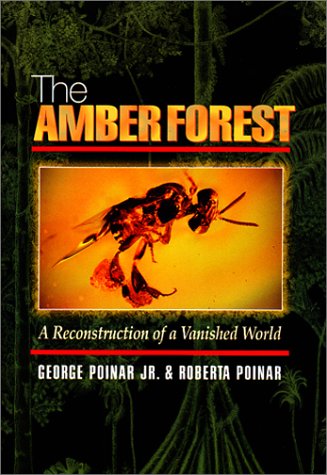
The Amber Forest: A Reconstruction of a Vanished World, by George Poinar Jr. and Roberta Poinar:
Fascinating gallery of ancient organisms preserved in amber of a particular age and location. Mostly insects and other arthropods which is fine by me, I enjoyed the overview of insect relationships and such that were covered alongside the representatives of the different groups found in amber. The format was a little strange and took some getting used to, I feel like there could have been a better way to present the images and the text but I don’t know, felt a little awkward flipping back and forth throughout reading. All in all, very interesting especially if you like insects and fossils.
A Naturalist At Large, by Bernd Heinrich:
A fun tour through various natural history topics. Bernd Heinrich is curious about the nature he observes and doesn’t take things for granted and by doing so, he discovers by bits and pieces, fascinating natural history stories. I especially liked the chapters focused on birds or insects, perhaps due to my own interests and knowledge but I think perhaps it is because those were Bernd Heinrich’s research focuses as well and his insight there was thus enhanced.
Biology and Conservation of Wild Canids, edited by D. W. Macdonald and C. Sillero-Zubiri:
A great review of Canid Conservation around the world. The case studies were interesting snapshots of species under investigation from Grey Wolves of Isle Royale, in Lake Superior, to the Blanford’s Fox in the deserts of the Middle East. While not comprehensive on the biology/ecology of canids (some species didn’t even get a case study chapter such as Bush Dogs), this was an excellent primer on the diversity of species and challenges in the canid research world.
Are We Smart Enough to Know How Smart Animals Are?, by Frans de Waal:
A book aimed at tearing down the division between human and “animal” cognition. Presents a wide array of anecdotes and experiments that demonstrate that human thinking is a matter of degree and not a separate category altogether from the millions of other species on this planet. I was a bit disappointed that the author focused mainly on chimpanzee research (his own specialty) but this served to really break down the idea that human thinking is a different sort from other species as chimpanzees display many of our ways of thinking that humans previously considered unique to our species. I would have loved to read more about cognition in diverse species and phyla, the one section on invertebrates was intriguing but all too short, but all in all the book presents its arguments well, and discusses the history of thinking about animal thinking in an interesting and thought-provoking way.
That concludes my writing and reading overview for the past blogging year! Stay tuned for more nature sightings, observations, photos and natural history!







 Norfolk Naturalist