Categories
Point Pelee Observations, May 2024

Birding Bonanza, Part 2: Icteridae

After the Swallows, the most abundant and frequently encountered birds that I photographed on my recent Point Pelee trip were the New World Blackbirds (Icteridae). Unlike the swallows, I have seen and photographed all 3 of the Icterids I saw on this trip in my own backyard in Simcoe. There are 105 species of Icterids worldwide that range across North, Central and South America (Elphick 2019), so as always the species I encountered are the tip of this bird family’s iceberg.

Red-winged Blackbird (Agelaius phoeniceus):
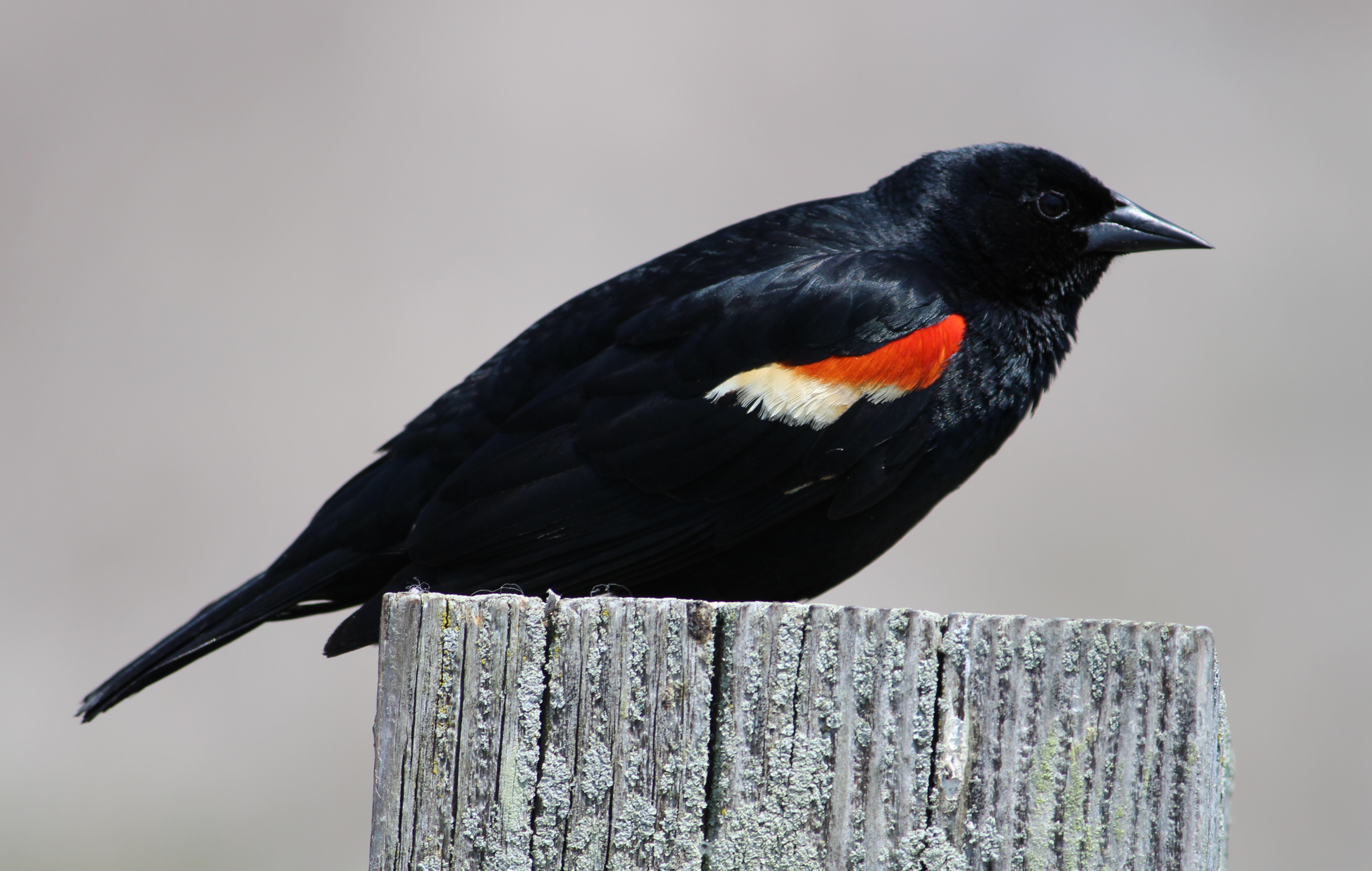
Not only are Red-winged Blackbirds abundant, they are also very noticeable thanks to their loud and frequent “Oh-ka-leeee!” calls and territorial behaviour. Males arrive earlier in the Spring to secure territories, and females arrive to survey the prospective male mates. Female Red-wings look strikingly different (we’ll see clear sexual dimorphism again with another species below), and it’s likely because the male and female blackbirds are under very different pressures from their very different behaviours. Besides being distinctly patterned, male and female Red-wings are also very different sizes, males being much larger. These differences are likely the result of the Red-winged Blackbird mating system, where male Red-wings fight and signal among themselves to establish territories and female Red-wings choose the male to join, but as always in biology, establishing the data is very difficult and there isn’t an easy answer. I’ve been reading The Red-Winged Blackbird by Les Beletsky and it’s fascinating how much research has been done on this widespread species, and yet even still there are so many mysteries about its behaviour and biology (Beletsky 1996).
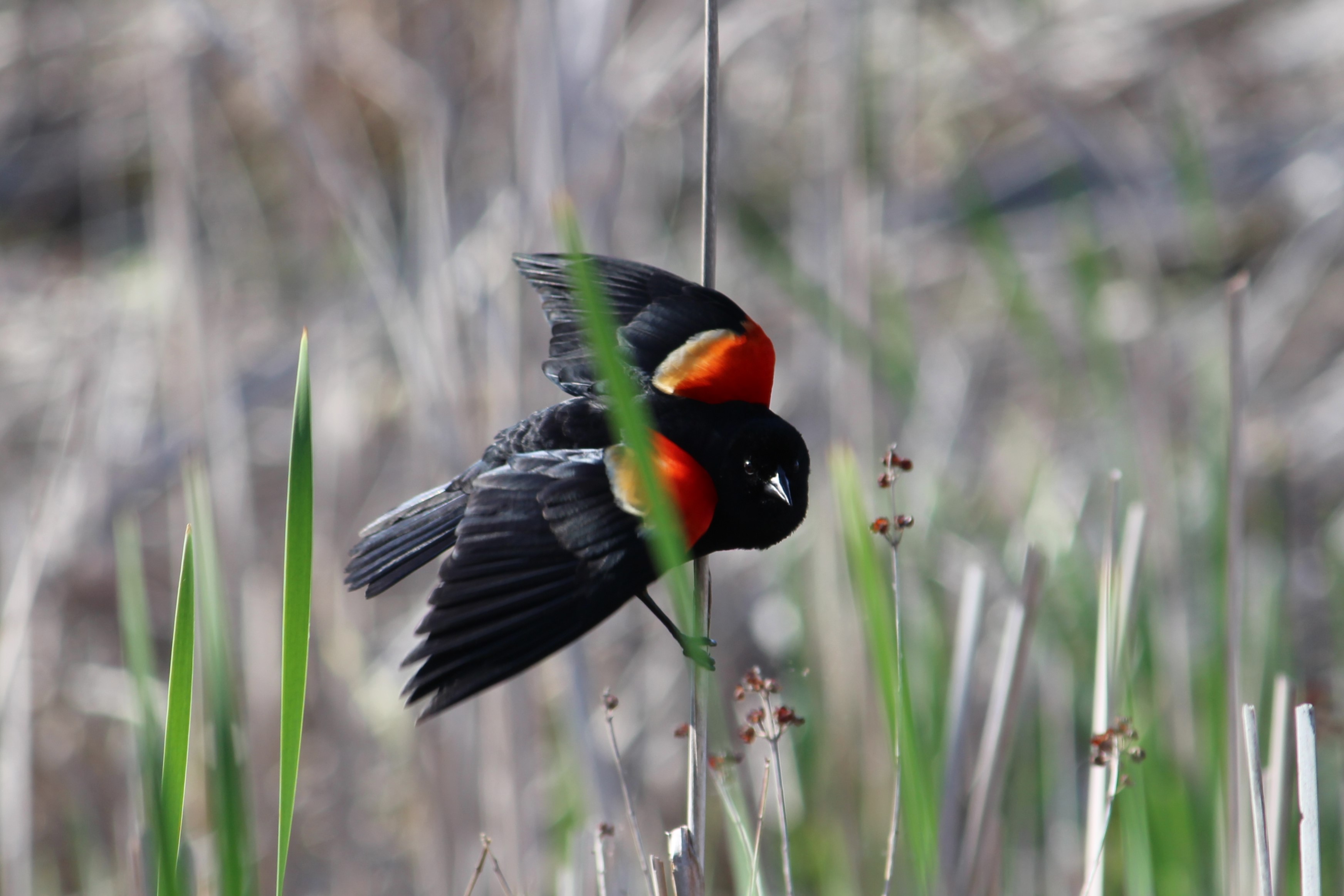
According to the ROM Field Guide to Birds of Ontario (Hughes 2001), Red-winged Blackbirds are year-round residents along the north shores of Lake Erie, but I believe they become less noticeable outside of the summer breeding season because they are no longer calling and pronouncing territories.

Common Grackle (Quiscalus quiscula):
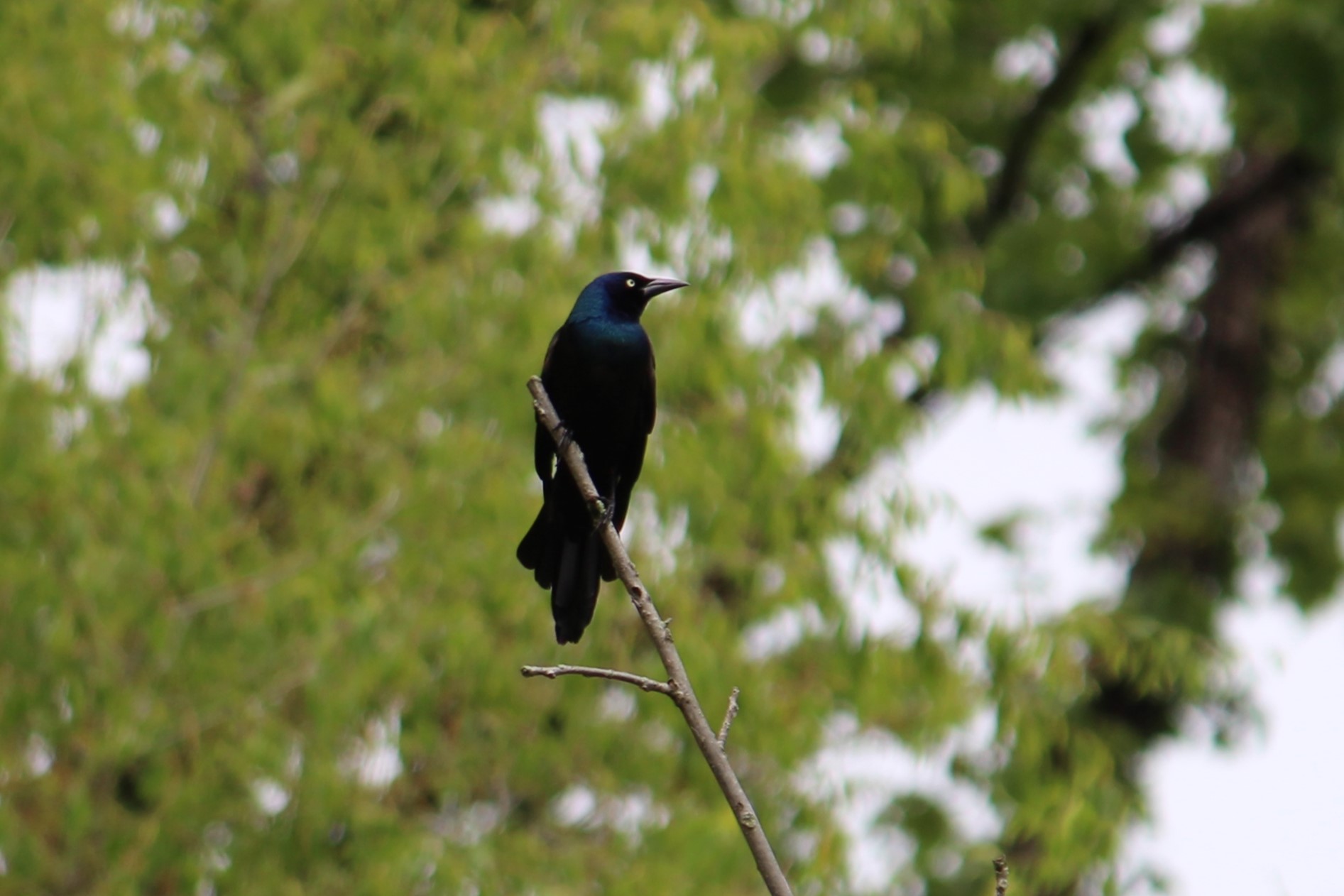
Common Grackles are a familiar sight and sound to many people. Like Red-winged Blackbirds, their call is harsh, metallic, and frequent. Grackles are year-round residents of Southern Ontario, feeding in grain fields during fall and winter (Bezener 2016). Apparently their diet is quite varied overall, as demonstrated in a list of food items from the National Audubon Society Field Guid to North American Birds: “insects, crayfish, frogs, mice, nestling birds, and eggs as well as grains and wild fruits” (Bull and Farrand 1994).

Baltimore Oriole (Icterus galbula):
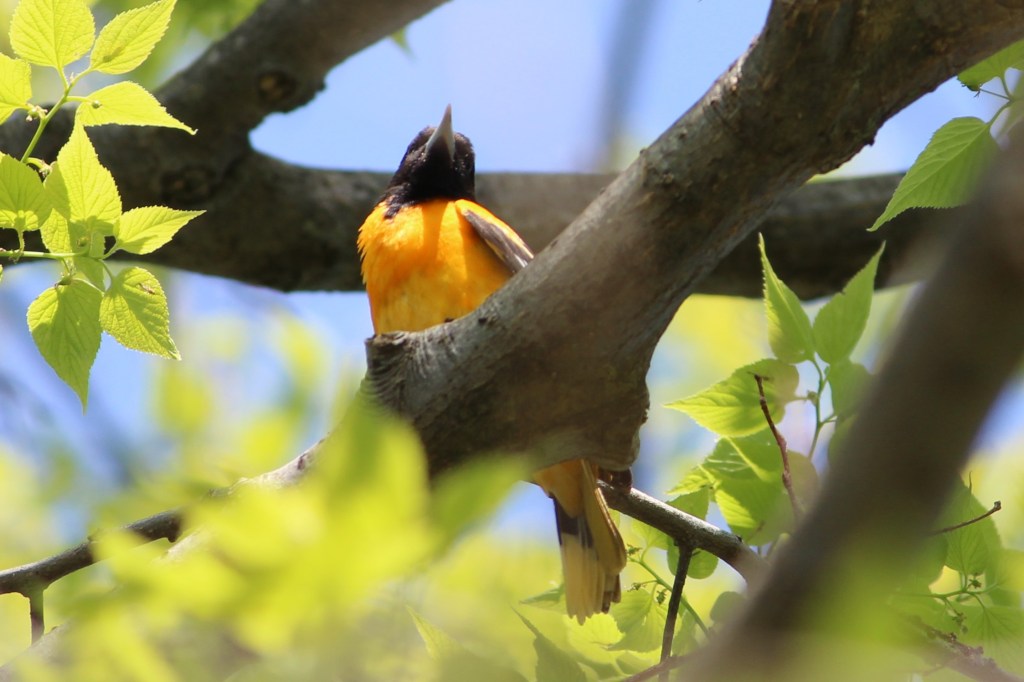
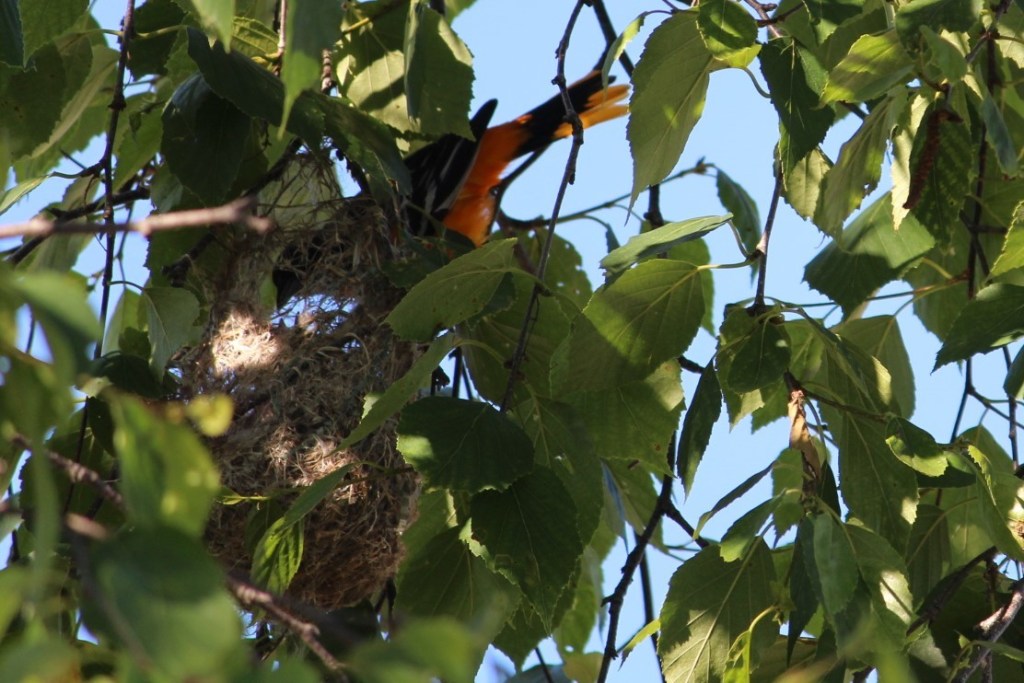
Orioles are a beautiful and welcome Spring migrant here in Southern Ontario. Of all the backyard birds that I have seen and photographed, Baltimore Orioles* seem to bring the Tropics north with them. Their brilliant colours, sharp and clear song, and fruit-seeking behaviour all seem to show how at-home they would be among the tropical rainforests they live in for half the year. Every year, I await the return of these beautiful birds to my backyard where they scoop up grape jelly in their long and thin beaks.

*Baltimore Orioles are named after the coat-of-arms of Cecil, the 2nd Baron Baltimore, who owned the state (then colony) of Maryland for a time (his coat-of-arms is featured on the Maryland flag). The heraldry is orange-and-black just like the plumage of the male Baltimore Oriole. “Oriole” likely comes from the Latin word for “golden” also in reference to the rich colours of these wonderful birds. The name Oriole was originally applied to a family of birds in Europe and Asia but was later used for some bright members of the New World Blackbird family (Icteridae). New World Blackbirds are named “Blackbirds” because the darkly coloured members of the group reminded Europeans of the Blackbirds (Turdus merula) back home, which are Thrushes (Turdidae). The Family name Icteridae comes from another colour reference, this time referring to the yellow-feathered members of this group (such as female Baltimore Orioles), ikteros is a Greek word for ‘yellow bird’ (Elphick 2019). Aren’t names fun?
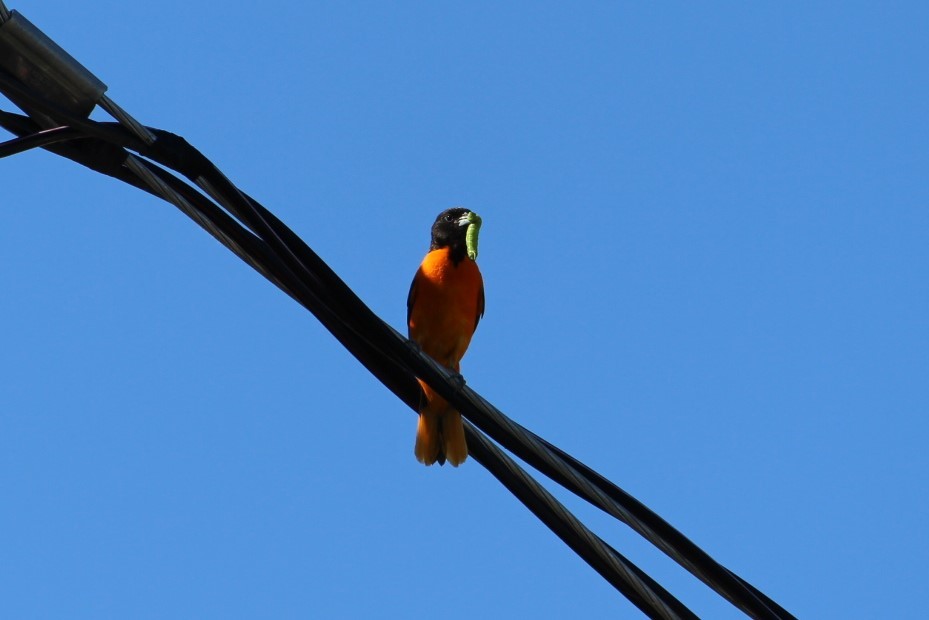
Baltimore Orioles fly all the way from South America (some winter as far north as Mexico) to my backyard in Southern Ontario, and they never cease to delight me with their song and bright colours.

That’s 2 Bird Families observed on my Point Pelee trip down! Only 20 or so more to go!

References:

Beletsky, Les. 1996. The Red-winged Blackbird: The Biology of a Strongly Polygynous Songbird. Academic Press.

Bezener, Andy. 2016. Birds of Ontario, New Edition. Lone Pine Publishing.

Bull, John, and Farrand, John Jr., 1994. Field Guide to North American Birds: Eastern Region. Chanticleer Press.

Elphick, Jonathan. 2019. The Handbook of Bird Families. Firefly Books.

For the previous post in this series, see:

Birding Bonanza, Part 1: Hirundinidae

And for similar posts about bird observations, see:

Warbler River (Algonquin Observations August 2023, Part 3)

Port Burwell Observations, July 2023

The American Woodcock in Literature and in Life

Terns, by David Cabot and Ian Nisbet

Eaters of the Dead

The Teal Tale Teale Told

Bullfrogs and Buffleheads

A Green Heron Stalks the Shallows
Return of the Ravens

3. Canada Jay (Perisoreus canadensis)

The Wonders of Wrens

A Visit to Big Creek, Part 2

A Visit to Big Creek, Part 1

Categories
Algonquin August 2023

Peck Lake Trail (Algonquin Observations August 2023, Part 4)

One of my favourite trails within Algonquin Provincial Park is the Peck Lake trail, because it circles a lake, offering a variety of habitats with their various inhabitants. Edge habitat (habitat that is at the edge of habitat types, such as coastlines or riversides) is often more diverse than core habitat (the center of a habitat range, eg. The middle of a forest), for obvious reasons: the edges of a habitat type contain representatives from the habitats surrounding it and species that are unique to the edge itself. So there are ecological reasons that this sort of habitat would be especially diverse in species and I have certainly found a large complement of creatures along this trail on my visits through the years. 2023 was no exception.

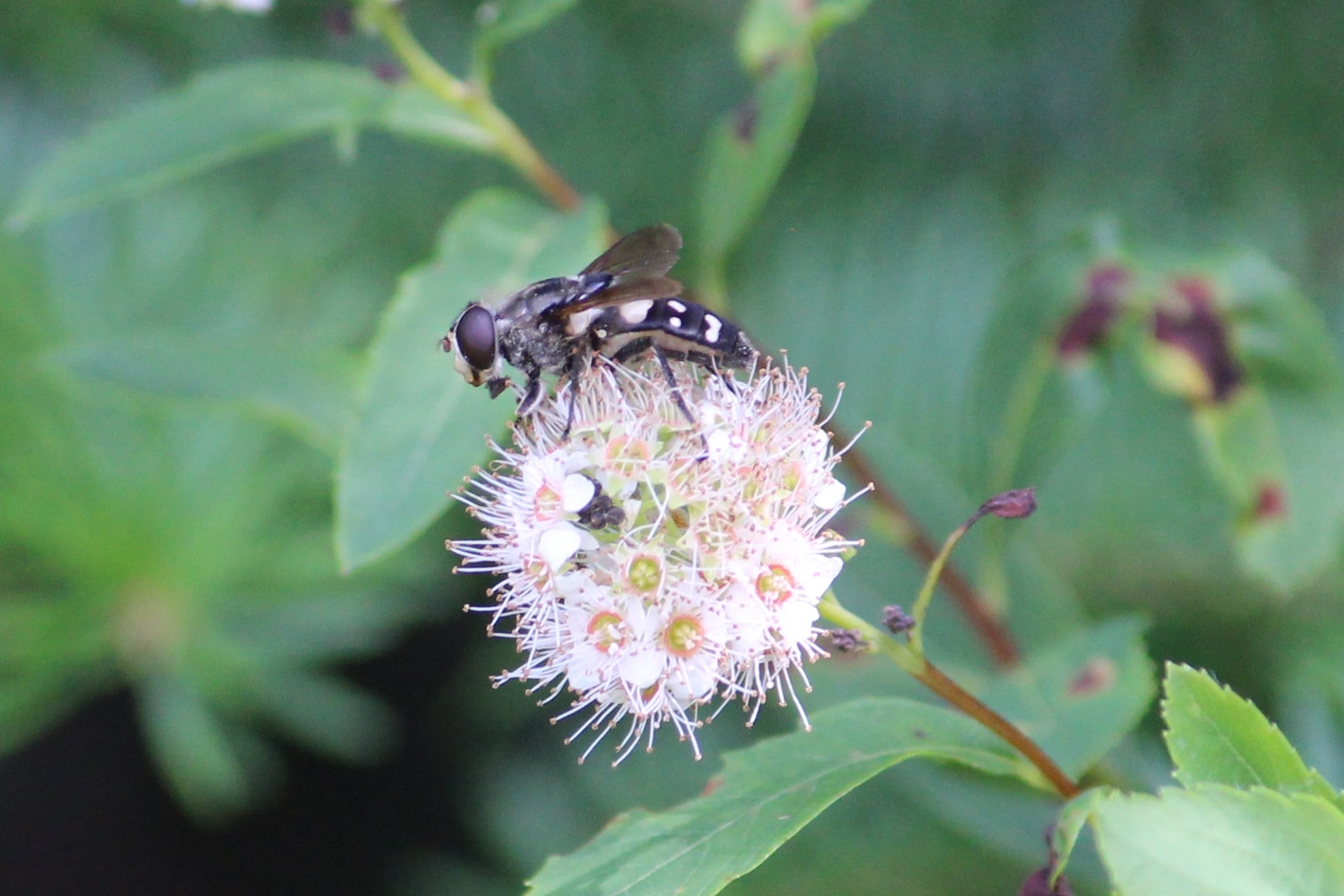
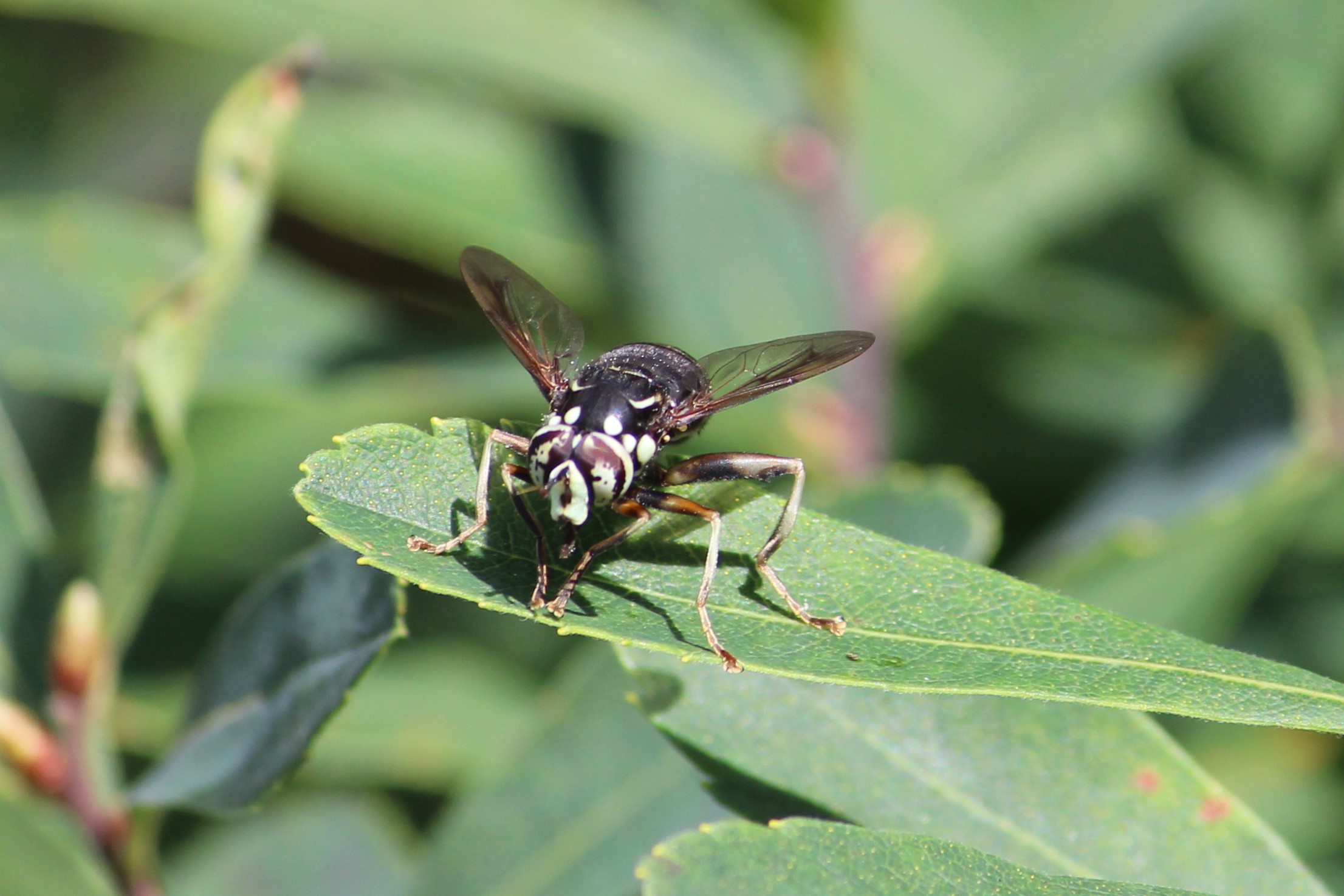
Bordering the lake were several patches of flowers, which were visited by many wasps, bees and flies (many of which resembled wasps or bees themselves). Bumblebees were abundant, and there were a few wasp-mimicking flies among them. Both pictured below are members of the Flower Fly family (Syrphidae).

White-spotted Pond Fly (Sericomyia lata).
Bald-faced Hornet Fly (Spilomyia fusca)

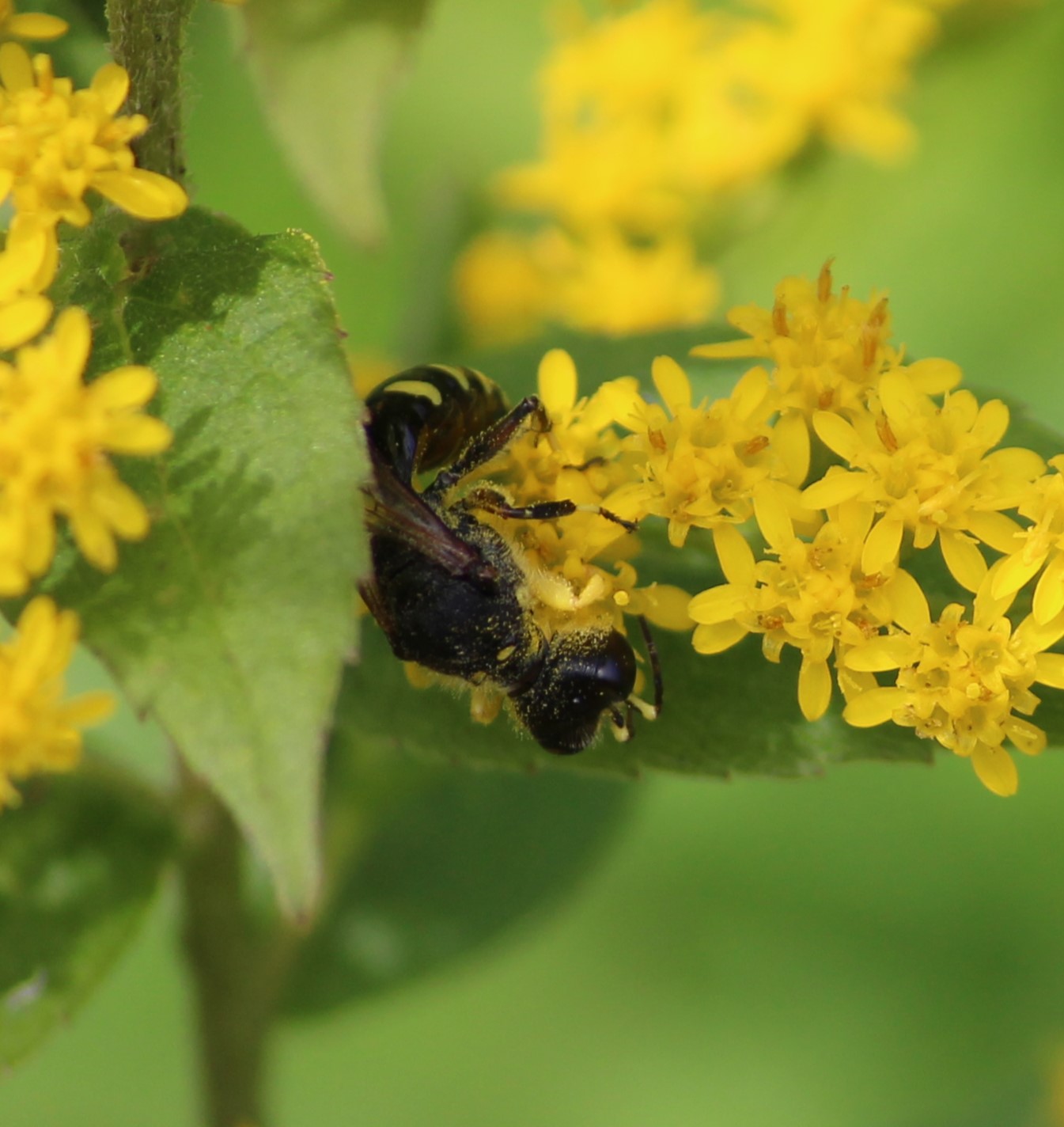
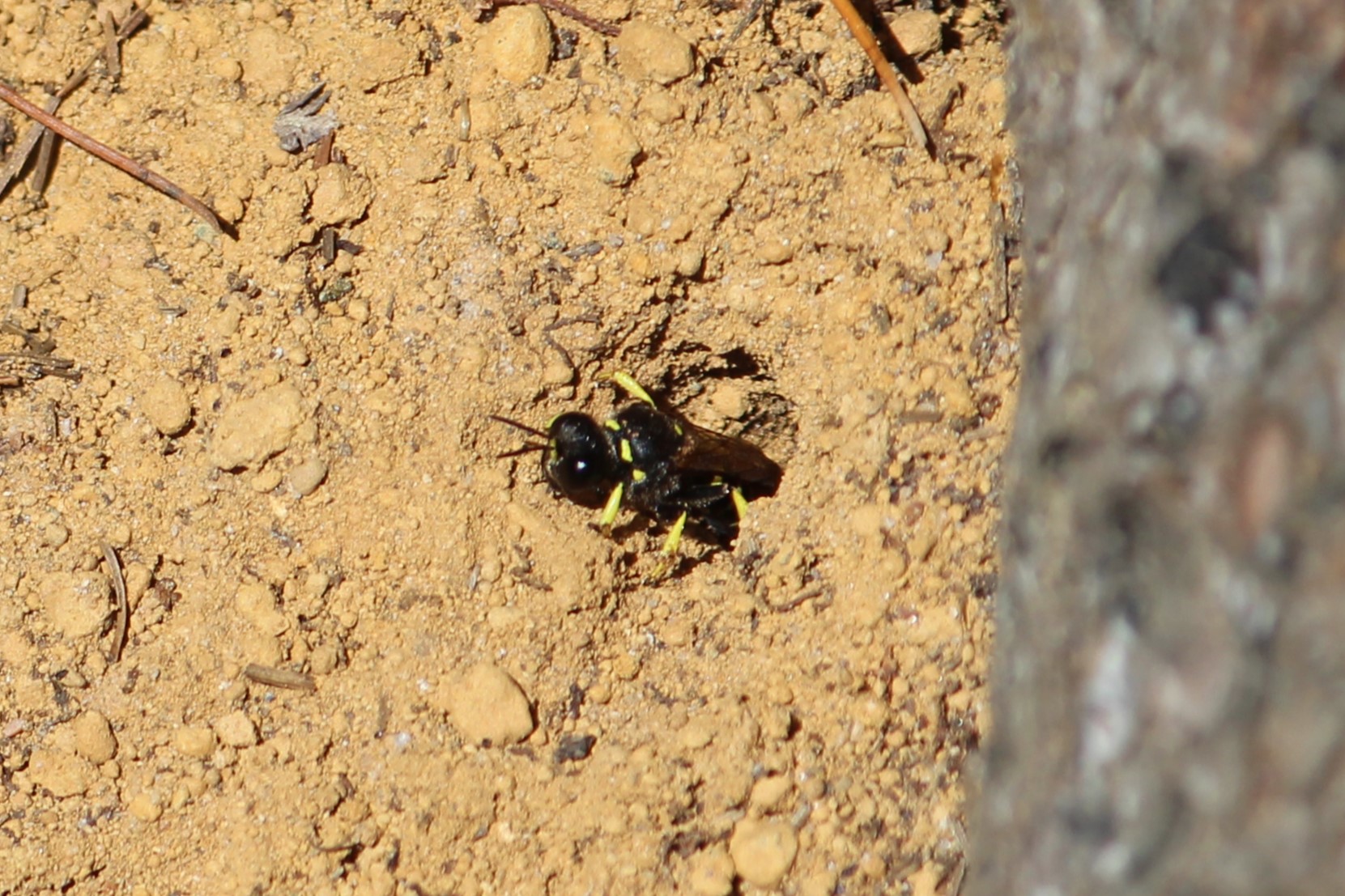
Of course, not all flower visitors were wasp mimics, many were the real thing. A crabronid of the genus Ectemnius was seen visiting a flower and another crabronid was seen emerging from its burrow at a different part of the trail. When I was first reviewing my photos I assumed that both members of the family Crabronidae that I observed dug into the ground for their nest burrows. Crabronidae is associated in my mind with “burrowing solitary wasps”. But Ectemnius wasps actually often nest in dead wood or plant stems (Holm 2021).

Ectemnius, a Crabronid wasp visiting a flower.
Crabronid wasp emerging from its burrow.

Another flower-visiting wasp was the intriguingly named “Parasitic Aerial Yellowjacket” (Dolichovespula arctica). As you might have guessed, this species is parasitic… and if you know how social parasitism works, then you could have guessed its host: another member of the Dolichovespula genus (Bald-faced hornets, D. arenaria or D. alpicola) (Holm 2021). After a non-parasitic wasp nest is beginning in Spring, a queen of this species will join and start laying her own eggs. She doesn’t produce workers like her hosts, but instead produces female and male reproductives only and through social aggression she forces the host’s workers to rear her young (Holm 2021). After some of her young are reared, she will kill the host queen and the nest will start to collapse (as yellowjacket/hornet nests do every year in the fall), workers will lay their own eggs which will hatch into reproductive male wasps (Holm 2021). After mating, the D. arctica queens will find hibernation sites in order to wait out the winter and start the cycle of revolution all over again next spring.

Parasitic Aerial Yellowjacket (Dolichovespula arctica).

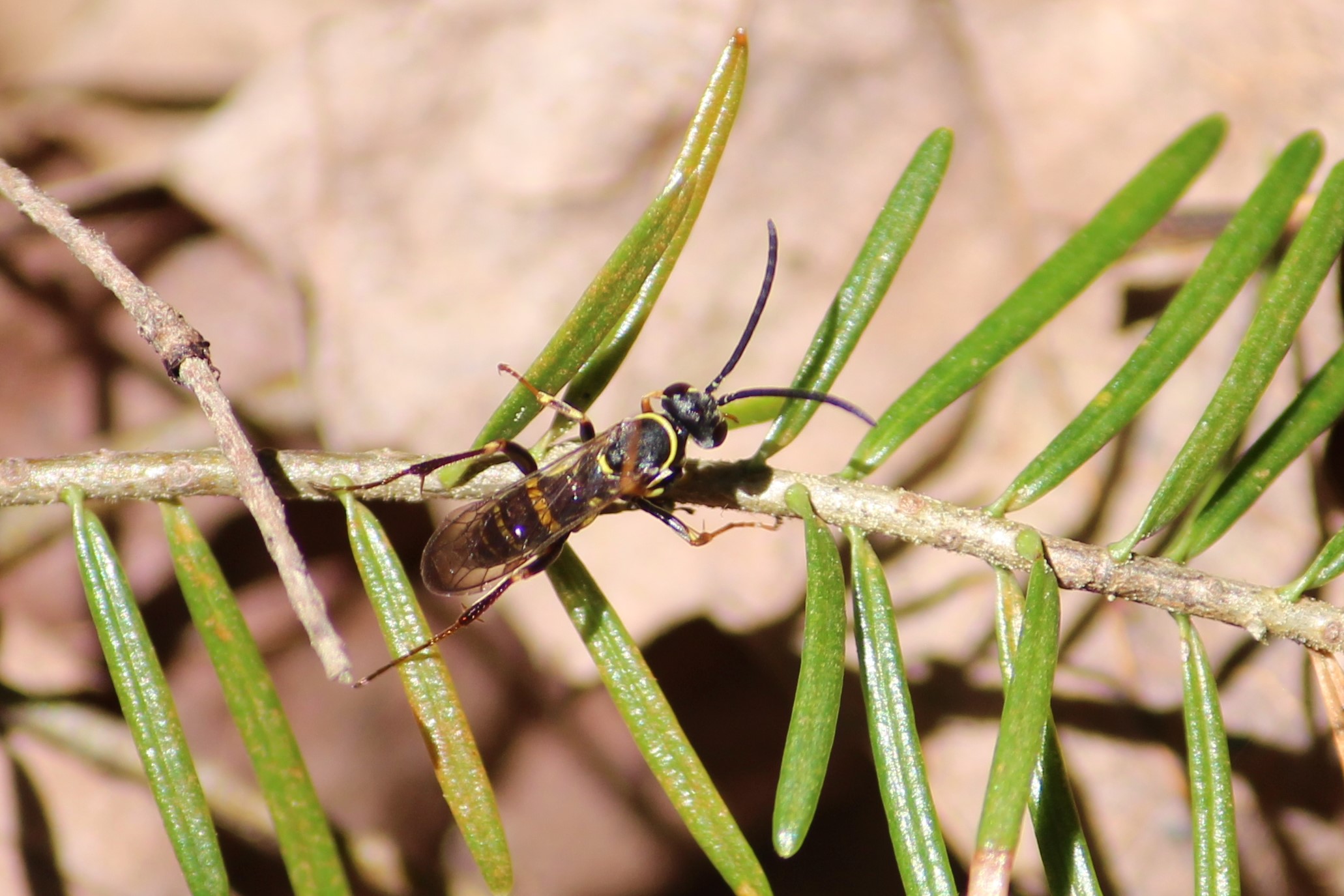
One other wasp was observed not on a flower, but on the branch of a tree, its bold coloration catching my eye. The Spotted Cuckoo Spider Wasp (Ceropales maculata) is another wasp which doesn’t create its own nest. Like the Parasitic Aerial Yellowjacket described above, this wasp usurps the nest of another related wasp, this time a non-parasitic Spider Wasp (Pompilidae). C. maculata lays an egg in the host’s captured prey (a spider) before the host buries her prey along with her own egg. Within the host’s burrow, the Cuckoo Spider wasp egg hatches and the hungry larva consumes the host’s egg and the captured spider (Holm 2021).

Spotted Cuckoo Spider Wasp (Ceropales maculata).

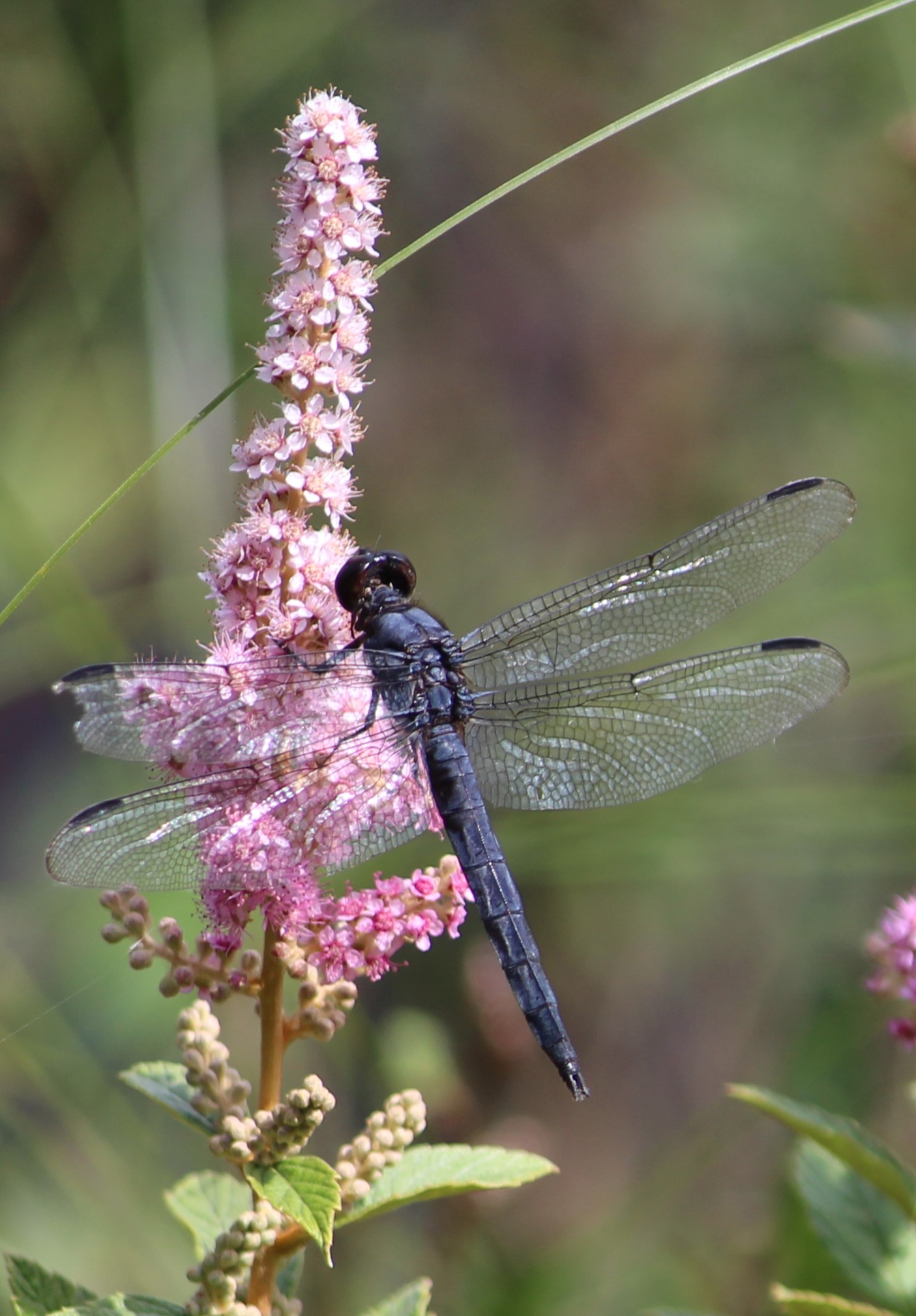
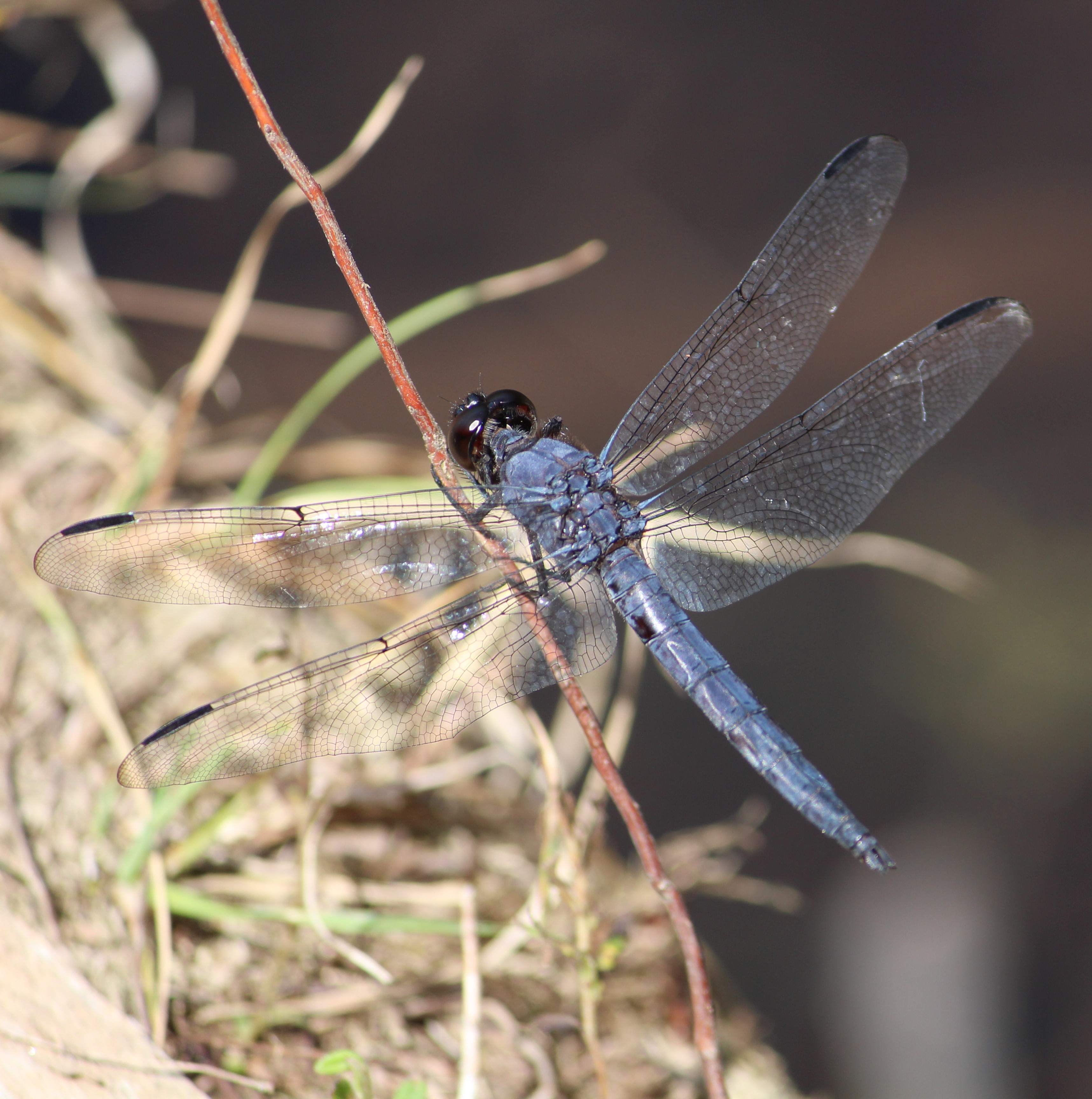
The Hymenopteran and Dipteran flower visitors were likely foraging in the flowers themselves for nectar and/or pollen, whereas other larger flower perchers were merely looking for a place to alight. Large and beautiful Dragonflies spread their wings in the morning sunlight while resting on lakeside flowers. The powdery blue bodies of the Slaty Skimmers (Libellula incesta) were particularly common and striking. These dragonflies were most obliging for my photographs, often allowing me to get quite close to their resting forms.

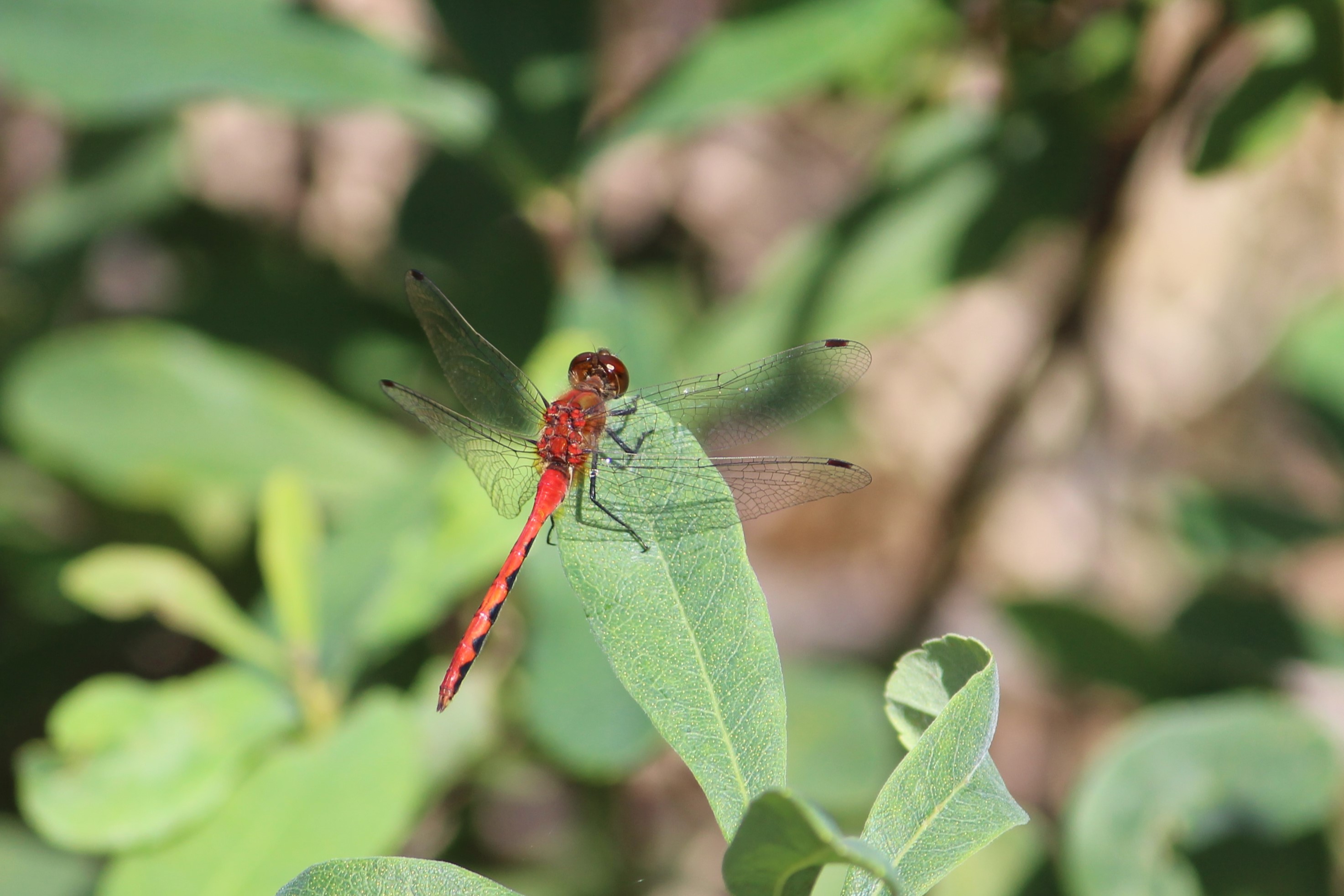
The sharp red of Meadowhawks (Sympetrum sp.) were also common along the lakeshore foliage.

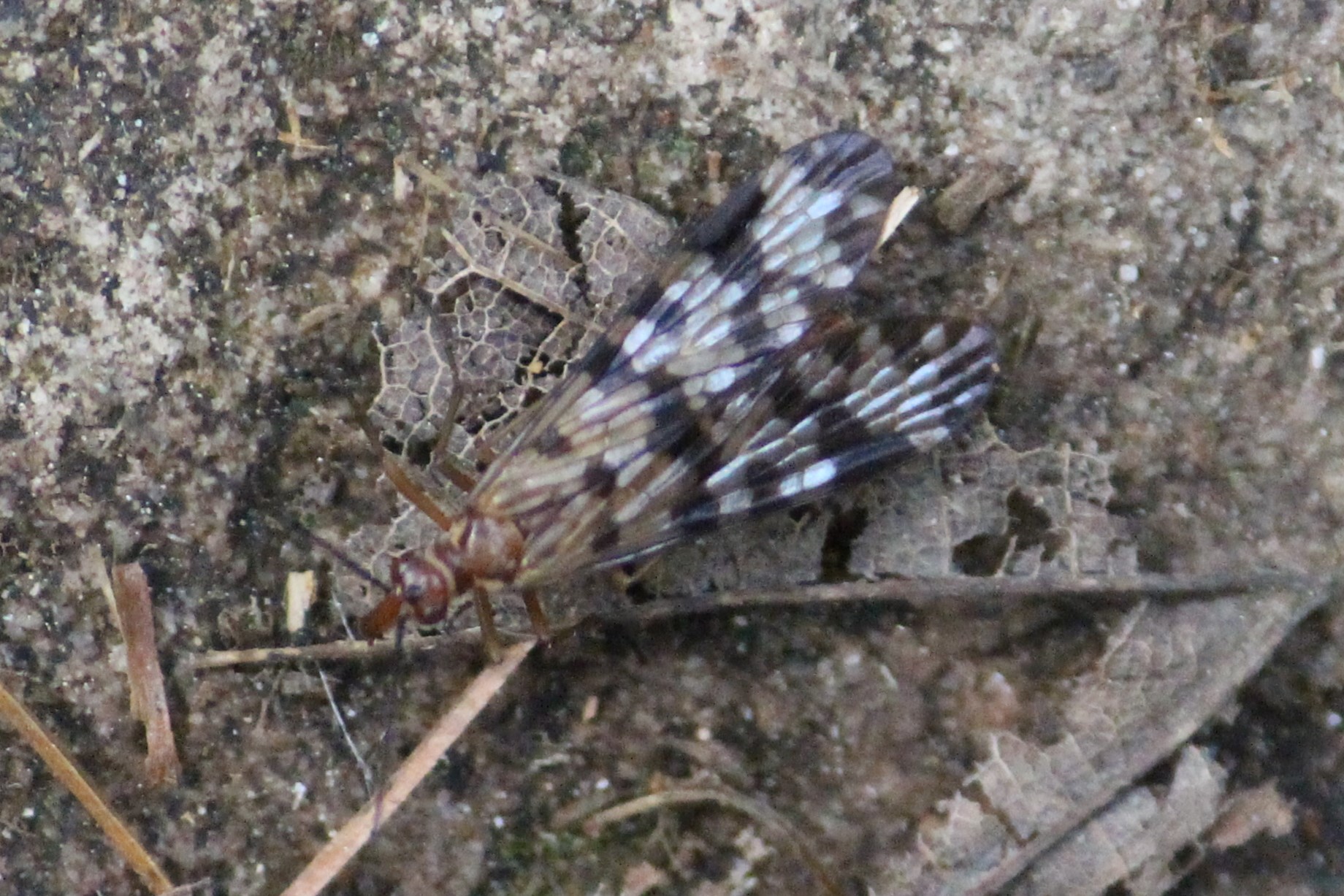
Rounding out the insect observations was a Scorpionfly (Panorpa sp.) which I spotted among the leaf litter.

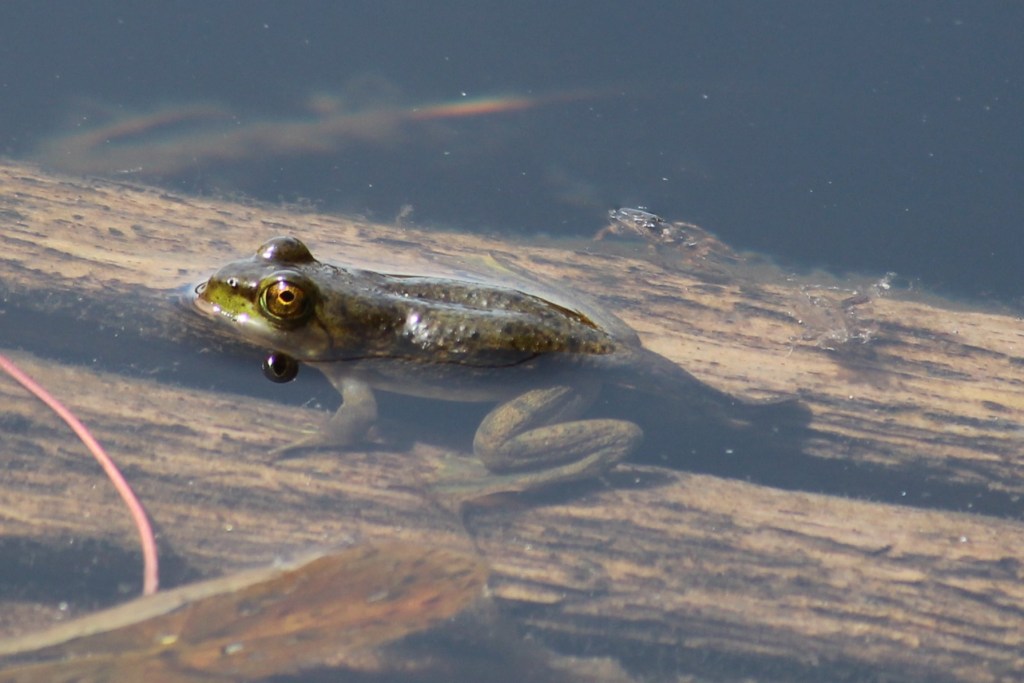
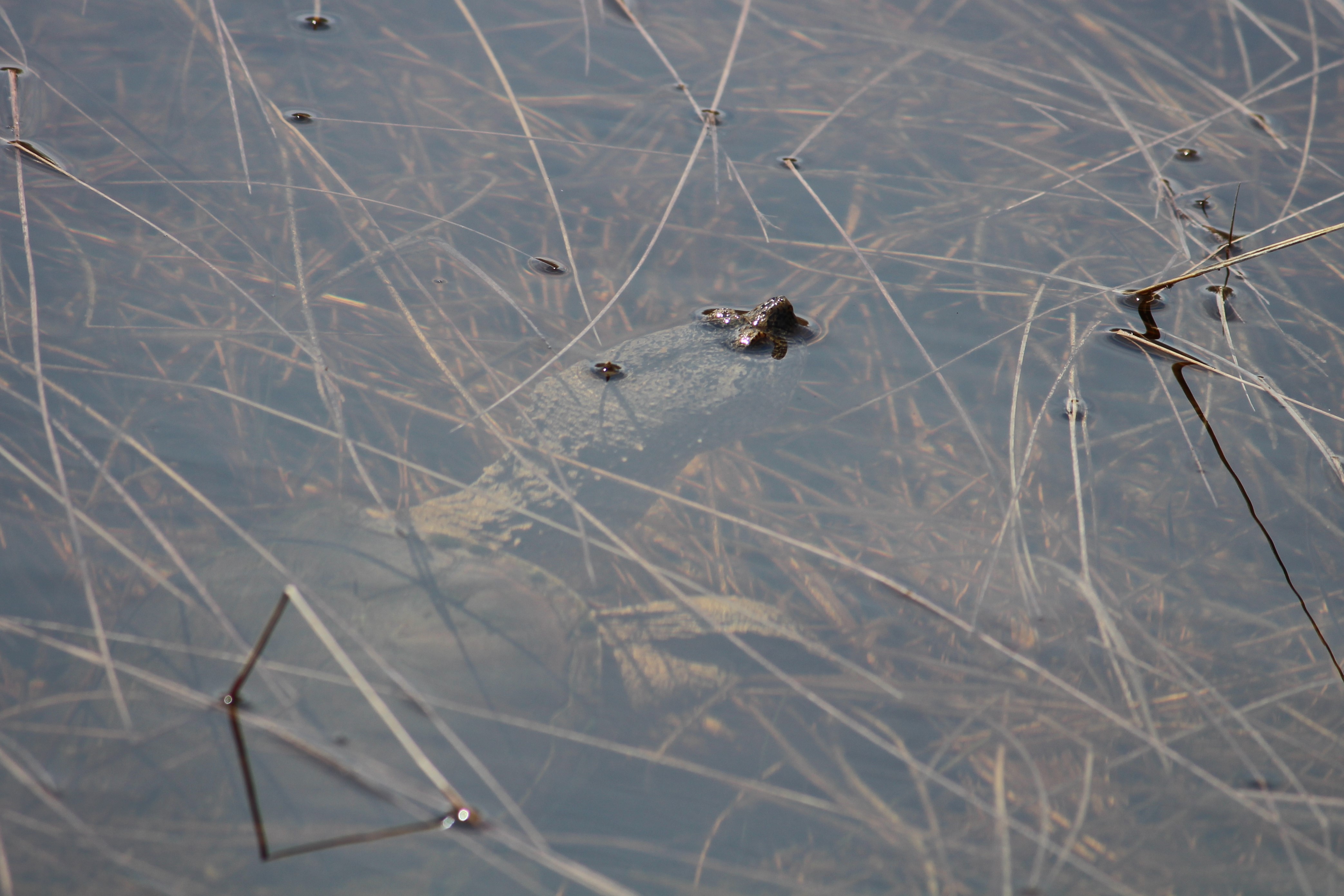
Within the lake itself, I spotted many frogs, and one was quite interesting in being at the penultimate stage of its ‘tadpole’ life, neither tadpole nor fully frog, this was a transitory creature.

The ‘transitory’ frog, no longer a tadpole, but not quite an adult frog.

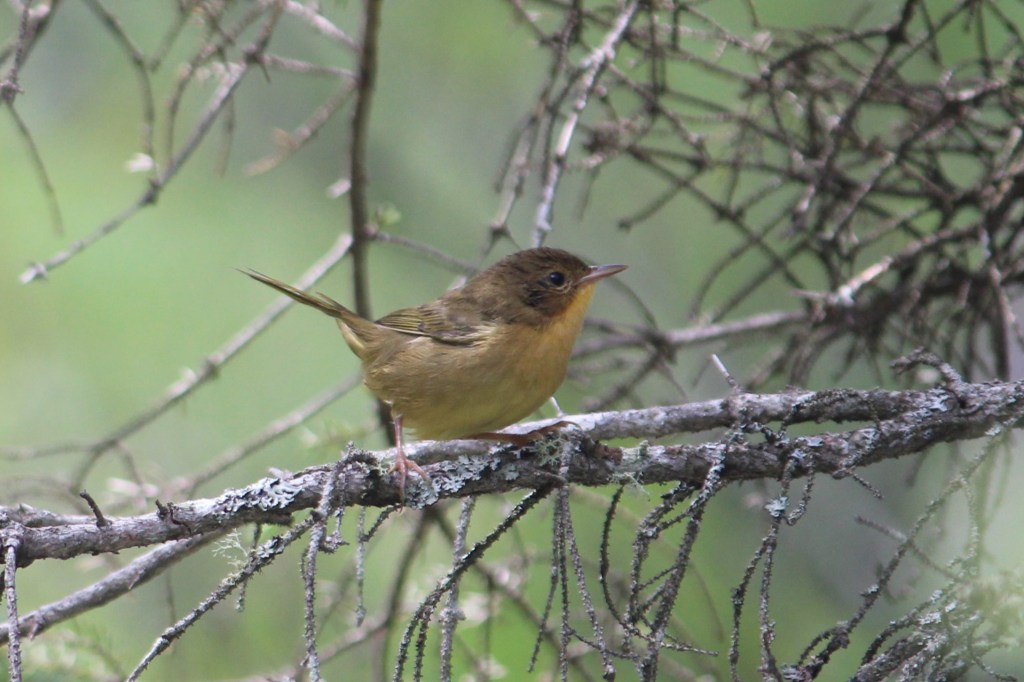
Among the branches above, I encountered two more wood-warbler species, not seen at the warbler river in Pog Lake (See Warbler River (Algonquin Observations August 2023, Part 3)). The Common Yellowthroat (Geothlypis trichas) is a bird that I associate with the wetlands of Long Point, not the woodlands of Algonquin, but Ron Tozer in Birds of Algonquin Park (2012), states “Probably the most widespread warbler, it is common in wet brushy habitats, weedy fields, and marshes through most of North America.”

Common Yellowthroat female, lacking entirely the black mask of the males.

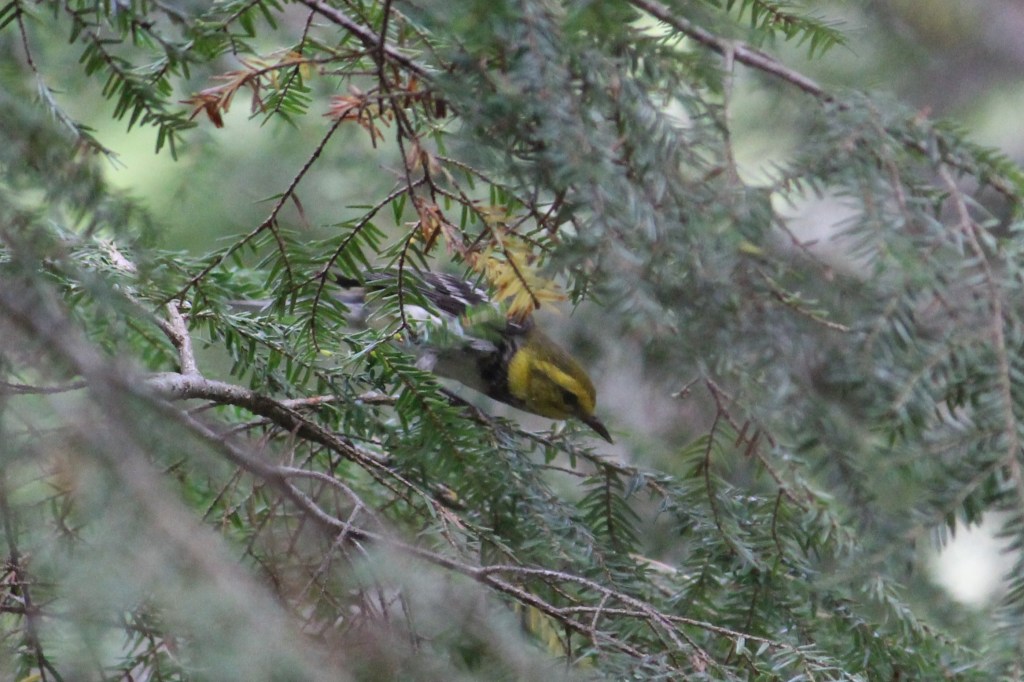
Another new Warbler for the trip was the Black-throated Green Warbler (Setophaga virens) darting among the conifer branches.

Black-throated Green Warbler (Setophaga virens).

Perhaps surprising, given my usual focus on insects and birds, my most striking observation on this trail walk was a plant.

One of the habitats merging with the edge of the lake was a small marshy area* which contained the dragonflies and frogs you might expect. But there was also a bog plant that I have never observed in the wild before and that struck me as particularly exciting: Round-leaved Sundew (Drosera rotundifolia).

*I will not get into the sinkhole that is wetland characterization… bog/marsh/swamp and other names in this vein are technically different things but ecologists often disagree what the parameters are for each or how to really define them. Although non-scientists might find it amusing, the controversy/discussion arises out of the importance in science of imposing definitions on the world in order to be able to dissect and discuss discrete entities and the real world often defies such limitations because it is just too complex of a system.

Round-leaved Sundews have highly modified leaves which sprout droplets which glisten in the sun. These droplets are sticky and insects which land on them are slowly entrapped by the folding leaves. Once an insect is trapped, the sundew secretes enzymes to digest its prey. The consumption of insect prey takes about a week or more (Eastman 1995). I was overjoyed to spot this amazing carnivorous plant, flourishing in its habitat within Algonquin Park.

References:

Eastman, John. 1995. The Book of Swamp and Bog. Stackpole Books.

Holm, Heather. 2021. Wasps. Pollination Press.

Tozer, Ron. 2012. Birds of Algonquin Park. The Friends of Algonquin Park.

For Previous Algonquin Observation posts, see:

Warbler River (Algonquin Observations August 2023, Part 3)

Lakeside Lives (Algonquin Observations August 2023, Part 2)

Campsite Companions (Algonquin Observations August 2023, Part 1)

Robber Fly Hunting Queen Ant

Algonquin in August

Canada Jay (Perisoreus canadensis)

Moose (Alces alces) Family

Algonquin Observations, Part 5 – Spruce Bog: The Reckoning

Algonquin Observations, Part 4 – Spruce Bog Speedrun and the Logging Museum Trail

Algonquin Observations, Part 3 – Peck Lake Trail

Algonquin Observations, Part 2 – Opeongo Road

Algonquin Observations, Part 1 – Pog Lake Campground

Categories
Top 20 Photos 2013-2020

My Top 20 Nature Photos of 2013-2020

I think this photo (taken in MacGregor Provincial Park May 2018) of a Snapping Turtle lurking at the air-water interface is pretty neat. But it didn’t make it into my personal top 20 Nature Photo list.

As you may know if you’ve been reading some of my earlier posts this year, I joined the Norfolk Field Naturalists this past Summer. This has meant joining with local nature enthusiasts for hikes (see NFN Fungi Hike posts, part 1, part 2, and part 3) and listening in on monthly presentations beginning in September. The December NFN meeting is going to be a “Members’ Night” in which members of the group can present up to 20 pictures or a short video of trips or observations of their own. I was excited by the prospect of sharing my photos and observations (as indeed I’ve been doing with this blog site).

So… what photos to select for my portion of the slideshow? I decided to present the highlight photos of my own past observations to demonstrate a bit about myself and my experiences.

I realized that I needed to pick out 20 of my top observations/nature photos of all time. At first 20 seemed like a lot… but going through my personal archives of nature photos I soon came to understand that it would actually be quite difficult to decide on which photos to include as I have take quite a few over the past several years.*

*literally thousands of photos of hundreds of species

So, to help narrow my choices down I eliminated this past year, 2021. I did this for a couple of reasons: 

  1. I would like to go over my 2021 nature photos on my blog (and I already have showcased many here), and I wanted to do something different for this presentation, ie. I wanted to review other photos and observations than ones I was already planning to write about.
  2. I believe I have truly improved a lot in my nature photography and I personally think that 2021 contains some of my best photos. If this is true, then this past year of observations might get over-represented in a list of “best nature photos”.

2021 out of the way, I only had about 8 years of nature photos to trawl through for those greatest hits. To decide which photos to include in my list, I considered the following:

  1. First and foremost, they had to be good pictures, high-quality, focused, nice composition. I usually don’t think of my pictures in this way because I’m interested and excited by the organisms involved and not the quality of the photos per se. But for a slideshow I wanted to have only the most crisp clear photos.
  2. Unique or rare organisms or behaviour were preferred. I have taken many pictures of Honeybees (Apis mellifera) and American Red Squirrels (Tamiasciurus hudsonicus) but unless they were doing something interesting or were exceptionally beautiful shots I wanted to compile a list of the more rare (to me) species that I’ve seen and photographed.
  3. Taxonomic Variety. I wanted the photos to reflect my own interests in nature which is pretty wide in scope, encompassing basically all that’s living with a particular emphasis (partly just because I can observe and photograph them more regularly and easily) on Insects and Birds. In other words, I didn’t want the 20 top photos to be a list made up of half Hymenoptera and half Lepidoptera, I wanted to have a good variety of organisms from across the tree of life.

As you can probably tell from the above, the list at the end of the day is quite… arbitrary. It’s my own decision what to include and what not to include, what’s particularly interesting and what organisms are different enough to showcase. I feel like this preamble is more for myself than for anyone else because I think everyone already assumes that a list such as this will be arbitrary but I felt while picking photos I needed to have some sort of guidelines to create a somewhat representative list. Anyway, boring stuff out of the way, next post will be the first of 20 of my top 20 Nature photos taken between 2013 and 2020!

Until then, I will leave you with a few of my photos that didn’t quite make it into my final list:

Downy Woodpecker (Dryobates pubescens) on the Lynn Valley Trail, February 2018:

Bog Copper Butterfly (Tharsalea epixanthe), in Algonquin Provincial Park, July 2018:

Six-spotted Tiger Beetle (Cicindela sexpunctata) on the Lynn Valley Trail, May 2020:

Categories
June 2021 Observations Nature Observations

The Wonders of Wrens

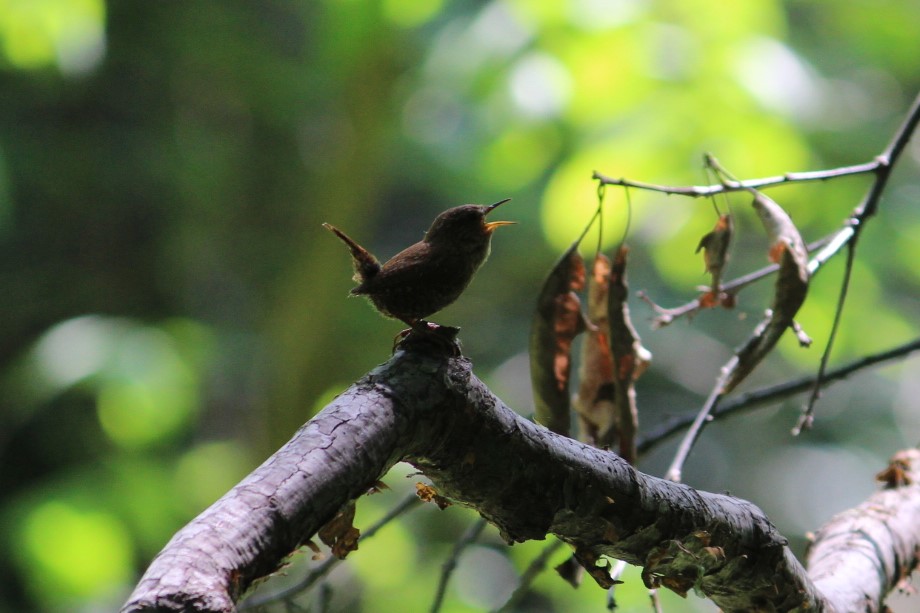
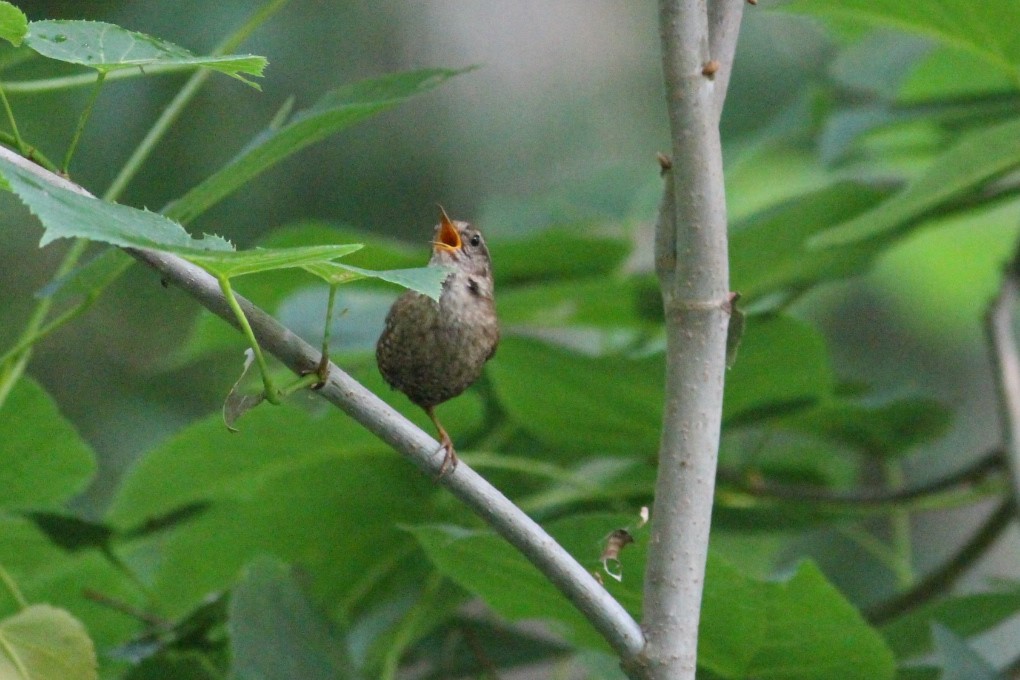
Twice on the Lynn Valley trail this past month, I managed to get some pictures of Wrens singing. These tiny birds burst with song much larger than themselves and it’s always a treat to see or hear them. 

When I saw and photographed the two Wrens, I assumed them to be the same species, and even possibly the same individual bird. I had found them in the same general location on the trail, separated by about a week and in location maybe only 100 metres away from each other. After submitting the pictures to iNaturalist (a website I use extensively for my observations and identifications), they were identified as two separate species in the same Genus. The Genus was Troglodytes, an evocative title for such small birds, one that stems from their habit of nesting or foraging in hidden holes, which I suppose are like caves. My first Wren spotting was a Winter Wren (Troglodytes hiemalis).

Winter Wren

The Winter Wren constructs its nest of twigs and moss and often hides it in one of the most incredible places: the tangled roots of fallen trees (Bull and Farrand Jr., 1994). When I encounter fallen trees, I have often been struck by the vertical clifflike nature of the mass of dirt still held fast by thick tree roots. On these miniature cliff faces, the Winter Wren hides its nest, and hides it so well that they are notoriously difficult to find. Bernd Heinrich, in his excellent book Winter World, describes the nest as “a snug little cavity with walls camouflaged with a lattice of moss and conifer twiglets” (p 61). Amazingly, only the Male Wren constructs the nest (at least in the two Wren species I’m writing about here) and he will often create more than one as part of his territory, from which the female can choose her favourite. When the female chooses one of these nests, she will add the lining of fur or feathers and the male will know that his territory has been accepted (Stokes 1979). This strategy of nest building (though not the nest location) applies to the other species I spotted on the Lynn Valley Trail: the House Wren (Troglodytes aedon).

The most conspicuous feature of Wrens (the Family Troglodytidae) in my experience is their stiff little tails and the way they flick them around often perpendicularly to their backs. According to A Guide to Bird Behavior, the tail is raised more and more to the vertical with increasing excitement or disturbance. This seems to indicate that I’ve rarely observed calm Wrens. House Wrens don’t nest among the upturned roots of fallen trees like the Winter Wrens, but instead in a natural or manmade cavity. The House Wren’s acceptance of human-made structures for nesting is the origin of their name. Besides nesting in nest boxes constructed by people for birds, House Wrens will apparently also nest in mailboxes, flowerpots, and jacket pockets that are hanging outside (Bull and Farrand Jr. 1994). I can think of few more appealing things to find in my jacket pocket than the nest of a tiny bird.

References:

Stokes, Donald W. A Guide to Bird Behavior. 1979.

Bull, John and Farrand Jr., John. National Audubon Society Field Guide to North American Birds: Eastern Region, 1994.

Heinrich, Bernd. Winter World, 2003.

For more Bird Observations, see:

-Nature Observations: Pinery, Winter 2019

-Feeding Opportunities

-Eaters of the Dead

And for more photos and natural history check out my instagram: norfolknaturalist!

Categories
June 2021 Observations Nature Observations

A Visit to Big Creek, Part 2

This is the second loop of my journey through the Big Creek Conservation Area Trail. For part 1, go here.

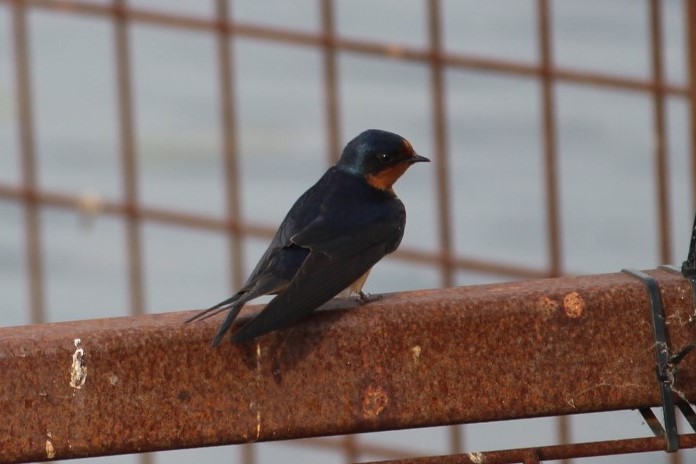
Having returned to the parking lot, I saw some amazing aerial masters. Similar to the Kingfisher and the Black Terns, I saw Barn Swallows (Hirundo rustica) maintaining a single position in the air, this time in groups. They were incredible to watch, and thankfully one landed for a moment so I was able to get a clear photo of it.
Barn Swallow, kindly sitting still for once for a picture.

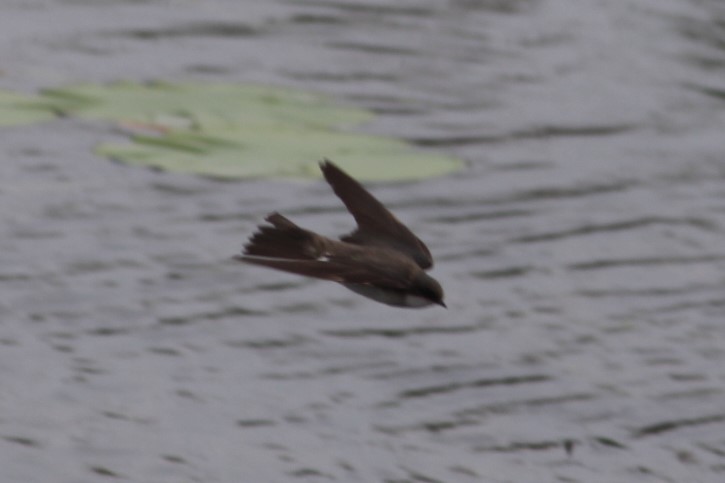
It was only recently that I realized there were so many different species of Swallows in our area. Later in this same hike I took (very blurry) pictures of two other species: Tree (Tachycineta bicolor) and Northern Rough-winged (Stelgidopteryx serripennis) Swallows.

I saw more Mute Swans, this time sleeping with their elongate necks tucked around themselves. In the picture below, you can really see how bizarre that long neck looks when it’s not extended.

Mute Swans, sleeping and preparing to sleep.

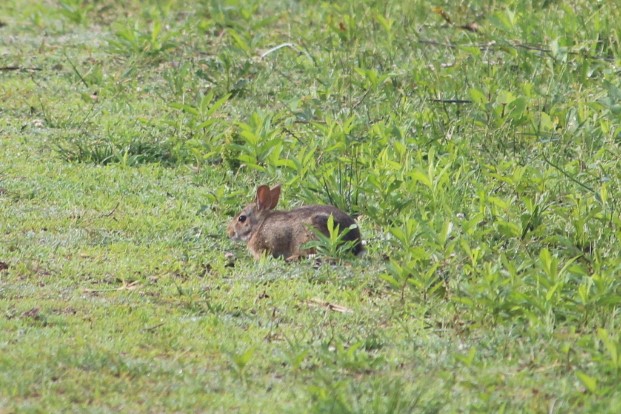
A small brown shape on the path ahead revealed itself as an Eastern Cottontail (Sylvilagus floridanus). Wikipedia says of this animal: “The cottontail prefers an area where it can hide quickly but be out in the open.” This seems to describe my sighting perfectly as the rabbit was fully exposed on the path, but disappeared into the plants at the edges as soon as I neared, and I was unable to spot it again.

Eastern Cottontail Rabbit frozen by my presence, until it disappeared into the vegetation.

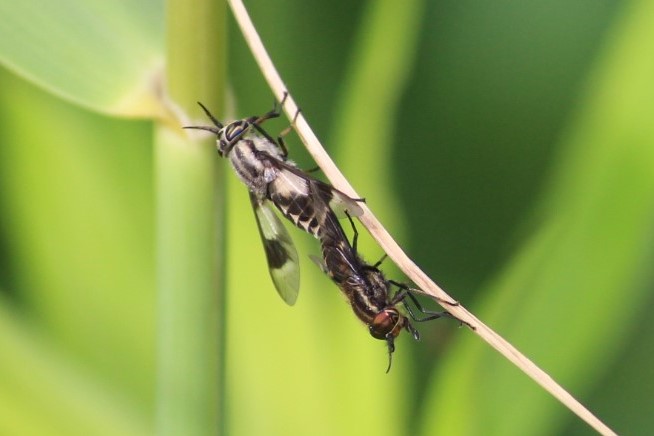
One of the only Insect observations I made were some mating Deer Flies (Genus Chrysops). Although they cause pain when they bite and can be determined adversaries, when you get a good look at them you realize they are also quite beautiful. Look at those wonderfully strange eyes and patterned wings.

Mating pair of Deer Flies.

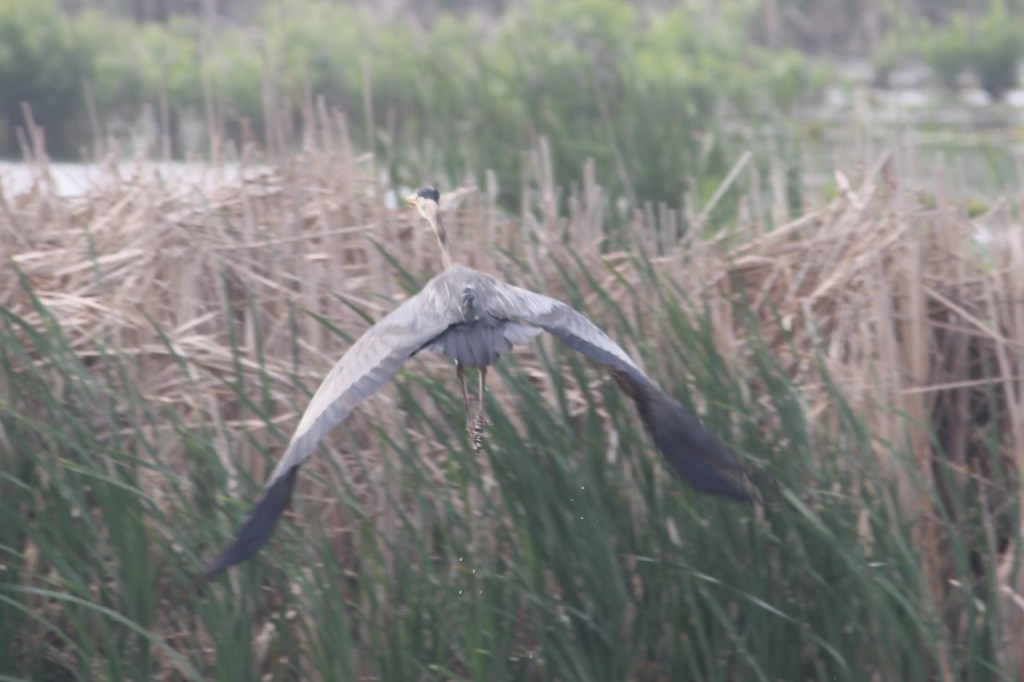
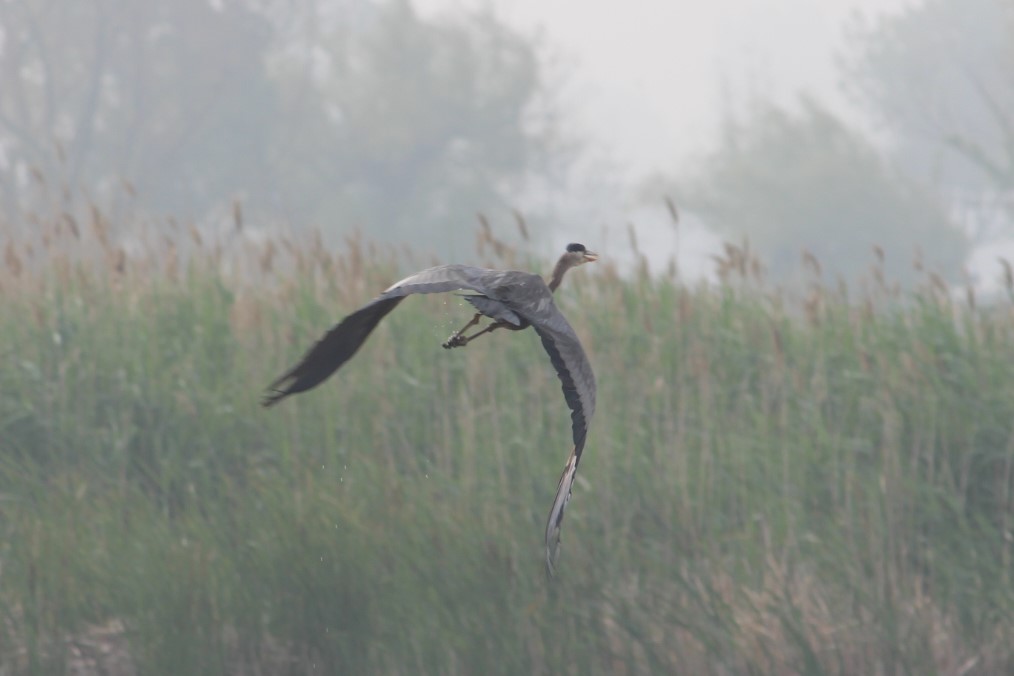
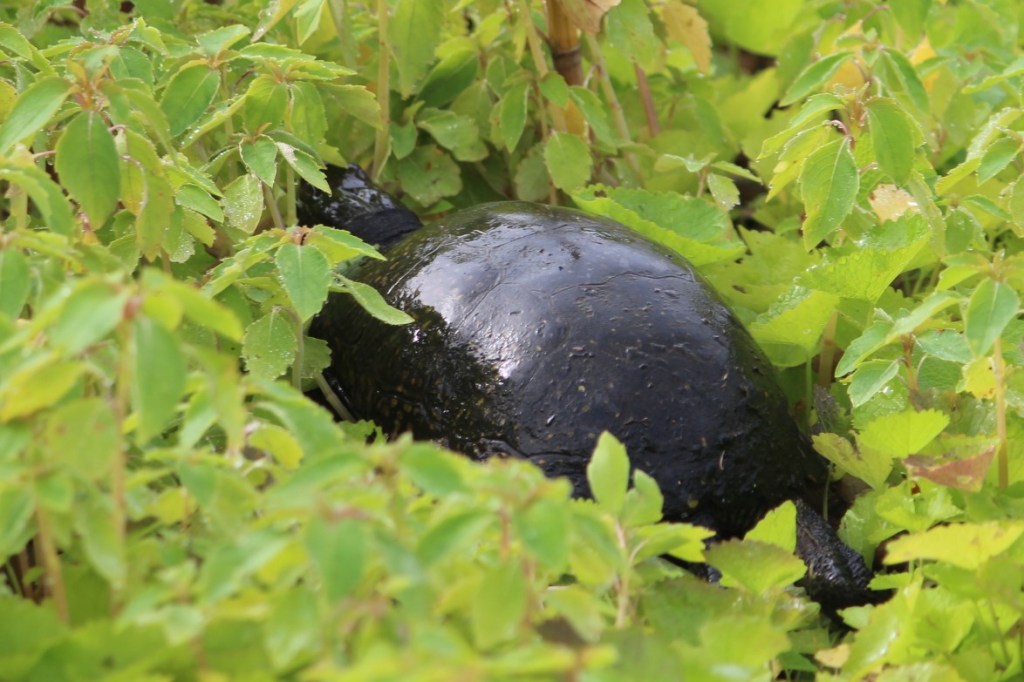
I had to pass through the Redwing assault again, and once through I saw the rarest observation of my hike. A black dome was crossing the trail at a decent rate for what I quickly realized was a turtle. In my excitement I couldn’t get the zoom lens to focus on the turtle for some reason. As I was trying to get a picture, I rushed forward, hoping to get a good picture of the turtle before it disappeared into the undergrowth that it was making for. While doing this, I startled something to my left. A Great Blue Heron (Ardea herodias) took to the skies, disturbed from its ambush site by the turtle-seeking human. I quickly snapped a couple of pictures of the Heron before moving forward, hoping to still find the Turtle.

After this mutual startling, I made it to the location of the Turtle, which had reached the shelter of the vegetation. I was still able to see the turtle (it was, after all, not moving incredibly fast) and took a few pictures of its shell. From this, I was able to determine that it was a Blanding’s Turtle (Emydoidea blandingii). I have only ever encountered Snapping Turtles and Painted Turtles before, so this was a very exciting sighting for me, even if I didn’t get a good photo.

My clearest shot of the Blanding’s Turtle as it barreled through the undergrowth.

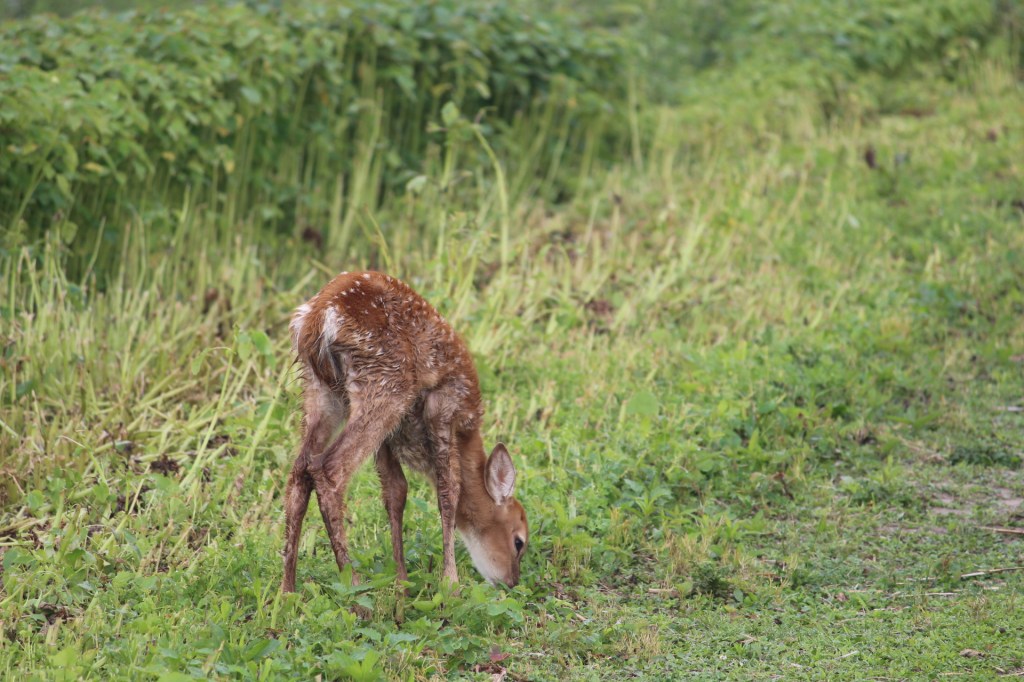
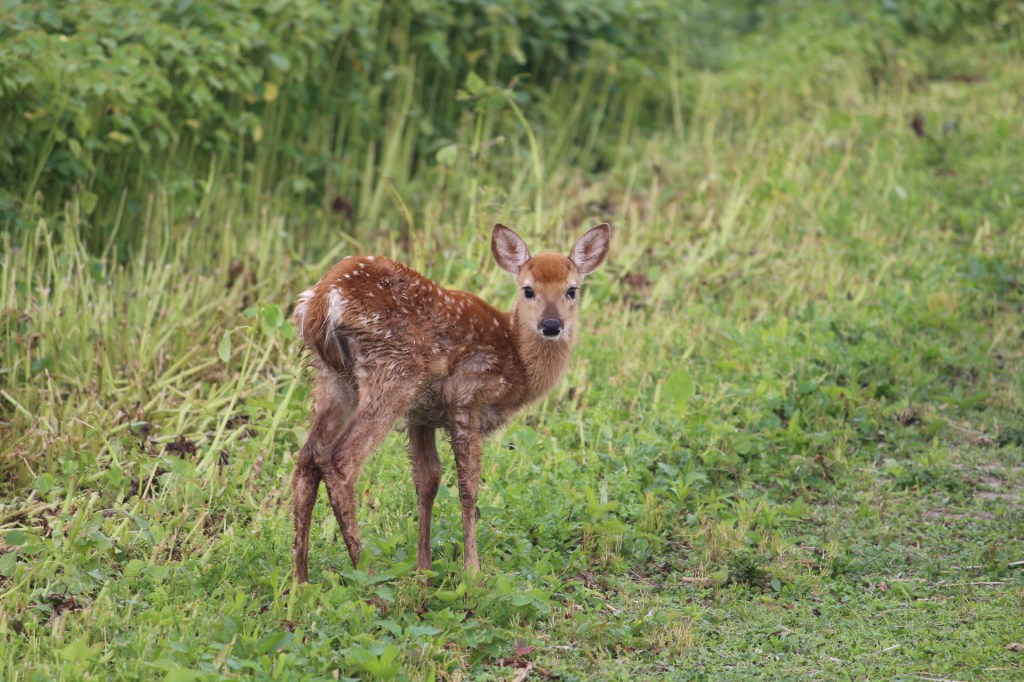
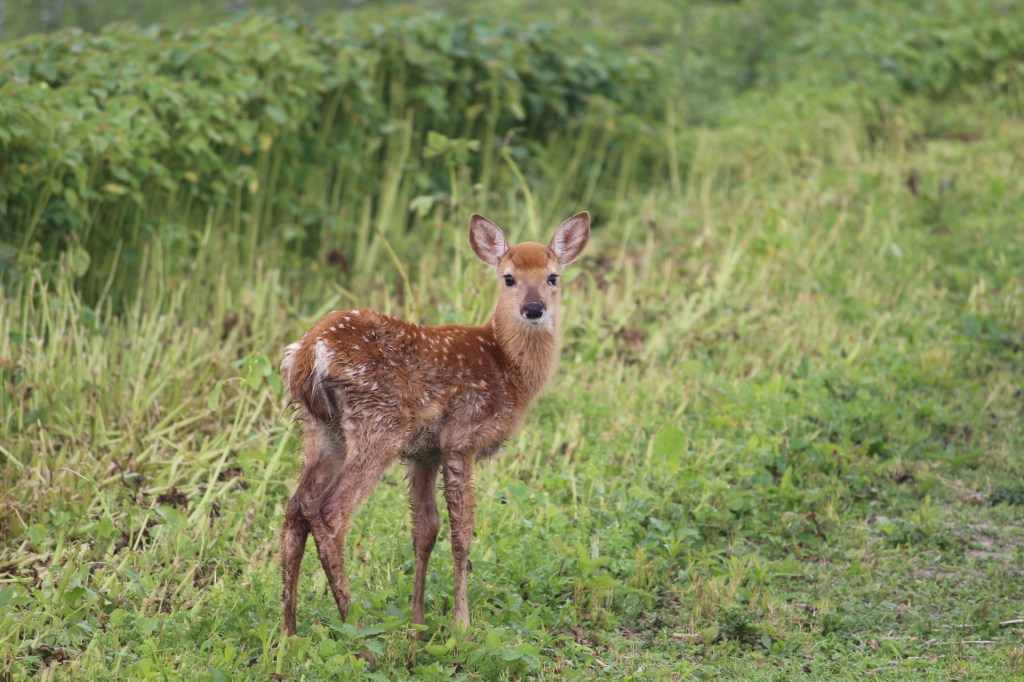
Just a few dozens of meters further I came upon a young deer browsing in the middle of the trail. It still retained the spots of a fawn, and was smaller than an adult but certainly not a helpless baby. The deer seemed pretty unaware of me until I was quite close so I got some good pictures as it looked at me and after it saw me it wandered off into the marsh.

I could hear Marsh Wrens all around making their buzzing calls, but they are extremely difficult to spot and even more difficult to capture with the camera. This was one of my closest attempts, it’s almost as though the Wren is mooning me with its upright tail sticking out into the line of my camera instead of its chirruping face:

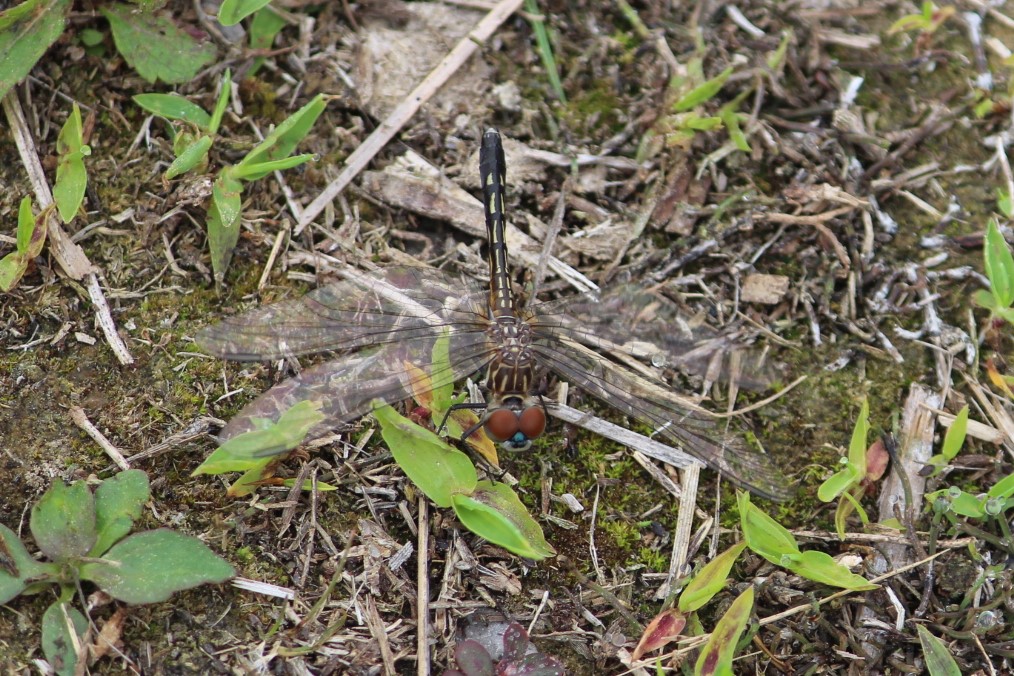
Most times in the summer, I have the Macro lens fixed to my camera because of the abundance of insect life, but on this trail I kept the telephoto equipped for all of the bird sightings I had. Near the end of my walk, I came upon a Dragonfly perched on the ground of the path and I was able to capture it adequately with the telephoto. It was A Blue Dasher Dragonfly (Pachydiplax longipennis), which occurs throughout most of the United States but only in the very Southern portions of Canada.

Blue Dasher Dragonfly resting in the path.

Ahead of me, meandering along the trail, was a pair of young Canada Geese (Branta canadensis). They were interesting to me, because they weren’t the Goslings following their parents and they weren’t Adult size either. The one appears to be much more “gosling-like’ than the other, which has started to acquire the characteristic facial markings of adult Canada Geese.

Young Canada Geese.

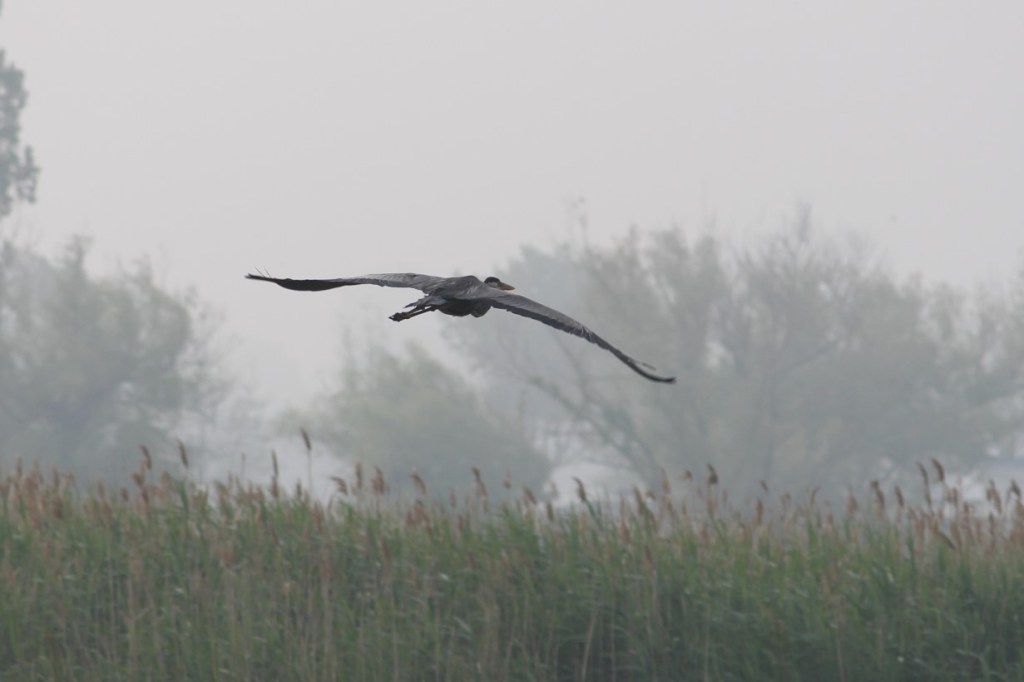
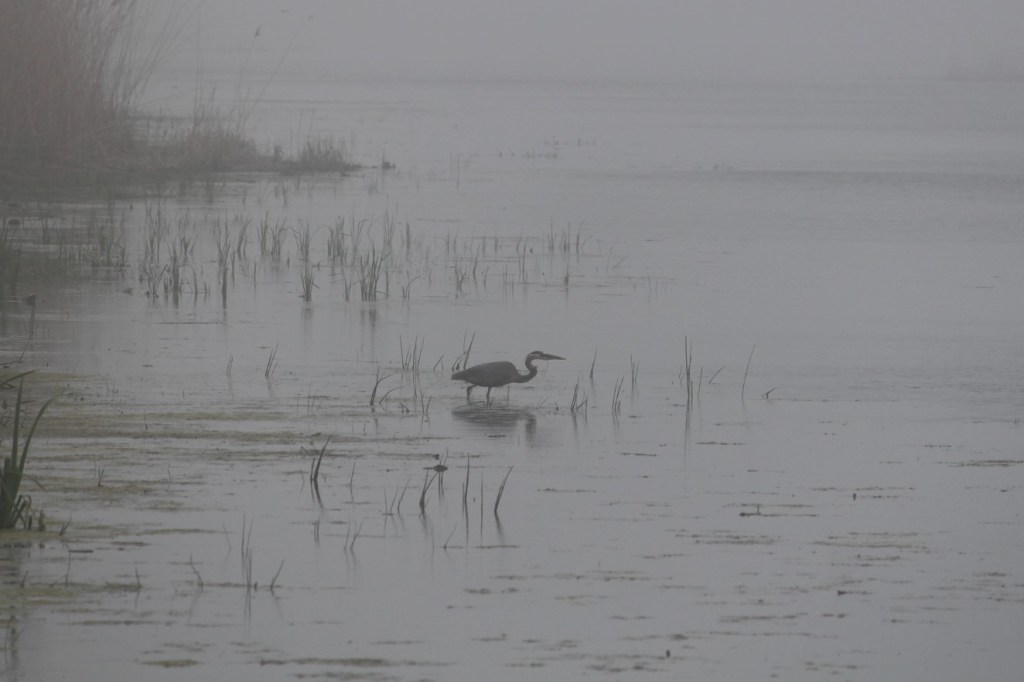
My final farewell to the trail this day was seeing a Heron stalking in the shallows, wreathed in fog. This Heron of the Mists was a perfect sendoff to my journey through the Long Point wetlands.

For previous posts about nature observations of this kind, see:

A Visit to Big Creek, Part 1

Pinery, Winter 2019

MacGregor Point Observations (May 2018

-Algonquin Observations (July 2018), Day One, Two, Three, Four, Five, Six

And if you’re interested in seeing more of my photos and learning some facts about the creatures I’ve observed, follow me on Instagram @norfolknaturalist.