I recently spent a weekend camping at Port Burwell Provincial Park and took several photos of interesting creatures I encountered there (as I usually do on camping trips). One of the first creatures I encountered was a beautiful Flower Fly which hovered right in front of my face for a few minutes and even landed on my glasses, as well as several times on my hands. My Flower Fly Friend was an Oblique Streaktail (Allograpta obliqua).
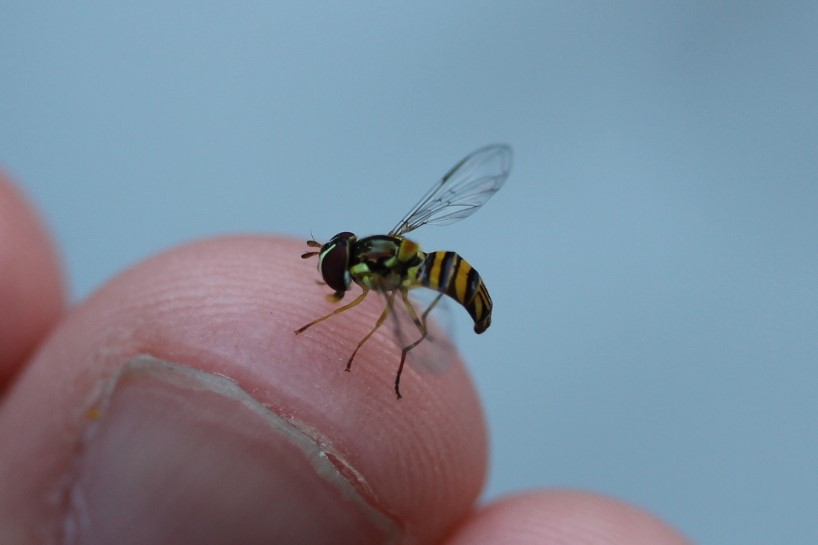
Flower Flies (Family Syrphidae) are wonderfully diverse and easily observed Insects, as they spend time hovering and landing on Flowers for the nectar they contain. In feeding on nectar, these Flies contribute greatly to Pollination, much like their similarly coloured models, the Bees and Wasps. I observed several other Flower Flies during my Port Burwell visit:
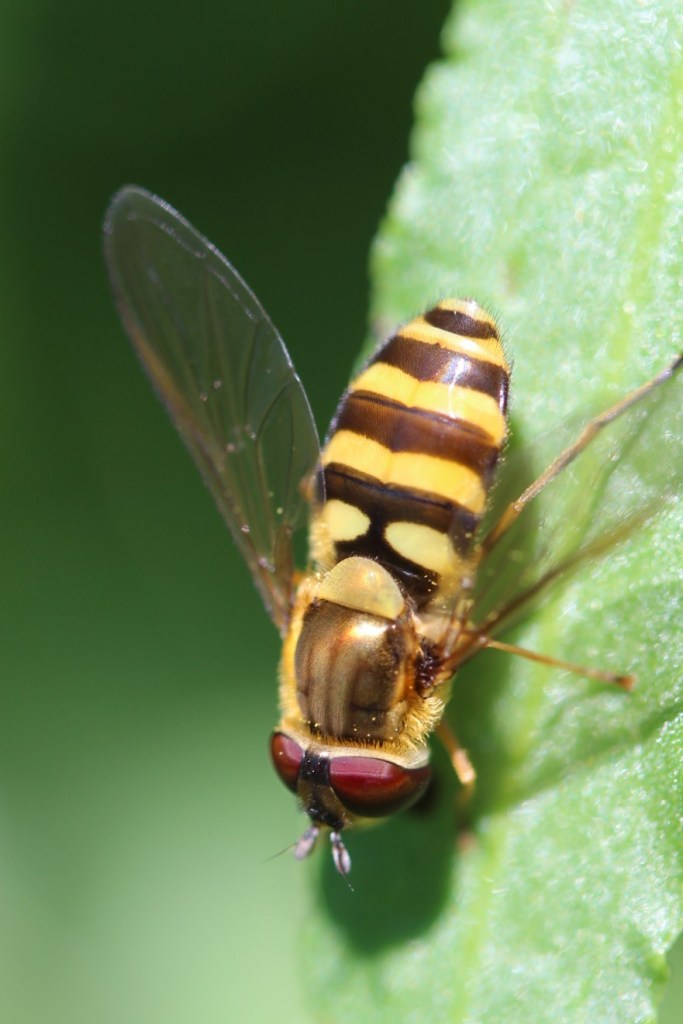
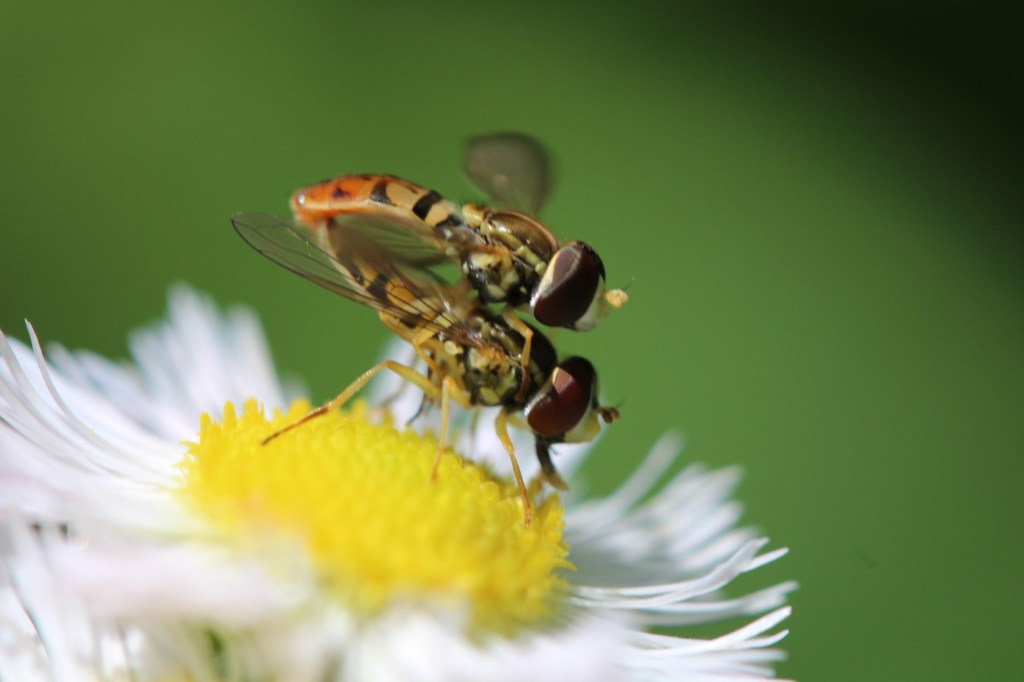
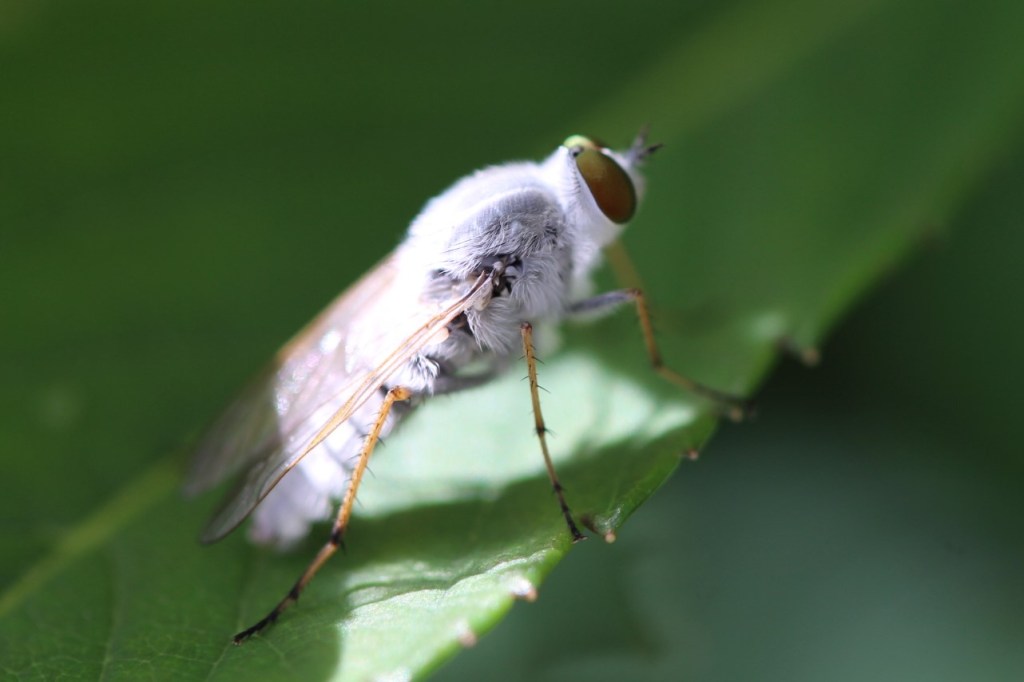
Most people don’t consider Flies beautiful, but that’s because they’re thinking of the House Fly variety, and not the colorful Flower Flies. Another beautiful fly I observed was this Ornate Snipe Fly:
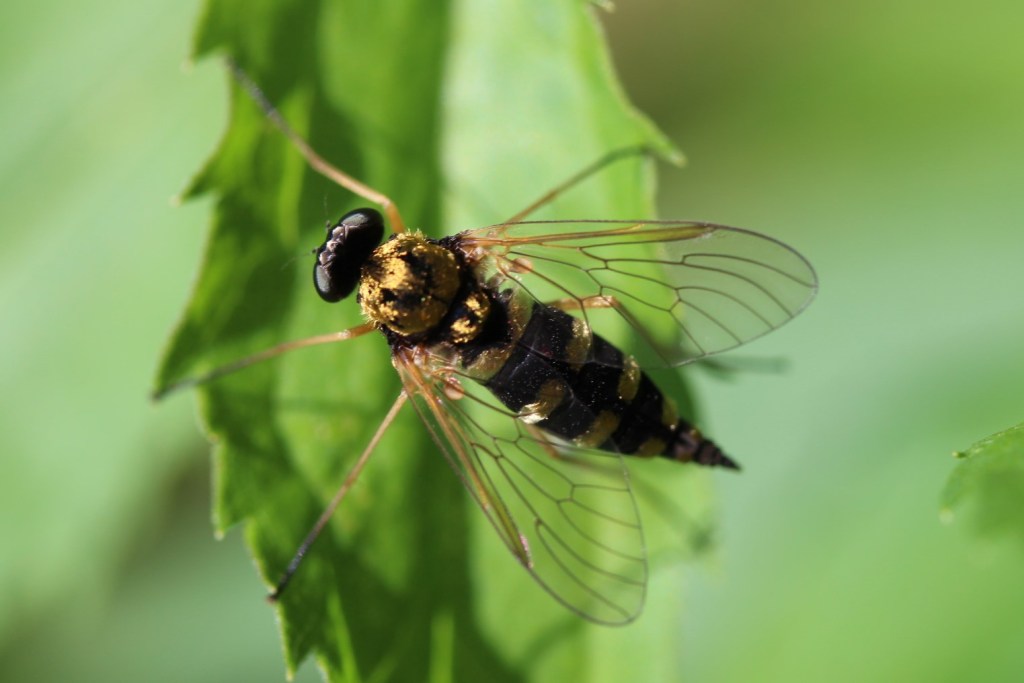
The Snipe Flies (Rhagionidae) are predators as larvae in the soil where they hunt invertebrates, but as adults don’t seem to feed at all (Marshall, 2012).
Like my Flower Fly Friend, another Insect was quite content to wander over my hands. I’m not sure the exact ID of this Bug (a True Bug, that is a member of the Order Hemiptera) but I’m pretty sure it’s a larval Plant Bug (Family Miridae).
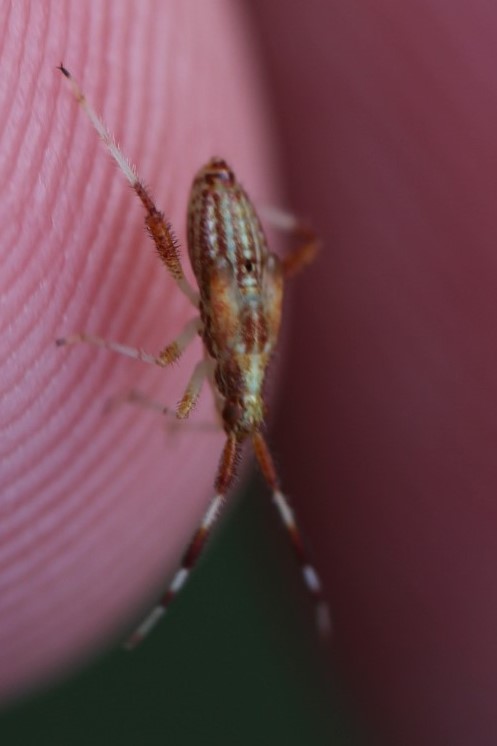
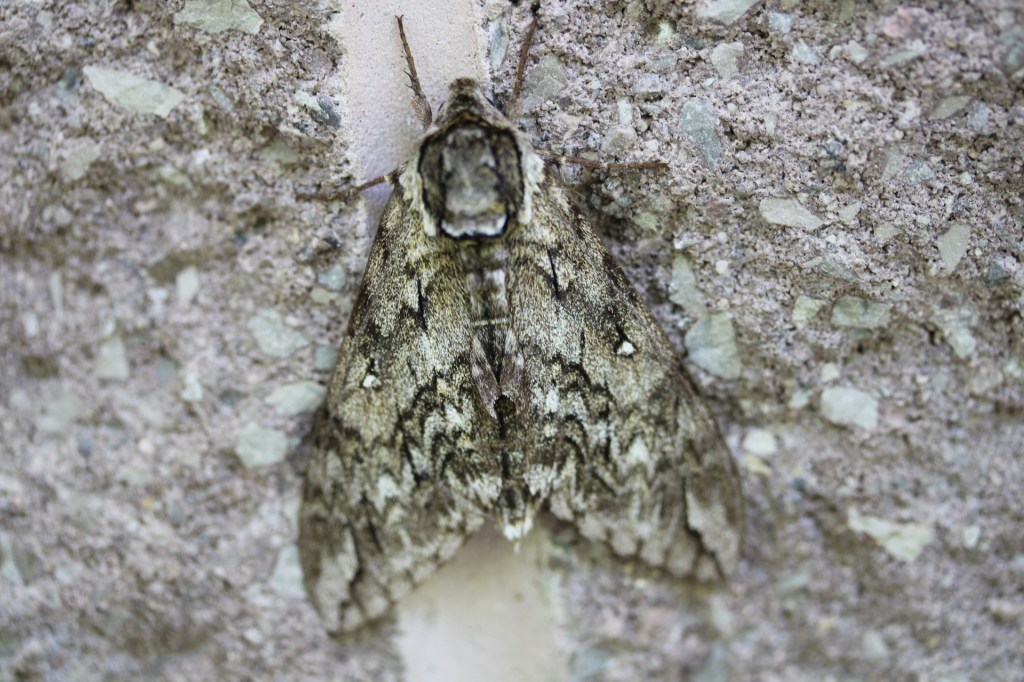
The little Plant Bug was probably the smallest Insect I took pictures of that weekend. The Largest is much easier to determine, and was clearly this Waved Sphinx (Ceratomia undulosa) which was on the outside wall of the restroom, blending in fairly well with the bricks.
Another Moth I observed couldn’t be more different from the bulky and camouflaged Waved Sphinx. This bizarre Grape Plume Moth (Geina periscelidactylus) doesn’t even look like a Moth at all because of its oddly shaped wings.
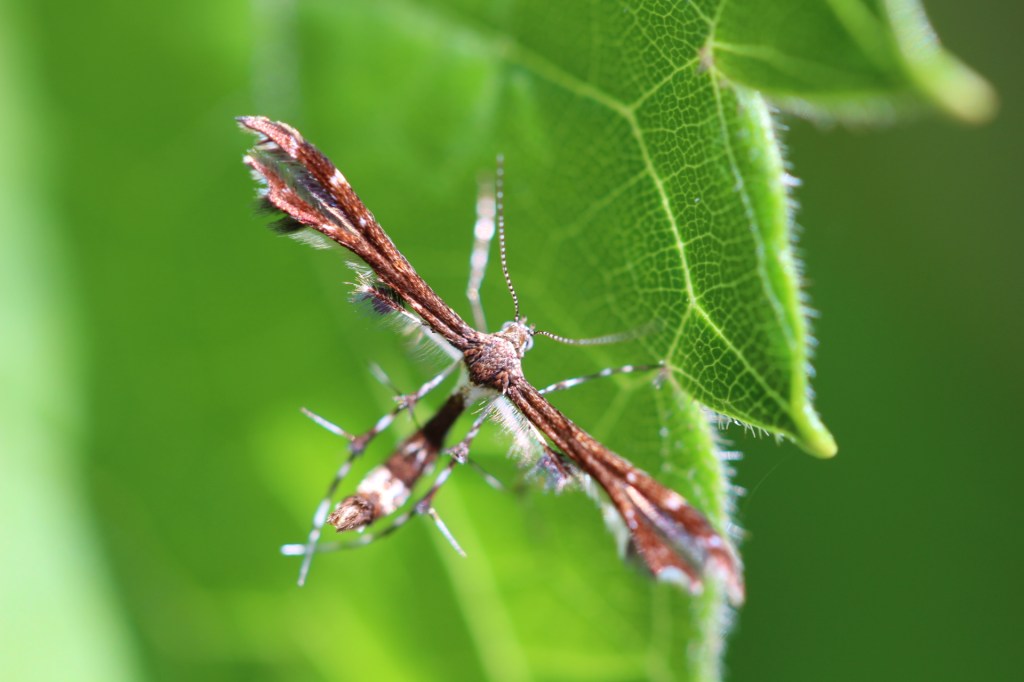
The forewing is the brown and white portion with a large notch carved into it from the outside. The hindwing has been transformed into three “plume” structures which resemble black-and-white wire brushes.
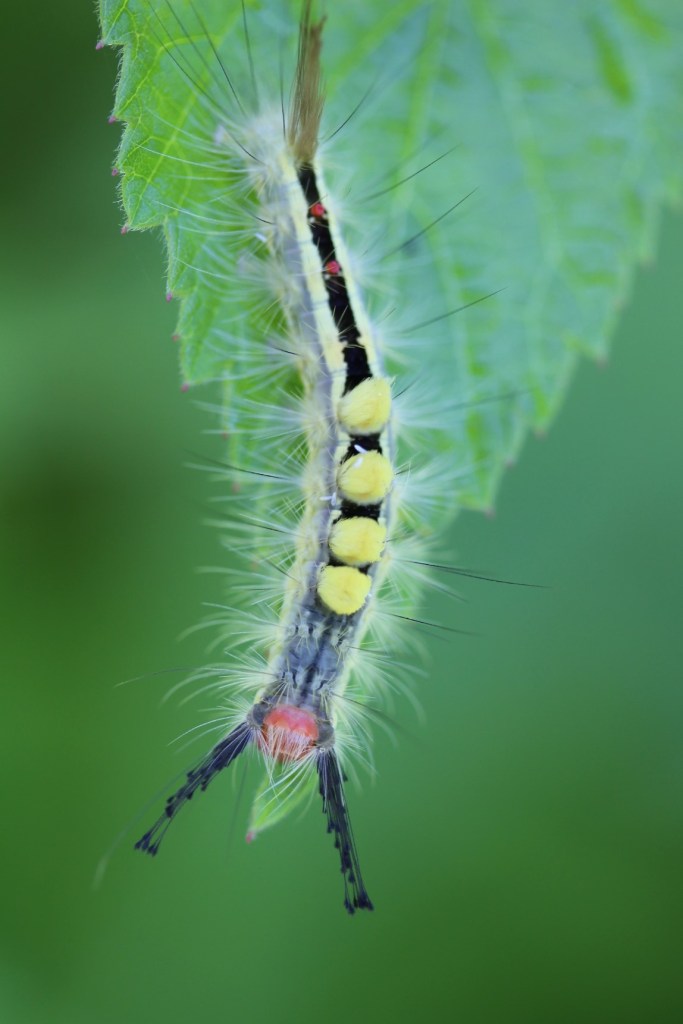
One other Moth drew my attention, but this one didn’t have any wings, because it was still in its Caterpillar stage: the Tussock Moth Orgyia leucostigma. These caterpillars have some of the most extraordinary decorations in our area. It’s possible the row of white tufts along their back resemble Parasitoid wasp cocoons in order to avoid subsequent parasitism, but I have no idea where to start explaining the bright orange head or black spiky tufts around its face.
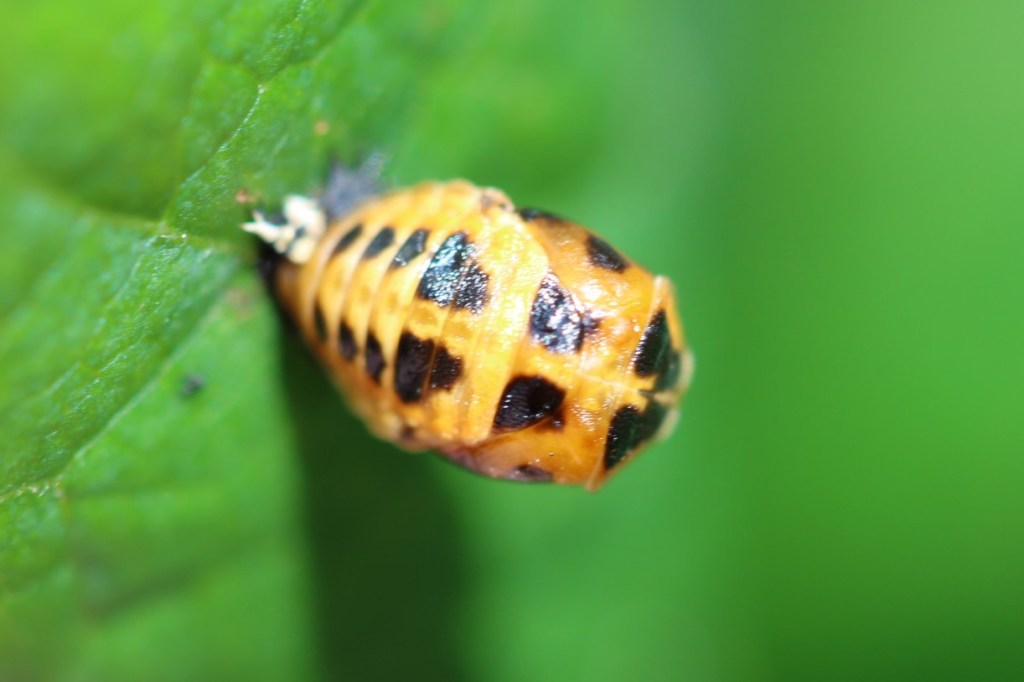
It’s well known that caterpillars turn into Moths and Butterflies, but many people are surprised to find that “baby” Ladybugs look quite different from the roly-poly adults. During the weekend, I spied the intermediate stage, the pupa, of a Ladybug stuck to the top of a leaf. Within, a Ladybug larva was being rearranged into the far more familiar form of its orange shielded adult beetle.
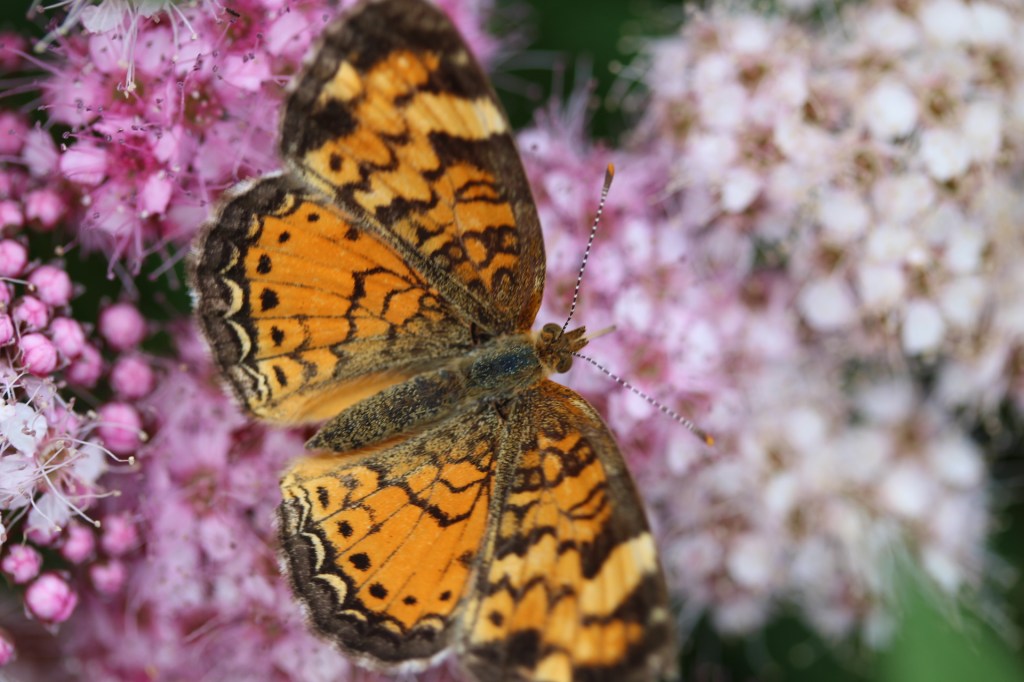
There were a number of smaller orange Butterflies flitting about our campsite which were difficult to photograph. This is the best picture I could manage of the upperside wings:
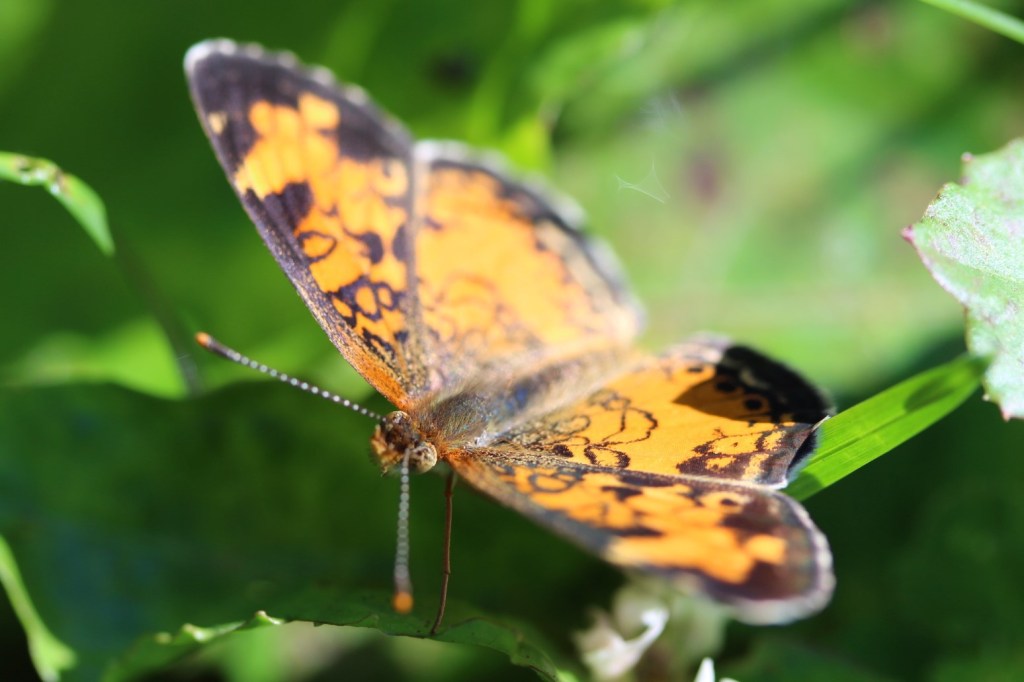
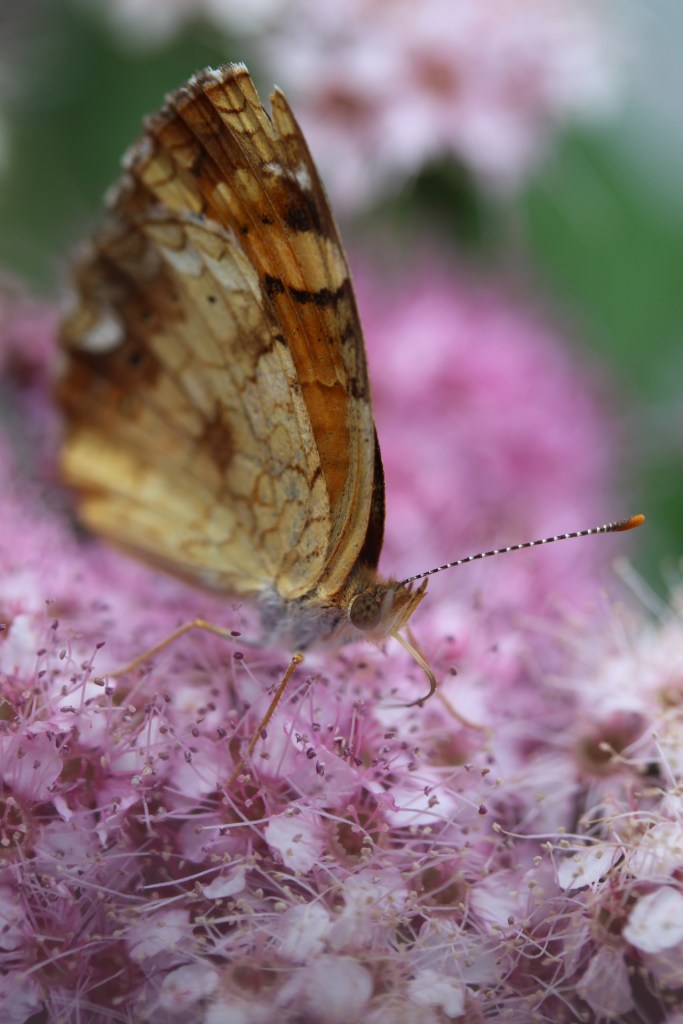
One of this same species (the Northern Crescent, Phycioides cocyta) was resting inside the Dining Tent, allowing me a good photo of the underside of its wings:

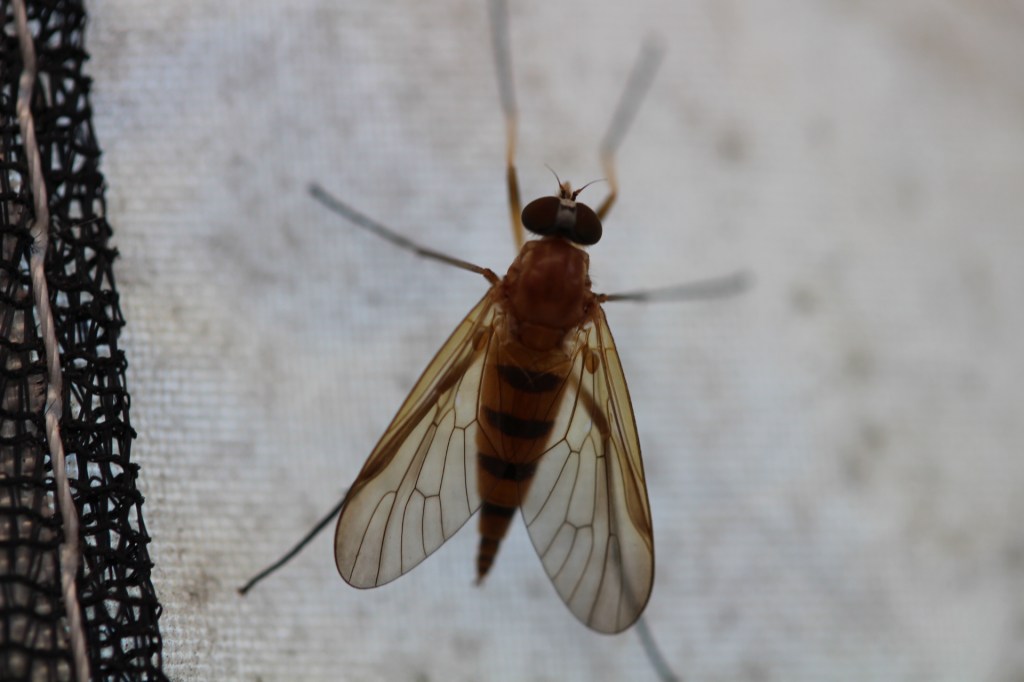
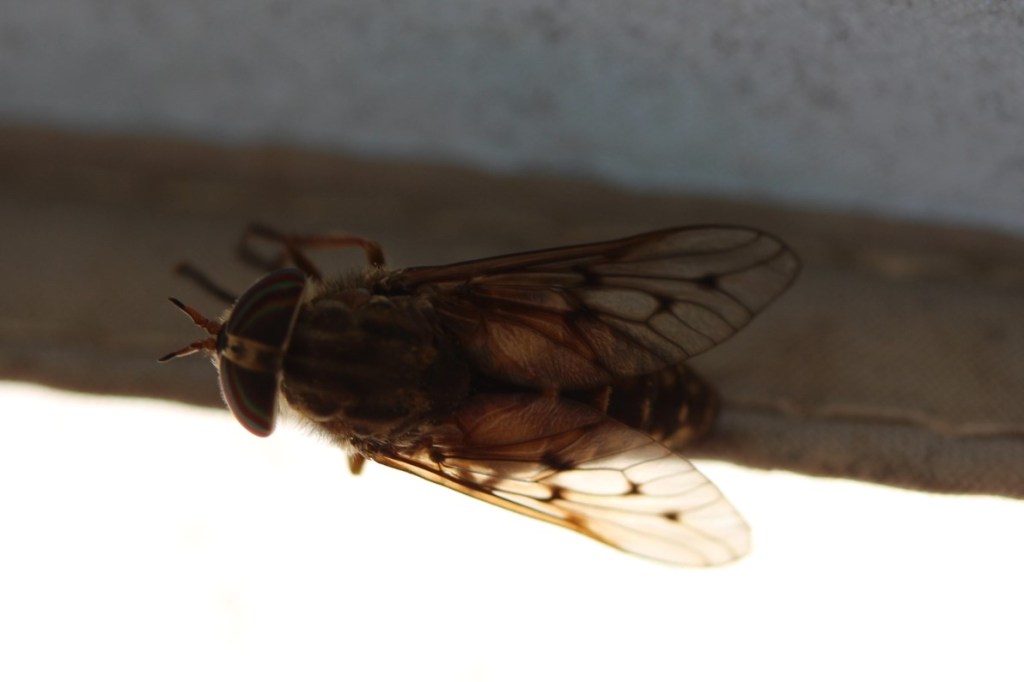
The interior of the Dining tent provided many other Insect observations that weekend. I observed this same phenomenon in my own backyard in May of this year. For whatever reason, many Insects enter the tent and then possibly get trapped inside because they have difficulty relocating the entrance (and are drawn to the light visible through the roof of the tent). In any case, it often presents myself with picture opportunities of insects I might not otherwise observe.
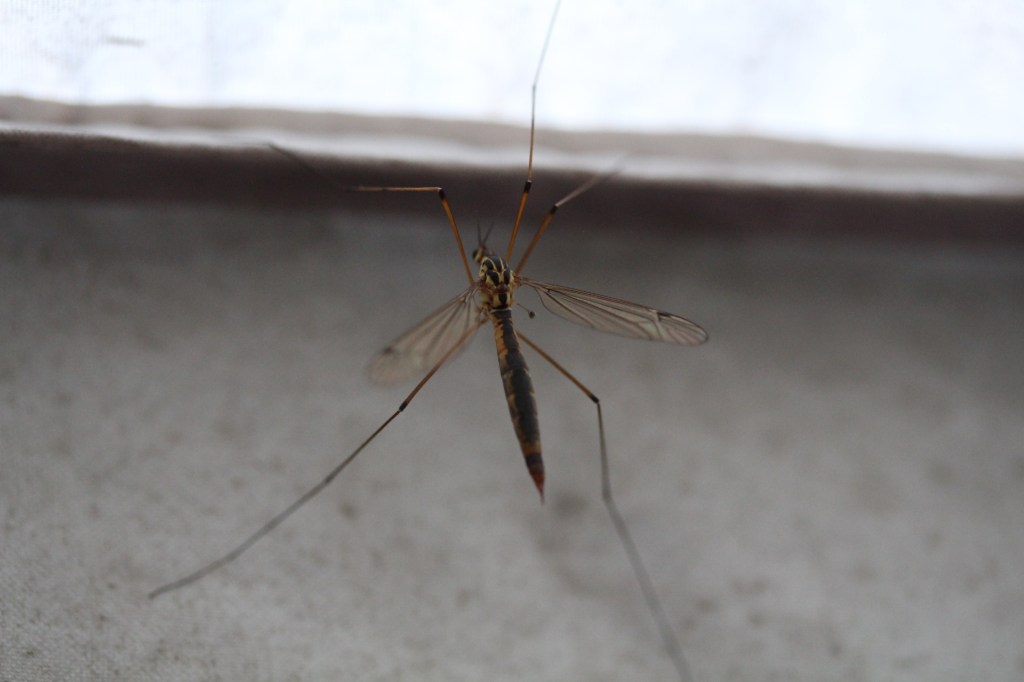
Most of the Dining Tent insects were Flies (and these are the ones I got good pictures of):
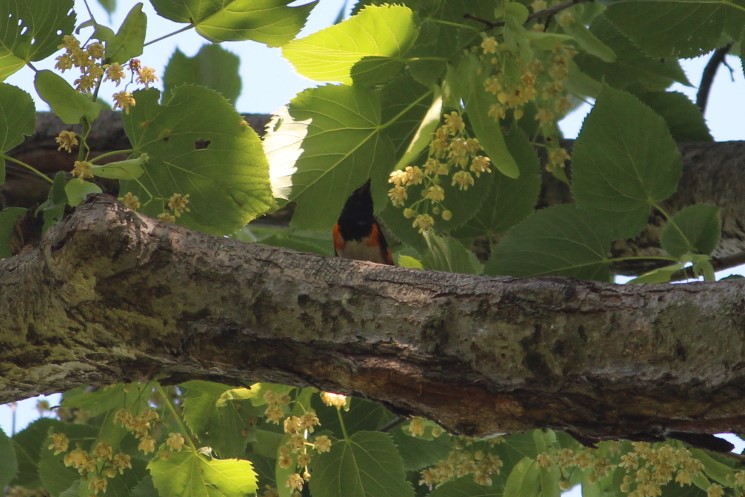
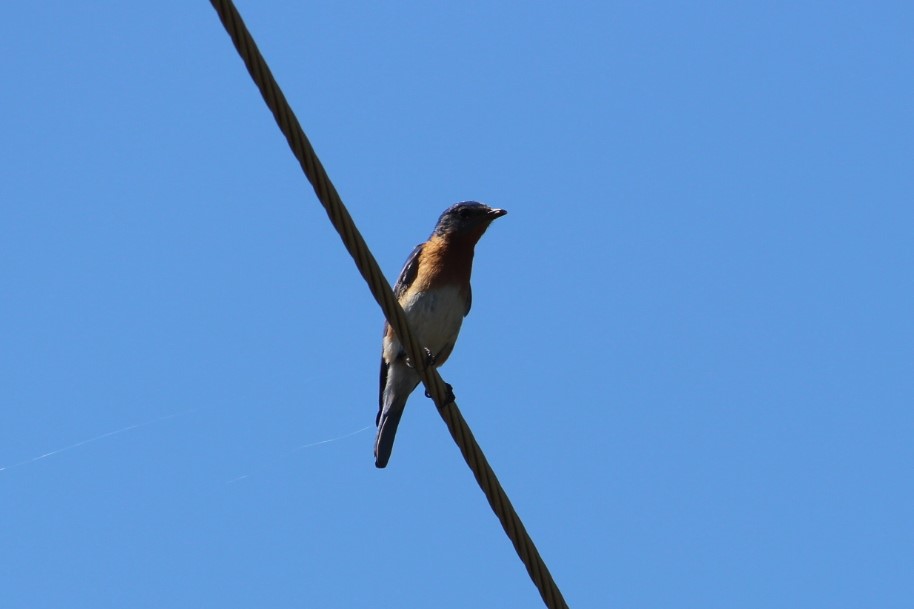
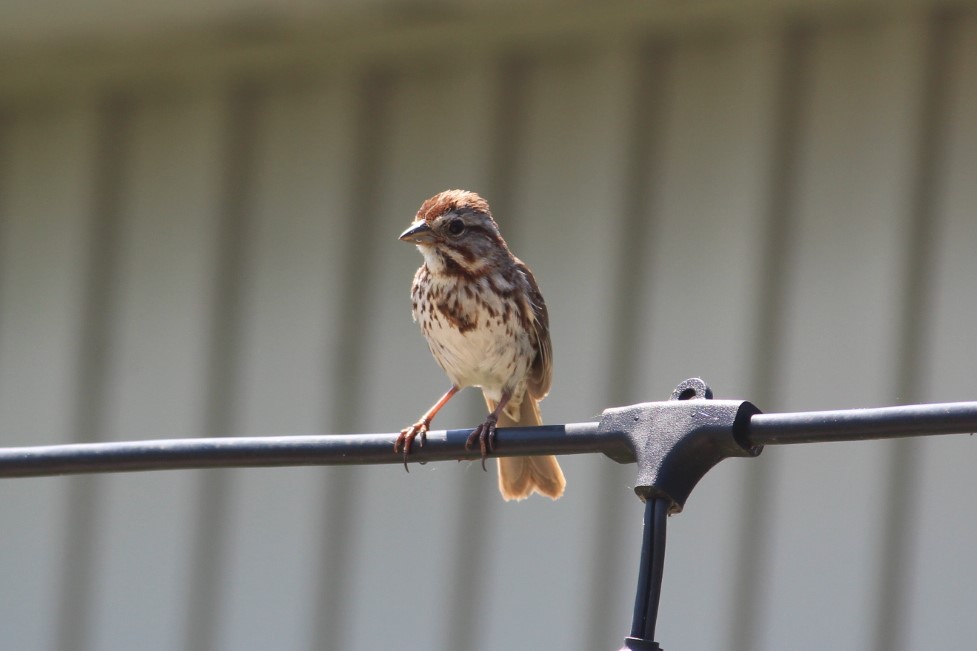
The majority of my observations were of Insects, and this reflects their abundance and diversity well, but I did have a chance to see a few Birds moving through the campsite. Most commonly spotted was a Catbird (Dumetella carolinensis) that seemed to have a particular liking for the berries that grew at the edge of the site. Flitting through the trees occasionally were American Redstarts (Setophaga ruticilla), fabulous black-orange-and white Warblers. Prior to this trip, I thought of the Redstart as a migrant, passing through Southern Ontario in the Spring and Fall. Since seeing it in Port Burwell in July, I have learned that the species breeds across most of Ontario during the summer (Cadman et. al. 1987).
References:
Cadman, Michael D., Eagles, Paul F. J. and Helleiner, Frederick M., Atlas of the Breeding Birds of Ontario. 1987.
Marshall, Stephen. Flies: The Natural History and Diversity of Diptera. 2012.
For other posts about Nature Observations similar to these, see:
–Leafhoppers, Lepidopterans and Longhorns
–Fuzzy Flies and Song Sparrows
–Cuckoo Wasps and Carpenter Bees
–Flies Falling to Fungi and Other Dipteran Observations
And for more nature observations, photos and natural history facts, follow me on instagram at norfolknaturalist.
 Norfolk Naturalist