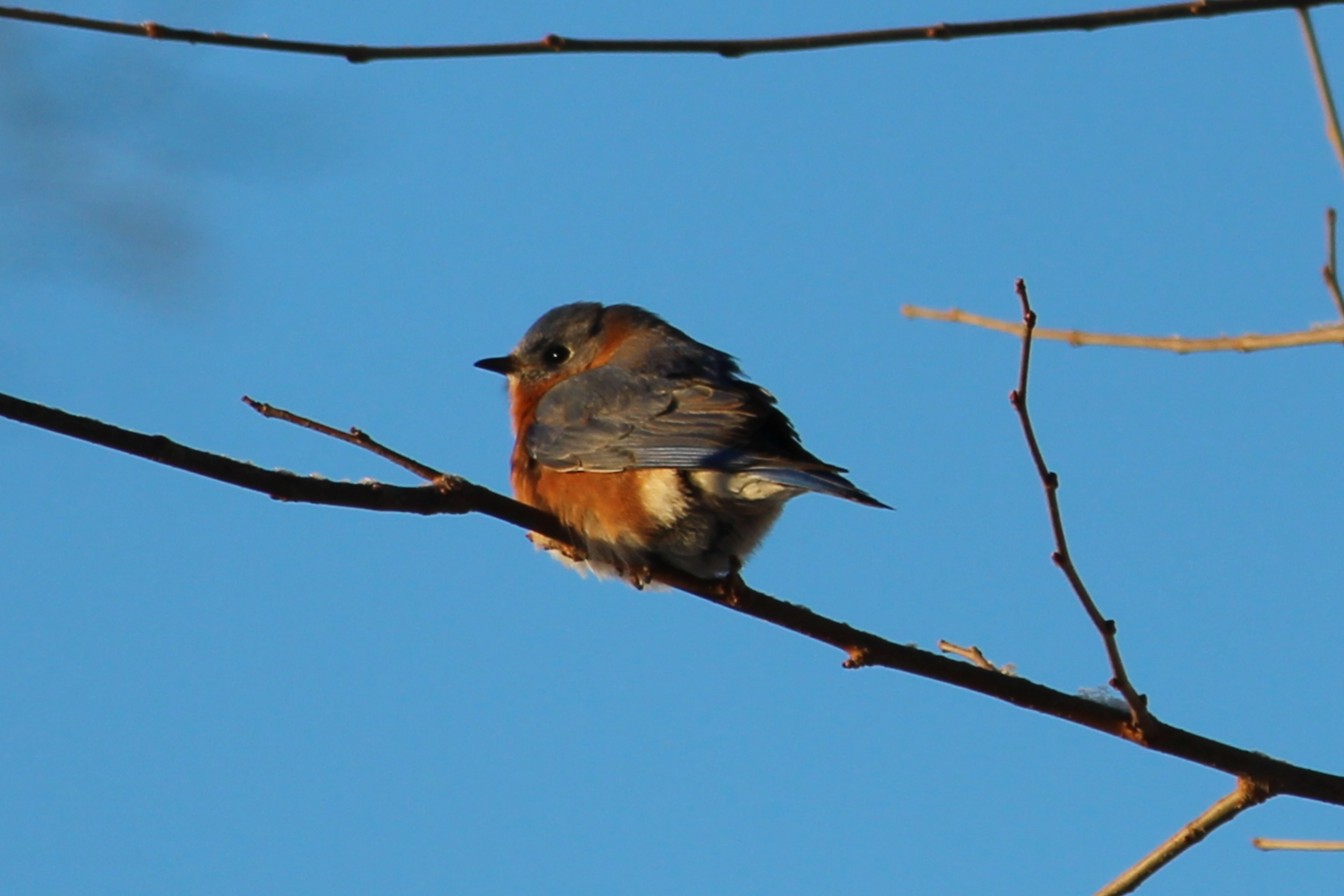
Eastern Bluebird (Sialia sialis), Backyard, February 2025:
This past year was the first time I have observed Bluebirds in my backyard, so this was quite exciting to me. Four or five birds explored the birdhouse we had set up and the backyard. I suspect that the Bluebirds may have been using the birdhouse as a nighttime shelter from the winter winds.
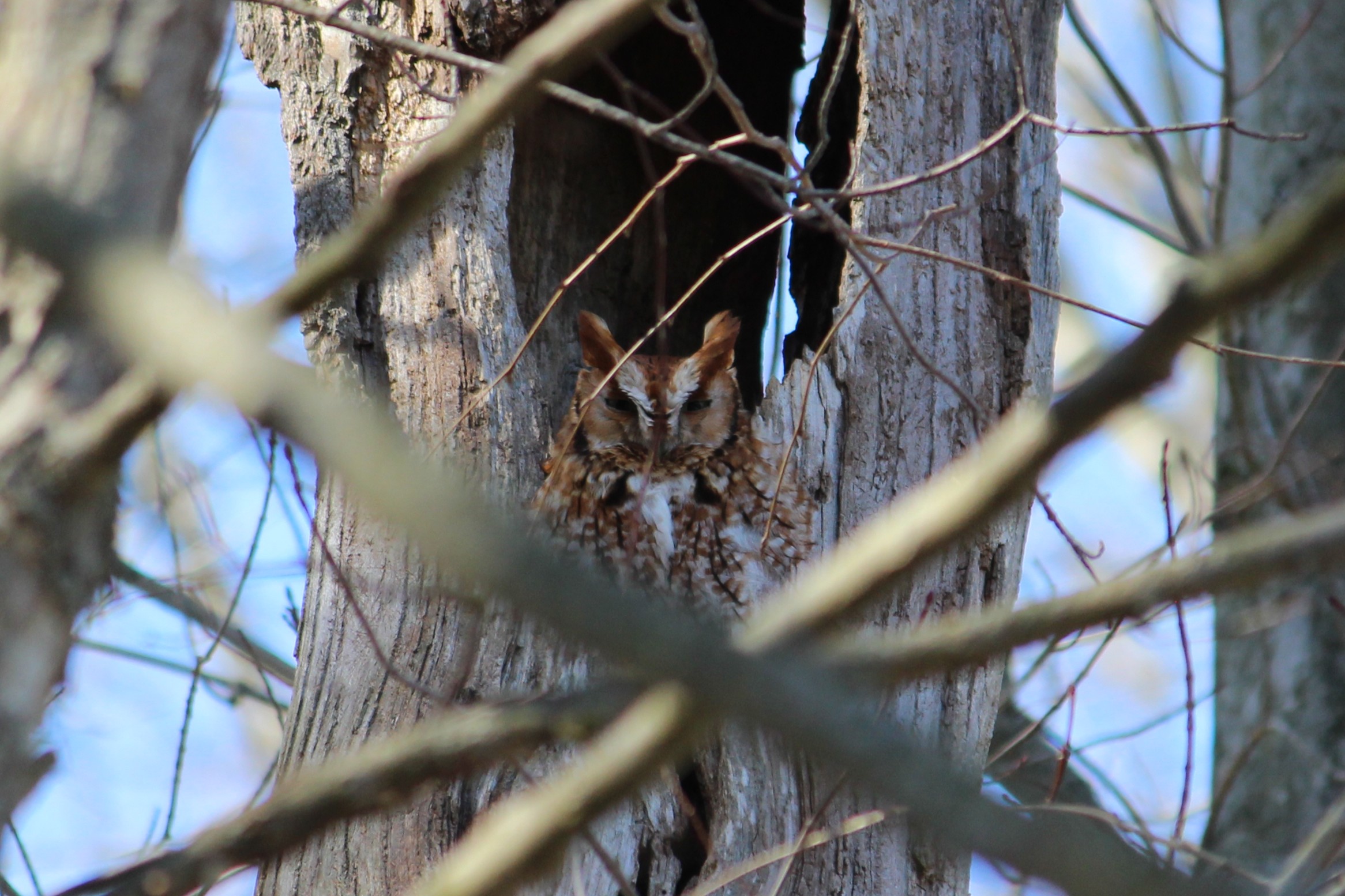
Eastern Screech Owl (Megascops asio), Norfolk County, Feb 2025:
This past year was also the first time I have ever photographed an owl, so this was another amazing experience. Eastern Screech Owls are distributed across the Eastern United States, into Northern Mexico and their northern distribution extends into Southern Ontario and a few other places along the southern Canadian border. With such a wide distribution across varied habitats, Eastern Screech Owls feed on a wide variety of animals including small birds, rodents, and many different types of invertebrates (such as insects, crayfish and worms) (Backhouse 2008). They are nonmigratory, only shifting their home ranges during severe winters, or if food is especially difficult to find.
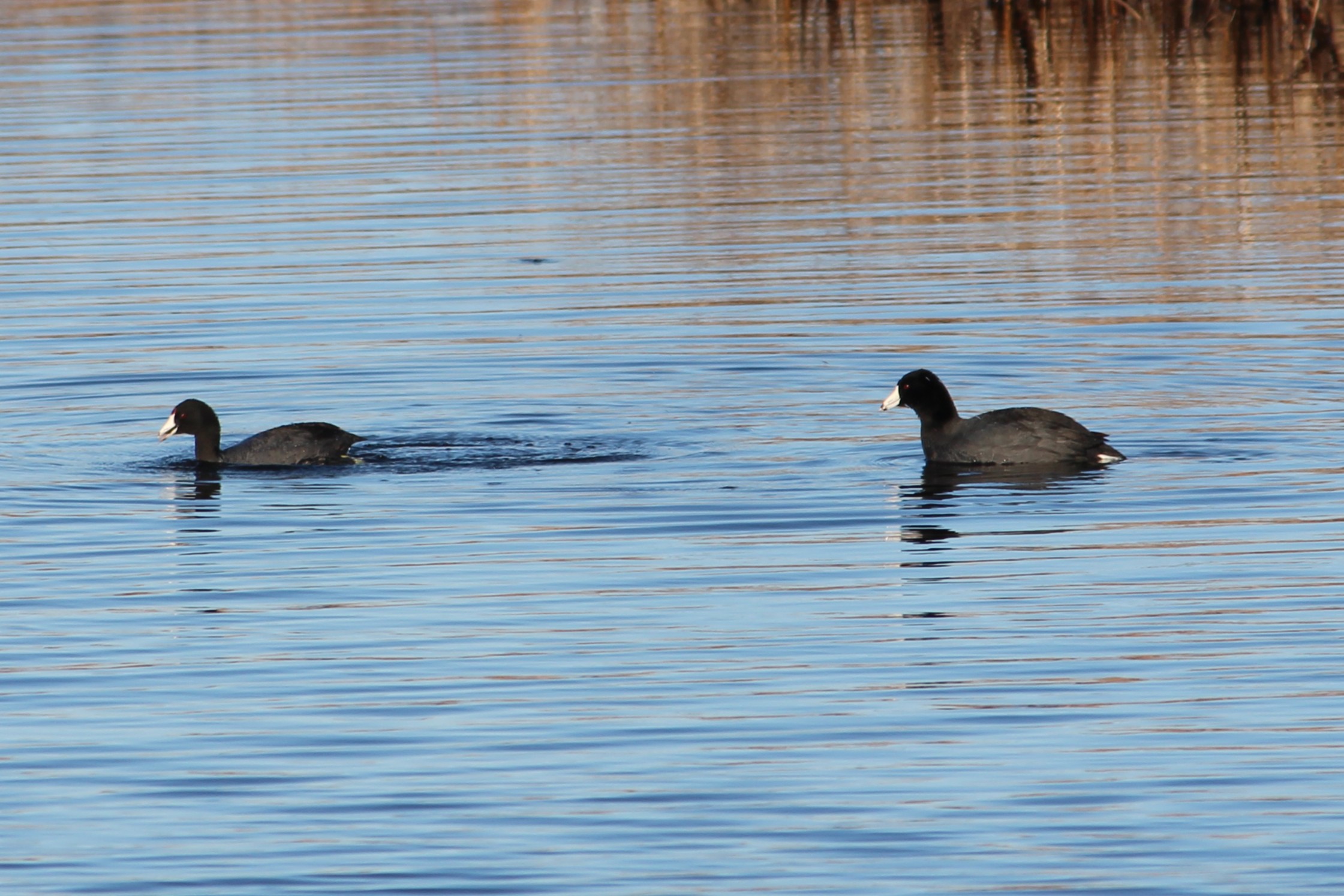
American Coot (Fulica americana), Long Point, April 2025:
I have photographed American Coots before but only rarely have I observed them. Although they appear very similar to ducks, coots are part of the Rail family Rallidae. American Coots feed on algae and other plants, and I observed this pair diving and coming up with green algae hanging dripping from their beaks. The most fascinating bit of American Coot biology is that they create floating nests out of plant material.
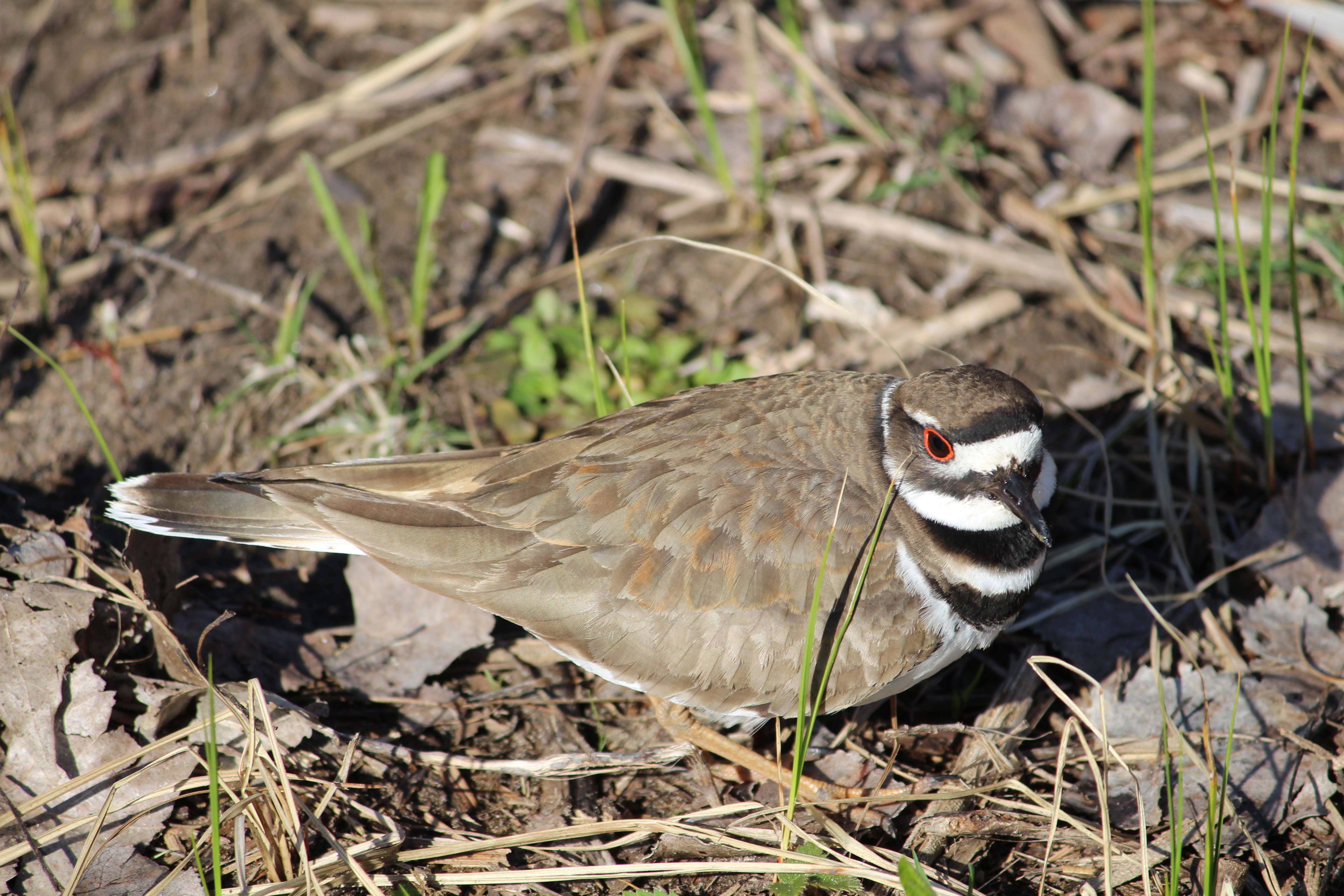
Killdeer (Charadrius vociferus), Long Point, April 2025:
This Killdeer was sitting on top of her clutch of eggs, bravely refusing to budge despite my close proximity. Killdeer are familiar birds of fields and even sometimes parking lots, though they are part of the Shorebird group of birds.
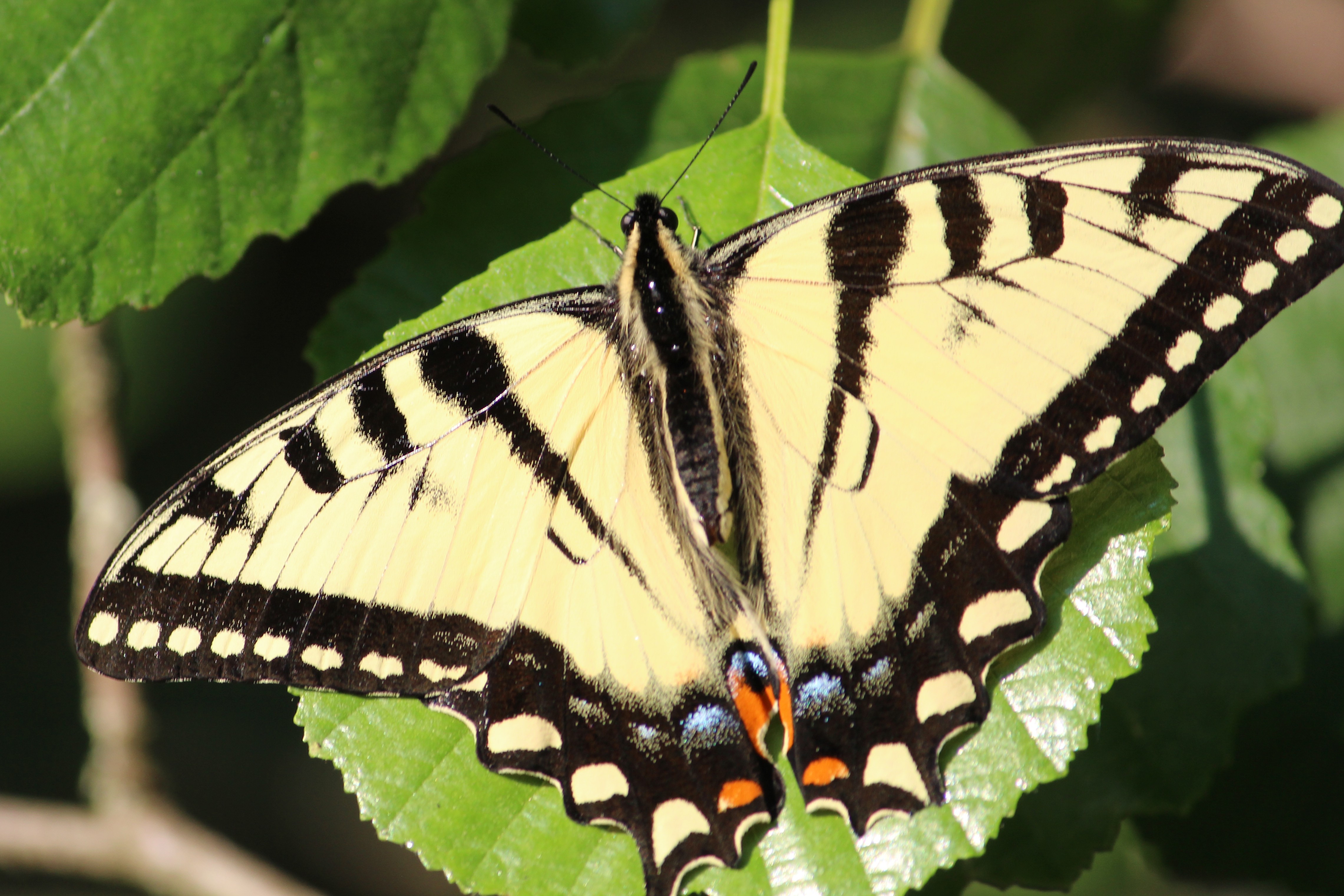
Eastern Tiger Swallowtail (Papilio glaucus), Backyard, June 2025:
These wonderfully large and colourful butterflies feed on many different species of plants as caterpillars and spend our Ontario winter in the chrysalis stage (Hall et. al. 2014).
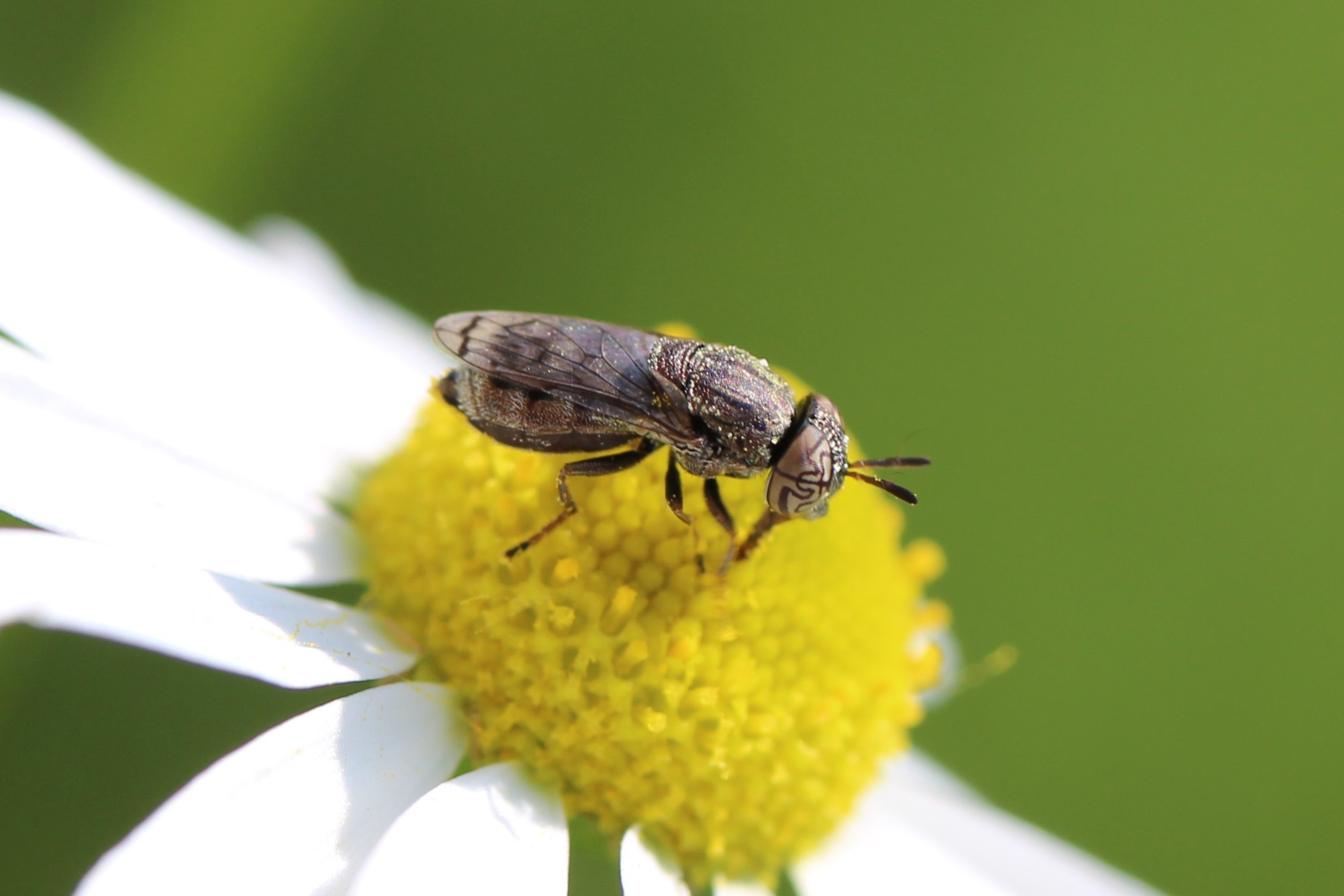
Wavy Mucksucker (Orthonevra nitida), Backyard, June 2025:
Though not as colourful or bee-like as many of the species seen on flowers, this is a member of the Flower Fly family, Syrphidae. This species is identified from the other Orthonevra species by the intricate pattern across its eyes. All other related species in our areas have a simple line. The larvae of Orthonevra species live in mud of wetlands and these species are often associated with marshes and bogs (Skevington et. al. 2019).
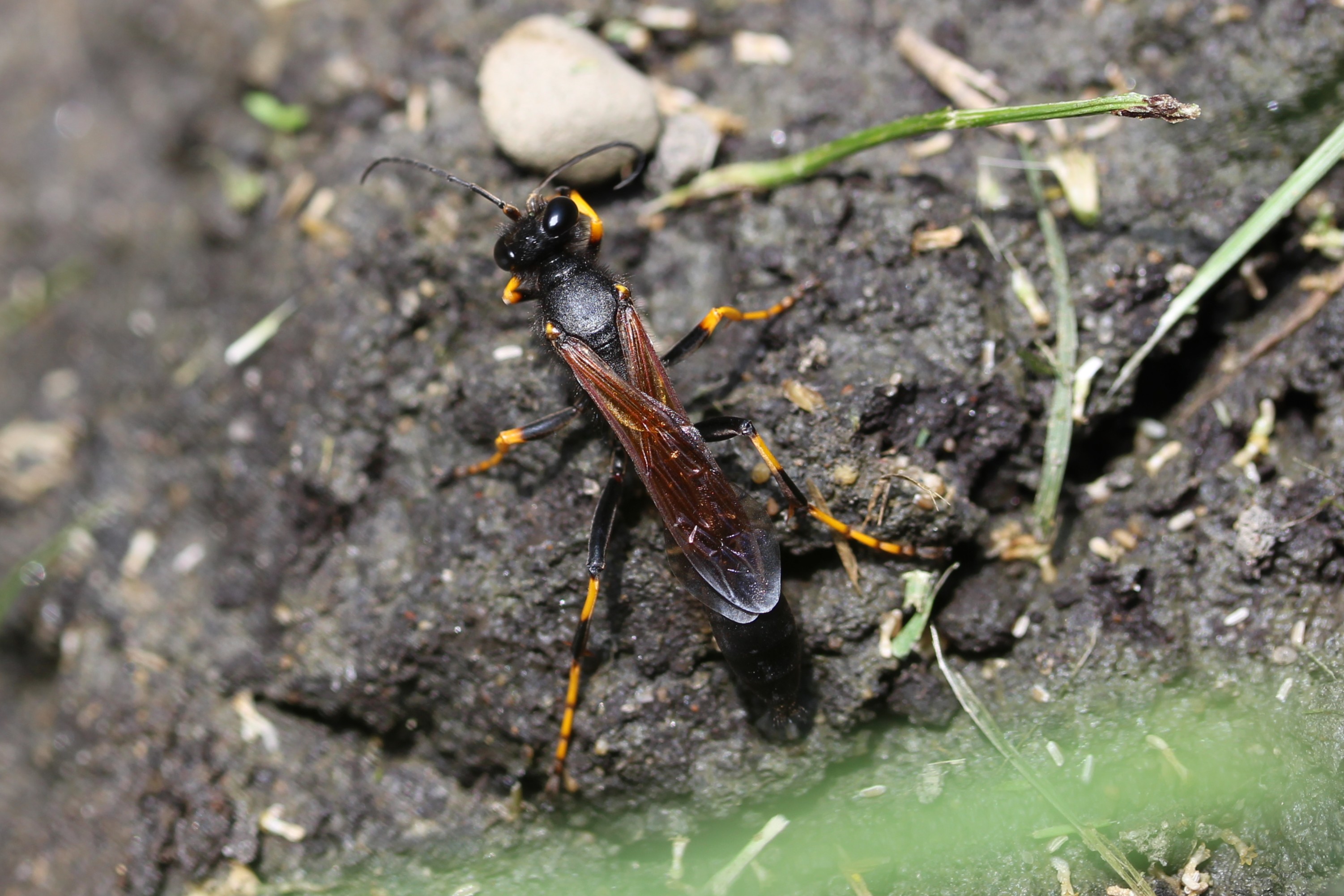
Yellow-legged Mud Dauber (Sceliphron caemantarium), Backyard, June 2025:
Through an unsuccessful pond creation attempt in my backyard, we ended up with a small temporary pool of mucky water. The moist mud around its edges attracted swarms of mud dauber wasps, collecting material for their nests. Each mud cell of the nest is filled with several spiders and a single wasp egg (Holm 2021).
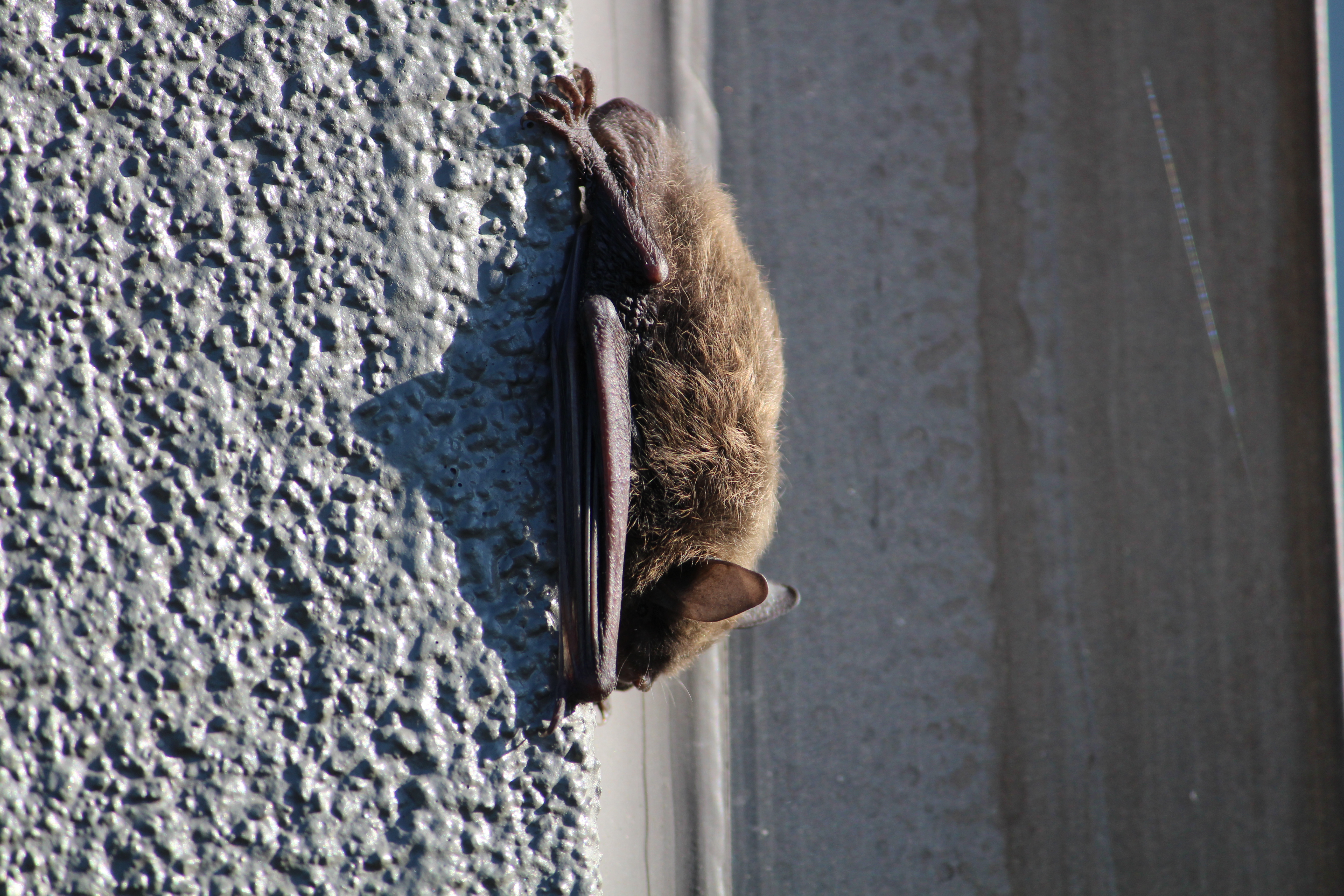
Mouse-eared Bat (Myotis sp.), Norfolk County, July 2025:
There are 8 species of Bats in Ontario and some of them look very similar to each other which means I have not been able to identify any closer than Genus level. For a previous experience I had with Bats, see Flying Creatures of the Night and Big Brown Bat.
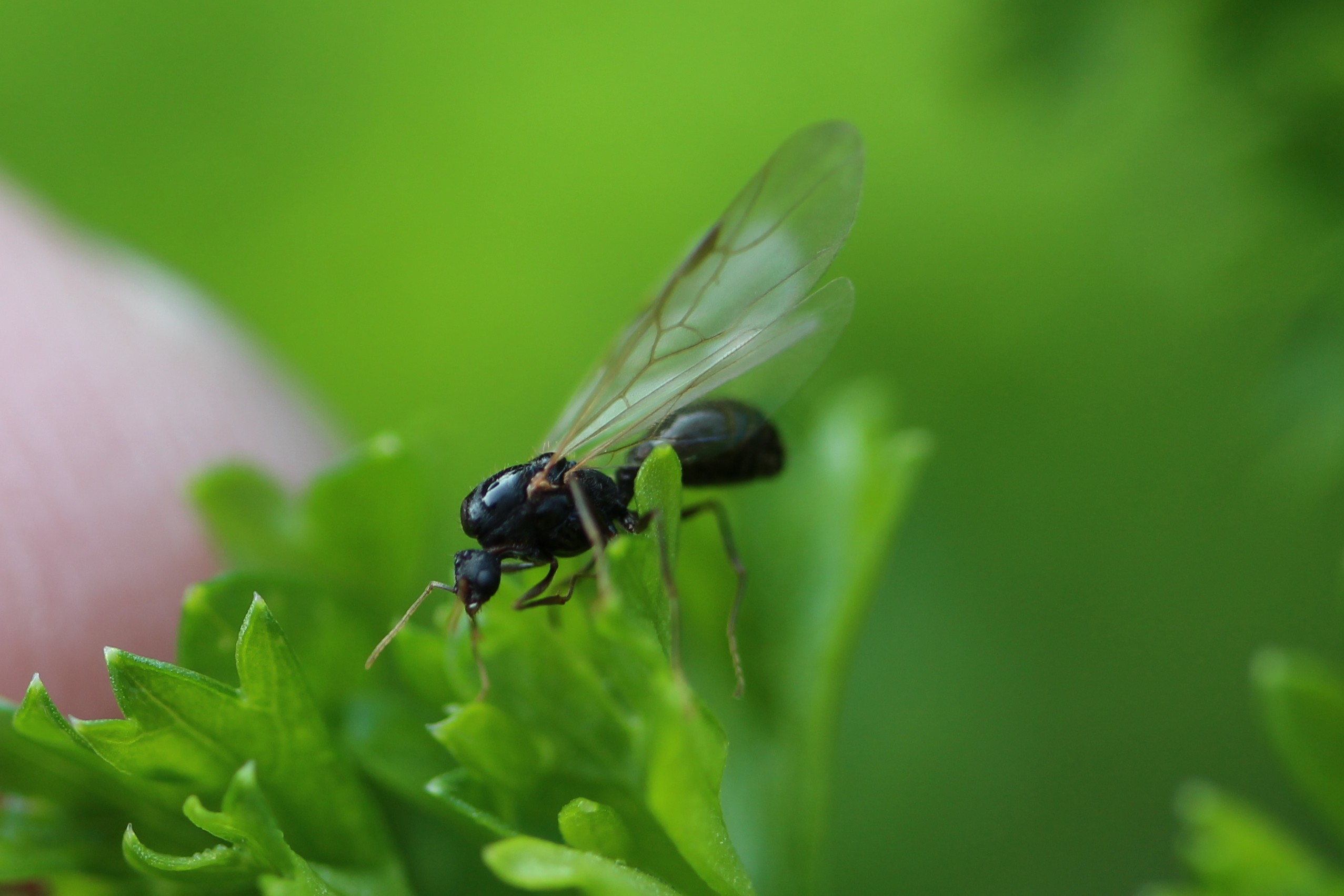
Immigrant Pavement Ant (Tetramorium immigrans), Backyard, July 2025:
Ants with wings, often in large swarms, are a seasonal sight of wonder to many. Flying ants are the only reproductives of their colonies, the only ants capable of starting new colonies. This tiny Immigrant Pavement Ant is a male, exceptionally rare among ants because the majority of a colony’s population is made up of sterile female workers. This male was seeking out a female, hopefully from another colony, to mate with and once it has mated the male ant usually dies soon after. Male ants have the shortest lifespans of any ant, much shorter than queens (which in some species can live for almost 30 years) and even shorter than workers (Wilson and Holldobler 1990).
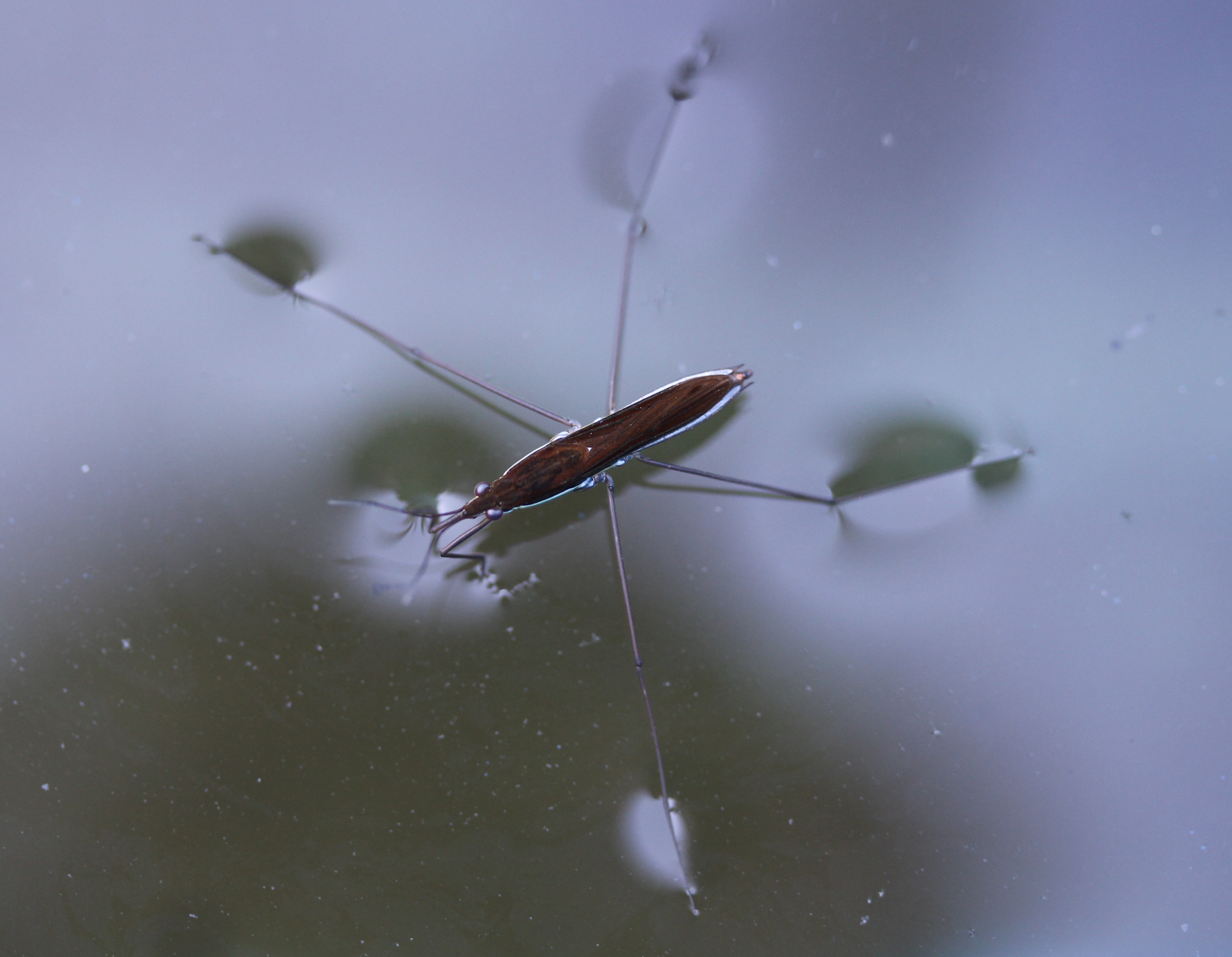
Kayak Pond Skater (Limnoporus dissortis), Backyard, July 2025:
Utilizing the small temporary pool of mucky water in my backyard, this beautiful and large water strider was seen hunting mosquito larvae that were growing within. This muddy pool in my backyard was so temporary and small that it amazes me a water strider could find it, let alone stay in it long enough to feast multiple times. One of the most amazing things about insects is that they appear where habitat is created for them. Perhaps I shouldn’t be too surprised. Despite their superb adaptations to the water surface, this individual also possessed wings, allowing it to travel beyond the water body it grew up in. Water striders use the water surface much like a spider uses its web, to sense the presence and direction of struggling prey, and rapidly skate towards any insects unlucky enough to land within striking distance.
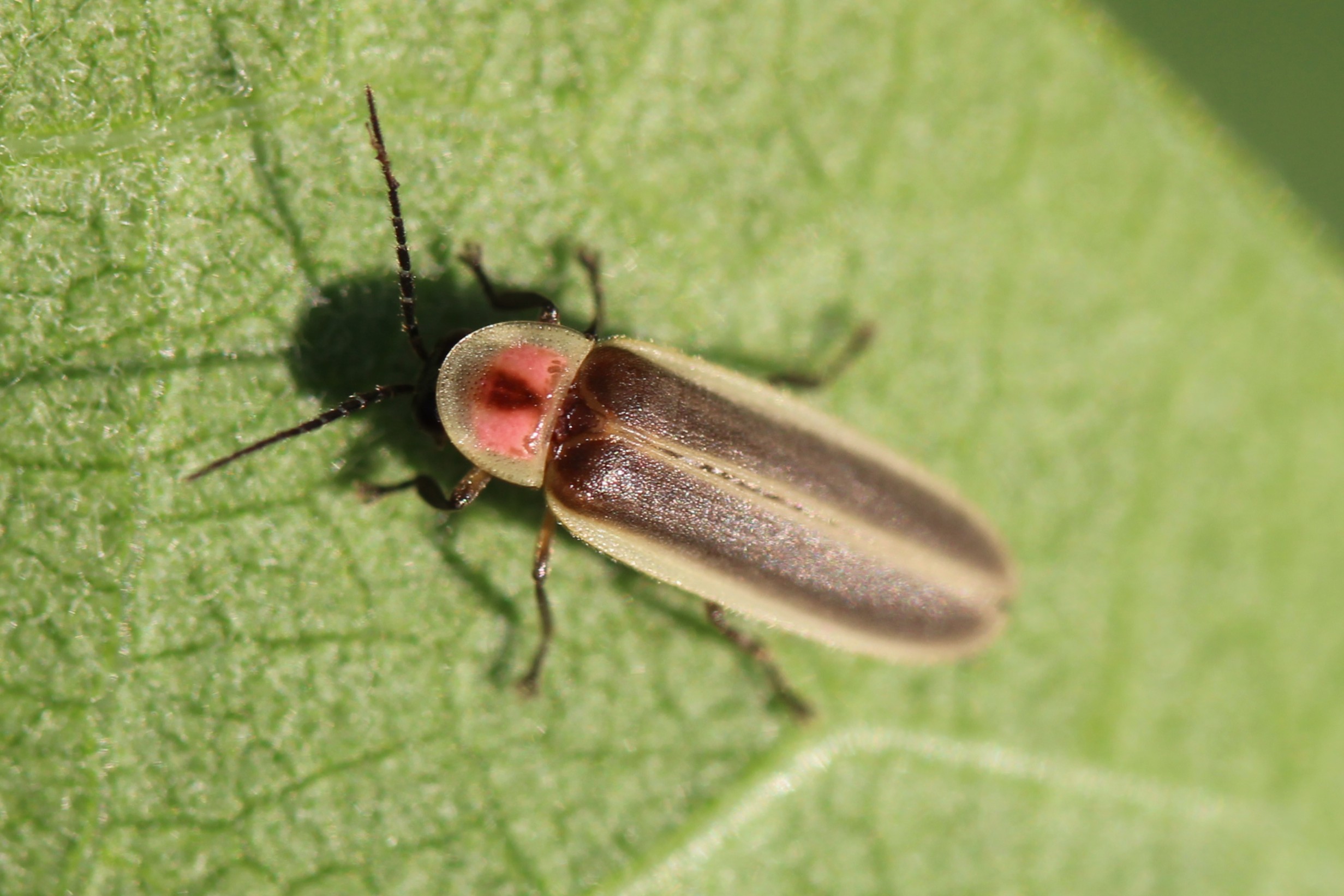
Firefly (Photinus marginellus), Backyard, July 2025:
Although fireflies are some of the most charismatic insects during summer nights, when they set backyards and woodlots glowing with their bioluminescent signals, we still don’t know a lot about them. Partly this is due to their sheer diversity. The genus Photinus contains almost 300 species, many of these in the tropics but 11 species in Ontario (Luk et al https://cjai.biologicalsurvey.ca/wp-content/uploads/2011/06/lmb_16.pdf). Many larvae are unknown, but the ones that have been well studied are semi-aquatic snail or slug hunters which use bioluminescence to protect them from predators (as a warning that they are distasteful) (Luk et al Fireflies of Ontario).
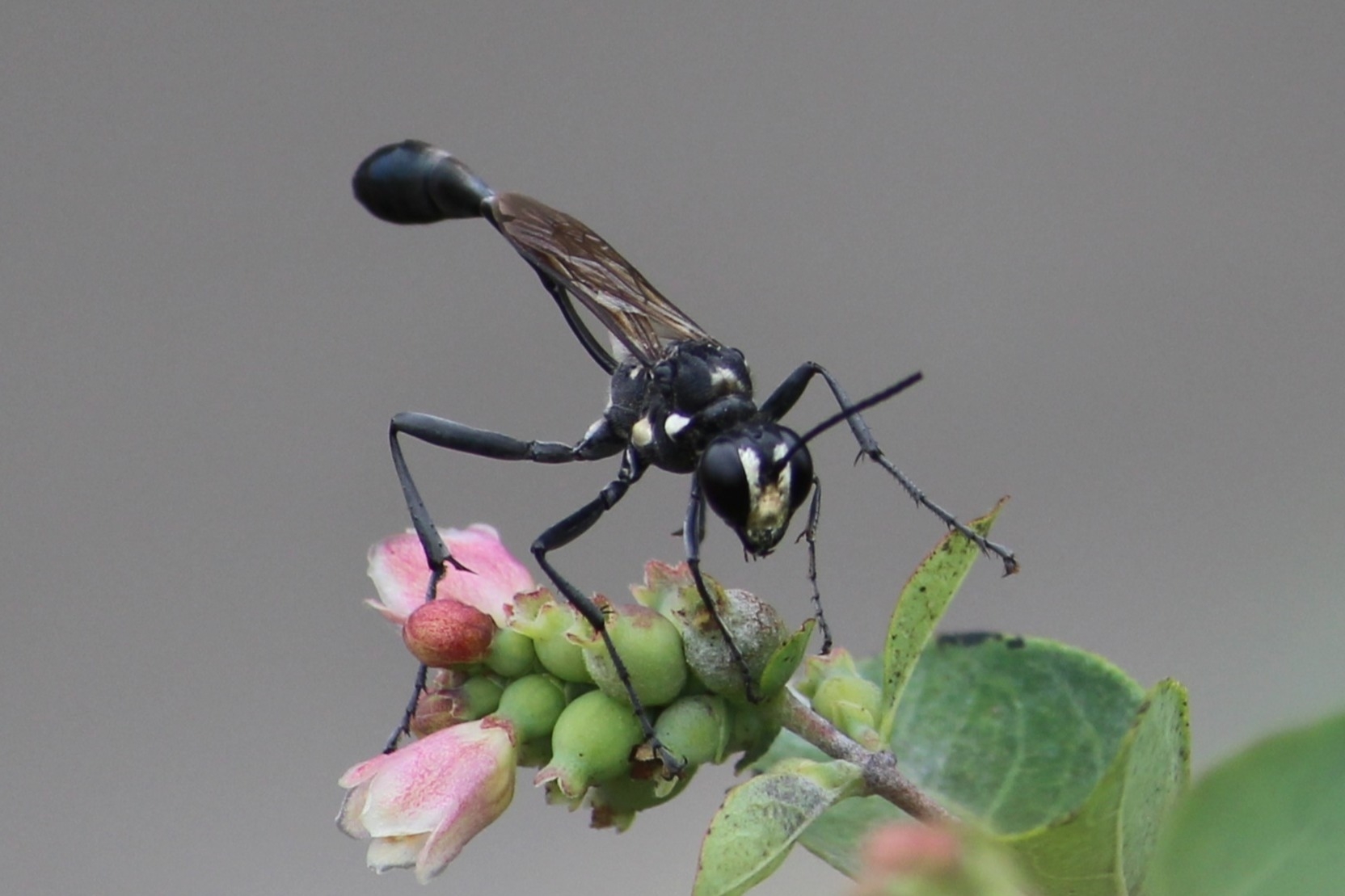
Gold Marked Thread waisted Wasp (Eremnophila aureonotata), Parents’ House, July 2025:
This wasp’s predatory pose and angle is striking, a hunter prepared to launch an attack. These wasps hunt among leaves for caterpillars, which they paralyze with stings and bring back to a prepared burrow to stash inside. The caterpillars are not future food for the hunter, but rather her larva’s first meal. Once the burrow is filled with larval prey, she lays an egg in it and seals it up (Holm 2021).
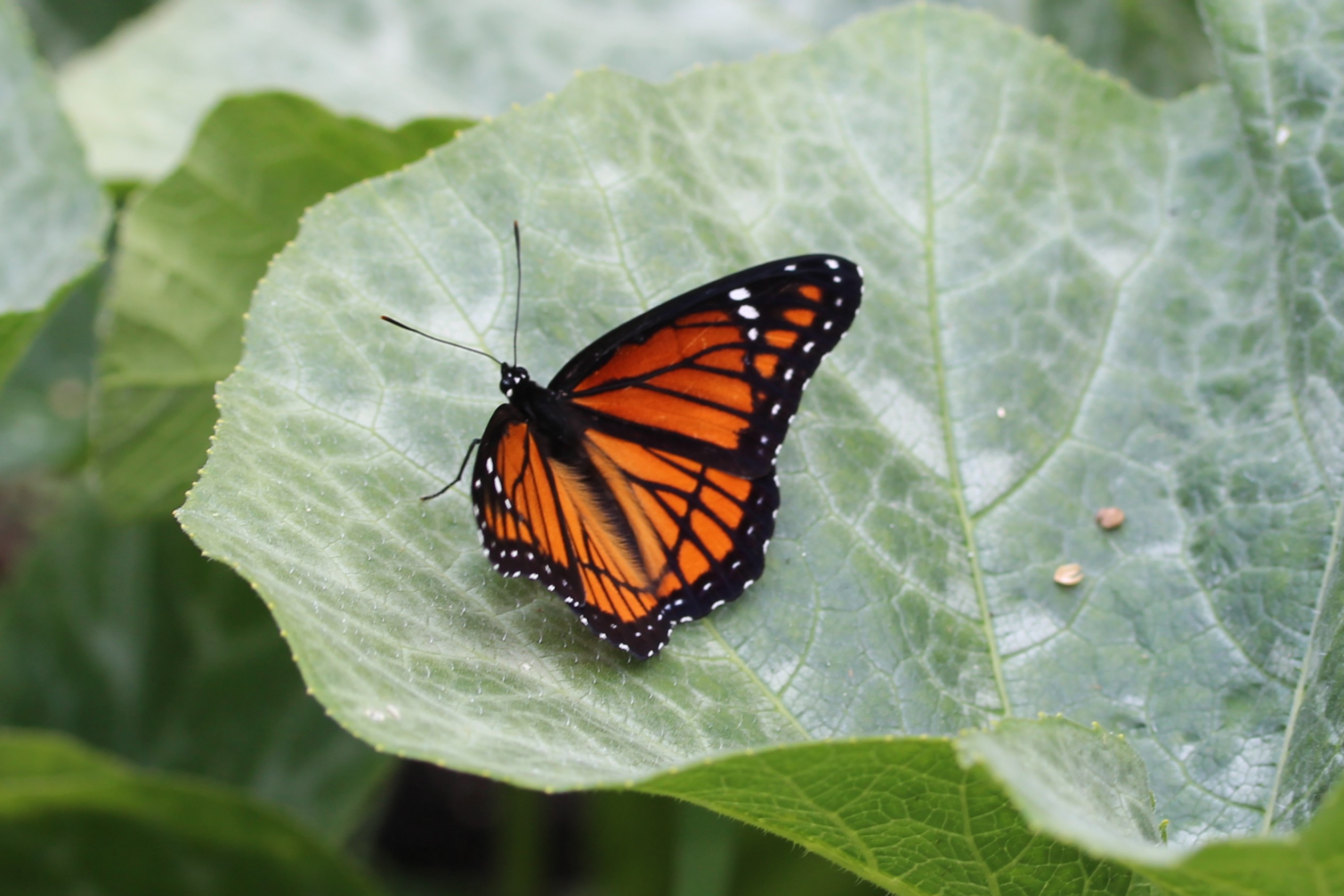
Viceroy Butterfly (Limenitis archippus), Backyard, August 2025:
At first glance, and when I took this picture, I believed the butterfly in my backyard was a Monarch (Danaus plexippus), but it is in fact a Viceroy Butterfly, the famous Monarch’s mimic.That dark line on the hindwing is what most easily sets this species apart visually from the more well-known Monarch butterfly. For a long time, it was thought that the Viceroy Butterfly was delicious but mimicked the poisonous Monarch to avoid hunting birds. Now it has been found that the Viceroy is also distasteful, so rather than exploiting the predators’ response to the Orange-and-black winged ‘don’t-eat-me’ patterning, the Viceroy is reinforcing this message. Although the adult butterflies are very similar, the Viceroy caterpillars look nothing like Monarch caterpillars, employing camouflage rather than the Monarch’s bright warning colours for protection. The Viceroy caterpillar feeds on willow and poplar leaves, appearing as mobile brown or green leaves with bird dropping patterns. Rather than flying south in a migration as the Monarchs famously do, Viceroys spend the winter here as caterpillars, hidden among the leaves (Hall et al 2014).
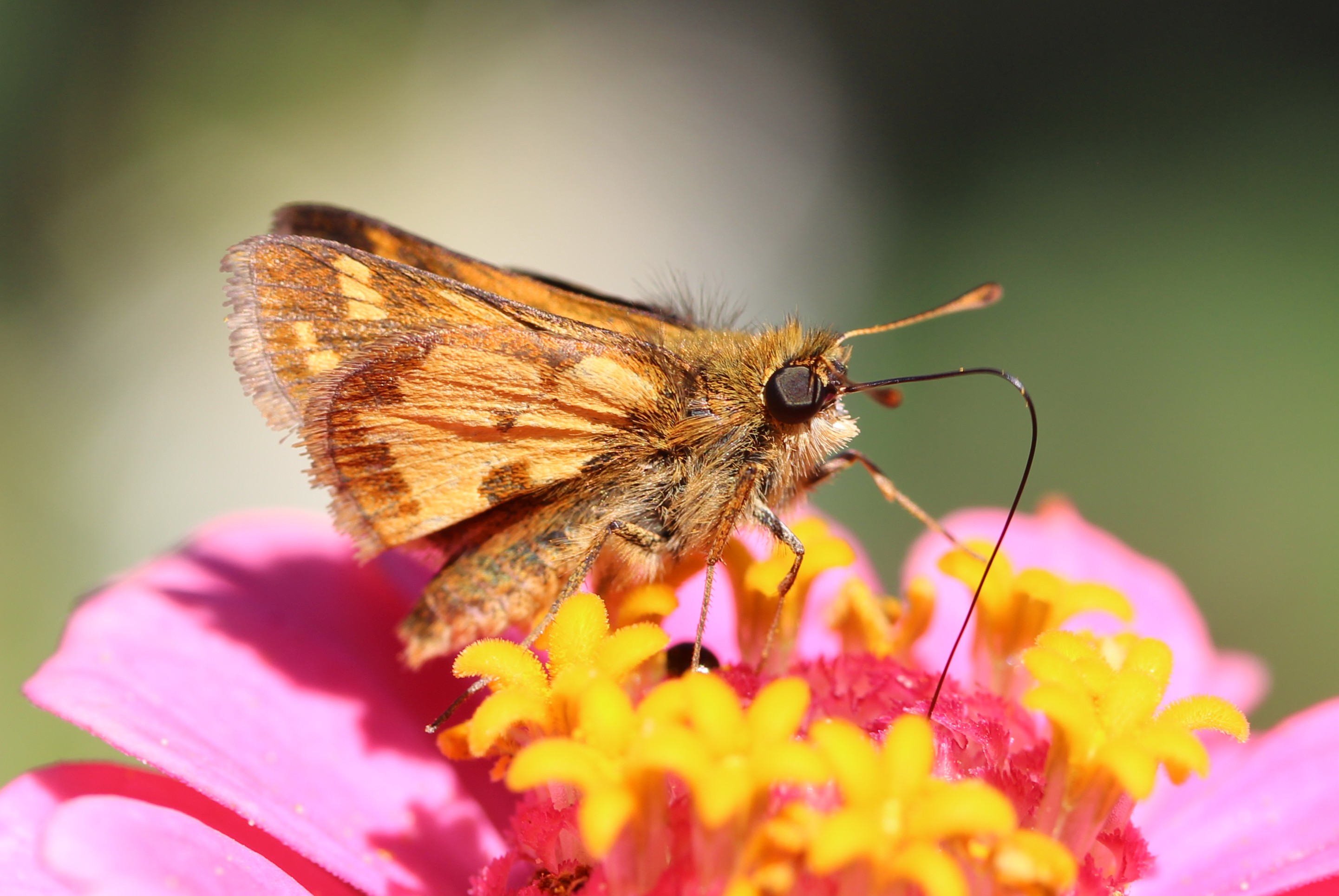
Peck’s Skipper (Polites peckius), Backyard, August 2025:
Another species of Butterfly that spends the winter here as a caterpillar is the Peck’s Skipper, which I managed to photograph in the act of drinking from a flower in my garden. The mouthparts of butterflies function essentially as straws and Skipper butterflies have proportionally very long proboscises for their body size as you can see here. Skippers (butterflies of the family Hesperiidae) are confused with moths because of their sometimes drab coloration and habit of holding their proportionally smaller wings at rest upon their backs. Skippers are incredibly diverse with 3700 species worldwide, and over 50 species recorded within Ontario (Hall et. al. 2014).
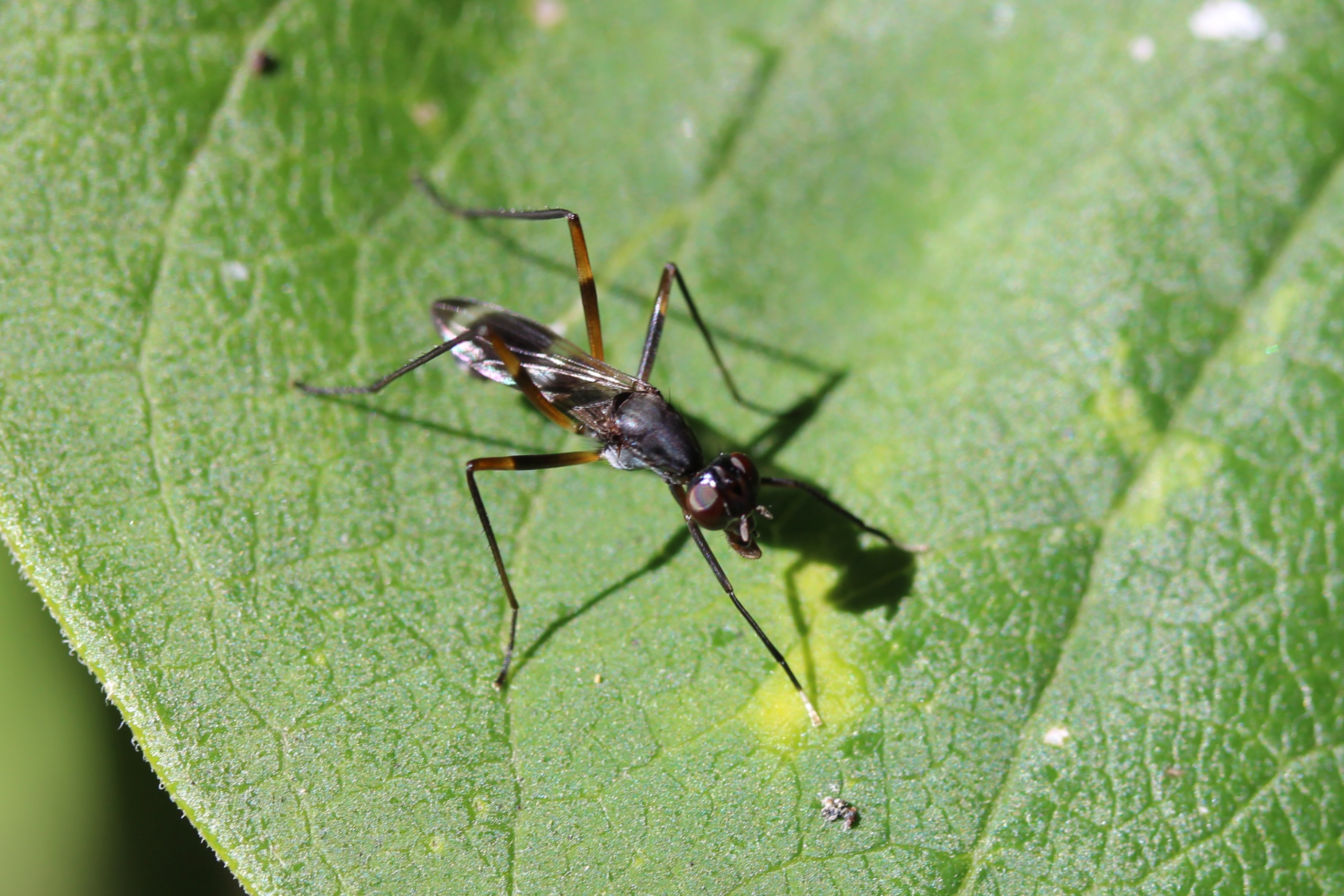
Stilt-legged Fly (Taeniaptera trivittata), Backyard, August 2025:
This long-legged fly was spotted meandering on a milkweed leaf in my backyard, possibly feeding on honeydew left by the numerous aphids the milkweed had also attracted. The fly seems to be mimicking an ichneumonid wasp with its stretched out body reminiscent of the constricted wasp-waist and front legs tipped in white and waved about in a manner that reminds me of parasitic wasps’ antennae. Females of this species lay eggs in rotting stems where their larvae feed on the decaying plants (Marshall 2006).
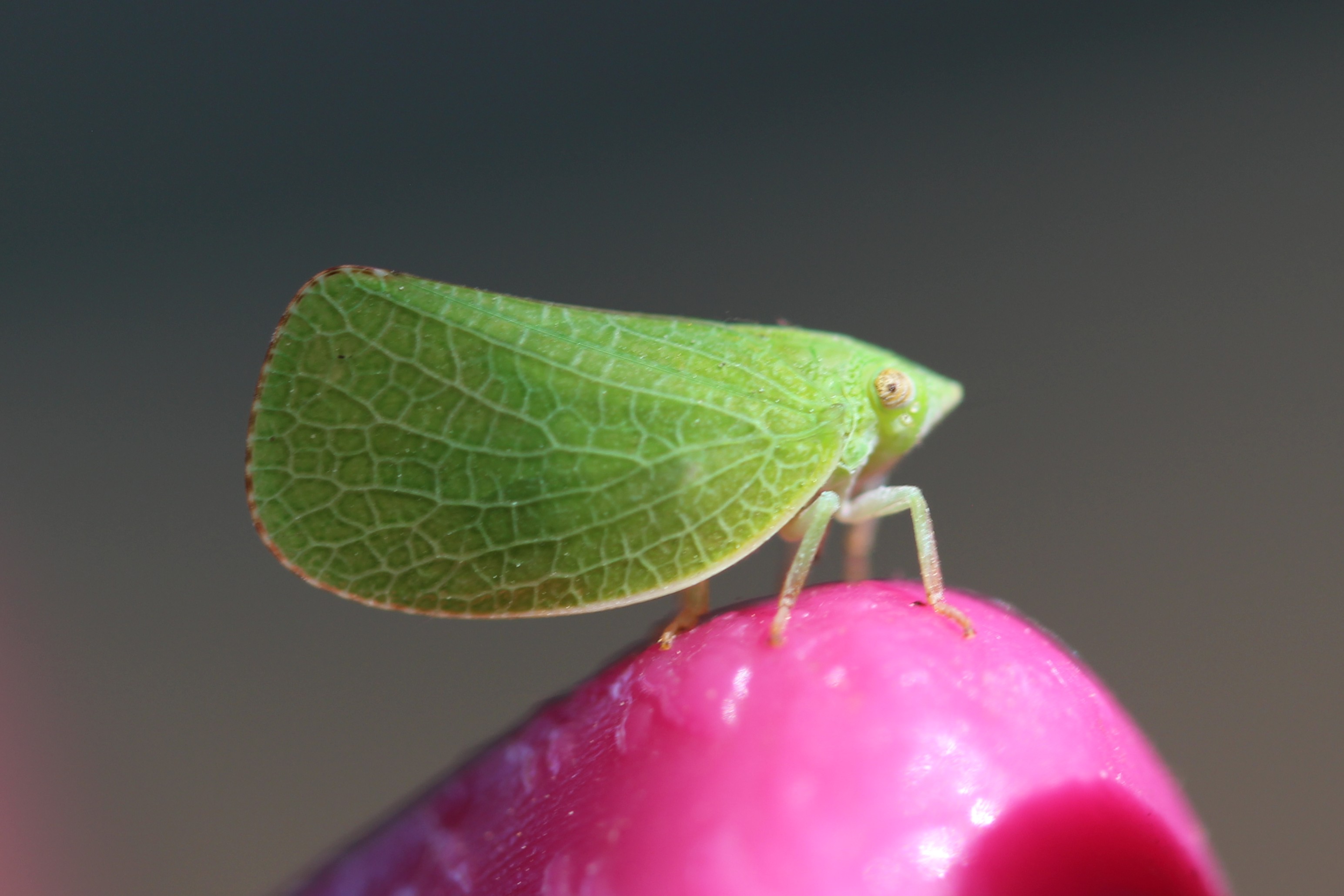
Green Cone-headed Planthopper (Acanalonia conica), Backyard, September 2025:
This leaf-patterned and coloured planthopper feeds on sap within woody plants.
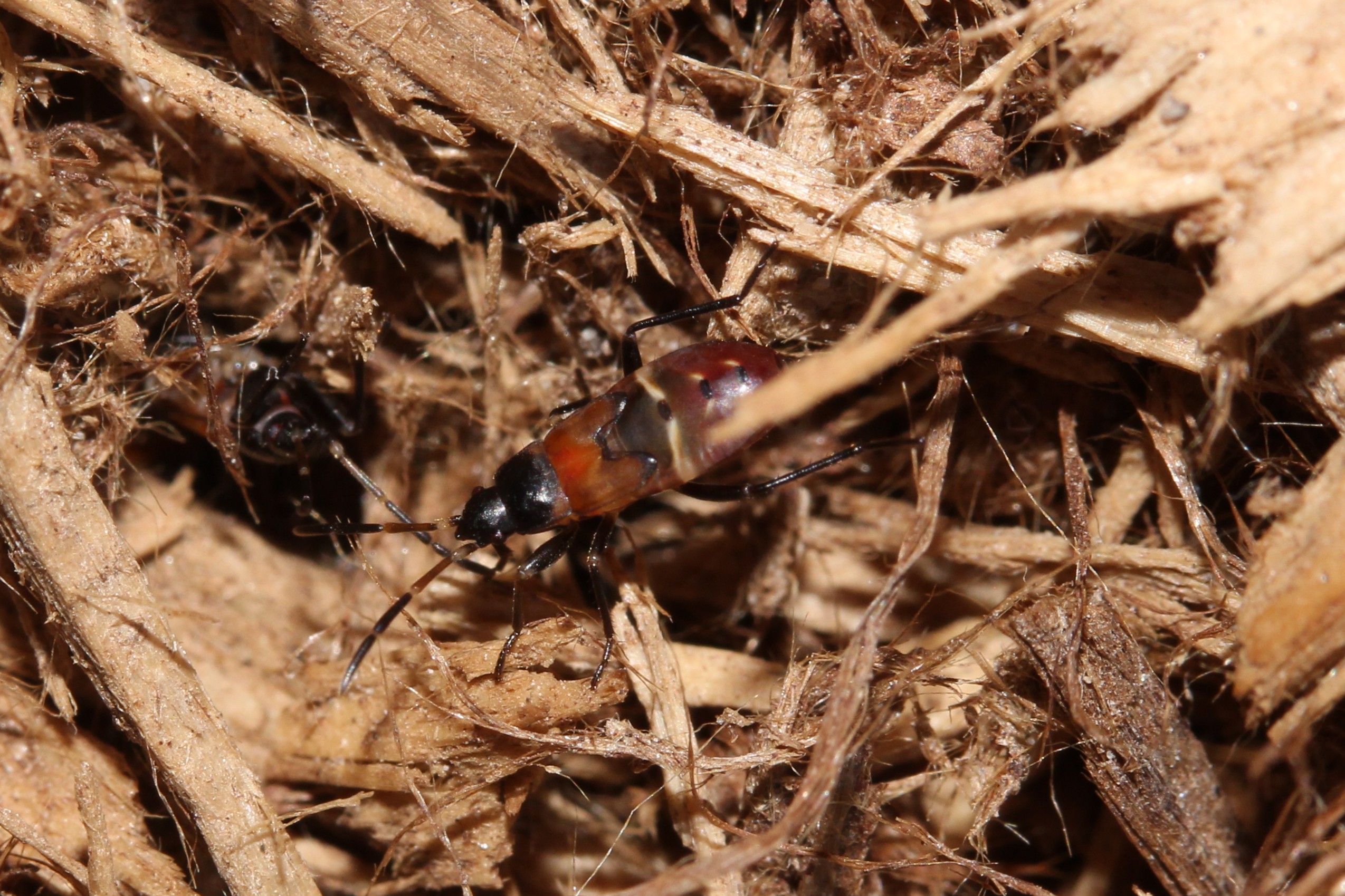
White-spotted Groundbug (Raglius alboacuminatus), September 2025:
Another name for this small bug is the “Tuxedo Bug” referring to the handsome black-and-white wings which cover its abdomen when it’s older. The Tuxedo Bug is native to Europe and was first discovered in North America in 1999 in the United States and was first reported in Canada in 2016 (Acheampong et. al. 2016). These small bugs (less than a cm long) spend the winter as adults which lay eggs in soil or ground litter in the spring. As they grow, they feed on seeds of plants in the mint family (Acheampong et. al. 2016).
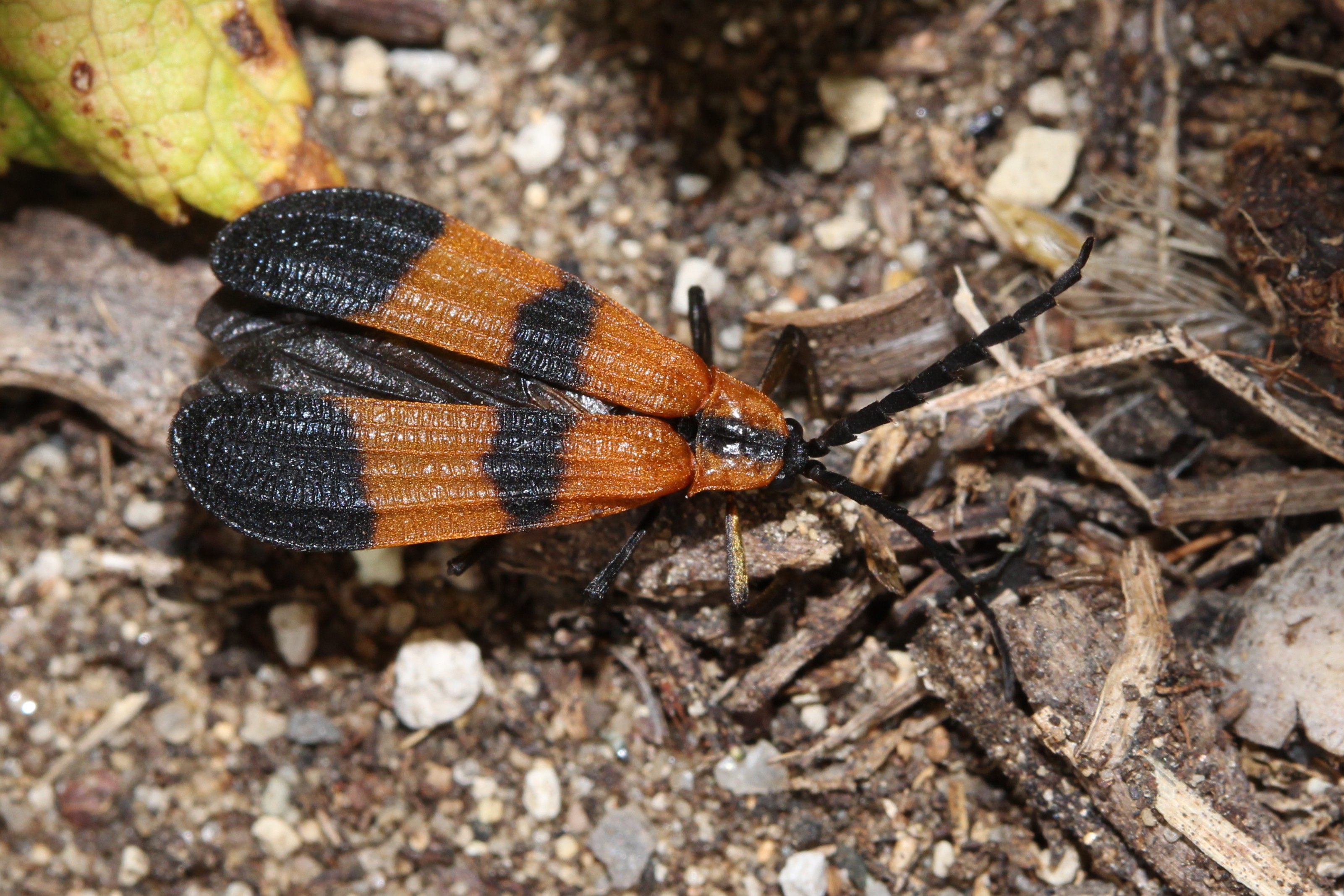
Net-winged Beetle (Calopteron sp.), Parents’ House, September 2025:
The bright colour and pattern of this distinctive beetle warns predators that it is distasteful so it can stand out as it seeks a mate. The adults of Net-winged beetles do not often feed during their short time as winged adults. As larvae, they are found “under bark, in rotting wood or in leaf litter, where they apparently feed on decomposing plant material and associated fungi, yeasts and slime molds” (Marshall 2018).
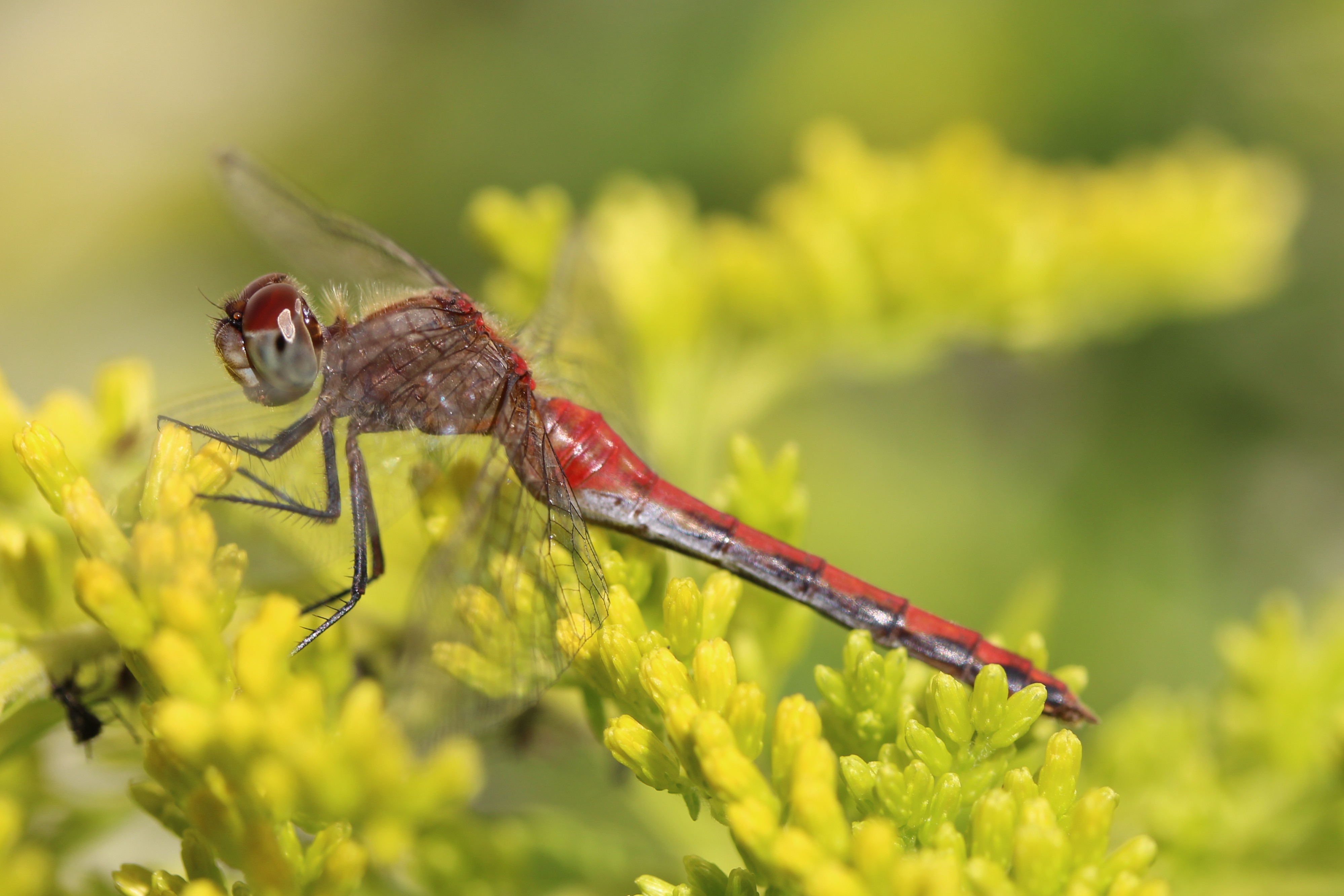
Meadowhawk Dragonfly (Sympetrum sp.), Backyard, September 2025:
Meadowhawk is an excellent name for a genus of Dragonflies. It’s as close as I can get with identifying the red Dragonflies I see as this genus (Sympetrum) is extremely difficult to distinguish into species without having a collected specimen. This is likely a mature male because of the bright red colouration (most female meadowhawks are yellowish brown or duller colours). Meadowhawks are part of the family of Dragonflies known as Skimmers (Family Libellulidae) because the females skim the water surface and dip their abdomens down to lay eggs within (Marshall 2006). These beautiful red dragonflies are a sign of Autumn for me because of a section I read in a Dragonfly text years ago that described how the migration of Meadowhawks in Japan during the Autumn was a sign of fall. Below is the haiku cited in the text (Shirao [Blyth 1952]) in Corbet 1999):
The beginning of autumnDecided
By the red dragonfly
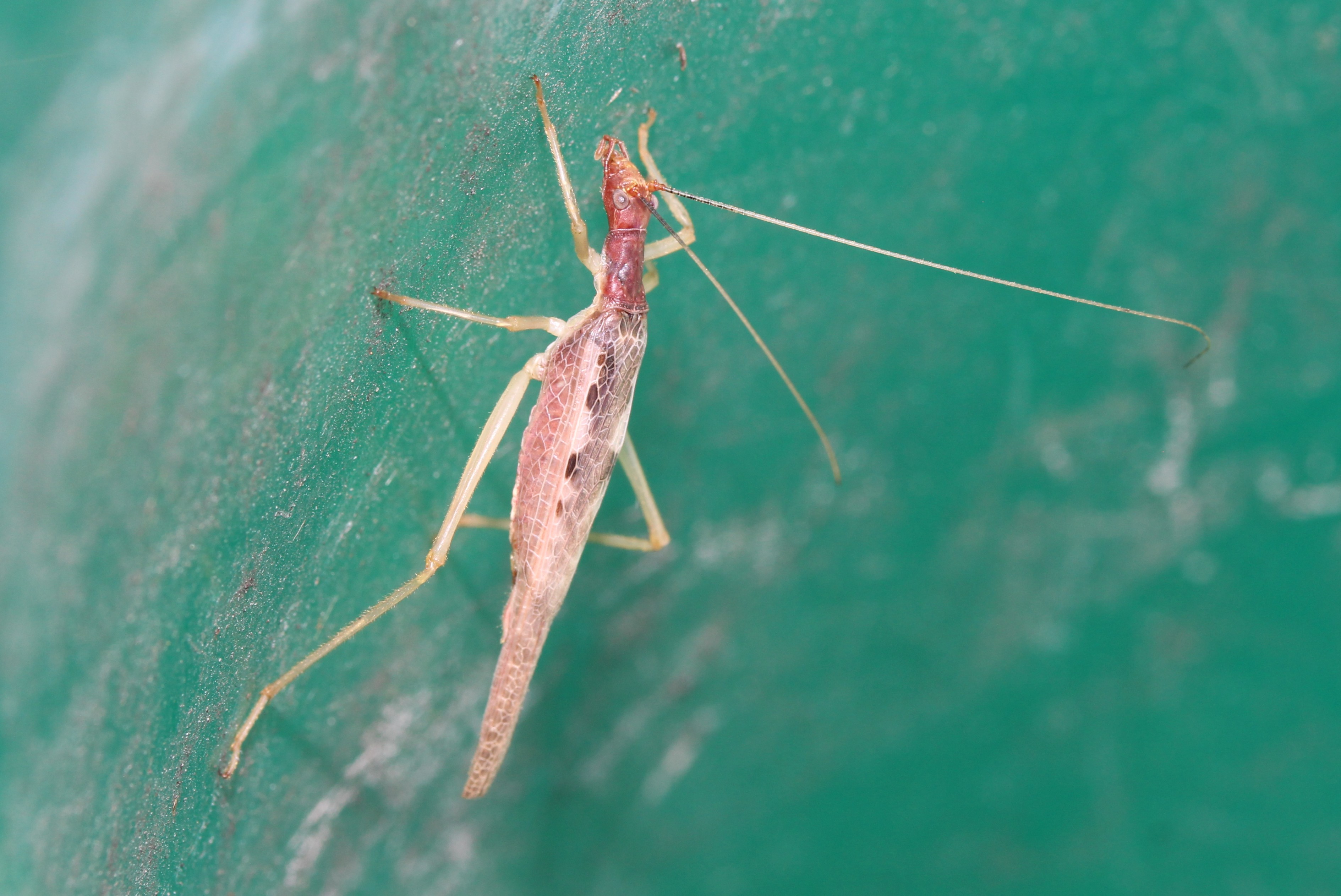
Two-spotted Tree Cricket (Neoxabea bipunctata), Backyard, September 2025:
I have struggled to find information on this species despite it being a large and conspicuous creature. In “Guide to Observing Insect Lives” I was surprised to find that tree crickets consume aphids (Stokes 1983), and it seems they also feed on plant material. This cricket is usually a more southern species but reaches its northern range limit here in southern Ontario (Marshall 2006).
References:
Acheampong, Susanna, Strong, Ward B., Schwartz, Michael D., Higgins, Robert J., Thurston, Molly A., Walker, Emma J., and Roberts, Josie (2016) First Canadian records for two invasive seed-feeding bugs, Arocatus melanocephalus (Fabricius, 1798) and Raglius alboacuminatus (Goeze, 1778), and a range extension for a third species, Rhyparochromus vulgaris (Schilling, 1829) (Hemiptera: Heteroptera). Journal of the Entomological Society of British Columbia, Vol. 113: December 2016. This article is open access: https://journal.entsocbc.ca/index.php/journal/article/view/940
Backhouse, Frances. 2008. Owls of North America. Firefly Books.
Corbet, 1999. Dragonflies: Behavior and Ecology of Odonata. Cornell University Press.
Hall, Peter, Jones, Colin, Guidotti, Antonia, and Hubley, Brad. 2014. The ROM Field Guide to Butterflies of Ontario. Royal Ontario Museum.
Holm, Heather 2021. Wasps: Their Biology, Diversity, and Role as Beneficial Insects and Pollinators of Native Plants. Pollination Press.
Marshall, Stephen. 2006. Insects: Their Natural History and Diversity. Firefly Books.
Marshall, Stephen. 2018. Beetles: Their Natural History and Diversity. Firefly Books.
Skevington, Jeffrey H. and Locke, Michelle M. 2019. Field Guide to the Flower Flies of Northeastern North America. Princeton University Press.
Stokes, Donald. 1983. Guide to Observing Insect Lives. Little, Brown and Company.
Wilson, Edward O., and Holldobler, Bert. 1990. The Ants. Harvard University Press.
For previous Photo recap posts, see:
–Norfolk Naturalist Year in Photos, (Dec 2022-Nov 2023)
–Norfolk Naturalist Year in Photos (Dec 2021-Nov 2022)
–Norfolk Naturalist Year in Photos, (Dec 2023-Nov 2024)
Discover more from Norfolk Naturalist
Subscribe to get the latest posts sent to your email.


