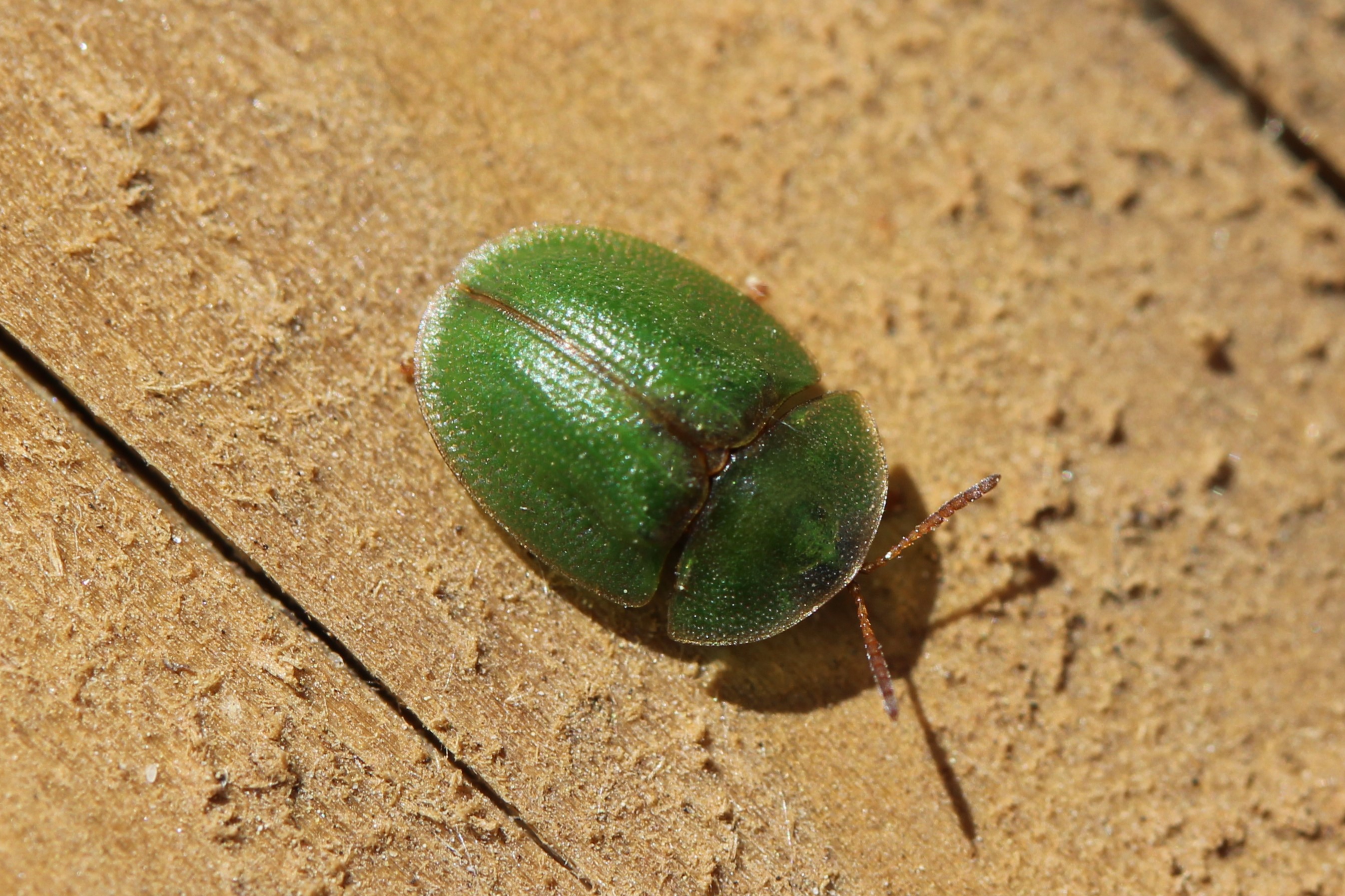
Thistle Tortoise Beetle (Cassida rubiginosa), Backyard, May 2024:
Tortoise Beetles (Beetles in the subfamily Cassidinae of the Family Chrysomelidae) have always been some of my favourite insects. Their wide elytra (wing-covers) protect their limbs and heads from predators and provide them with an appealingly round shape. The Thistle Tortoise Beetle is not native to Canada (having been introduced to combat the non-native Thistle plant), but it was still exciting to spot this charismatic insect on my back porch, trundling along. Their larval stage is less appealing, but still interesting, protecting itself not with a hardened armor covering but a “fecal parasol”. Yes, that’s right, larval Tortoise beetles carry their poop within a forked abdomen curved forward over their backs to ward off predators. There is even a specific word for this behaviour: “merdigery” – from the Latin for “dung” and “carry” (Costa 2006). Likely not a word you’ll find too much use for.

Armored Resin-bee (Heriades), Backyard, June 2024:
This strange-looking bee lays its eggs inside of constructions left behind by other insects, “especially beetle holes in wood, but they may also use pine cones” according to Wilson and Carril (2016). Their nest cells are divided with resin which is where they get their common name of “resin-bee”. Their generic name “Heriades” means “wool” referring to their woolly hairs, evident in the photo.

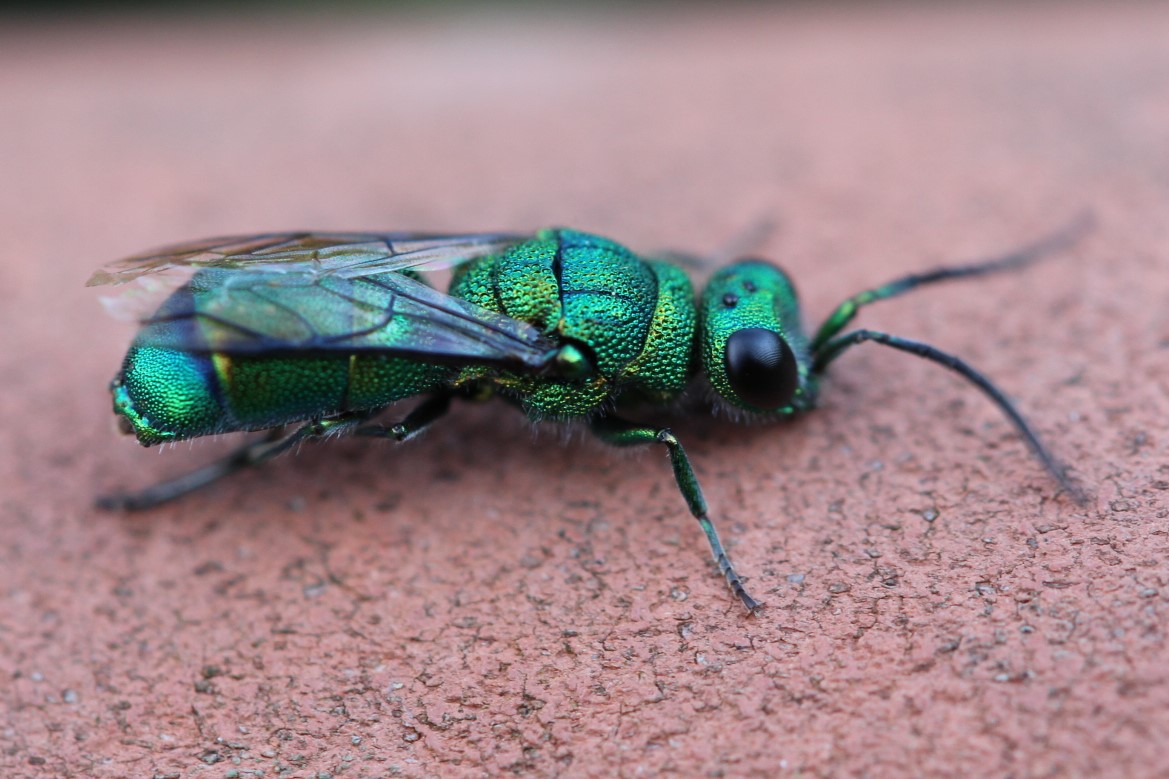
Related Chaclid Wasp (Leucospis affinis), Backyard, June 2024:
Although her colouration may remind you of a paper wasp or other social, stinging wasp, the long ovipositor curled over her back indicates that she is in fact something quite different: a parasitic wasp. This female will lay her eggs inside the nest of a leafcutter bee (bees in the family Megachilidae), and the larvae that hatch will locate and consume their host bee larvae (Holm 2021). Holm, in her amazingly detailed books on common garden wasps, says this about the larval stage of this wasp: “The larva is initially equipped with sensory and locomotive hairs on its head and body to help it find the host as it moves around the dark nest cell… has an oversized head, and large mandibles used to kill the host larva and destroy any other Leucospis eggs. Like many cleptoparasitic bees, the larva loses most of these prey-finding apparatus after molting” (Holm 2021).
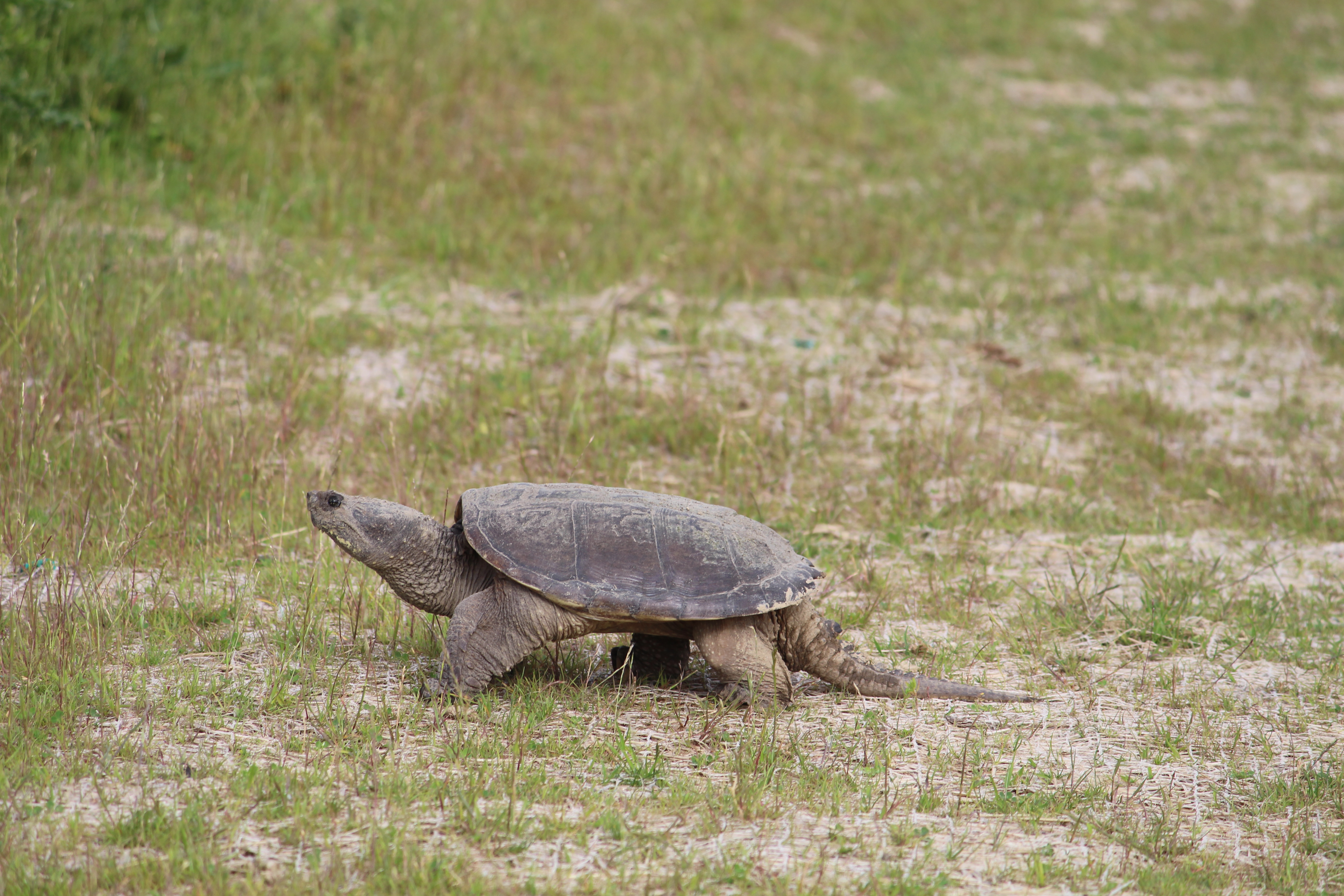
Common Snapping Turtle (Chelydra serpentina), Long Point, June 2024:
The sight of a Snapping Turtle walking across land always makes me think of a prehistoric beast lumbering out of some primeval swamp. Despite the fact that Snapping Turtles are well adapted to their environment, and no more primitive a species than any others, they give the impression of an ancient power, a relic from the days of the lumbering dinosaurs.
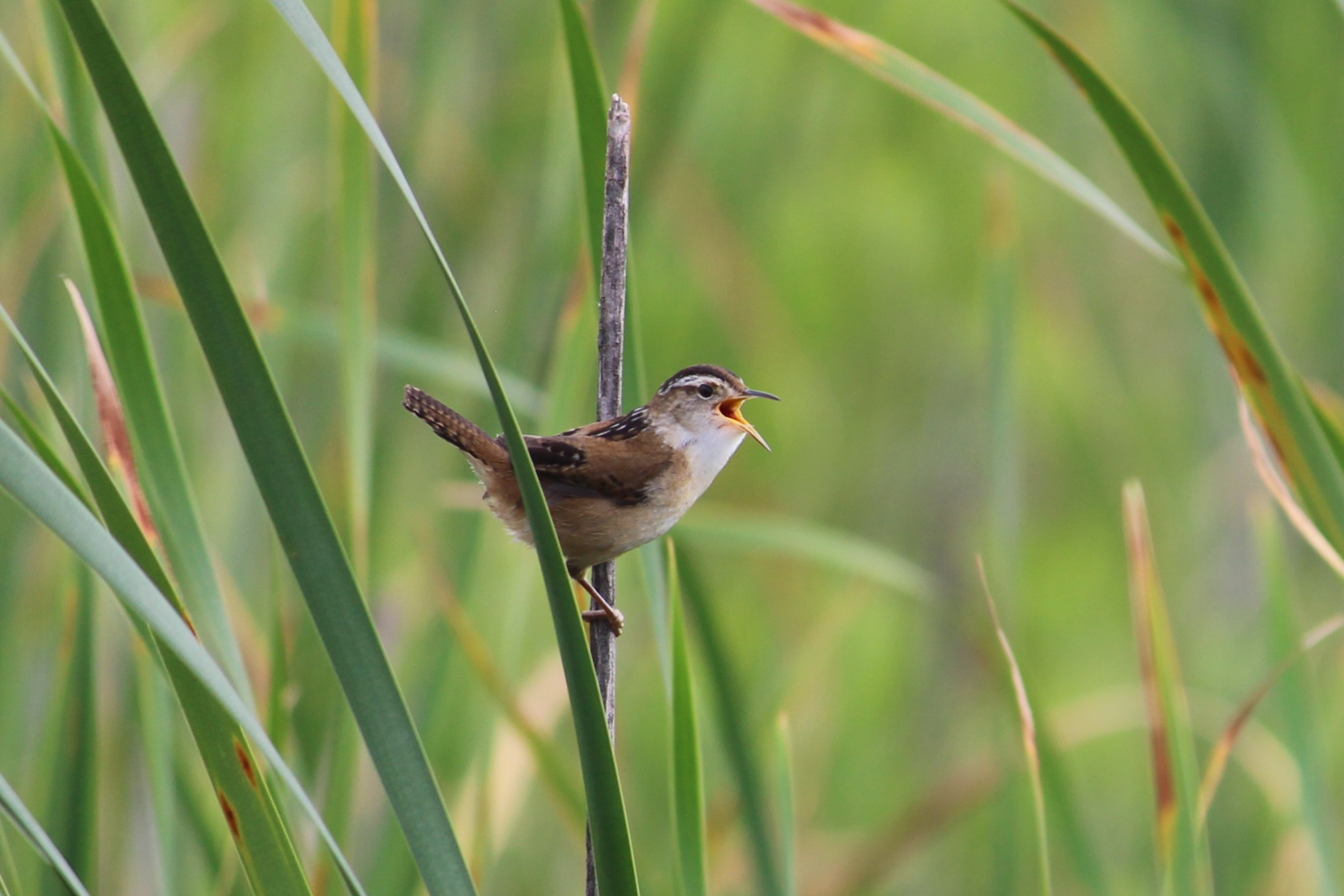
Marsh Wren (Cistothorus palustris), Long Point, June 2024:
The sound of these energetic birds clambering among the cattails of a wetland is one of the backdrops of my summer, going out to take photos of birds and other wildlife. I was surprised to learn that Marsh Wrens are major predators on Red-winged Blackbird eggs and nestlings in some parts of their range (Beletsky 1996). Marsh Wrens mostly eat insects, and they construct several nests within their territories from which the females choose, just like in House Wrens (Stokes and Stokes 1983).
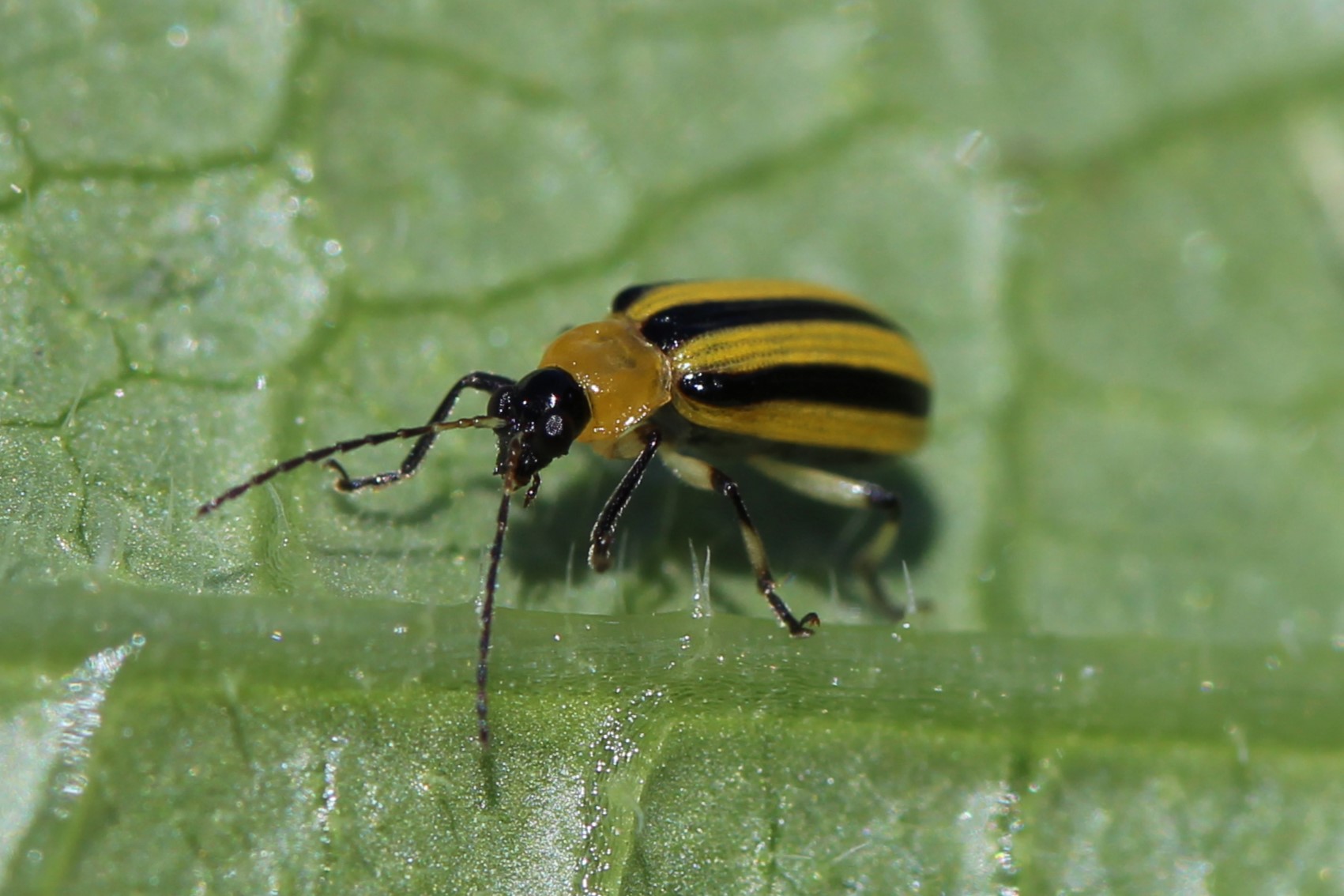
Striped Cucumber Beetle (Acalymma vittatum), Backyard, July 2024:
The Striped Cucumber Beetle is considered a pest because it consumes plants that we like to consume ourselves: members of the Cucurbitaceae (cucumbers, watermelons, gourds, pumpkins, squash and many others). The adults feed on leaves, while their larvae feed on the roots (Marshall 2018).
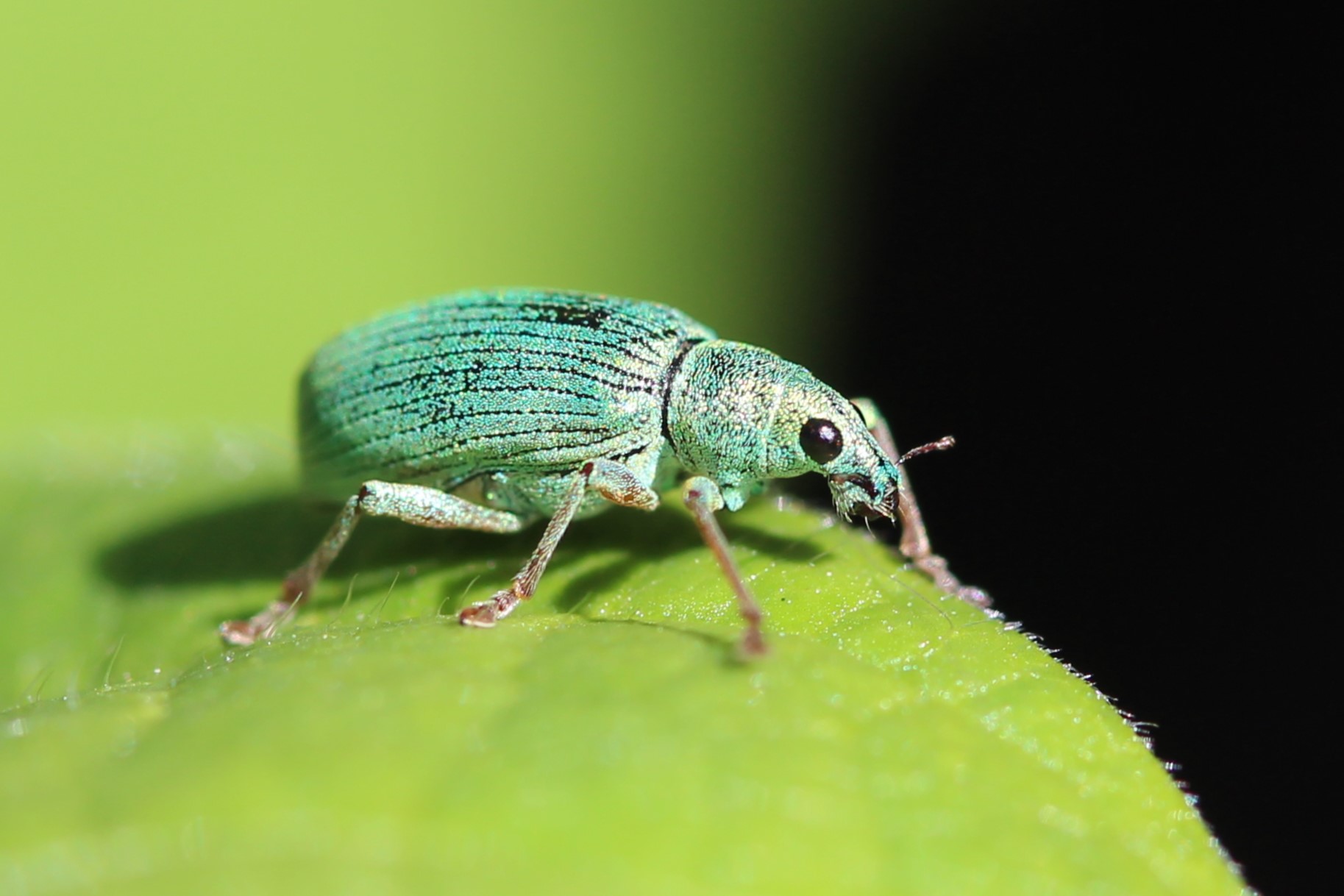
Green Immigrant Leaf Weevil (Polydrusus formosus), Backyard, July 2024:
Another pest beetle species, this one non-native to North America (accidentally introduced, and not deliberately like the Thistle Tortoise Beetle), the Green Immigrant Leaf Weevil feeds on various shrubs and trees. Eggs are laid in the bark of host plants or in the soil, the larvae feed on roots through Spring and Summer and then emerge as adults in the following Spring (Lisak et. al. 2024).
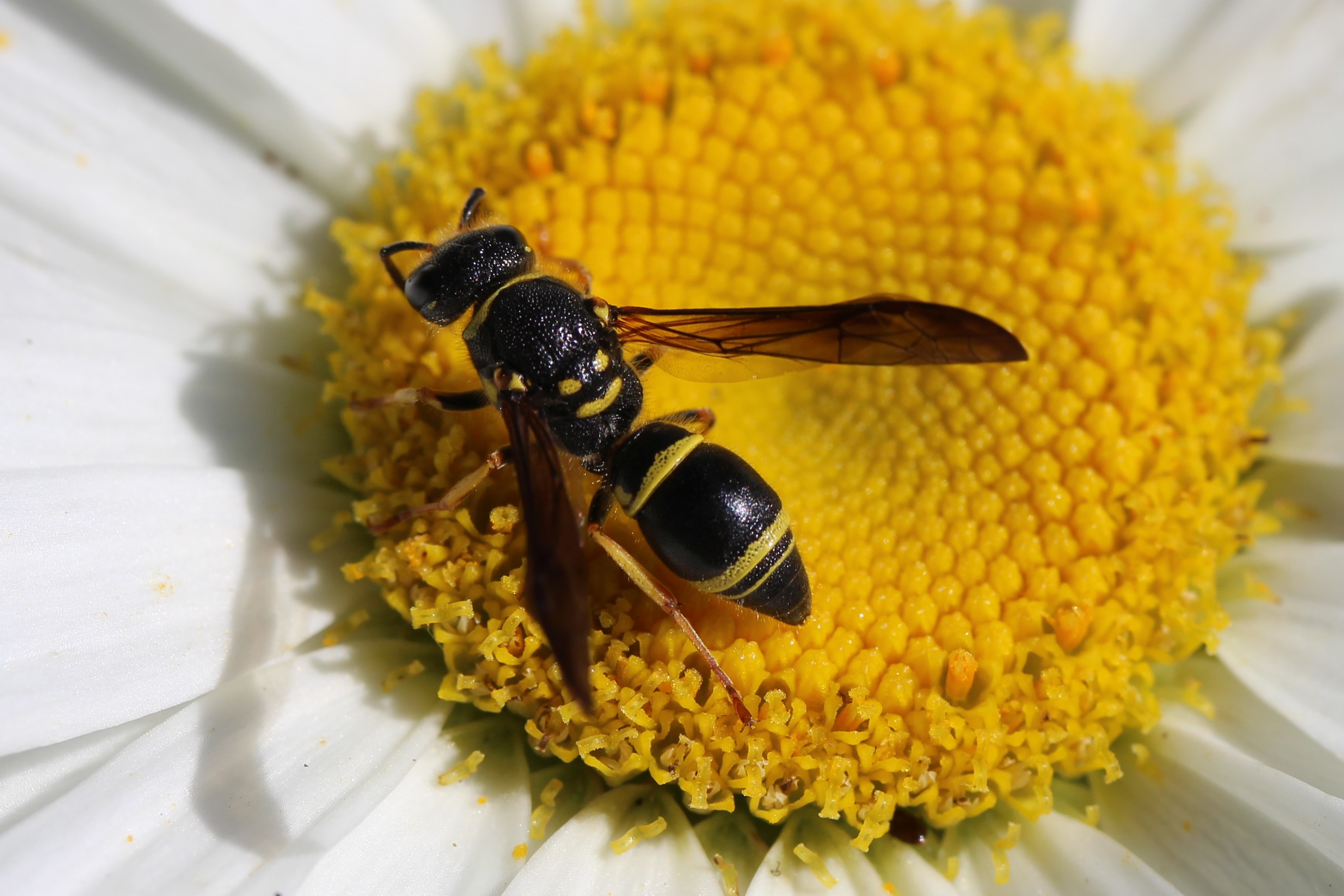
Smiling Mason Wasp (Ancistrocerus campestris), Backyard, July 2024:
In the photo above, you can clearly see the smile emblazoned on the Smiling Mason Wasp’s thorax. These wasps lay their eggs in pre-existing cavities, creating several nest cells by dividing the cavity with mud walls (Holm 2021). You can think of each nest cell as a nursery for individual wasp larvae, as the Smiling Mason Wasp female lays a single egg in each chamber (and hangs it from the ceiling by a silken thread) (O’Neill 2001). Each nursery is filled with several paralyzed caterpillars for the larva to consume upon hatching (Holm 2021).
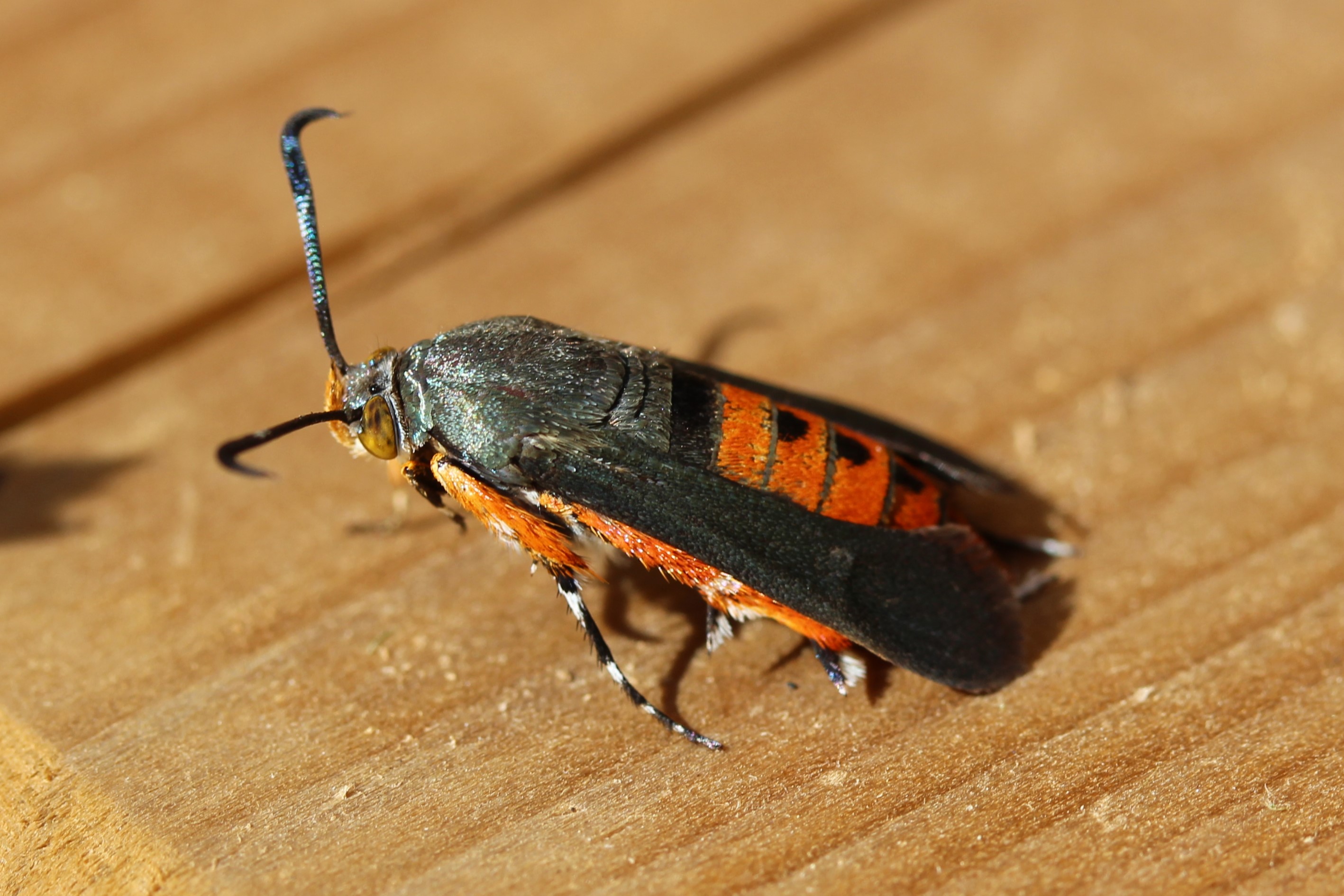
Squash Vine Borer (Eichlinia cucurbitae), Backyard, July 2024:
Standing still, the illusion is not very convincing, but when this little moth was in constant buzzing motion, hovering from flower to flower, the resemblance to a wasp was impressive (specifically the Great Golden Digger Wasp, Sphex ichneumoneus). The mimicry helps keep this moth safe from predators which hesitate to interfere with a stinging wasp but would love to snack on a harmless moth. As with several other insects on this list, the Squash Vine Borer feeds on squash, cucumbers, gourds, or pumpkin during its larval stage, giving some indication of what we were growing in our garden this past summer.

Pruinose Squash Bee (Peponapis pruinosa), Backyard, July 2024:
Unlike many other bees, Squash Bees are specialist pollinators on one plant family: the Cucurbitaceae (the pumpkins, squash, cucumbers etc). These are solitary bees, meaning that each female creates her own nest for her offspring, rather than contributing to a social construction such as a honeybee or bumblebee colony made up of many non-reproducing individuals. Female Squash Bees dig their nests into the soil, 1.5 feet deep or more, before branching off the main tunnel into several off-shoots with each one receiving pollen and an egg (Wilson and Carril 2016).
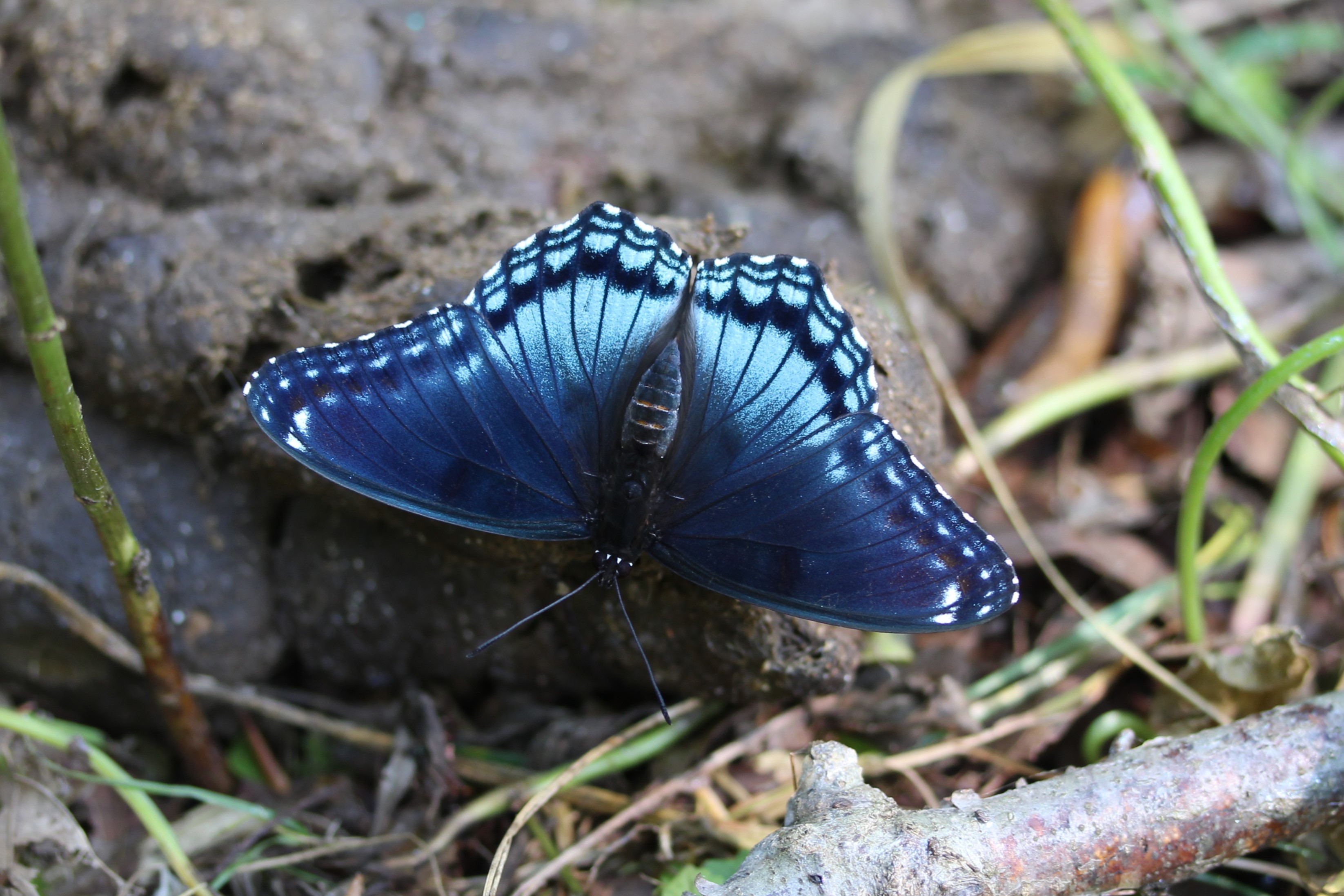
Red-Spotted Purple Butterfly (Limenitis arthemis astyanax), Backus Woods, July 2024:
This beautiful butterfly was spreading its wondrous wings as it fed on dung (I believe this was of the horse variety). Many butterflies feed on dung for valuable minerals, creating such jarring juxtapositions.
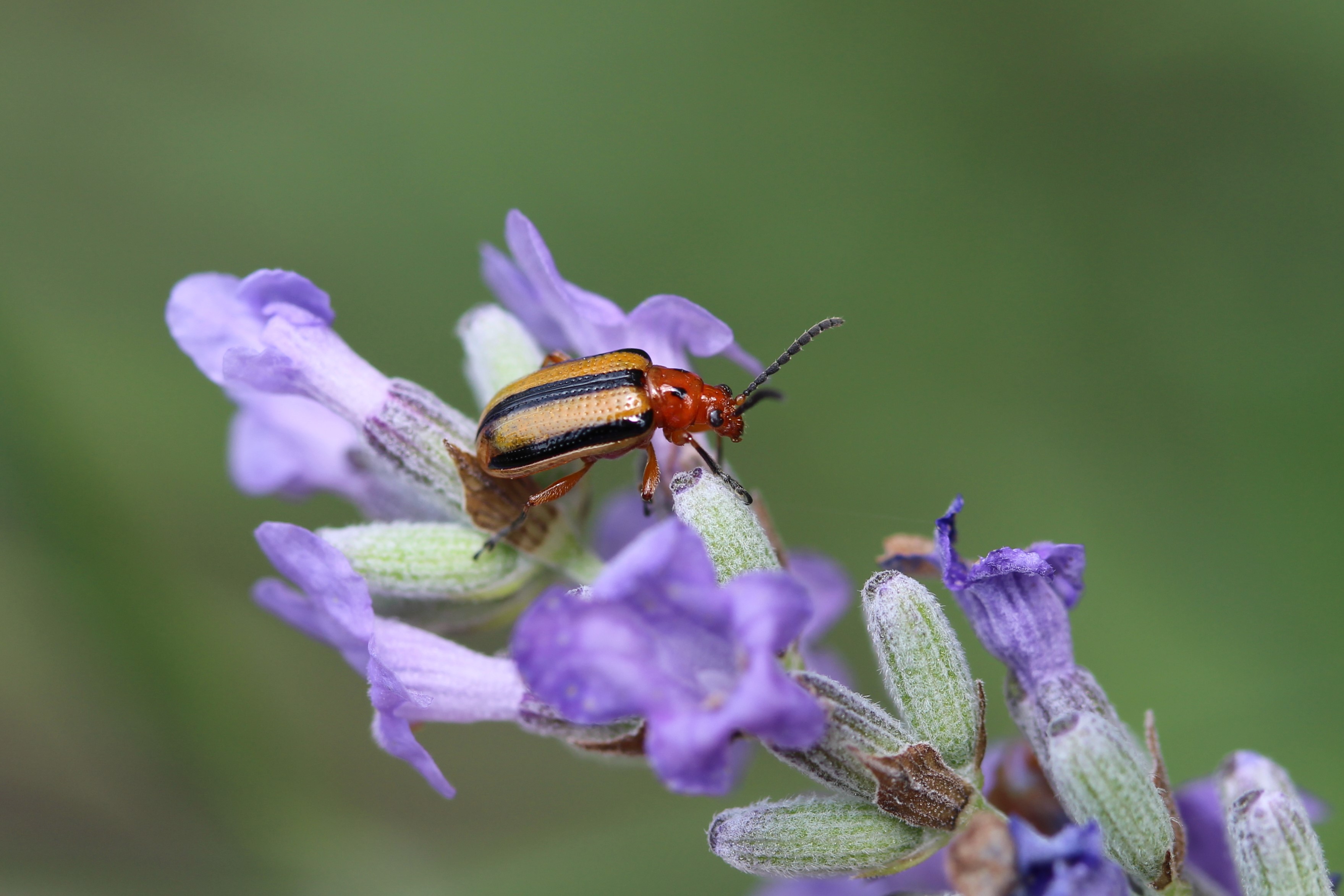
Three-lined Potato Beetle (Lema daturaphila), Backyard, July 2024:
This attractively coloured beetle is a native leaf beetle (in the subfamily Criocerinae) which feeds on potatoes and other related plants. Its larvae exhibit merdigery (bet you didn’t think that word was coming back again so soon, did you!?).
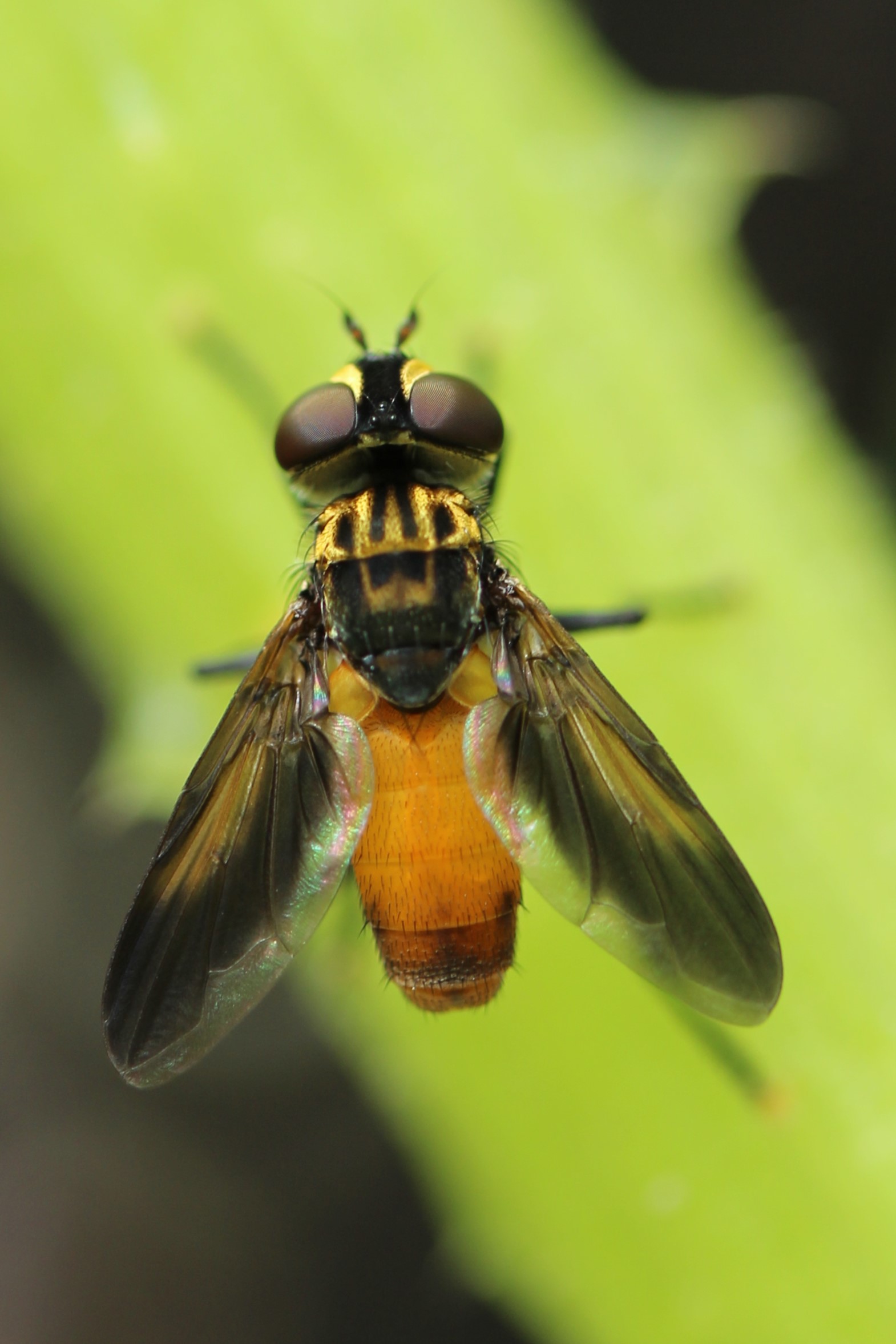
Swift Feather-legged Fly (Trichopoda pennipes), Backyard, July 2024:
These flies are part of the vast fly Family Tachinidae, which are largely bristly and parasitic. Trichopoda pennipes lays its eggs directly onto its hosts which are various true bugs (Hemipterans), including Squash Bugs, Stink Bugs and Leaf-footed bugs. The egg hatches and the larva burrows directly into the host bug, consuming it from the inside. This gruesome life cycle is helpful to gardeners as many of its hosts are pests of garden plants.
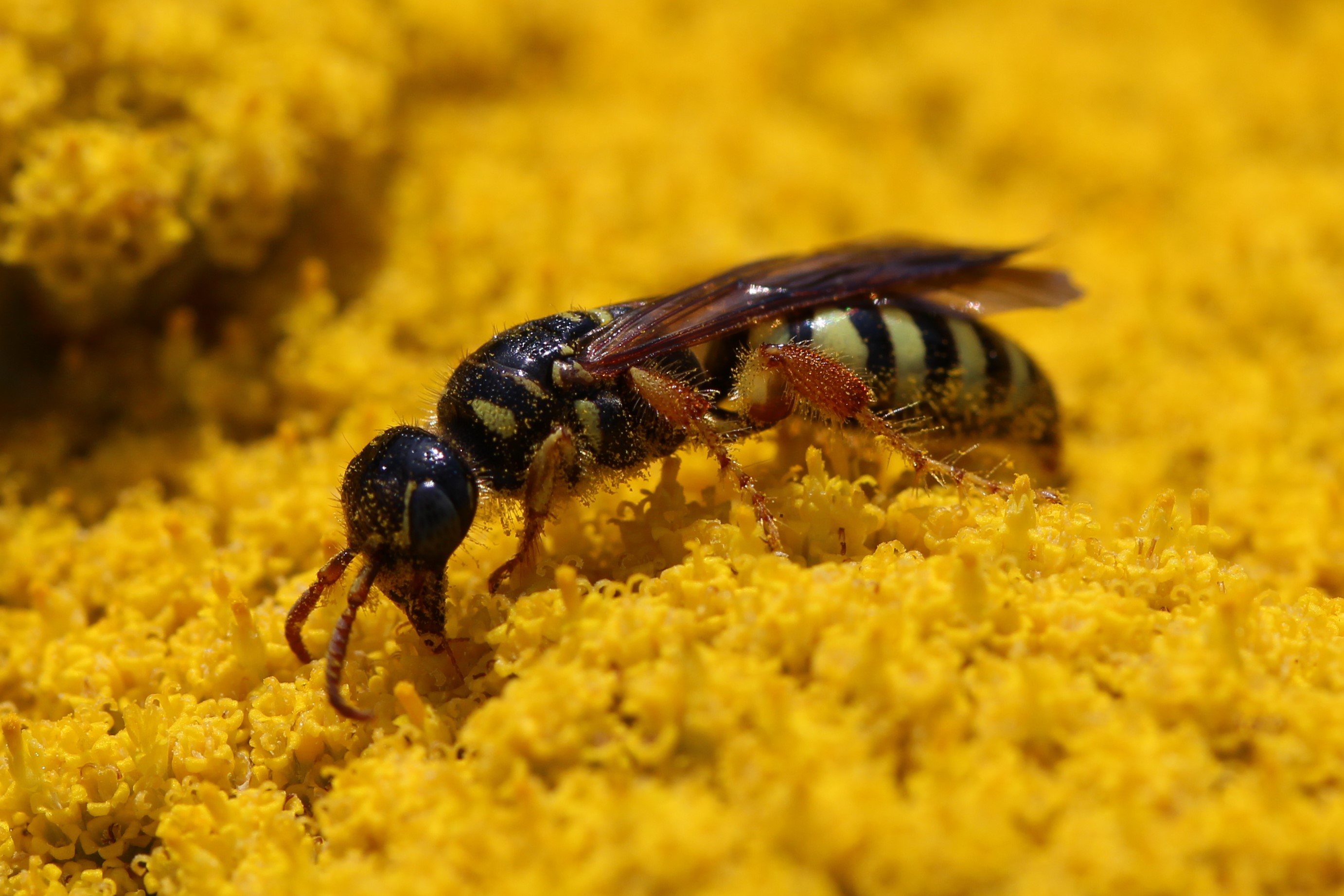
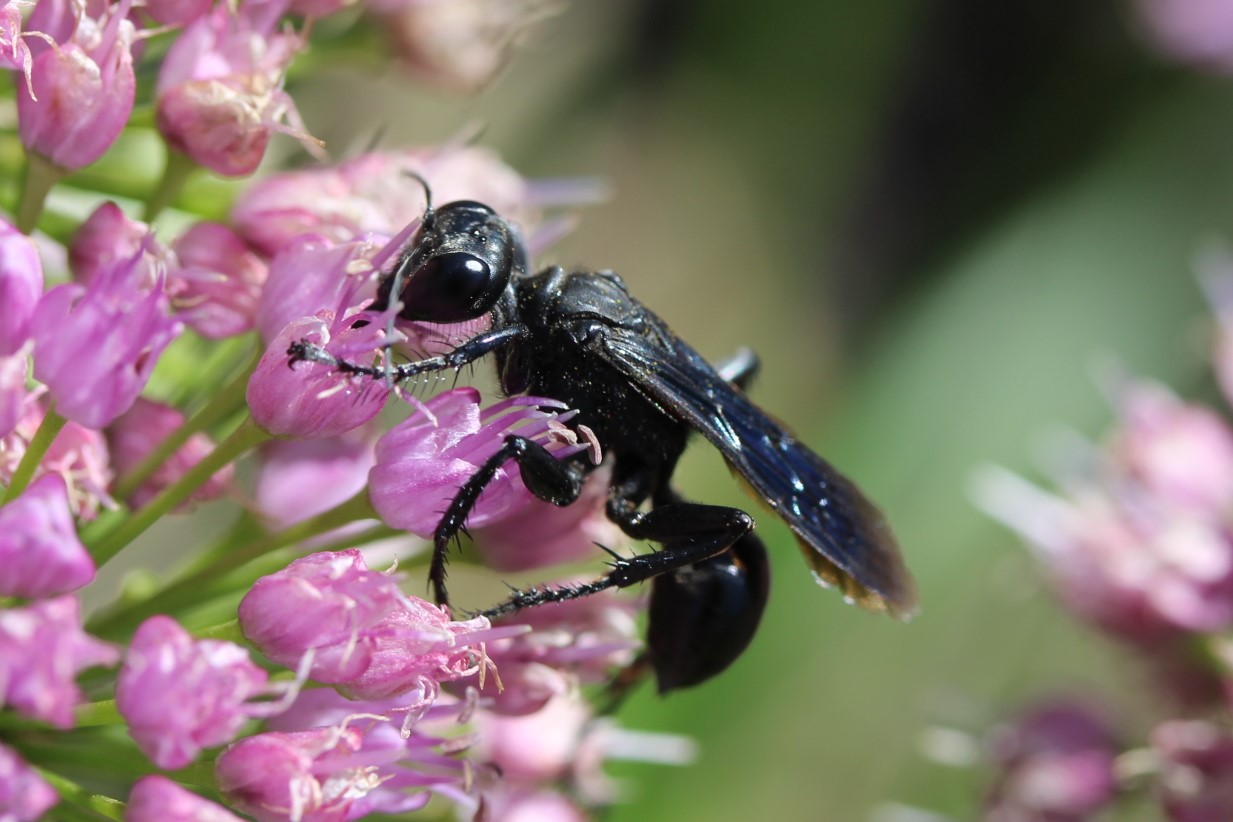
Five-Banded Thynnid Wasp (Myzinum quinquecinctum), Backyard, July 2024:
These large wasps again demonstrate the familiar patterning and colouring of a social paper wasp, but are very distinct in their life cycle. Female Five-Banded Thynnid Wasps dig up to six inches into the ground at night, in search of scarab beetle larvae (or occasionally tiger beetle larvae) (Holm 2021). Once found, the female paralyzes the grub and lays her egg on its abdomen (Holm 2021). The wasp larva consumes the beetle larva and creates a silken cocoon within its late host’s underground chamber to spend the winter (Holm 2021). Once spring arrives, the wasp pupates and emerges as the impressive adult pictured above in summer (Holm 2021).
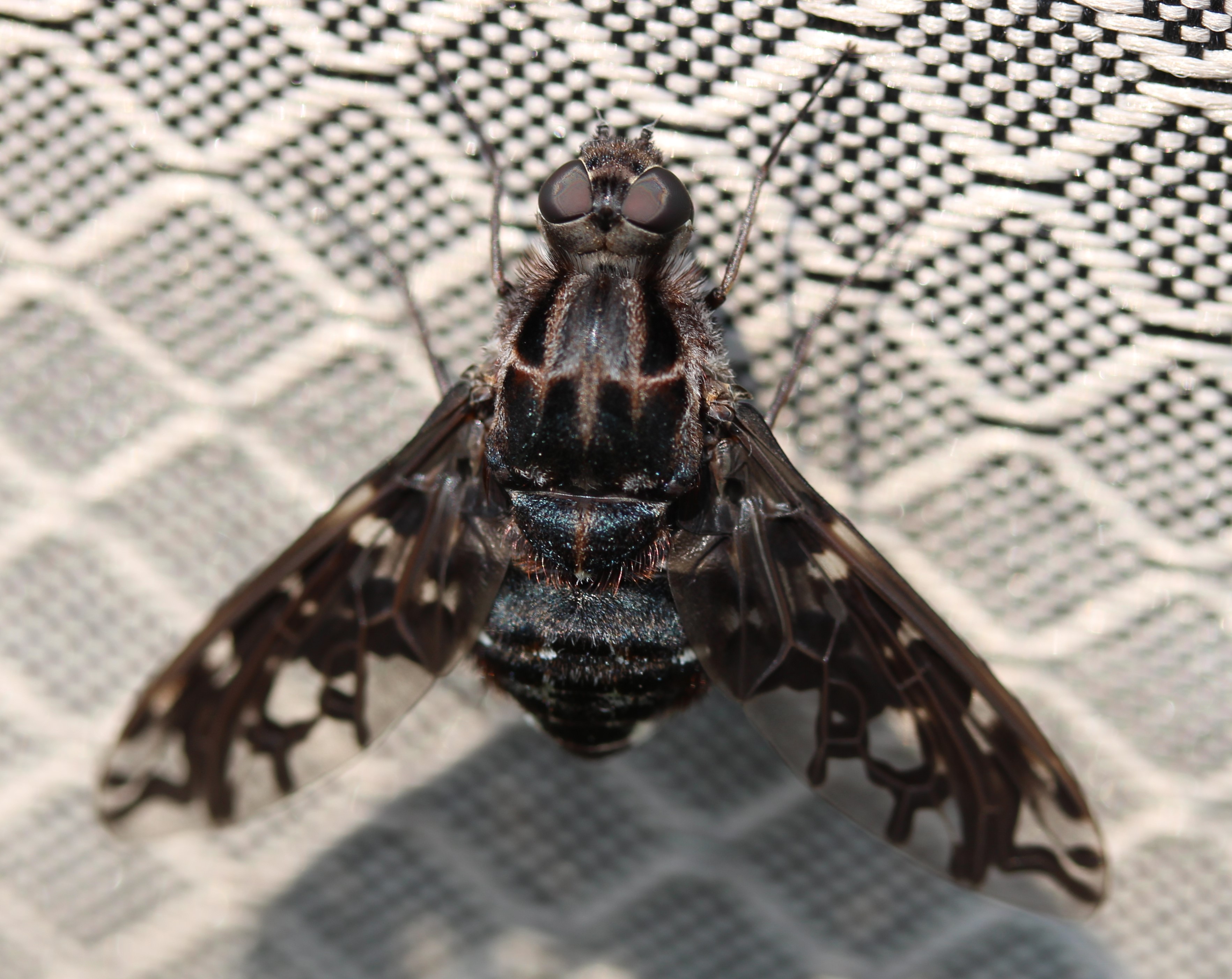
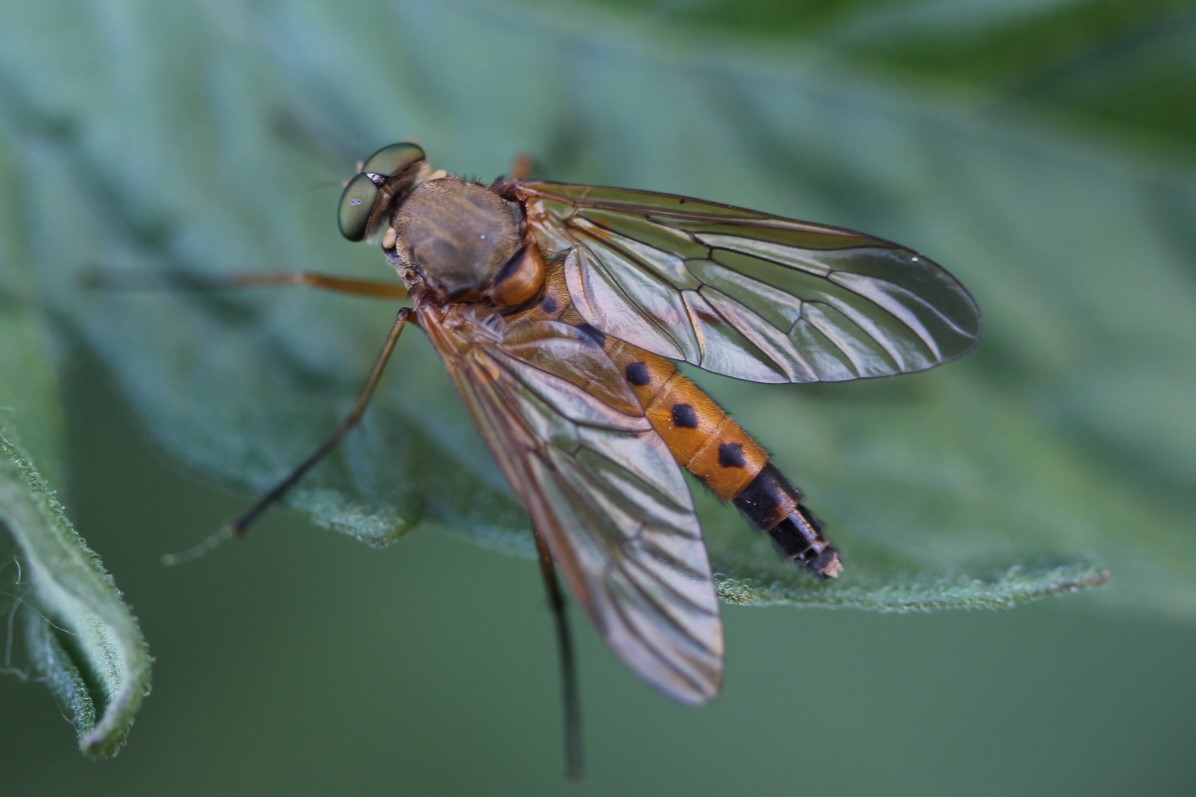
Tiger Bee-Fly (Xenox tigrinus), Backyard, July 2024:
Despite its large and striking appearance, this formidable fly does not bite or sting people and should only be feared by its prey: Carpenter Bees (Xylocopa spp.). The Tiger Bee-Fly lays its eggs near Carpenter Bee nests, and the larvae make their way inside to consume the bee larvae.

Belted Kingfisher (Megaceryle alcyon), Grant Anderson Park, September 2024:
I have tried in vain to take a good, clear, photo of a kingfisher for many years now. These distinctive, charismatic birds are always on the move, and very aware of me whenever I approach with camera in hand. They need their good senses to spy fish underwater which they dive and catch. This past September, I finally managed to get a nice photo of this bird in the local park in Simcoe.
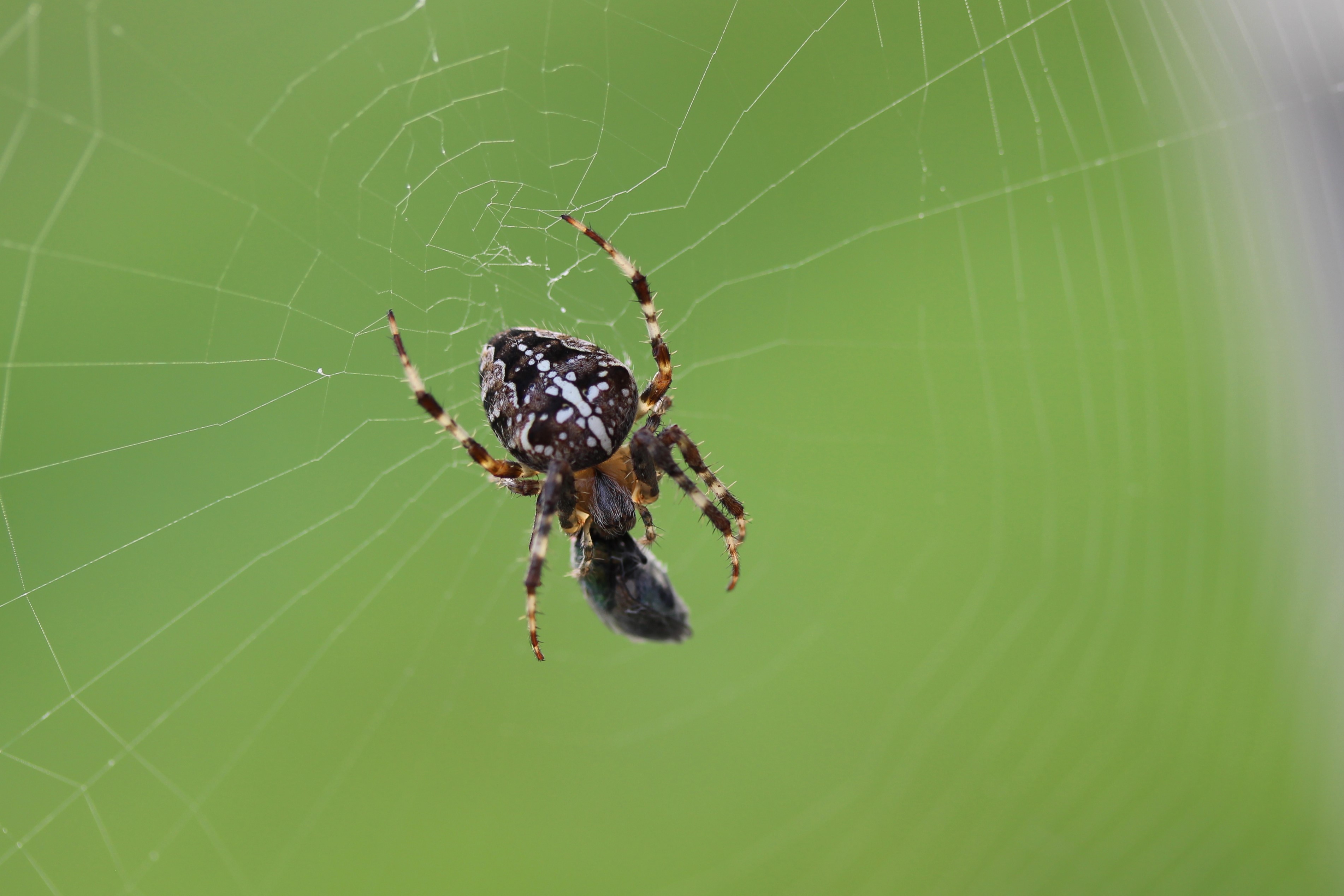
Cross Orbweaver (Araneus diadematus), Backyard, September 2024:
This large spider feasting on its dipteran prey had constructed a web on the edge of my back porch. Cross Orbweavers are introduced spiders here, native to Europe.
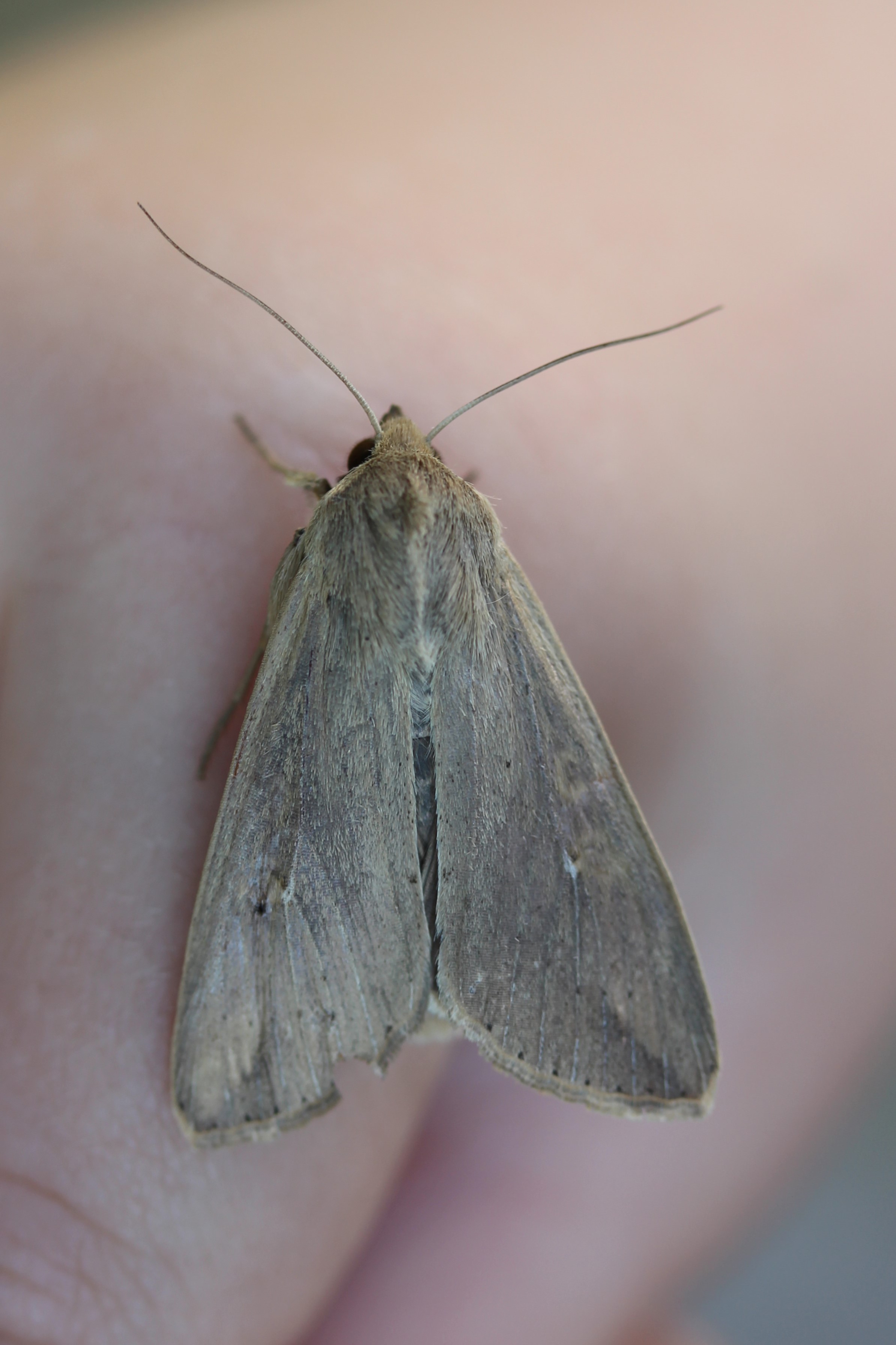
Mythimna Moth, Backyard, September 2024:
I believe this moth is of the genus Mythimna, but I’m not quite sure as it’s a fairly nondescript moth. The moths in this genus feed on grasses when larvae which would also line up with its discovery within my lawn (Beadle and Leckie 2012).
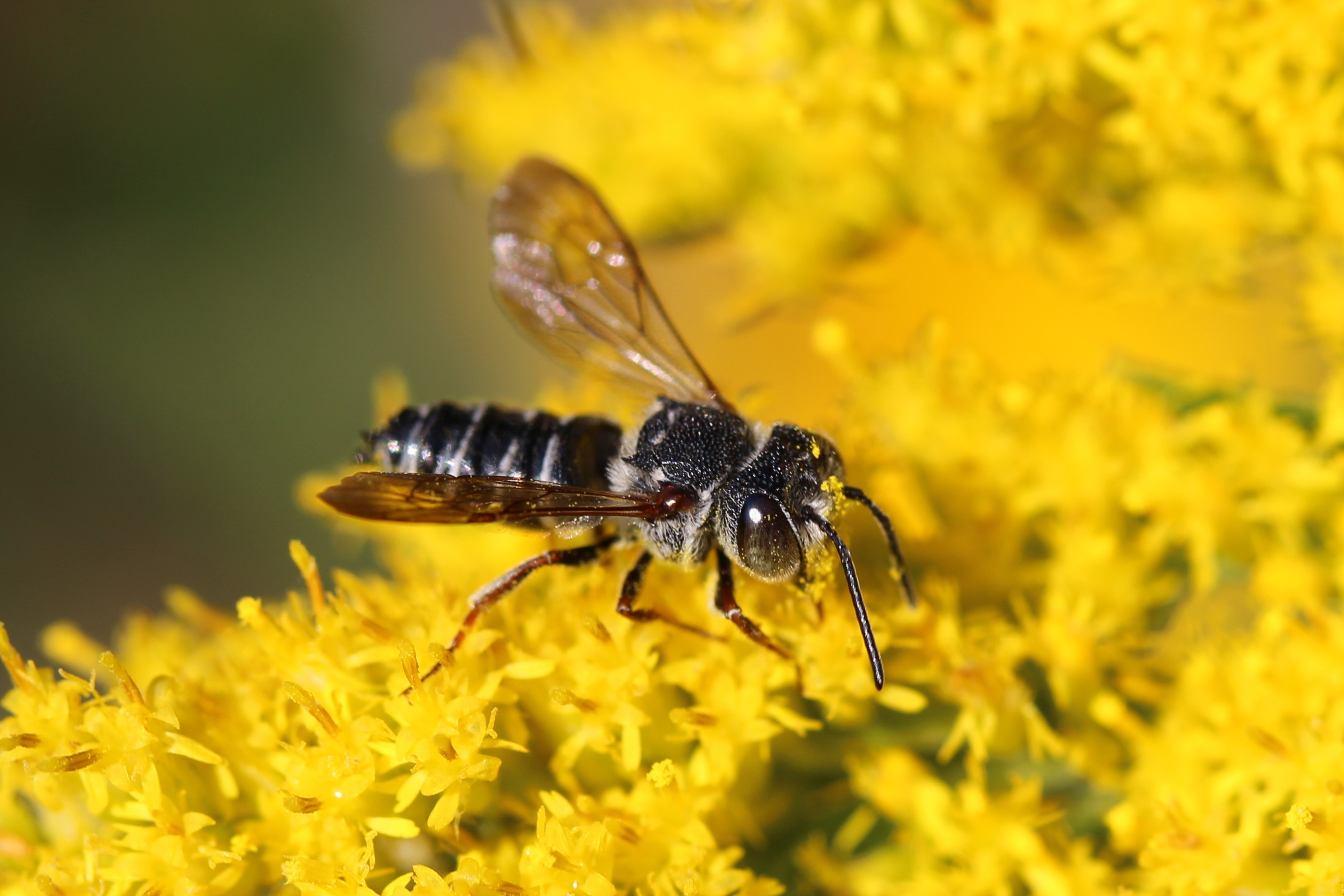
Sharptail Bee (Coelioxys), Backyard, September 2024:
Although the proportions of the pictured individual lead the head to be much larger than the thinning abdomen, the common name “Sharptail Bee” refers more to the females of these bees (the bee in the photo is a male) who have very pointed abdomens used to puncture the nest cells of Megachilid bees (Wilson and Carril 2016). Coelioxys eggs laid inside their hosts’ nests hatch and the emerging larva “uses tweezer-sharp mandibles to snip the egg or young larva of the host bee in half” (Wilson and Carril 2016). The larva then proceeds to consume the pollen that was stored away for the host bee’s young.

Apple Leaf Skeletonizer Moth (Choreutis pariana), Backyard, September 2024:
These are day-active moths, with larvae that feed on crab apple leaves. They were introduced to North America sometime around 1917 (Beadle and Leckie 2012).
References:
Beadle, David and Leckie, Seabrooke 2012. Peterson Field Guide to Moths of Northeastern North America. Houghton Mifflin Harcourt.
Beletsky, Les. The Red-Winged Blackbird: The Biology of a Strongly Polygynous Songbird. 1996. Academic Press.
Costa, James T. 2006. The Other Insect Societies. Harvard University Press.
Holm, Heather 2021. Wasps: Their Biology, Diversity, and Role as Beneficial Insects and Pollinators of Native Plants. Pollination Press.
Lisak, Sarah C., Hailey N. Shanovich, Amelia R.I. Lindsey, and Brian H. Aukema. “The Polydrusus Weevils (Coleoptera: Curculionidae) of the United States of America and Canada: Identification and Insights into the Ecology of Two Nonnative Species in Hazel (Corylus Spp.).” The Canadian Entomologist 156 (2024): e10. https://doi.org/10.4039/tce.2024.7.
Marshall, Stephen. 2018. Beetles: Their Natural History and Diversity. Firefly Books.
Marshall, Stephen. 2023. Hymenoptera: The Natural History and Diversity of Wasps, Bees, and Ants. Firefly Books.
O’Neill, Kevin M. 2001. Solitary Wasps: Behavior and Natural History. Cornell University Press.
Stokes, Donald and Stokes, Lillian. 1983. A Guide to Bird Behavior Volume 2. Little, Brown and Company.
Wilson, Joseph S. and Carril, Olivia M. 2016. The Bees in Your Backyard. Princeton University Press.
For previous Photo recap posts, see:

































 Norfolk Naturalist