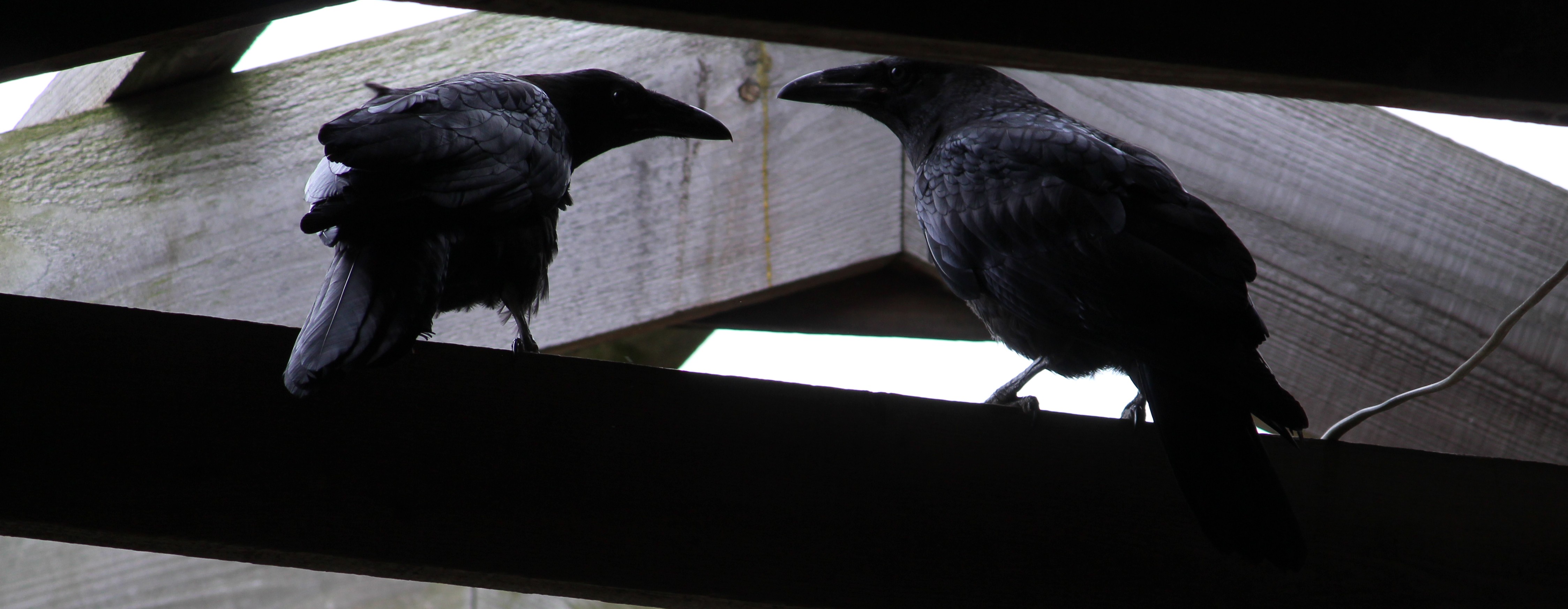
The ominous photo above was taken in my parents’ barn, host to Ravens these past few years (see my article about this here: Return of the Ravens). You could almost imagine they were Odin’s Ravens, Huginn and Muninn (Thought and Memory), perfect to herald a look back at this past blogging year. It’s time for my anniversary article to summarize my year’s writing and reading. This year I was much less productive on the blog than I have been in previous years, but we’ll see how next year goes!
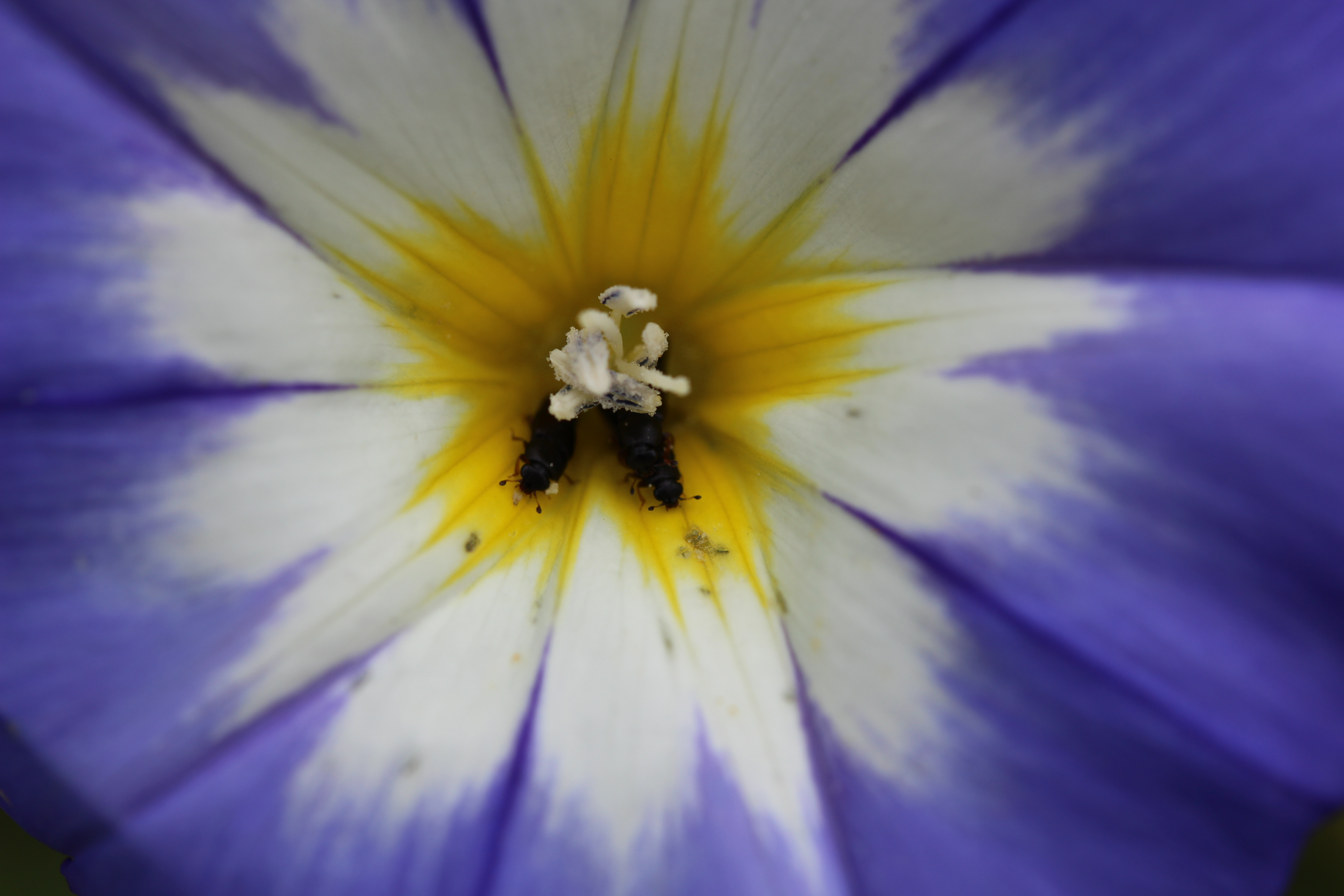
Some Conotelus beetles peering out of a flower in my backyard, July 2025, likely pollen-feeders.
This past year, I only published 4 blogposts, and some of those were rather short. The first was my now-annual Year in Photos post (I am currently working on this year’s edition). And the following three cover some of the amazing moths that I observed at an event 2 years ago: Sphingidae, Erebidae, and Limacodidae. I have such a backlog of observations/writings that I would like to see posted on my blog and I will get to them… eventually…
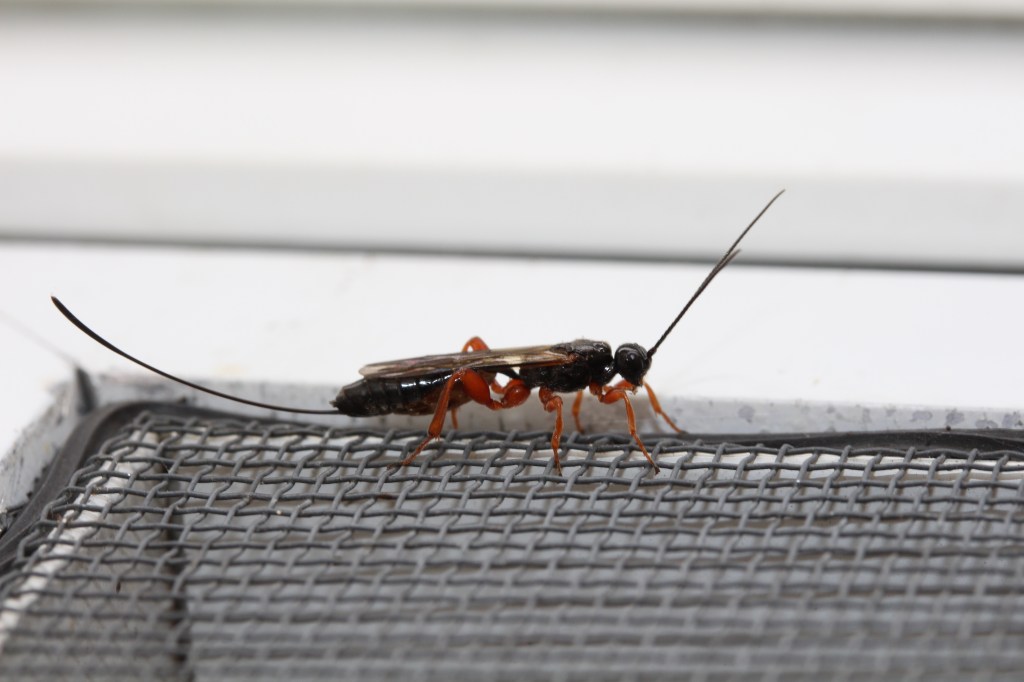
Parasitoid wasp (ichneumonoid of some sort) observed at my parents’ house in September 2025.
Let’s take a look at what nature books I’ve read this past year with a brief review and thoughts:
Marine Life of the Pacific Northwest: A Photographic Encyclopedia of Invertebrates, Seaweeds and Selected Fishes, by Andy Lamb and Bernard Hanby:
Excellent photographic overview of the diversity of coastal marine life in the Pacific Northwest. The text is not meant to be comprehensive for identifying or comprehensive for life history attributes, more a selection of interesting facts or occasional anecdotes about the species covered. I really enjoy these types of books for driving home once more that there is so much biodiversity out there.
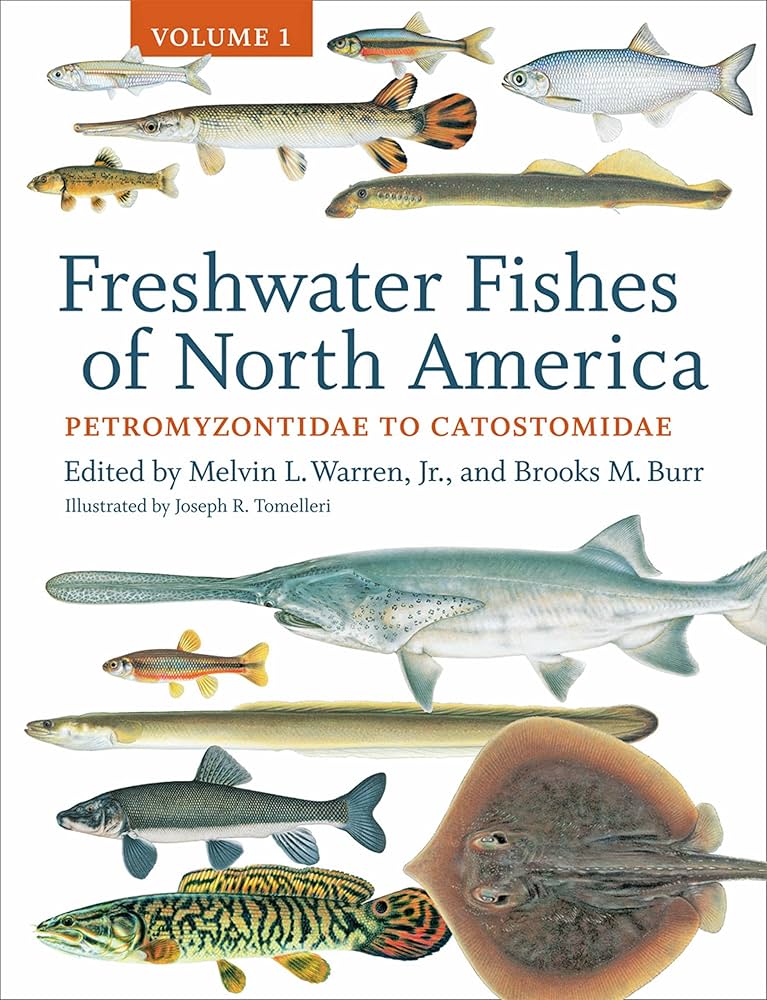
Freshwater Fishes of North America: Volume 1: Petromyzontidae to Catostomidae, by Melvin Warren and Brooks Burr, Illustrated by Joseph Tomelleri:
Very in-depth look at a selection of fish families of North American freshwaters. The focus is on behaviour, ecology, physiology, and giving a family-level overview of the diversity of fishes in North America that inhabit fresh water.
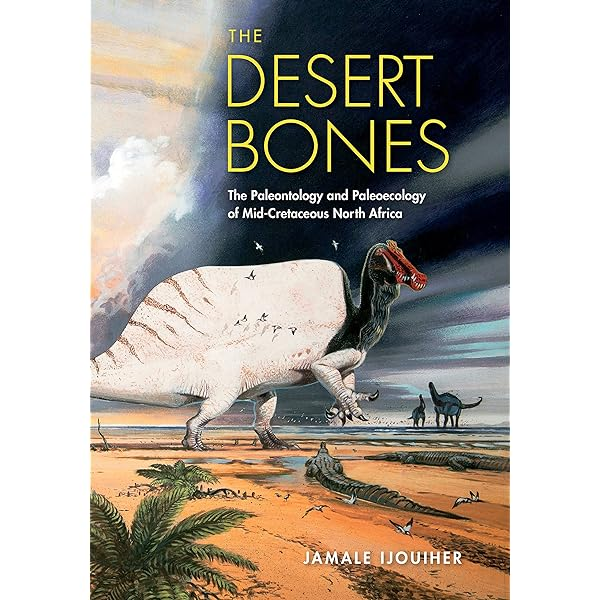
The Desert Bones: The Paleontology and Paleoecology of Mid-Cretaceous North Africa, by Jamale Ijouiher:
An overview of an ancient ecosystem, mostly listing the inhabitants with excellent artistic reconstructions for almost all of the vertebrate genera mentioned and even many invertebrates.
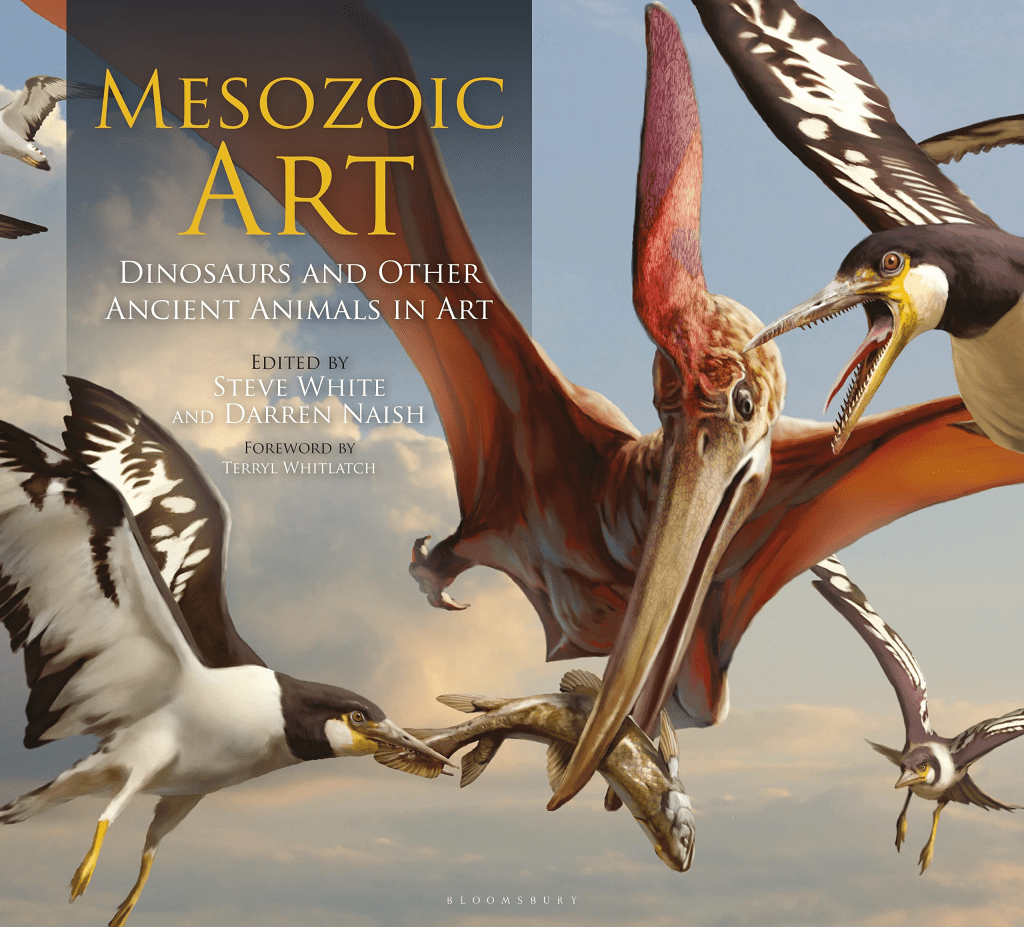
Mesozoic Art: Dinosaurs and Other Ancient Animals in Art, Edited by Steve White and Darren Naish:
Beautiful art portfolios showcasing the diverse artistic talent in the Paleoart world. Wonderful windows into lost worlds of the past, with excellent context supplied by Darren Naish. A book I will read and flip through many times in the future.
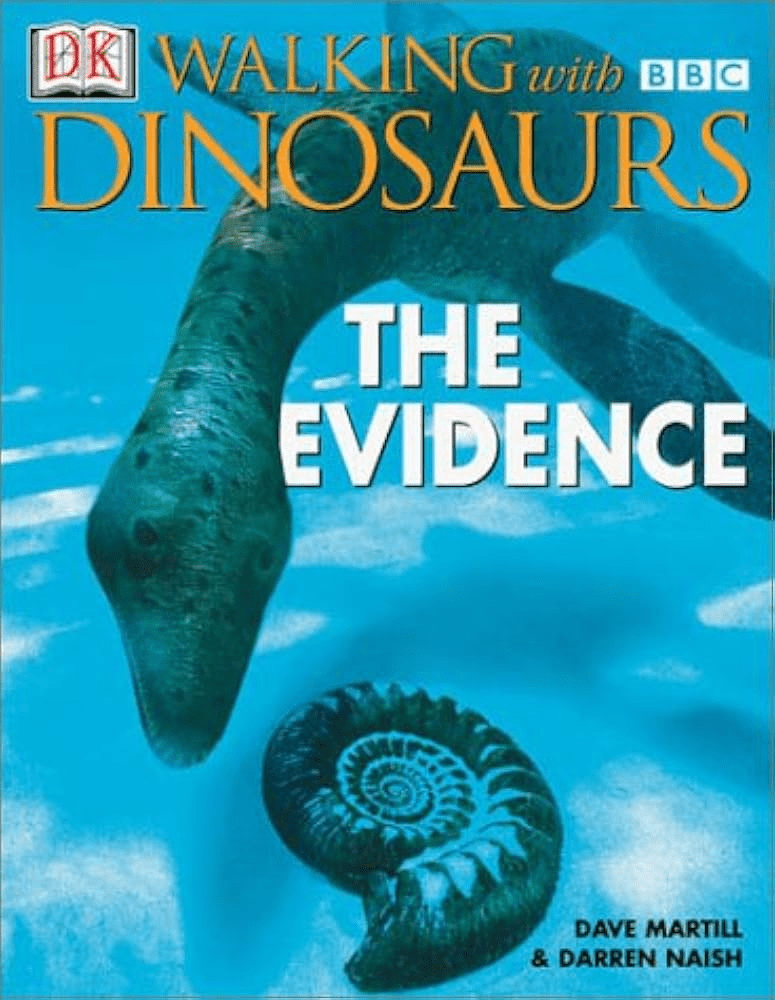
Walking With Dinosaurs: The Evidence, By Dave Martill and Darren Naish:
This was a really fun read, all about the fossil evidence that was behind the Walking With Dinosaurs BBC documentary (which I recently rewatched). Fascinating how much and how little we know about the lost world of the dinosaurs.
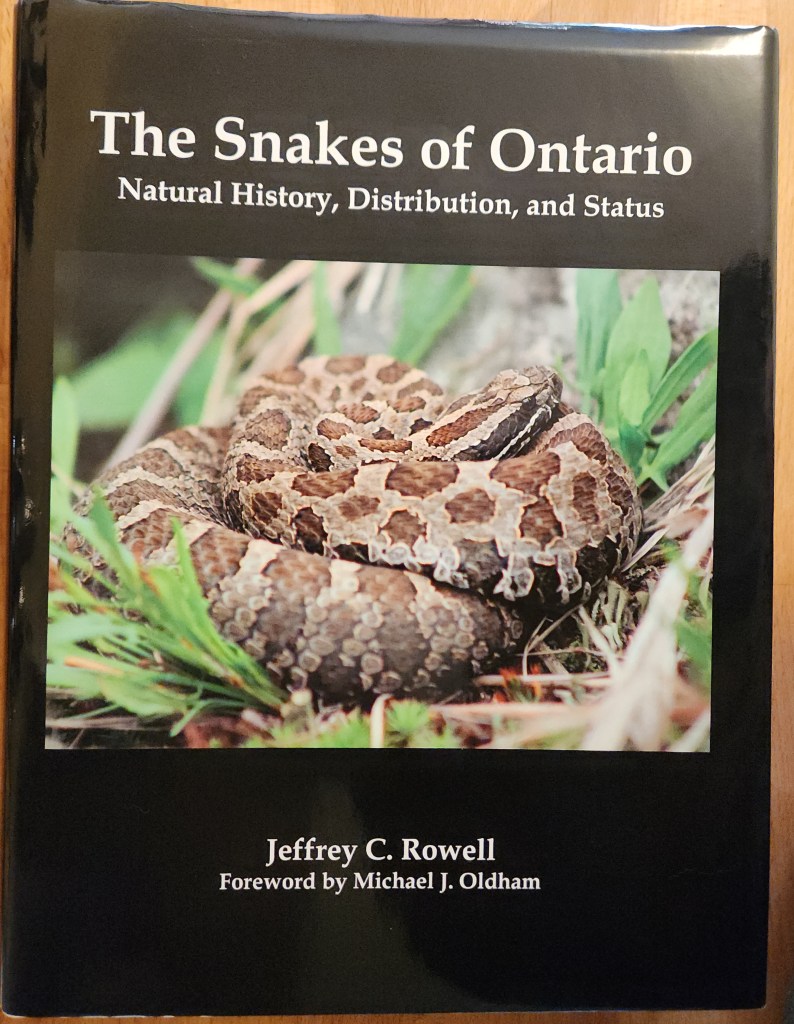
The Snakes of Ontario: Natural History, Distribution, and Status, by Jeffrey C. Rowell:
Amazing to read a book like this with such a narrow focus both taxonomically (Snakes) and geographically (the Province of Ontario). It’s not a field guide, though it gives many details to help distinguish snake species from each other. It is an in depth overview of Snake natural history in Ontario, an excellent reference work.
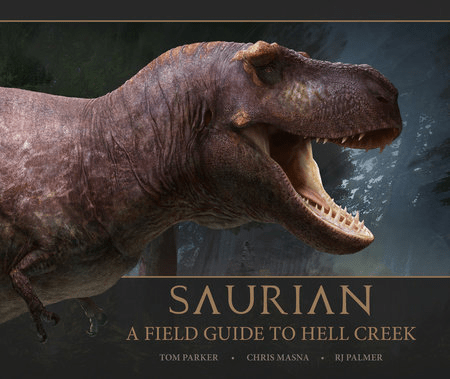
Saurian – A Field Guide to Hell Creek, by Tom Parker, Chris Masna, and R. J. Palmer:
Beautiful artwork, love the window onto a vanished ecosystem. I especially loved the guest artwork pages at the end because it gave the feeling of varied artists visiting this extinct ecosystem and creating pictures from their observations.
And… that concludes this blogversary article. For previous blogversary posts, see:
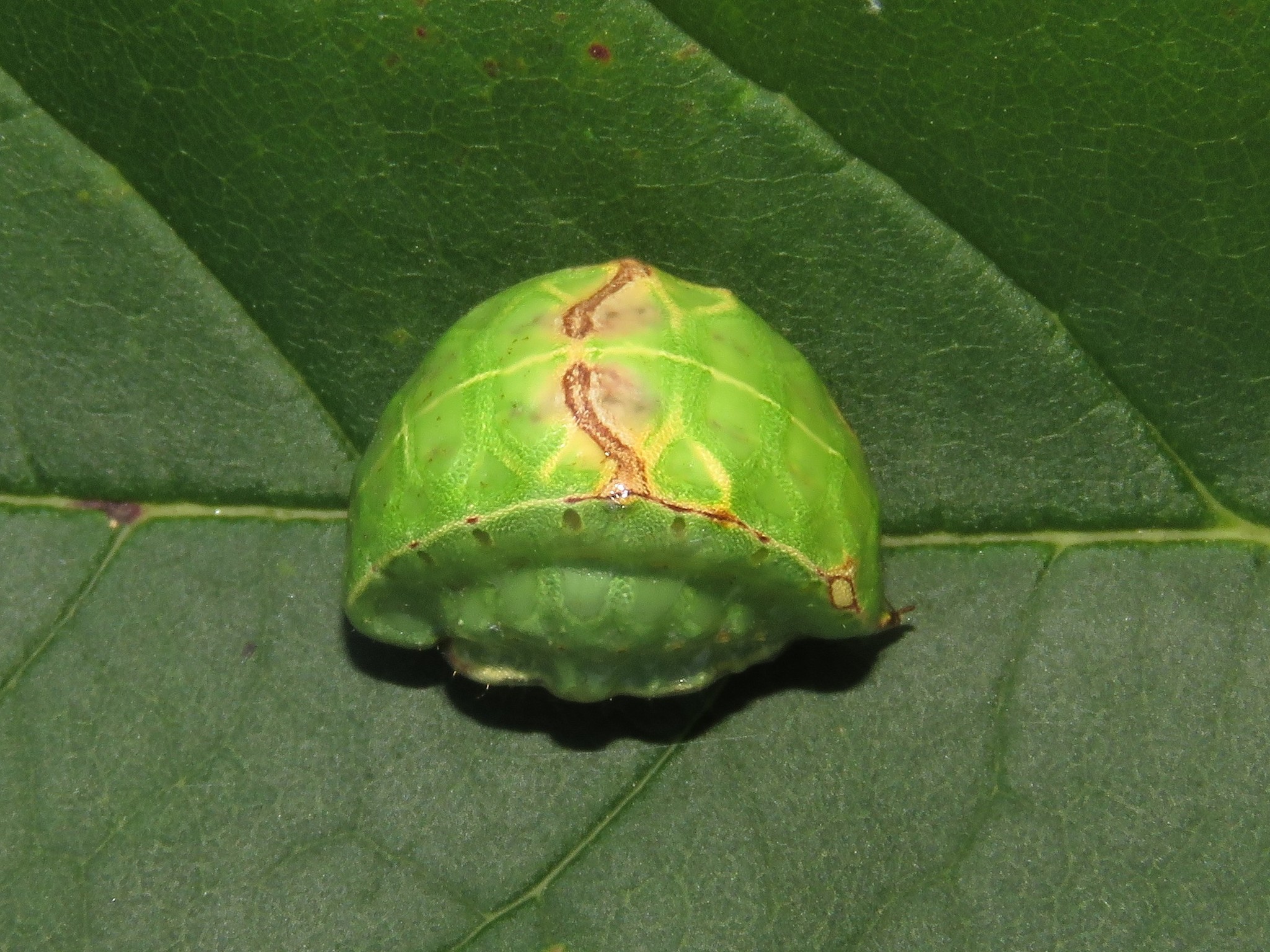
The Limacodidae are known as “Slug Moths” in reference to their bizarre caterpillars (see below). Although there are almost 2000 named species, many of them are tropical and I only observed one at the mothing event, the Skiff Moth. These moths feed on various trees and woody plants as larvae including “birch, blueberry, oak, poplar, and willow” (Beadle and Leckie 2012). Some slug moths (especially the tropical members of this group) have bristly spines that can give a nasty sting, but the Skiff moth larva doesn’t seem to have any of these venomous defenses, perhaps relying entirely on its strange non-caterpillar appearance for evading predation or disturbance.
Skiff Moth (Prolimacodes badia)Skiff Moth Caterpillar (Prolimacodes badia), photographed in Port Dover, Ontario by Dan McNeal (used with permission).
References:
Beadle, David and Leckie, Seabrooke 2012. Peterson Field Guide to Moths of Northeastern North America. Houghton Mifflin Harcourt.
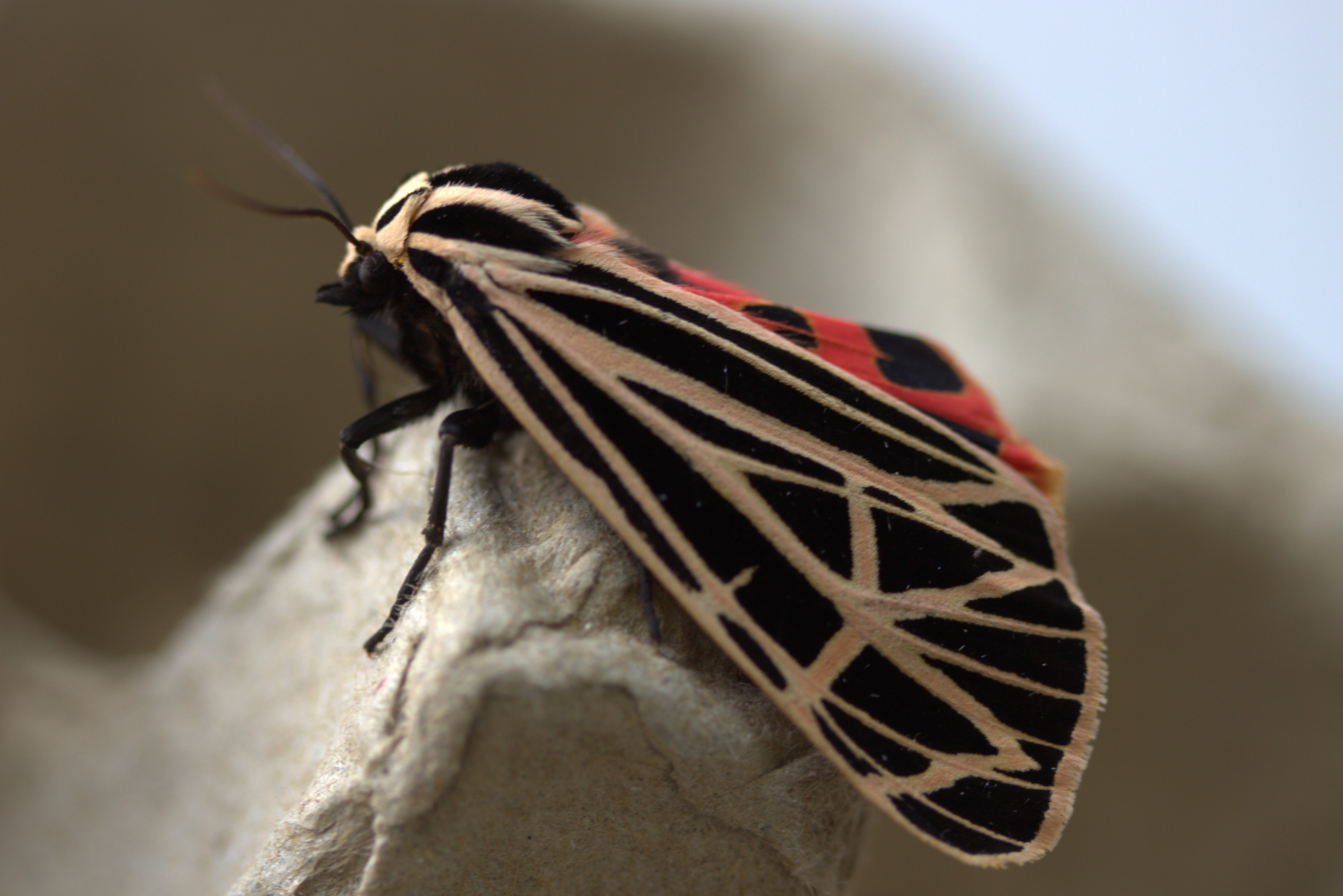
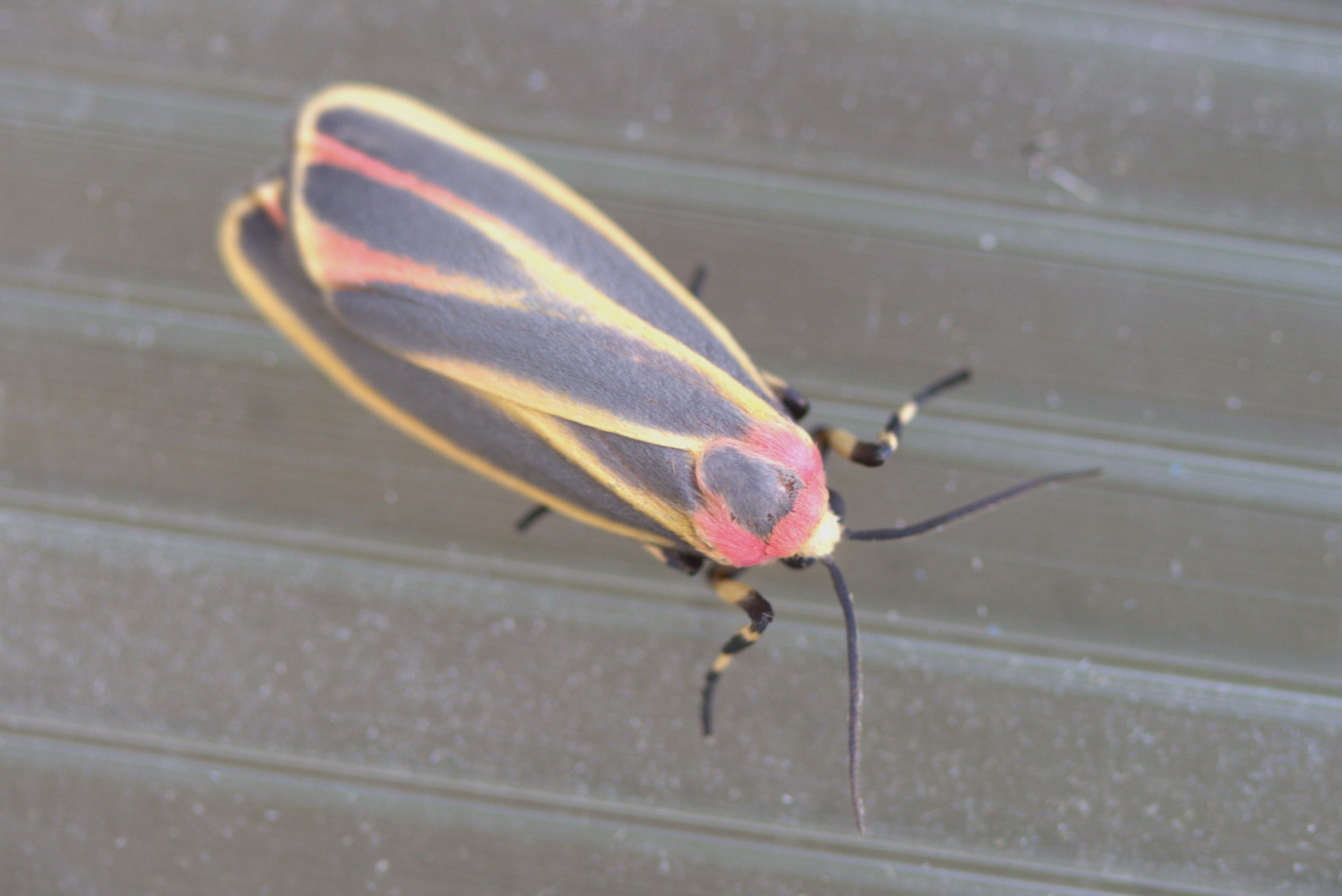
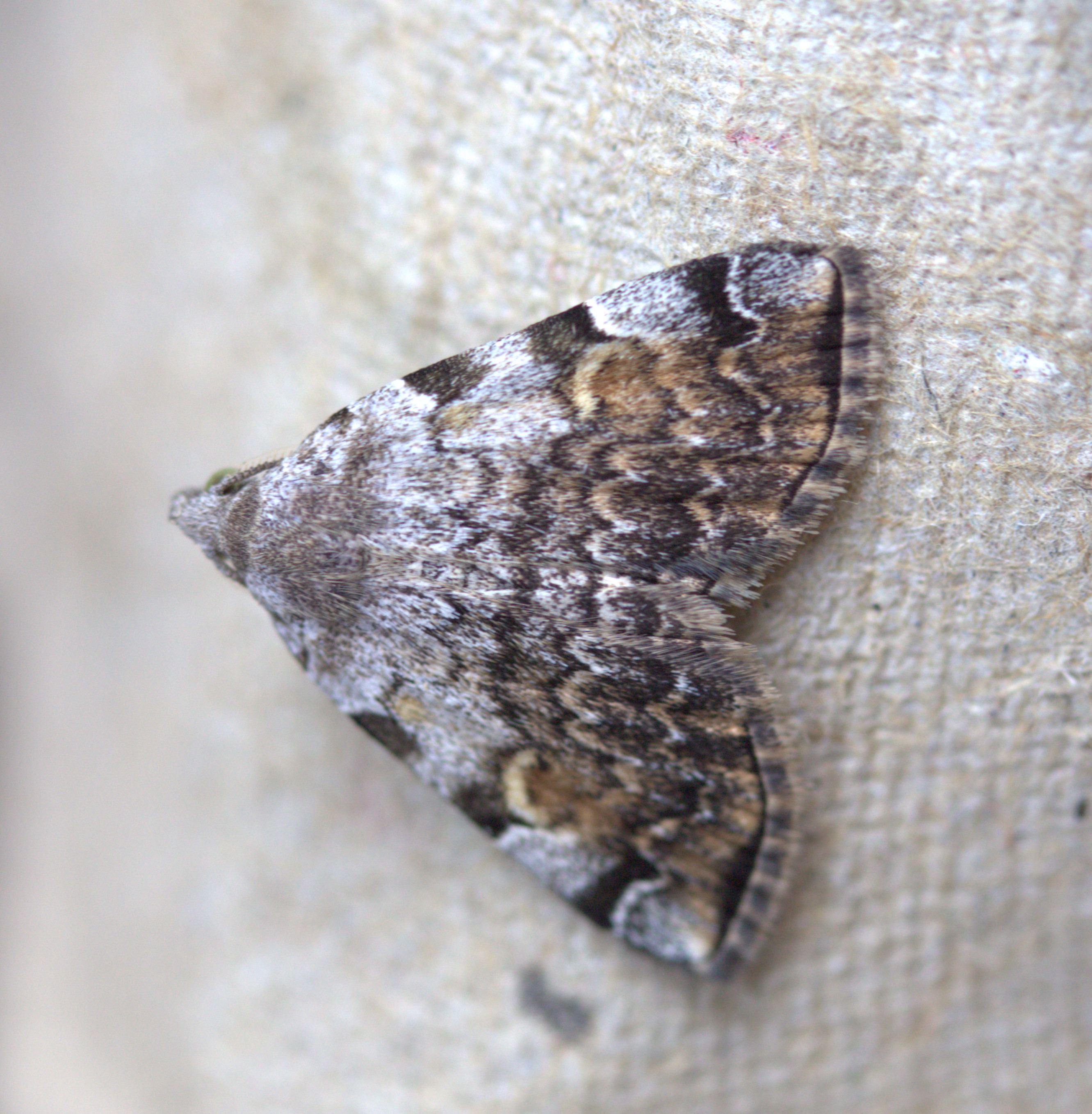
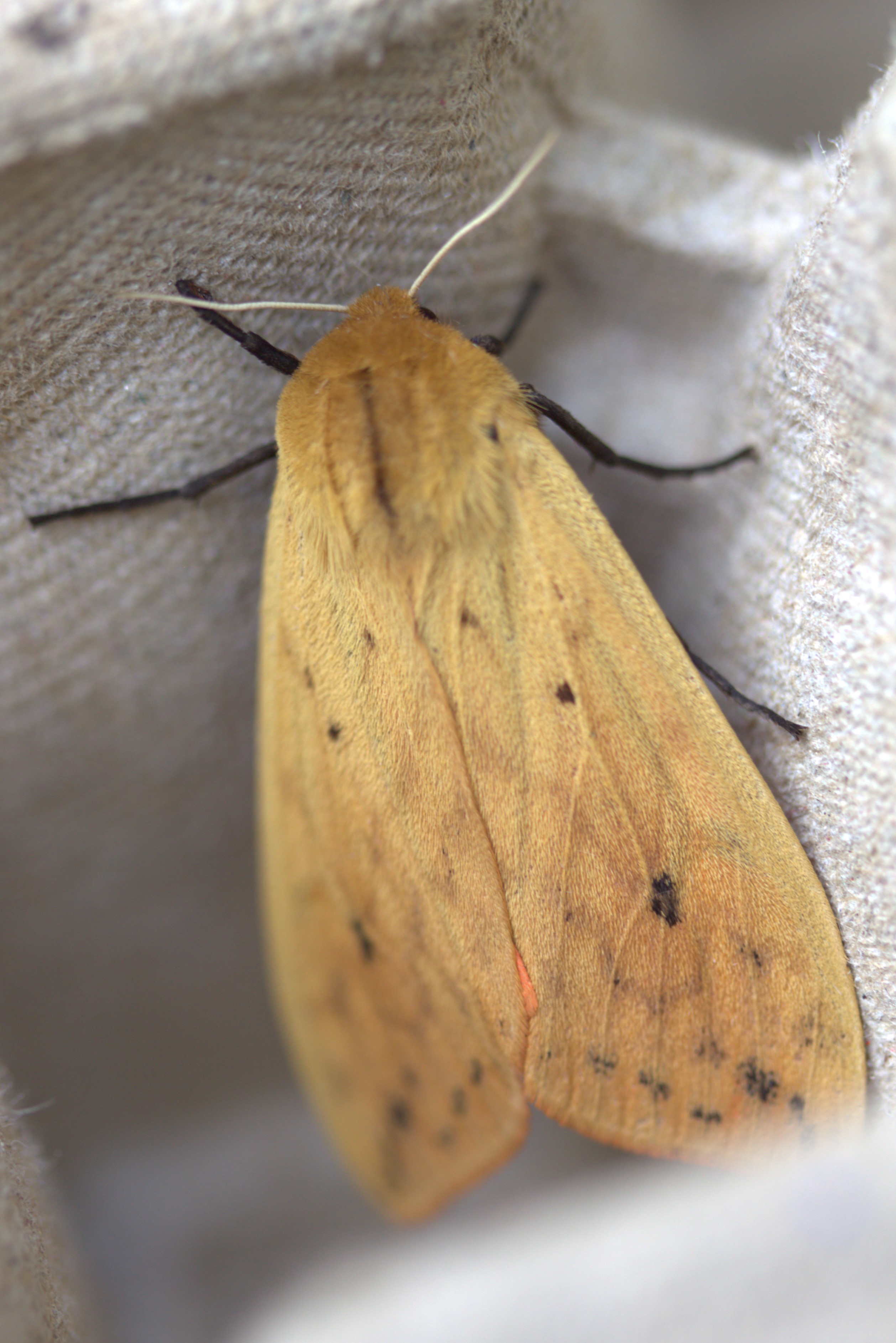
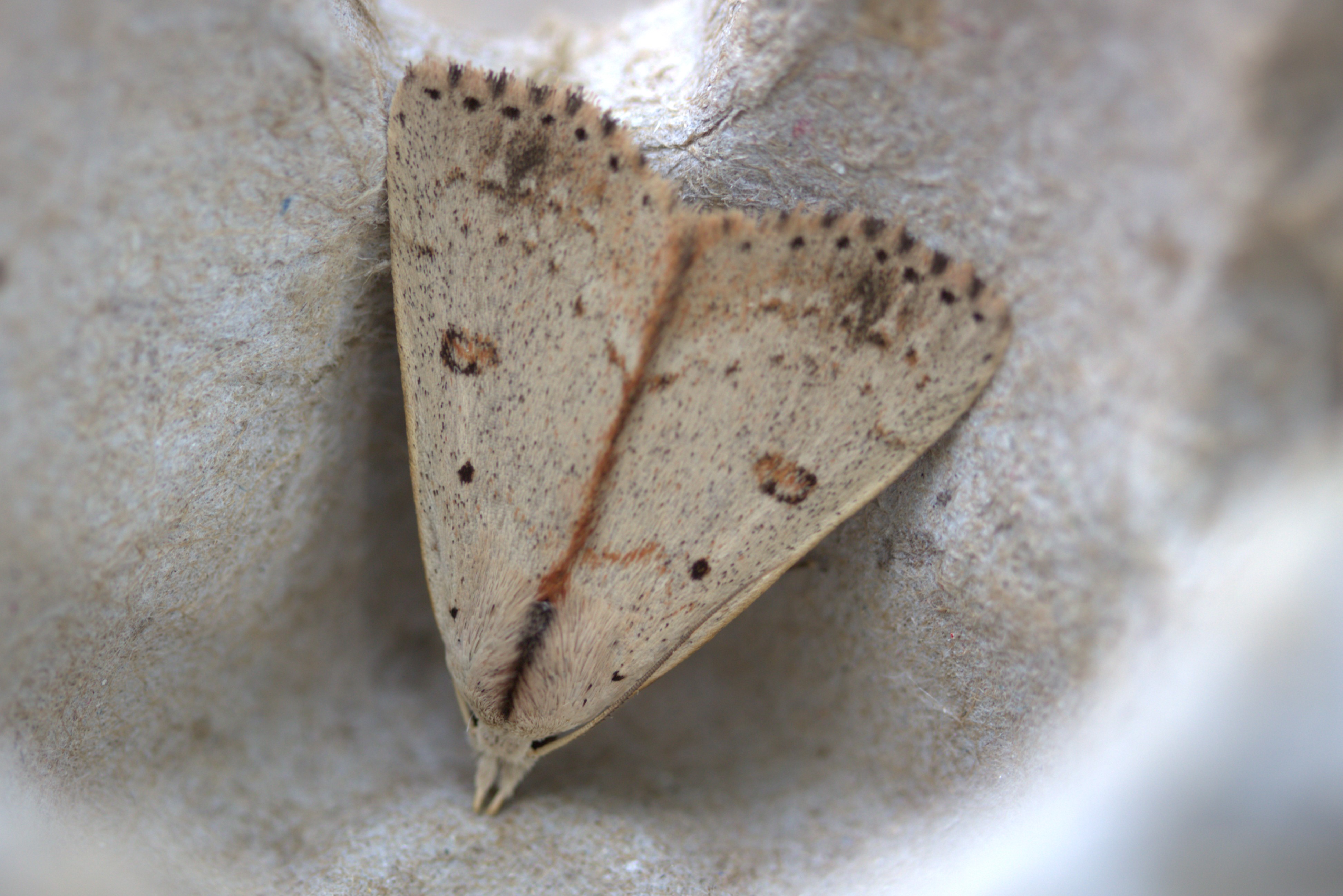
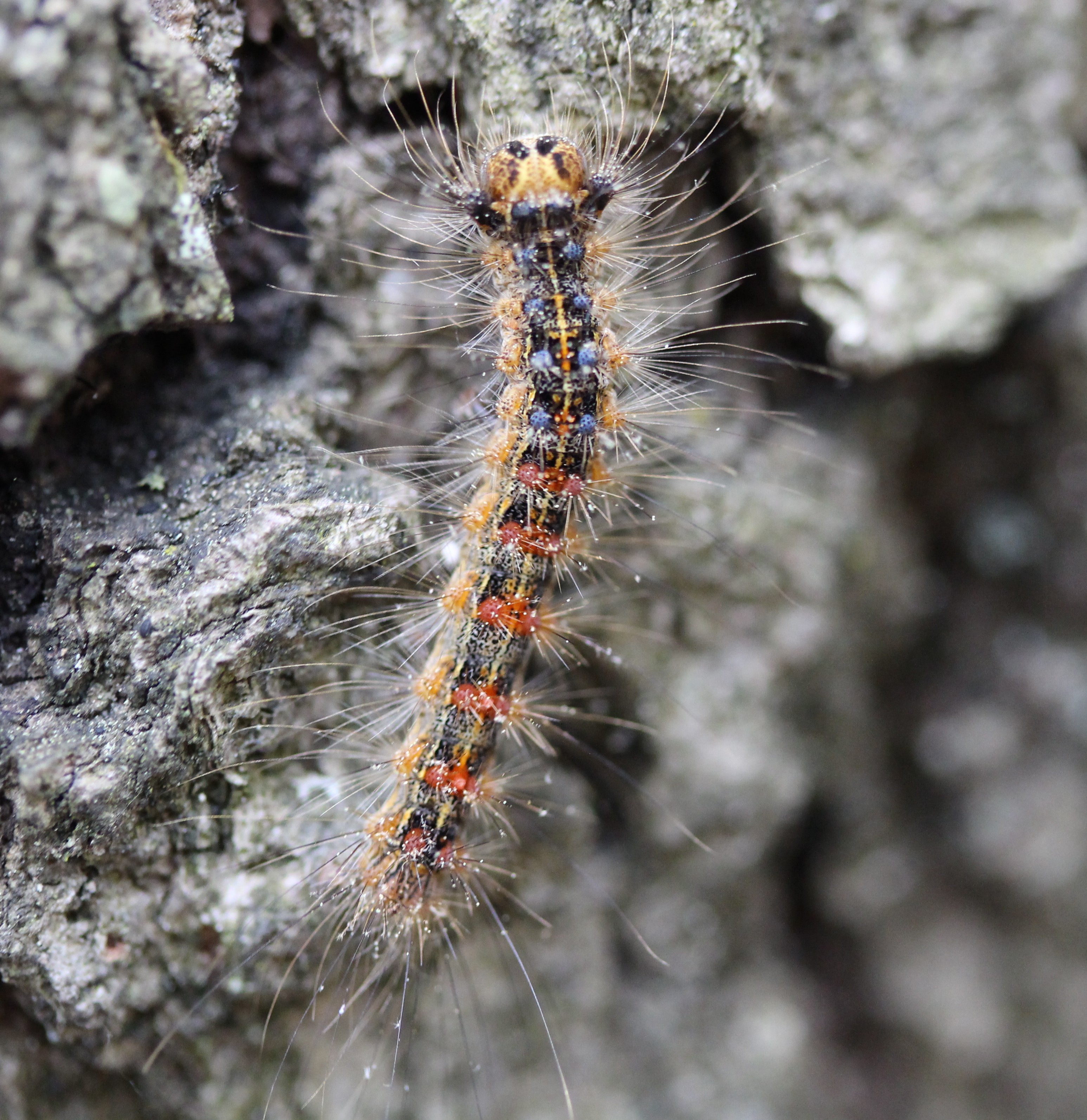
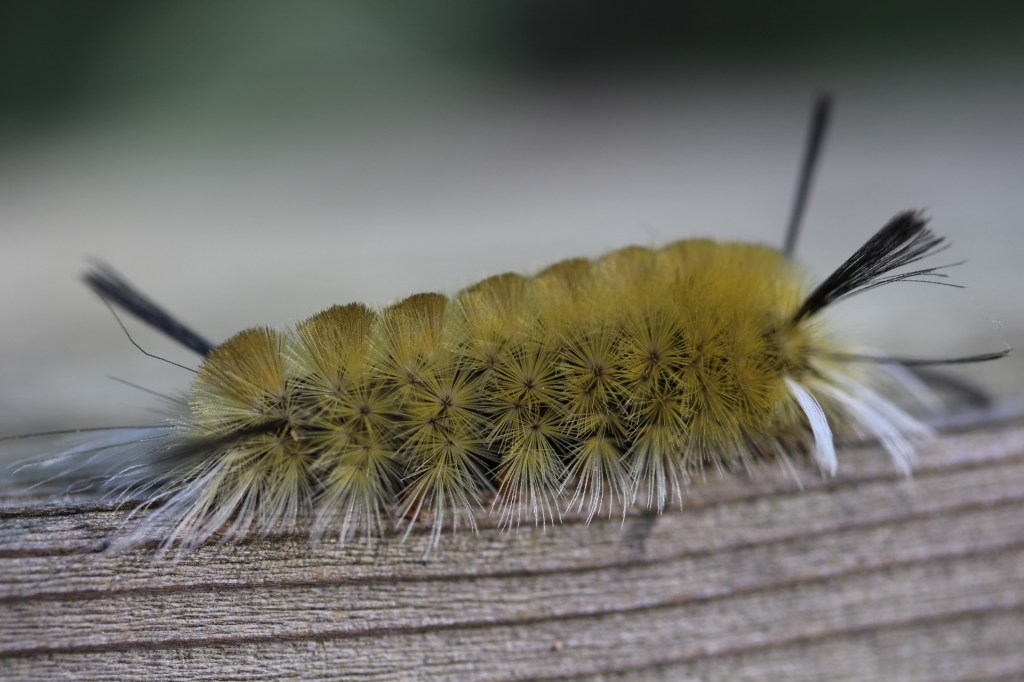
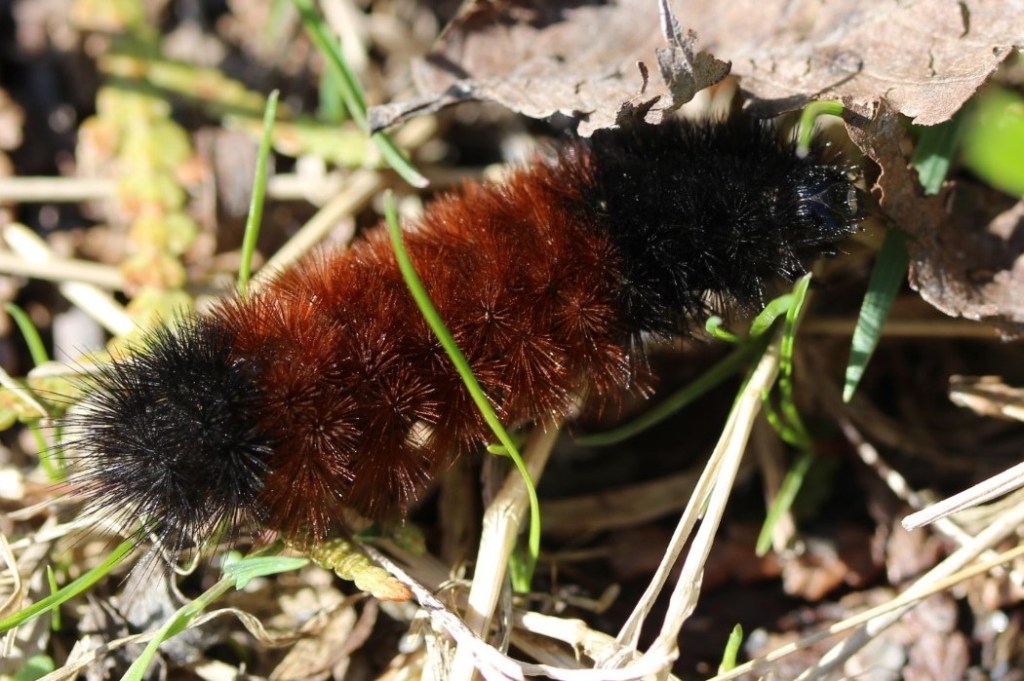
Moths in the Family Erebidae are widespread and diverse (in fact, they are the most speciose family of moths, with over 24,000 described species). They are some of the most colourful and fantastic night fliers, some of the most familiar and exotic moths. Perhaps the most commonly encountered Erebid moth in North America is the Spongy Moth (Lymantria dispar), because of its incredibly invasive caterpillars that have spread across the continent. Spongy Moths are part of the Tussock Moth group, known for their spiky caterpillars covered with long ‘tussocks’. One such moth is featured below, the Banded Tussock Moth. Another incredibly common Erebid caterpillar is the trundling Woolly Bear caterpillar, the adult moth is featured below (known in its winged form as the Isabella Tiger Moth). Another group of Erebids are known as Lichen Moths because their caterpillars feed on lichen. Another lichen-feeding species is featured below: the American Idia, a drab grey moth in contrast to the colourful pastels of its lichen-feeding cousin the Painted Lichen Moth. The Virgin Tiger Moth and the Giant Leopard Moth are two of the larger and more striking of the Erebid moths that I photographed. Other moths in this group are striking for their evocative names such as “The Herald Moth” or “Deadwood-borer Moth”. Another subsection of this family are known as “Underwings” because they have often brilliantly coloured wings concealed beneath their often drab forewings, the better to startle predators with when discovered.
Spongy Moth Caterpillar (Lymantria dispar), Turkey Point Provincial Park, June 2018Banded Tussock Moth Caterpillar (Halydisota tessellaris), Lynn Valley Trail, September 2020Woolly Bear Caterpillar (Pyrrharctia isabella), Lynn Valley Trail, August 2019. Another name would be the Isabella Tiger Moth Caterpillar.
References:
Beadle, David and Leckie, Seabrooke 2012. Peterson Field Guide to Moths of Northeastern North America. Houghton Mifflin Harcourt.
In the bygone days of July 2023, I attended an event with the Long Point Basin Land Trust which was all about exploring the diversity of moths. I was unable to attend the night-time event where moths were attracted to sheets and photographed and observed in their element, but I was very excited to be able to observe and photograph many species of moths that were caught in traps and released the next morning. In a series of posts I plan to explore the diversity of the moths of Southern Ontario via the subset of moths that I was fortunate enough to observe and photograph. I’m going to go Family by Family in no particular taxonomic order, but rather when each Family’s post is completed. So here goes for the first one!
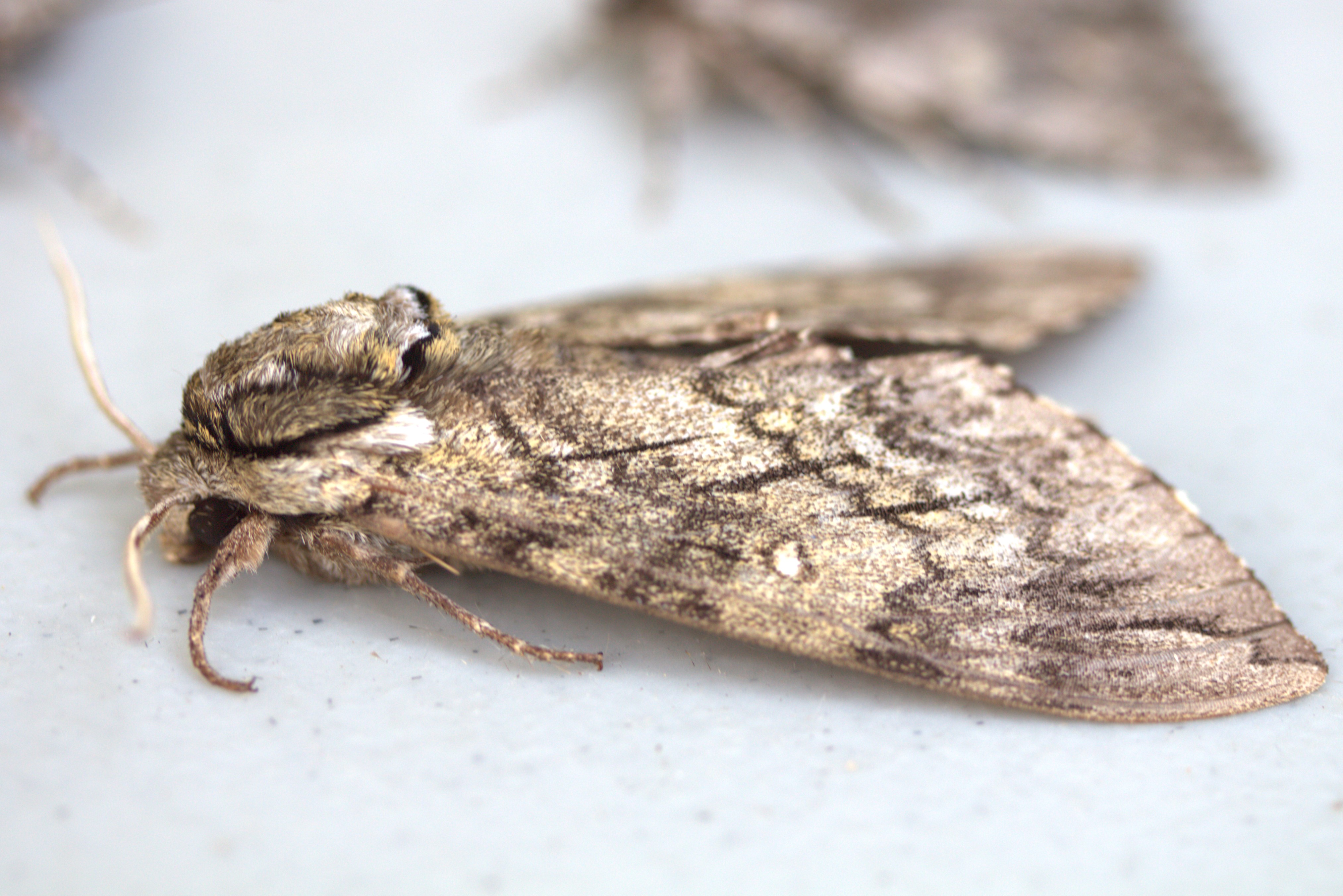
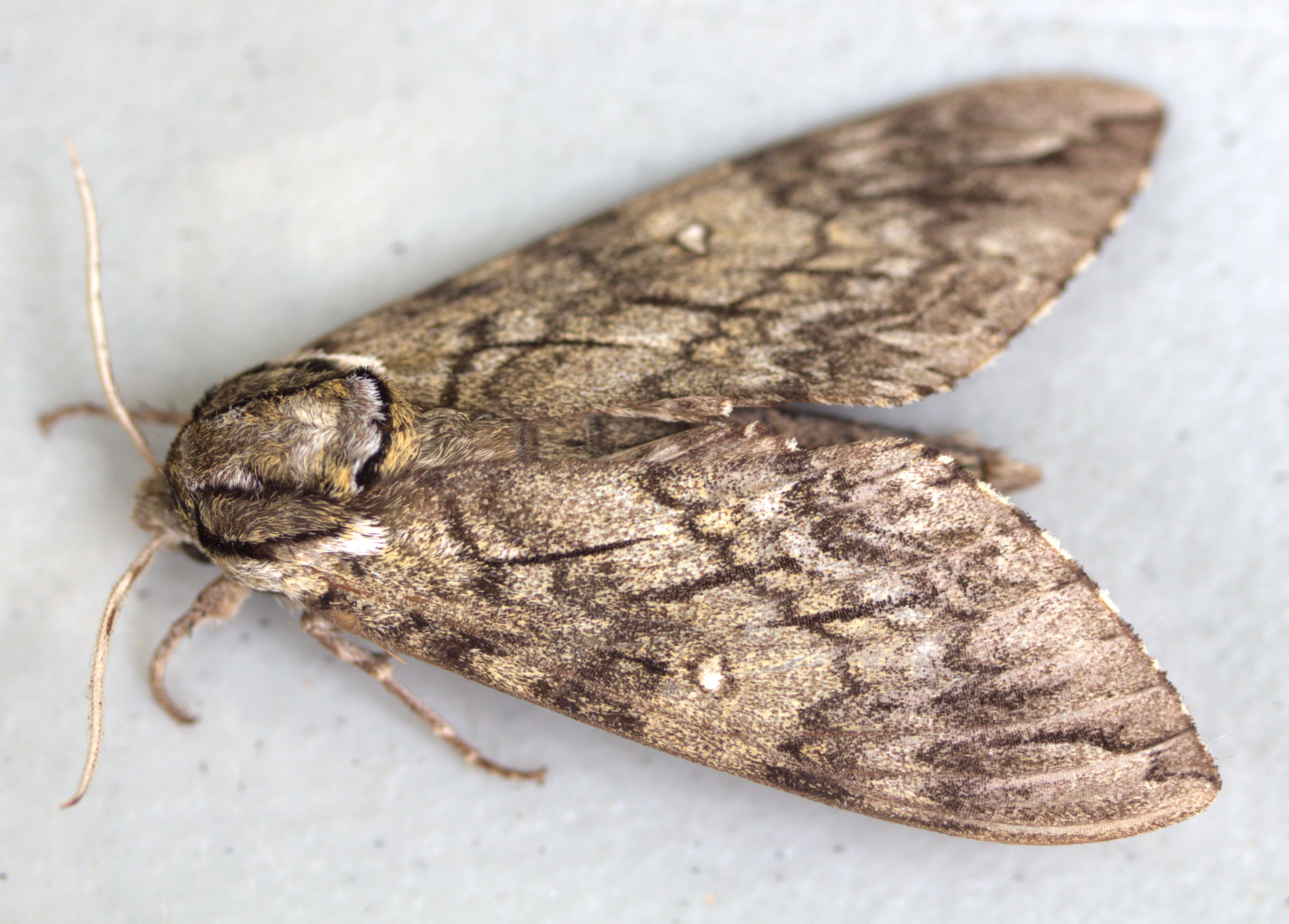
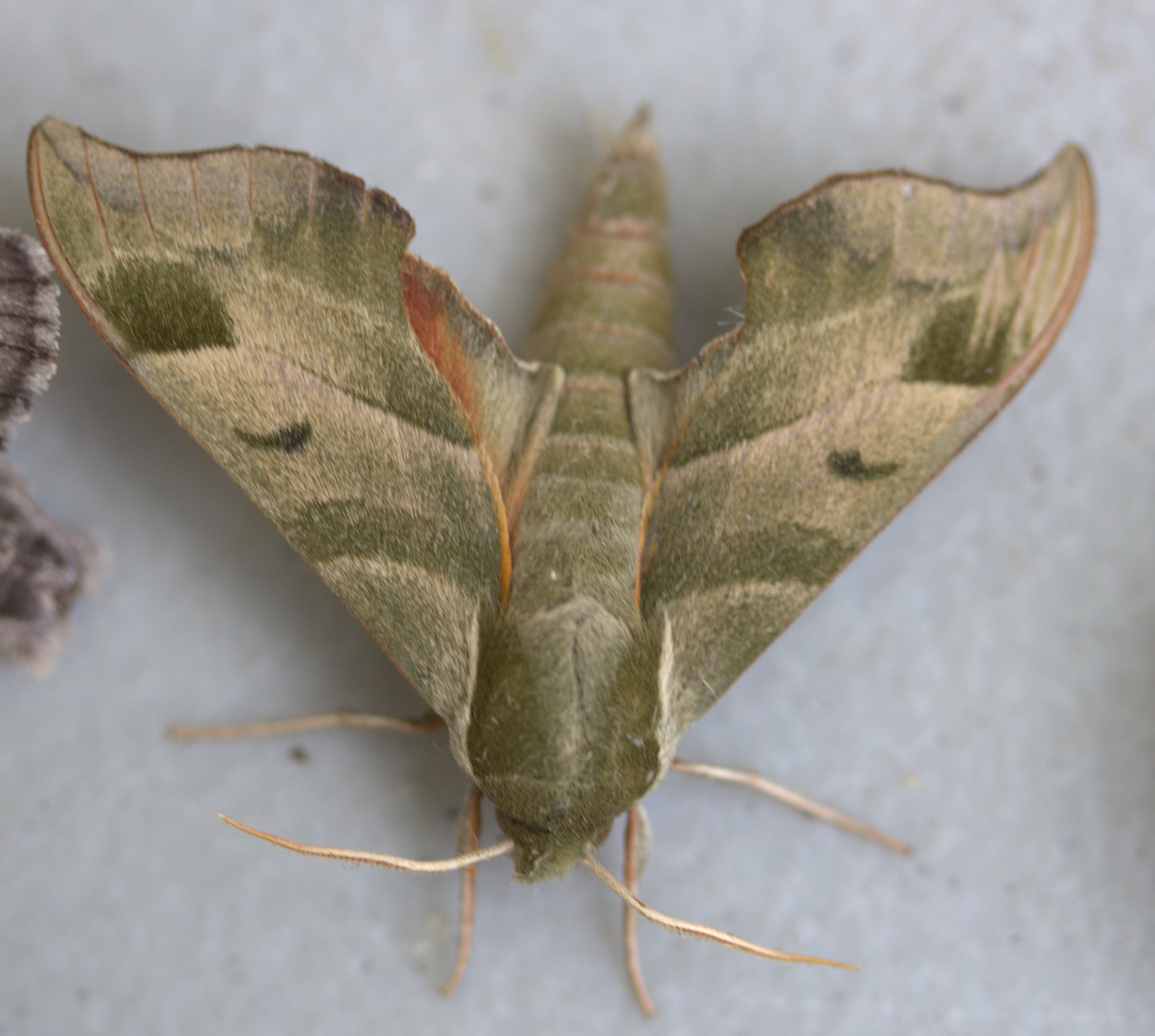
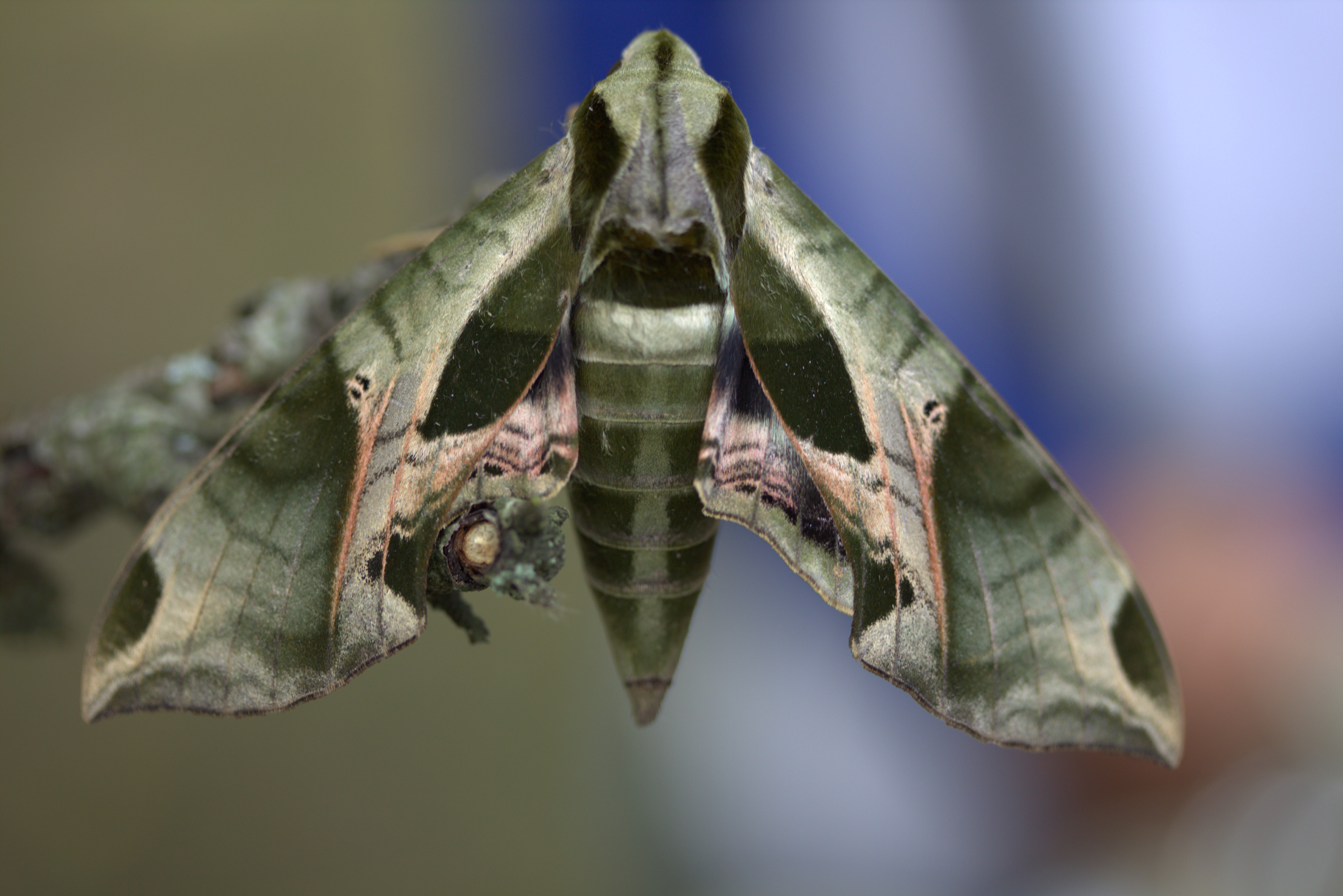
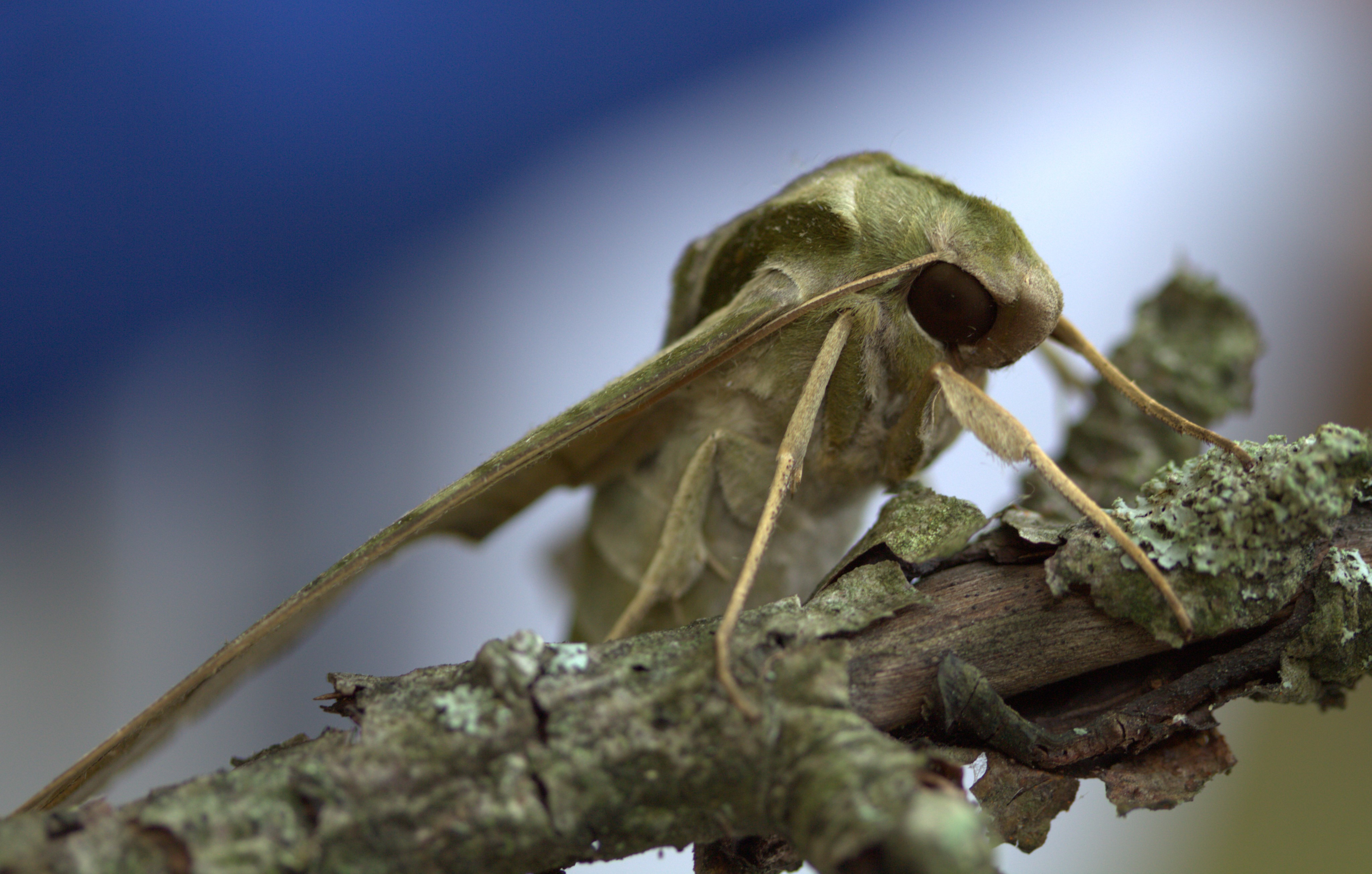
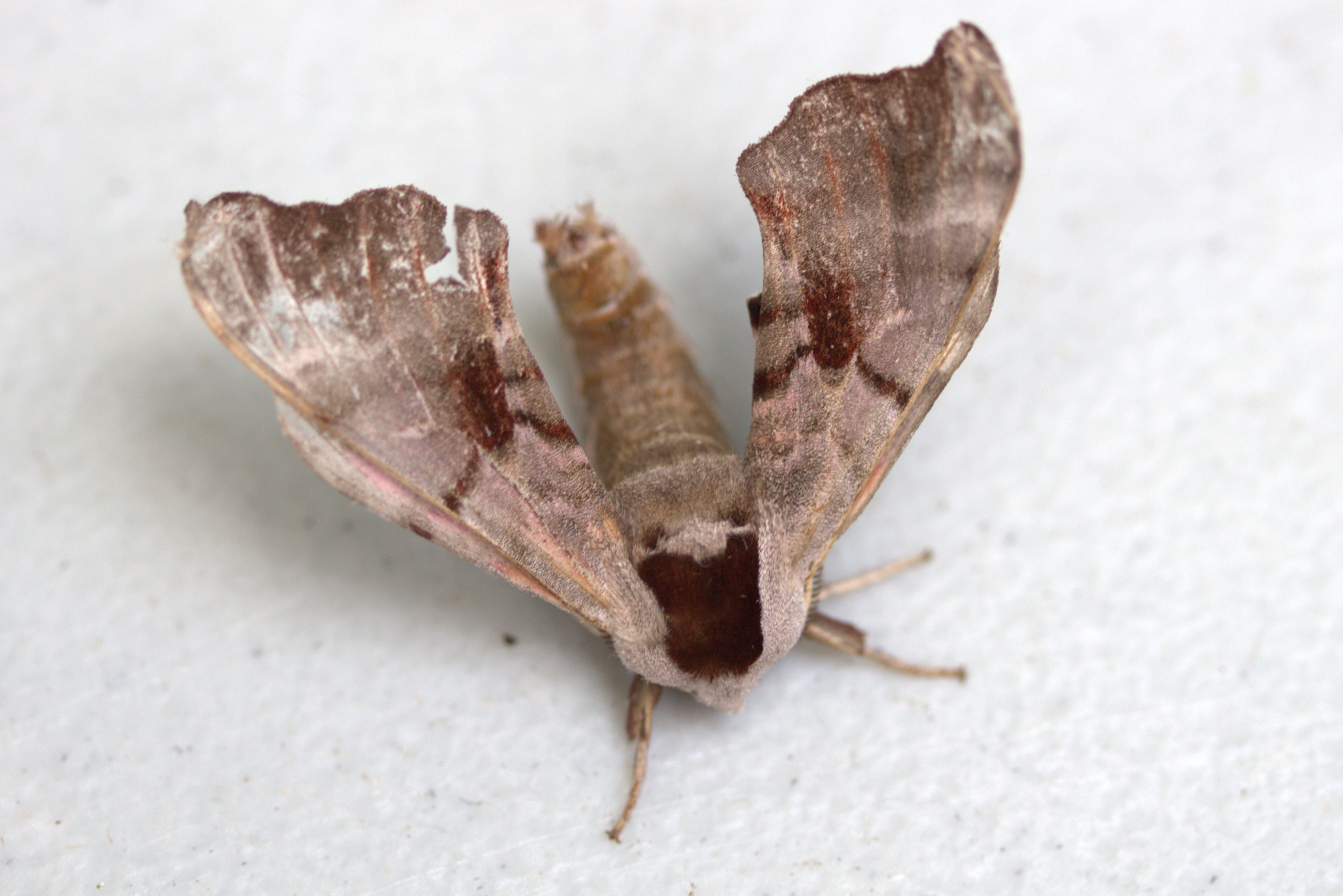
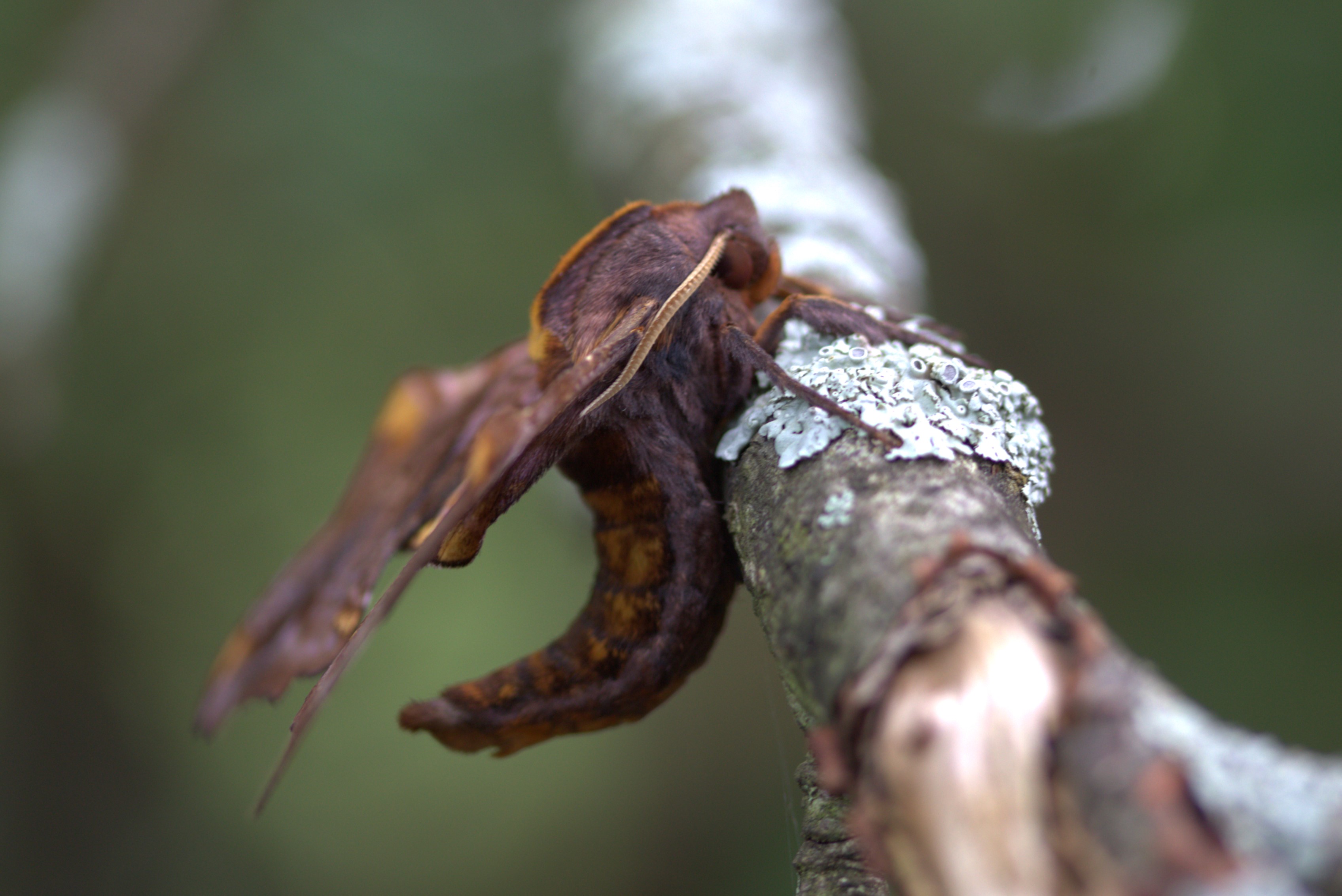
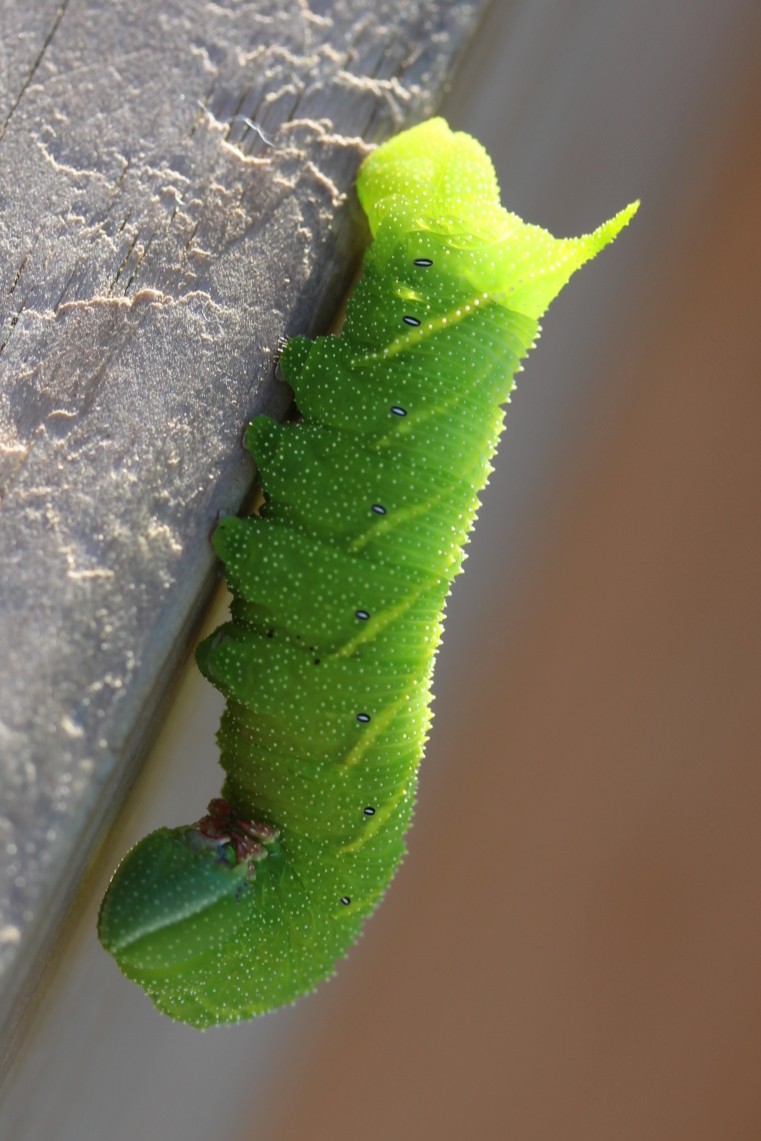
Sphinx Moths, or Hawk Moths (Family Sphingidae) are some of the largest moths in our area and are quite stunning to see. This family includes almost 1500 named species worldwide, and some very surprising members such as the Hummingbird Hawkmoths which are day-flying nectar feeders that look shockingly like insect hummingbirds. Larval Sphinx Moths are often called “Hornworms” because of the projections on some of their heads which resemble horns. Some hornworms are well known for their destructive feeding habits such as the Tomato/Tobacco Hornworm (Manduca sexta). Adult Sphinx moths feed at flowers with their long proboscis (Beadle and Leckie 2012).
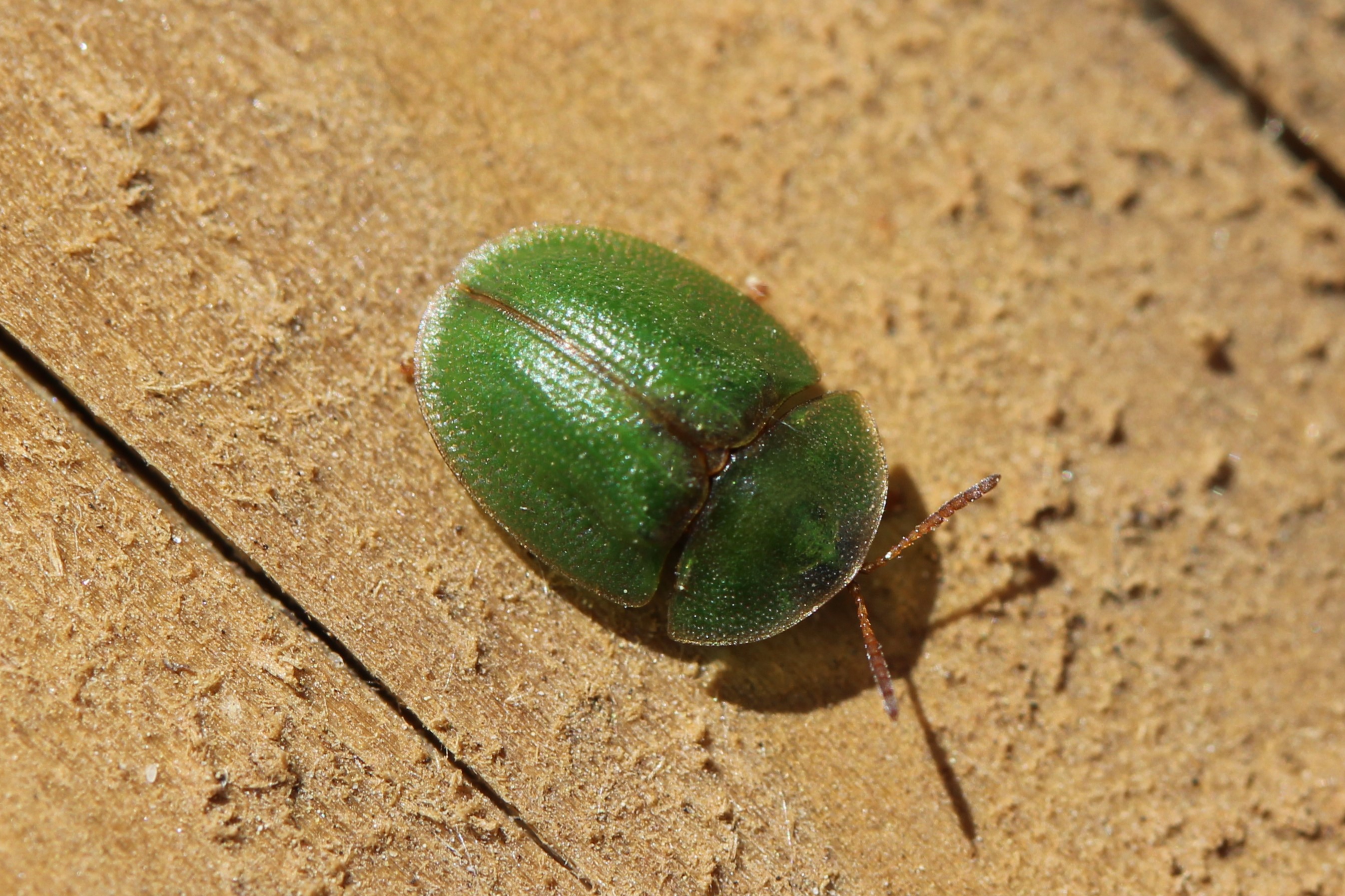
Thistle Tortoise Beetle (Cassida rubiginosa), Backyard, May 2024:
Tortoise Beetles (Beetles in the subfamily Cassidinae of the Family Chrysomelidae) have always been some of my favourite insects. Their wide elytra (wing-covers) protect their limbs and heads from predators and provide them with an appealingly round shape. The Thistle Tortoise Beetle is not native to Canada (having been introduced to combat the non-native Thistle plant), but it was still exciting to spot this charismatic insect on my back porch, trundling along. Their larval stage is less appealing, but still interesting, protecting itself not with a hardened armor covering but a “fecal parasol”. Yes, that’s right, larval Tortoise beetles carry their poop within a forked abdomen curved forward over their backs to ward off predators. There is even a specific word for this behaviour: “merdigery” – from the Latin for “dung” and “carry” (Costa 2006). Likely not a word you’ll find too much use for.
Armored Resin-bee (Heriades), Backyard, June 2024:
This strange-looking bee lays its eggs inside of constructions left behind by other insects, “especially beetle holes in wood, but they may also use pine cones” according to Wilson and Carril (2016). Their nest cells are divided with resin which is where they get their common name of “resin-bee”. Their generic name “Heriades” means “wool” referring to their woolly hairs, evident in the photo.
Related Chaclid Wasp (Leucospis affinis), Backyard, June2024:
Although her colouration may remind you of a paper wasp or other social, stinging wasp, the long ovipositor curled over her back indicates that she is in fact something quite different: a parasitic wasp. This female will lay her eggs inside the nest of a leafcutter bee (bees in the family Megachilidae), and the larvae that hatch will locate and consume their host bee larvae (Holm 2021). Holm, in her amazingly detailed books on common garden wasps, says this about the larval stage of this wasp: “The larva is initially equipped with sensory and locomotive hairs on its head and body to help it find the host as it moves around the dark nest cell… has an oversized head, and large mandibles used to kill the host larva and destroy any other Leucospis eggs. Like many cleptoparasitic bees, the larva loses most of these prey-finding apparatus after molting” (Holm 2021).
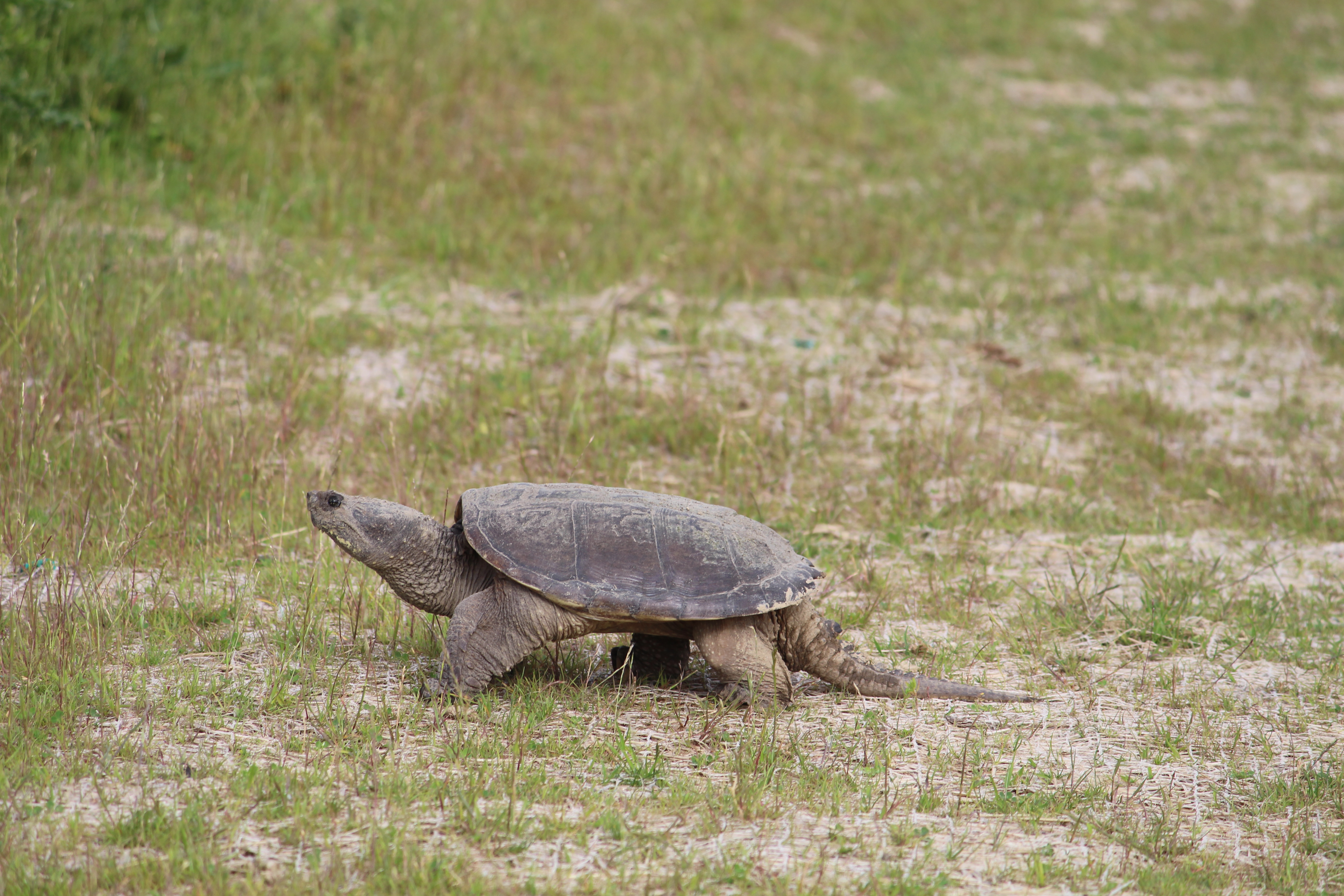
Common Snapping Turtle (Chelydra serpentina), Long Point, June 2024:
The sight of a Snapping Turtle walking across land always makes me think of a prehistoric beast lumbering out of some primeval swamp. Despite the fact that Snapping Turtles are well adapted to their environment, and no more primitive a species than any others, they give the impression of an ancient power, a relic from the days of the lumbering dinosaurs.
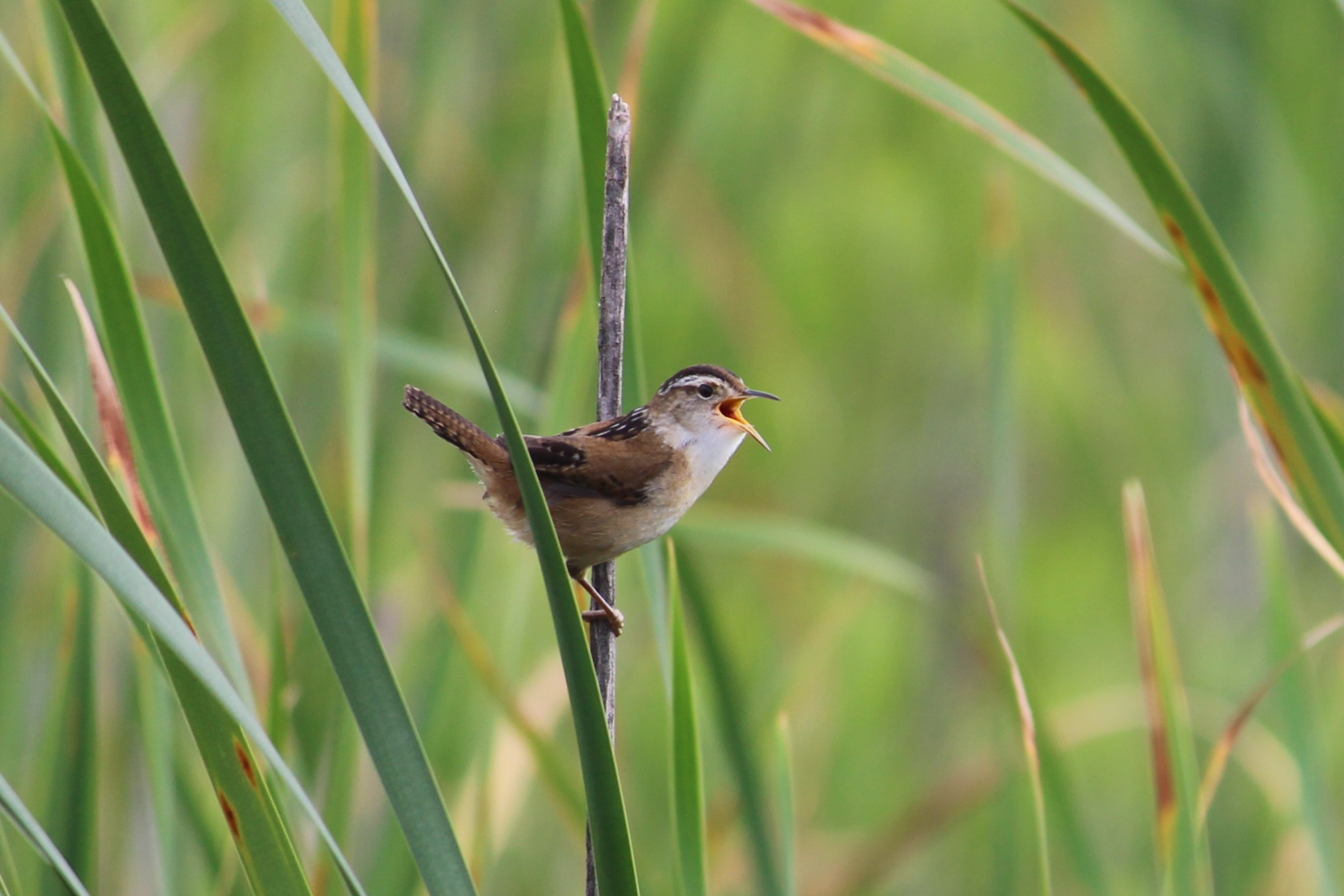
Marsh Wren (Cistothorus palustris), Long Point, June 2024:
The sound of these energetic birds clambering among the cattails of a wetland is one of the backdrops of my summer, going out to take photos of birds and other wildlife. I was surprised to learn that Marsh Wrens are major predators on Red-winged Blackbird eggs and nestlings in some parts of their range (Beletsky 1996). Marsh Wrens mostly eat insects, and they construct several nests within their territories from which the females choose, just like in House Wrens (Stokes and Stokes 1983).
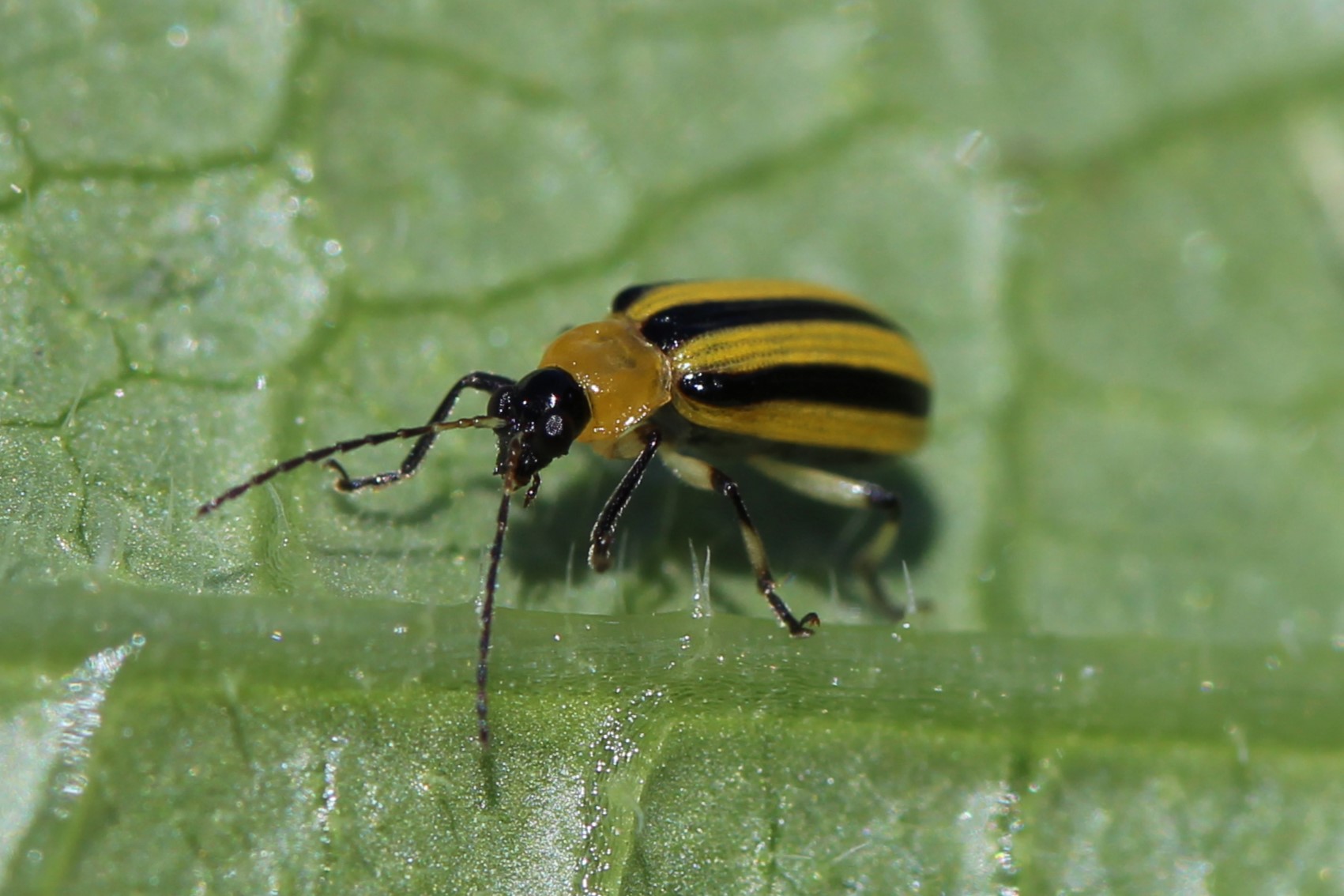
Striped Cucumber Beetle (Acalymma vittatum), Backyard, July 2024:
The Striped Cucumber Beetle is considered a pest because it consumes plants that we like to consume ourselves: members of the Cucurbitaceae (cucumbers, watermelons, gourds, pumpkins, squash and many others). The adults feed on leaves, while their larvae feed on the roots (Marshall 2018).
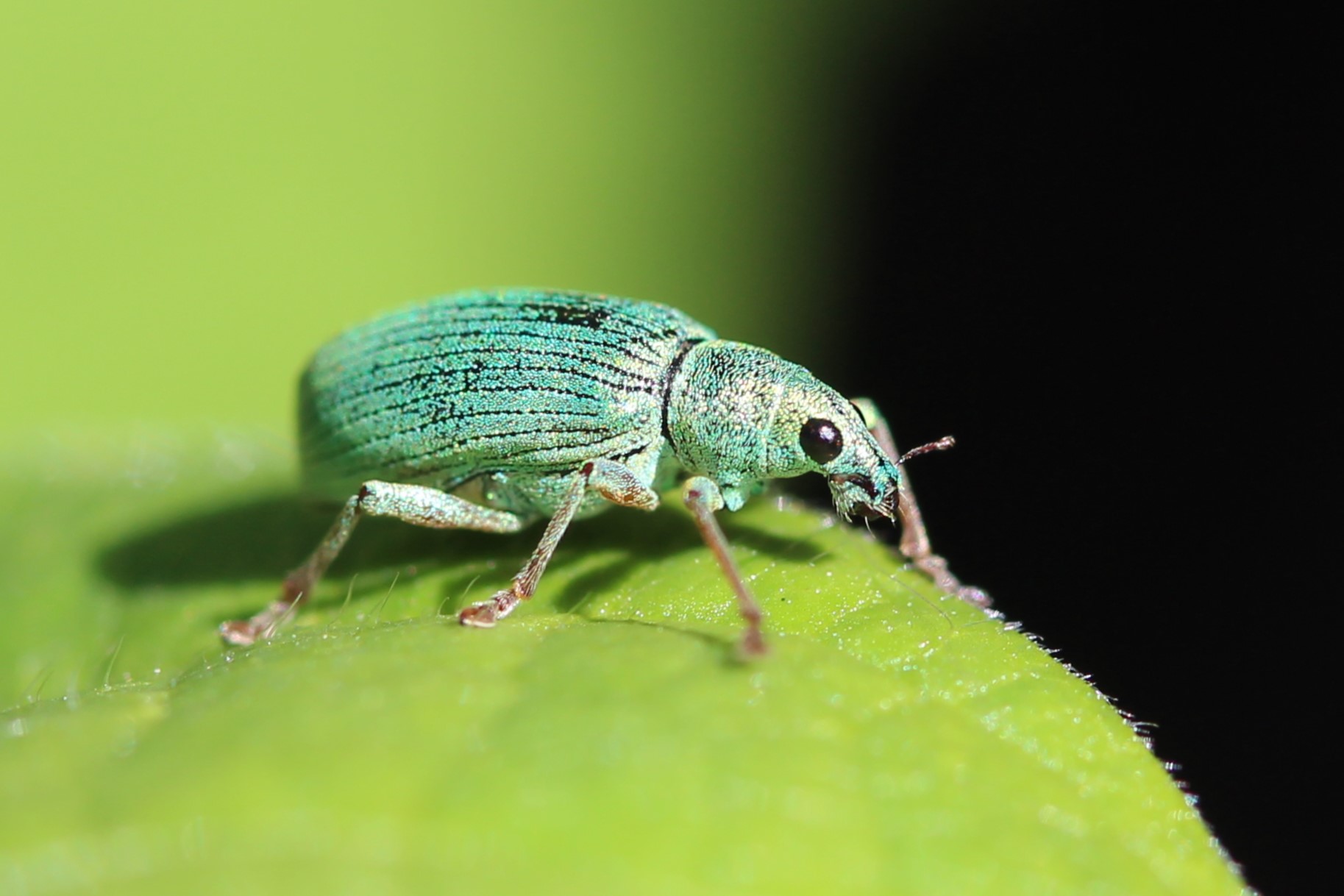
Green Immigrant Leaf Weevil (Polydrusus formosus), Backyard, July 2024:
Another pest beetle species, this one non-native to North America (accidentally introduced, and not deliberately like the Thistle Tortoise Beetle), the Green Immigrant Leaf Weevil feeds on various shrubs and trees. Eggs are laid in the bark of host plants or in the soil, the larvae feed on roots through Spring and Summer and then emerge as adults in the following Spring (Lisak et. al. 2024).
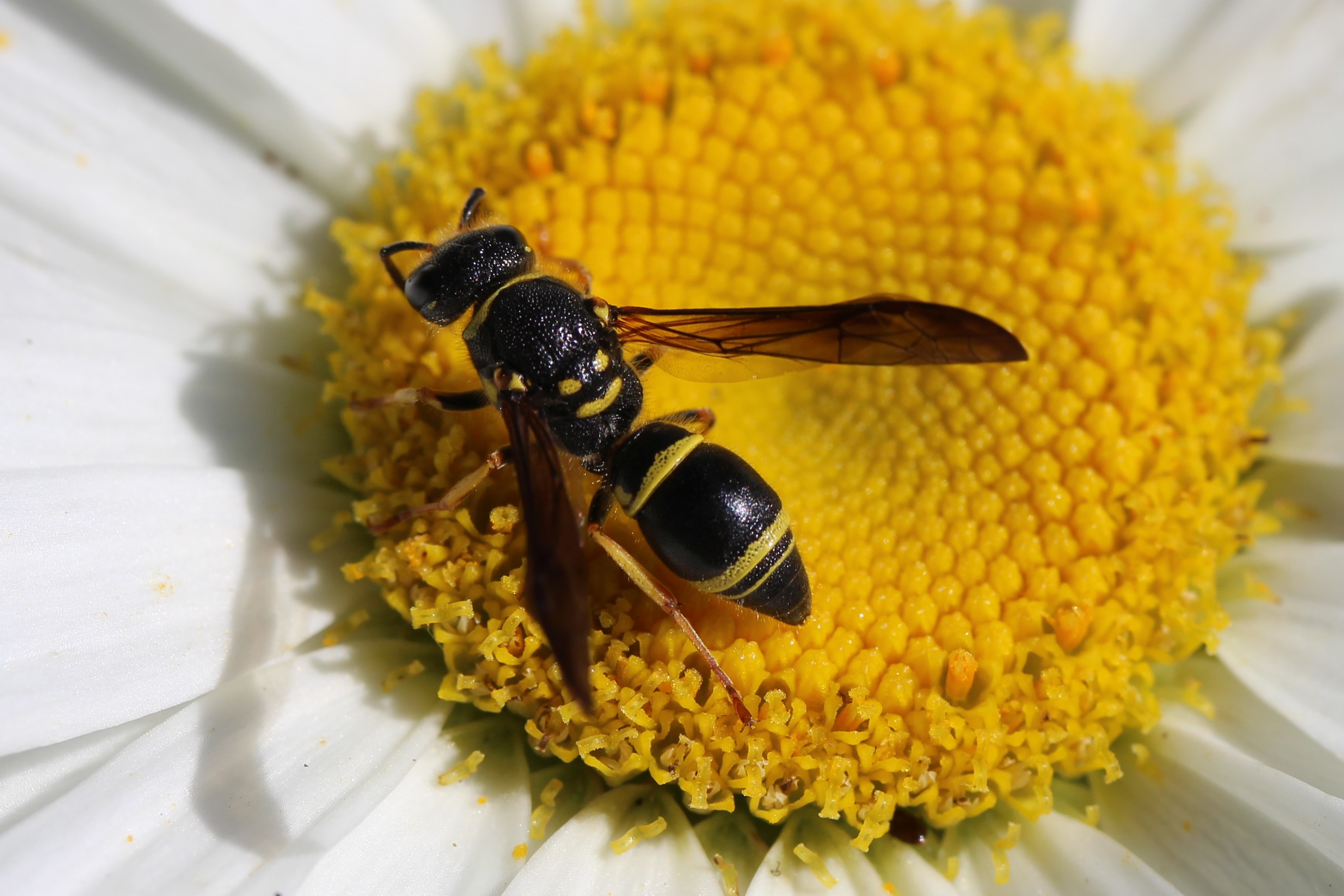
Smiling Mason Wasp (Ancistrocerus campestris), Backyard, July 2024:
In the photo above, you can clearly see the smile emblazoned on the Smiling Mason Wasp’s thorax. These wasps lay their eggs in pre-existing cavities, creating several nest cells by dividing the cavity with mud walls (Holm 2021). You can think of each nest cell as a nursery for individual wasp larvae, as the Smiling Mason Wasp female lays a single egg in each chamber (and hangs it from the ceiling by a silken thread) (O’Neill 2001). Each nursery is filled with several paralyzed caterpillars for the larva to consume upon hatching (Holm 2021).
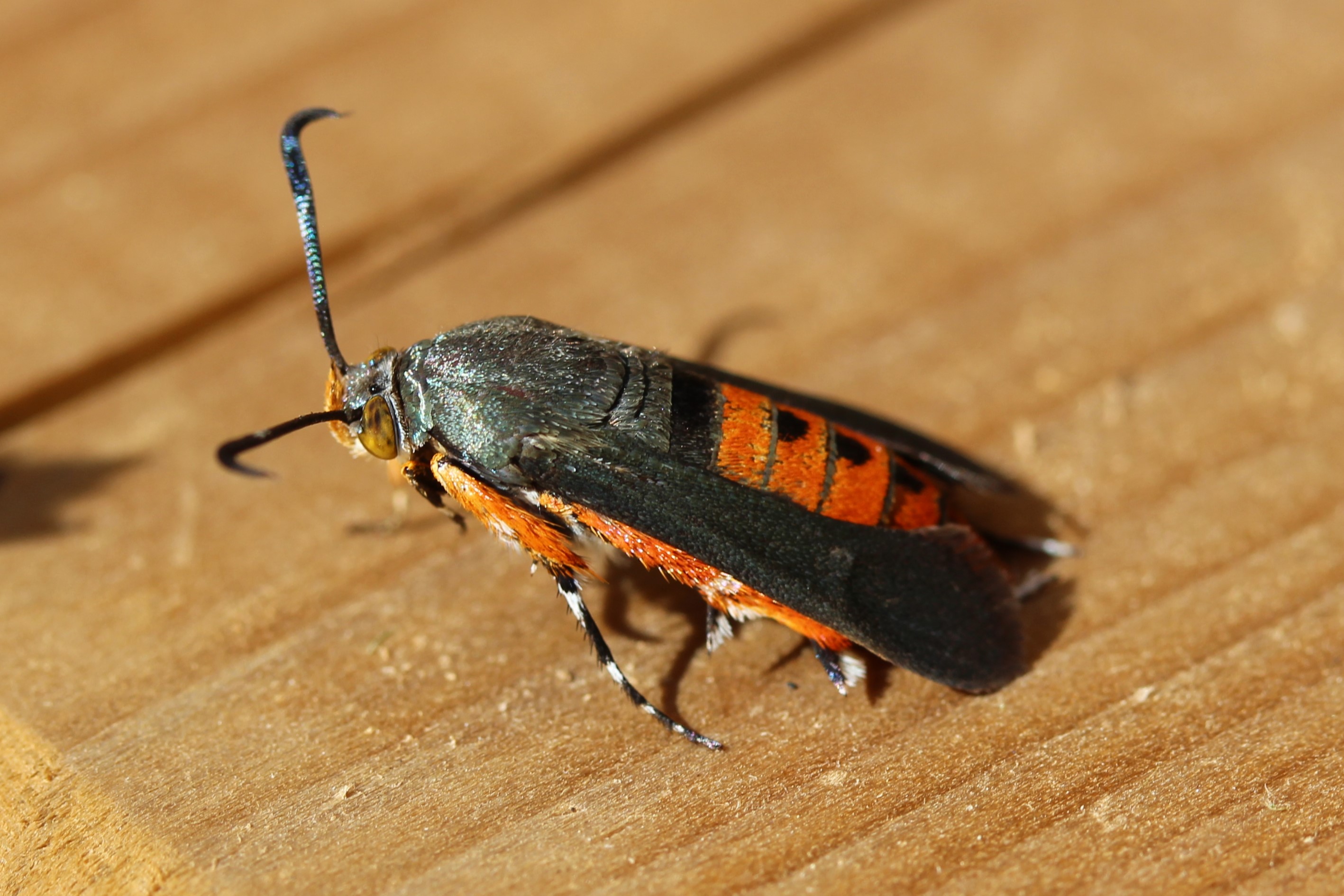
Squash Vine Borer (Eichlinia cucurbitae), Backyard, July 2024:
Standing still, the illusion is not very convincing, but when this little moth was in constant buzzing motion, hovering from flower to flower, the resemblance to a wasp was impressive (specifically the Great Golden Digger Wasp, Sphex ichneumoneus). The mimicry helps keep this moth safe from predators which hesitate to interfere with a stinging wasp but would love to snack on a harmless moth. As with several other insects on this list, the Squash Vine Borer feeds on squash, cucumbers, gourds, or pumpkin during its larval stage, giving some indication of what we were growing in our garden this past summer.
Pruinose Squash Bee (Peponapis pruinosa), Backyard, July 2024:
Unlike many other bees, Squash Bees are specialist pollinators on one plant family: the Cucurbitaceae (the pumpkins, squash, cucumbers etc). These are solitary bees, meaning that each female creates her own nest for her offspring, rather than contributing to a social construction such as a honeybee or bumblebee colony made up of many non-reproducing individuals. Female Squash Bees dig their nests into the soil, 1.5 feet deep or more, before branching off the main tunnel into several off-shoots with each one receiving pollen and an egg (Wilson and Carril 2016).
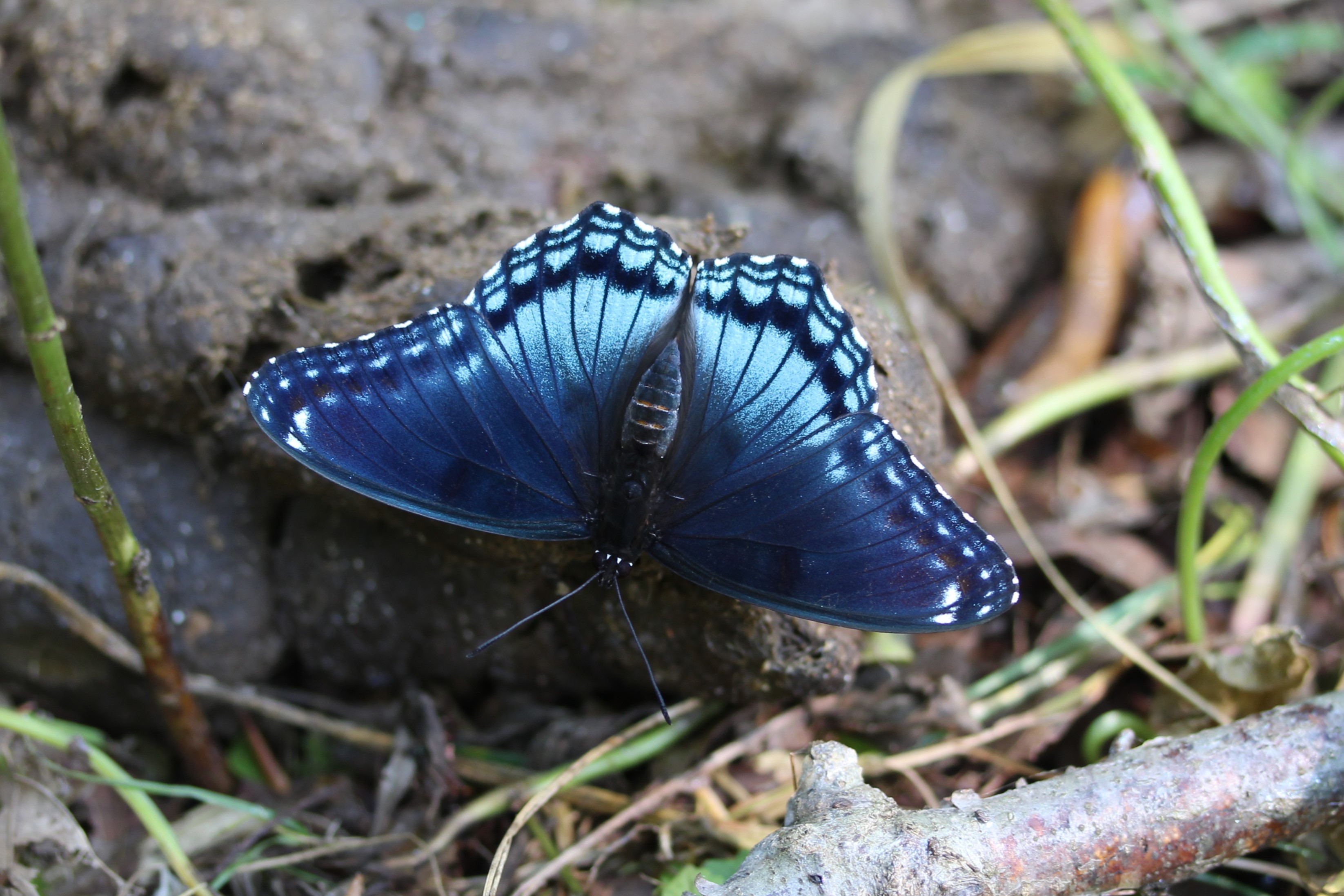
Red-Spotted Purple Butterfly (Limenitis arthemis astyanax), Backus Woods, July 2024:
This beautiful butterfly was spreading its wondrous wings as it fed on dung (I believe this was of the horse variety). Many butterflies feed on dung for valuable minerals, creating such jarring juxtapositions.
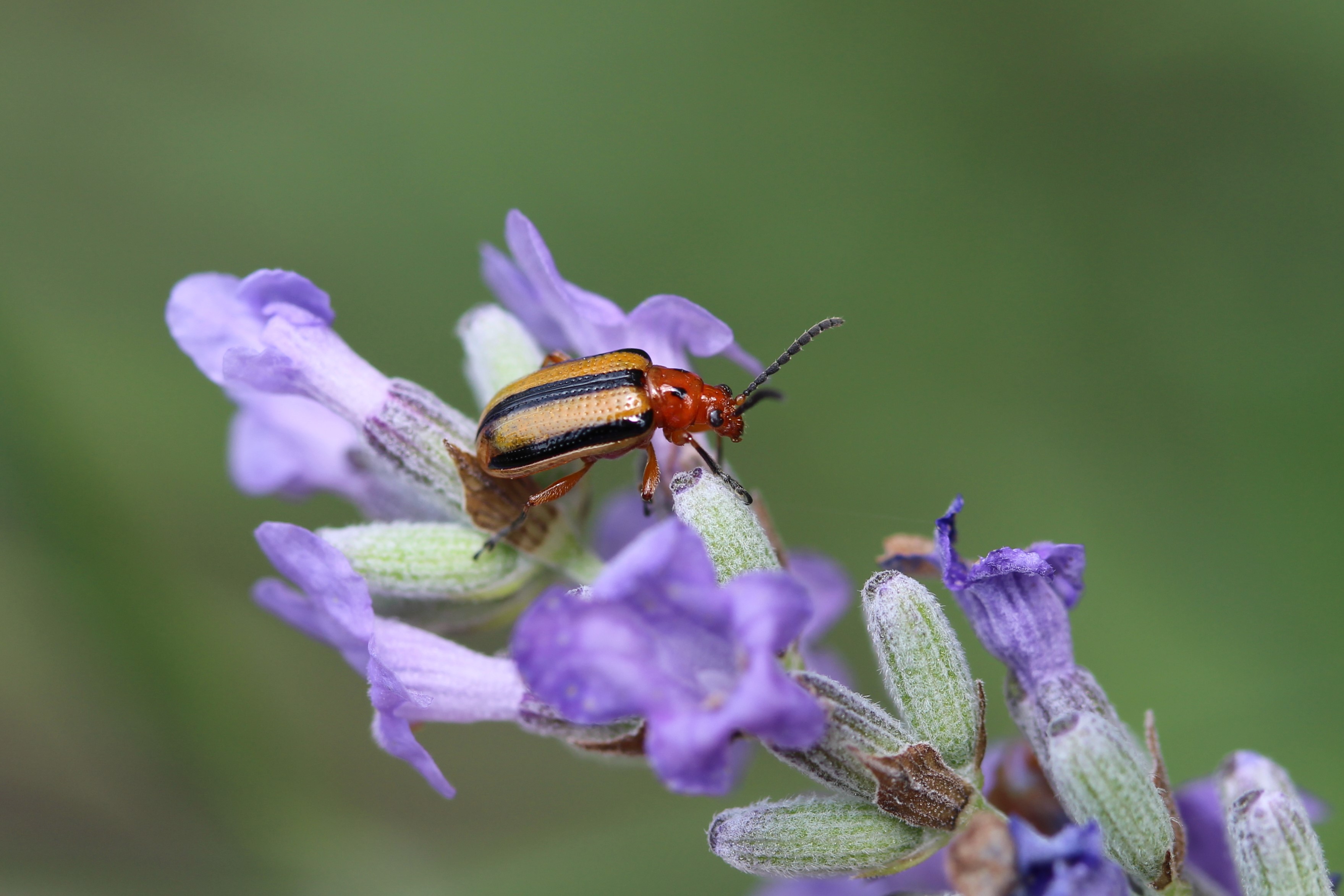
Three-lined Potato Beetle (Lema daturaphila), Backyard, July 2024:
This attractively coloured beetle is a native leaf beetle (in the subfamily Criocerinae) which feeds on potatoes and other related plants. Its larvae exhibit merdigery (bet you didn’t think that word was coming back again so soon, did you!?).
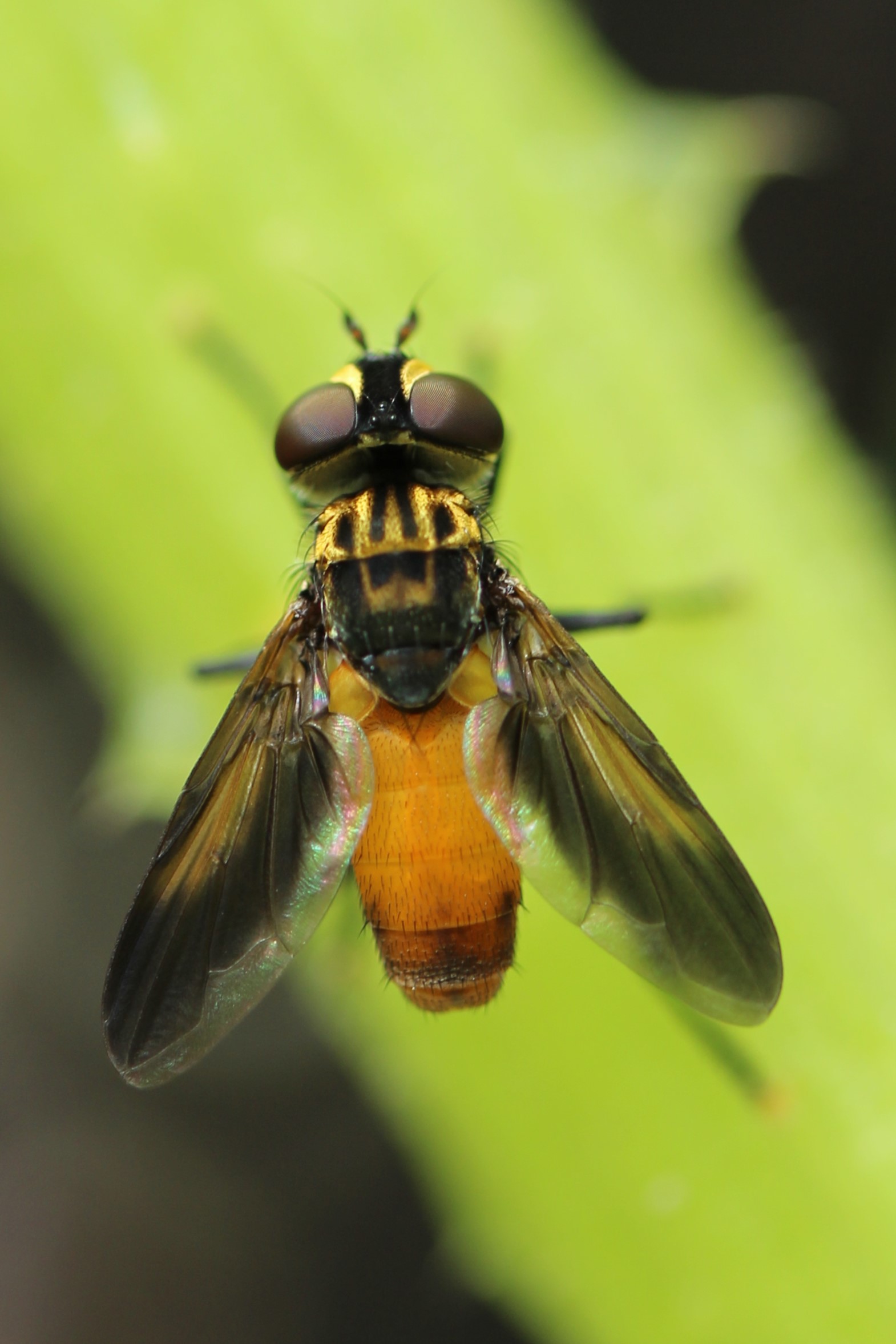
Swift Feather-legged Fly (Trichopoda pennipes), Backyard, July 2024:
These flies are part of the vast fly Family Tachinidae, which are largely bristly and parasitic. Trichopoda pennipes lays its eggs directly onto its hosts which are various true bugs (Hemipterans), including Squash Bugs, Stink Bugs and Leaf-footed bugs. The egg hatches and the larva burrows directly into the host bug, consuming it from the inside. This gruesome life cycle is helpful to gardeners as many of its hosts are pests of garden plants.
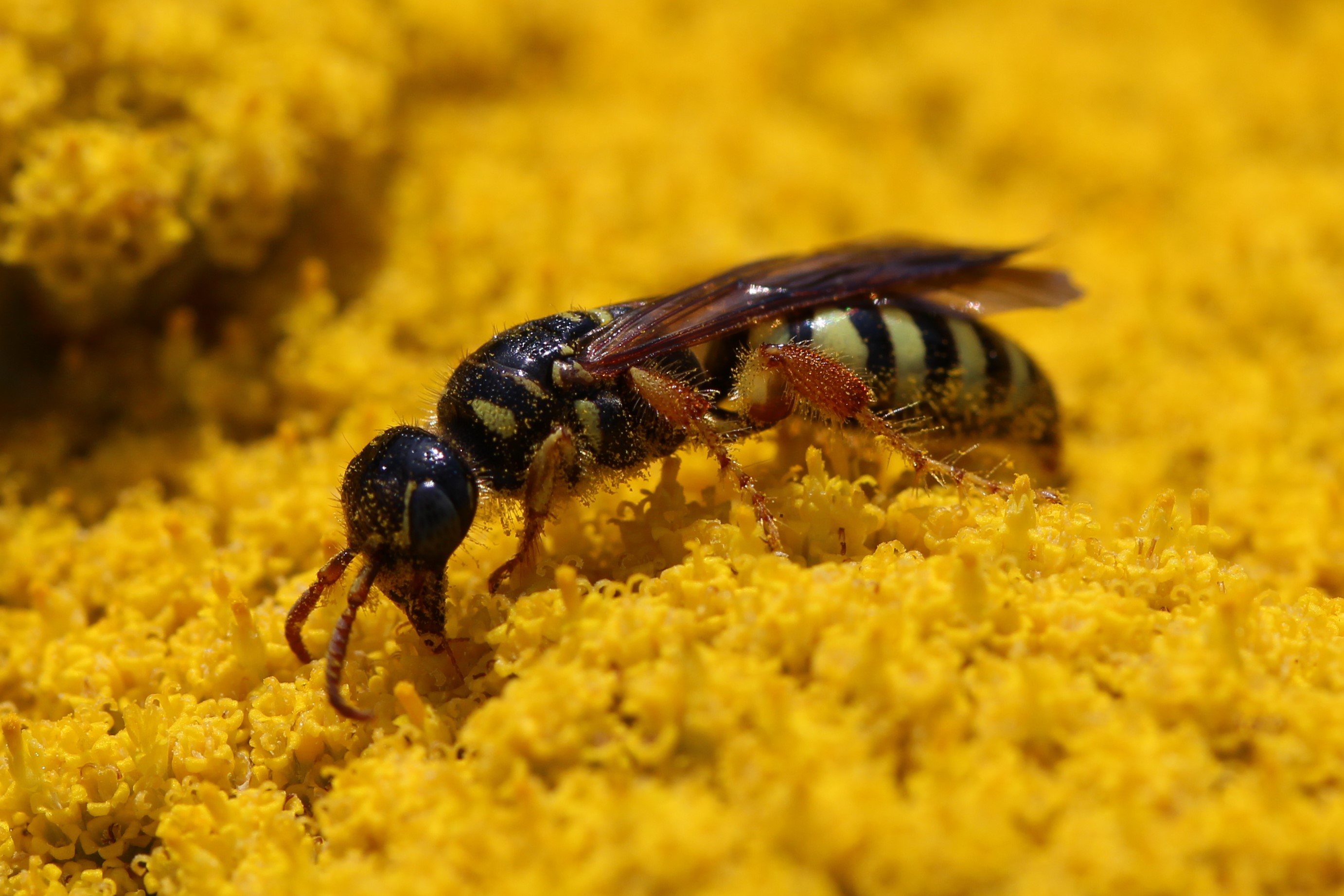
Five-Banded Thynnid Wasp (Myzinum quinquecinctum), Backyard, July 2024:
These large wasps again demonstrate the familiar patterning and colouring of a social paper wasp, but are very distinct in their life cycle. Female Five-Banded Thynnid Wasps dig up to six inches into the ground at night, in search of scarab beetle larvae (or occasionally tiger beetle larvae) (Holm 2021). Once found, the female paralyzes the grub and lays her egg on its abdomen (Holm 2021). The wasp larva consumes the beetle larva and creates a silken cocoon within its late host’s underground chamber to spend the winter (Holm 2021). Once spring arrives, the wasp pupates and emerges as the impressive adult pictured above in summer (Holm 2021).
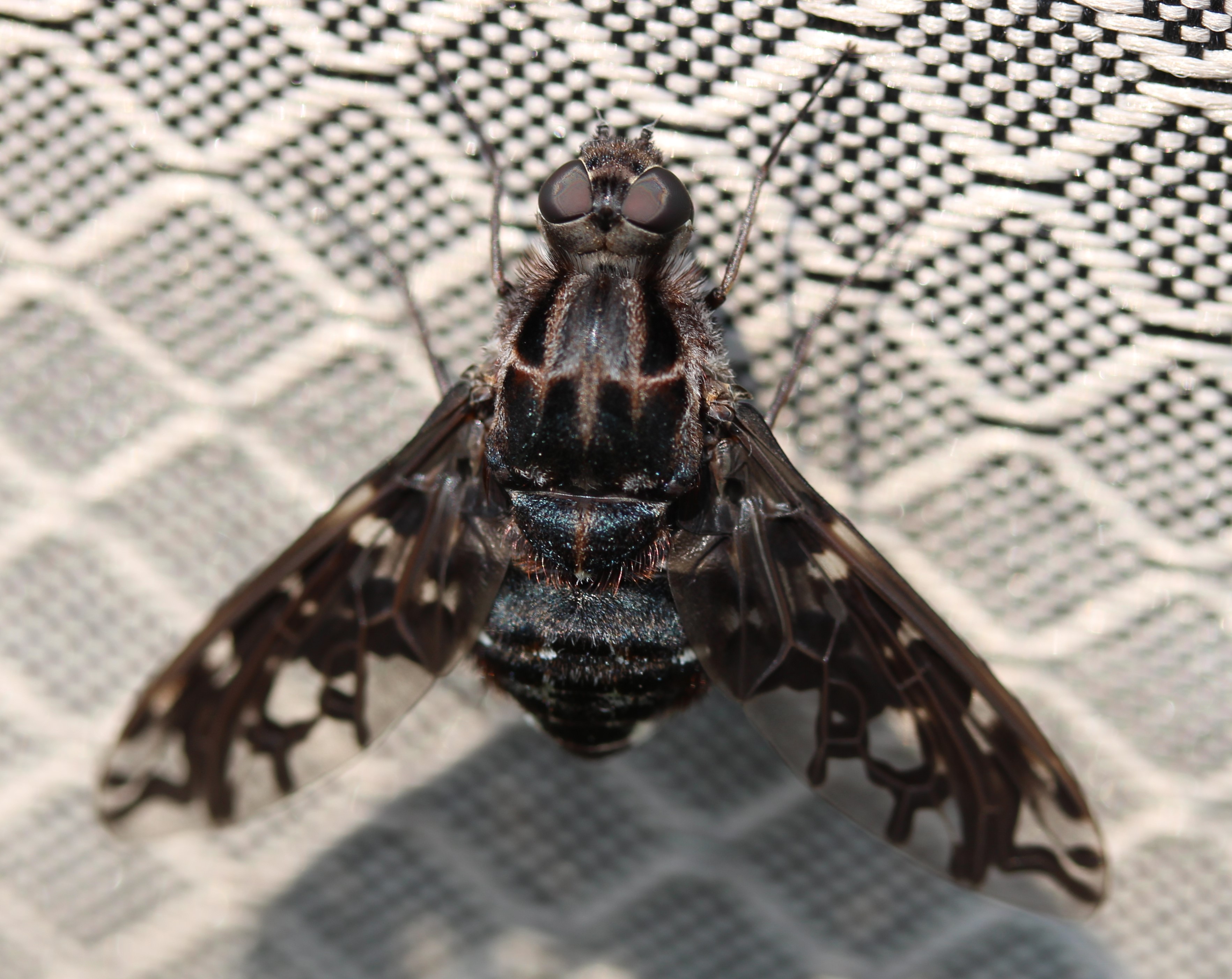
Despite its large and striking appearance, this formidable fly does not bite or sting people and should only be feared by its prey: Carpenter Bees (Xylocopa spp.). The Tiger Bee-Fly lays its eggs near Carpenter Bee nests, and the larvae make their way inside to consume the bee larvae.
Belted Kingfisher (Megaceryle alcyon), Grant Anderson Park, September 2024:
I have tried in vain to take a good, clear, photo of a kingfisher for many years now. These distinctive, charismatic birds are always on the move, and very aware of me whenever I approach with camera in hand. They need their good senses to spy fish underwater which they dive and catch. This past September, I finally managed to get a nice photo of this bird in the local park in Simcoe.
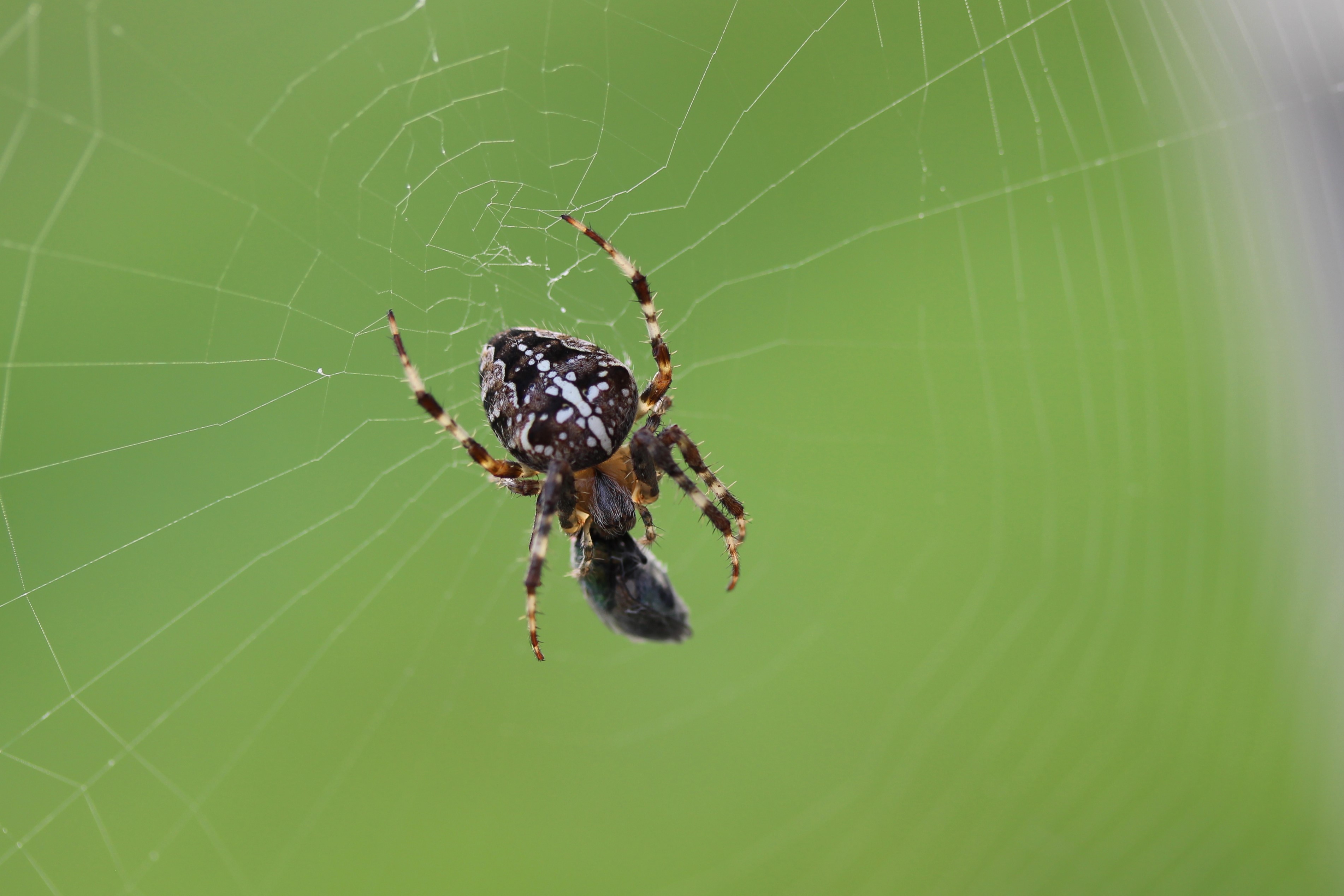
Cross Orbweaver (Araneus diadematus), Backyard, September 2024:
This large spider feasting on its dipteran prey had constructed a web on the edge of my back porch. Cross Orbweavers are introduced spiders here, native to Europe.
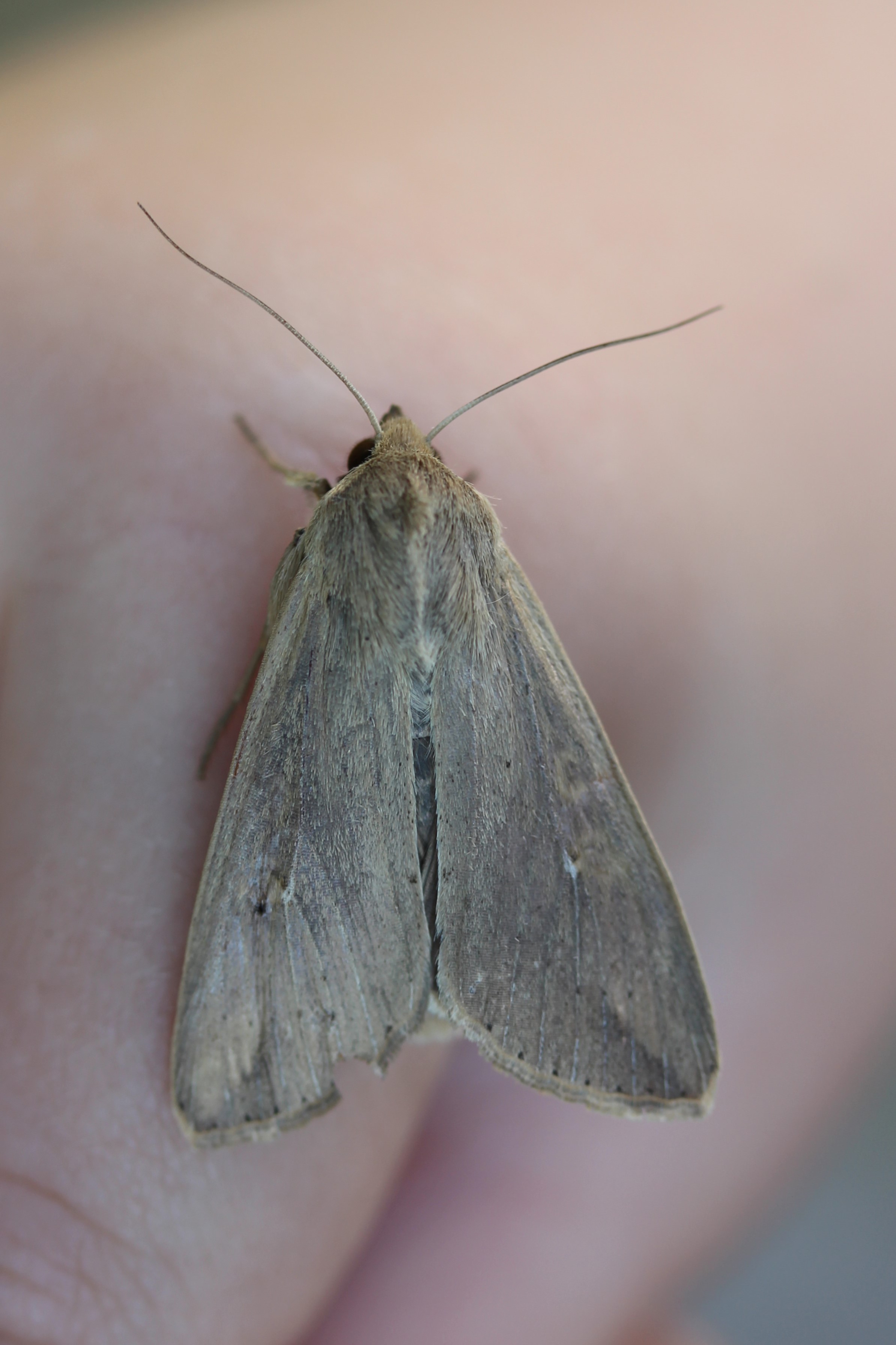
Mythimna Moth, Backyard, September 2024:
I believe this moth is of the genus Mythimna, but I’m not quite sure as it’s a fairly nondescript moth. The moths in this genus feed on grasses when larvae which would also line up with its discovery within my lawn (Beadle and Leckie 2012).
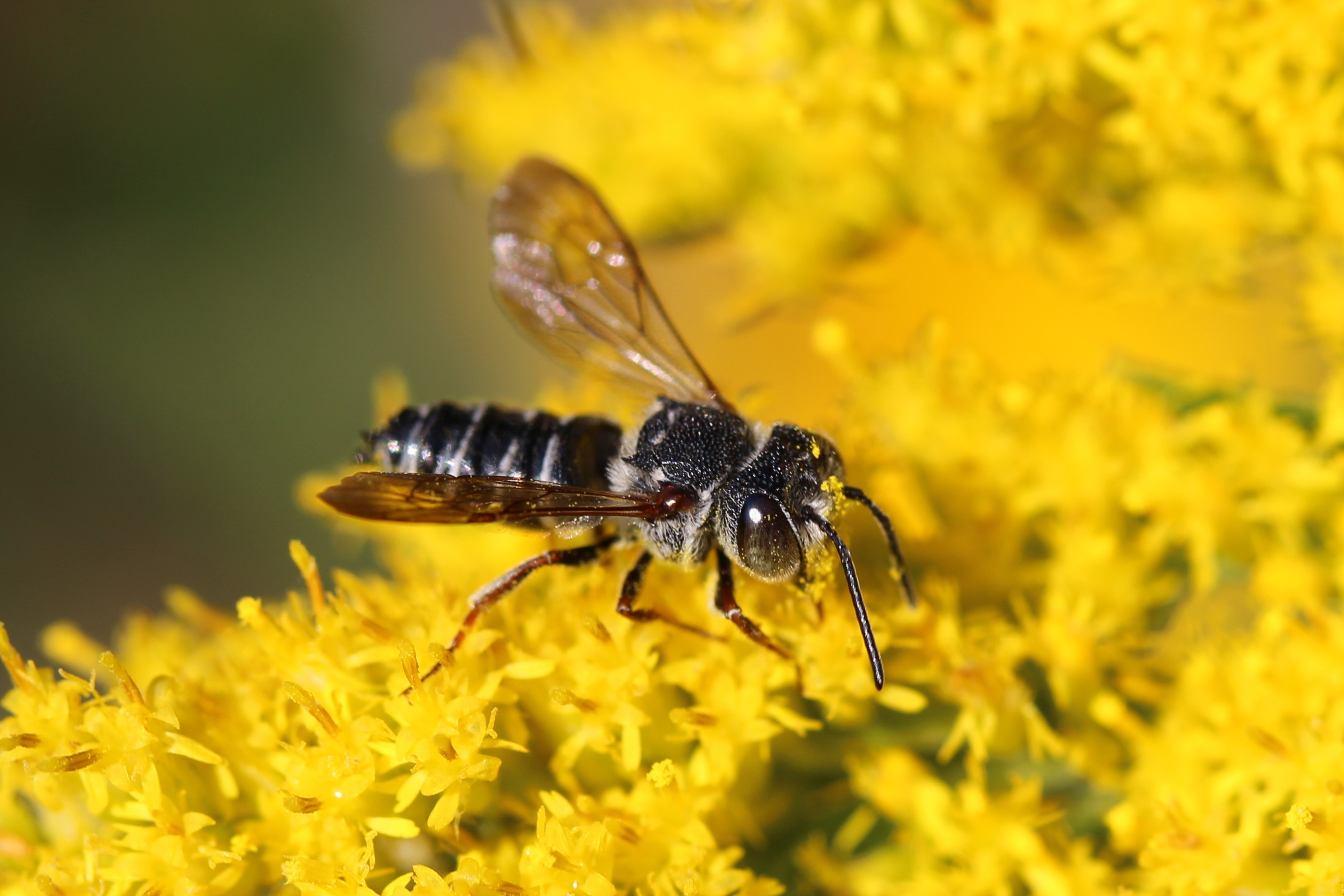
Sharptail Bee (Coelioxys), Backyard, September 2024:
Although the proportions of the pictured individual lead the head to be much larger than the thinning abdomen, the common name “Sharptail Bee” refers more to the females of these bees (the bee in the photo is a male) who have very pointed abdomens used to puncture the nest cells of Megachilid bees (Wilson and Carril 2016). Coelioxys eggs laid inside their hosts’ nests hatch and the emerging larva “uses tweezer-sharp mandibles to snip the egg or young larva of the host bee in half” (Wilson and Carril 2016). The larva then proceeds to consume the pollen that was stored away for the host bee’s young.
Apple Leaf Skeletonizer Moth (Choreutis pariana), Backyard, September 2024:
These are day-active moths, with larvae that feed on crab apple leaves. They were introduced to North America sometime around 1917 (Beadle and Leckie 2012).
References:
Beadle, David and Leckie, Seabrooke 2012. Peterson Field Guide to Moths of Northeastern North America. Houghton Mifflin Harcourt.
Beletsky, Les. The Red-Winged Blackbird: The Biology of a Strongly Polygynous Songbird. 1996. Academic Press.
Costa, James T. 2006. The Other Insect Societies. Harvard University Press.
Holm, Heather 2021. Wasps: Their Biology, Diversity, and Role as Beneficial Insects and Pollinators of Native Plants. Pollination Press.
Lisak, Sarah C., Hailey N. Shanovich, Amelia R.I. Lindsey, and Brian H. Aukema. “The Polydrusus Weevils (Coleoptera: Curculionidae) of the United States of America and Canada: Identification and Insights into the Ecology of Two Nonnative Species in Hazel (Corylus Spp.).” The Canadian Entomologist 156 (2024): e10. https://doi.org/10.4039/tce.2024.7.
Marshall, Stephen. 2018. Beetles: Their Natural History and Diversity. Firefly Books.
Marshall, Stephen. 2023. Hymenoptera: The Natural History and Diversity of Wasps, Bees, and Ants. Firefly Books.
O’Neill, Kevin M. 2001. Solitary Wasps: Behavior and Natural History. Cornell University Press.
Stokes, Donald and Stokes, Lillian. 1983. A Guide to Bird Behavior Volume 2. Little, Brown and Company.
Wilson, Joseph S. and Carril, Olivia M. 2016. The Bees in Your Backyard. Princeton University Press.
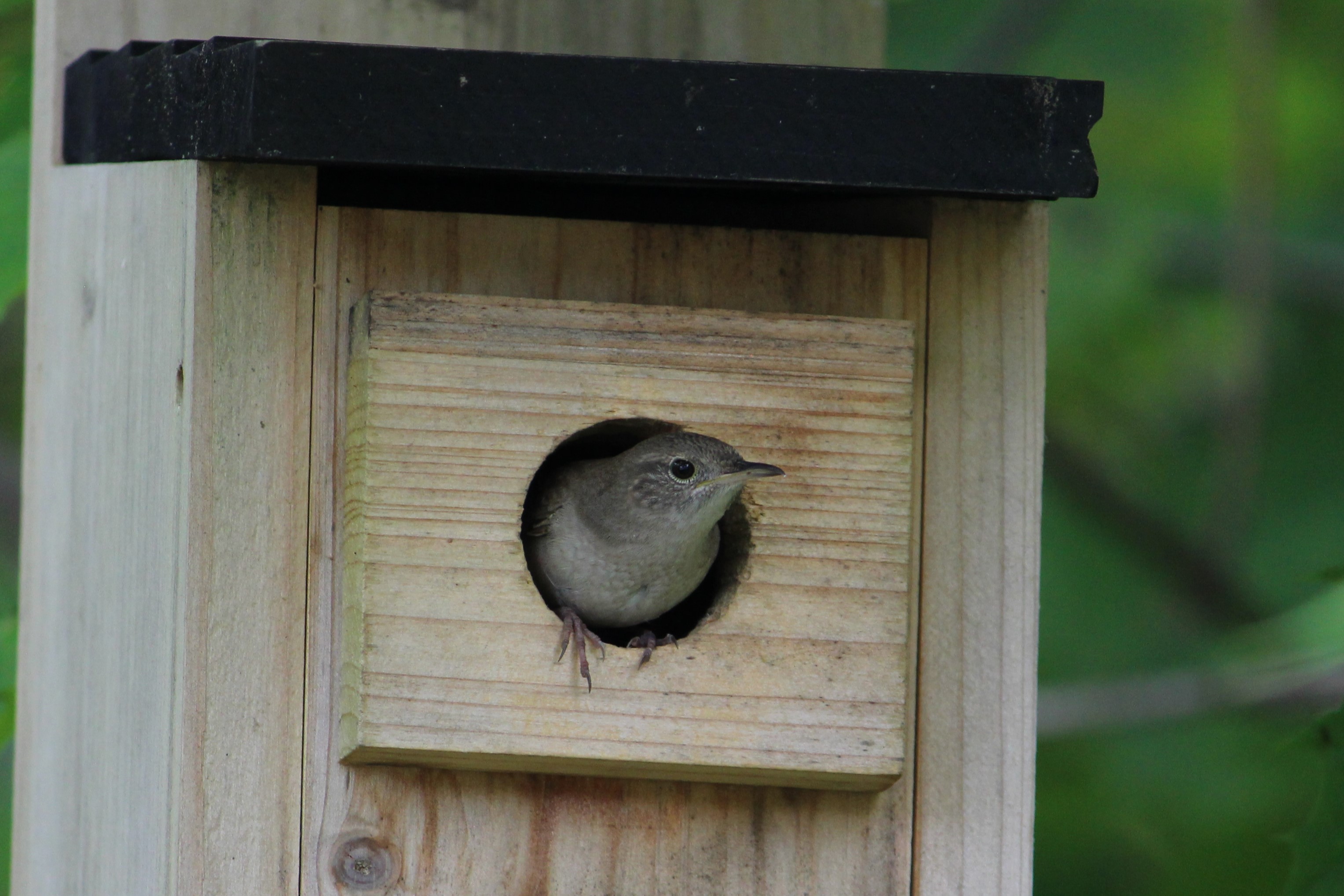
This past Summer my backyard was home to a House Wren (Troglodytes aedon) Nest.
Today marks 5 years of nature blogging on norfolknaturalist.ca! For my blogversary, we’ll do the usual summary of the past blogging year interspersed with some pictures and then we’ll look at some mini reviews of nature-related books I read this past year. In December, I’ll post my top photos from the past blogging year and take a look at the creatures featured in said photos. Here we go!
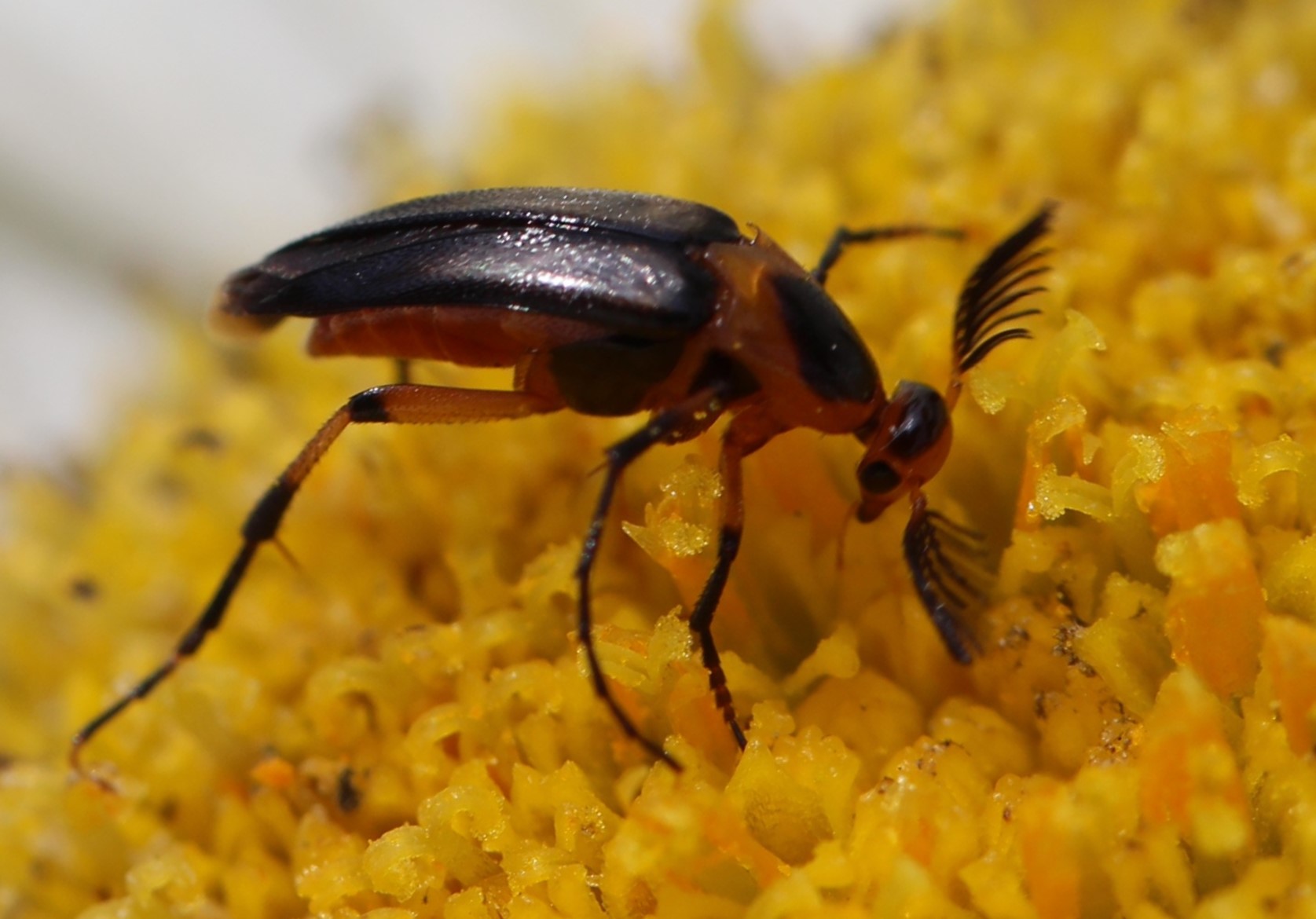
A Bordered Wedge-shaped Beetle (Macrosiagon limbata) in my backyard this past summer. He (you can tell it’s a male because of the impressive antler-like antennae) had shoved his head deep into this flower before pushing back to reveal his antennae.
As is tradition, I began last year’s posts with a roundup of photos from the past blogging year: Norfolk Naturalist Year in Photos (Dec 2022-Nov 2023). My first series of posts in 2024 were detailing my Algonquin observations from August 2023. This time, instead of following a strict chronology, I focused on the different areas I spent time at and the things I observed there. I began with organisms observed on or near our campsite, moved on to the Lake shore observations within Pog Lake Campground, and then described what I have come to call “Warbler River”. My final post in this series was all about the creatures I observed on the Peck Lake Trail, including carnivorous plants and dazzling dragonflies.
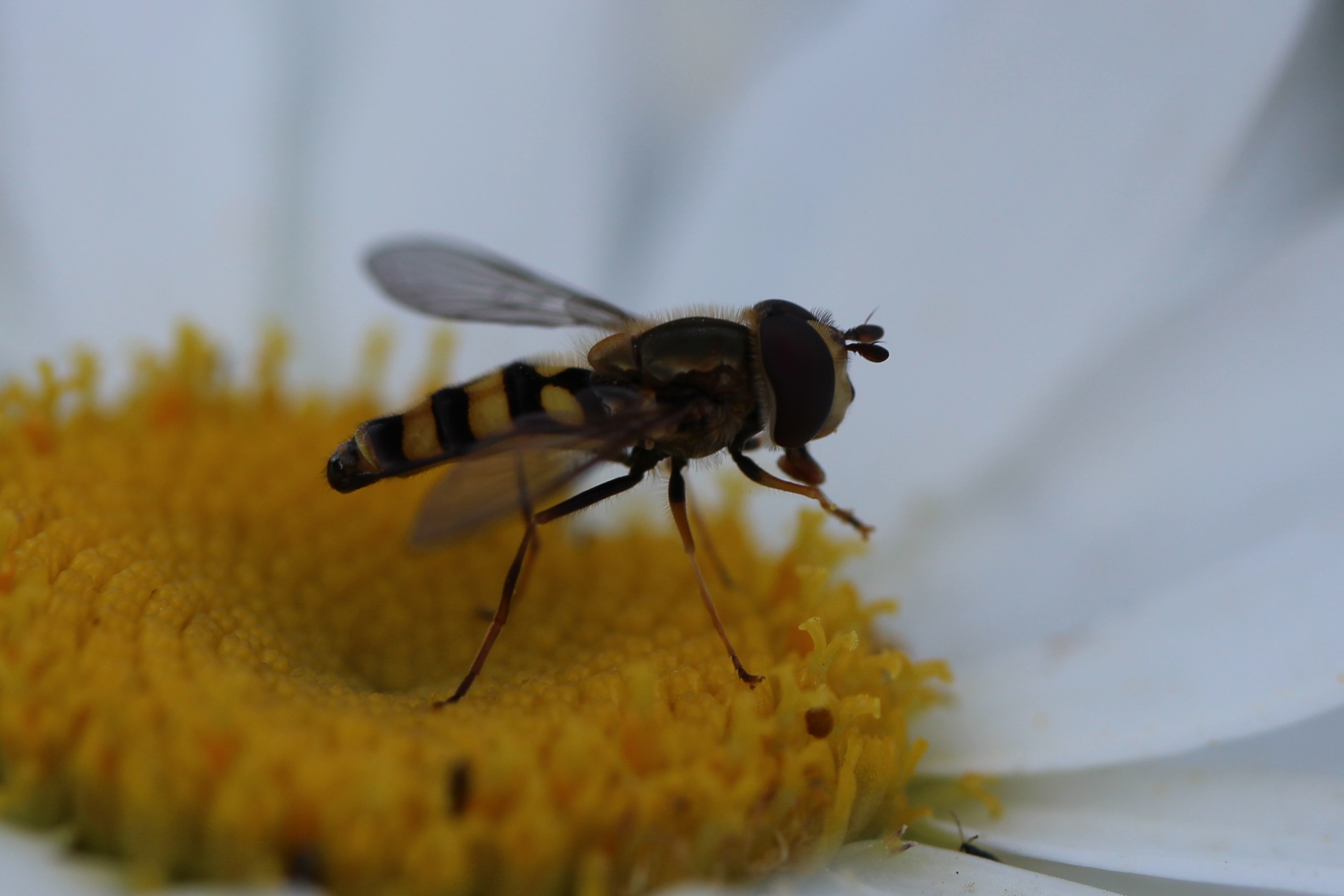
Long-tailed Aphideater (Eupeodes americanus) in my backyard in October. The name refers to the larva which consumes aphids, while the adult feeds on nectar.
In May 2024, I went on an amazing weekend trip to Point Pelee and did a lot of birding while there. So much birding that I observed over 20 different families of birds and more than 50 species!!! I want to look at each family of birds I observed (and eventually plan to do a couple non-bird posts too) but so far I have only posted about 2 of the bird families: Hirundinidae (the Swallows and Martins) and Icteridae (New World Blackbirds). Stay tuned for more of these bird observations to come.
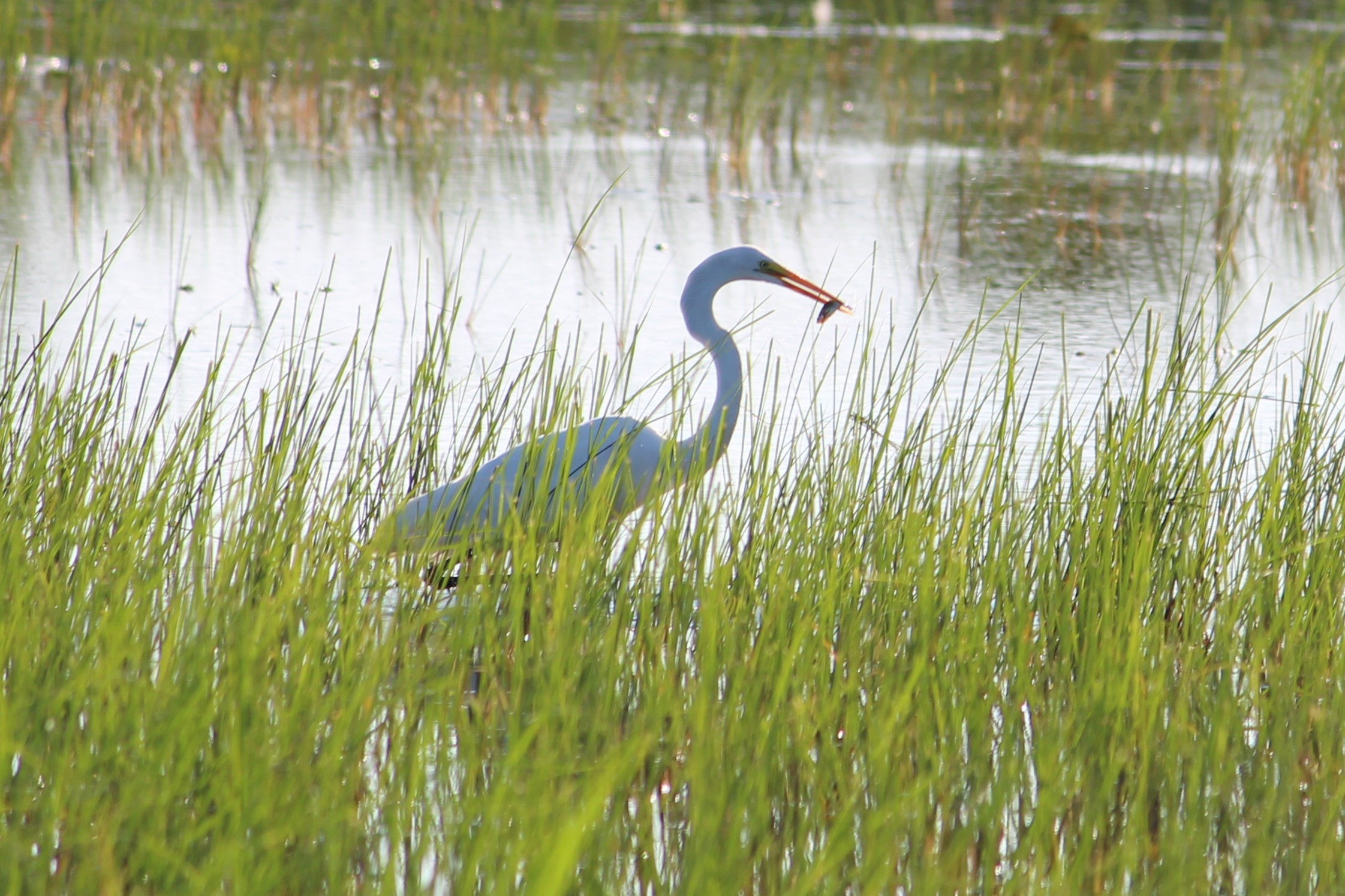
A Great Egret (Ardea alba) feasting on fish in Long Point in July, 2024.
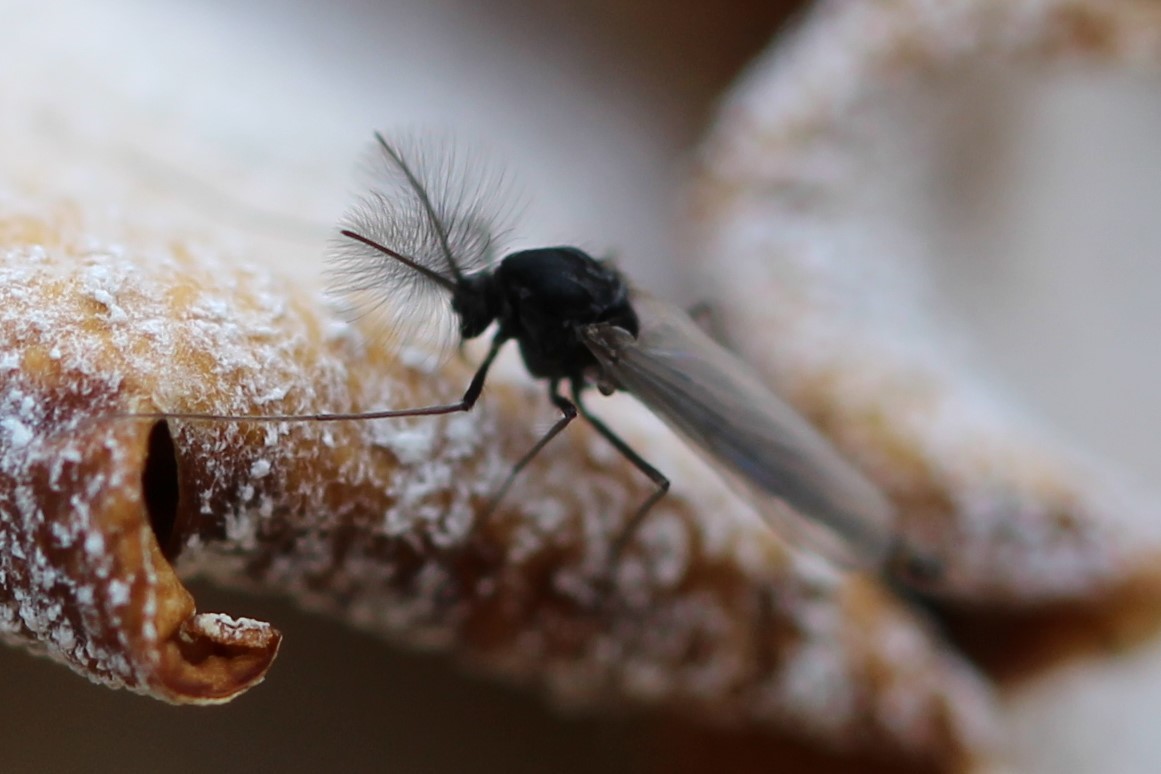
In August, I did a re-post from my old tumblr blogsite, about some midges I observed in Pinery Park in April 2018. I still have several old tumblr posts to re-post here on my current blogsite and I will continue to do so in future.
Also in August, I wrote a post about Ant Books, something I am particularly fond of. Check it out for your next ant book read. I’d like to do some more posts like this one in the future about other categories of nature books since I have an obsession with book collecting and have many more topics I could cover and explore through the books on my shelves.
Speaking of nature books… next up we will explore the nature books I’ve read over the past blogging year…
Dr Dhrolin’s Dictionary of Dinosaurs, by Nathan T. Barling and Michael O’Sullivan, Illustrated by Mark P. Witton
A combination of some of my favourite things, this book exceeded my expectations. Filled to the brim with incredible artworks by world-renowned palaeoartist Mark Witton (and the supplementary non-Witton art was also really well done). Chock full of theories of prehistoric creatures’ ecologies and behaviour (complete with scientific literature references). Intriguing creature design and optional magical rules to meld the species into a more fantastical setting. In-depth reconstructions of extinct ecosystems such as Hateg Island, Crato Formation, and more (complete with paleo-flora with their own magical abilities and uses to complement an exploration adventure).
I was blown away by how much content there really was here, and all of it made for someone like myself who is fascinated by animal behaviour, extinct creatures, and incorporating those things into the fantasy worlds of roleplaying games. 10/10 for the art, 10/10 for the science, 10/10 for the format/style (there is a ribbon bookmark included, the pages are good quality, the images beautiful to behold).
If you are interested in prehistoric animals or ttrpgs, do yourself a favour and buy this beautiful, content-filled book.
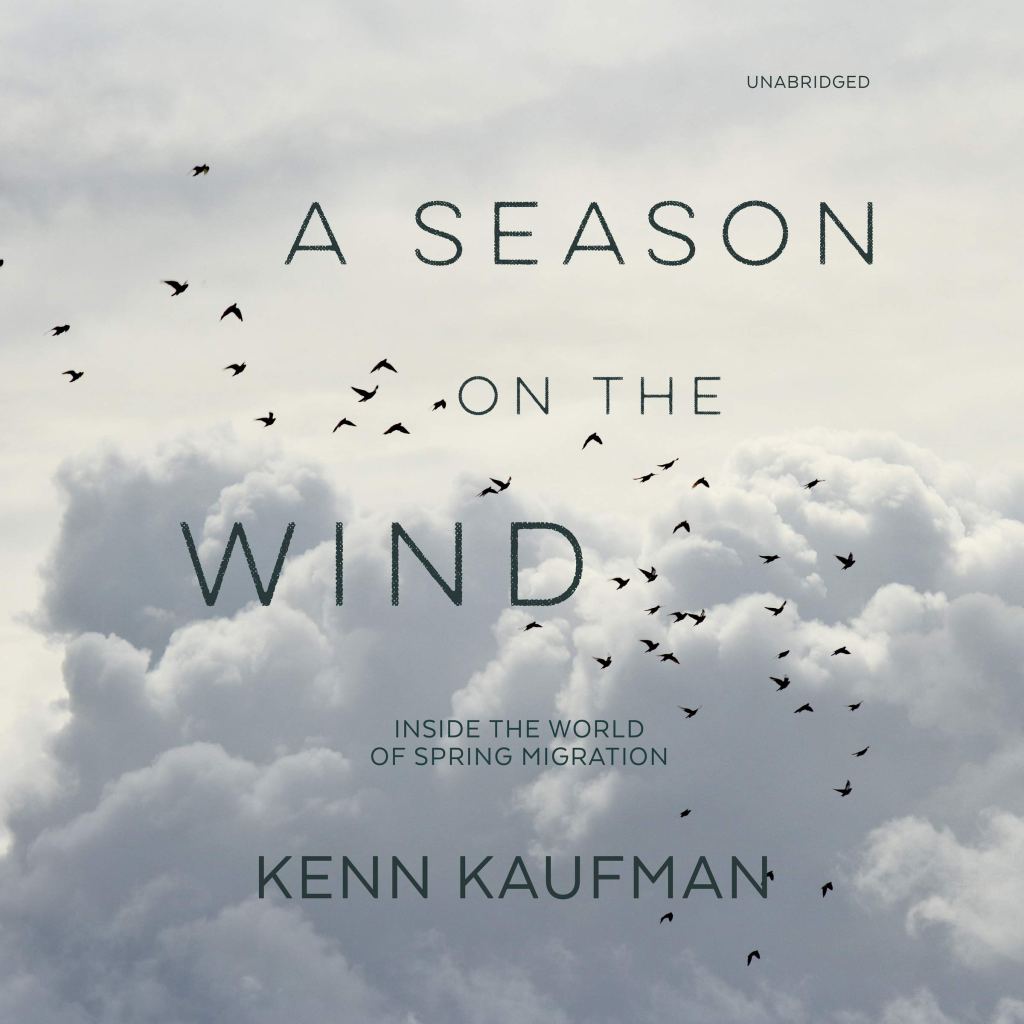
A Season on the Wind: Inside the World of Spring Migration, by Kenn Kauffman:
Version 1.0.0
* I listened to the Audiobook *
Part personal memoir, part reflections on past migration seasons, this book was a bit meandering, kind of like its subject birds. I enjoyed the impressions of people and the author’s heartfelt joy at the rise in birding and birdwatching as a hobby, and many of the stories of birds or people or projects were interesting. Some chapters focused on a particular group of birds, such as Warblers, Waterfowl, or Shorebirds, while others focused on aspects of migration. One of the most interesting was the chapter about methods of studying migrating birds because it fascinates me how little we still know and how much people have unraveled so far. A running thread through the book is a proposed wind turbine project in a bird migration hotspot and the local birding association’s struggle to halt its progress. I was surprised how invested I became in this story, despite it feeling a bit out of place in some of the other portions of the book. Overall, this was an easy read, most like a memoir or personal collection of impressions and interactions with migrating birds with some specific threads running throughout.
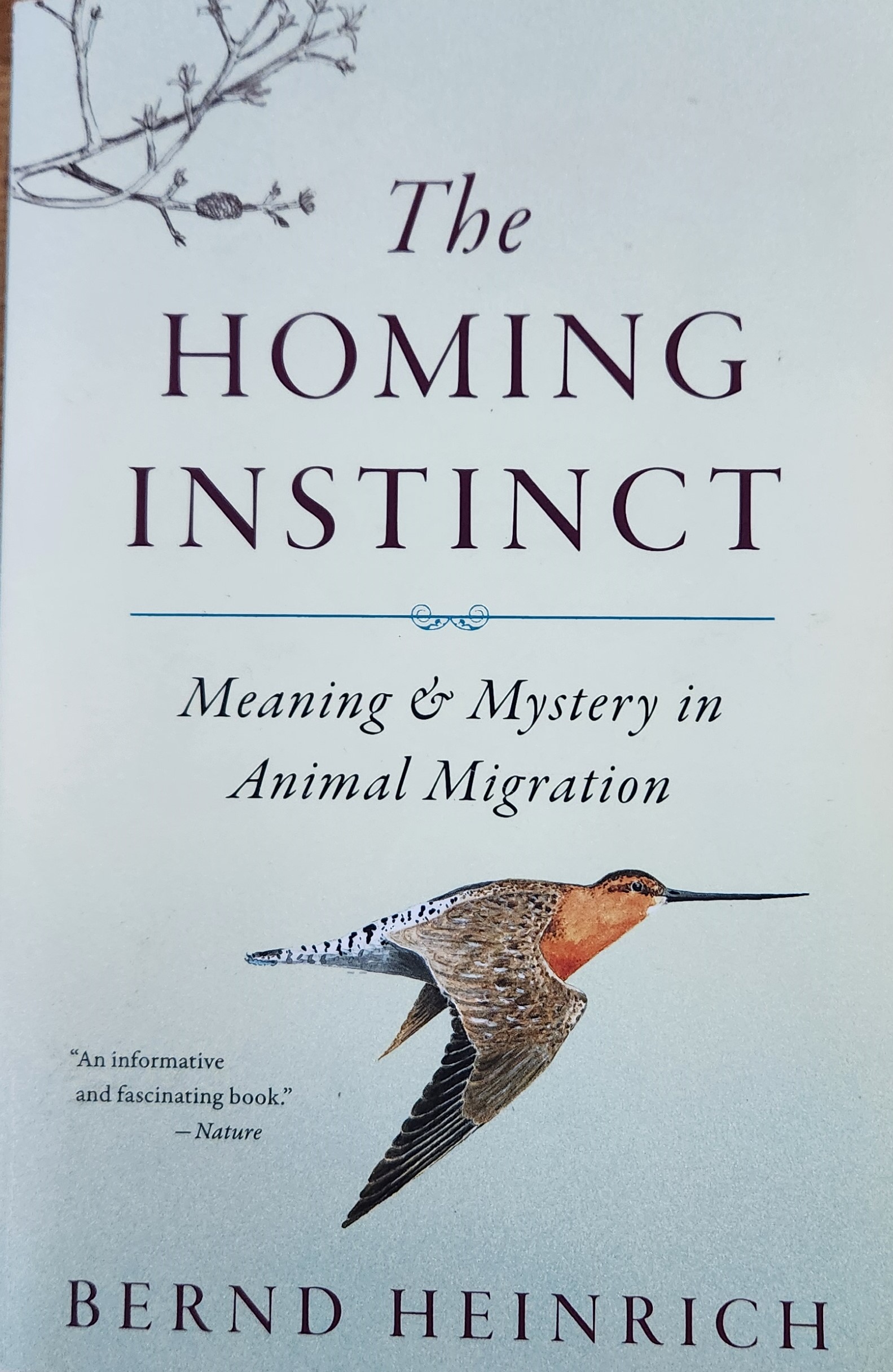
The Homing Instinct, by Bernd Heinrich:
I really enjoyed this tour through the world of animal migration and homing and home-making behaviour. The tour was very idiosyncratic and a bit thematically messy. There was not as much of a common thread running through as there have been in other Heinrich books I have read, though he tried to link the stories within to “animal homing/homemaking”.
Despite the lack of cohesiveness, the stories themselves were for the most part fascinating (I thought he spent way too long on a journal-style chapter about him hunting, felt out-of-place even amid other not-so-linked chapters) and informative. I learned some fun things about animals and plants, and appreciate them even more now.
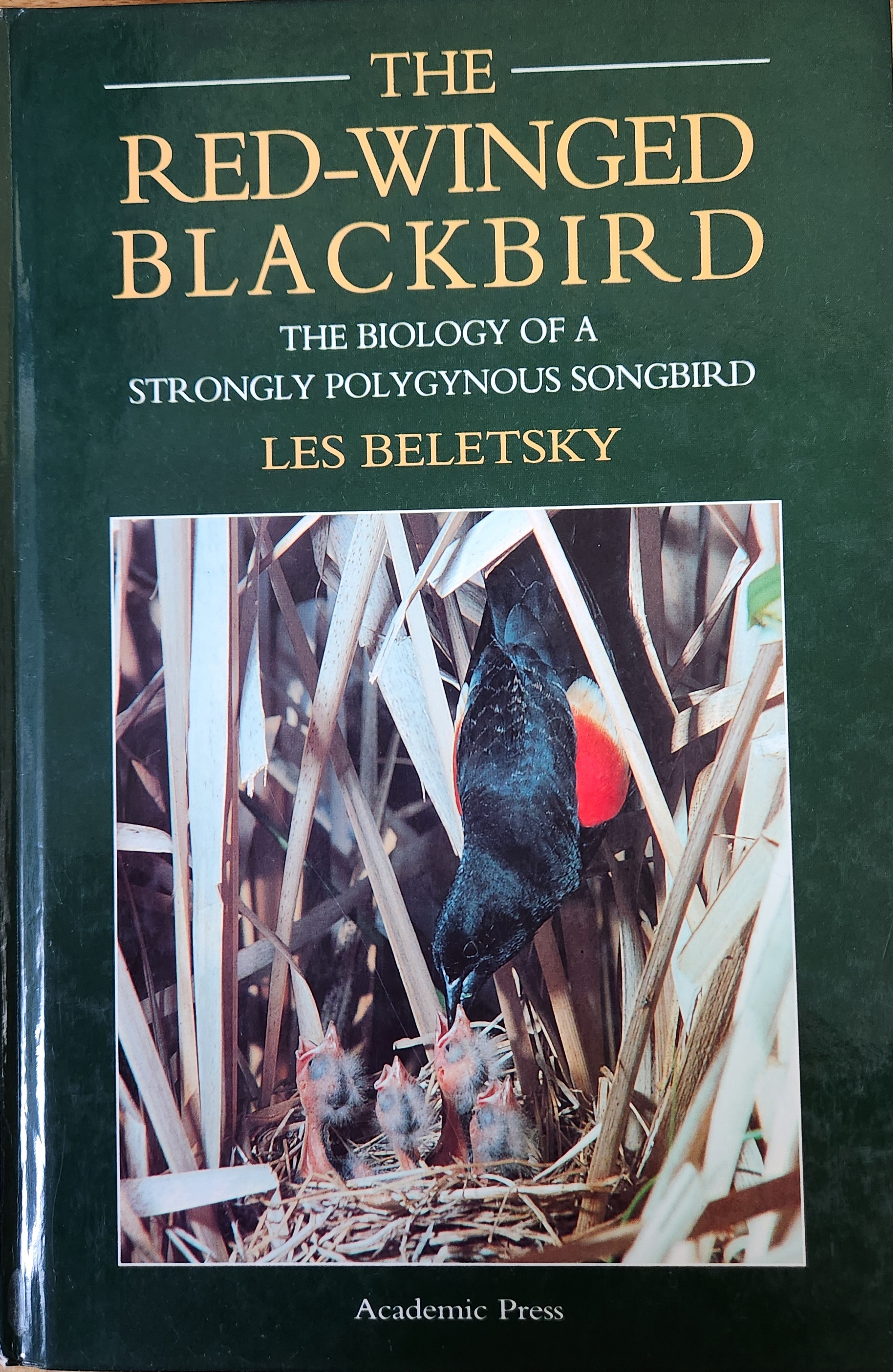
The Red-winged Blackbird: The Biology of a Strongly Polygynous Songbird, by Les Beletsky:
An excellent overview of the biology of a much-studied and common bird. The book focuses on Red-winged Blackbirds’ breeding biology and the studies most focused on are for a particular population in Washington state which the author has studied for years. One of the interesting points the book puts across is that Red-winged blackbirds are common across the United States, southern Canada, and Mexico but they exhibit different behaviours in different populations/regions. This is sort of a rule across animal species but it was interesting to see it demonstrated and explored with this familiar bird. Lots of interesting discussions of how animal behaviour research is done and how we know so much about a species because we’ve studied them for so long but as a consequence we open up more frontiers of mystery to explore (the research questions never stop, they only split into more questions).
Bird Migration (New Naturalist #113), by Ian Newton:
An incredibly detailed look at Bird Migration, focusing on the migrants in Eurasia-Africa because of being a British Natural History book. This book expanded my worldview on bird migration, bringing out the true complexity of this wondrous phenomenon. The book was dense with information, but the data was presented very readably, with very helpful concluding/summarizing paragraphs at the end of each chapter. Excellent photos were sprinkled throughout, illustrating the myriad species of birds discussed.
Well, that wraps up another year of blogging on norfolknaturalist.ca! If you’ve been reading along for the past 5 years, I want to extend a sincere thanks for journeying along with me. And if you’re new here, I want to welcome you to share in my observations and wonder at the natural world all around us.
This was originally posted on my old blogsite April 2018.
We took a day-trip to Pinery yesterday, and aside from the fascinating species of birds flitting and calling among the trunks of the trees and the underbrush, we encountered something quite ordinary, and yet, as I hope to demonstrate, quite beautiful.
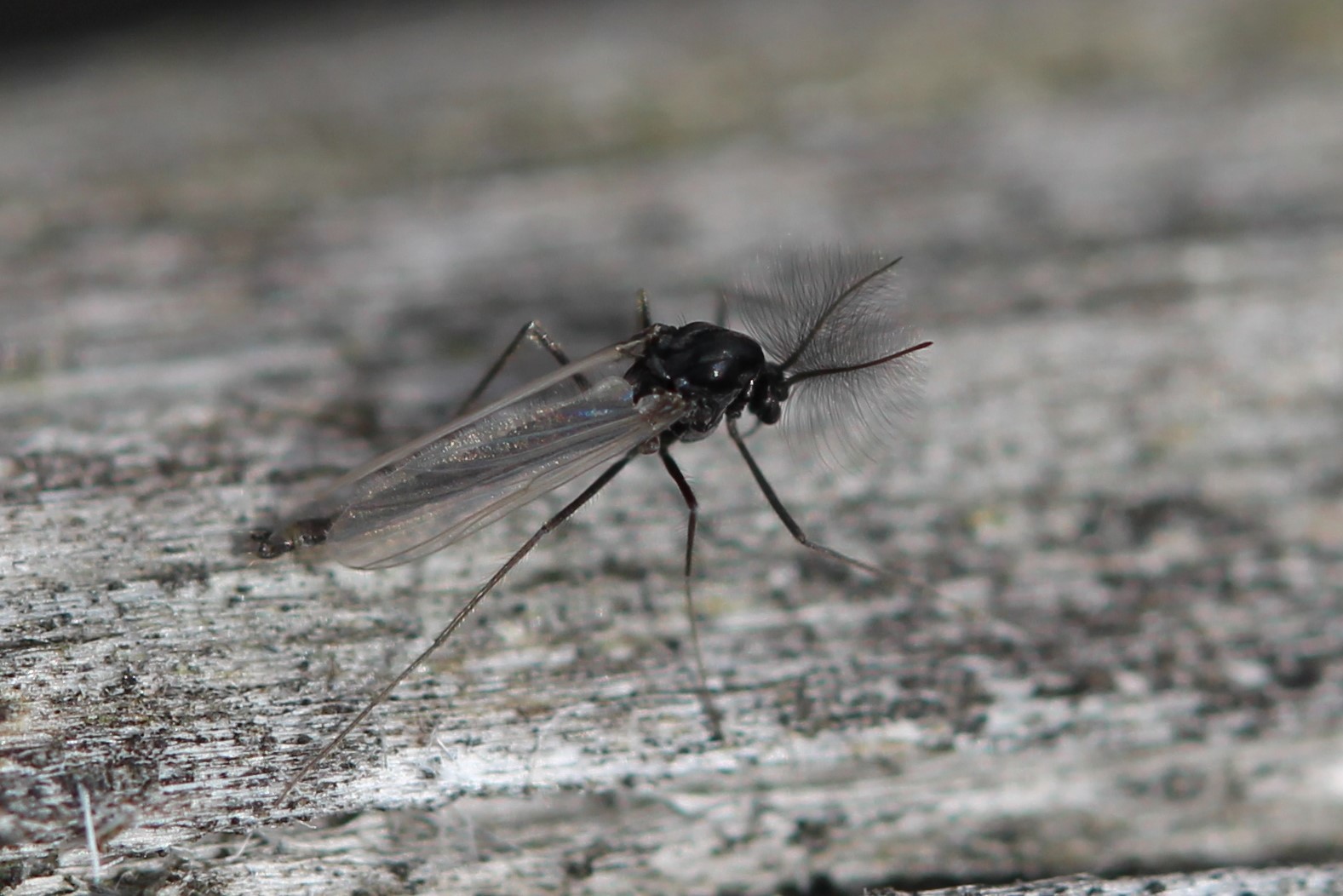
While walking along the trails by the river, we saw clouds of swirling insects. These tiny flies were creating their own signal, for potential mates. You’ve probably encountered their kind before, creating a smoke-like cloud above your head as you walked. Even though we are much larger than them, we certainly take notice of their swarms, which are made up of male midges.
These particular insects were of the Family Chironomidae (the common, nonbiting midges). They may look like mosquitoes, but they won’t bite or seek blood. As such, you can see they don’t have the needle-like mouthparts that a mosquito uses to probe beneath skin. And you can even tell that these midges were male, because they had delicate feathered antennae atop their heads. With these, the male midges seek out female mates.
These midges most likely developed in the river, as small worm-like larvae, to become the graceful adults that we encountered. Because they are so numerous in and out of the water, they are incredibly important pieces of food chains and can also contribute to pollination of various plant species. These small and delicate insects may seem to be a nuisance, but they won’t bite and are a beautiful component of the world’s fauna.
Several of the midges landed on some fungi near the water.
I love ants. If you’ve read some of my blogposts or know me personally you already know this. My admiration and appreciation for these animals was built in large part by reading well-written and informative books about ants. I want to take a mini tour through my bookshelf to describe, introduce, and recommend my favourite books about ants.
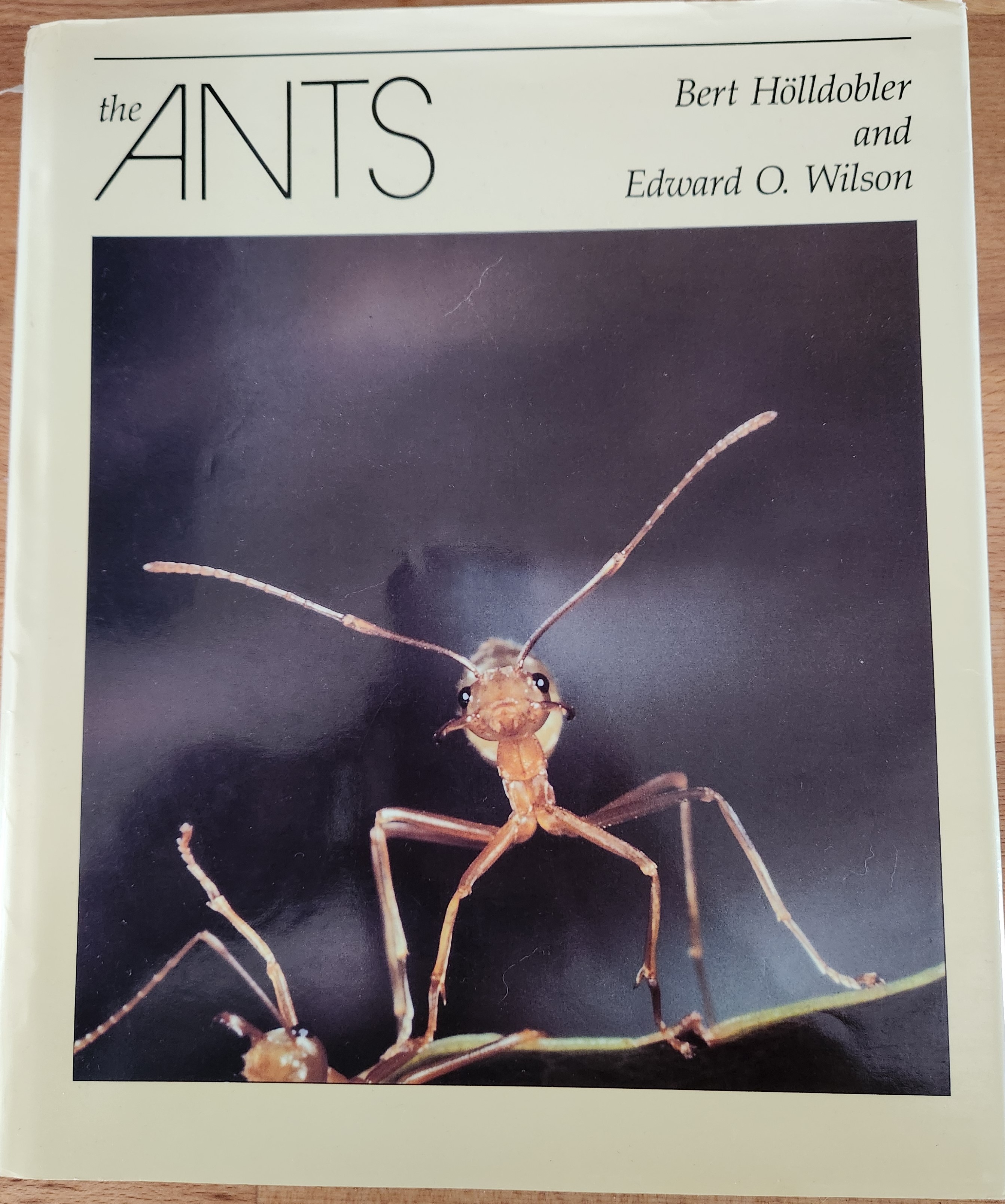
The Ants, by Bert Holldobler and Edward O. Wilson
As you can guess from the monolithic title, this is THE book about Ants, covering them comprehensively from their anatomy to their ecology. Despite the wide variety of topics, there is a throughline of focus on the sociality of ants which is unsurprising given E. O. Wilson’s personal interest in the subject*. Despite being comprehensive for its time (published in 1990), The Ants reads with a narrative flow and moves smoothly from one fascinating topic into the next. The dense information is conveyed in a very engaging fashion and illustrated with wonderful line drawings throughout. If you are seriously interested in ants, there is no equal to this tome.
*E. O. Wilson has written several books focused on the evolution of social behaviour in animals inspired by his studies of social insects, including Sociobiology, The Social Conquest of the Earth, and The Insect Societies. I can personally recommend The Insect Societies as an excellent introduction to the social insects. Despite being published almost over 50 years ago now (in 1971), the text is engaging and informative and serves as an excellent overview/introduction to the world of eusocial insects.
Things I learned: Weaver ants wage territorial wars across treetop empires, carpenter ants bring their aphid “cattle” inside for winter and then bring them back out to their host plants in Spring, honeypot ants have a “storage” caste which hangs from the ceiling of their nests as living larders and many many more fascinating insights into the incredibly diverse and complex world of ants.
Field Guide to the Ants of New England, by Aaron M. Ellison, Nicolas J. Gotelli, Elizabeth J. Farnsworth and Gary D. Alpert
This is the only pictorial field guide to ants that I’ve encountered and as such it is extremely valuable to me. I haven’t read through it, but have used the keys on the inside of the front and back covers to identify my ant photos to subfamily and then gone through the genus and species photos looking for a match. The layout and design is excellent, and the natural history notes are great as well. Although this is a guide to the ants of New England specifically, the ants of southern Ontario overlap with the ant fauna of New England to a great extent, making this an important field guide for ant enthusiasts in various regions across Eastern North America.
Things I learned: double-petiole ants are almost certainly part of the subfamily Myrmicinae in our area (northeastern North America).
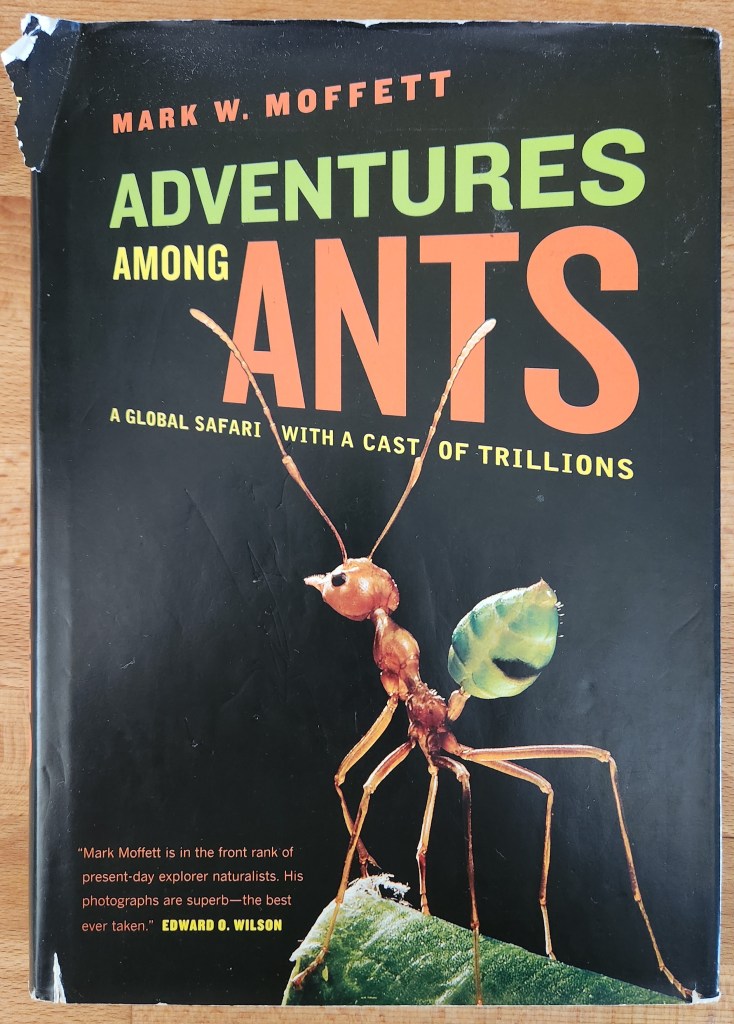
Adventures Among Ants, by Mark W. Moffett
If you’ve ever wondered what it’s like to explore tropical rainforests in search of ant empires, this is the book for you. The stories of fieldwork transport you to the fascinating ecosystems of the tropics and the incredible ants that can be found there. This book was a gateway book for me because it was semi-popular science and also fairly technical. The adventures of fieldwork and the bizarre adaptations of tropical ants combine to make this an exciting dive into myrmecology.
Things I learned: Weaver ants use their larvae as glue guns to sew leaves together in their arboreal nest construction, fire ants construct living rafts with their bodies in order for the colony to survive floods, marauder ants (Carebara diversa) have a 500-fold size difference between minor workers and major workers, such that the minor workers can ride comfortably atop the major’s head without causing a stir.
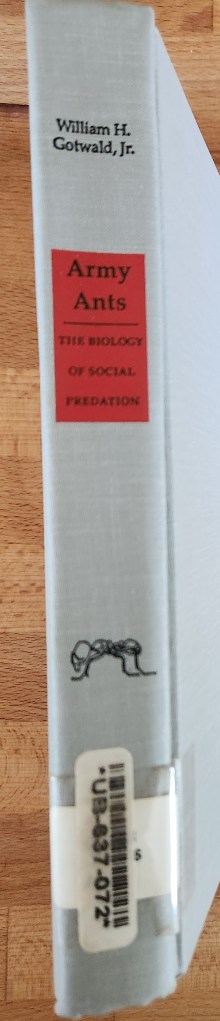
Army Ants: The Biology of Social Predation, by William H. Gotwald, Jr.
Who isn’t astounded by army ants? They are the ultimate super-organism, a group of tiny individuals acting as one large predator. From reading The Ants I was already introduced to these miniature soldiers and the concept of the “social stomach” where because ants share their food and resources among colony members you can think of them as having one stomach. In the army ants’ case you can also think of them as having “social mandibles”, tearing into prey in their path as a group and subduing surprisingly large prey items.
Things I learned: There are many different species of Army Ants, members of multiple subfamilies.
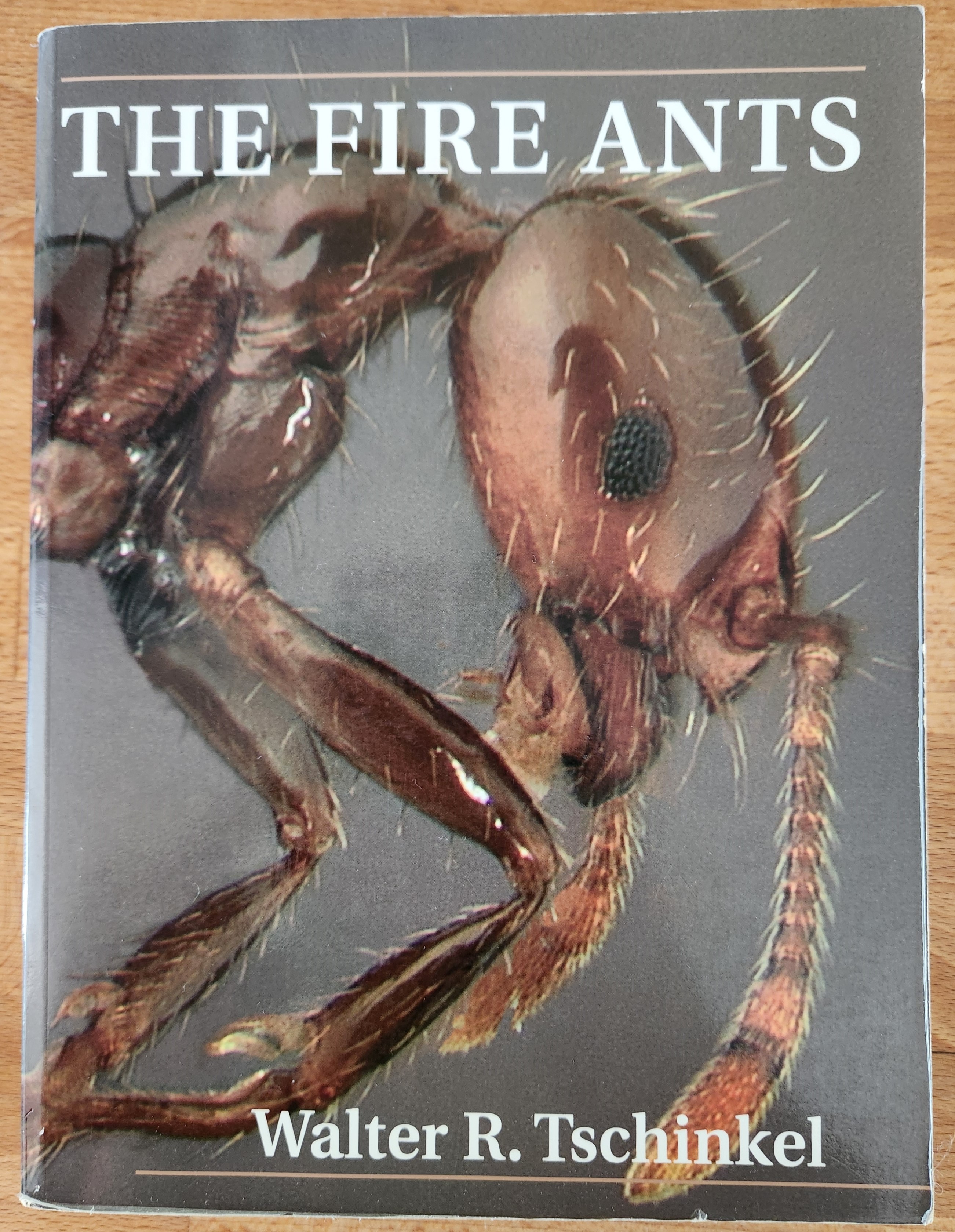
The Fire Ants, by Walter R. Tschinkel
Talk about a monograph. If reading a 600-page book about a single species of ant feels like a dream come true to you, then you are me. Surprisingly humorous and extremely insightful into the world of fire ants, this incredible book deals with some other ant species but is especially focused on the invasive fire ant Solenopsis invicta, which has spread across the southern half of the United States over the past half-century or so. Part case-study of an invasive species, part monograph on all biological aspects of said species, this excellent book also contains vignettes about the author’s work as an ant researcher (properly a myrmecologist) and many fascinating stories about fascinating ants.
Things I learned: fire ants have super complex colony founding, they can become super colonies or super territorial and it’s genetically determined. This discussion of fire ant genetics and alleles was actually the most well-written explanation of the genetic research and relevance that I’ve ever read (as in, I could understand and follow it, genetics is often a bit over my head with all of its complexity and biochemistry).
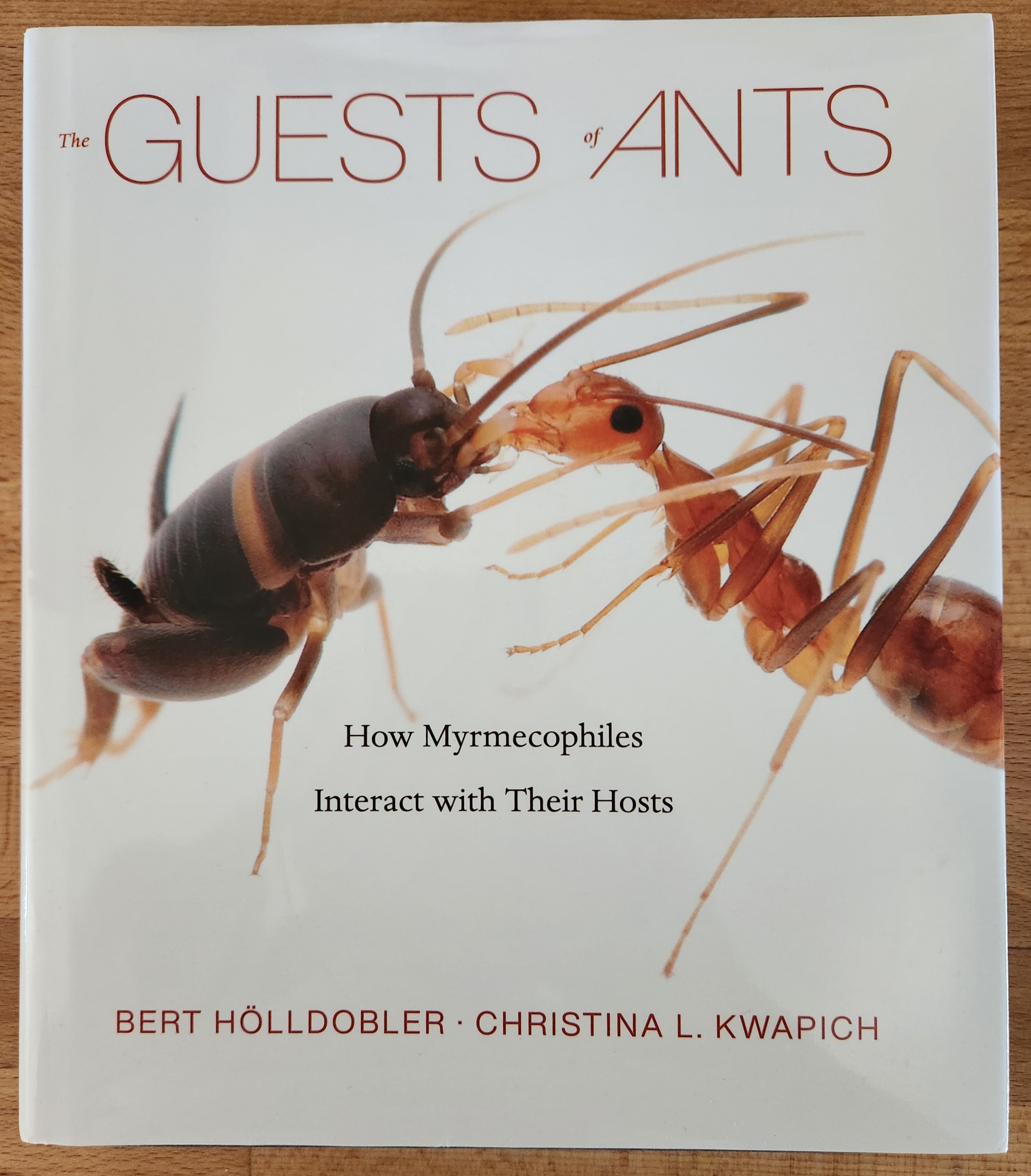
The Guests of Ants, by Bert Holldobler and Christina L. Kapwich
This is the most recent addition to my list of amazing ant books, published just a couple years ago in 2022. The images within are astounding, I found myself gasping as I turned pages to come across beautiful photographs of behaviour rarely seen. This tome is focused on the adaptations and behaviour of “Myrmecophiles”. It’s hard to define myrmecophile* because the interactions range from parasitic organisms dependent on killing their hosts (ant-decapitating phorid flies for instance) to beetles that appease their ant hosts with nectar secretions in exchange for a safe stay within an ant nest. So much is unknown about these complex interspecific interactions and the mysteries unfold in incredible stories throughout this book, leaving me wanting a sequel.
*the word means “ant-lover” which I guess could apply to me? Am I a myrmecophile of sorts? Are you?
Things I learned: Some mites ride on ants’ heads or feet, some spiders are ‘transformational mimics’ of ants: meaning that they resemble different ant species at each successive moult, there is a subfamily of crickets (featured on the cover!) which depend on ants, one species lives exclusively on Yellow Crazy Ant liquid food exchange, there are even frogs which live inside ant nests by chemically masking themselves.
I’m sure there are more excellent books about ants out there (I can actually think of a few more myself…) but these are my top favourites from the ones I’ve read. Do you have any recommendations? Let me know! I’m always up for a good book recommendation about one of my favourite animal groups.
After the Swallows, the most abundant and frequently encountered birds that I photographed on my recent Point Pelee trip were the New World Blackbirds (Icteridae). Unlike the swallows, I have seen and photographed all 3 of the Icterids I saw on this trip in my own backyard in Simcoe. There are 105 species of Icterids worldwide that range across North, Central and South America (Elphick 2019), so as always the species I encountered are the tip of this bird family’s iceberg.
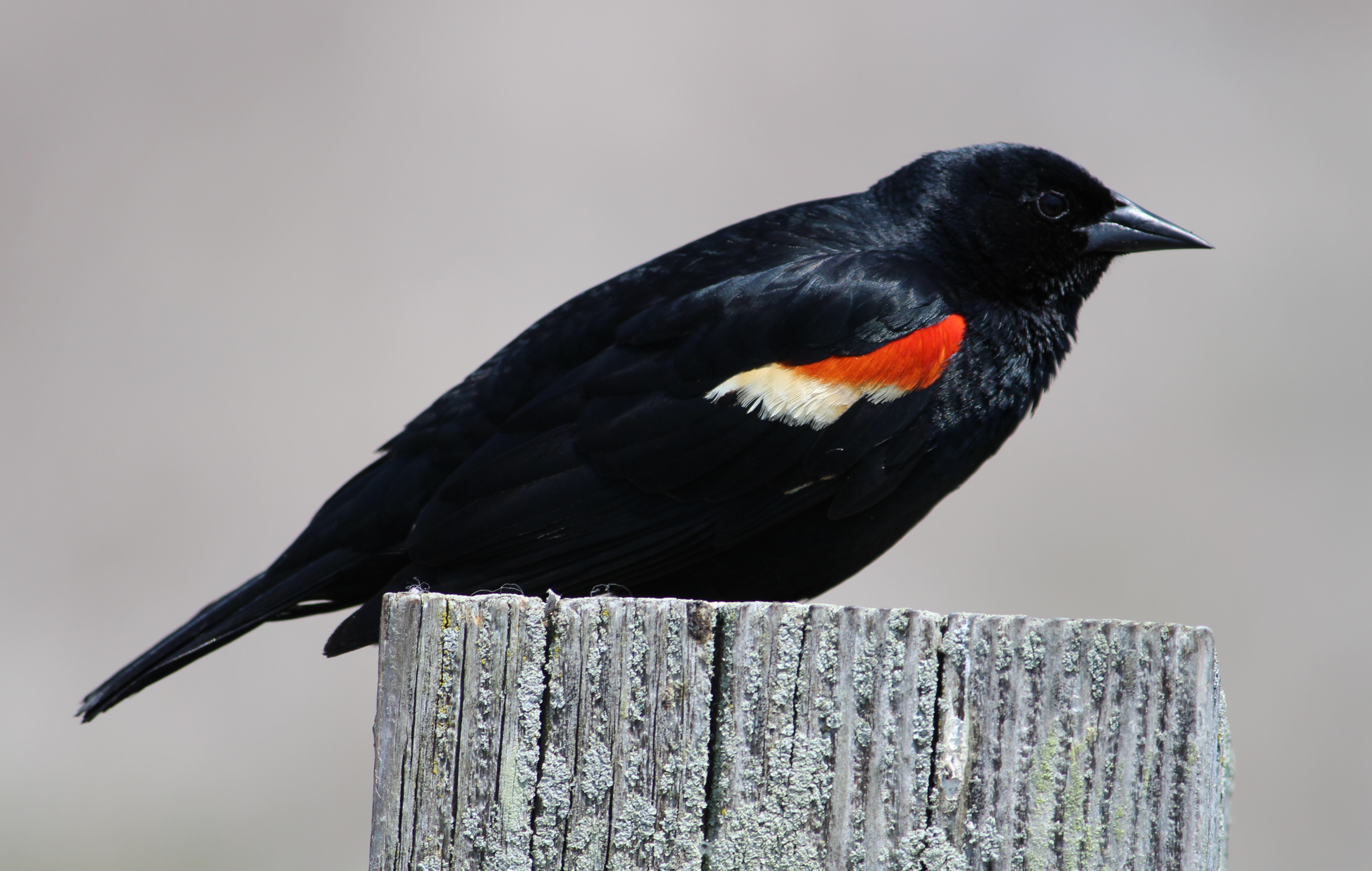
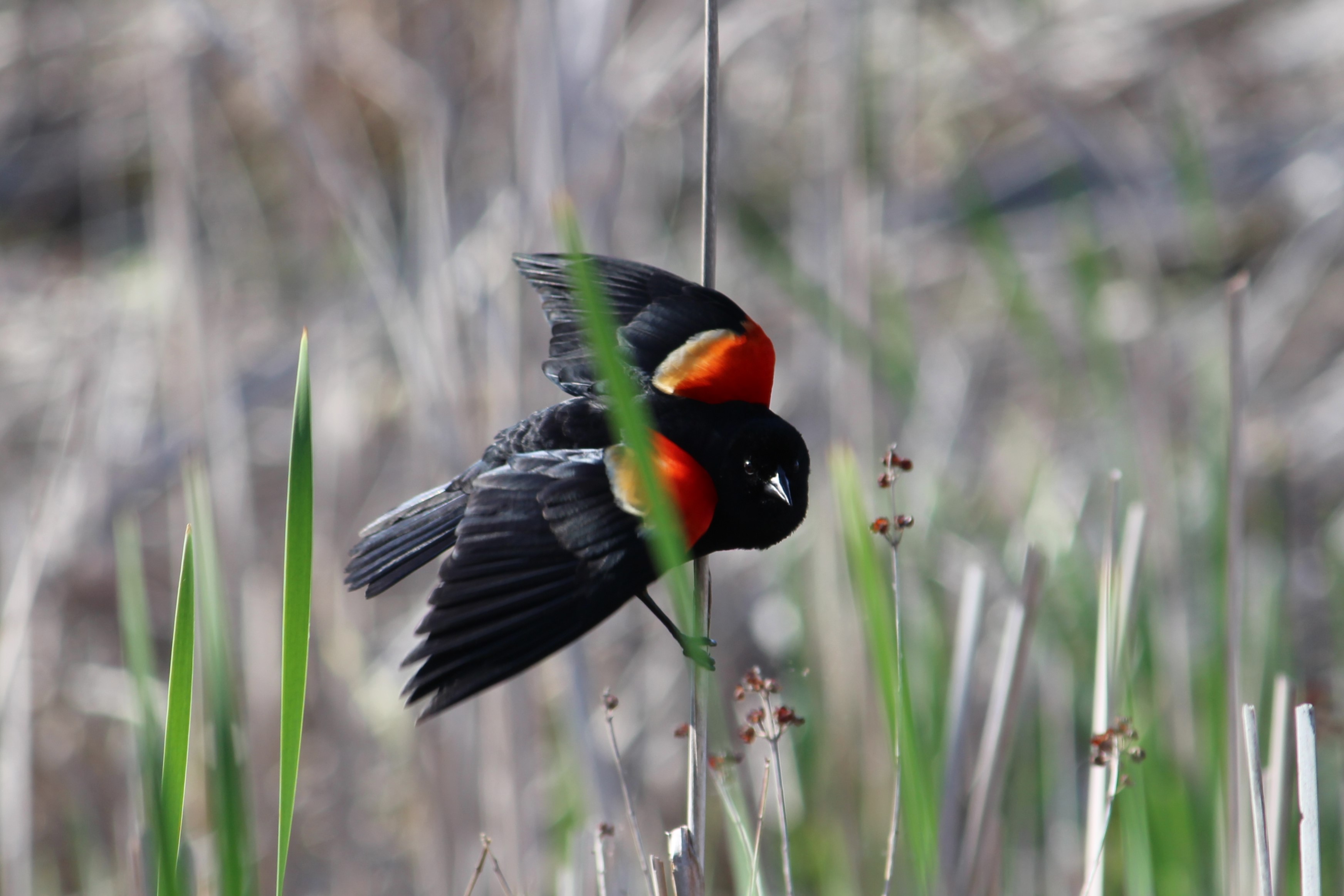
Red-winged Blackbird (Agelaius phoeniceus):
Not only are Red-winged Blackbirds abundant, they are also very noticeable thanks to their loud and frequent “Oh-ka-leeee!” calls and territorial behaviour. Males arrive earlier in the Spring to secure territories, and females arrive to survey the prospective male mates. Female Red-wings look strikingly different (we’ll see clear sexual dimorphism again with another species below), and it’s likely because the male and female blackbirds are under very different pressures from their very different behaviours. Besides being distinctly patterned, male and female Red-wings are also very different sizes, males being much larger. These differences are likely the result of the Red-winged Blackbird mating system, where male Red-wings fight and signal among themselves to establish territories and female Red-wings choose the male to join, but as always in biology, establishing the data is very difficult and there isn’t an easy answer. I’ve been reading The Red-Winged Blackbird by Les Beletsky and it’s fascinating how much research has been done on this widespread species, and yet even still there are so many mysteries about its behaviour and biology (Beletsky 1996).
According to the ROM Field Guide to Birds of Ontario (Hughes 2001), Red-winged Blackbirds are year-round residents along the north shores of Lake Erie, but I believe they become less noticeable outside of the summer breeding season because they are no longer calling and pronouncing territories.
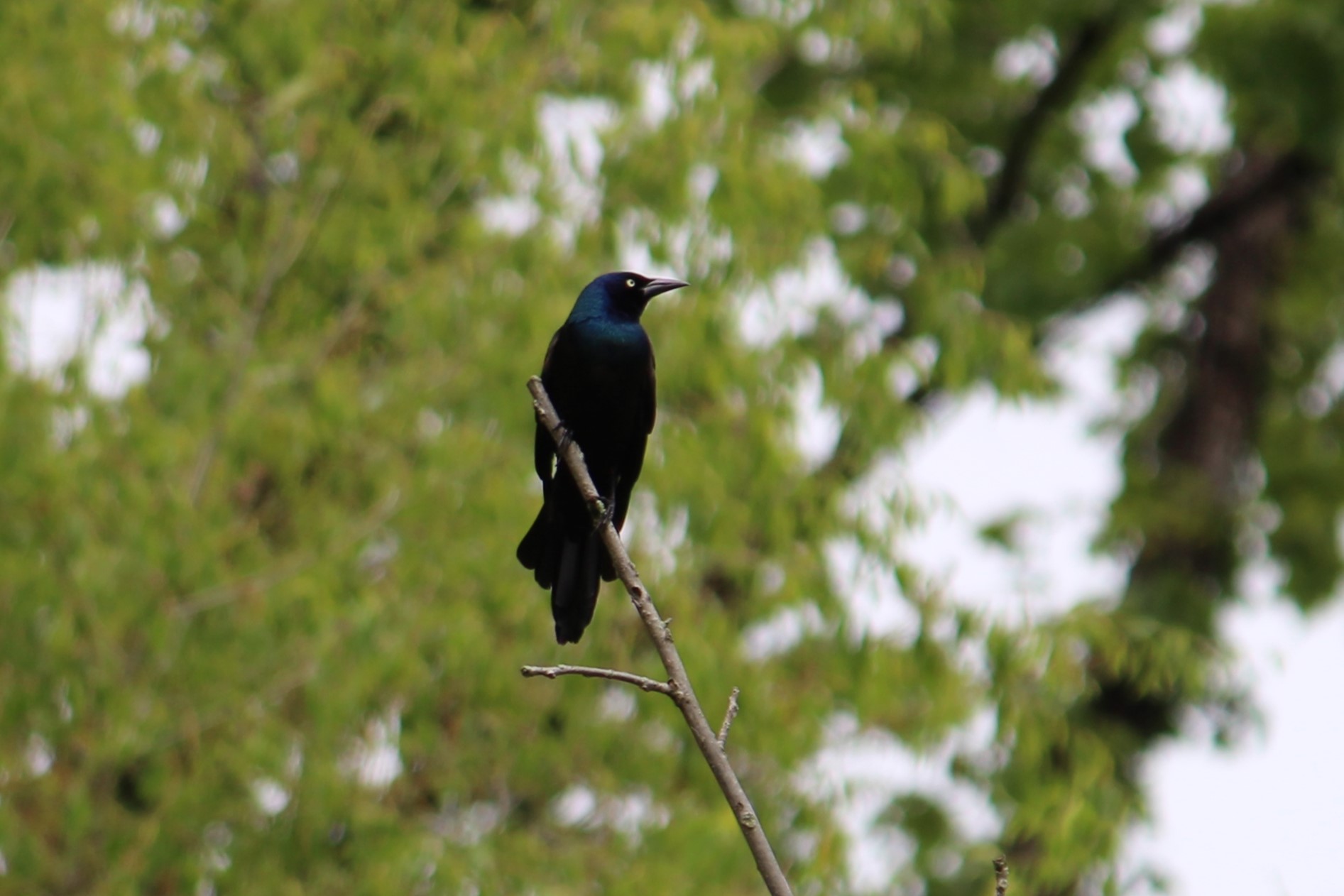
Common Grackle (Quiscalus quiscula):
Common Grackles are a familiar sight and sound to many people. Like Red-winged Blackbirds, their call is harsh, metallic, and frequent. Grackles are year-round residents of Southern Ontario, feeding in grain fields during fall and winter (Bezener 2016). Apparently their diet is quite varied overall, as demonstrated in a list of food items from the National Audubon Society Field Guid to North American Birds: “insects, crayfish, frogs, mice, nestling birds, and eggs as well as grains and wild fruits” (Bull and Farrand 1994).
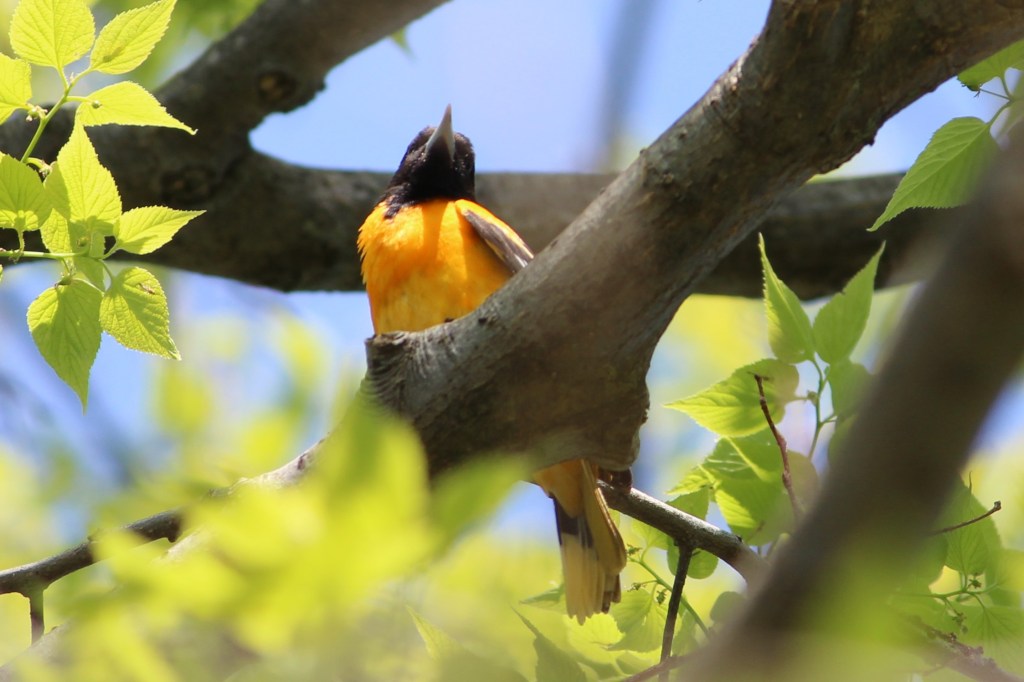
Baltimore Oriole (Icterus galbula):
Orioles are a beautiful and welcome Spring migrant here in Southern Ontario. Of all the backyard birds that I have seen and photographed, Baltimore Orioles* seem to bring the Tropics north with them. Their brilliant colours, sharp and clear song, and fruit-seeking behaviour all seem to show how at-home they would be among the tropical rainforests they live in for half the year. Every year, I await the return of these beautiful birds to my backyard where they scoop up grape jelly in their long and thin beaks.
*Baltimore Orioles are named after the coat-of-arms of Cecil, the 2nd Baron Baltimore, who owned the state (then colony) of Maryland for a time (his coat-of-arms is featured on the Maryland flag). The heraldry is orange-and-black just like the plumage of the male Baltimore Oriole. “Oriole” likely comes from the Latin word for “golden” also in reference to the rich colours of these wonderful birds. The name Oriole was originally applied to a family of birds in Europe and Asia but was later used for some bright members of the New World Blackbird family (Icteridae). New World Blackbirds are named “Blackbirds” because the darkly coloured members of the group reminded Europeans of the Blackbirds (Turdus merula) back home, which are Thrushes (Turdidae). The Family name Icteridae comes from another colour reference, this time referring to the yellow-feathered members of this group (such as female Baltimore Orioles), ikteros is a Greek word for ‘yellow bird’ (Elphick 2019). Aren’t names fun?
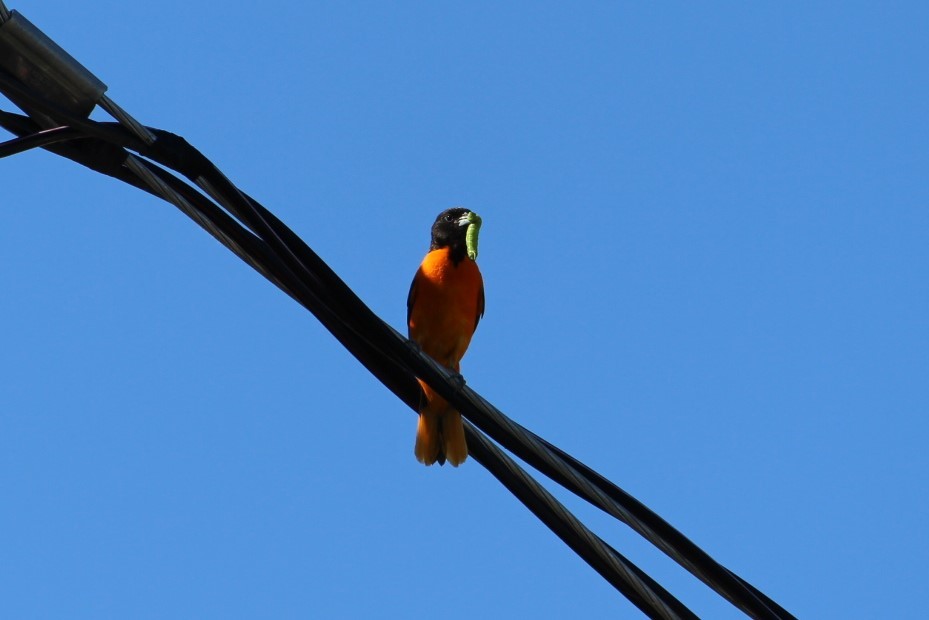
As with many fruit-eating birds (and for that matter, flower-drinking wasps), the adults can subsist on sugary foods but the young require protein and feed on insect prey brought to the nests by the parent birds. This is a male Baltimore Oriole with a large caterpillar in its beak. This photo was taken in my front yard in June 2020, the year Orioles were nesting in my birch tree.
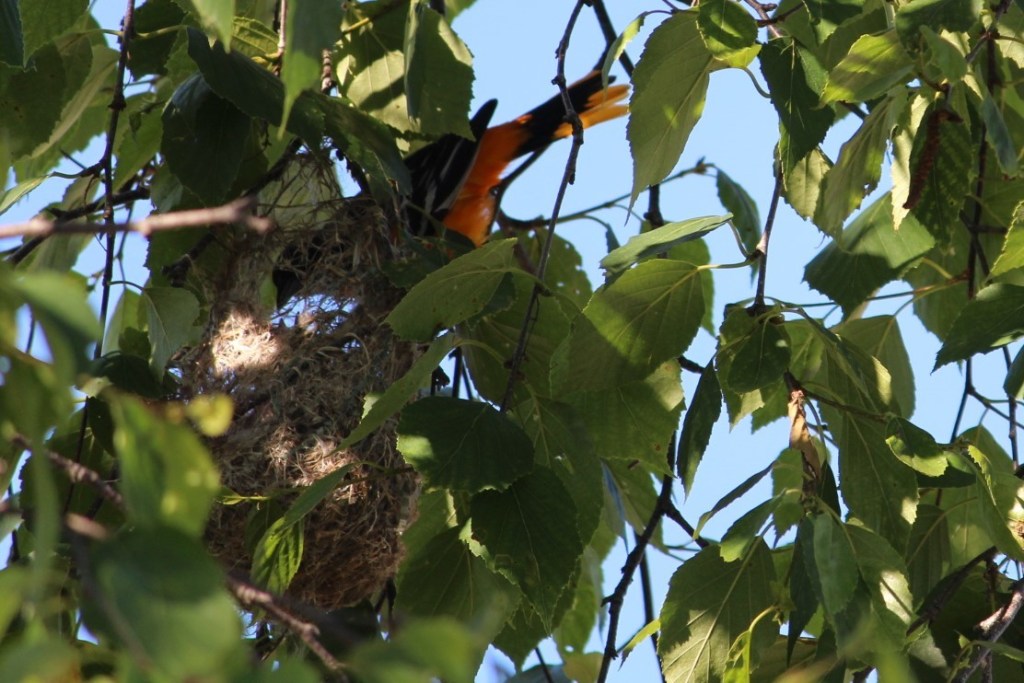
Here is the male Oriole delivering his caterpillar prey to his nestlings.
Baltimore Orioles fly all the way from South America (some winter as far north as Mexico) to my backyard in Southern Ontario, and they never cease to delight me with their song and bright colours.
That’s 2 Bird Families observed on my Point Pelee trip down! Only 20 or so more to go!
References:
Beletsky, Les. 1996. The Red-winged Blackbird: The Biology of a Strongly Polygynous Songbird. Academic Press.
Bezener, Andy. 2016. Birds of Ontario, New Edition. Lone Pine Publishing.
Bull, John, and Farrand, John Jr., 1994. Field Guide to North American Birds: Eastern Region. Chanticleer Press.
Elphick, Jonathan. 2019. The Handbook of Bird Families. Firefly Books.
I took a weekend trip to Point Pelee area, renowned for birding and I was amazed at the abundant and diverse birdlife passing through or permanently residing. There were quite a few non-bird surprises along the way and I’ll discuss them as well. I think for this adventure, I’m going to break it up into discussions by species rather than a more chronological approach I’ve used before for nature encounters on a trip. So we’re going to move through the Avian tree of life, family-by-family because not only did I encounter and photograph many different species of birds but I was surprised to find that most of them come from different bird families, representing a diversity of form and behavior.
We’re going to begin with the bird family I encountered first and most frequently throughout the trip: the Swallows (Hirundinidae). These acrobatic aeronauts were abundant wherever spaces were made available for them to construct their nests. I saw 3 different species of Swallows, of the 84 species worldwide (Elphick 2019).
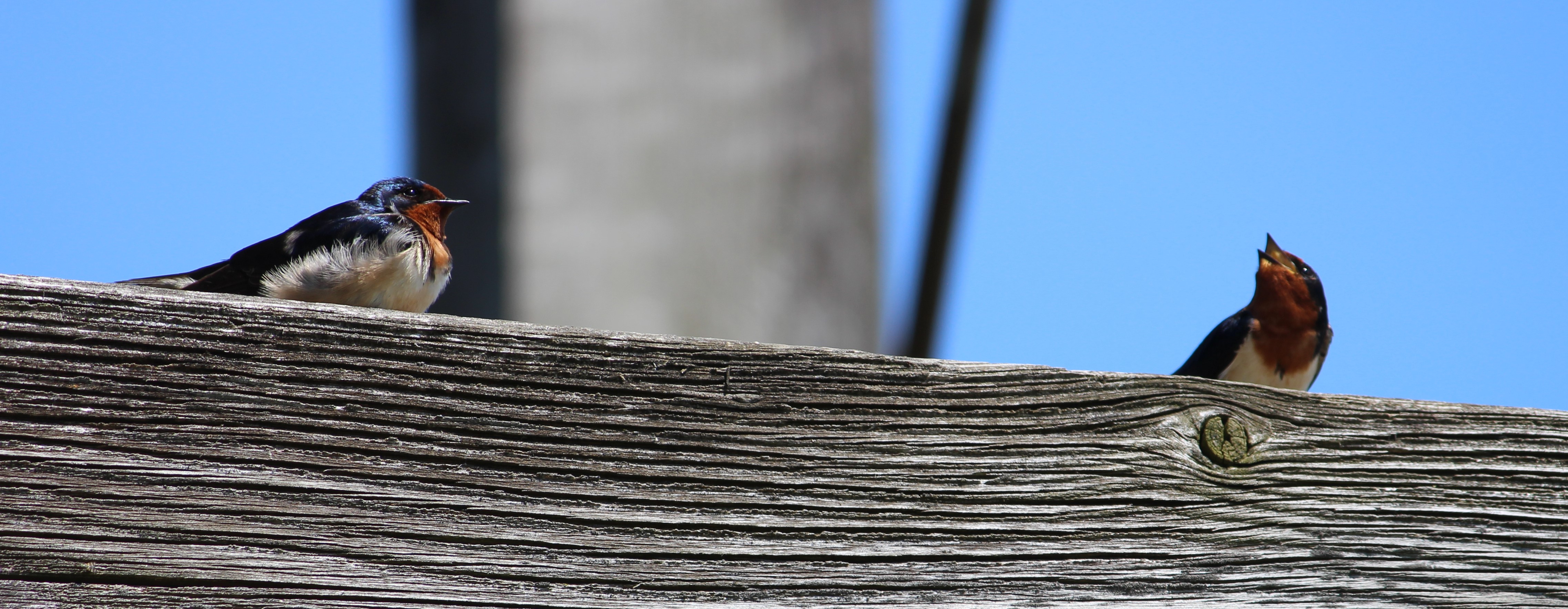
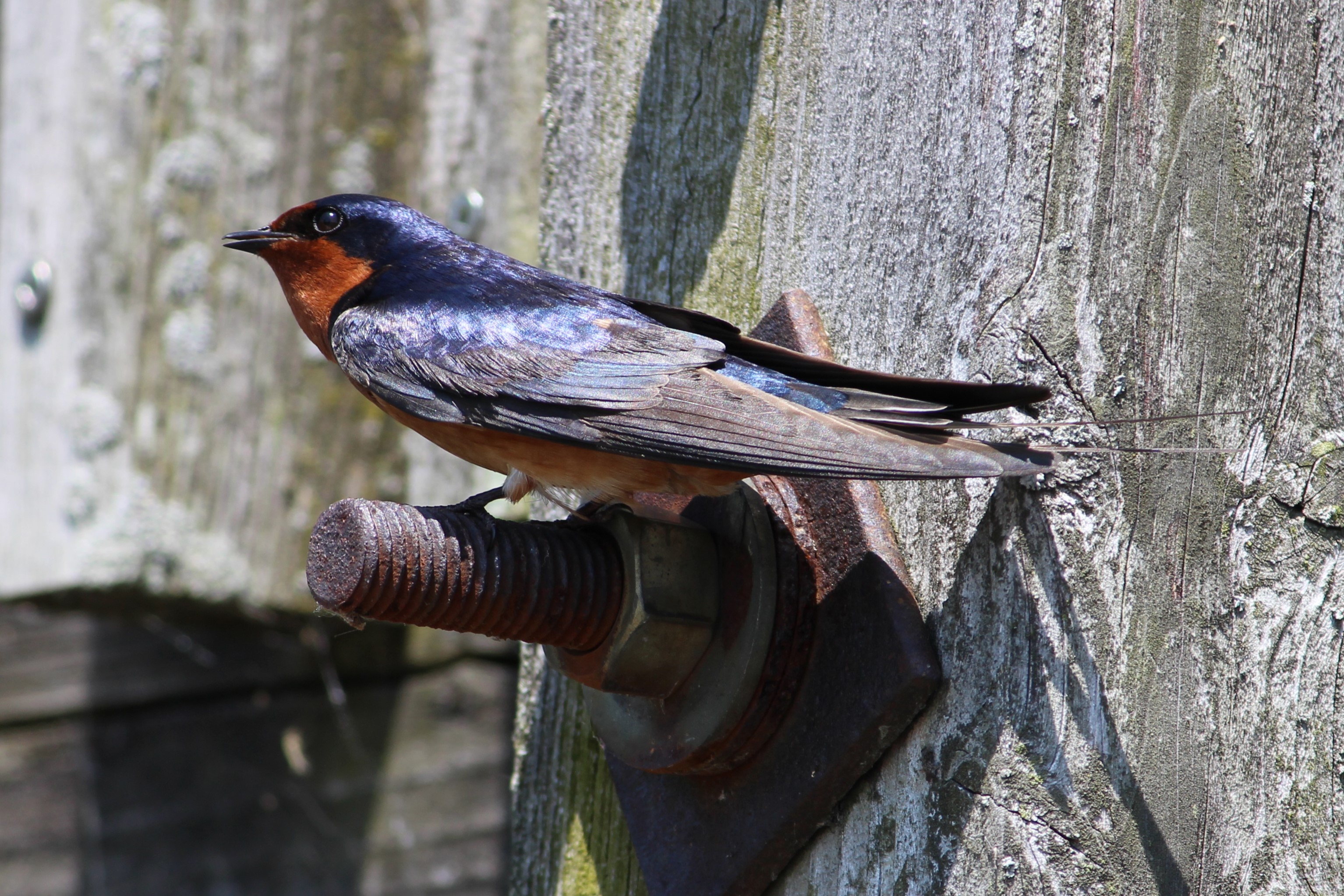
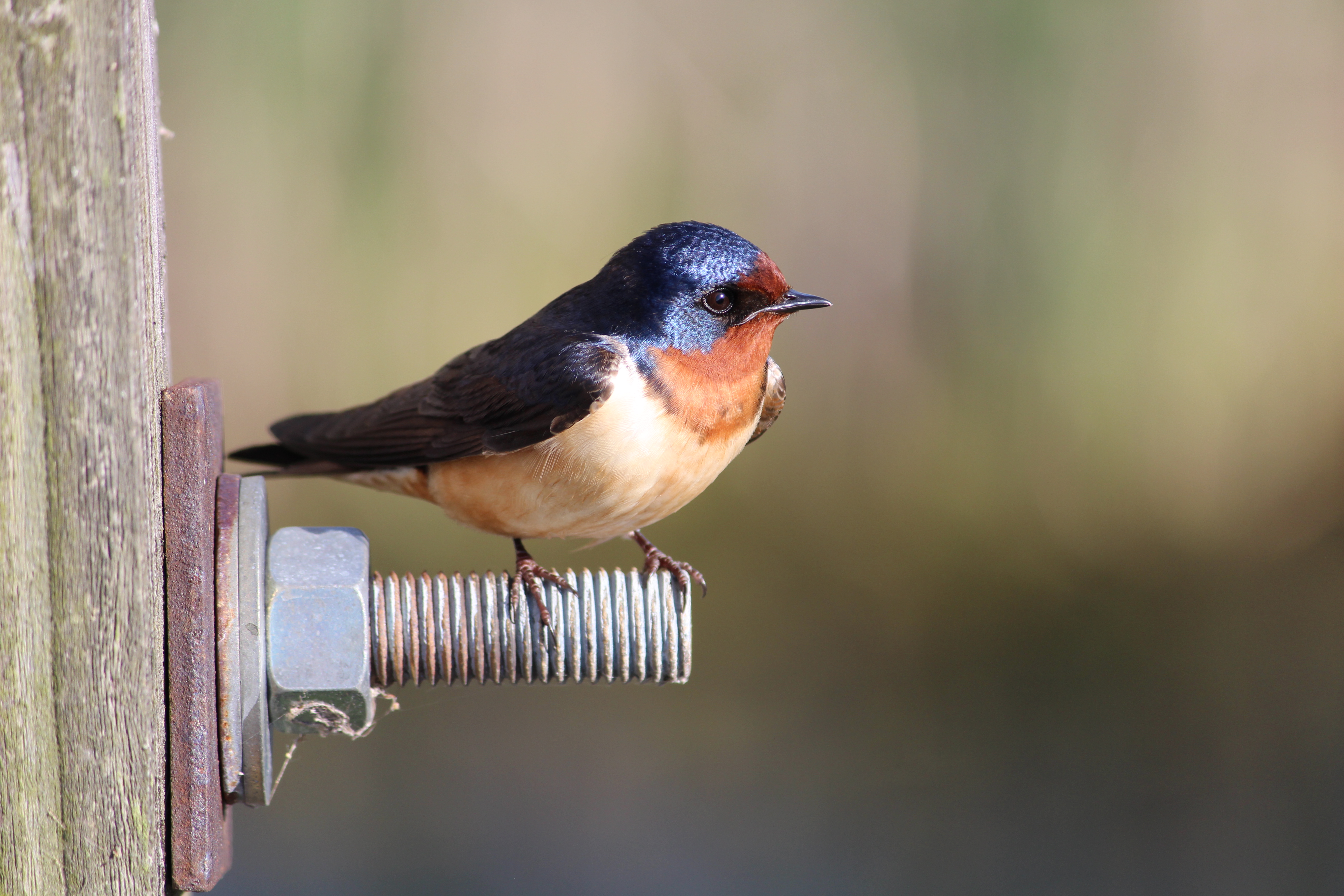
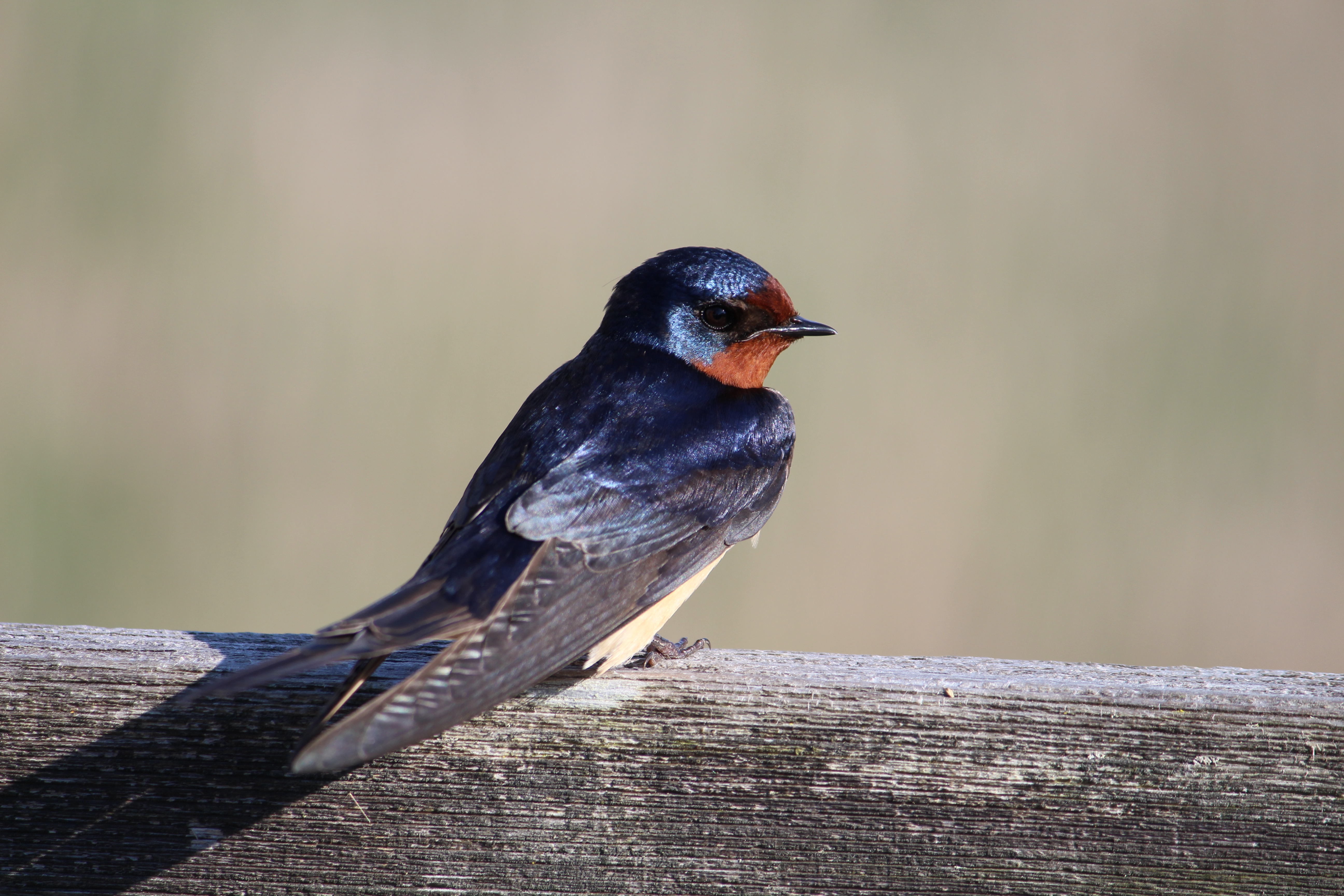
Barn Swallow (Hirundo rustica):
Barn Swallows on a lookout tower in Point Pelee National Park.
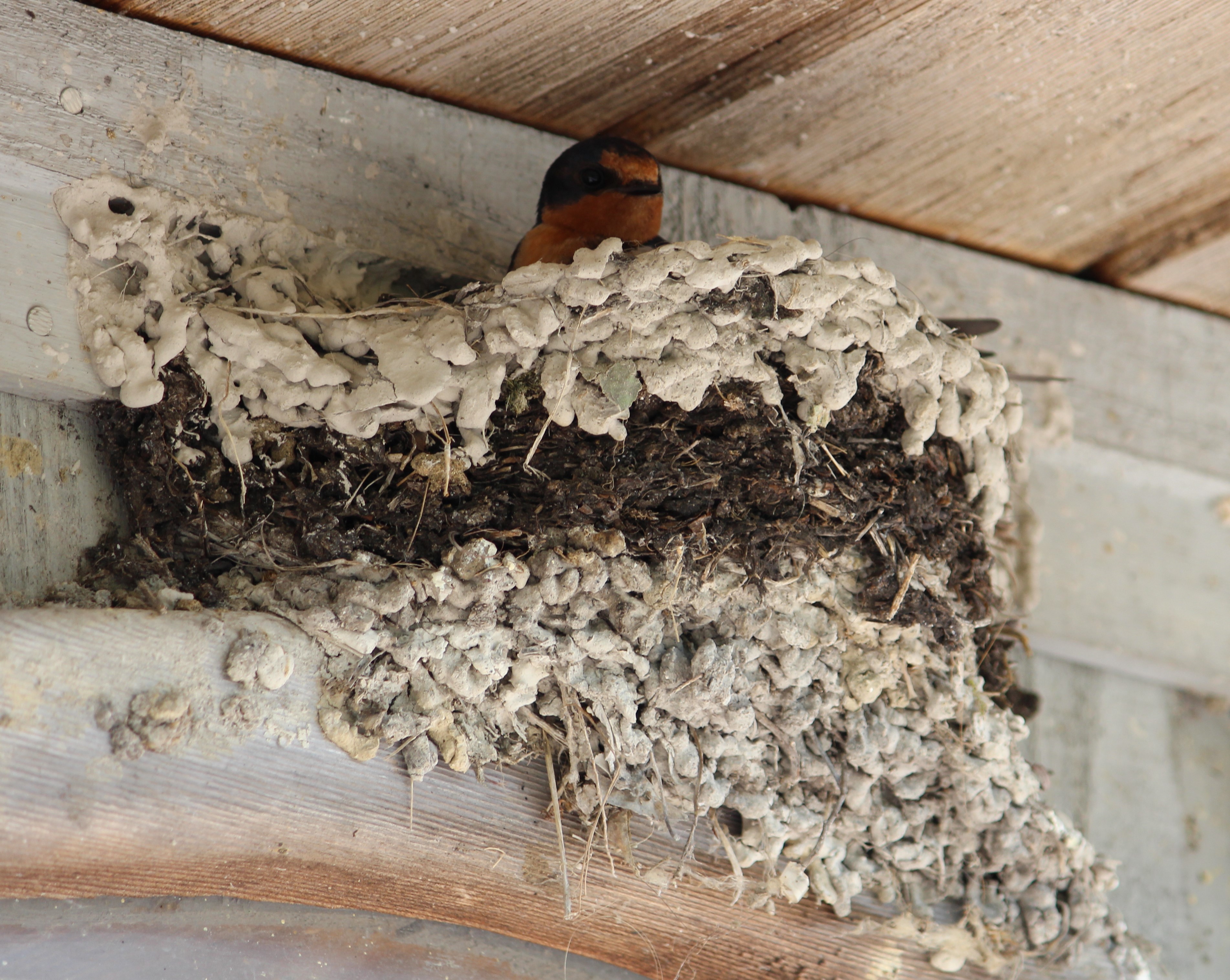
Most semi-enclosed overhangs were populated by the mud nests of Barn Swallows. These beautifully patterned and colourful birds swooped in and out of their nest locations, snatching insects from the air, skimming shockingly close to a water surface for a drink, or gathering mud to bolster their constructions. The chattering darts of Barn Swallows gave a frenetic energy to the buildings within Point Pelee National Park, some passing close enough to startle you. Never once did one dive at my head, like the divebombing behaviour I had experienced at the claws of a Red-winged Blackbird in Long Point. There were so many energetic birds coming and going, creating the impression of small, busy cities of mud.
Barn Swallow in a mud nest mixed with grass fibers.
Cliff Swallow (Petrochelidon pyrrhonota):
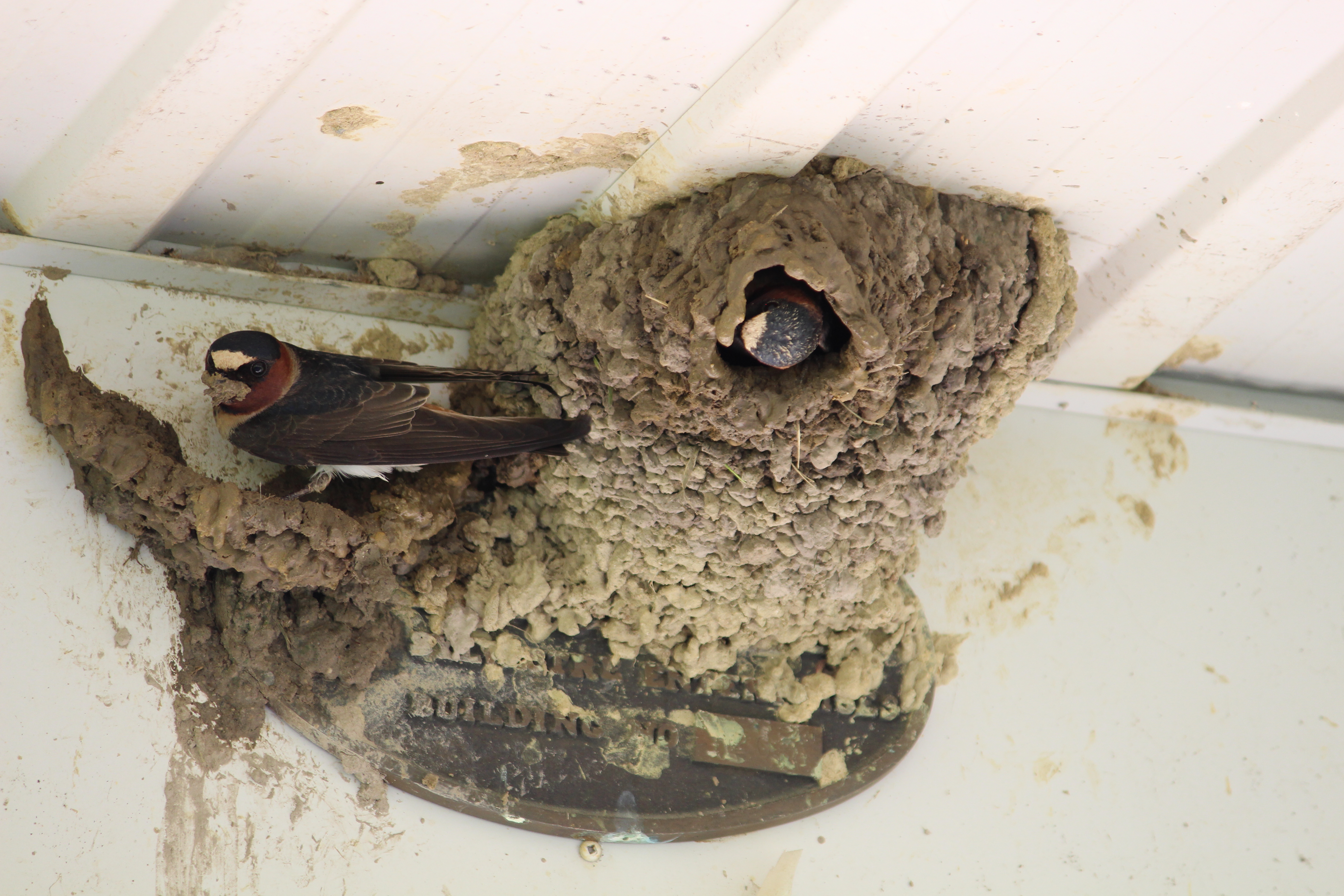
Cliff Swallows, one inside their nest applying mud, the other adding mud to a budding nest, supported partly by its neighbours’.
Cliff Swallows appear very similar to Barn Swallows in their nest construction, location and their physical appearance. Cliff Swallow nests are similar mud nests, but have a downward facing entrance rather than an open bowl like the Barn Swallow nest. Cliff Swallows will occasionally use the remains of Barn Swallow nests as a beginning point for their own constructions (del Hoyo et. al. 2004). Like all the swallows I saw, and all Hirundinids in Ontario, these birds arrive in Spring, breed and then depart in the Fall. As Swallows are dependent on insects (especially flying insects) for food, they can’t stay within northern areas during the winter when insects rarely if ever fly and most are hidden away and dormant.
Tree Swallow (Tachycineta bicolor):
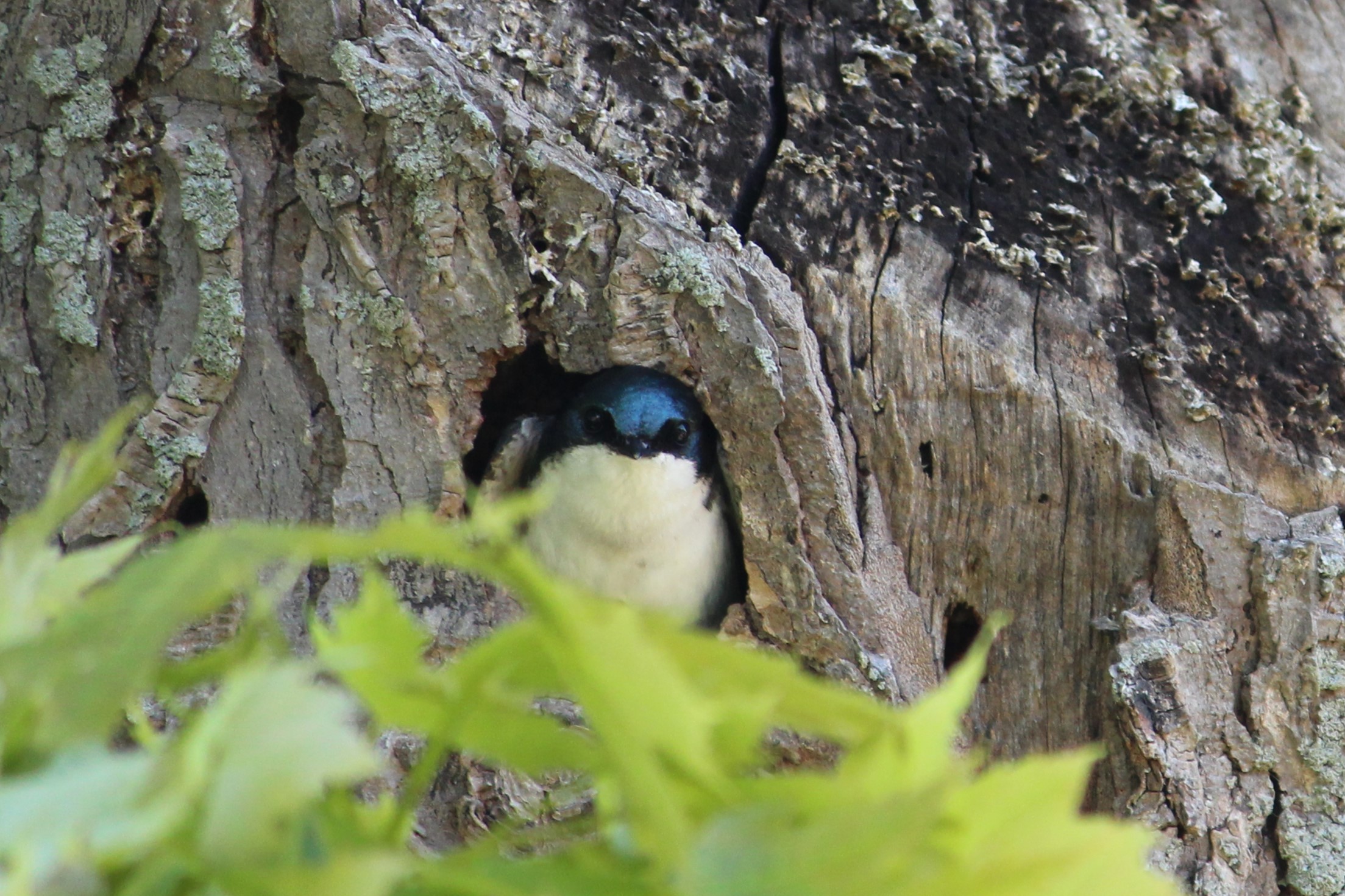
Tree Swallow peeking out of its home.
Contrasting sharply with the other two swallow species observed, the Tree Swallow does very little in the way of nest construction. Tree Swallows nest in tree holes but they do not make the holes, and they will readily nest in human-made nestboxes or other artificial cavities as well (del Hoyo et. al. 2004). They will add some nesting material to the tree hole, but this preparation pales in comparison to the mud constructions of the Barn and Cliff Swallows.
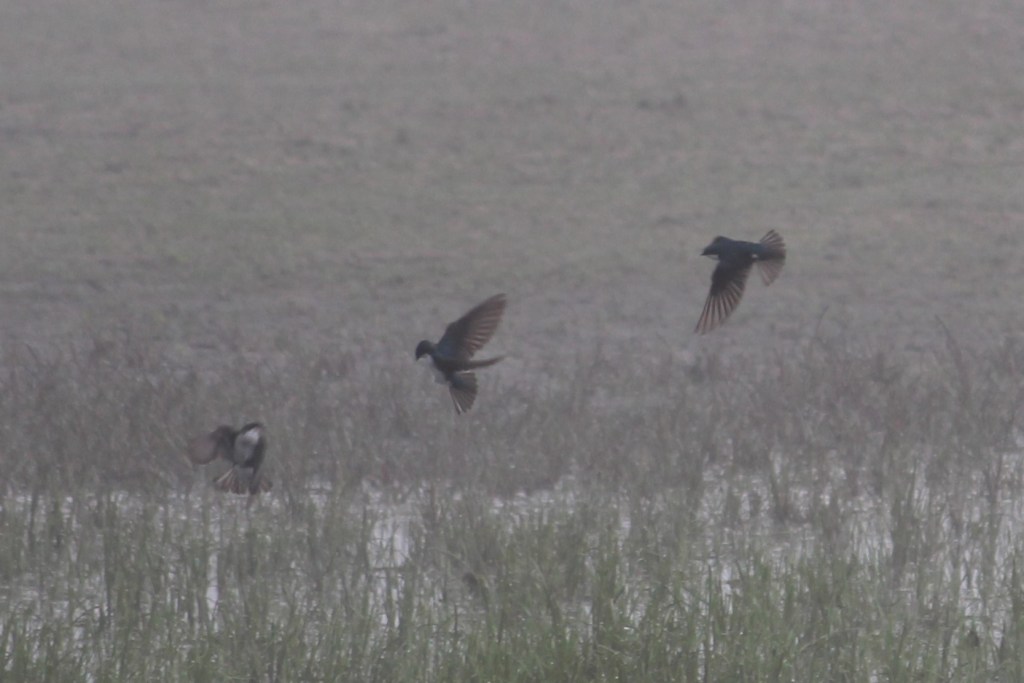
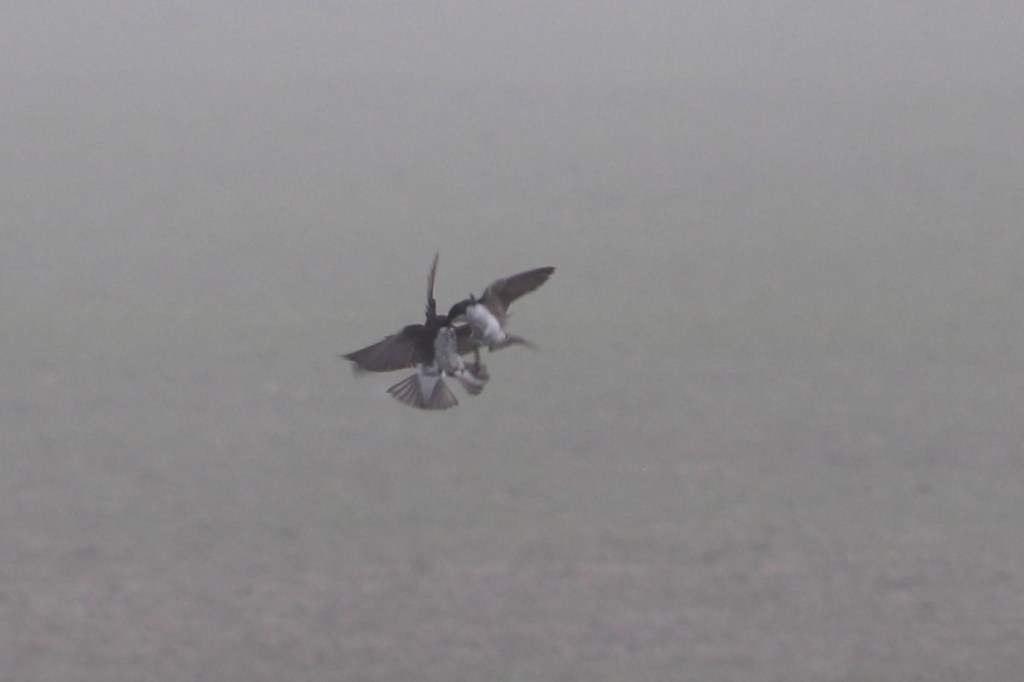
Tree Swallows having some sort of aerial battle in the Hillman Marsh Conservation Area, Essex County.
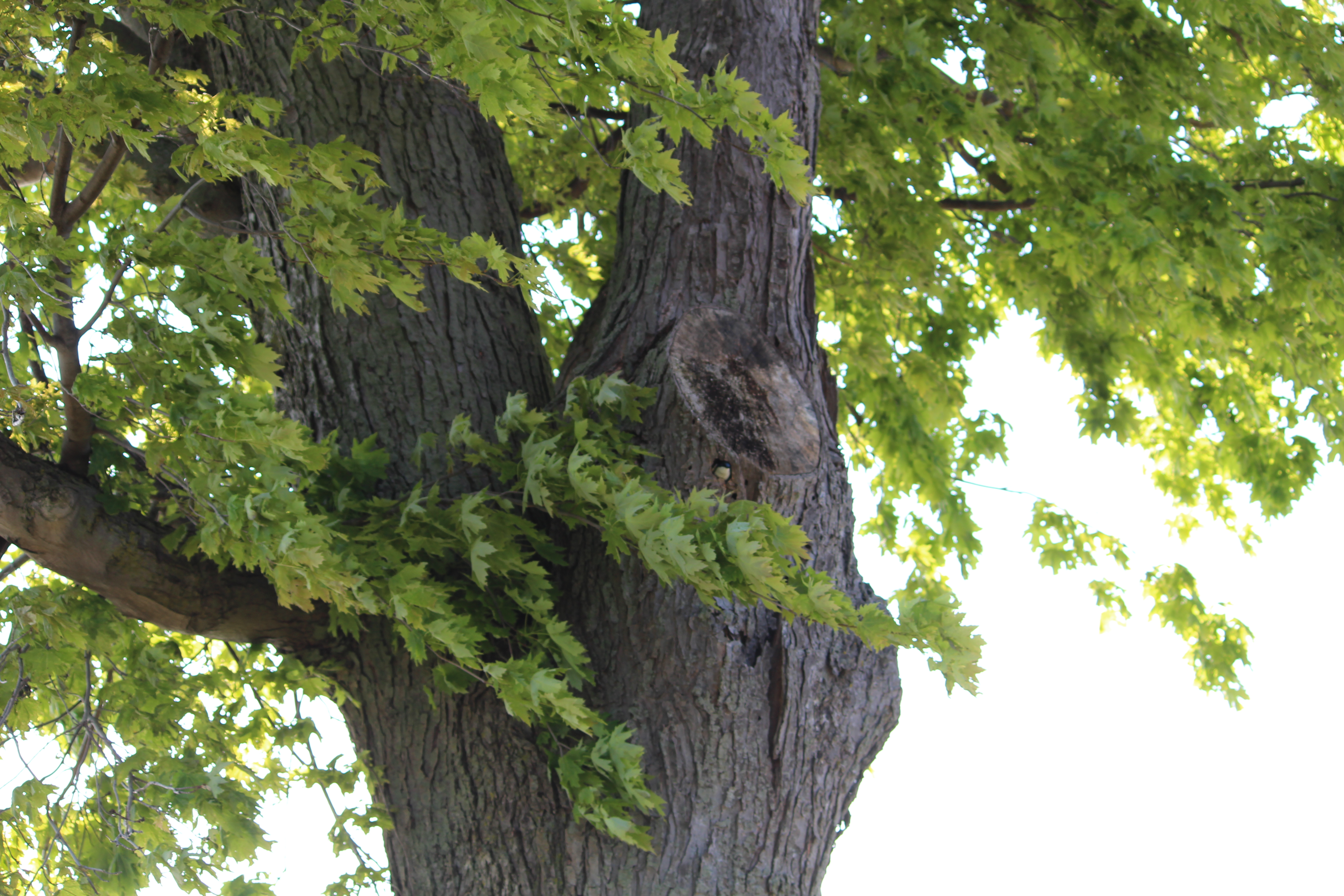
I was excited to discover a Tree Swallow was staying on the property where I was staying for this eventful birding weekend. Throughout my stay, I would occasionally check on the treehole where I had seen the inquisitive face staring out at me. Sometimes the beak would be open, chittering away, sometimes the bird would cock its head to the side as if examining the world outside its snug abode, and other times there would be no face filling the cavity, only a dark entrance to a hidden nest.
Some perspective on the tiny Tree Swallow’s treehole.
Swallows are incredible birds, and only one of the many bird families observed on my recent trip. Check in next time for another abundant and noisy bird family.
References:
del Hoyo J., Elliott A., & Christie D. A. eds. 2004. Handbook of the Birds of the World Vol. 9: Cotingas to Pipits and Wagtails. Lynx Edicions.
Elphick, Jonathan. 2019. The Handbook of Bird Families. Firefly Books.

















 Norfolk Naturalist