I love ants. If you’ve read some of my blogposts or know me personally you already know this. My admiration and appreciation for these animals was built in large part by reading well-written and informative books about ants. I want to take a mini tour through my bookshelf to describe, introduce, and recommend my favourite books about ants.
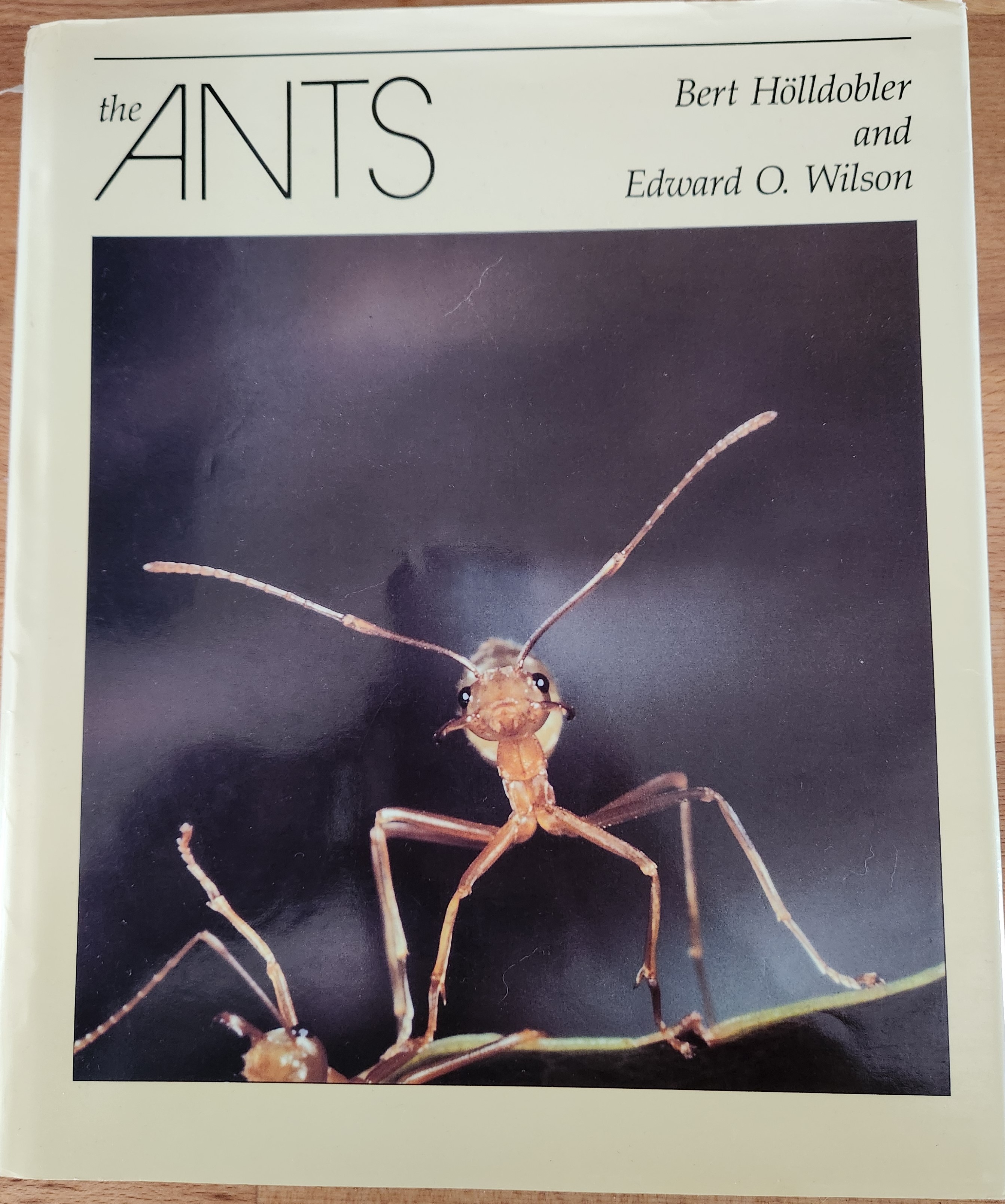
The Ants, by Bert Holldobler and Edward O. Wilson
As you can guess from the monolithic title, this is THE book about Ants, covering them comprehensively from their anatomy to their ecology. Despite the wide variety of topics, there is a throughline of focus on the sociality of ants which is unsurprising given E. O. Wilson’s personal interest in the subject*. Despite being comprehensive for its time (published in 1990), The Ants reads with a narrative flow and moves smoothly from one fascinating topic into the next. The dense information is conveyed in a very engaging fashion and illustrated with wonderful line drawings throughout. If you are seriously interested in ants, there is no equal to this tome.
*E. O. Wilson has written several books focused on the evolution of social behaviour in animals inspired by his studies of social insects, including Sociobiology, The Social Conquest of the Earth, and The Insect Societies. I can personally recommend The Insect Societies as an excellent introduction to the social insects. Despite being published almost over 50 years ago now (in 1971), the text is engaging and informative and serves as an excellent overview/introduction to the world of eusocial insects.
Things I learned: Weaver ants wage territorial wars across treetop empires, carpenter ants bring their aphid “cattle” inside for winter and then bring them back out to their host plants in Spring, honeypot ants have a “storage” caste which hangs from the ceiling of their nests as living larders and many many more fascinating insights into the incredibly diverse and complex world of ants.
Field Guide to the Ants of New England, by Aaron M. Ellison, Nicolas J. Gotelli, Elizabeth J. Farnsworth and Gary D. Alpert
This is the only pictorial field guide to ants that I’ve encountered and as such it is extremely valuable to me. I haven’t read through it, but have used the keys on the inside of the front and back covers to identify my ant photos to subfamily and then gone through the genus and species photos looking for a match. The layout and design is excellent, and the natural history notes are great as well. Although this is a guide to the ants of New England specifically, the ants of southern Ontario overlap with the ant fauna of New England to a great extent, making this an important field guide for ant enthusiasts in various regions across Eastern North America.
Things I learned: double-petiole ants are almost certainly part of the subfamily Myrmicinae in our area (northeastern North America).
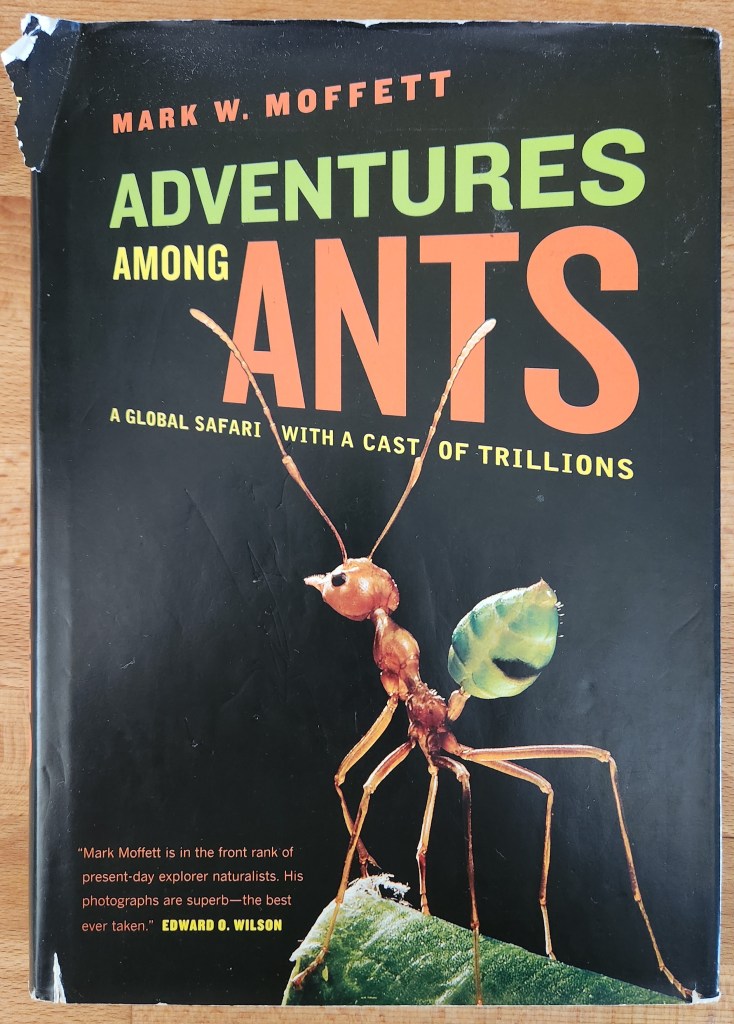
Adventures Among Ants, by Mark W. Moffett
If you’ve ever wondered what it’s like to explore tropical rainforests in search of ant empires, this is the book for you. The stories of fieldwork transport you to the fascinating ecosystems of the tropics and the incredible ants that can be found there. This book was a gateway book for me because it was semi-popular science and also fairly technical. The adventures of fieldwork and the bizarre adaptations of tropical ants combine to make this an exciting dive into myrmecology.
Things I learned: Weaver ants use their larvae as glue guns to sew leaves together in their arboreal nest construction, fire ants construct living rafts with their bodies in order for the colony to survive floods, marauder ants (Carebara diversa) have a 500-fold size difference between minor workers and major workers, such that the minor workers can ride comfortably atop the major’s head without causing a stir.
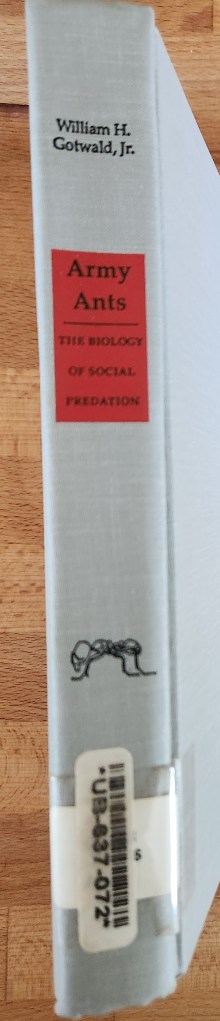
Army Ants: The Biology of Social Predation, by William H. Gotwald, Jr.
Who isn’t astounded by army ants? They are the ultimate super-organism, a group of tiny individuals acting as one large predator. From reading The Ants I was already introduced to these miniature soldiers and the concept of the “social stomach” where because ants share their food and resources among colony members you can think of them as having one stomach. In the army ants’ case you can also think of them as having “social mandibles”, tearing into prey in their path as a group and subduing surprisingly large prey items.
Things I learned: There are many different species of Army Ants, members of multiple subfamilies.
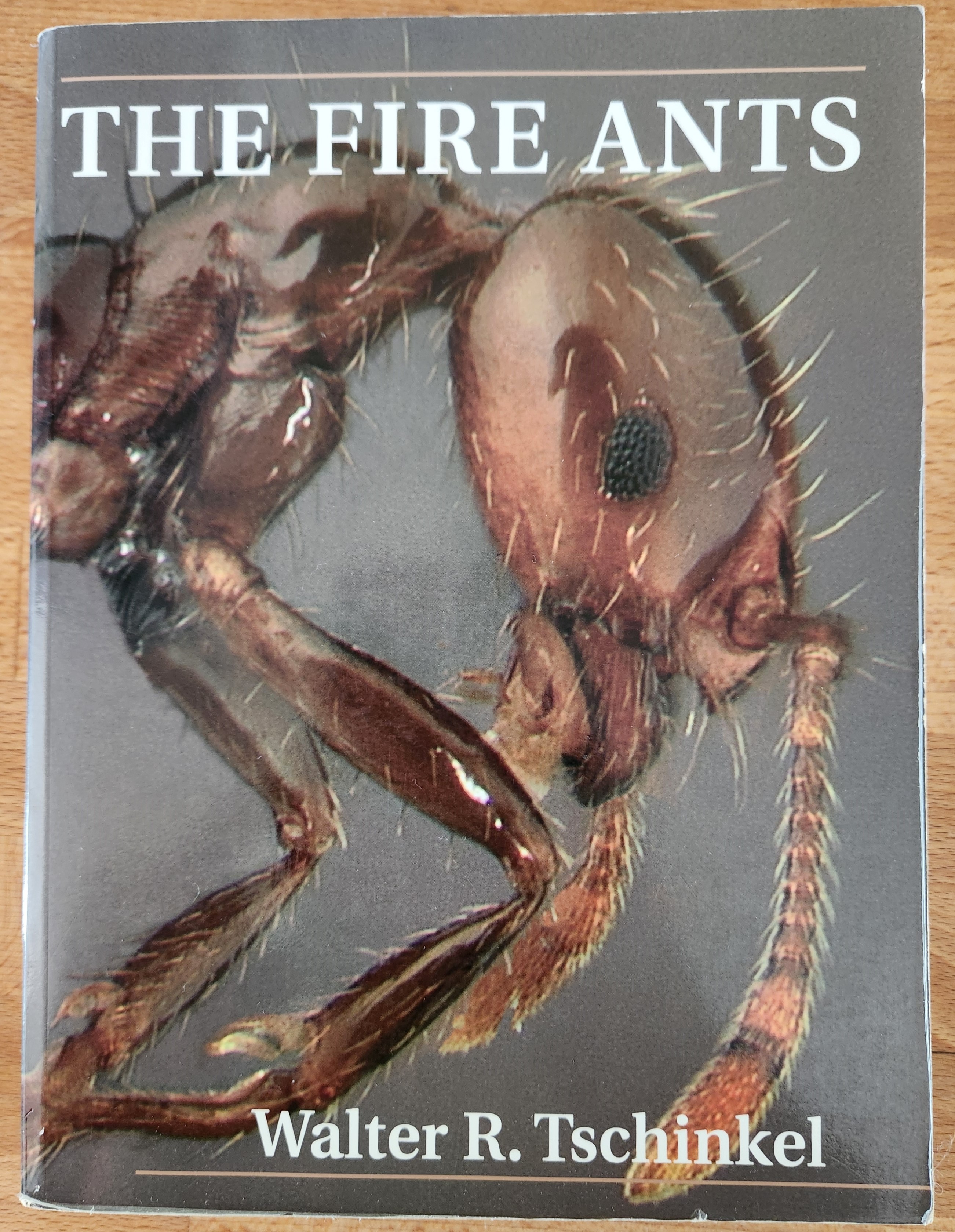
The Fire Ants, by Walter R. Tschinkel
Talk about a monograph. If reading a 600-page book about a single species of ant feels like a dream come true to you, then you are me. Surprisingly humorous and extremely insightful into the world of fire ants, this incredible book deals with some other ant species but is especially focused on the invasive fire ant Solenopsis invicta, which has spread across the southern half of the United States over the past half-century or so. Part case-study of an invasive species, part monograph on all biological aspects of said species, this excellent book also contains vignettes about the author’s work as an ant researcher (properly a myrmecologist) and many fascinating stories about fascinating ants.
Things I learned: fire ants have super complex colony founding, they can become super colonies or super territorial and it’s genetically determined. This discussion of fire ant genetics and alleles was actually the most well-written explanation of the genetic research and relevance that I’ve ever read (as in, I could understand and follow it, genetics is often a bit over my head with all of its complexity and biochemistry).
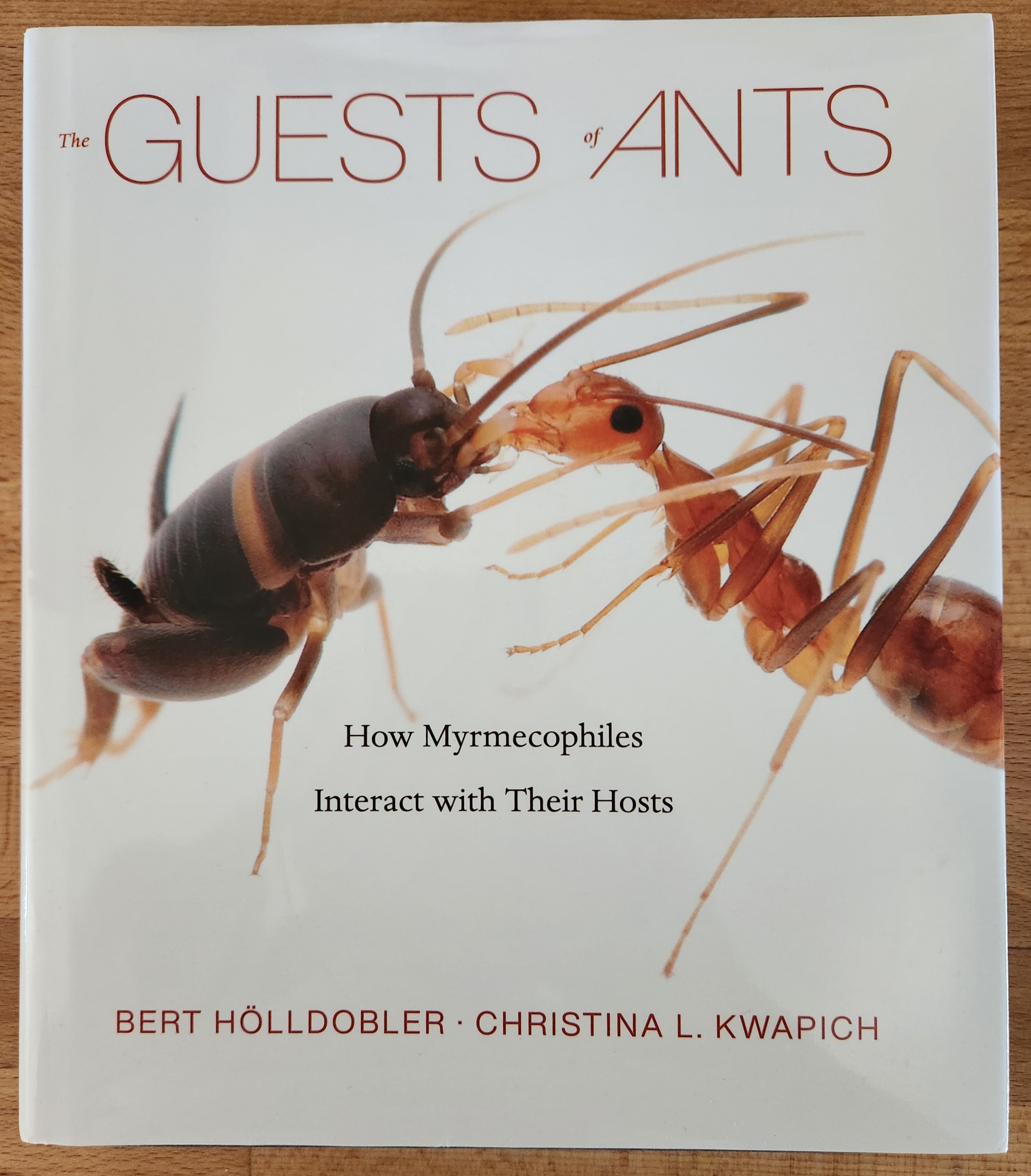
The Guests of Ants, by Bert Holldobler and Christina L. Kapwich
This is the most recent addition to my list of amazing ant books, published just a couple years ago in 2022. The images within are astounding, I found myself gasping as I turned pages to come across beautiful photographs of behaviour rarely seen. This tome is focused on the adaptations and behaviour of “Myrmecophiles”. It’s hard to define myrmecophile* because the interactions range from parasitic organisms dependent on killing their hosts (ant-decapitating phorid flies for instance) to beetles that appease their ant hosts with nectar secretions in exchange for a safe stay within an ant nest. So much is unknown about these complex interspecific interactions and the mysteries unfold in incredible stories throughout this book, leaving me wanting a sequel.
*the word means “ant-lover” which I guess could apply to me? Am I a myrmecophile of sorts? Are you?
Things I learned: Some mites ride on ants’ heads or feet, some spiders are ‘transformational mimics’ of ants: meaning that they resemble different ant species at each successive moult, there is a subfamily of crickets (featured on the cover!) which depend on ants, one species lives exclusively on Yellow Crazy Ant liquid food exchange, there are even frogs which live inside ant nests by chemically masking themselves.
I’m sure there are more excellent books about ants out there (I can actually think of a few more myself…) but these are my top favourites from the ones I’ve read. Do you have any recommendations? Let me know! I’m always up for a good book recommendation about one of my favourite animal groups.
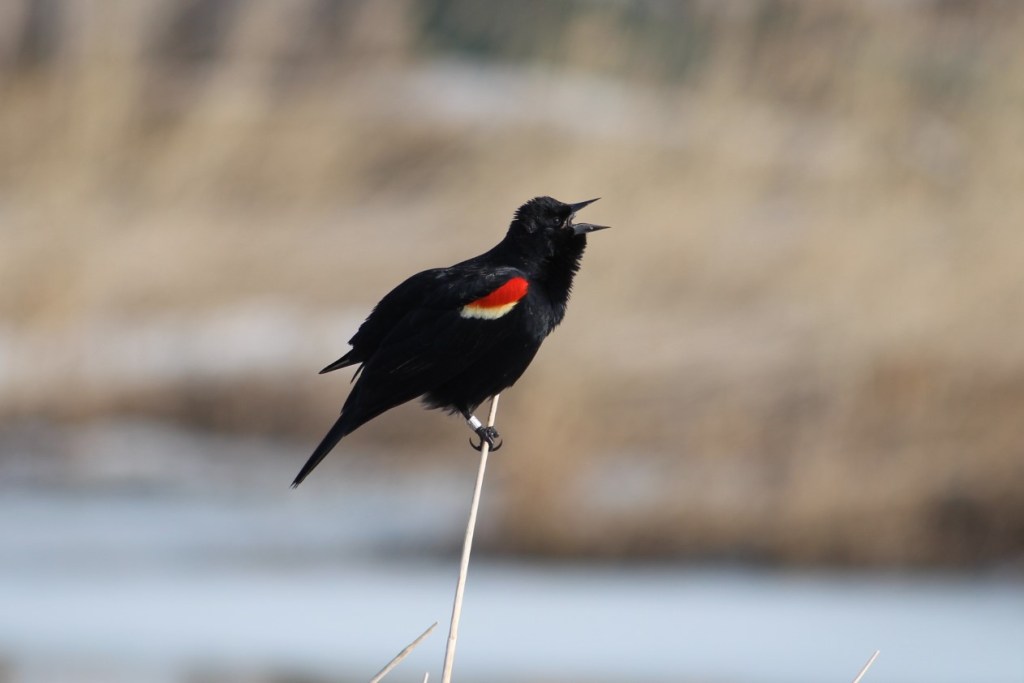
If you’ve ever spent time around Red-wing Blackbirds then I’m sure you can hear their distinctive ohk-a-lee! call when looking at this picture.
Two years ago today, I published my first blog article on my site: norfolknaturalist.ca. So today, I’m going to celebrate two years of Norfolk Naturalist blogging, by looking back over the past year at what I’ve written on my blog, what I’ve read that is nature-related, and other events and recollections of the past year that are related to the Norfolk Naturalist blog. For last year’s birthday article, go here. So here we go!
Many exciting things occurred over the past year for the Norfolk Naturalist, including an event I attended in December 2020: my first ever zoological conference: Tetzoomcon! I didn’t finish writing up my thoughts on the event until Tetzoomcon 2021 was announced so although the event was in December 2020, the article was posted in August 2021.
Also in December 2020, I published the first article in my Sand Wasps series, the Introduction, and in January of 2021 I published Part 2: the Tribe Alyssontini. I haven’t continued the Sand Wasps series since… my initial impetus to write about Sand Wasps was reading the book The Sand Wasps by Howard Evans and Kevin O’Neill, which I mention in my Introduction article. Basically, it’s a series that I’ll continue when I feel inspired to write more about Sand Wasps.
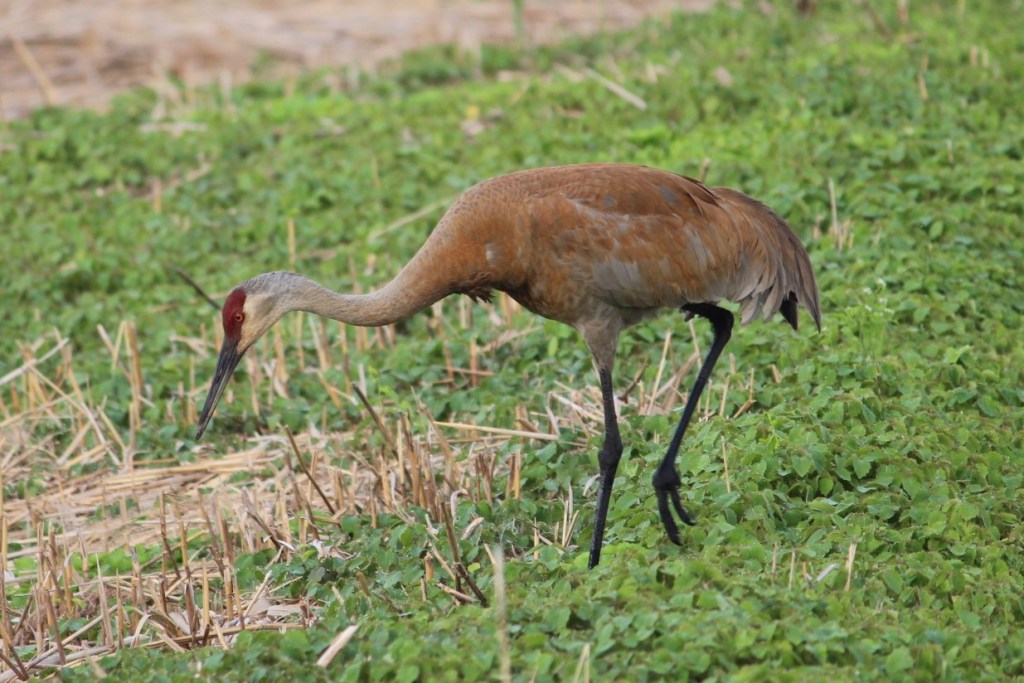
Sandhill Crane close encounter on the Big Creek trail in Long Point. I would like to do a roundup of top nature photos taken during the last blogging year (especially those that didn’t make it onto my blog this year), but didn’t get that together in time. Perhaps I’ll post a second article later. For now, I’ll post a few of my best sightings interspersed through this article.
In February I wrote an article titled Swimming Squirrels, which was all about a fascinating paper I read in the Canadian Field-Naturalist which described an observation of a Grey Squirrel (Sciurus carolinensis) swimming and catching a fish, behaviour that is surprising to me.
Another unfinished, and barely begun series was started in March with my posting of Natural Curiosities, Part 1: Emu Feathers. I meant to go through various nature objects that I had obtained through the years and describe the organisms they came from or represented, but I only finished the one that’s published. Perhaps the next year of blogging will contain more parts to this series (I certainly have more natural curiosities to describe and write about).
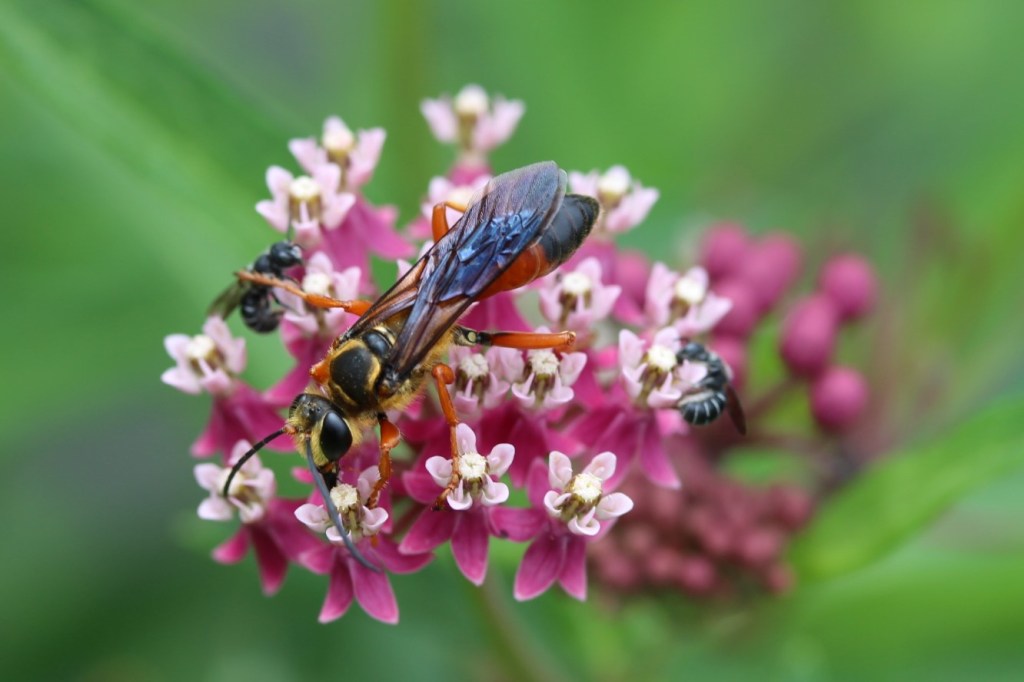
Pollinators on a milkweed flower in my backyard, featuring the amazing Great Golden Digger Wasp (Sphex ichneumoneus).
A rather different article was posted in May, in which I examined what the distinction between life and non-life really is and the complexities of the question from a scientific point of view. This article mentions viruses and alludes to being the beginning of yet another series of posts… of which it is the only one so far…
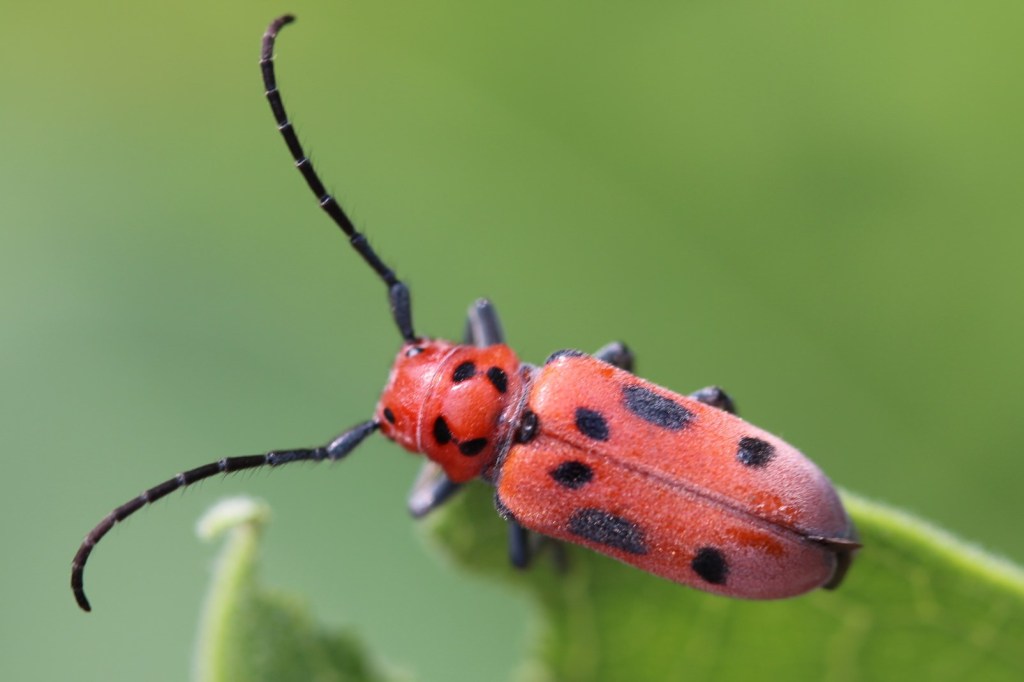
Milkweed Borer Beetle in my backyard.
The tail end of June saw the stepping up of my blog-writing. I fell into something of a routine with my writing and found ways to write that felt natural and productive. No longer was I struggling to produce an article per month and for the rest of the year I wrote several articles per month which was a real achievement for myself. First I wrote up my experiences visiting a trail in Long Point, in two parts (Part 1 and Part 2). Then I wrote an article about Wrens (Troglodytes).
After these articles, I proceeded to write and post about the various organisms I had seen and photographed at my parents’ house, and in my own backyard (Diptera, Hymenoptera, and Others) all observed during the month of June.
During July, I went camping at Port Burwell Provincial Park and made several interesting observations there which I wrote up into a post.
The next notable camping trip was to Algonquin Provincial Park, one of my favourite places in the world. While there, I took plenty of photos and saw many wonderful creatures. I wrote up my Algonquin observations into five parts: Part 1, Part 2, Part 3, Part 4, Part 5.
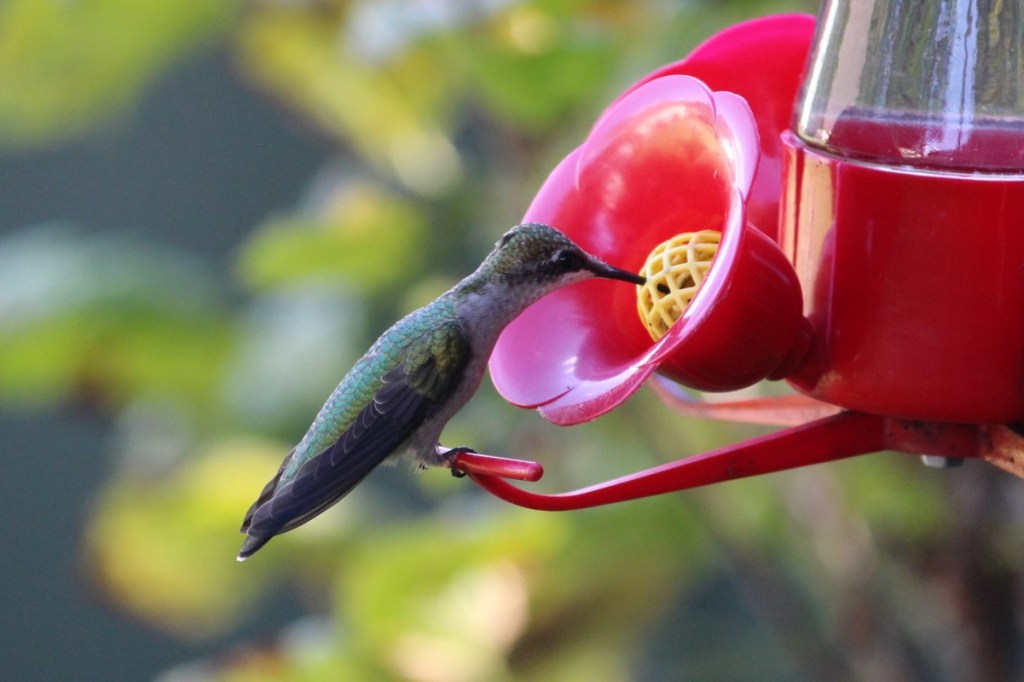
Ruby-throated Hummingbird taking a sip in my backyard.
After my long series of Algonquin observation posts, I changed it up a little with a Podcast review of one of my favourite podcasts: The Field Guides. My website was actually mentioned on the podcast in their following episode, which really made my… year, and they added a link to my site on their website which is incredible.
This year, I joined the Norfolk Field Naturalists, an organization of nature enthusiasts in Norfolk County and my first experience with them was a hike in Backus Woods, searching for fungi to photograph. We found plenty, I learned lots, and I wrote up my observations in a series of 3 posts: Part 1, Part 2, Part 3.
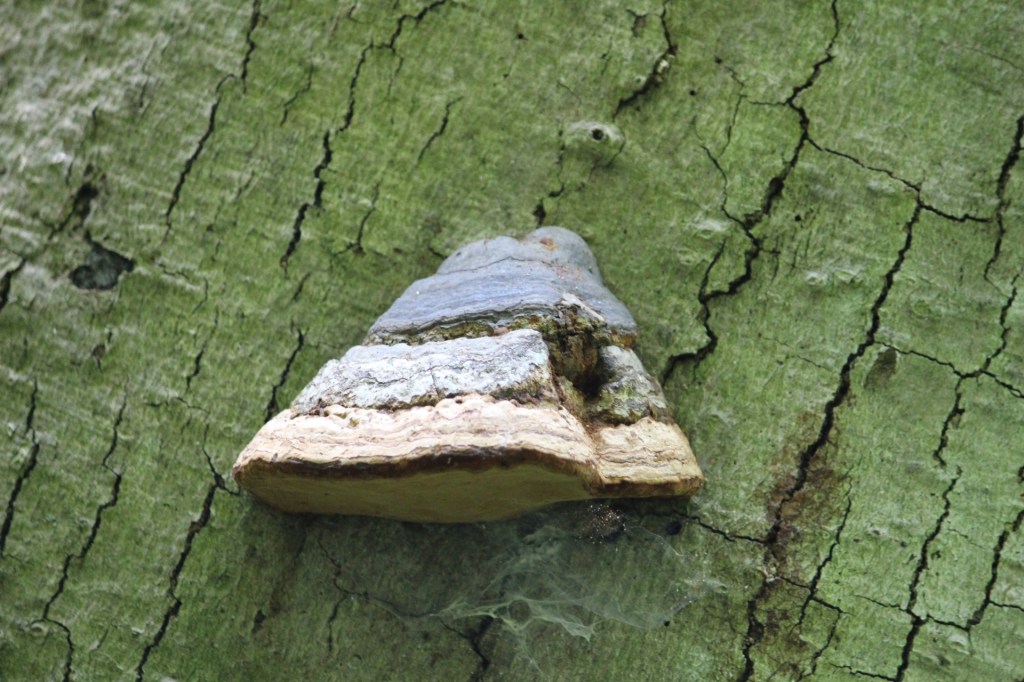
Some sort of Polypore mushroom growing out of the side of a tree in Backus Woods.
In addition to hikes with other local naturalists, the group also arranges meetings every month with a presenter. This year, because of the global pandemic, the meetings were done over zoom. So far the presentations have been excellent and interesting, and I might write up more about them in a future article.
Coming up in December is a Members’ Night meeting in which members can submit up to 20 photos of their own for a slideshow. I’ve already submitted my photos and will be blogging about my selection of 20 photos from my personal collection in due time.
Just during November I received the latest issue of the Canadian Field-Naturalist, a science journal that I subscribe to. Within, I was delighted to find that one of the articles mentioned a species that I profiled for my first post on this website (besides my welcome post): the Eastern Band-winged Hover Fly (Ocyptamus fascipennis). I have added an update to this post to reflect this recent interesting note about this species (spoiler alert: it’s possibly migratory).
Nature-related books I’ve read over the past blogging year (from November 30, 2020 to November 30, 2021):
Here’s a quick gallery of the nature-related books that I’ve read over the past year with a short summary of my thoughts on the books. Some of these books have more substantial reviews in the works or already published on my site. The books are presented in no particular order except vaguely chronological of when I started reading them.
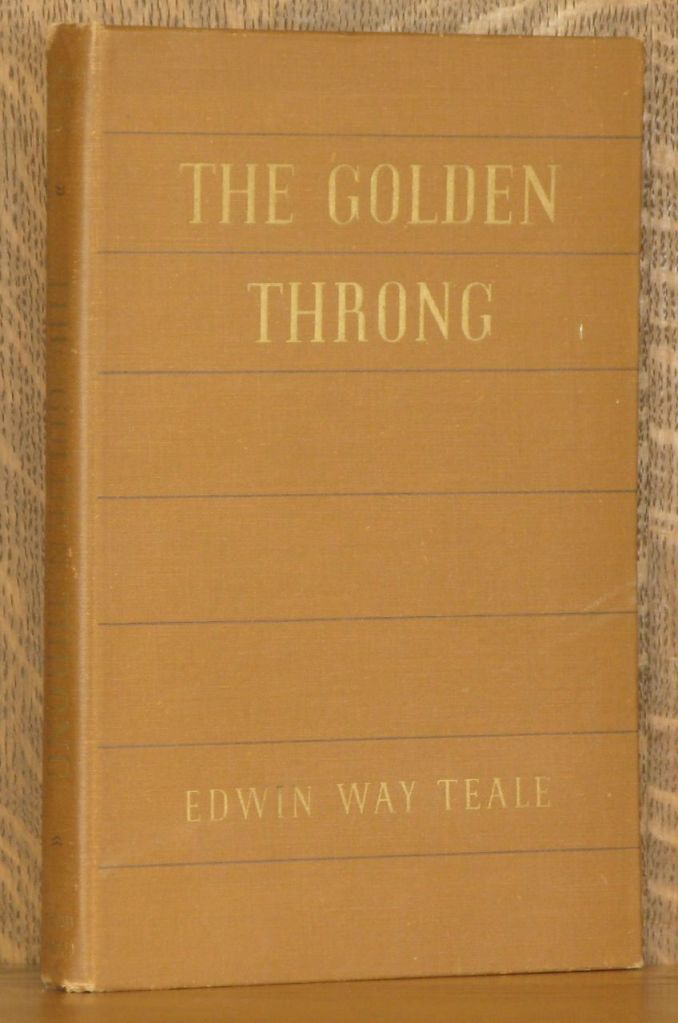
The Golden Throng, by Edwin Way Teale:
A book about bees, by Edwin Way Teale, a classic naturalist writer. The book doesn’t go into as much detail as I might prefer, but if you want a book that can ignite curiosity or admiration for bees for someone who isn’t already curious or fascinated then I would recommend this book.
Naked Trees, by John Terpstra:
Excellent poetry about trees, delving into their nature and their interactions with people.
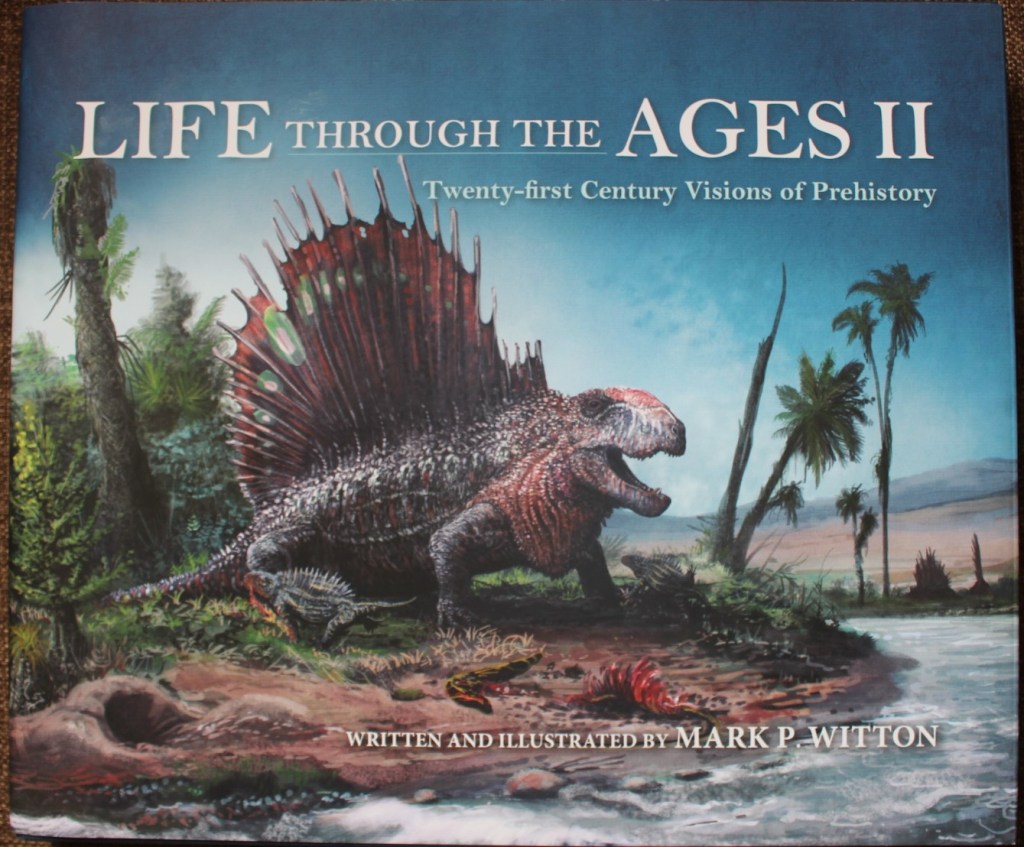
Life through the Ages II, by Mark Witton:
Incredible book, filled with beautiful illustrations of past life and concise descriptions of bygone eras. This book was a wonderful treat in visuals and text. Highly recommended for fans of paleoart or extinct life or the diversity of life (which must include the vast array of extinct organisms).
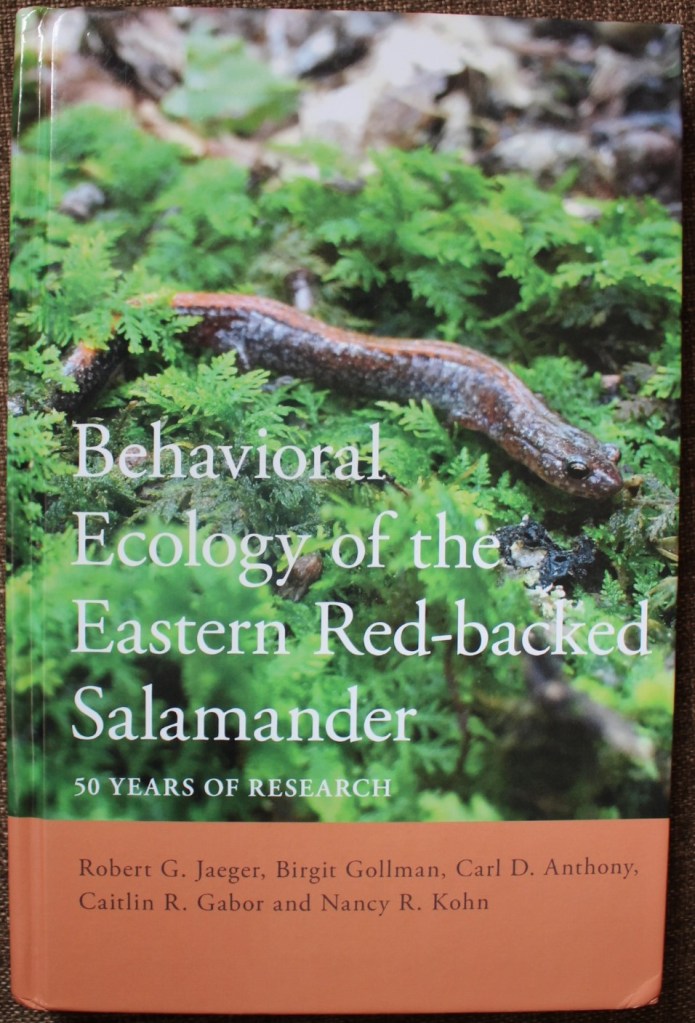
Behavioral Ecology of the Eastern Red-Backed Salamander, by Robert G. Jaeger, Birgit Gollman, Carl D. Anthony, Caitlin R. Gabor and Nancy R. Kohn:
A fascinating book describing various experiments and research ideas on a single species: the Eastern Red-backed Salamander (Plethodon cinereus) in a specific place: Northeastern United States. I love finding a book like this which contains details about a species that can be found nowhere else.
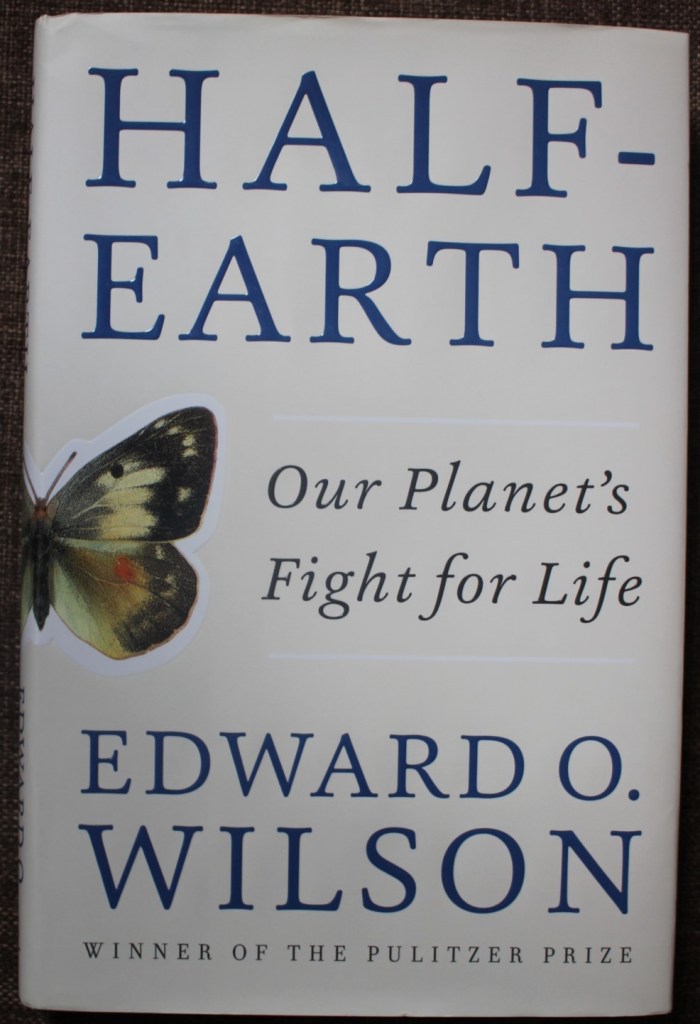
Half-Earth: Our Planet’s Fight for Life, by E. O. Wilson:
I didn’t love this book. I found it was a bit incohesive and fragmented in tone and content despite being presented as if it was a single argument piece. I disliked some of the inconsistent messaging on science/religion/philosophy of science, but I really enjoyed the discussion of various ecosystems and fascinating organisms that live there. I think Wilson’s writing works best in this book when he’s explaining and refuting the anthropocentric worldview, and I think if it had been more tightly focused on this aspect it could be a more cohesive exploration of the topic.
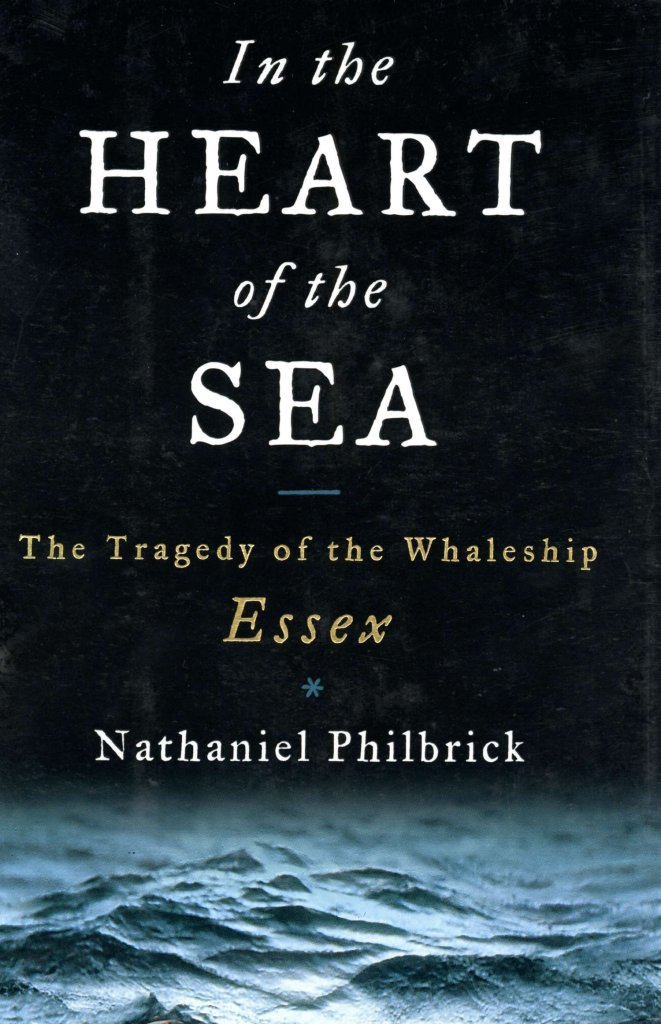
In the Heart of the Sea, by Nathaniel Philbrick:
This is a history book that recounts the tragedy of the whaleship Essex, which was rammed and sunk by a Sperm Whale in 1820. Not particularly nature-focused, but it does contain some information about Sperm Whales and the whaling industry of the time. Fascinating shipwreck survivor tale.
Parasitism: The Ecology and Evolution of Interspecific Interactions, by Claude Combes:
Composite showing my used copy of Parasitism by Claude Combes front cover and side view. If it weren’t for used copies of books, I wouldn’t be able to buy and read a lot of the books I buy and read (because they’re out of print, prohibitively expensive new, etc etc).
Absolutely incredible book that covers such a broad range of topics that it’s hard to summarize. Describes the process of Parasitism from multiple levels sometimes going very heavily theoretical and sometimes describing particular in-depth case studies of model systems. I learned lots and had a ton of fun reading it.
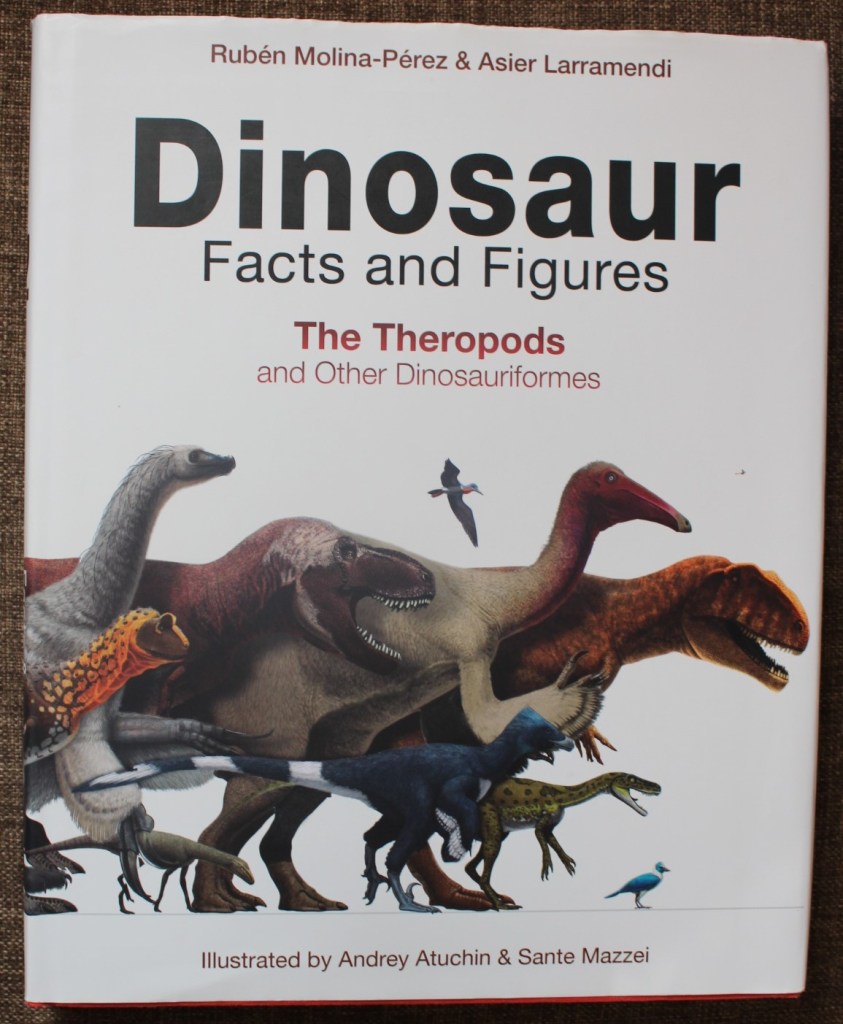
Dinosaur Facts and Figures: The Theropods and Other Dinosauriformes, by Ruben Molina-Perez, Asier Larramendi, Andrey Atuchin and Sante Mazzei:
Beautifully illustrated dinosaur book with a focus on “records” some of which are bizarrely specific, and some of which are quite fascinating. I think this book is worth it for the illustrations, but there are also a lot of interesting facts as well. I particularly liked the geographical context section because I find that many general dinosaur books don’t give you a good idea of what dinosaurs lived where.
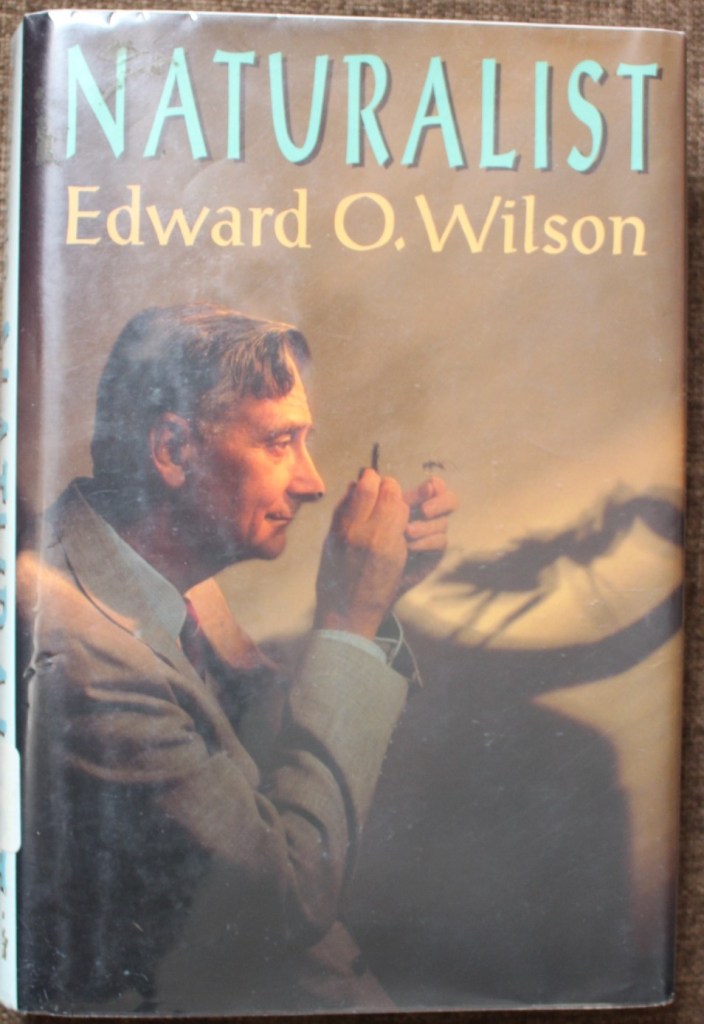
Naturalist, by E. O. Wilson:
Very fascinating look at the journey of a young man growing into a scientist. Interesting to see where different aspects of E. O. Wilson’s philosophy arose from and how they influenced his growth and avenues of research.
After Man: A Zoology of the Future, by Dougal Dixon:
A speculative look at what animals and ecosystems might evolve after another 50 million years. Thought-provoking and very fun way to explore evolutionary ‘rules’ and ideas.
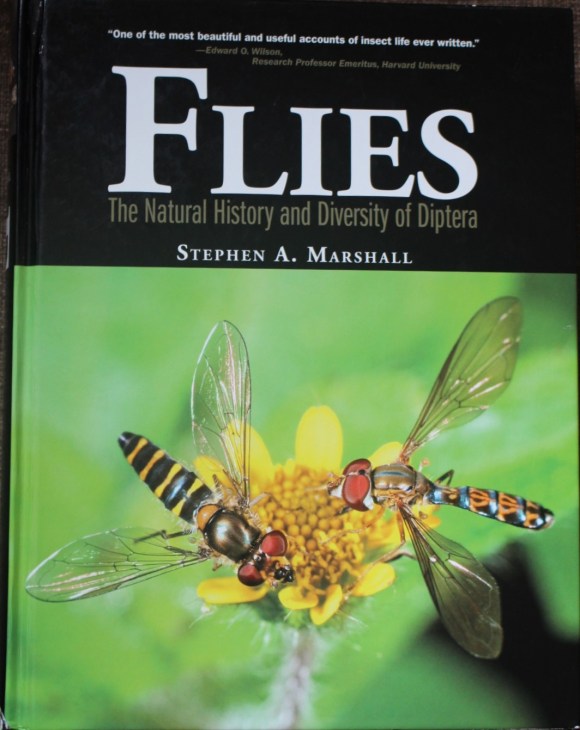
Flies: The Natural History and Diversity of Diptera, by Stephen Marshall:
This book is absolutely incredible, full of amazing photographs and fascinating text. Read my full Review here.
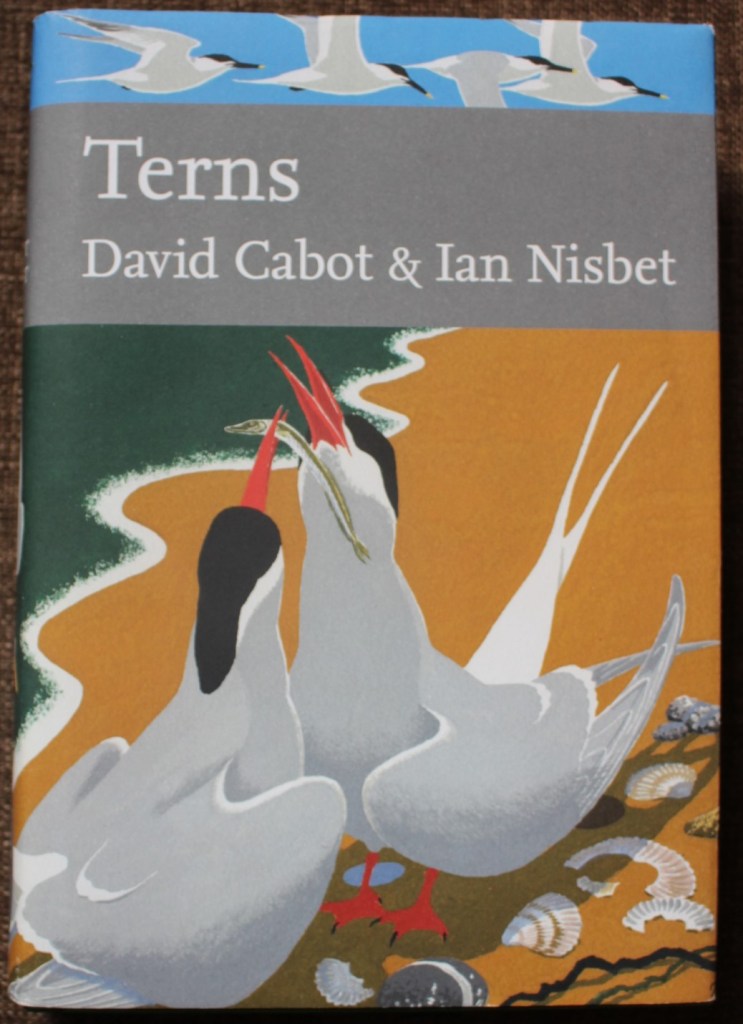
Terns, by David Cabot and Ian Nisbet:
In-depth natural history of British and Irish Tern species, but also covers many other Terns from around the world. Excellent photos and detailed text. I am working on a longer review of this book and will post it here soon.
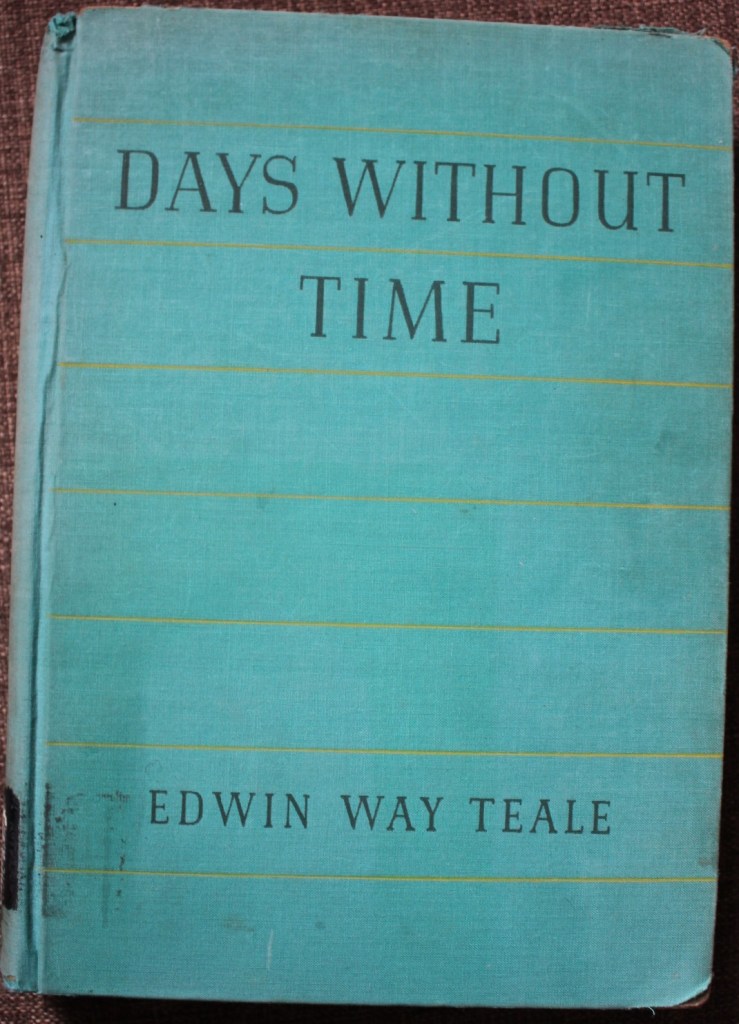
Days Without Time, by Edwin Way Teale:
The subtitle of this book is “Adventures of a Naturalist” and as such it’s a random collection of chapters, each presenting a different nature encounter of the author. I quite enjoyed this book. Some sections feel a little dated (the book was published in 1948) but the curiosity and sense of wonder that Edwin Way Teale has for nature is something that resonates strongly with me. The final two paragraphs feel like they should be in a banner across the top of my blog:
“The out-of-doors is – as it always has been – everybody’s art gallery, everybody’s concert hall, everybody’s library of poetry written in a universal language. The beauty of nature is every generation’s gift. It is free for the taking, around us always. And each man, according to his character, realizes its possibilities. To dwell with this beauty of the out-of-doors, as much as we can, is the better part of wisdom. Here we feel ourselves losing nervous tension, relaxing like a drought-dried plant in a summer shower. Here the hunger of our eyes for the green of trees and the color of flowers is satisfied. Here the longing of our ears for the sound of wind in the grasses and the lap of waves on sand is gratified. Here there is beauty to lift the heart and calm endurance to speak of courage. And here there is something more, something magical, something that fills a deep need of the human heart.”
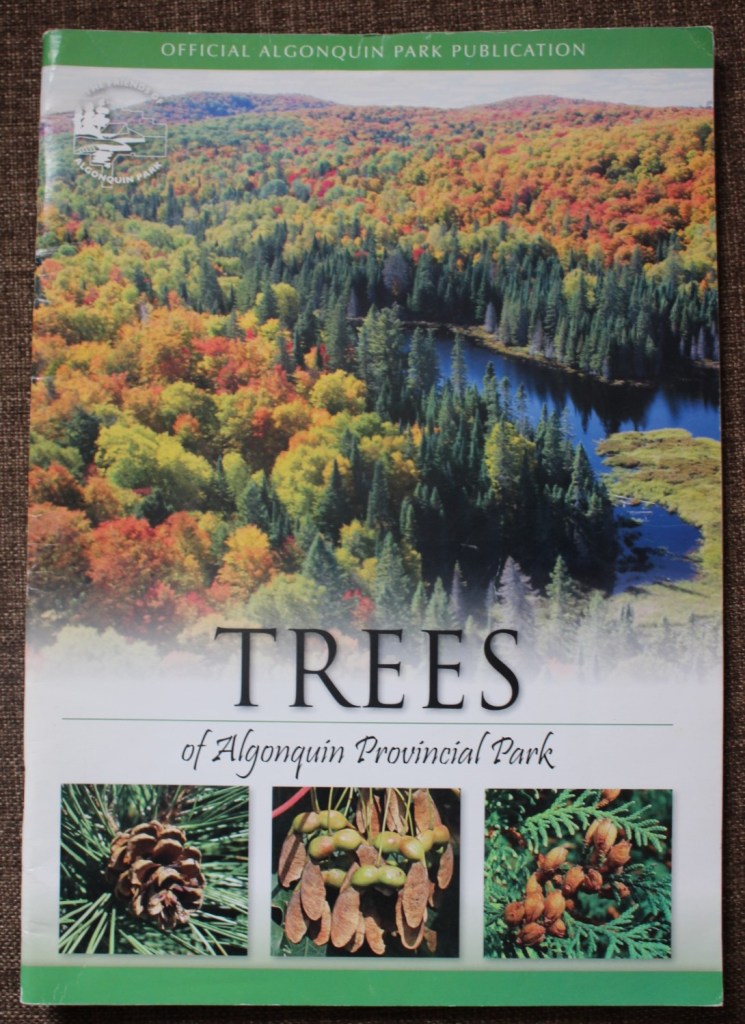
Trees of Algonquin Provincial Park:
I read this “book” (it’s a pictorial guide to the trees of Algonquin Park, 40-something pages long) while camping in Algonquin Provincial Park. It brought a greater appreciation for the beautiful trees that surrounded me there.
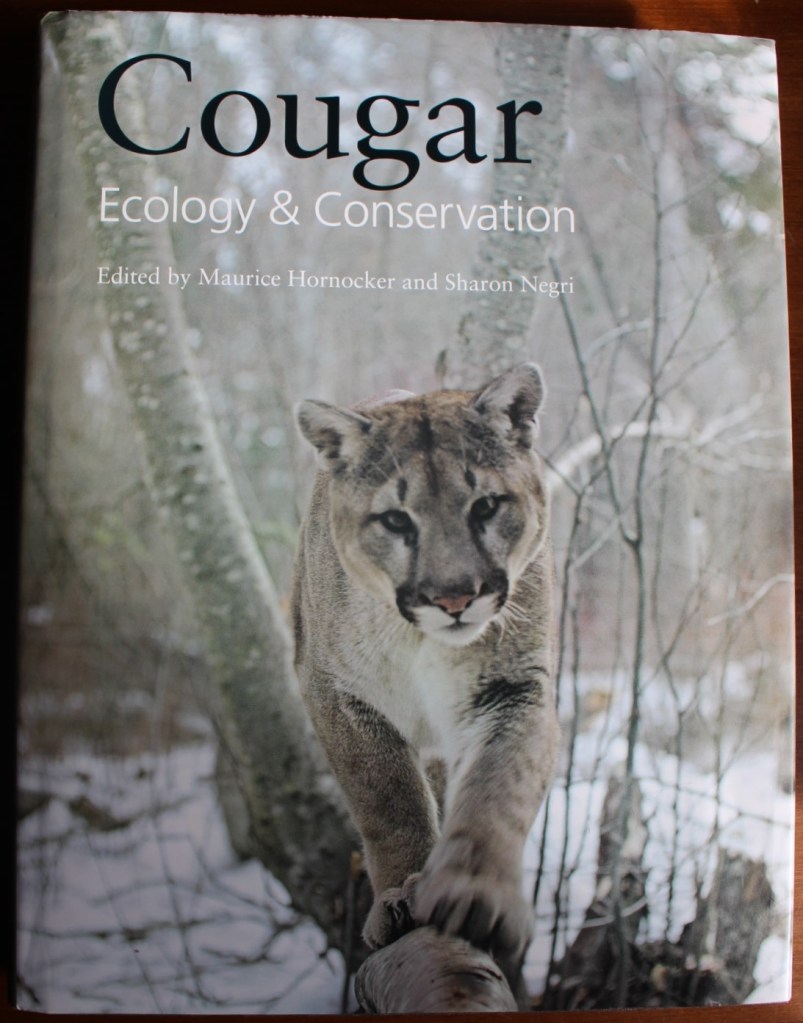
Cougar: Ecology and Conservation, edited by Maurice Hornocker and Sharon Negri:
This edited volume contains basically all aspects of Cougar ecology and conservation that you could imagine. I particularly found it fascinating to read about Cougars in Central and South America as I’m used to picturing them in the Rocky Mountains of Western North America. As an edited volume, some topics are repetitive and some are not as interesting to myself as others. Overall though, an excellent scientific overview of cougar research published in 2008.
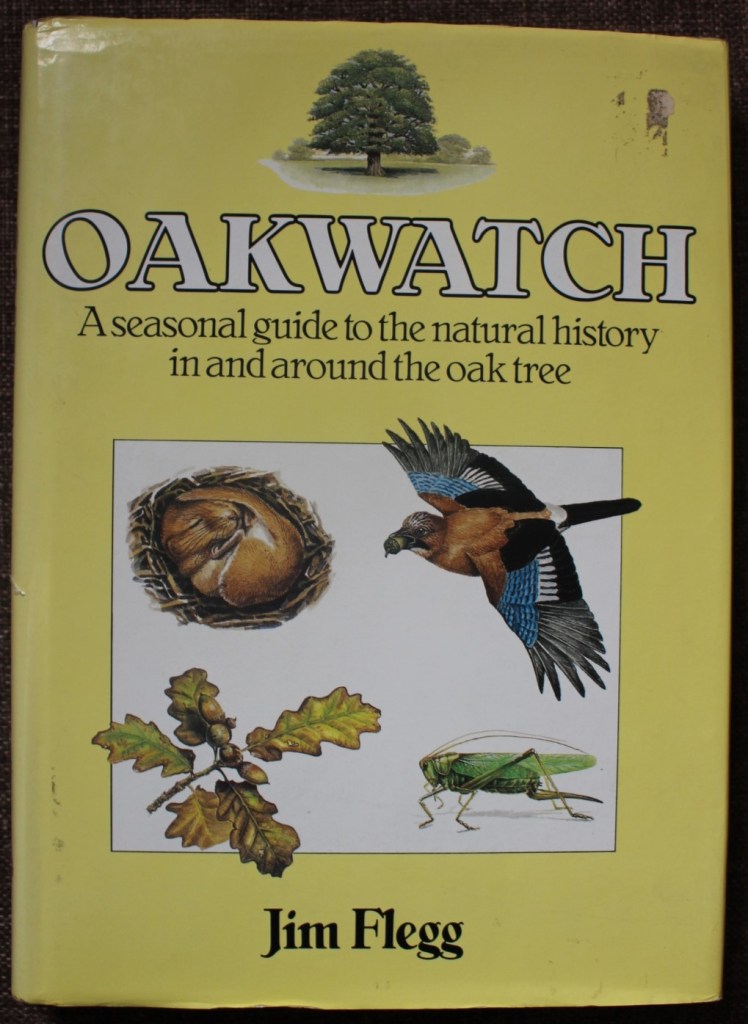
Oakwatch, by Jim Flegg:
Oakwatch describes the species that live in and around oak trees in Britain. Great exploration of the seasonal changes that occur and the trees that tie so many distinct species together. Something to read slowly through the year as the seasons change, which is how I read it.
Grassroot Jungles, by Edwin Way Teale:
A book about insects, with a very relaxed naturalists’ style. I personally prefer the similar book by the same author: Near Horizons: The Story of an Insect Garden for an overview of the insects he has observed in his own backyard. Even so, Grassroot Jungles has the same charm and joy at the everyday wonders that are the Insects all around us.
In Conclusion:
I hope that you enjoyed this look back at the past year at norfolknaturalist.ca! Last year’s blogversary article concluded with a goal that my second anniversary would contain more than 7 posts to summarize and I am happy to say that I have far exceeded that goal! Next year, I hope to stick to my main goal of producing interesting nature articles on various topics that grab my attention, at least once a month. I truly love sharing my fascination with the natural world and hopefully inspiring others to take a closer look and keep learning. If you enjoy my writing and photos and have the means and desire to support me, I now have a donation function set up on my Home page. I really appreciate any level of support, which includes most importantly sharing my website with others who might find it interesting or worth a read.
Here’s to many more years of norfolk naturalist blogging!



 Norfolk Naturalist