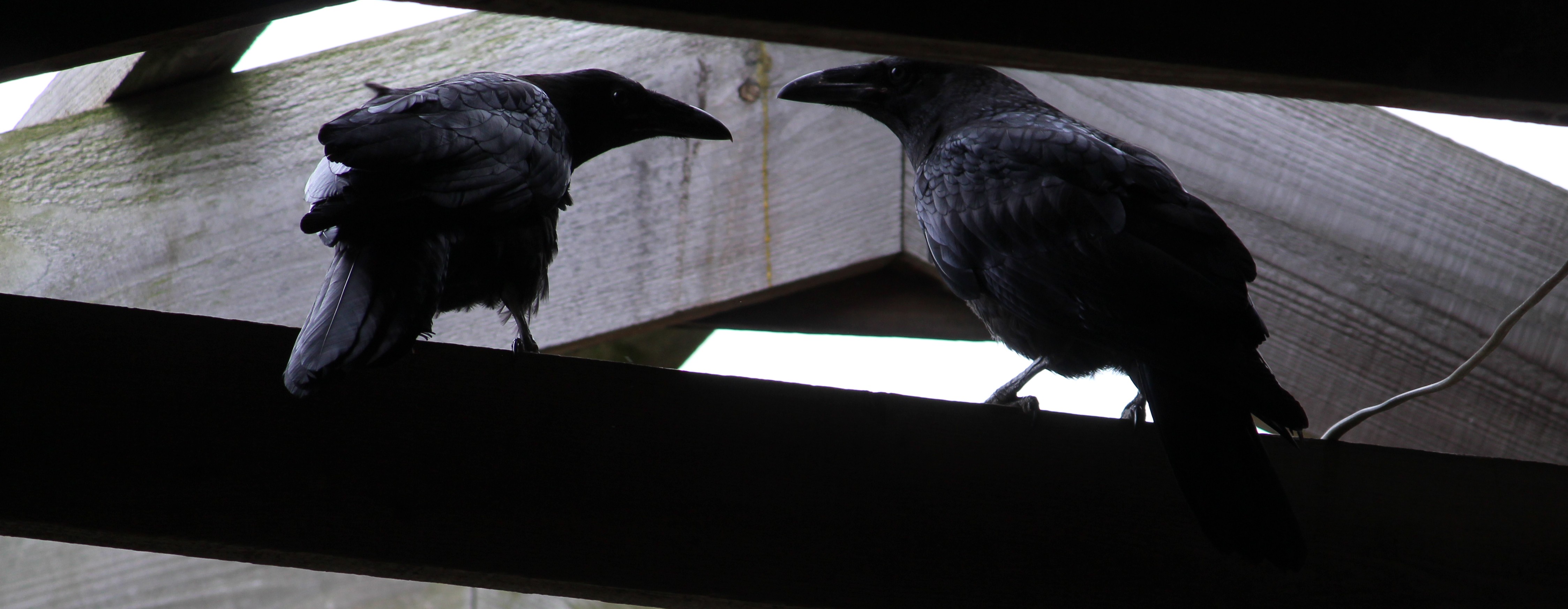
The ominous photo above was taken in my parents’ barn, host to Ravens these past few years (see my article about this here: Return of the Ravens). You could almost imagine they were Odin’s Ravens, Huginn and Muninn (Thought and Memory), perfect to herald a look back at this past blogging year. It’s time for my anniversary article to summarize my year’s writing and reading. This year I was much less productive on the blog than I have been in previous years, but we’ll see how next year goes!
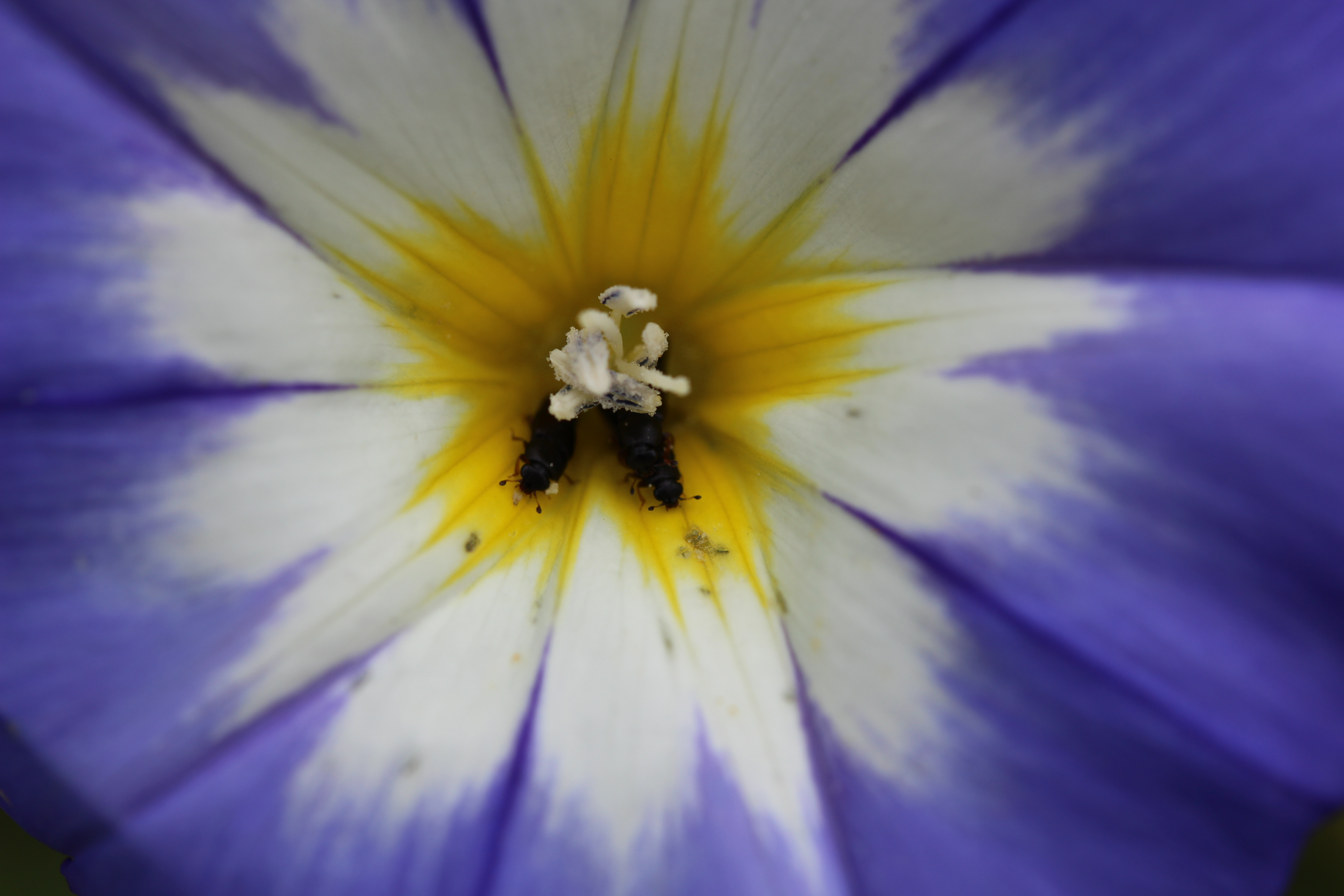
Some Conotelus beetles peering out of a flower in my backyard, July 2025, likely pollen-feeders.
This past year, I only published 4 blogposts, and some of those were rather short. The first was my now-annual Year in Photos post (I am currently working on this year’s edition). And the following three cover some of the amazing moths that I observed at an event 2 years ago: Sphingidae, Erebidae, and Limacodidae. I have such a backlog of observations/writings that I would like to see posted on my blog and I will get to them… eventually…
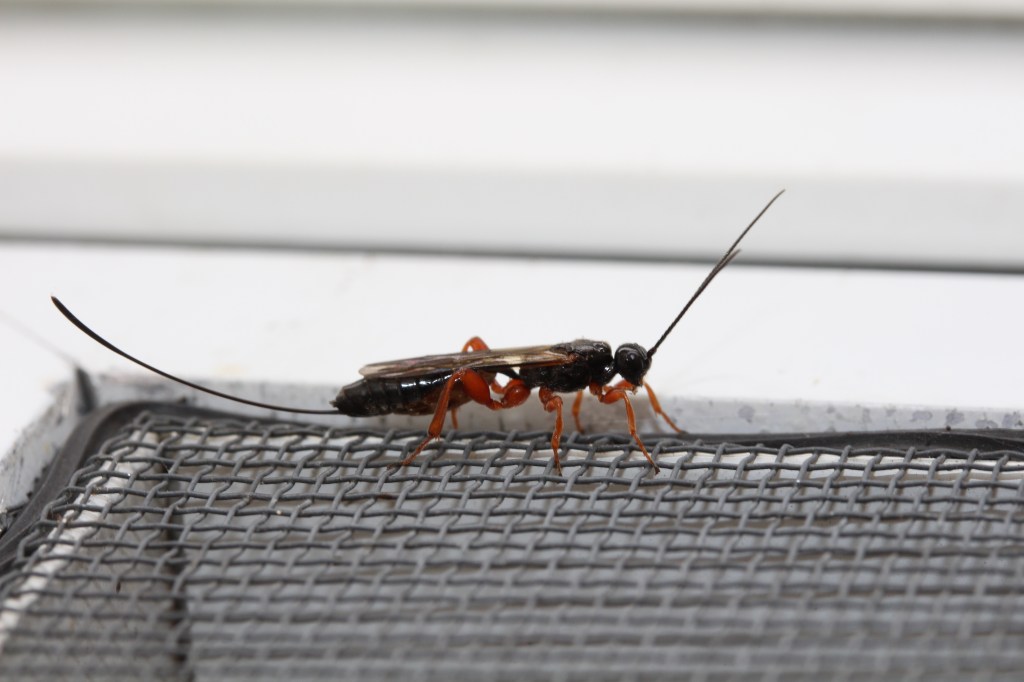
Parasitoid wasp (ichneumonoid of some sort) observed at my parents’ house in September 2025.
Let’s take a look at what nature books I’ve read this past year with a brief review and thoughts:
Marine Life of the Pacific Northwest: A Photographic Encyclopedia of Invertebrates, Seaweeds and Selected Fishes, by Andy Lamb and Bernard Hanby:
Excellent photographic overview of the diversity of coastal marine life in the Pacific Northwest. The text is not meant to be comprehensive for identifying or comprehensive for life history attributes, more a selection of interesting facts or occasional anecdotes about the species covered. I really enjoy these types of books for driving home once more that there is so much biodiversity out there.
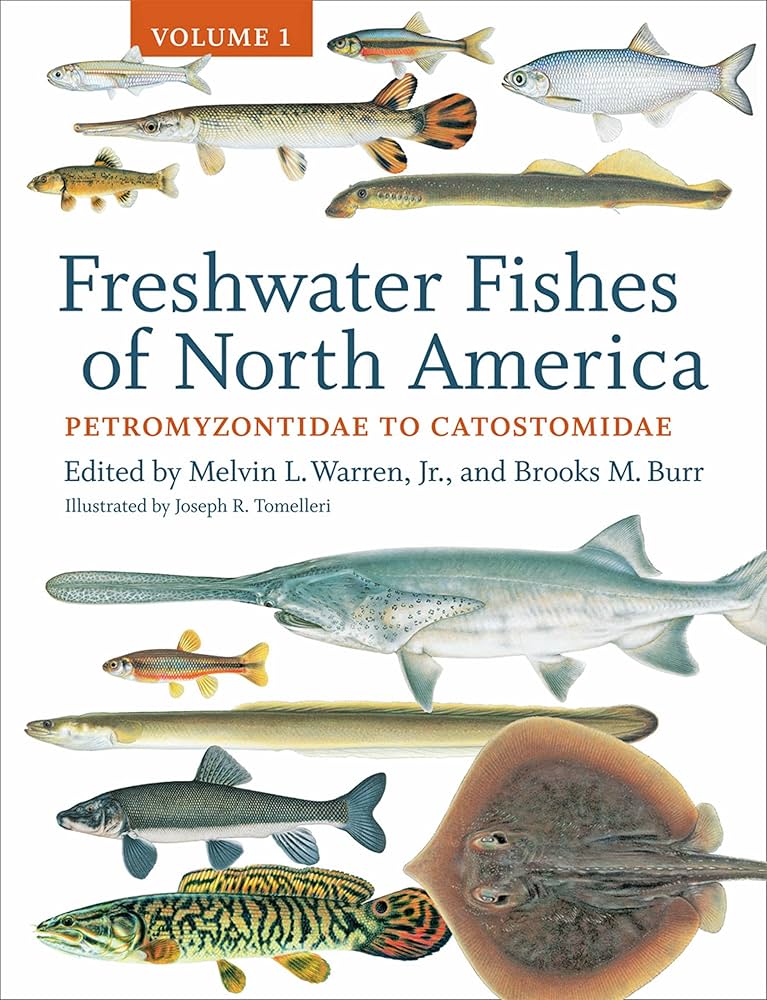
Freshwater Fishes of North America: Volume 1: Petromyzontidae to Catostomidae, by Melvin Warren and Brooks Burr, Illustrated by Joseph Tomelleri:
Very in-depth look at a selection of fish families of North American freshwaters. The focus is on behaviour, ecology, physiology, and giving a family-level overview of the diversity of fishes in North America that inhabit fresh water.
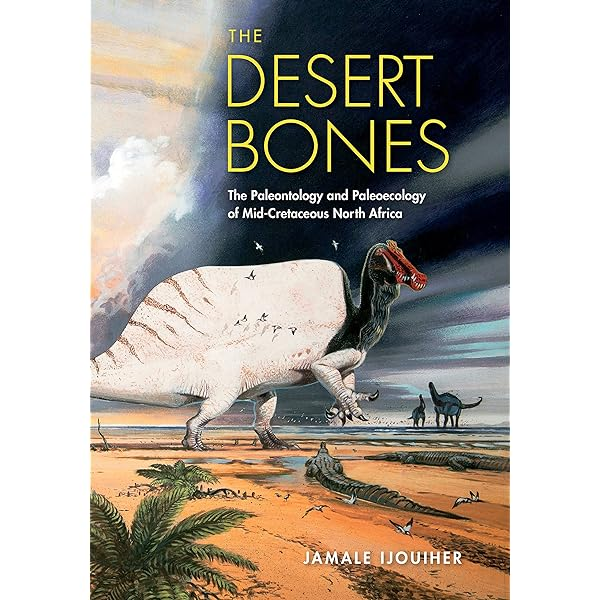
The Desert Bones: The Paleontology and Paleoecology of Mid-Cretaceous North Africa, by Jamale Ijouiher:
An overview of an ancient ecosystem, mostly listing the inhabitants with excellent artistic reconstructions for almost all of the vertebrate genera mentioned and even many invertebrates.
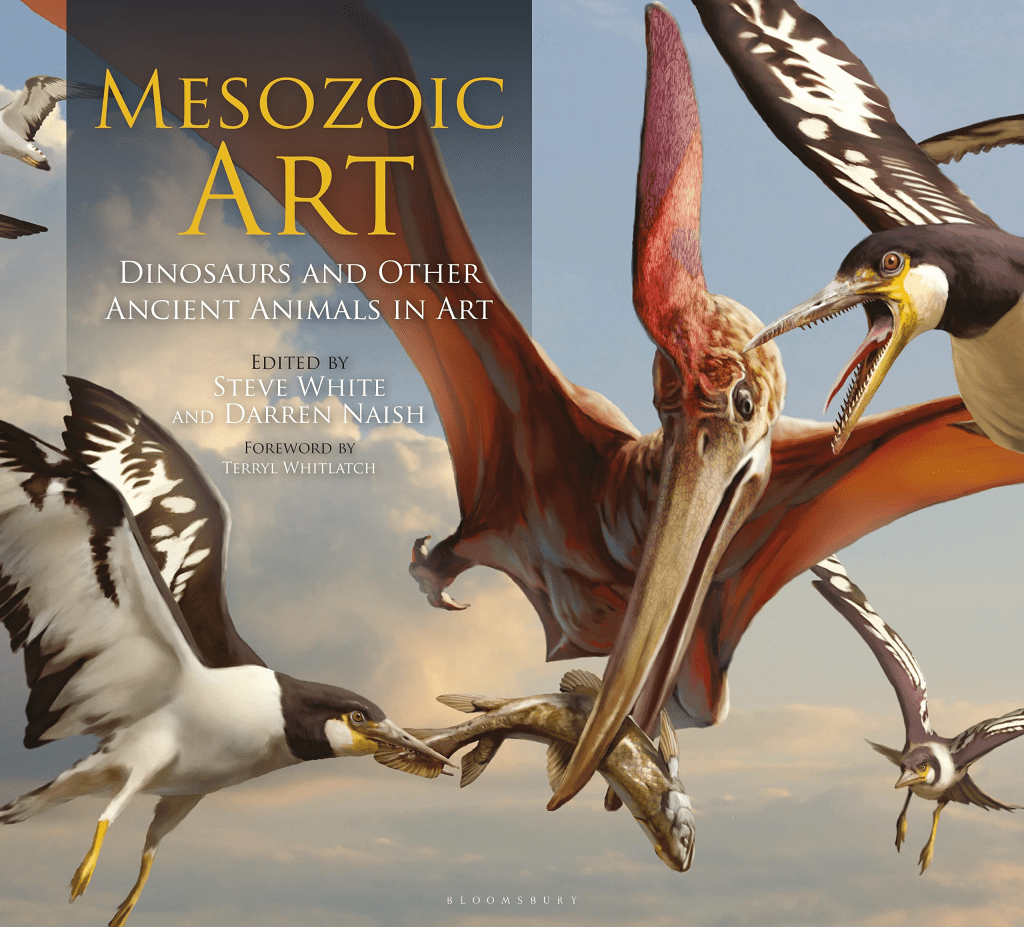
Mesozoic Art: Dinosaurs and Other Ancient Animals in Art, Edited by Steve White and Darren Naish:
Beautiful art portfolios showcasing the diverse artistic talent in the Paleoart world. Wonderful windows into lost worlds of the past, with excellent context supplied by Darren Naish. A book I will read and flip through many times in the future.
Walking With Dinosaurs: The Evidence, By Dave Martill and Darren Naish:
This was a really fun read, all about the fossil evidence that was behind the Walking With Dinosaurs BBC documentary (which I recently rewatched). Fascinating how much and how little we know about the lost world of the dinosaurs.
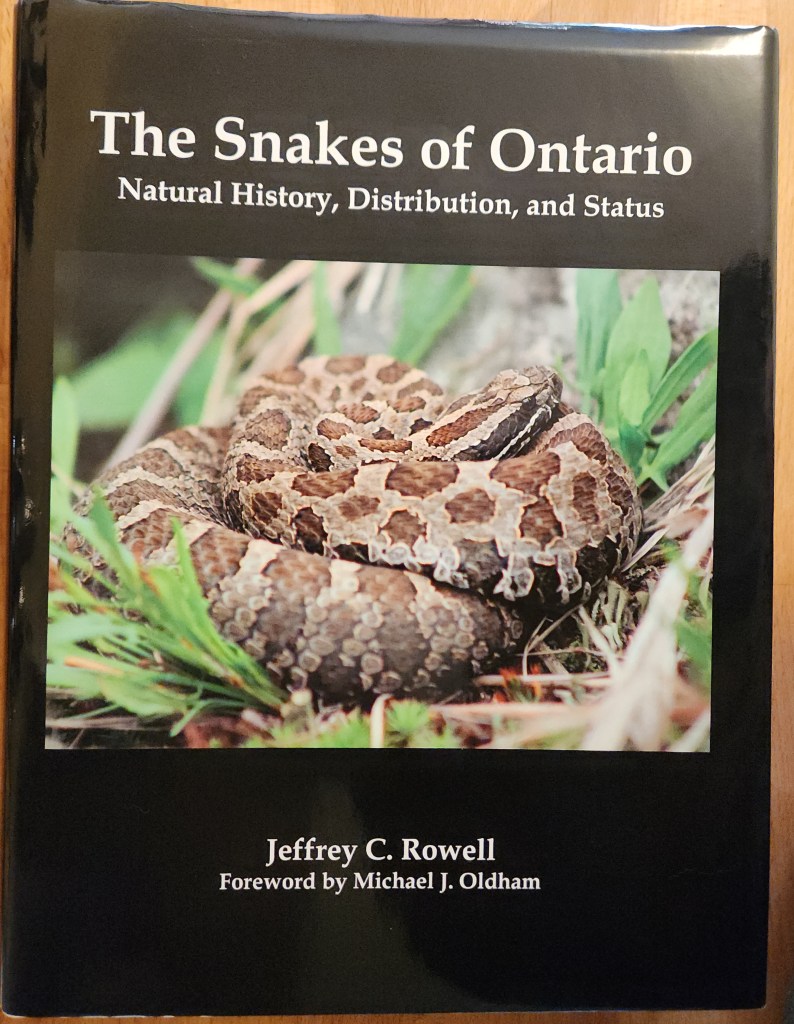
The Snakes of Ontario: Natural History, Distribution, and Status, by Jeffrey C. Rowell:
Amazing to read a book like this with such a narrow focus both taxonomically (Snakes) and geographically (the Province of Ontario). It’s not a field guide, though it gives many details to help distinguish snake species from each other. It is an in depth overview of Snake natural history in Ontario, an excellent reference work.
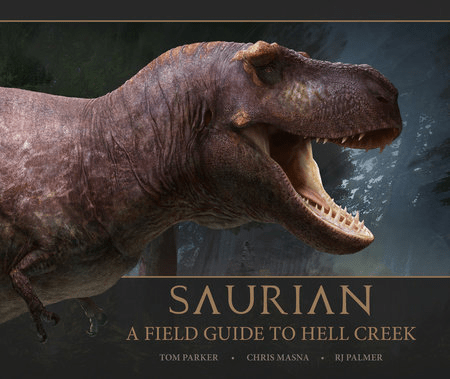
Saurian – A Field Guide to Hell Creek, by Tom Parker, Chris Masna, and R. J. Palmer:
Beautiful artwork, love the window onto a vanished ecosystem. I especially loved the guest artwork pages at the end because it gave the feeling of varied artists visiting this extinct ecosystem and creating pictures from their observations.
And… that concludes this blogversary article. For previous blogversary posts, see:
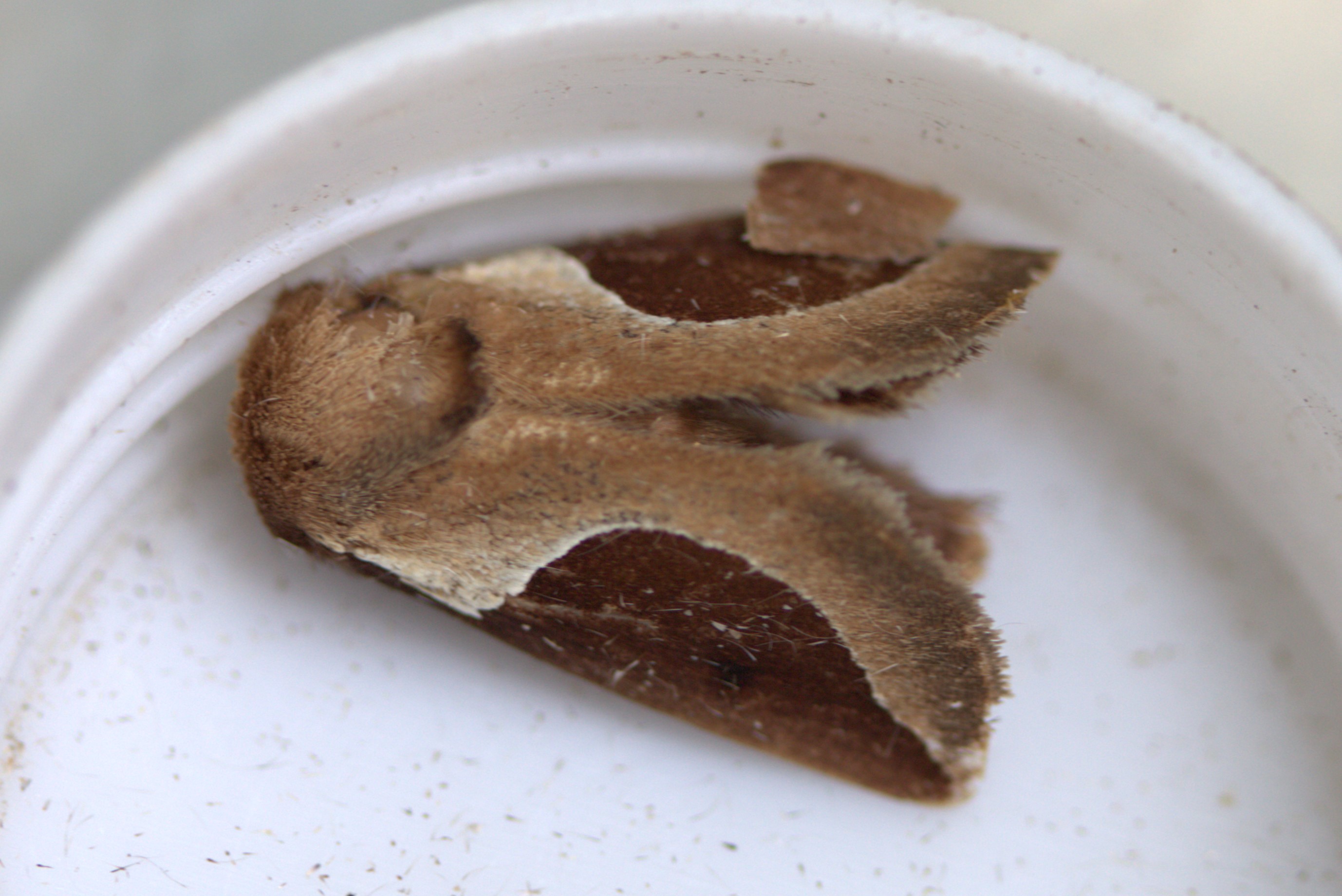
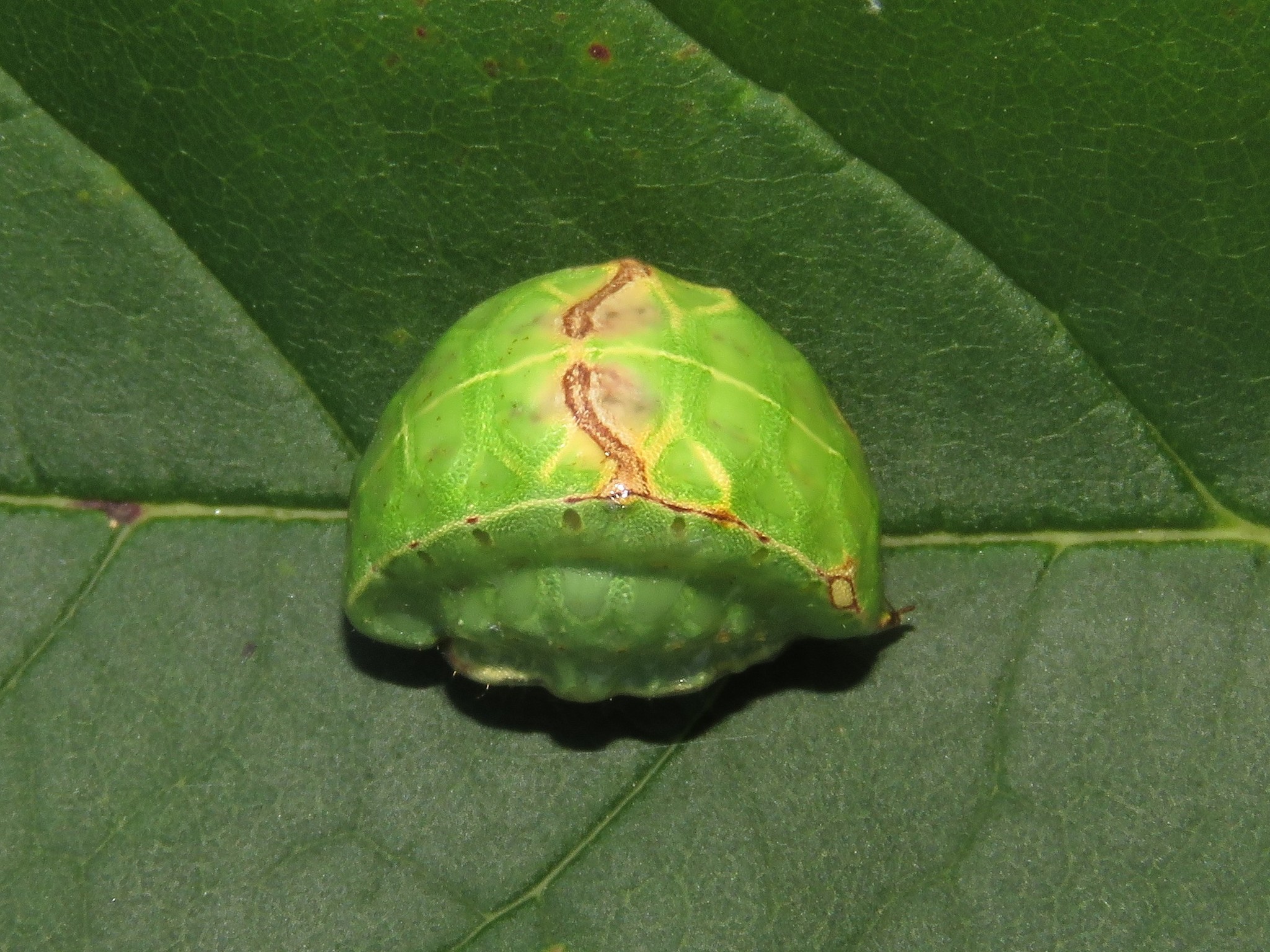
The Limacodidae are known as “Slug Moths” in reference to their bizarre caterpillars (see below). Although there are almost 2000 named species, many of them are tropical and I only observed one at the mothing event, the Skiff Moth. These moths feed on various trees and woody plants as larvae including “birch, blueberry, oak, poplar, and willow” (Beadle and Leckie 2012). Some slug moths (especially the tropical members of this group) have bristly spines that can give a nasty sting, but the Skiff moth larva doesn’t seem to have any of these venomous defenses, perhaps relying entirely on its strange non-caterpillar appearance for evading predation or disturbance.
Skiff Moth (Prolimacodes badia)Skiff Moth Caterpillar (Prolimacodes badia), photographed in Port Dover, Ontario by Dan McNeal (used with permission).
References:
Beadle, David and Leckie, Seabrooke 2012. Peterson Field Guide to Moths of Northeastern North America. Houghton Mifflin Harcourt.
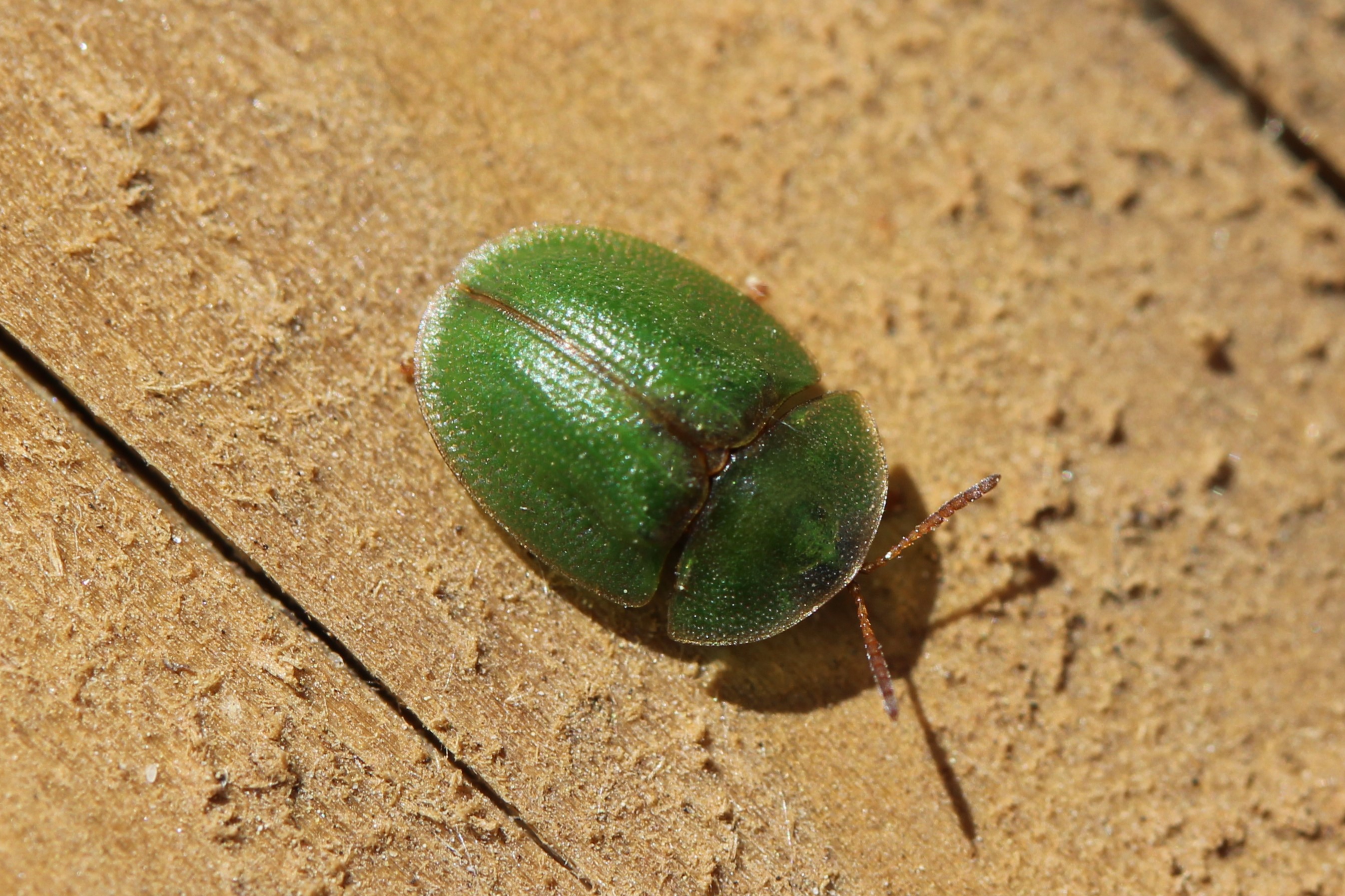
Thistle Tortoise Beetle (Cassida rubiginosa), Backyard, May 2024:
Tortoise Beetles (Beetles in the subfamily Cassidinae of the Family Chrysomelidae) have always been some of my favourite insects. Their wide elytra (wing-covers) protect their limbs and heads from predators and provide them with an appealingly round shape. The Thistle Tortoise Beetle is not native to Canada (having been introduced to combat the non-native Thistle plant), but it was still exciting to spot this charismatic insect on my back porch, trundling along. Their larval stage is less appealing, but still interesting, protecting itself not with a hardened armor covering but a “fecal parasol”. Yes, that’s right, larval Tortoise beetles carry their poop within a forked abdomen curved forward over their backs to ward off predators. There is even a specific word for this behaviour: “merdigery” – from the Latin for “dung” and “carry” (Costa 2006). Likely not a word you’ll find too much use for.
Armored Resin-bee (Heriades), Backyard, June 2024:
This strange-looking bee lays its eggs inside of constructions left behind by other insects, “especially beetle holes in wood, but they may also use pine cones” according to Wilson and Carril (2016). Their nest cells are divided with resin which is where they get their common name of “resin-bee”. Their generic name “Heriades” means “wool” referring to their woolly hairs, evident in the photo.
Related Chaclid Wasp (Leucospis affinis), Backyard, June2024:
Although her colouration may remind you of a paper wasp or other social, stinging wasp, the long ovipositor curled over her back indicates that she is in fact something quite different: a parasitic wasp. This female will lay her eggs inside the nest of a leafcutter bee (bees in the family Megachilidae), and the larvae that hatch will locate and consume their host bee larvae (Holm 2021). Holm, in her amazingly detailed books on common garden wasps, says this about the larval stage of this wasp: “The larva is initially equipped with sensory and locomotive hairs on its head and body to help it find the host as it moves around the dark nest cell… has an oversized head, and large mandibles used to kill the host larva and destroy any other Leucospis eggs. Like many cleptoparasitic bees, the larva loses most of these prey-finding apparatus after molting” (Holm 2021).
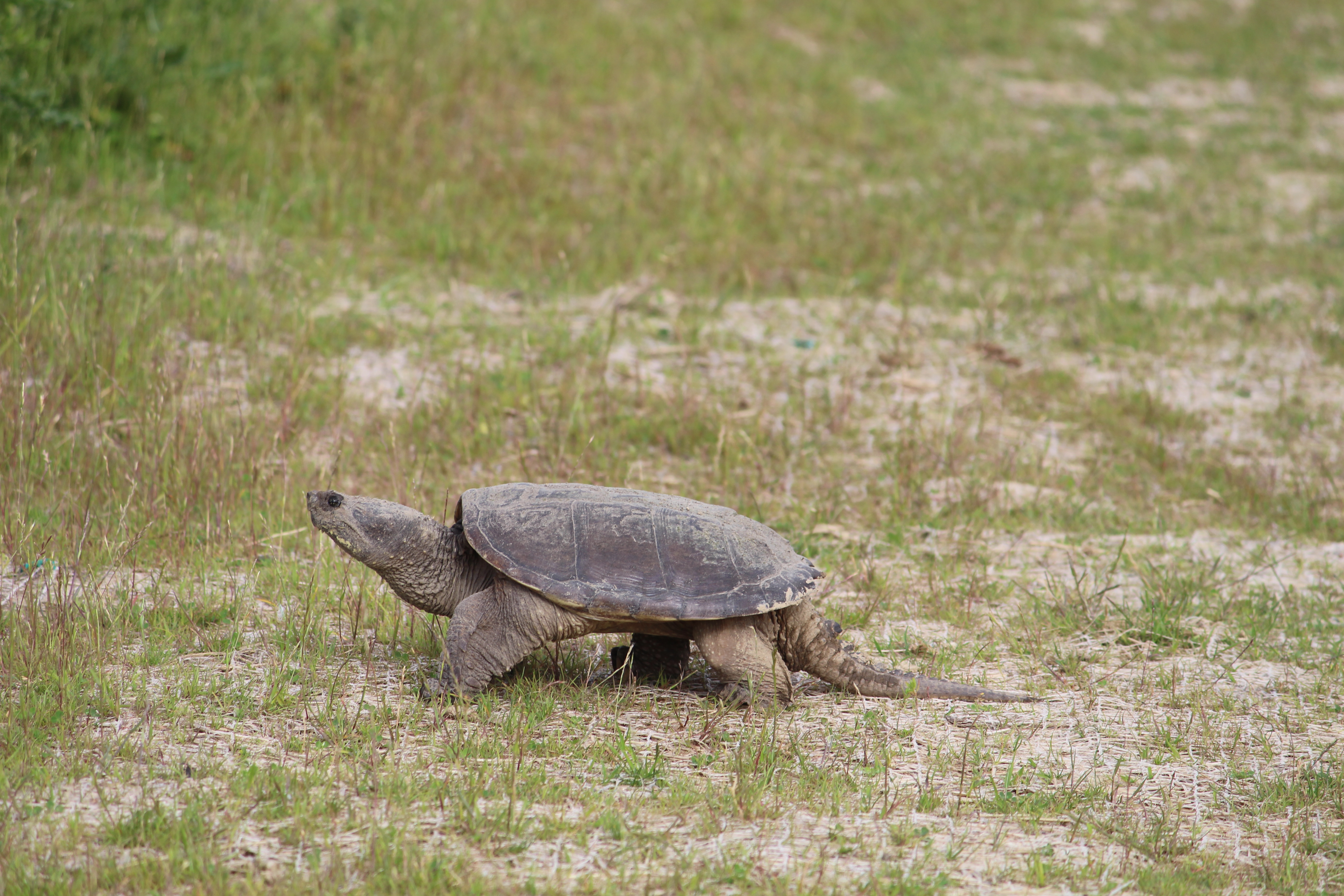
Common Snapping Turtle (Chelydra serpentina), Long Point, June 2024:
The sight of a Snapping Turtle walking across land always makes me think of a prehistoric beast lumbering out of some primeval swamp. Despite the fact that Snapping Turtles are well adapted to their environment, and no more primitive a species than any others, they give the impression of an ancient power, a relic from the days of the lumbering dinosaurs.
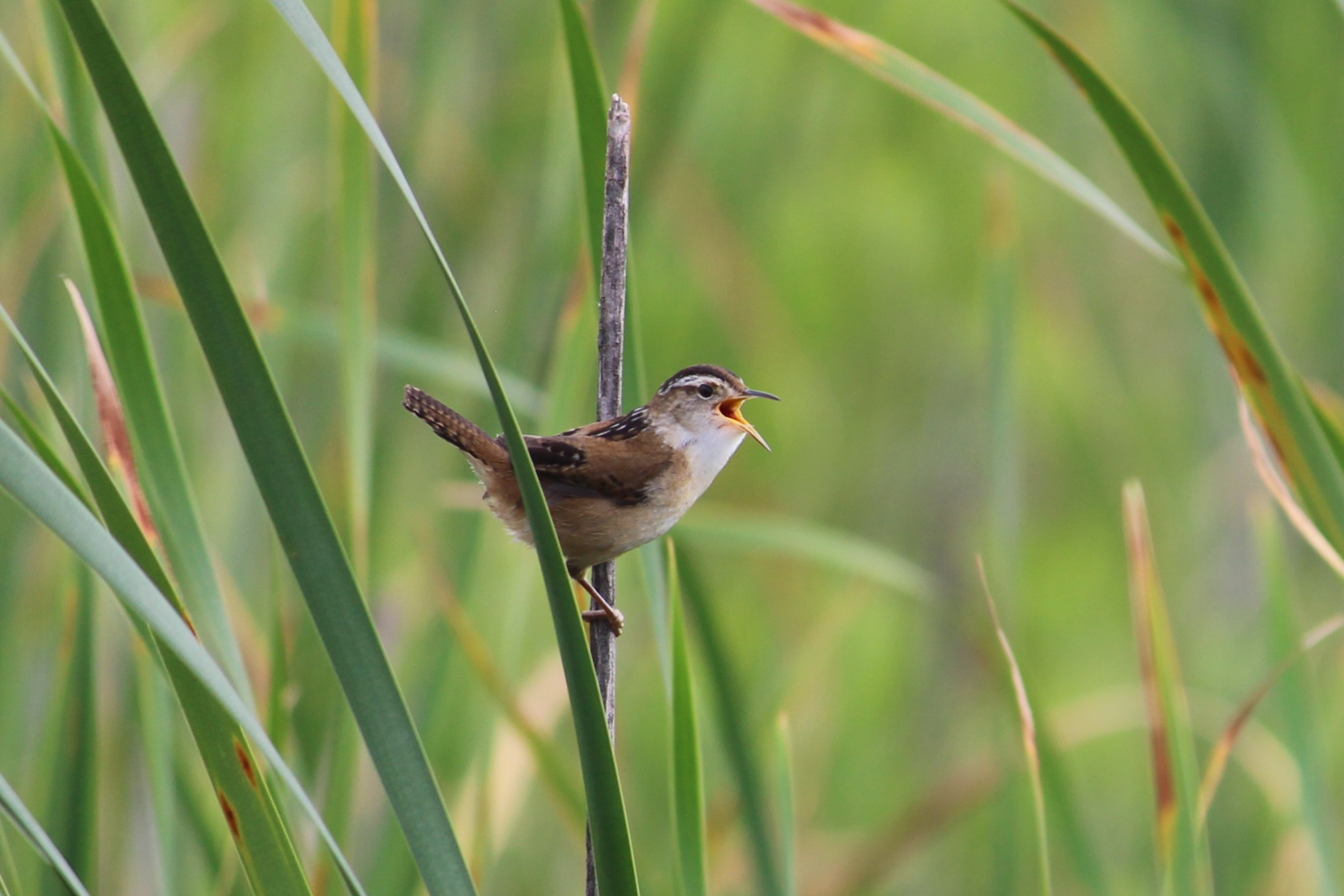
Marsh Wren (Cistothorus palustris), Long Point, June 2024:
The sound of these energetic birds clambering among the cattails of a wetland is one of the backdrops of my summer, going out to take photos of birds and other wildlife. I was surprised to learn that Marsh Wrens are major predators on Red-winged Blackbird eggs and nestlings in some parts of their range (Beletsky 1996). Marsh Wrens mostly eat insects, and they construct several nests within their territories from which the females choose, just like in House Wrens (Stokes and Stokes 1983).
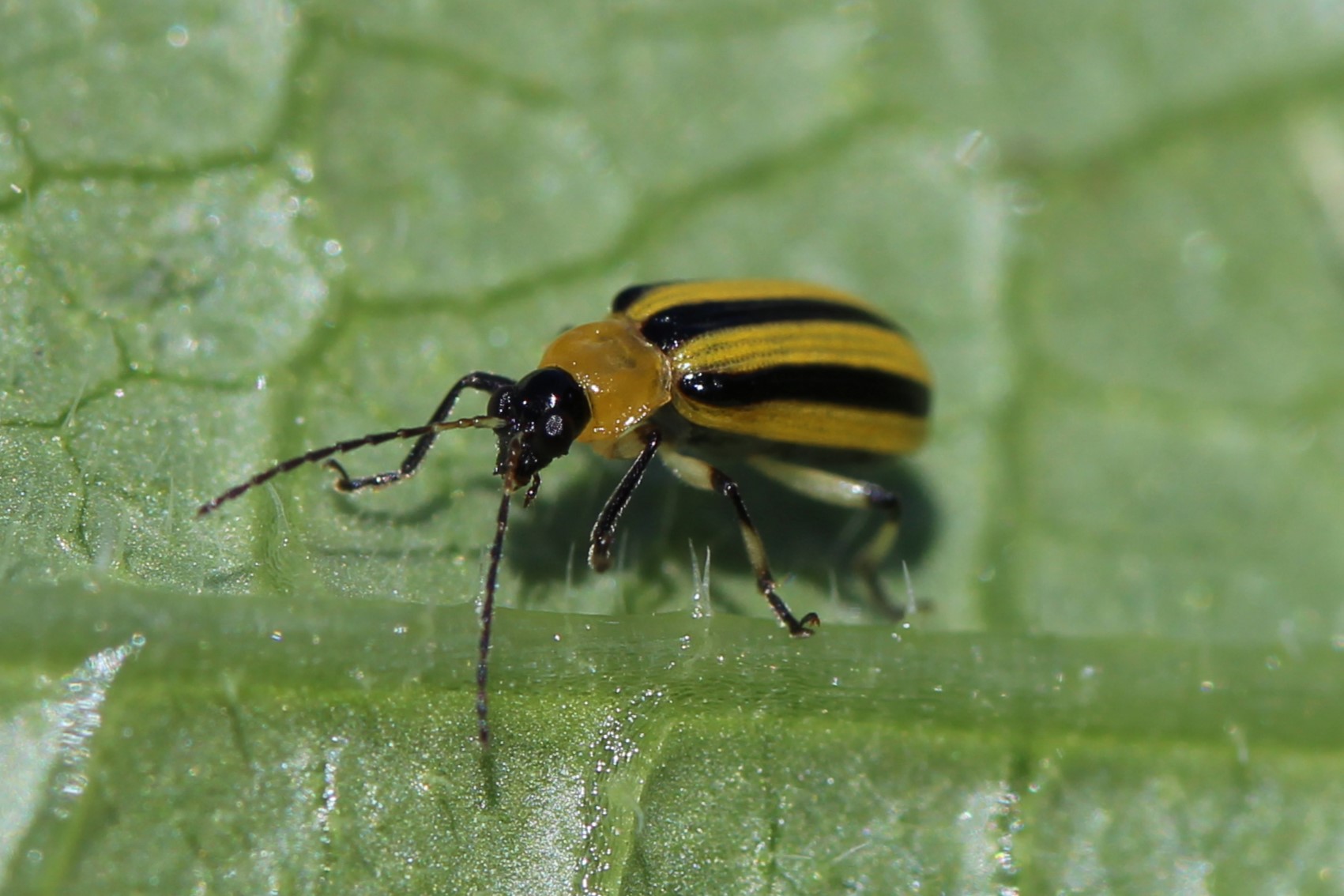
Striped Cucumber Beetle (Acalymma vittatum), Backyard, July 2024:
The Striped Cucumber Beetle is considered a pest because it consumes plants that we like to consume ourselves: members of the Cucurbitaceae (cucumbers, watermelons, gourds, pumpkins, squash and many others). The adults feed on leaves, while their larvae feed on the roots (Marshall 2018).
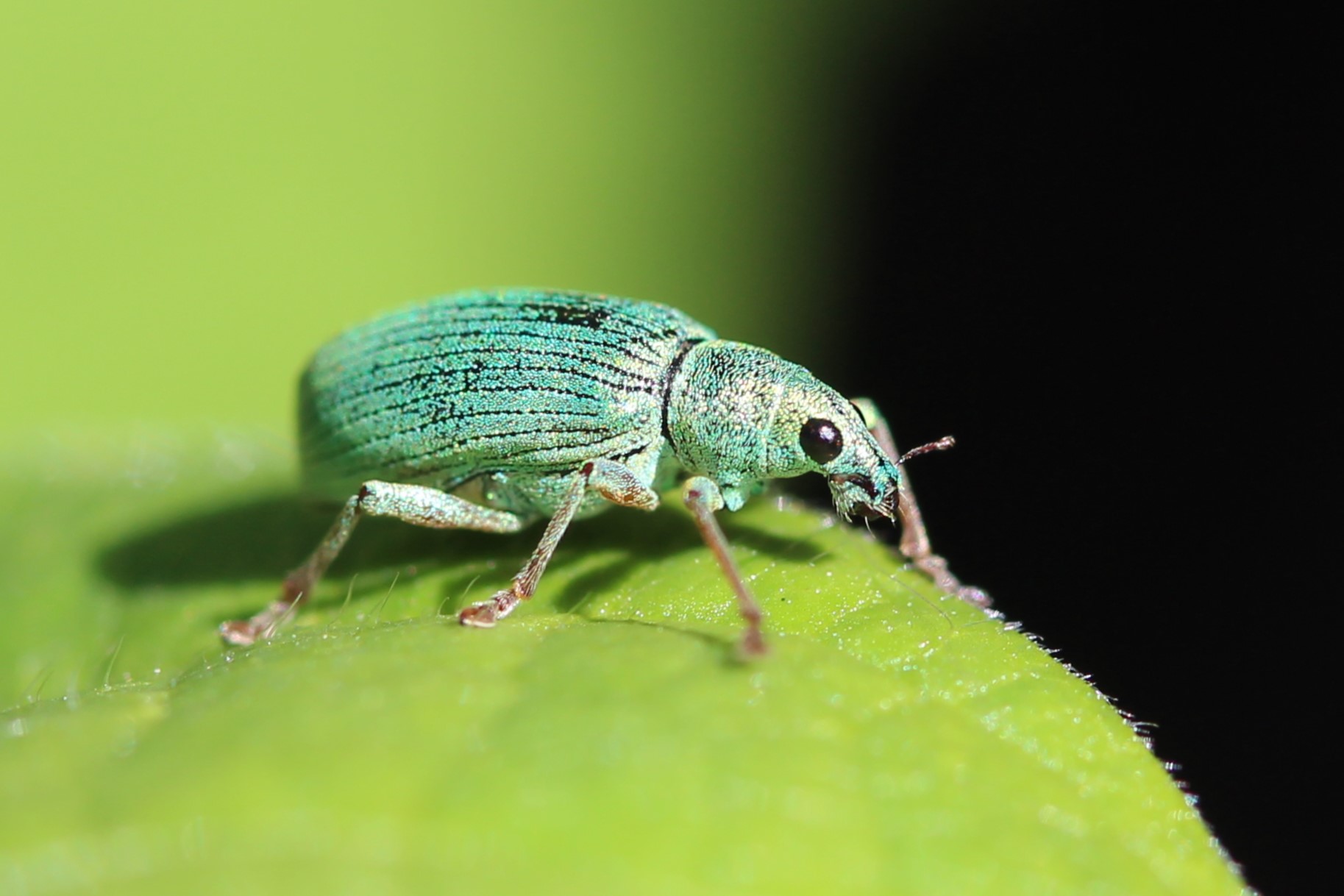
Green Immigrant Leaf Weevil (Polydrusus formosus), Backyard, July 2024:
Another pest beetle species, this one non-native to North America (accidentally introduced, and not deliberately like the Thistle Tortoise Beetle), the Green Immigrant Leaf Weevil feeds on various shrubs and trees. Eggs are laid in the bark of host plants or in the soil, the larvae feed on roots through Spring and Summer and then emerge as adults in the following Spring (Lisak et. al. 2024).
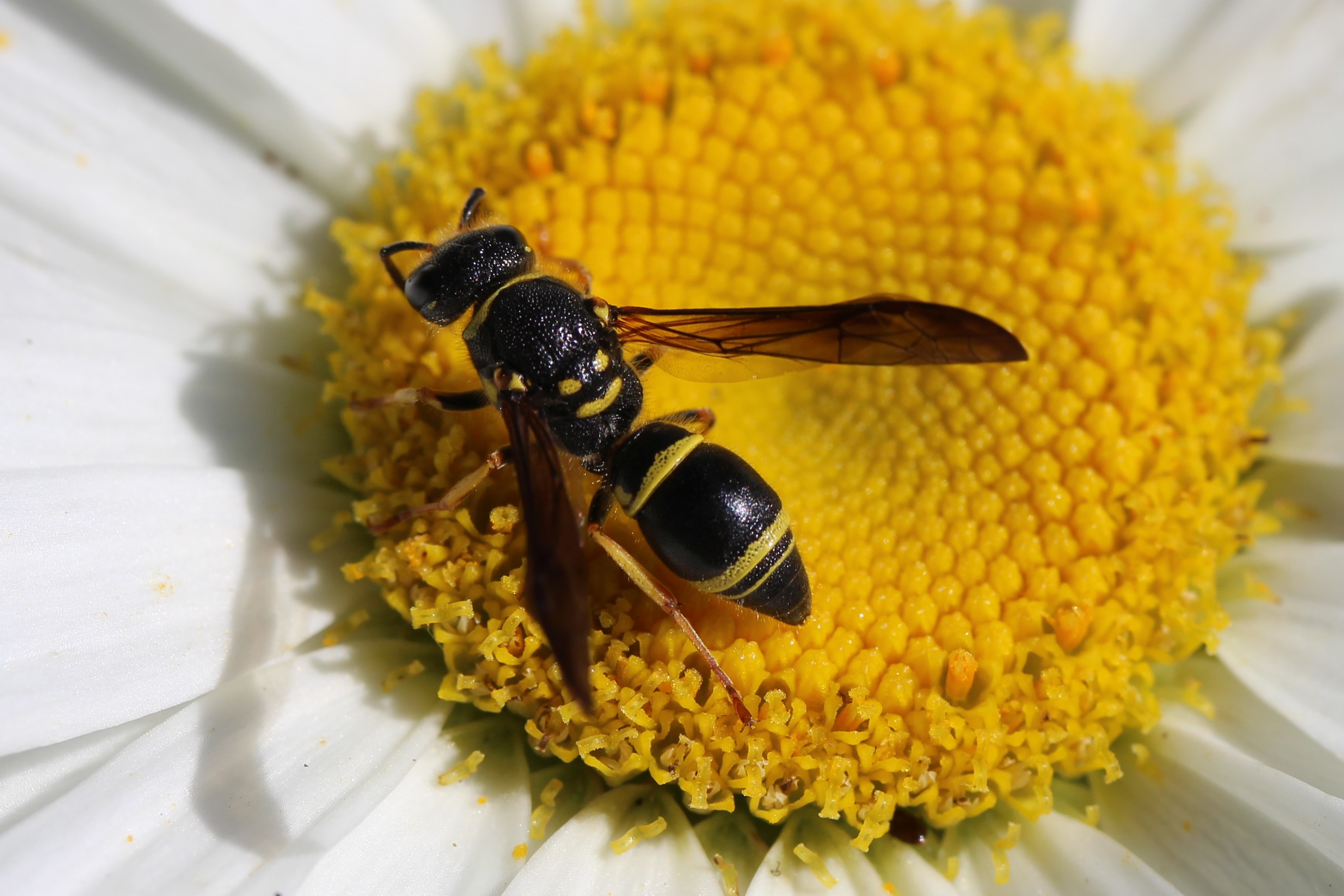
Smiling Mason Wasp (Ancistrocerus campestris), Backyard, July 2024:
In the photo above, you can clearly see the smile emblazoned on the Smiling Mason Wasp’s thorax. These wasps lay their eggs in pre-existing cavities, creating several nest cells by dividing the cavity with mud walls (Holm 2021). You can think of each nest cell as a nursery for individual wasp larvae, as the Smiling Mason Wasp female lays a single egg in each chamber (and hangs it from the ceiling by a silken thread) (O’Neill 2001). Each nursery is filled with several paralyzed caterpillars for the larva to consume upon hatching (Holm 2021).
Squash Vine Borer (Eichlinia cucurbitae), Backyard, July 2024:
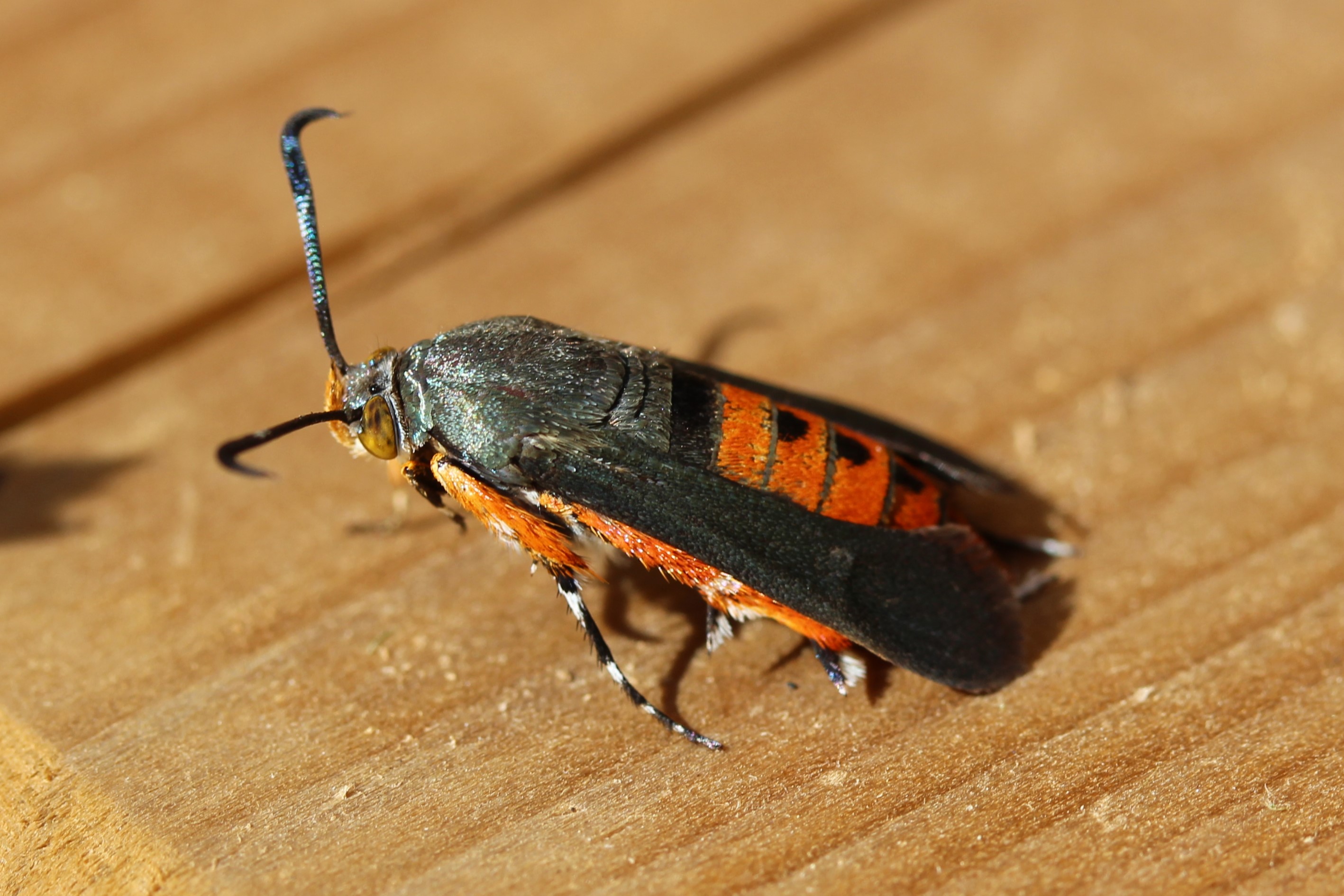
Standing still, the illusion is not very convincing, but when this little moth was in constant buzzing motion, hovering from flower to flower, the resemblance to a wasp was impressive (specifically the Great Golden Digger Wasp, Sphex ichneumoneus). The mimicry helps keep this moth safe from predators which hesitate to interfere with a stinging wasp but would love to snack on a harmless moth. As with several other insects on this list, the Squash Vine Borer feeds on squash, cucumbers, gourds, or pumpkin during its larval stage, giving some indication of what we were growing in our garden this past summer.
Pruinose Squash Bee (Peponapis pruinosa), Backyard, July 2024:
Unlike many other bees, Squash Bees are specialist pollinators on one plant family: the Cucurbitaceae (the pumpkins, squash, cucumbers etc). These are solitary bees, meaning that each female creates her own nest for her offspring, rather than contributing to a social construction such as a honeybee or bumblebee colony made up of many non-reproducing individuals. Female Squash Bees dig their nests into the soil, 1.5 feet deep or more, before branching off the main tunnel into several off-shoots with each one receiving pollen and an egg (Wilson and Carril 2016).
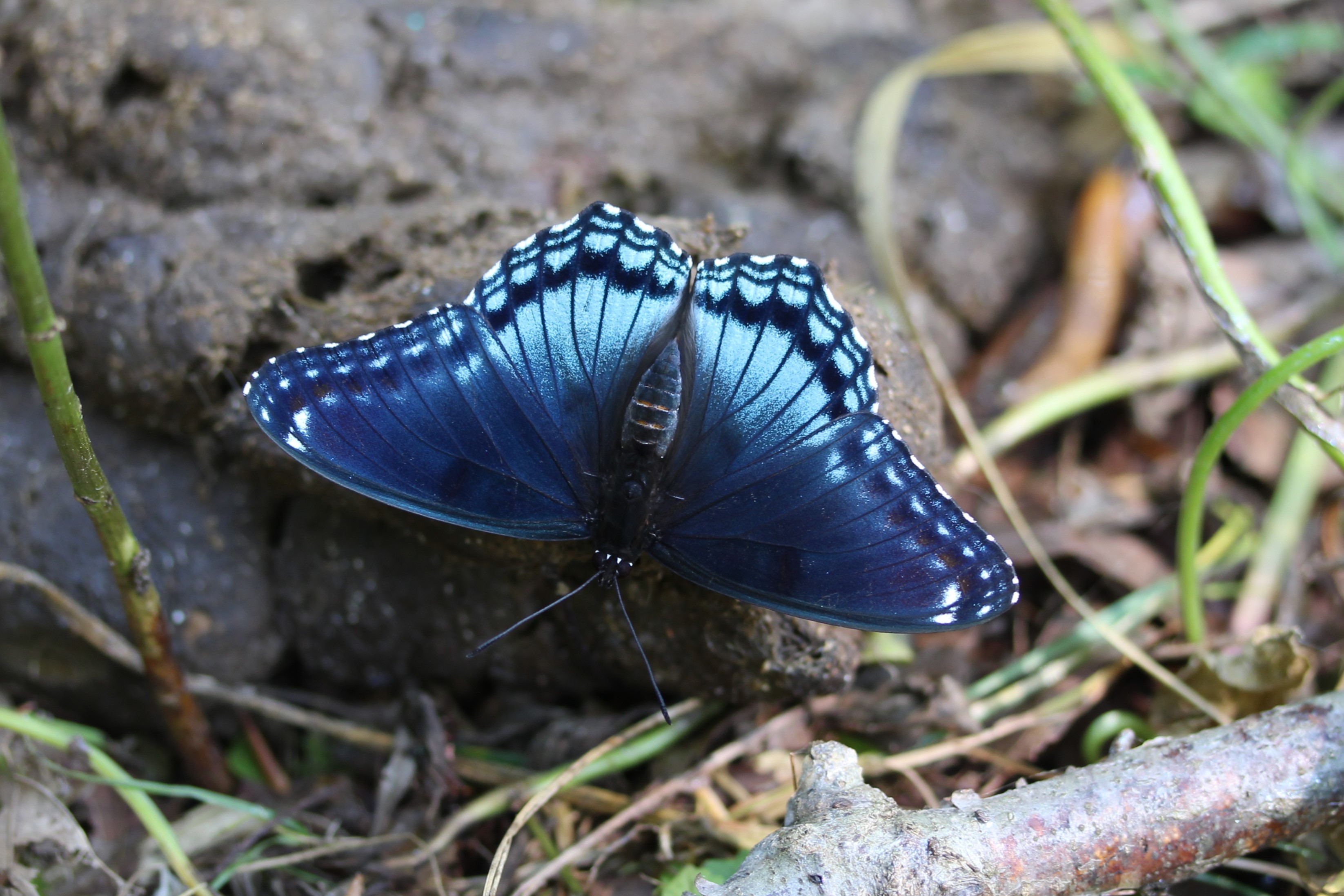
Red-Spotted Purple Butterfly (Limenitis arthemis astyanax), Backus Woods, July 2024:
This beautiful butterfly was spreading its wondrous wings as it fed on dung (I believe this was of the horse variety). Many butterflies feed on dung for valuable minerals, creating such jarring juxtapositions.
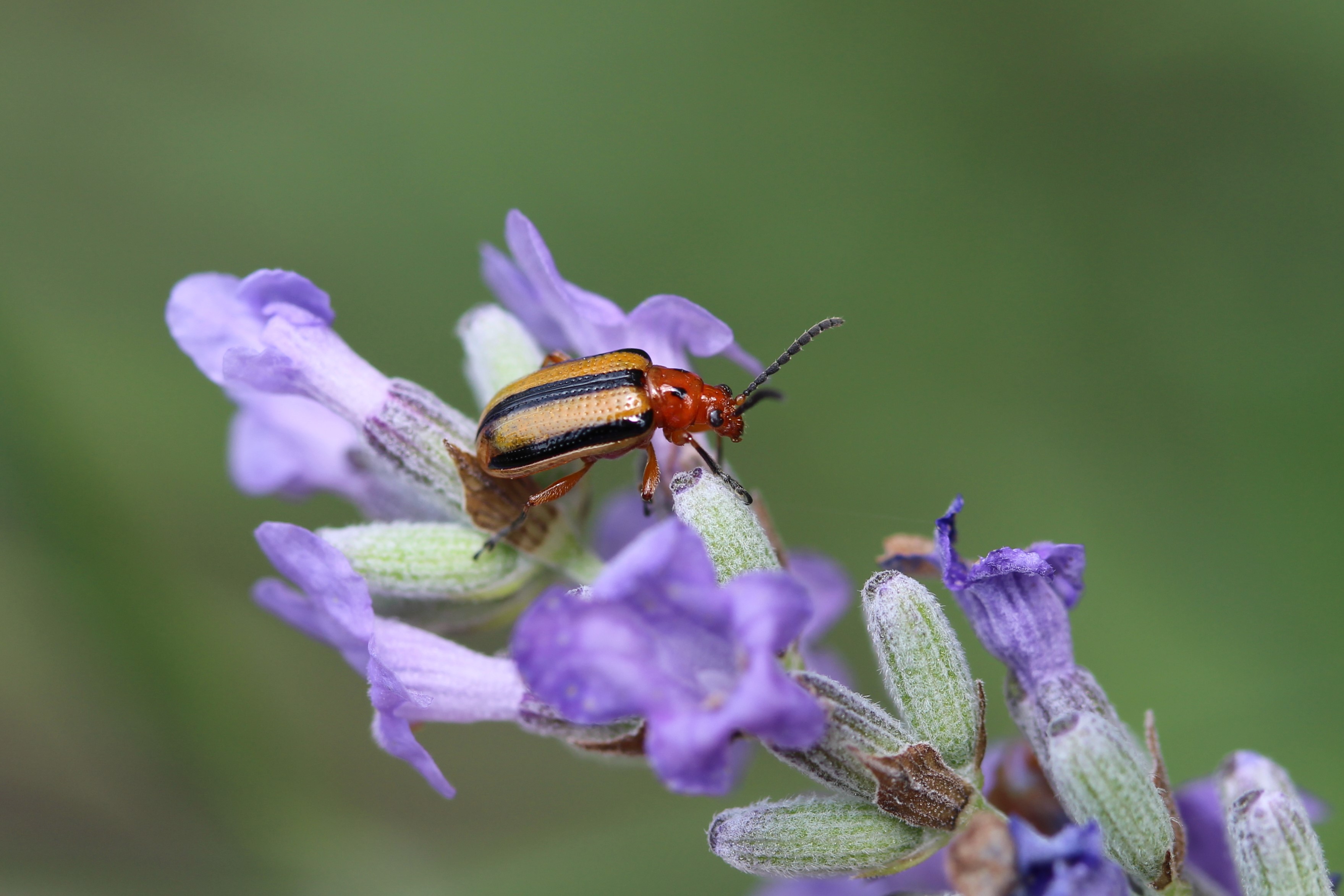
Three-lined Potato Beetle (Lema daturaphila), Backyard, July 2024:
This attractively coloured beetle is a native leaf beetle (in the subfamily Criocerinae) which feeds on potatoes and other related plants. Its larvae exhibit merdigery (bet you didn’t think that word was coming back again so soon, did you!?).
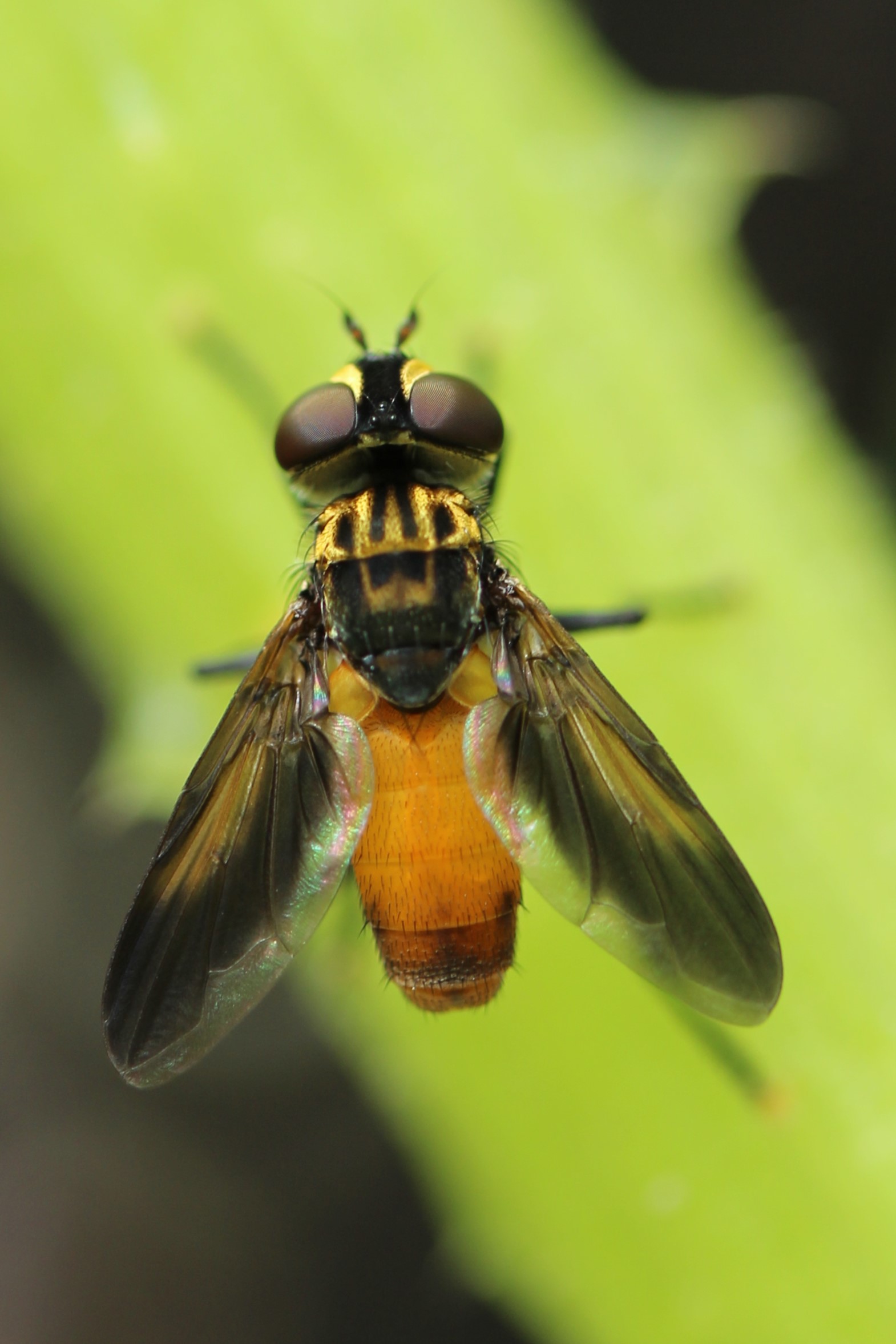
Swift Feather-legged Fly (Trichopoda pennipes), Backyard, July 2024:
These flies are part of the vast fly Family Tachinidae, which are largely bristly and parasitic. Trichopoda pennipes lays its eggs directly onto its hosts which are various true bugs (Hemipterans), including Squash Bugs, Stink Bugs and Leaf-footed bugs. The egg hatches and the larva burrows directly into the host bug, consuming it from the inside. This gruesome life cycle is helpful to gardeners as many of its hosts are pests of garden plants.
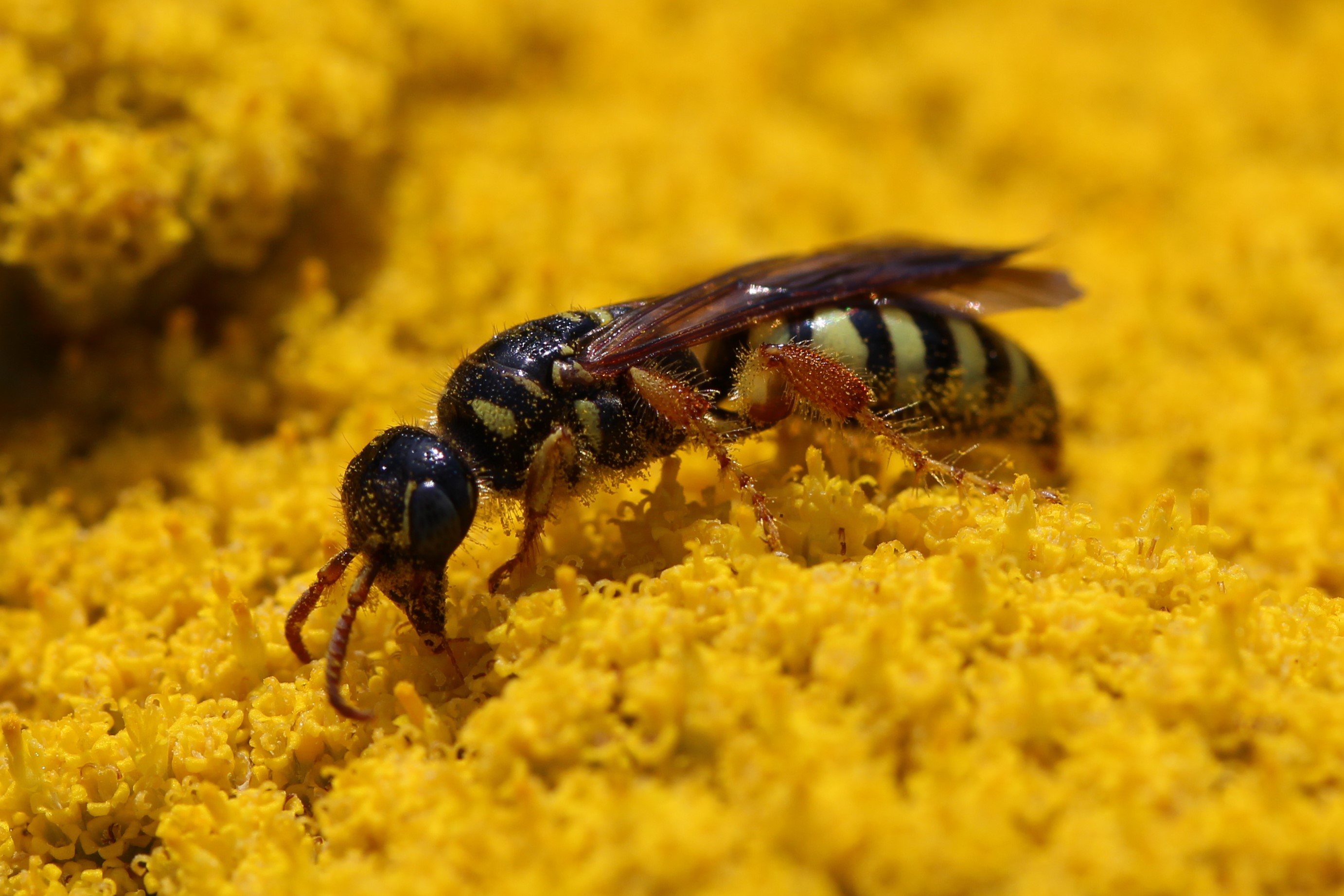
Five-Banded Thynnid Wasp (Myzinum quinquecinctum), Backyard, July 2024:
These large wasps again demonstrate the familiar patterning and colouring of a social paper wasp, but are very distinct in their life cycle. Female Five-Banded Thynnid Wasps dig up to six inches into the ground at night, in search of scarab beetle larvae (or occasionally tiger beetle larvae) (Holm 2021). Once found, the female paralyzes the grub and lays her egg on its abdomen (Holm 2021). The wasp larva consumes the beetle larva and creates a silken cocoon within its late host’s underground chamber to spend the winter (Holm 2021). Once spring arrives, the wasp pupates and emerges as the impressive adult pictured above in summer (Holm 2021).
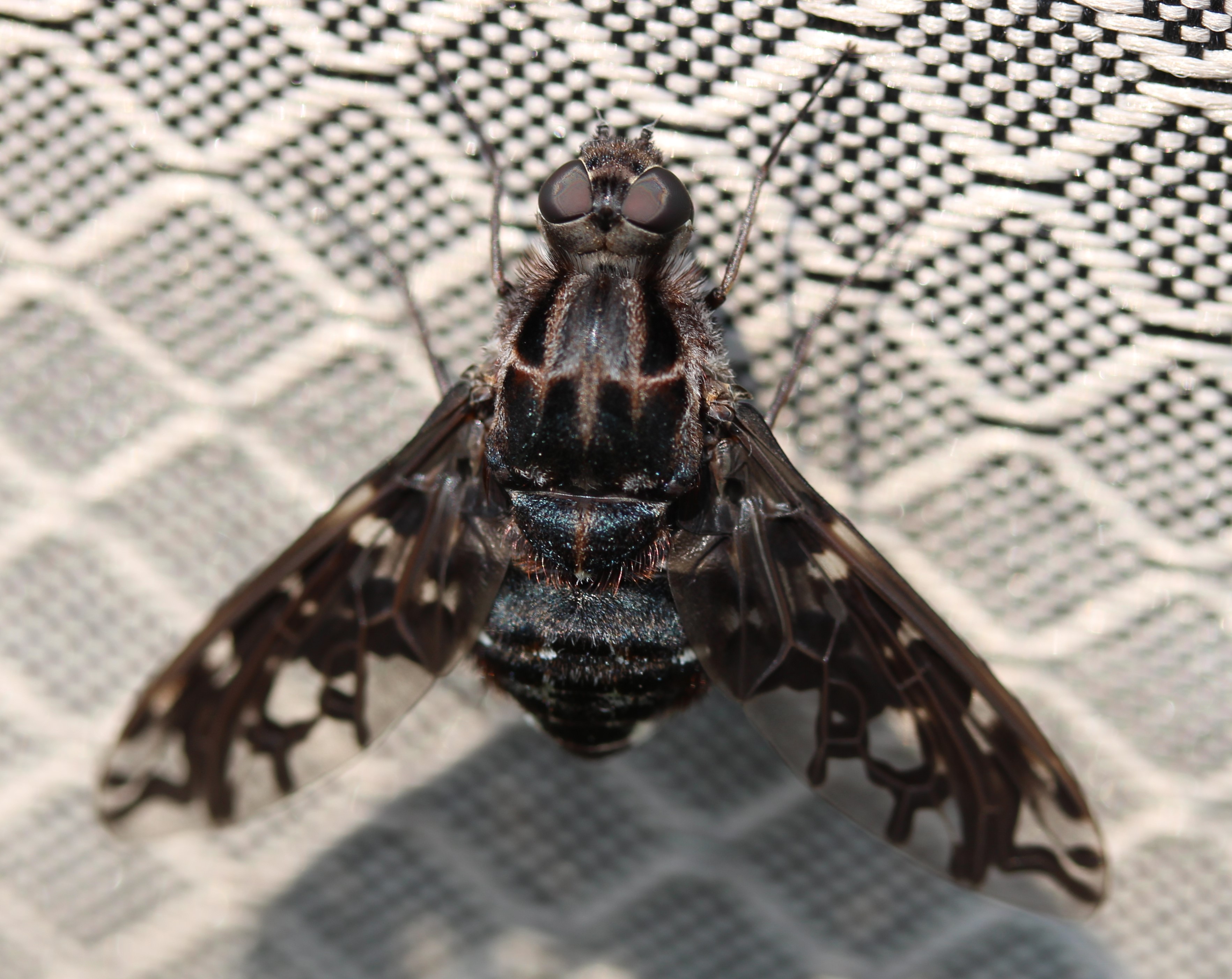
Despite its large and striking appearance, this formidable fly does not bite or sting people and should only be feared by its prey: Carpenter Bees (Xylocopa spp.). The Tiger Bee-Fly lays its eggs near Carpenter Bee nests, and the larvae make their way inside to consume the bee larvae.
Belted Kingfisher (Megaceryle alcyon), Grant Anderson Park, September 2024:
I have tried in vain to take a good, clear, photo of a kingfisher for many years now. These distinctive, charismatic birds are always on the move, and very aware of me whenever I approach with camera in hand. They need their good senses to spy fish underwater which they dive and catch. This past September, I finally managed to get a nice photo of this bird in the local park in Simcoe.
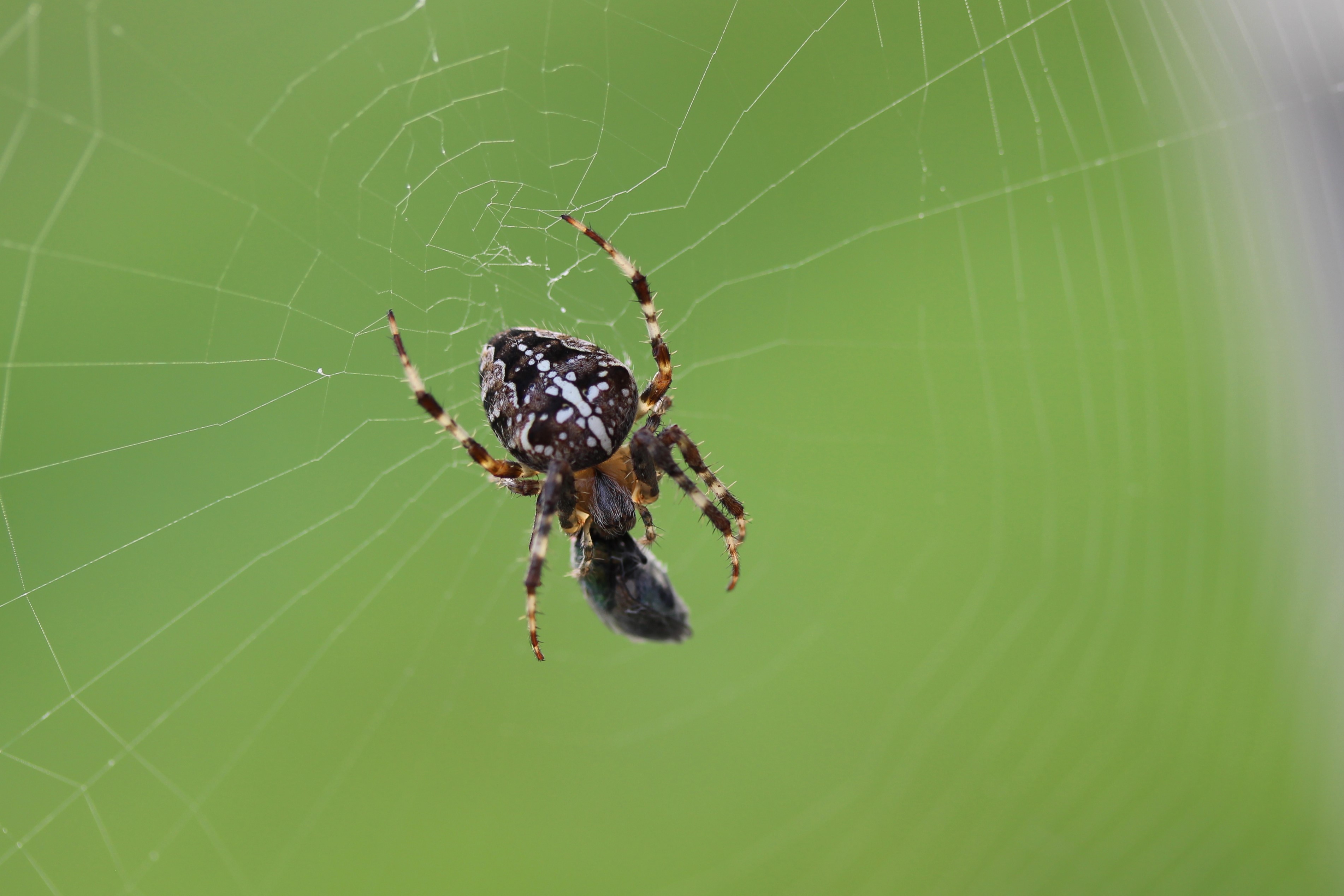
Cross Orbweaver (Araneus diadematus), Backyard, September 2024:
This large spider feasting on its dipteran prey had constructed a web on the edge of my back porch. Cross Orbweavers are introduced spiders here, native to Europe.
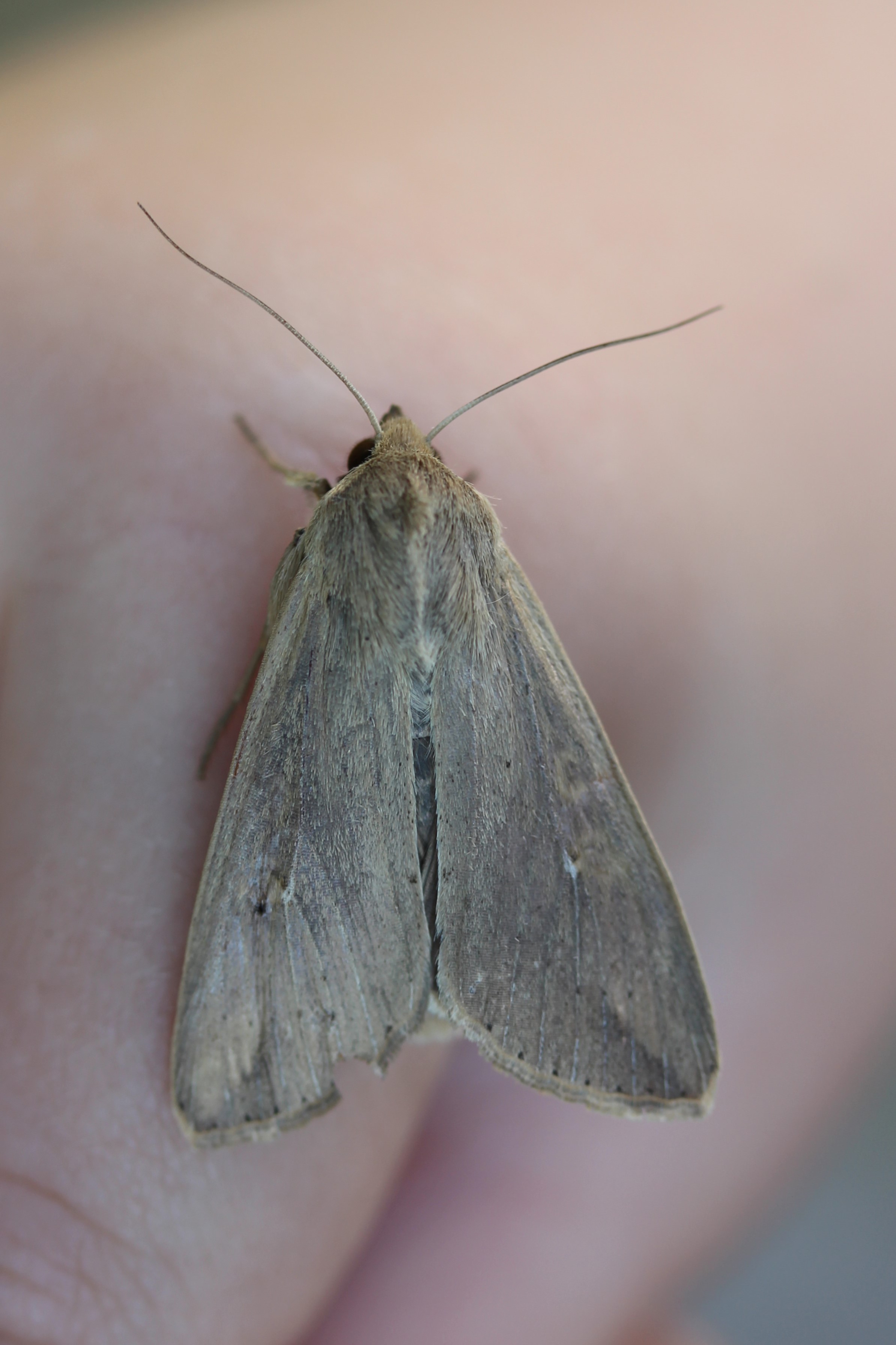
Mythimna Moth, Backyard, September 2024:
I believe this moth is of the genus Mythimna, but I’m not quite sure as it’s a fairly nondescript moth. The moths in this genus feed on grasses when larvae which would also line up with its discovery within my lawn (Beadle and Leckie 2012).
Sharptail Bee (Coelioxys), Backyard, September 2024:
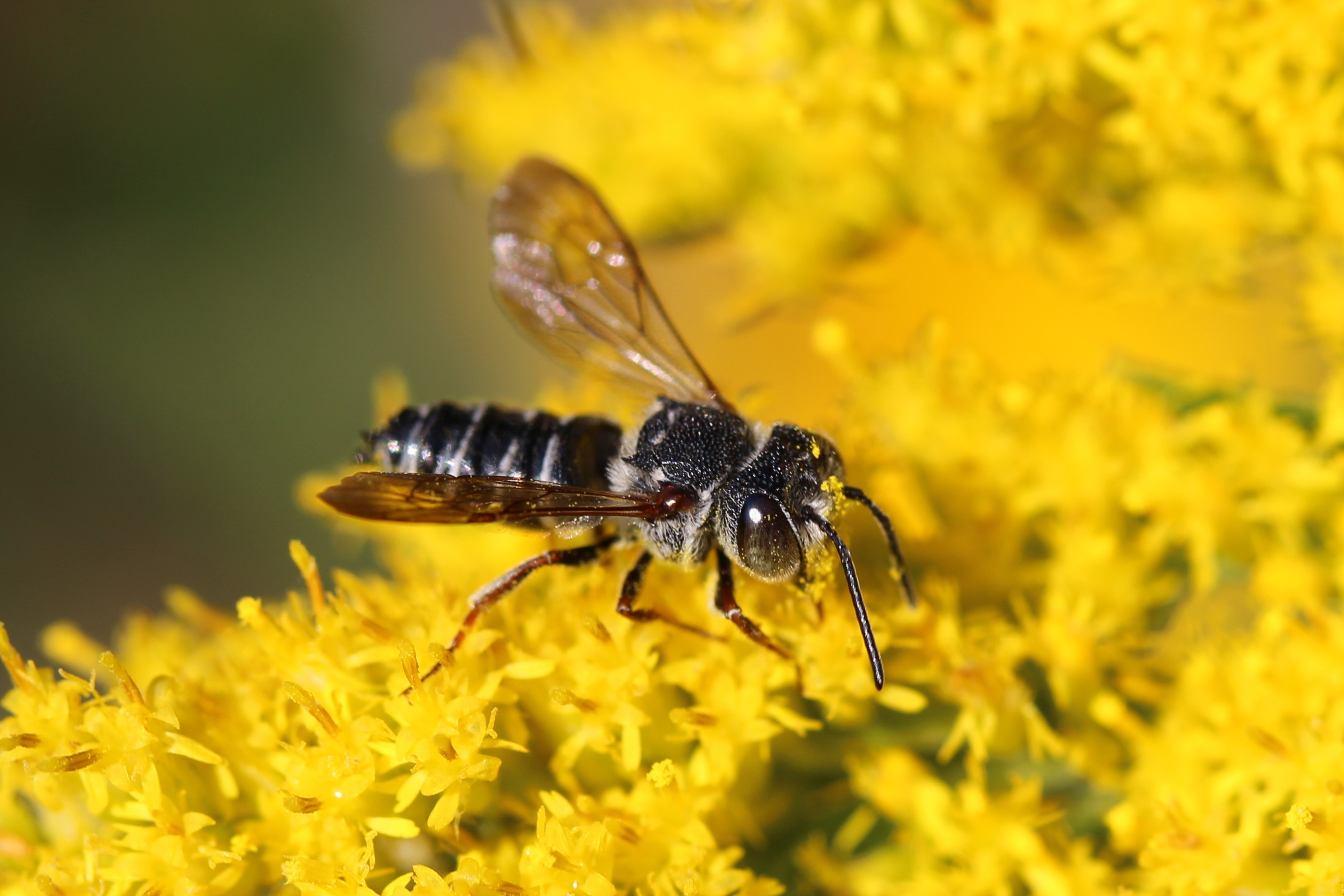
Although the proportions of the pictured individual lead the head to be much larger than the thinning abdomen, the common name “Sharptail Bee” refers more to the females of these bees (the bee in the photo is a male) who have very pointed abdomens used to puncture the nest cells of Megachilid bees (Wilson and Carril 2016). Coelioxys eggs laid inside their hosts’ nests hatch and the emerging larva “uses tweezer-sharp mandibles to snip the egg or young larva of the host bee in half” (Wilson and Carril 2016). The larva then proceeds to consume the pollen that was stored away for the host bee’s young.
Apple Leaf Skeletonizer Moth (Choreutis pariana), Backyard, September 2024:
These are day-active moths, with larvae that feed on crab apple leaves. They were introduced to North America sometime around 1917 (Beadle and Leckie 2012).
References:
Beadle, David and Leckie, Seabrooke 2012. Peterson Field Guide to Moths of Northeastern North America. Houghton Mifflin Harcourt.
Beletsky, Les. The Red-Winged Blackbird: The Biology of a Strongly Polygynous Songbird. 1996. Academic Press.
Costa, James T. 2006. The Other Insect Societies. Harvard University Press.
Holm, Heather 2021. Wasps: Their Biology, Diversity, and Role as Beneficial Insects and Pollinators of Native Plants. Pollination Press.
Lisak, Sarah C., Hailey N. Shanovich, Amelia R.I. Lindsey, and Brian H. Aukema. “The Polydrusus Weevils (Coleoptera: Curculionidae) of the United States of America and Canada: Identification and Insights into the Ecology of Two Nonnative Species in Hazel (Corylus Spp.).” The Canadian Entomologist 156 (2024): e10. https://doi.org/10.4039/tce.2024.7.
Marshall, Stephen. 2018. Beetles: Their Natural History and Diversity. Firefly Books.
Marshall, Stephen. 2023. Hymenoptera: The Natural History and Diversity of Wasps, Bees, and Ants. Firefly Books.
O’Neill, Kevin M. 2001. Solitary Wasps: Behavior and Natural History. Cornell University Press.
Stokes, Donald and Stokes, Lillian. 1983. A Guide to Bird Behavior Volume 2. Little, Brown and Company.
Wilson, Joseph S. and Carril, Olivia M. 2016. The Bees in Your Backyard. Princeton University Press.
This was originally posted on my old blogsite April 2018.
We took a day-trip to Pinery yesterday, and aside from the fascinating species of birds flitting and calling among the trunks of the trees and the underbrush, we encountered something quite ordinary, and yet, as I hope to demonstrate, quite beautiful.
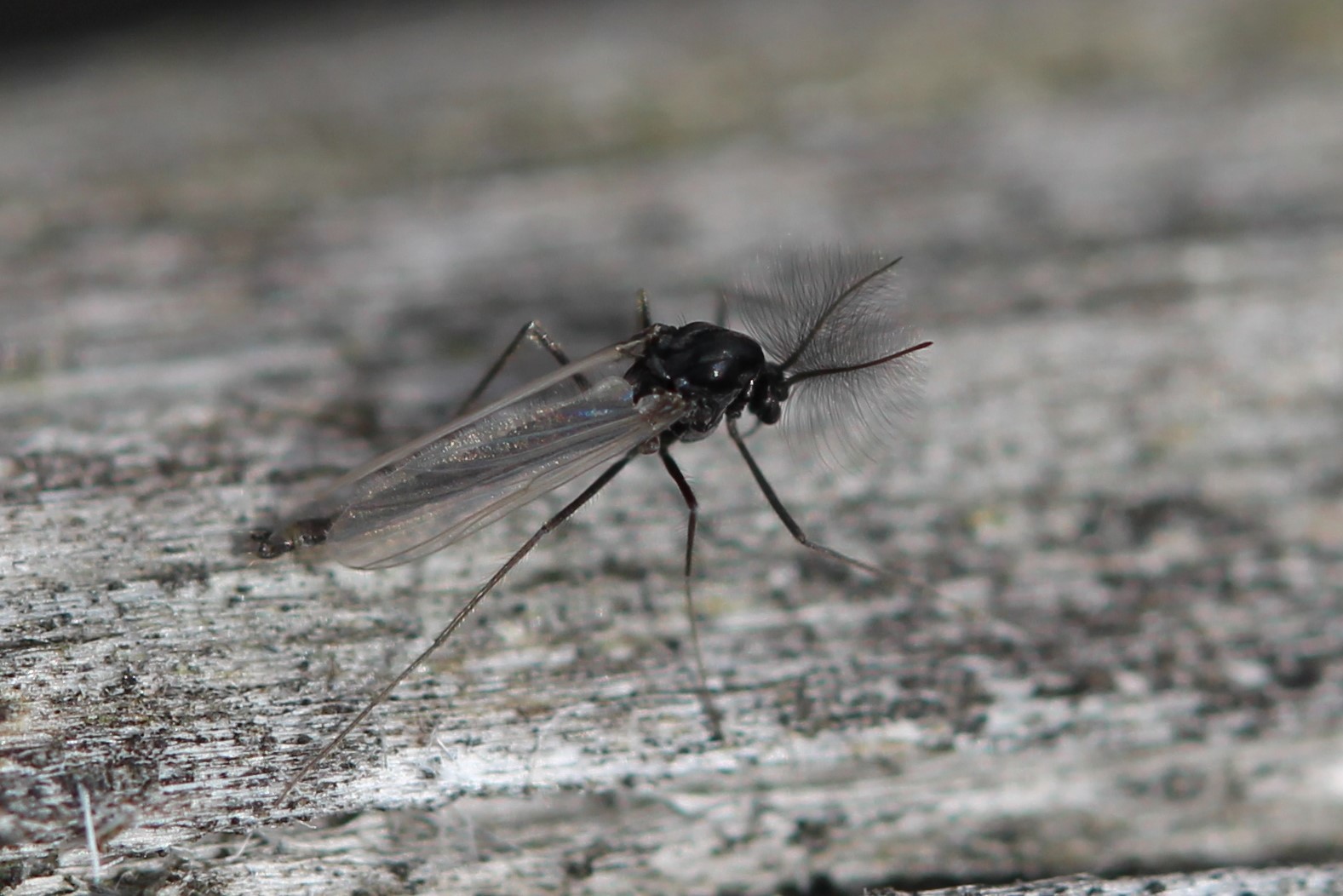
While walking along the trails by the river, we saw clouds of swirling insects. These tiny flies were creating their own signal, for potential mates. You’ve probably encountered their kind before, creating a smoke-like cloud above your head as you walked. Even though we are much larger than them, we certainly take notice of their swarms, which are made up of male midges.
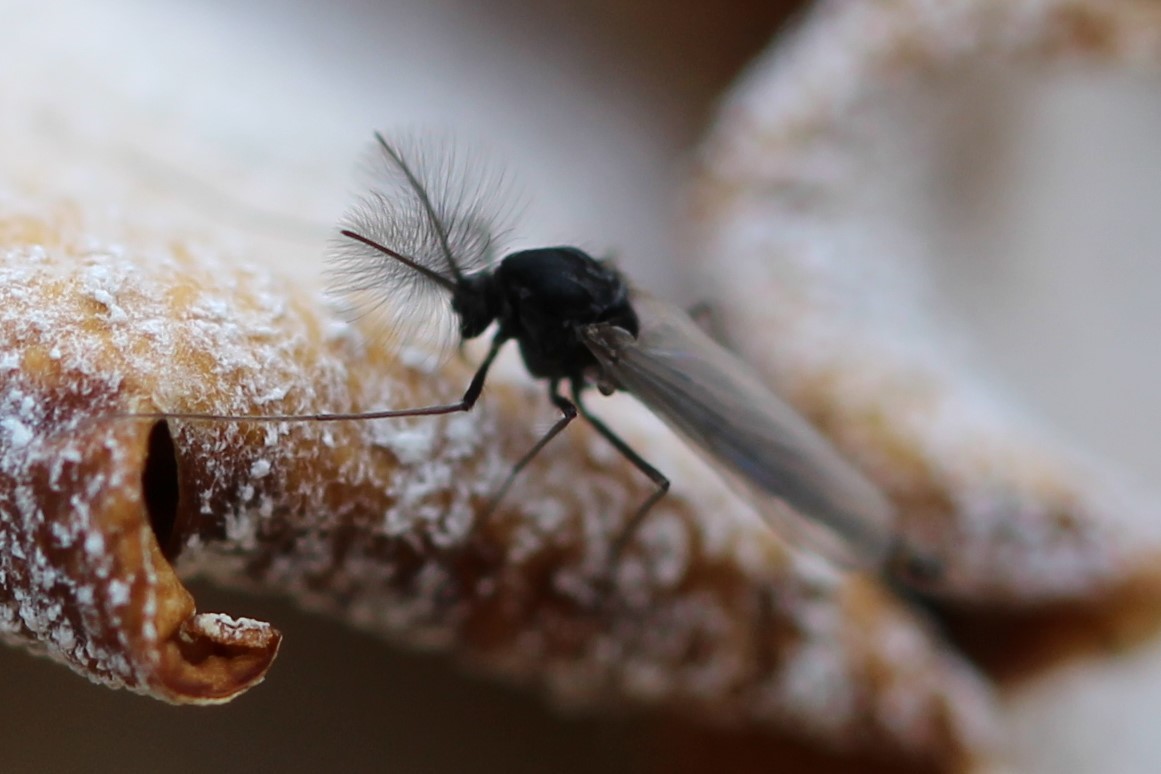
These particular insects were of the Family Chironomidae (the common, nonbiting midges). They may look like mosquitoes, but they won’t bite or seek blood. As such, you can see they don’t have the needle-like mouthparts that a mosquito uses to probe beneath skin. And you can even tell that these midges were male, because they had delicate feathered antennae atop their heads. With these, the male midges seek out female mates.
These midges most likely developed in the river, as small worm-like larvae, to become the graceful adults that we encountered. Because they are so numerous in and out of the water, they are incredibly important pieces of food chains and can also contribute to pollination of various plant species. These small and delicate insects may seem to be a nuisance, but they won’t bite and are a beautiful component of the world’s fauna.
Several of the midges landed on some fungi near the water.
I took a weekend trip to Point Pelee area, renowned for birding and I was amazed at the abundant and diverse birdlife passing through or permanently residing. There were quite a few non-bird surprises along the way and I’ll discuss them as well. I think for this adventure, I’m going to break it up into discussions by species rather than a more chronological approach I’ve used before for nature encounters on a trip. So we’re going to move through the Avian tree of life, family-by-family because not only did I encounter and photograph many different species of birds but I was surprised to find that most of them come from different bird families, representing a diversity of form and behavior.
We’re going to begin with the bird family I encountered first and most frequently throughout the trip: the Swallows (Hirundinidae). These acrobatic aeronauts were abundant wherever spaces were made available for them to construct their nests. I saw 3 different species of Swallows, of the 84 species worldwide (Elphick 2019).
Barn Swallow (Hirundo rustica):
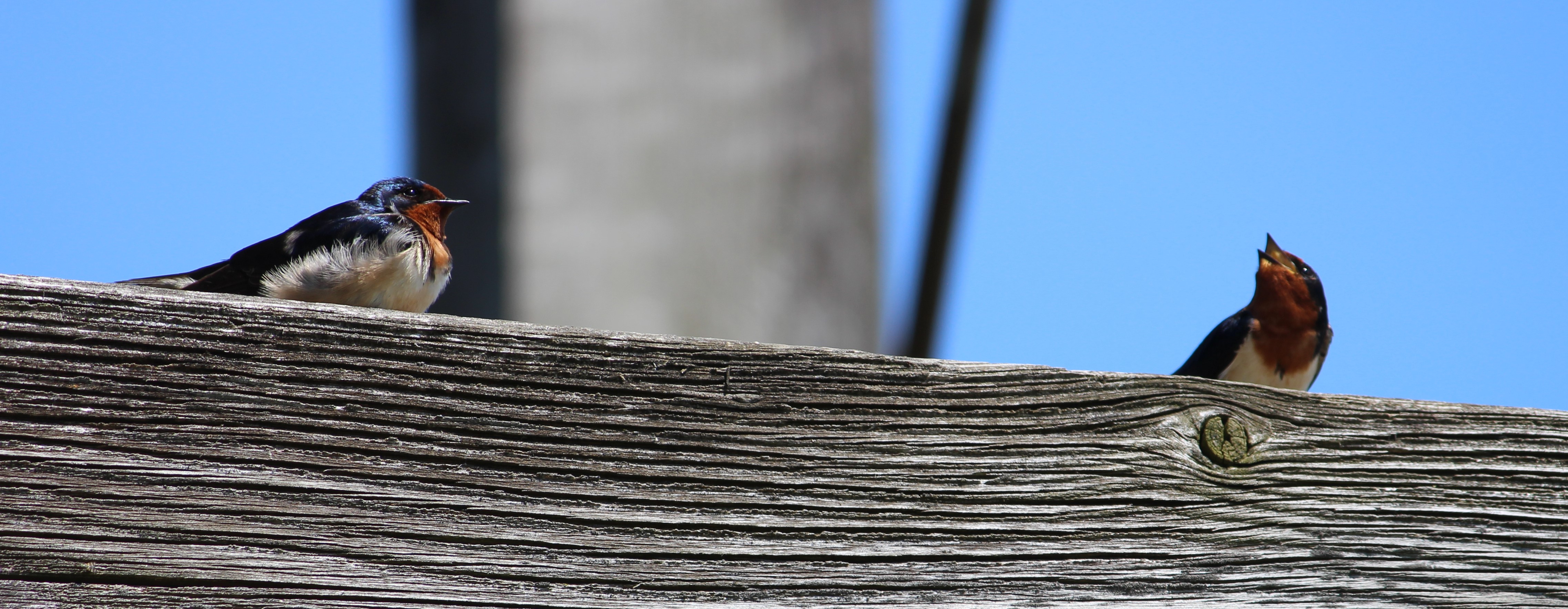
Barn Swallows on a lookout tower in Point Pelee National Park.
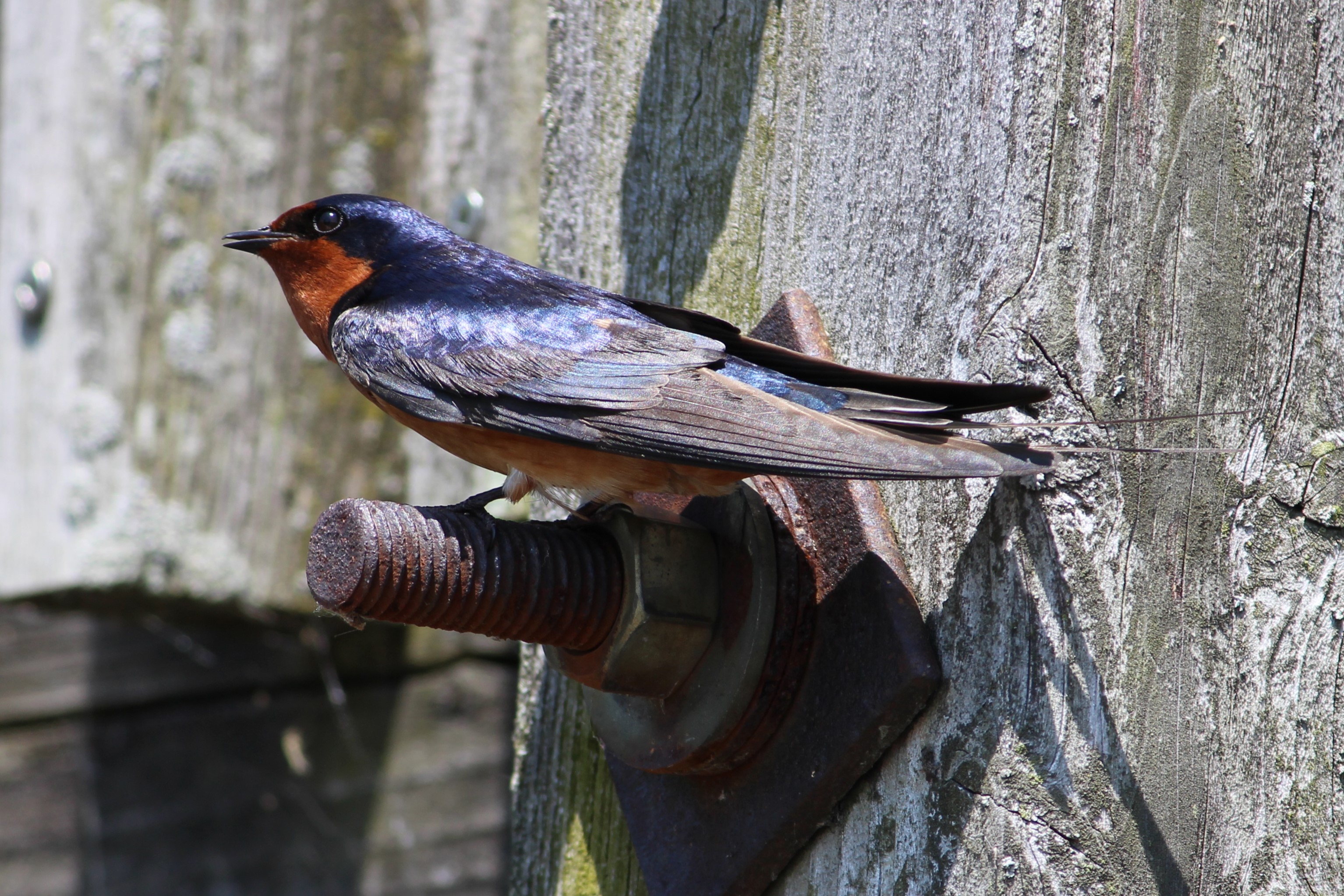
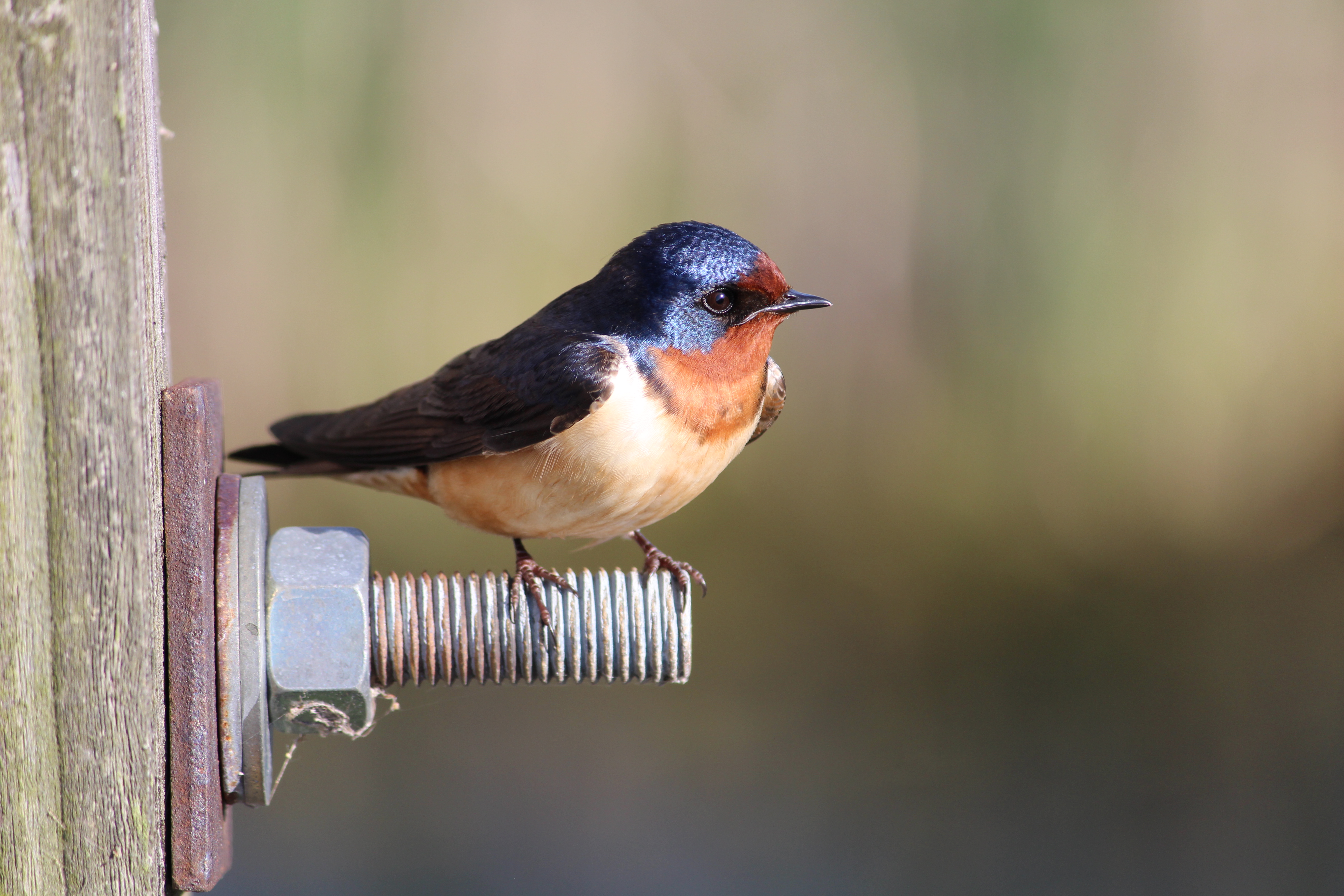
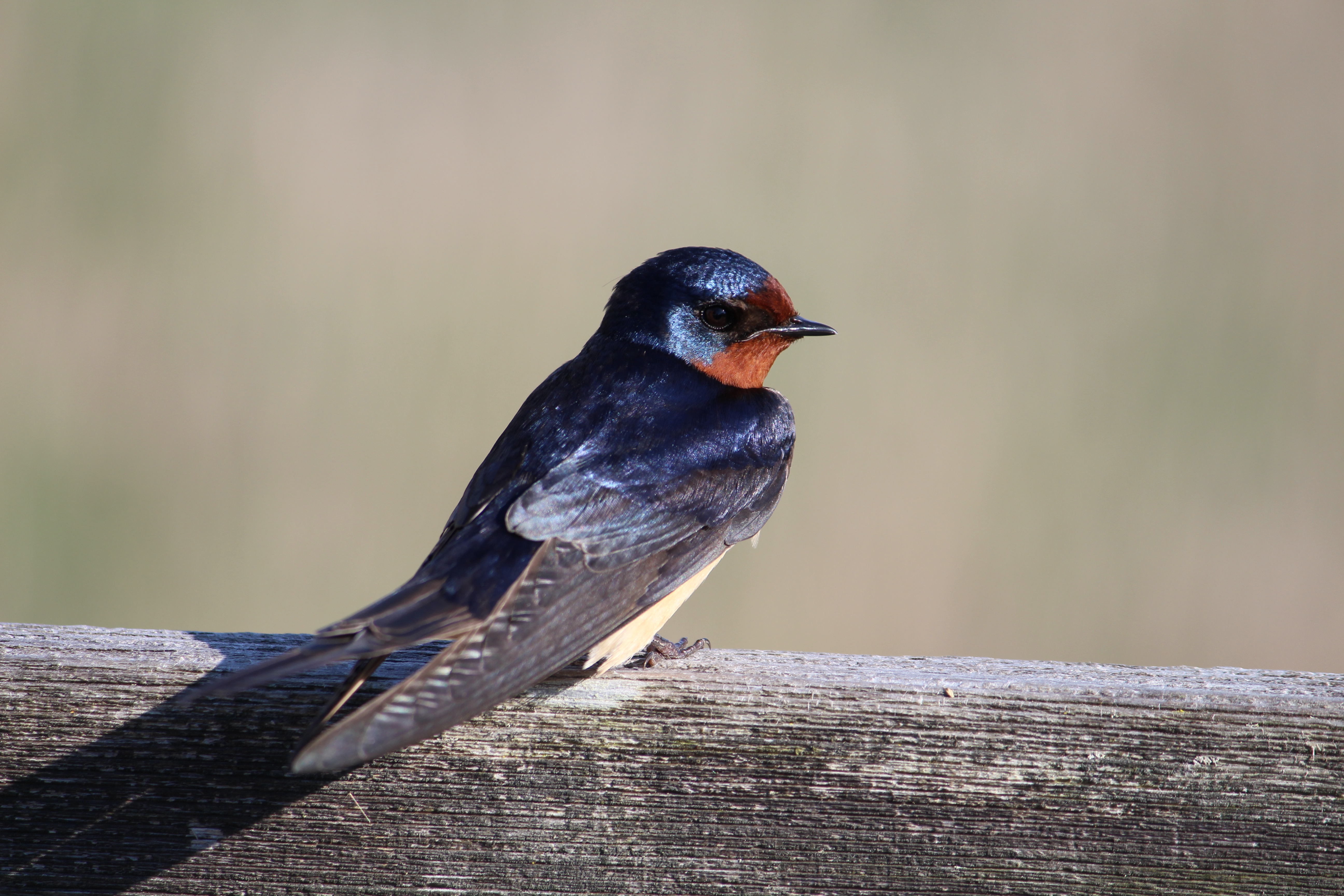
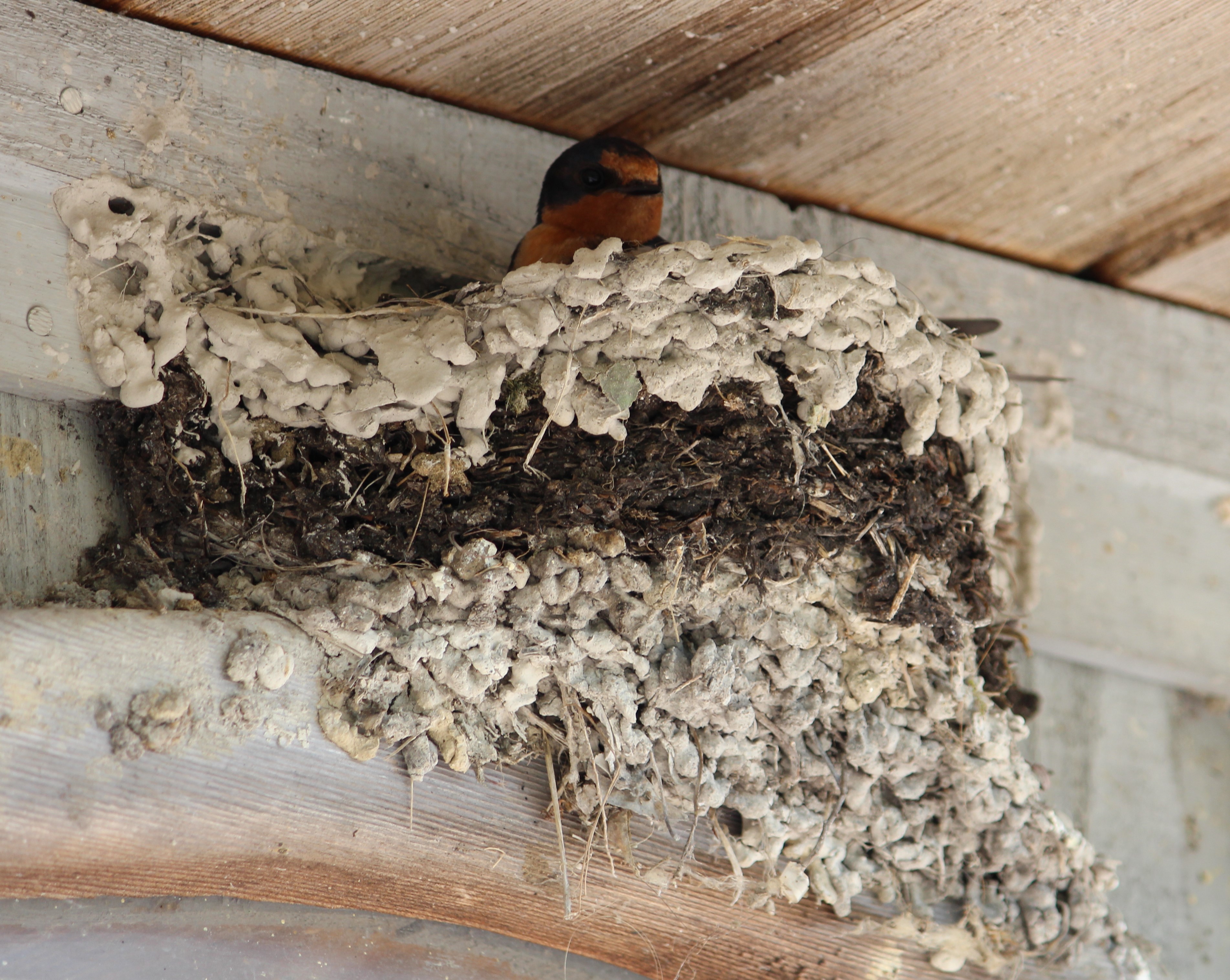
Most semi-enclosed overhangs were populated by the mud nests of Barn Swallows. These beautifully patterned and colourful birds swooped in and out of their nest locations, snatching insects from the air, skimming shockingly close to a water surface for a drink, or gathering mud to bolster their constructions. The chattering darts of Barn Swallows gave a frenetic energy to the buildings within Point Pelee National Park, some passing close enough to startle you. Never once did one dive at my head, like the divebombing behaviour I had experienced at the claws of a Red-winged Blackbird in Long Point. There were so many energetic birds coming and going, creating the impression of small, busy cities of mud.
Barn Swallow in a mud nest mixed with grass fibers.
Cliff Swallow (Petrochelidon pyrrhonota):
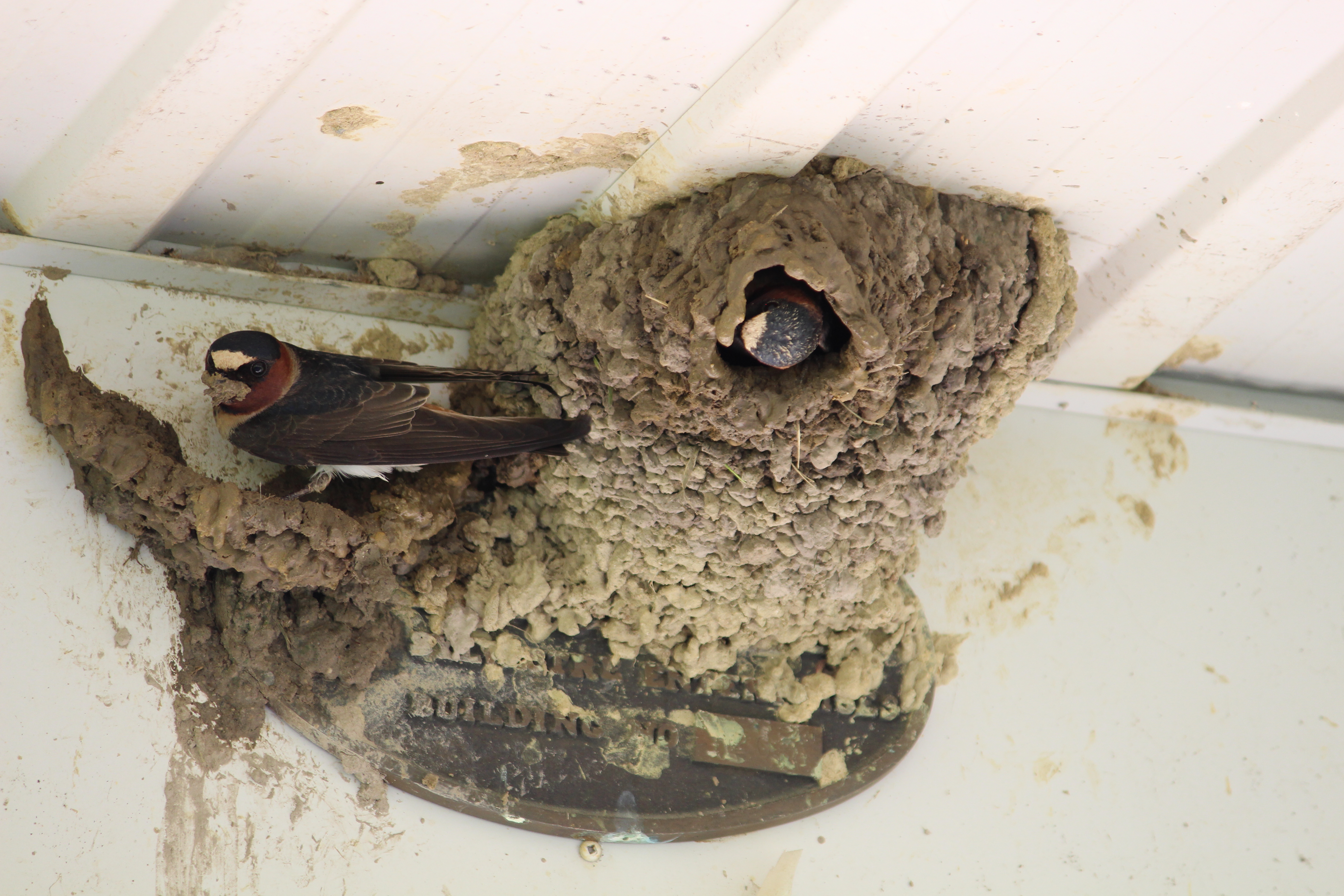
Cliff Swallows, one inside their nest applying mud, the other adding mud to a budding nest, supported partly by its neighbours’.
Cliff Swallows appear very similar to Barn Swallows in their nest construction, location and their physical appearance. Cliff Swallow nests are similar mud nests, but have a downward facing entrance rather than an open bowl like the Barn Swallow nest. Cliff Swallows will occasionally use the remains of Barn Swallow nests as a beginning point for their own constructions (del Hoyo et. al. 2004). Like all the swallows I saw, and all Hirundinids in Ontario, these birds arrive in Spring, breed and then depart in the Fall. As Swallows are dependent on insects (especially flying insects) for food, they can’t stay within northern areas during the winter when insects rarely if ever fly and most are hidden away and dormant.
Tree Swallow (Tachycineta bicolor):
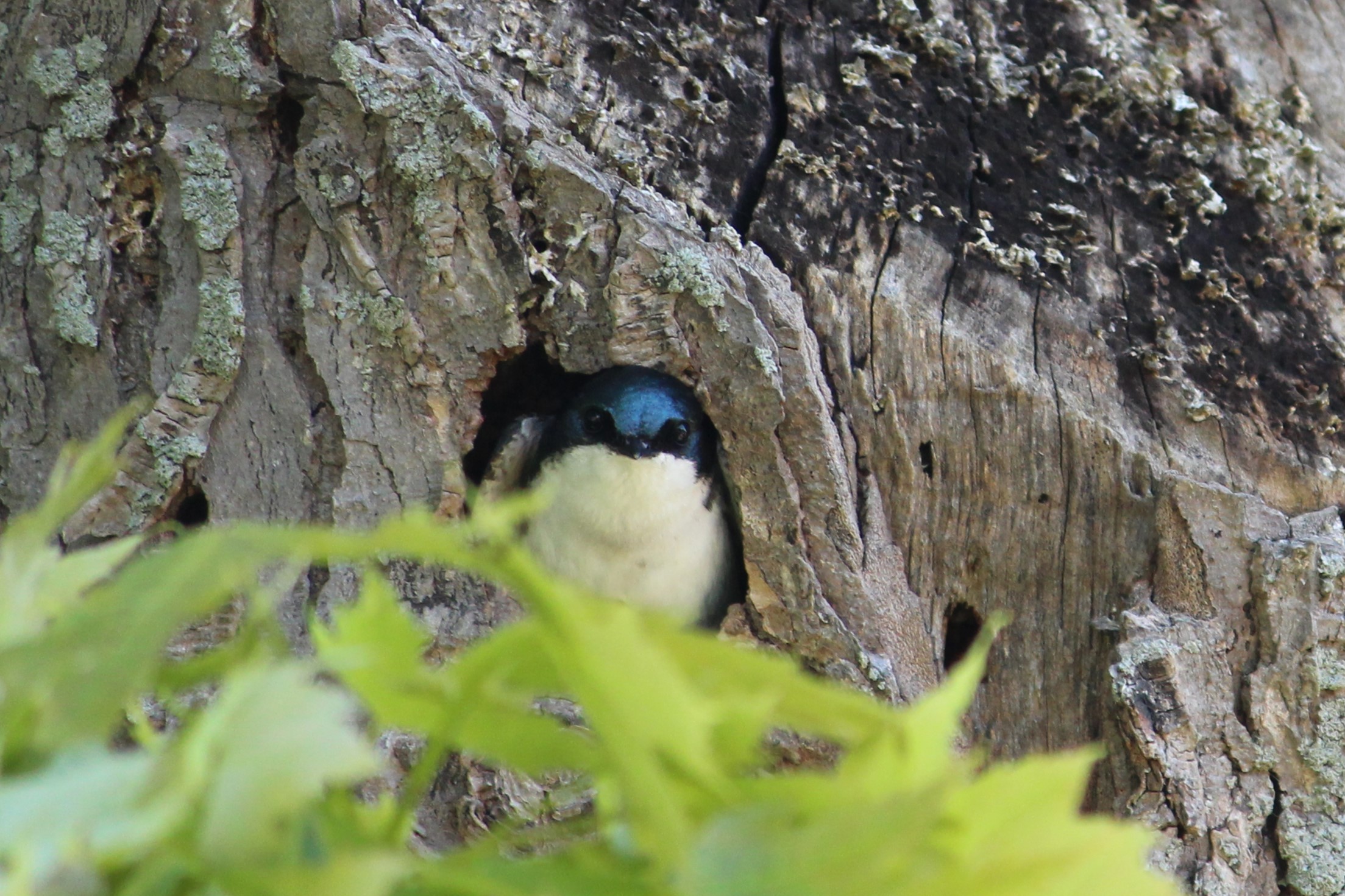
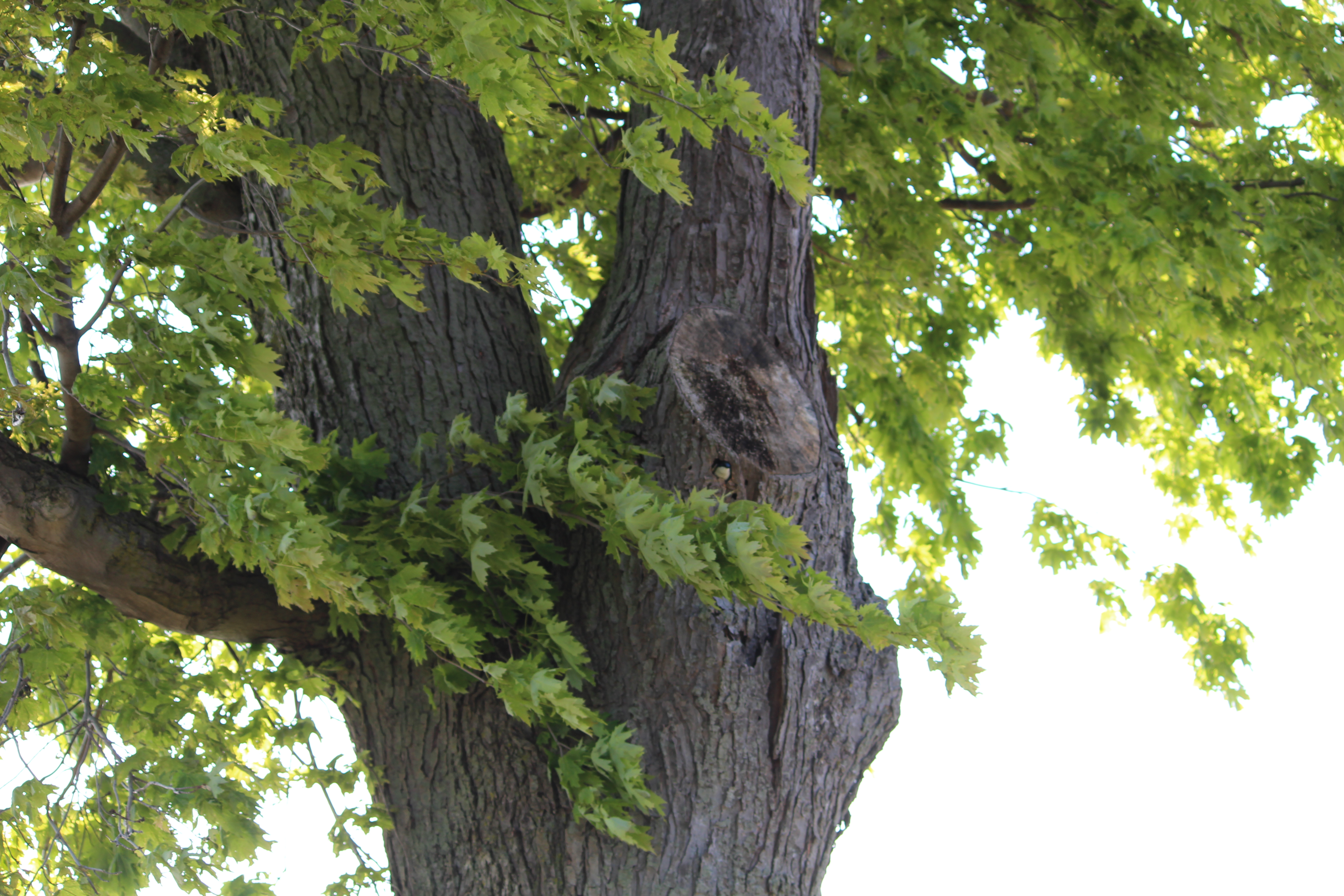
Tree Swallow peeking out of its home.
Contrasting sharply with the other two swallow species observed, the Tree Swallow does very little in the way of nest construction. Tree Swallows nest in tree holes but they do not make the holes, and they will readily nest in human-made nestboxes or other artificial cavities as well (del Hoyo et. al. 2004). They will add some nesting material to the tree hole, but this preparation pales in comparison to the mud constructions of the Barn and Cliff Swallows.
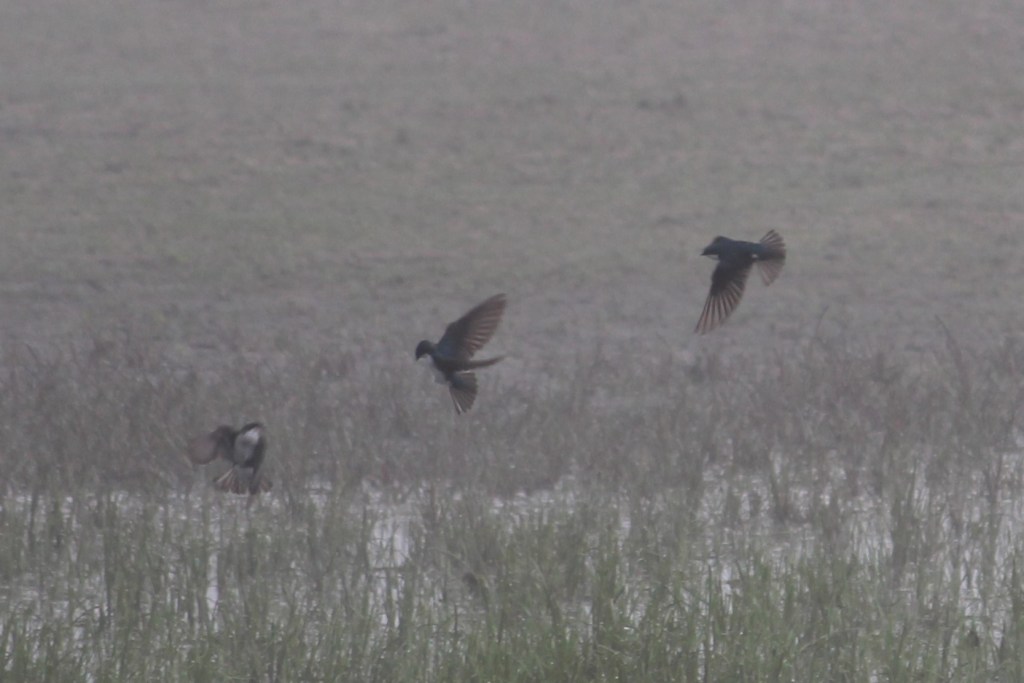
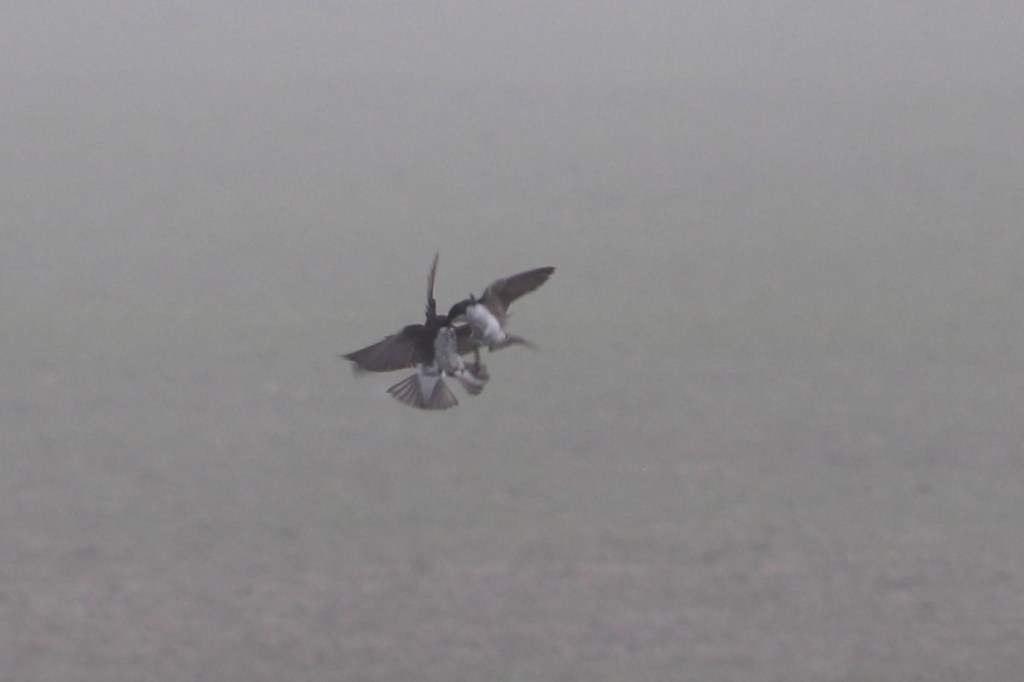
Tree Swallows having some sort of aerial battle in the Hillman Marsh Conservation Area, Essex County.
I was excited to discover a Tree Swallow was staying on the property where I was staying for this eventful birding weekend. Throughout my stay, I would occasionally check on the treehole where I had seen the inquisitive face staring out at me. Sometimes the beak would be open, chittering away, sometimes the bird would cock its head to the side as if examining the world outside its snug abode, and other times there would be no face filling the cavity, only a dark entrance to a hidden nest.
Some perspective on the tiny Tree Swallow’s treehole.
Swallows are incredible birds, and only one of the many bird families observed on my recent trip. Check in next time for another abundant and noisy bird family.
References:
del Hoyo J., Elliott A., & Christie D. A. eds. 2004. Handbook of the Birds of the World Vol. 9: Cotingas to Pipits and Wagtails. Lynx Edicions.
Elphick, Jonathan. 2019. The Handbook of Bird Families. Firefly Books.
Subsequent days in the park had us spending time at the Pog lake beach and surrounding area. The fog swirling across the calm lake was a wonderful sight to begin our Algonquin days. One morning the shapes of loons speared the fog and then dropped below the still surface of the lake. Loons may be a common sight within the lakes of Algonquin park, but that does not mean that they are a boring sight at all. Their calls and dives are woven into the atmosphere of Algonquin Park.
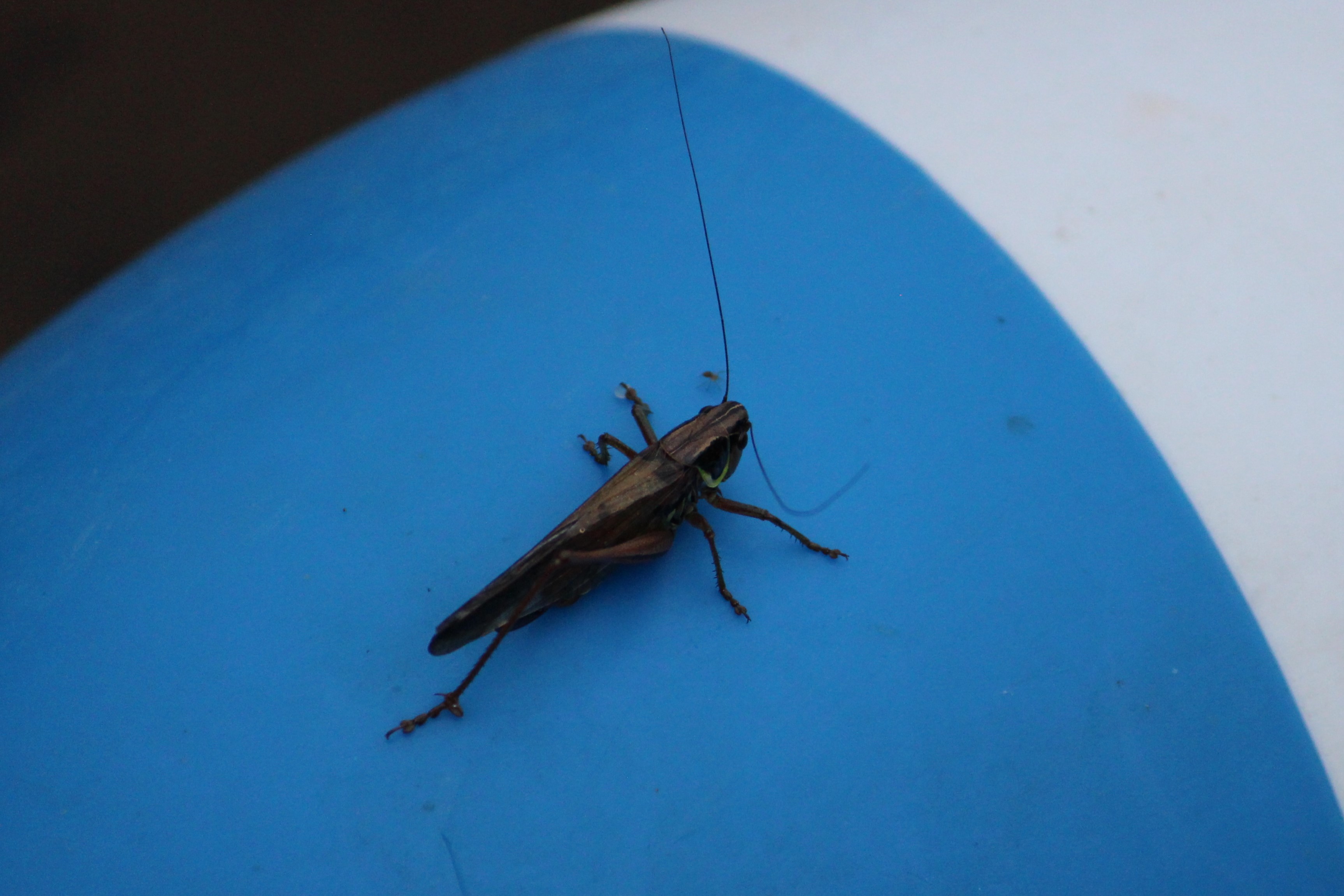
The charisma of Loons did not prevent my eyes being drawn to the small living denizens of the beach area as well. Resting on a buoy was a Large Orthopteran (grasshopper/cricket/katydid) of some sort. This was a Roesel’s Bush-Cricket (Roeseliana roeselii), an introduced Katydid from Europe. There are two forms to this species, one long-winged, and one short-winged. I believe the one I spotted is of the longer-winged variety.
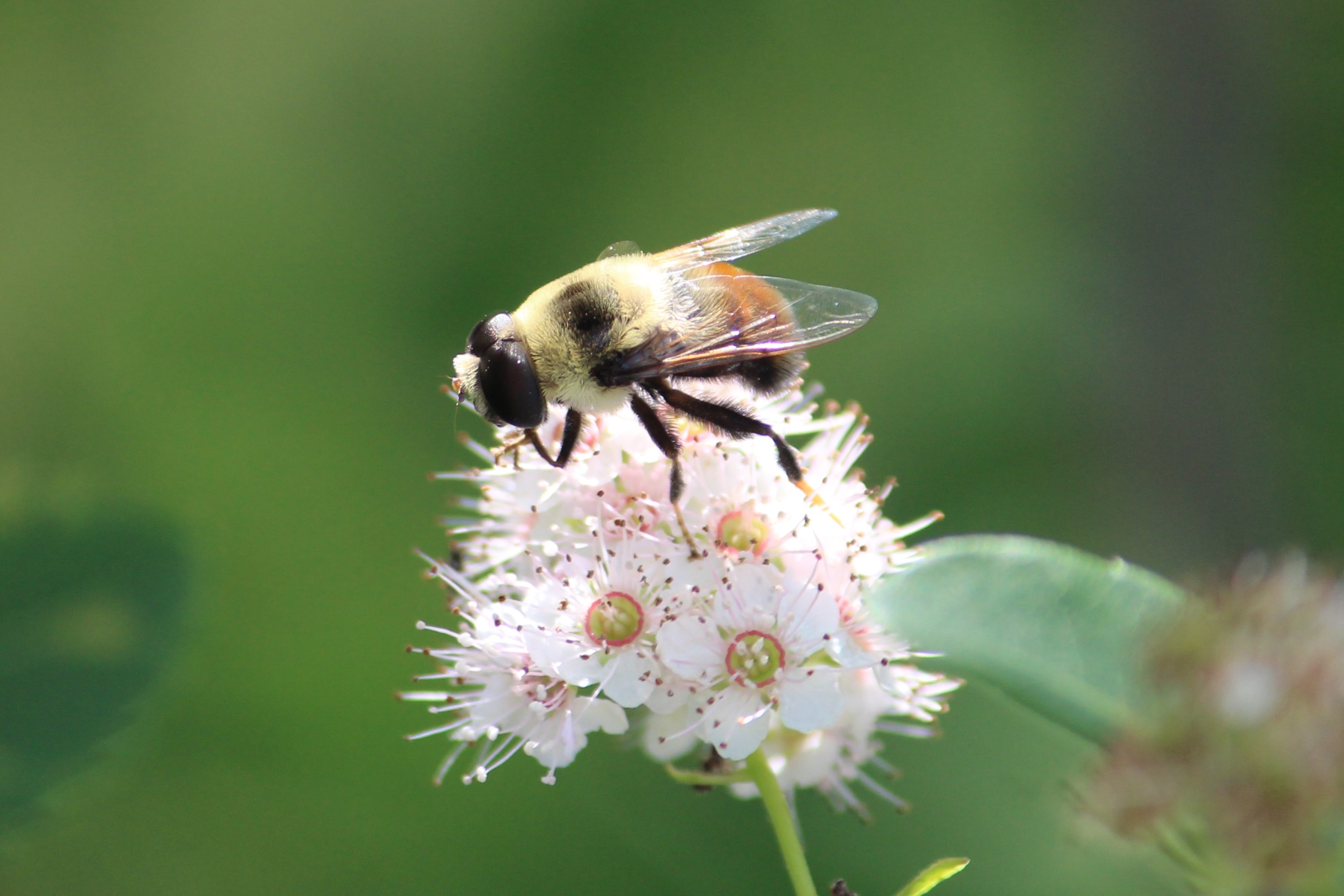
As the days progressed, more insect activity became apparent. A flower near the lake’s edge was visited by a bumblebee-look-alike: the Orange-legged Drone Fly (Eristalis flavipes). The larvae of this species feed within moist decomposing plant material and are known as “rat-tailed maggots” because of the long thin breathing tube that extends from the larvae. But the adults are beautiful bumblebee-mimics, one of many examples where one stage in an insect’s life is more attractive (to us) than another.
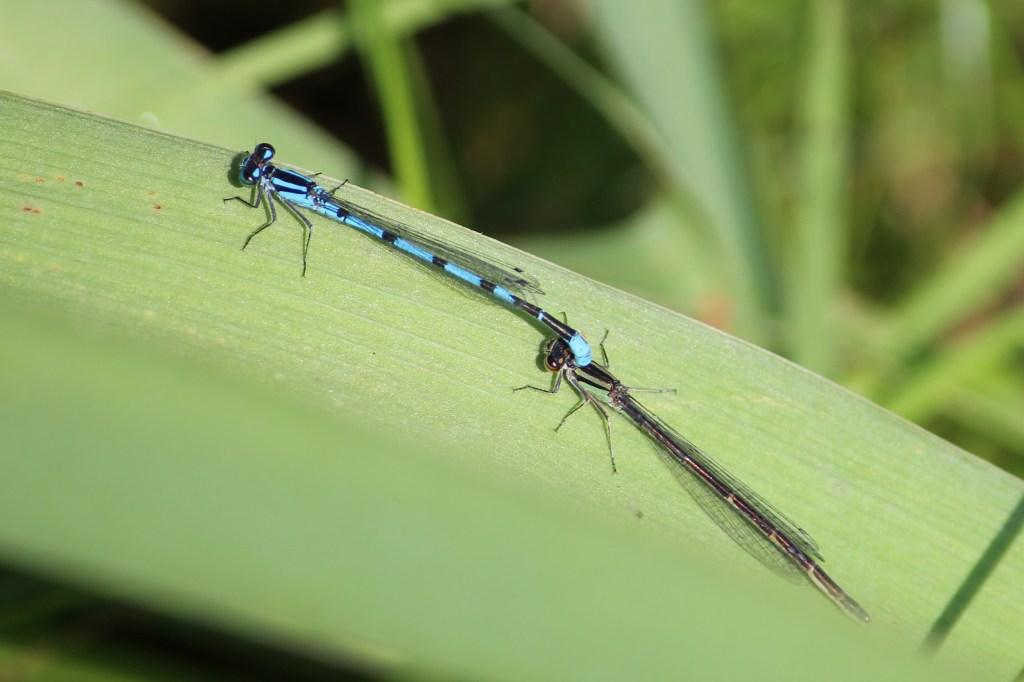
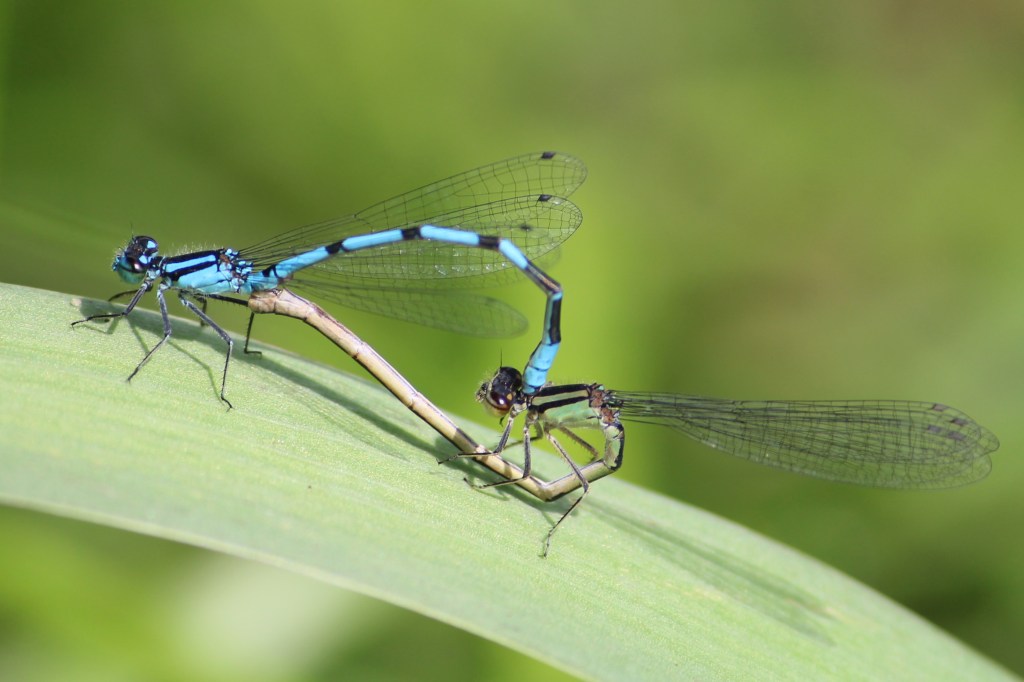
Nearby the flower was a pair of damselflies (Bluets, Enallagma) performing their heart-shaped coupling.
Part 1: The Male has clasped onto the female behind her head.
I’m unsure of the species but there are over 30 species of Bluets in North America (bugguide.net), so called because of the often bright blue colour of the male.
Part 2: Acrobatics incoming…
Damselflies have a strong ovipositor which they use to pierce vegetation in order to lay their eggs inside. Oftentimes, the plants they lay eggs into are partly underwater, causing the damselflies to stretch their abdomens beneath the water surface to cut into a suitable stem.
Part 3: Union.
There were other encounters within the Pog Lake Campground, but the most memorable for me were in a location separated by a walk from our campsite and the beach, a wonderful place I came to call “Warbler River”. That will be the subject of my next post.
In August of 2023, I returned to one of my favourite places: Algonquin Provincial Park. While there, I photographed and encountered varied organisms and I’d like to take the opportunity to explore and describe these nature observations in a series of blogposts, as I often do.
When first arriving at our campsite, I observed not a living thing itself, but rather the mark of a living thing on its environment: I found a bird nest. According to iNaturalist it is likely the creation of a Vireo (genus Vireo, who said Scientific names were hard to remember?). The most common Vireo in Southern Ontario is the Red-eyed Vireo (Vireo olivaceus), so this was likely constructed by a member of this species. A description of their nest construction is appropriate here: “The female spends 4 to 5 days constructing a nest of bark strips, grasses, pine needles, wasp-nest paper, twigs, and plant fibers that hangs below the branch. She glues the materials (some of which are provided by the male) together and to the branch fork with spider-web adhesive, occasionally supplemented with spider egg cases and sticky plant fibers.” (Cornell Lab of Ornithology 2019). I love thinking of the time and effort that went into this small nest. Just think of the spiders’ webs and egg cases that went into this architecture.
Small eye-level nest of a songbird, likely a Vireo of some sort.
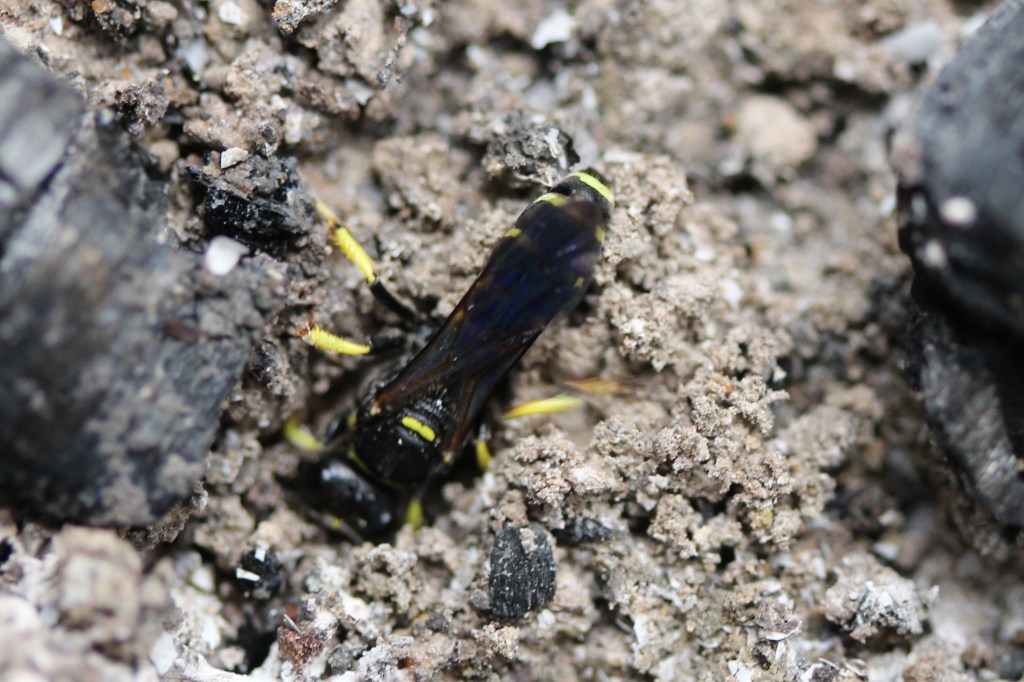
While exploring our campsite, a very different organism was in the process of creating a nest, a crabronid wasp female. This tiny black-and-yellow wasp was investigating the ground of our campsite for a location to create a burrow. The wasp landed several times and dug a little bit into the sandy soil then hovered for a while, circling the area before dropping to the ground once more. At one point, it entered the firepit and dug rapidly into the ashes within, crafting itself a very easily constructed but frightfully unwise burrow. It put me in mind of the parable of the man building a house on sand, perhaps there is a Hymenopteran equivalent about “digging one’s burrow in ashes”. In any case, I don’t think the wasp was settled on the firepit as its burrow location because after forming these temporary exploratory burrows, she flew off and wasn’t seen the rest of the day.
“Do not dig your burrow in ash” – ancient Hymenopteran proverb.
A few days later, I spotted her hovering form once more, this time accompanied by a prey item. Dragging below her was a corpse larger than herself, that of a Horse Fly (Tabanidae). I never witnessed the end of her journey, I’m not sure if she found a good spot to bury her large prey to feed her young. But I hope that she did.
Crabronid wasp dragging her larger horse fly prey below herself.
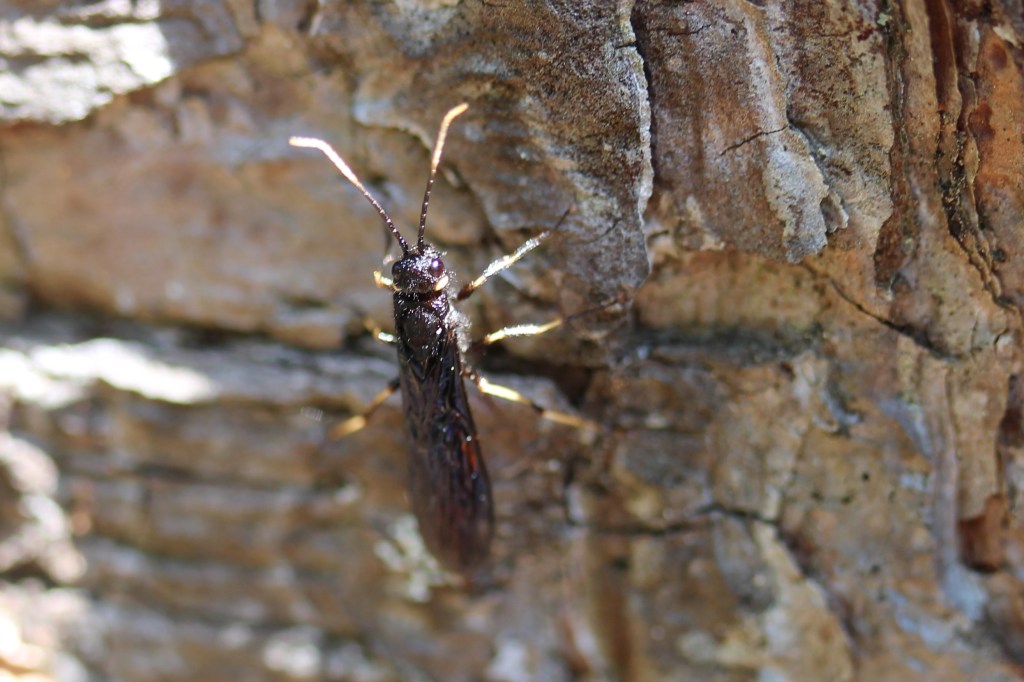
Another Hymenopteran was looking to provision for its young, although its prey was far larger than a horsefly. The creature was a Black-and-red Horntail (Urocerus cressoni) and its prey was a tree. Horntails (Suborder Symphyta) lay their eggs inside the trunks of trees and the larvae feed within. Urocerus cressoni larvae feed inside of Pine trees and their relatives (Marshall 2023).
Black-and-Red Horntail (Urocerus cressoni) resting on the trunk of a tree, likely searching for a place to lay her eggs.
Many other insects were observed on the trees, plants and litter of our campsite and the surrounding areas of the Pog Lake Campground. Some True Flies (Order Diptera) caught my attention. A bright and shiny Dolichopus skittered about in the leaf litter, and an elongate Robber Fly (Genus Machimus) was spotted on fallen pine needles.
Dolichopus Fly.Robber fly of the genus Machimus.
Some of the most beautiful insects found in the Pog Lake campground were the Dragonflies (Order Odonata). A strikingly large Dragonfly of the genus Aeshna was basking in the sun on the trunks of trees and (when I was able to take its photo) on our dining tent entrance.
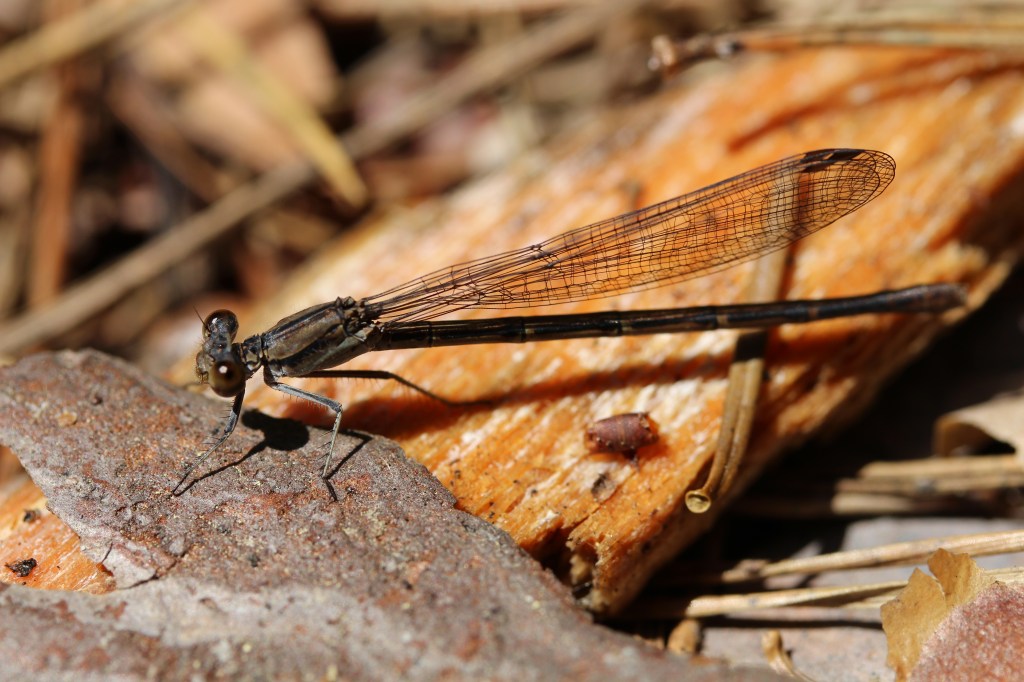
A much more easily missed odonate was the Variable Darner (Argis fumipennis), a smoky grey presence among the pine needles and fallen bark.
Resting along a branch was a beautiful Autumn Meadowhawk (Sympetrum vicinum), in a colour phase that I hadn’t observed before. Males of this species are a bright red with a rusty-red thorax, but females (like the one I encountered) are yellowish. I was able to get very close to this dragonfly and was rewarded with some beautiful photographs.
We didn’t just hang out by our campsite in Pog Lake, but we spent quite a bit of time at the campground beach and that will be the focus of my next blogpost.
Siederia walshella, on the Lynn Valley Trail, April 2023:
On a walk on the trail by my house, I spotted this tiny creature (about a cm long) climbing up the trunk of a tree. I’m not positive on the identification, but it’s based on iNaturalist’s auto-ID for my photo and seems to match from what I can tell. If the ID is correct, this tiny caterpillar was likely searching for lichen to eat.
Eastern Spotted Newt (Notophthalmus viridescens), in my Parents’ pond, April 2023:
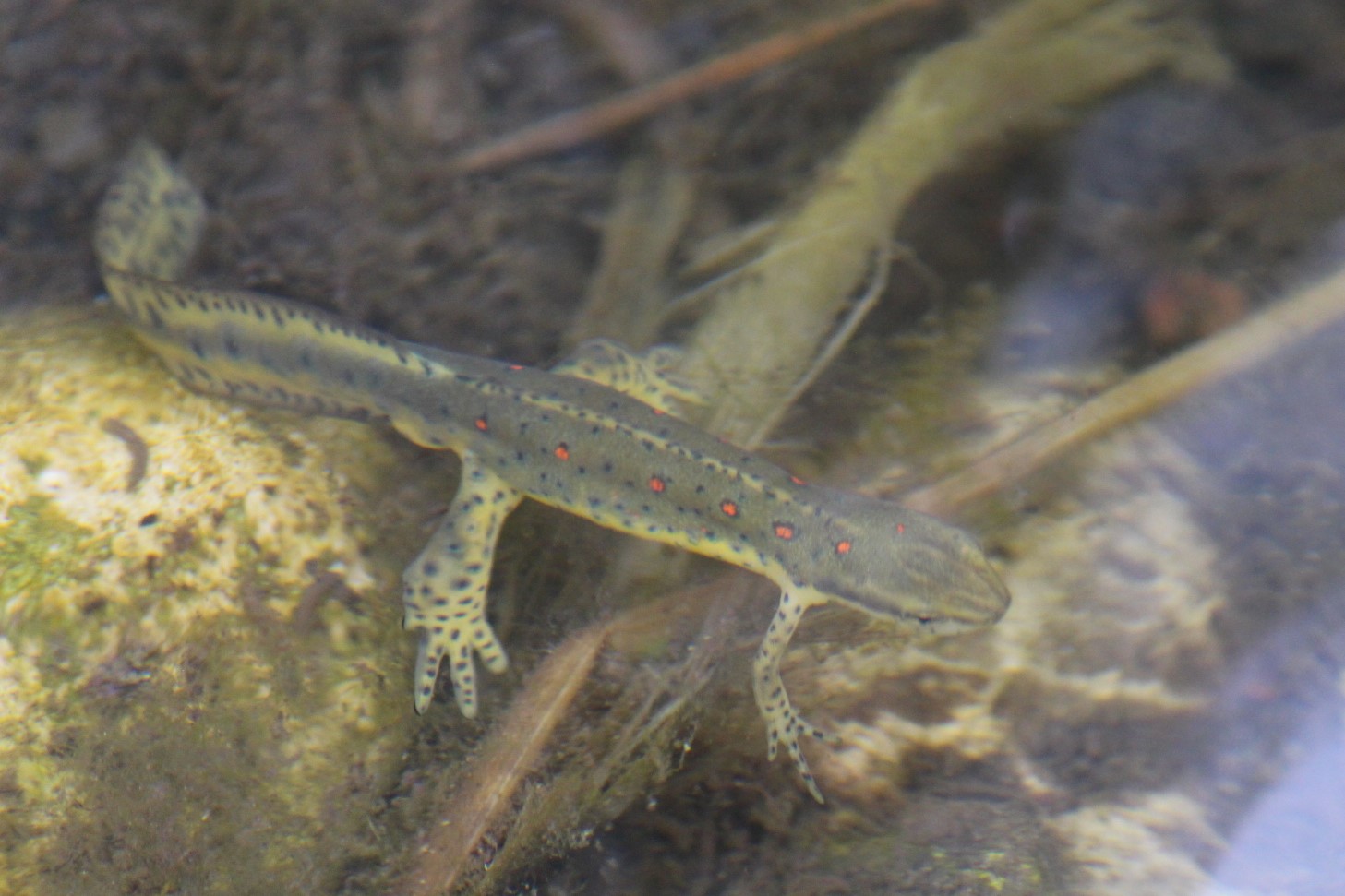
For the past few years, my parents’ garden pond has been host to these amazing creatures. All amphibians impress with their transformation from aquatic to terrestrial life but the Eastern Spotted Newt outdoes this life cycle with some incredible twists and turns. Larval newts transform into terrestrial juveniles (known as “efts”) and leave the water behind, living in the leaf litter. While on land, the efts have a rough reddish brown skin which keeps moisture in. After two to seven years, the efts undergo another transformation, darkening in colour and gaining a raised tail fin which aids them as they return to the water as aquatic adults. The newt pictured above is in this final stage of life: an aquatic adult. This isn’t necessarily the end of the newt’s transformations however, since some newt adults leave the water and regain some of their terrestrial attributes (rougher dry skin, loss of tail fin) for hibernation on dry land (Harding and Mifsud 2017).
Greater Bee Fly (Bombylius sp.), Lynn Valley Trail, April 2023:
This fuzzy fly has special adaptations to gather sand in its abdomen which it coats its eggs with before launching the eggs into solitary wasp nests (dug in sand presumably) (Marshall 2012). The larvae hatch from the eggs and enter the nest chambers of their host before feeding on a single host larva each (making the Bee Flies parasitoids, consumers of a single prey item).
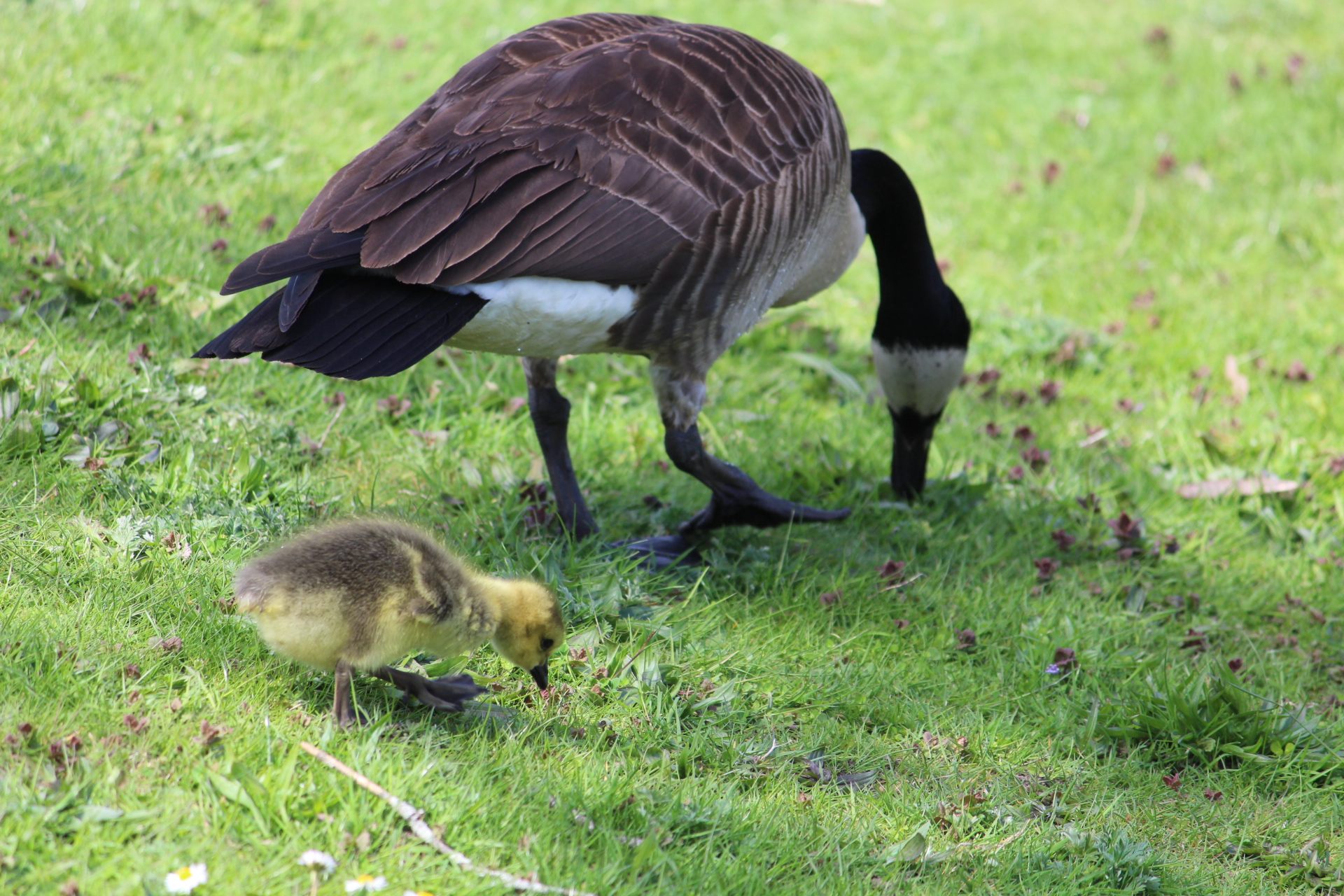
Canada Goose (Branta canadensis) Parent and Gosling, Grant Andersen Park, May 2023:
Canada Geese are both common and abundant so they usually don’t catch my eye, but I really liked how the gosling was in the exact same pose as its nearby parent in this photo.
Spotted Sandpiper (Actitis macularius), Grant Andersen Park, May 2023:
The picture is blurry because the action was taking place across some water from my camera lens, but this fascinating courtship display was happening right in the middle of Simcoe in Grant Andersen Park. These shorebirds performed their display a few times and then mated and dispersed.
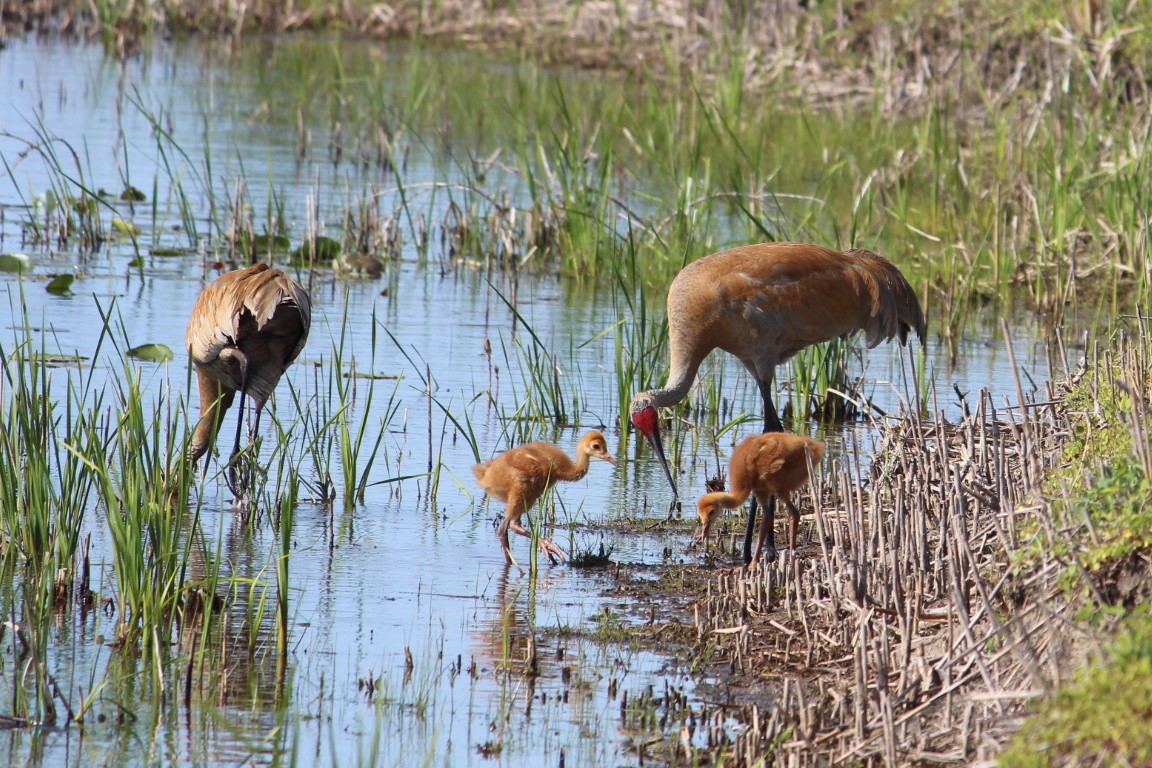
Sandhill Crane (Grus canadensis) family, Long Point, May 2023:
Sandhill Cranes have captures my heart with their wild resonant calls and their impressive size. It was a special treat to watch this family of two parents and two young foraging at the edges of a marsh in Long Point.
Canada Warbler (Cardellina canadensis), Long Point Old Cut Birding Station, May 2023:
Canada Warblers migrate into Ontario to breed during May/June, creating nests near the ground on stumps or small mounds (Bezener 2016). Then in late summer/early Fall they set off again to leave the Canadian winter behind them. Like other Wood-Warblers (the Family Parulidae) they consume insects and spiders, taken from plants or the ground.
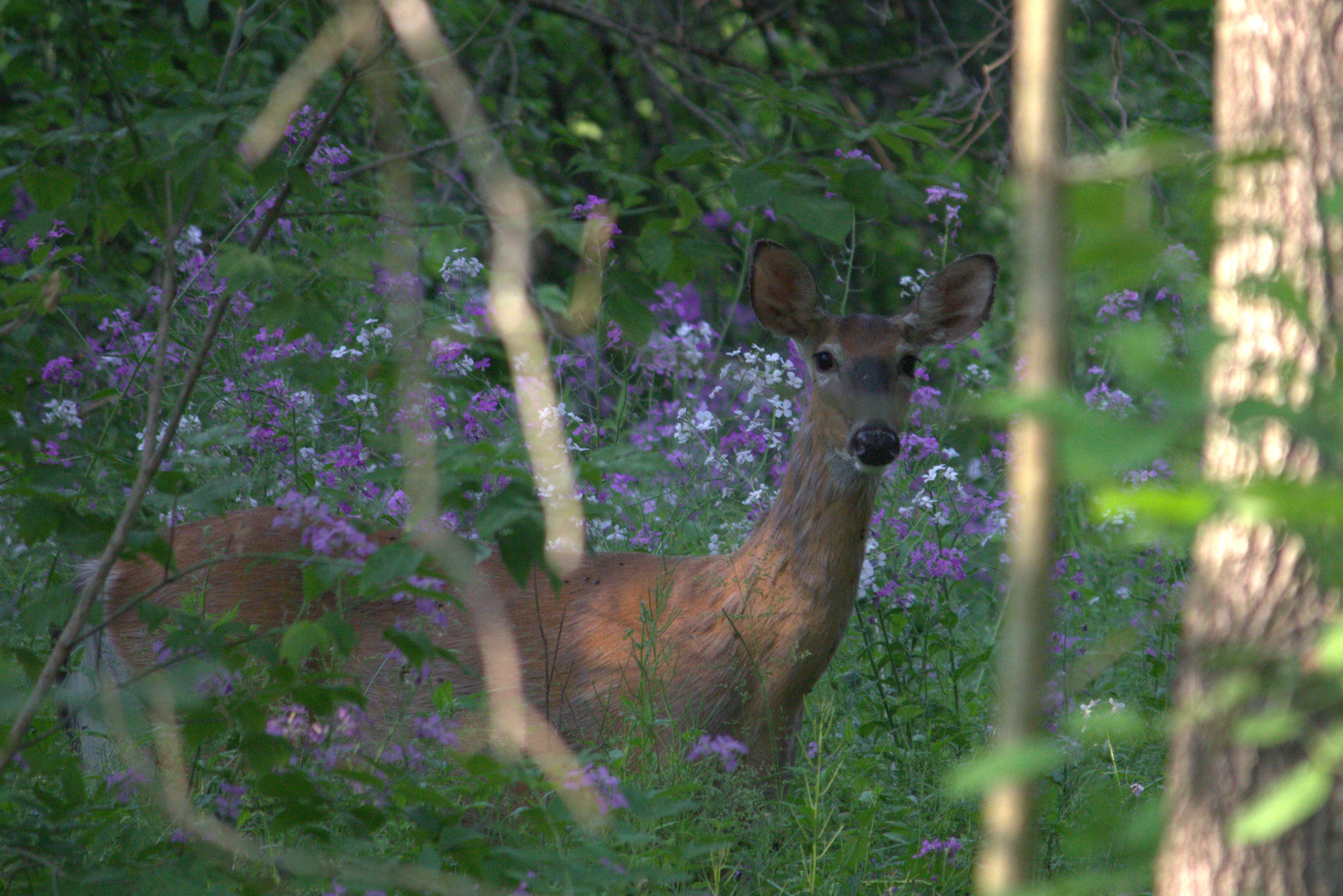
White-Tailed Deer (Odocoileus virginianus), Lynn Valley Trail, June 2023:
This deer was incredibly close to the trail, so I was able to capture its gaze among the purple wildflowers.
Velvet Ant (Timulla vagans), Backyard, July 2023:
Velvet Ants are not members of the ant superfamily (Formicoidea) but are instead solitary wasps (members of the family Mutillidae). Their larvae develop as parasitoids on the larvae of other wasps (in the case of Timulla vagans, their hosts are Crabronids and Eumenine wasps (Marshall 2023)). The males of Timulla vagans are winged unlike the ant-like females and will carry the wingless females in their mandibles during their mating flight (Waldren et al 2020).
Physocephala marginata, Backyard, July 2023:
Although this insect drinking nectar appears to be a wasp, it is actually a fly of the Family Conopidae. Female Physocephala marginata seek out their lookalikes (wasps and bees) at flowers. After apprehending a host wasp or bee, P. marginata uses its abdomen to insert an egg inside the host’s abdomen (Marshall 2012). The egg hatches inside and the larval Conopid consumes the host from the inside.
Tachinid Fly (Exorista sp.), Backyard, August 2023:
Tachinid Flies are yet another group of parasitoid insects. Stephen Marshall, in his giant book on flies had this to say about this huge family of flies: “The Tachinidae is in many ways the ultimate fly family. With almost 10,000 named species and thousands more awaiting description… exhibits an unparalleled variety of sizes, shapes and colors. The range of life history strategies is equally amazing, at least within the constraint that every know species in the group is a parasitoid that develops inside another insect… or related arthropod” (Marshall 2012, p 386). Hosts of this genus are caterpillars or sawfly larvae.
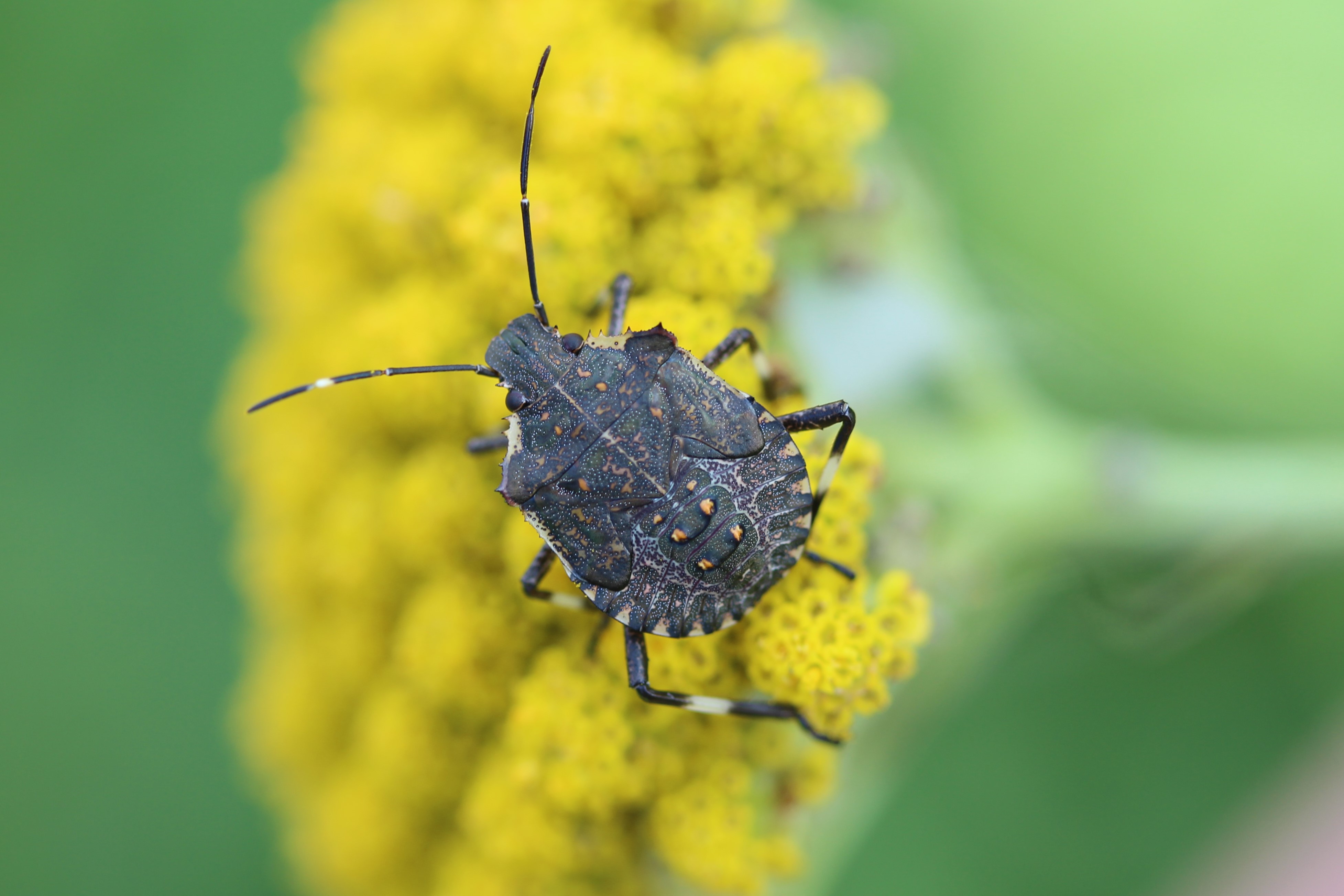
Brown Marmorated Stink Bug (Halyomorpha halys), Backyard, August 2023:
This species of Stink Bug is native to East Asia but was introduced to North America accidentally in the 1990s. As with many successful and widespread introduced species, the Brown Marmorated Stink Bug can feed on a wide diversity of plants and can be a serious pest of agriculture and gardens. The pictured insect is a nymph, not quite an adult because it is missing fully developed wings across its back.
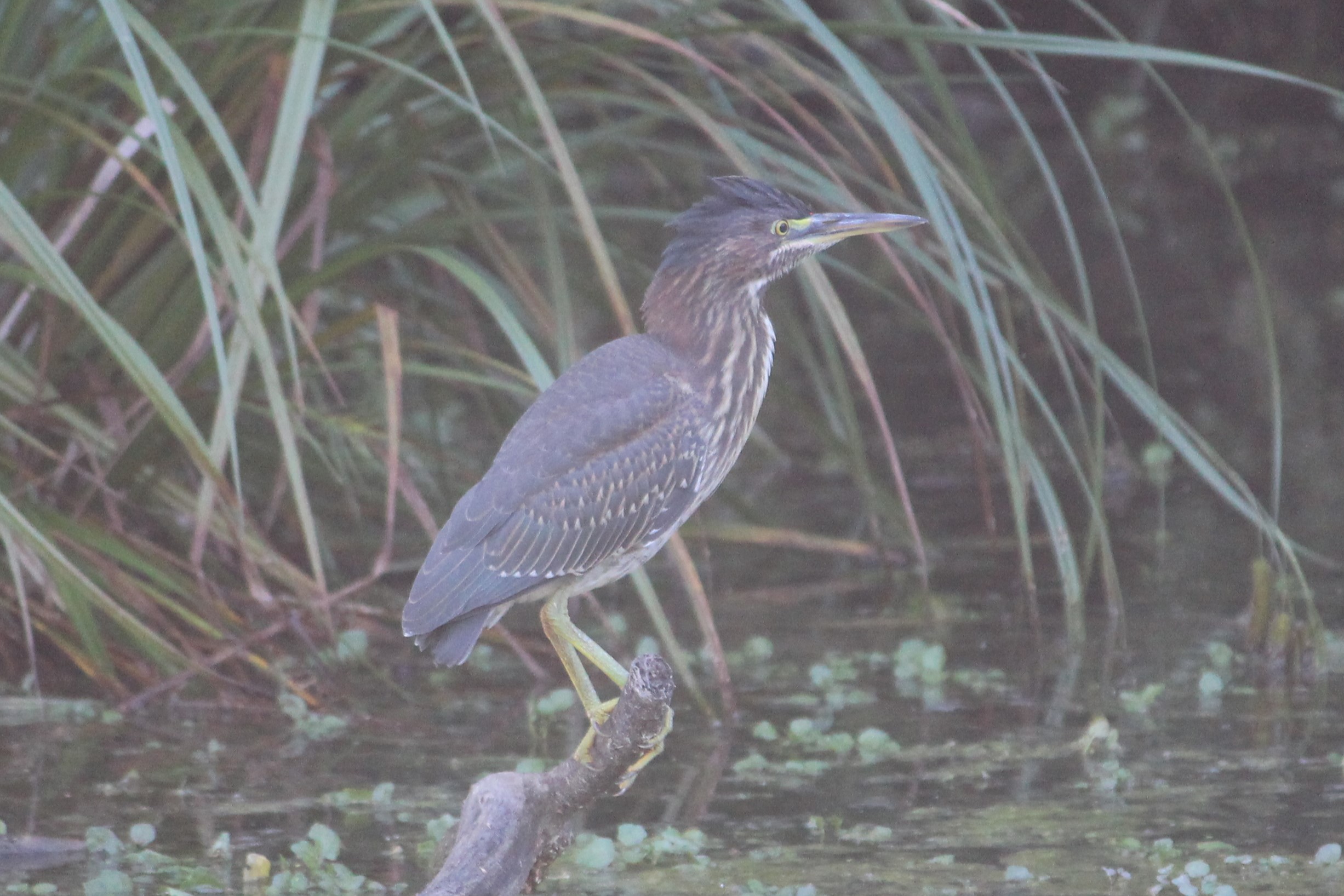
Green Heron (Butorides virescens), Waterford Ponds, August 2023:
The above photo was actually taken by my wife on an outing to Waterford Ponds. She was quicker on the draw to find and focus on this beautiful bird amidst the morning mist and tangled reeds of its marshy habitat. I’ve written an article about these amazing birds because of a different close encounter I had, go here to learn more!
Common Whitetail Dragonfly (Plathemis lydia), Front of House, September 2023:
As I was entering my house, I was stopped by the sight of this wondrous insect framed perfectly on my siding beside my door. I carefully entered the house to retrieve my camera in order to get this picture. One of the first Dragonflies photographed at my house since I don’t have a backyard pond… yet. The Common Whitetail pictured is a male, distinguishable because it has the chalky white abdomen which it uses as a signal to chase other males off of its territory. Females of this species have multiple bands on their wings and a dark abdomen.
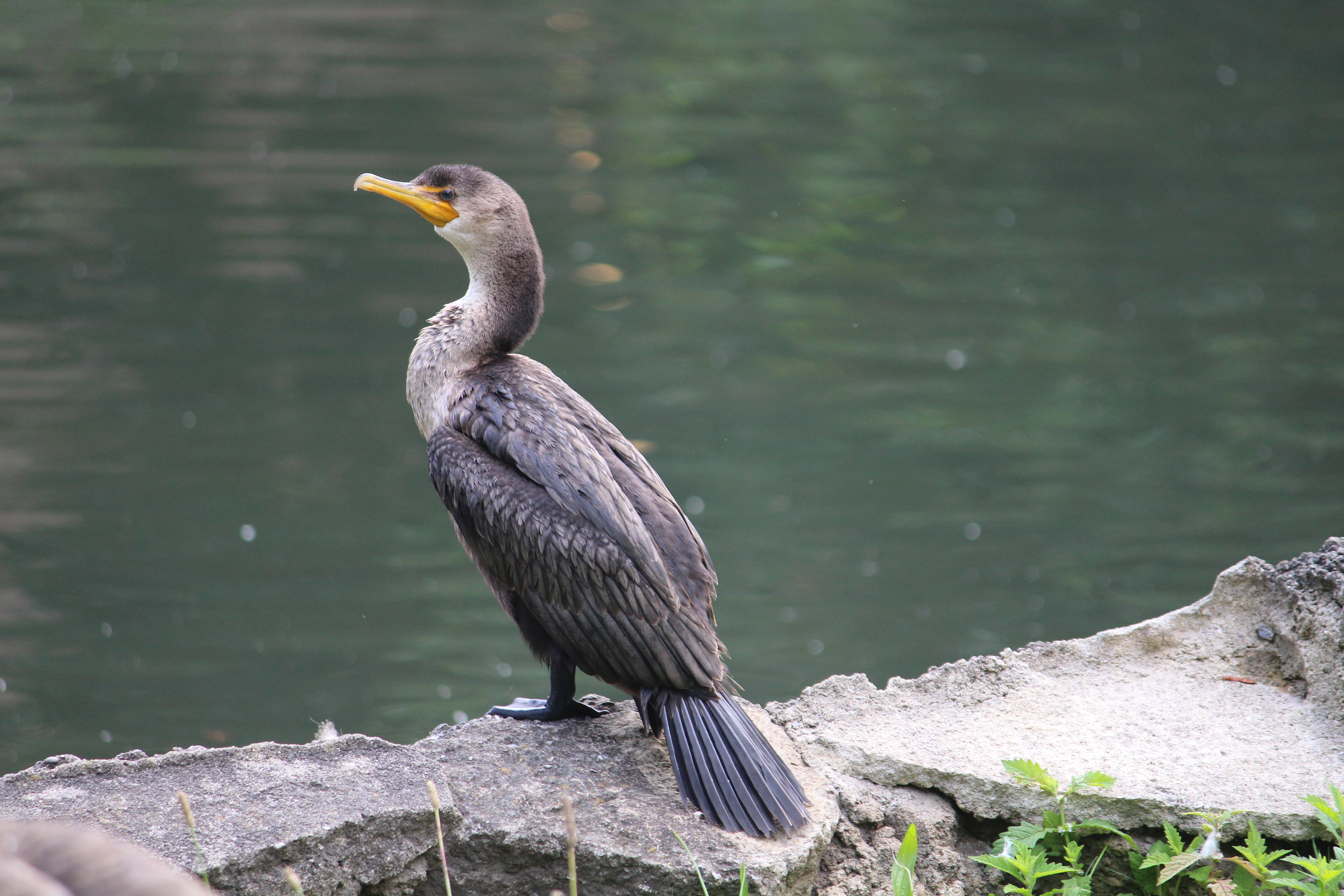
Double-crested Cormorant (Nannopterum auritum), Lynn River, September 2023:
When swimming in the water, a cormorant reminds me of a hook-billed loon or a merganser, but their especially long neck gives them away. Like loons and mergansers, cormorants are underwater divers, pursuing fish prey amid lakes and rivers. This one was foraging in the Lynn River right in the middle of Simcoe, and I was very excited to get a close look at its sleek profile as it dried off on the bank. You can’t see them in the photo, but it was amidst a crowd of Canada Geese.
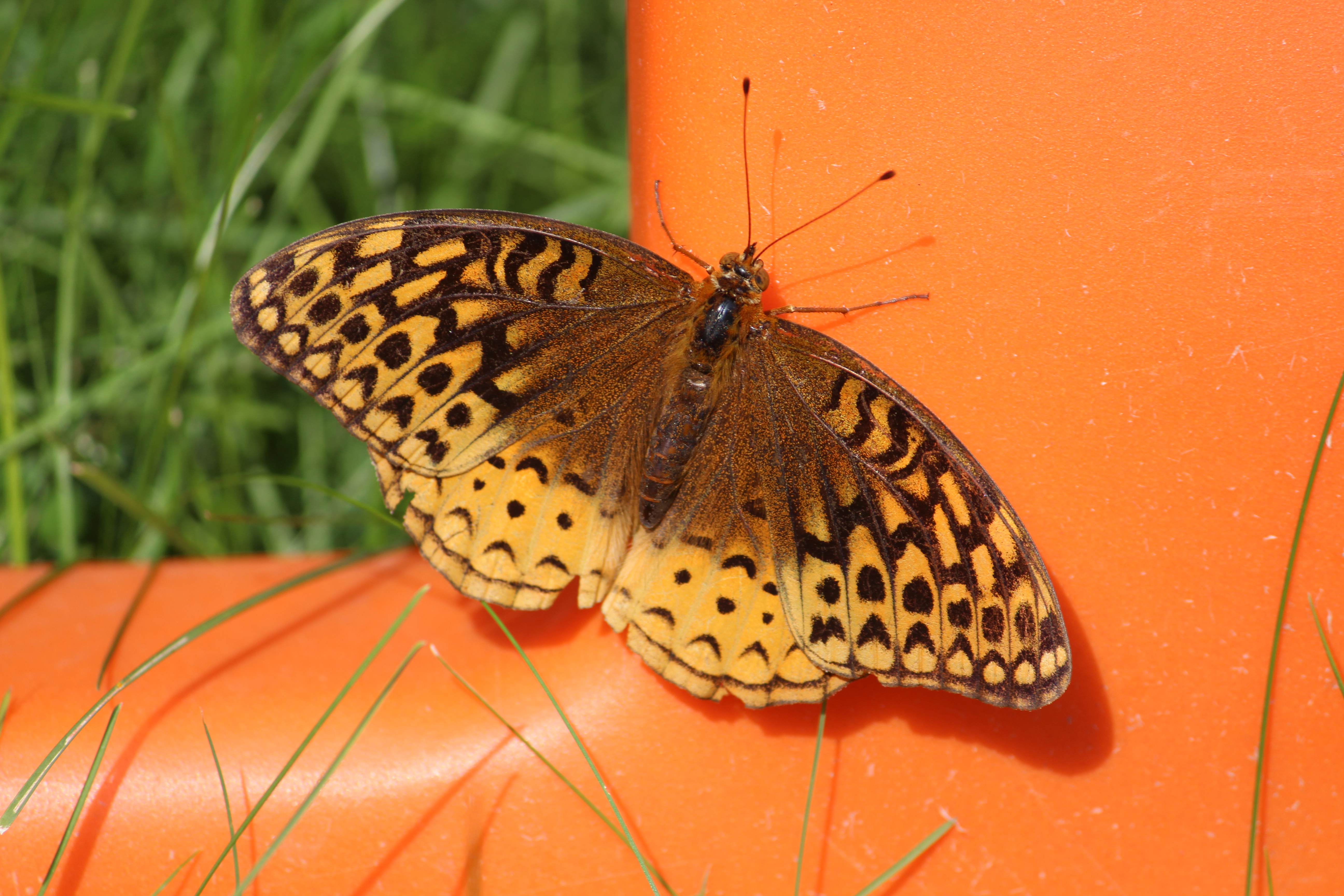
Great Spangled Fritillary (Argynnis cybele), Backyard, September 2023:
I at first thought this large butterfly was a Monarch (Danaus plexippus) as it was nectaring among our milkweed patch, but I quickly realized it was a different species. After patrolling our garden, this fluttering visitor rested and spread its wings on our orange plastic picnic table where I snapped this picture. The caterpillars of this species make it through our winter, after hatching just before the cold arrives (Hall et al 2014).
Black Swallowtail Caterpillar (Papilio polyxenes), Backyard, September 2023:
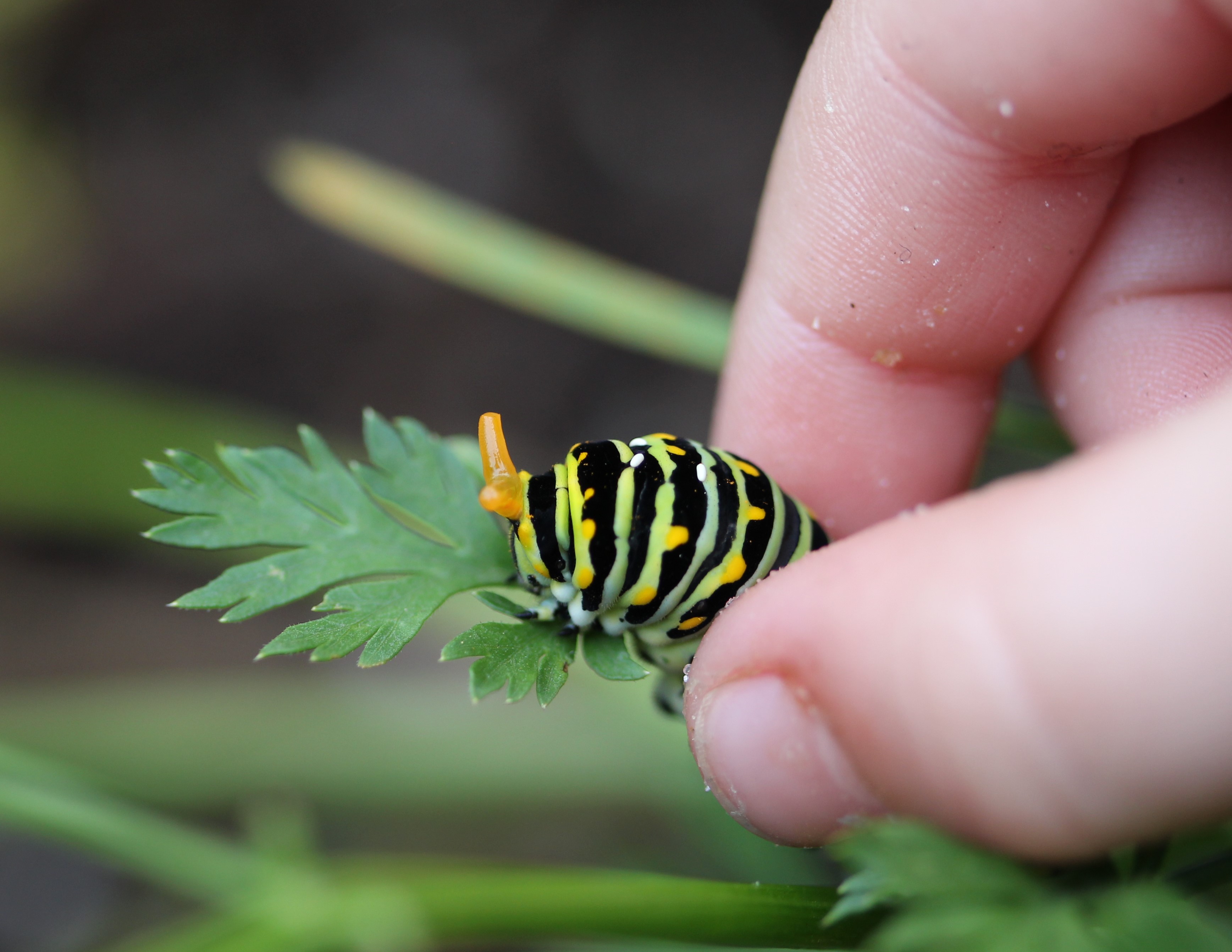
These colourful caterpillars feed on plants in the Carrot family (Apiaceae), and there were several munching away on our garden carrots this year. My 3-year old son helped me demonstrate one of their defensive strategies for this photo. If provoked these conspicuous caterpillars unfold the orange organ featured here, named an osmeterium, which has a foul odor (I would describe it as old rotten cheese, it was surprisingly powerful for such a small creature) (Marshall 2006). If I were a caterpillar-foraging bird or mammal, I would avoid such smelly prey.
Virginia Giant Hover Fly (Milesia virginiensis), Backus Woods, September 2023:
As the name implies, this fly was large and conspicuous in a sunny clearing. The larvae of these large flower flies (Syrphidae) develop inside rotting trees, sometimes inside tree holes (Skevington and Locke 2019).
Shadow Darner (Aeshna umbrosa), Backus Woods, September 2023:
Darners are huge dragonflies (over 7 cm long), instantly noticeable when in flight but this one cooperated in staying still while I took its picture. The Shadow Darner is named after its habit of flying late in the day (even at dusk) and staying mostly in shade (Marshall 2006). This one was photographed in the afternoon.
Chinese Mantis (Tenodera sinensis), Backyard, September 2023:
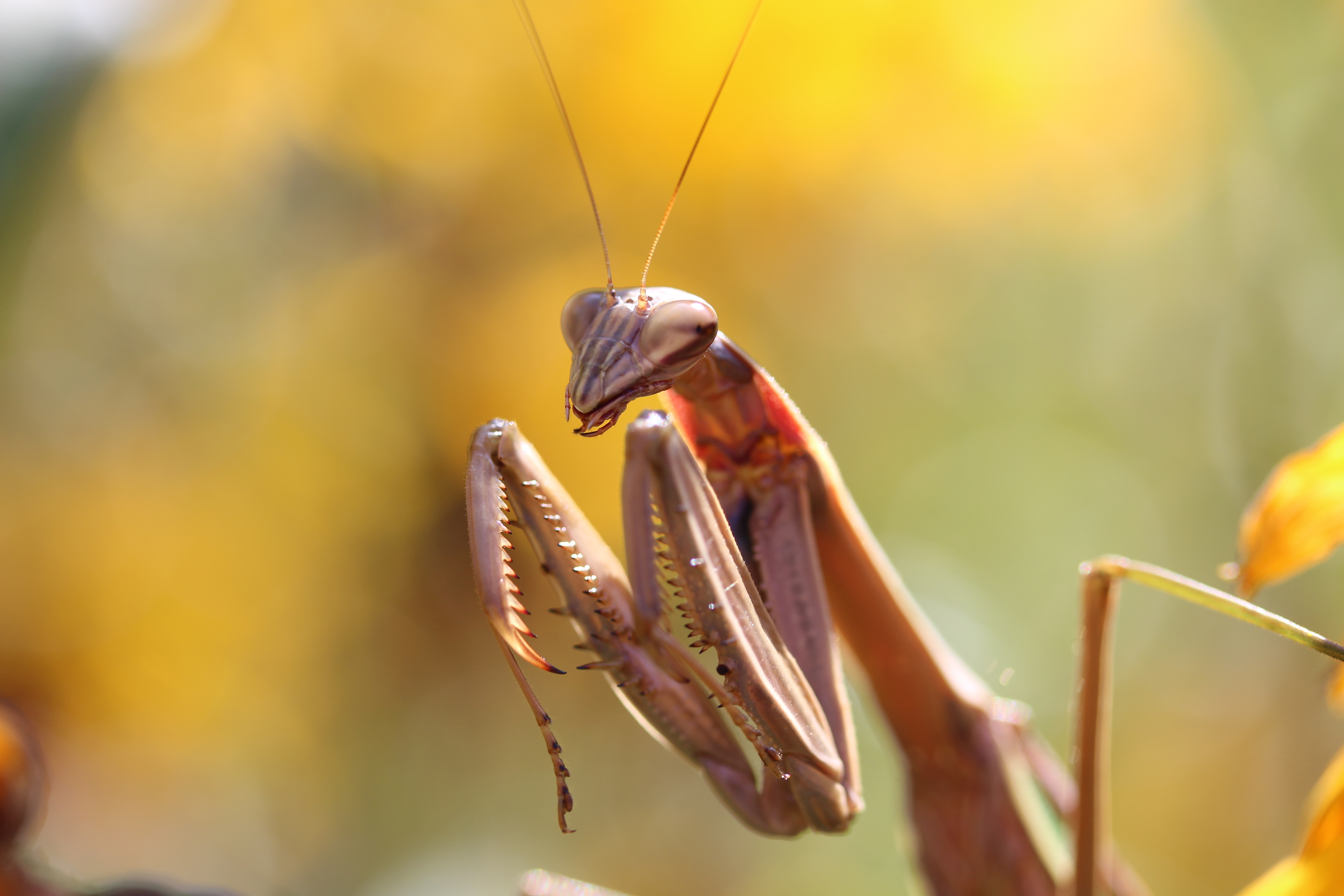
There are no Mantids native to Ontario, both of our common species: the European Mantis (Mantis religiosa) and the Chinese Mantis pictured here, were introduced to North America over a hundred years ago (Marshall 2006). This very large and impressive insect was clambering through my garden and nicely posed for a few pictures but this was my favourite photo I took, showcasing its powerful grasping forelegs and its triangular head.
References:
Bezener, Andy. 2016. Birds of Ontario. Partners and Lone Pine Publishing.
Hall, Peter, Jones, Colin, Guidotti, Antonia, and Hubley, Brad. 2014. The ROM Field Guide to Butterflies of Ontario. Royal Ontario Museum.
Harding, James H. and Mifsud, David A. 2017. Amphibians and Reptiles of the Great Lakes Region. University of Michigan Press.
Marshall, Stephen. 2006. Insects: Their Natural History and Diversity. Firefly Books.
Marshall, Stephen. 2012. Flies: Their Natural History and Diversity. Firefly Books.
Marshall, Stephen. 2023. Hymenoptera: The Natural History and Diversity of Wasps, Bees, and Ants. Firefly Books.
Skevington, Jeffrey H. and Locke, Michelle M. 2019. Field Guide to the Flower Flies of Northeastern North America. Princeton University Press.
Waldren GC, Roberts JD, Pitts JP (2020) Phoretic copulation in the velvet ant Sphaeropthalma pensylvanica (Lepeletier) (Hymenoptera, Mutillidae): A novel behavior for Sphaeropthalminae with a synthesis of mating strategies in Mutillidae. Journal of Hymenoptera Research 78: 69-89. https://doi.org/10.3897/jhr.78.55762
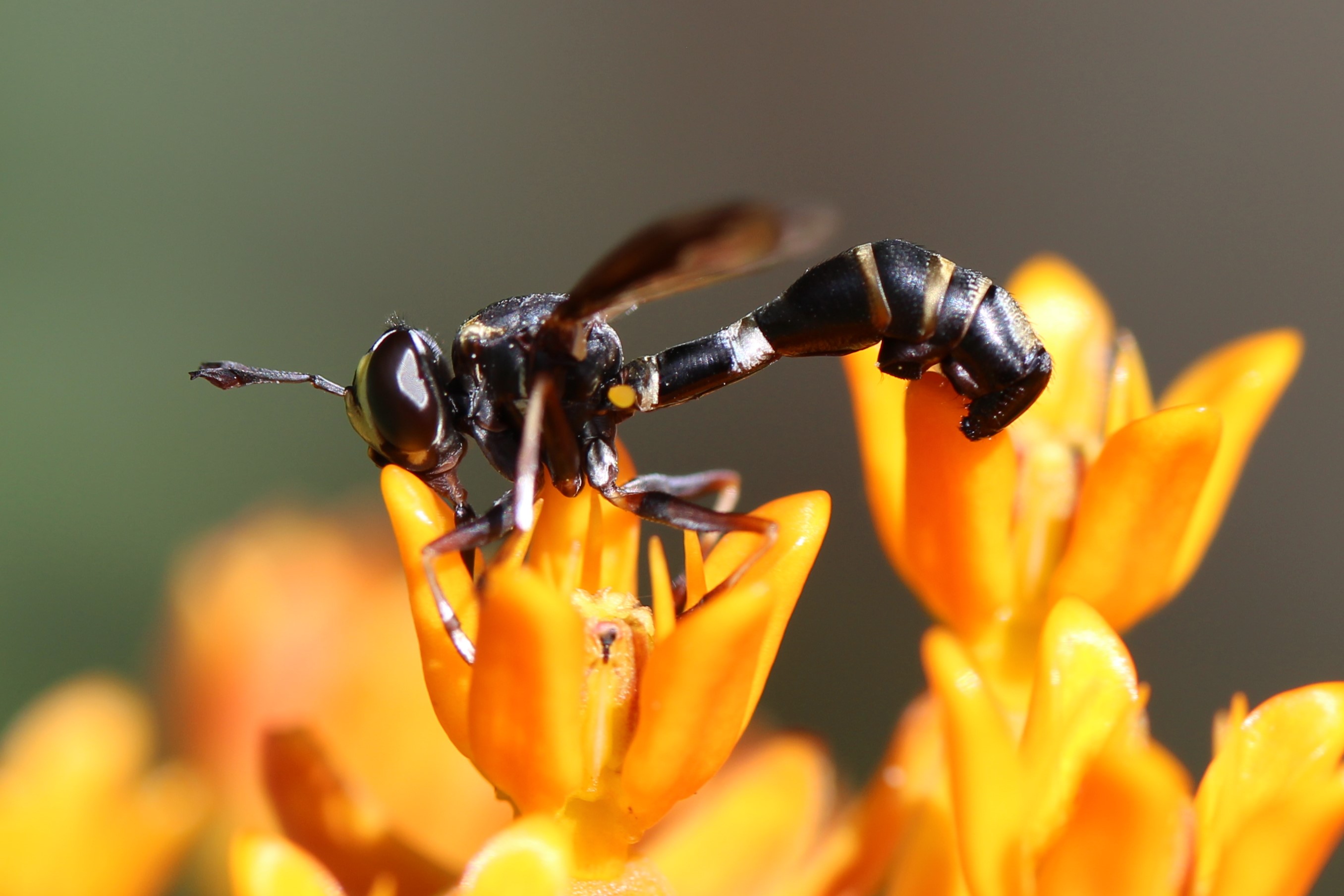
The Story Behind the Shot: The amazing hovering capabilities of Flower Flies (the Family Syrphidae) have always impressed me and I really wanted to capture this one in the air. The fact that I was able to take this shot is a testament to how little these insects falter while hovering in mid-air.
The Story Behind the Species:
Common Compost Fly males are some of the most impressive flyers in the world of insects. They use their skills to patrol among flowers and pursue females which visit the flowers with incredible agility. Their singleminded pursuits seem to have sacrificed discrimination for the sake of directness, as these flies are known to pursue “any insect of almost any size that appears in their search area” (Marshall 2012 p. 307). After mating, the females lay their eggs in decomposing plant material, which can include compost, hence their common name.
Syritta pipiens is an introduced species in North America, brought over accidentally from Europe around 1895 (Skevington et. al. 2019).
References:
Marshall, Stephen A. 2012. Flies: The Natural History and Diversity of Diptera. Firefly Books.
Skevington, Jeffrey H., Locke, Michelle M., Young, Andrew D., Moran, Kevin, Crins, William J., and Marshall, Stephen A. 2019. Field Guide to the Flower Flies of Northeastern North America. Princeton University Press.
Subject: Maple Looper Moth (Parallelia bistriaris)
Location: Turkey Point Provincial Park.
Date: June 2018.
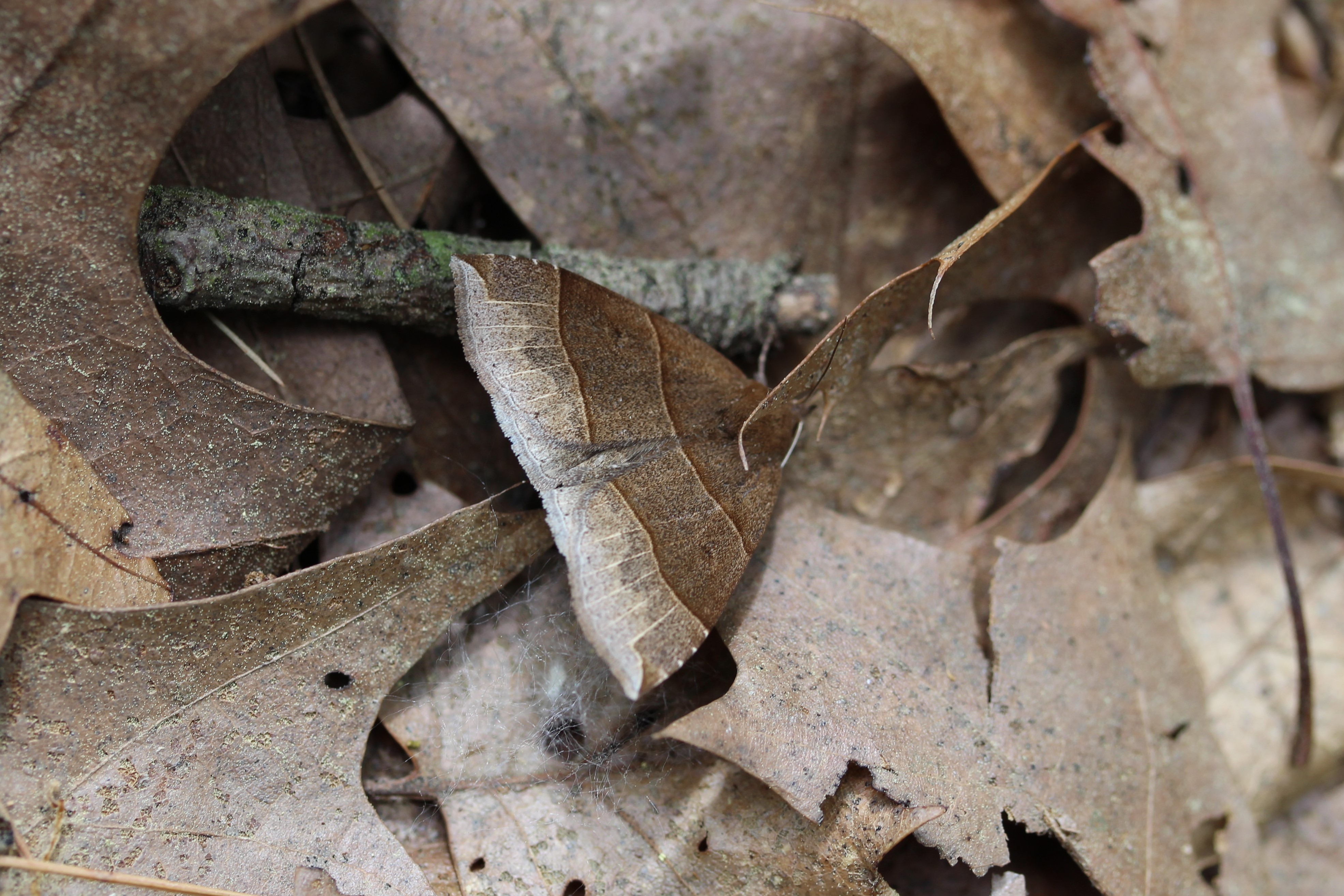
The Story behind the Shot: While hiking down a trail at Turkey Point Provincial Park, my wife somehow spotted this moth among the leaves which it matched so closely. I was overjoyed to get such a close-up shot of an amazingly camouflaged insect.
The Story behind the Species:
This moth could be the poster-child for camouflage. Such an elegant example of hiding-in-plain-sight. Positioned among fallen leaves which it matches in tone and general shape, this moth is incredibly hard to spot! To hide itself even more, the Maple Looper Moth positions itself head down, thus hiding its least leaf-like feature and accentuating the lighter edge of its hindwings (Keiper 1969).
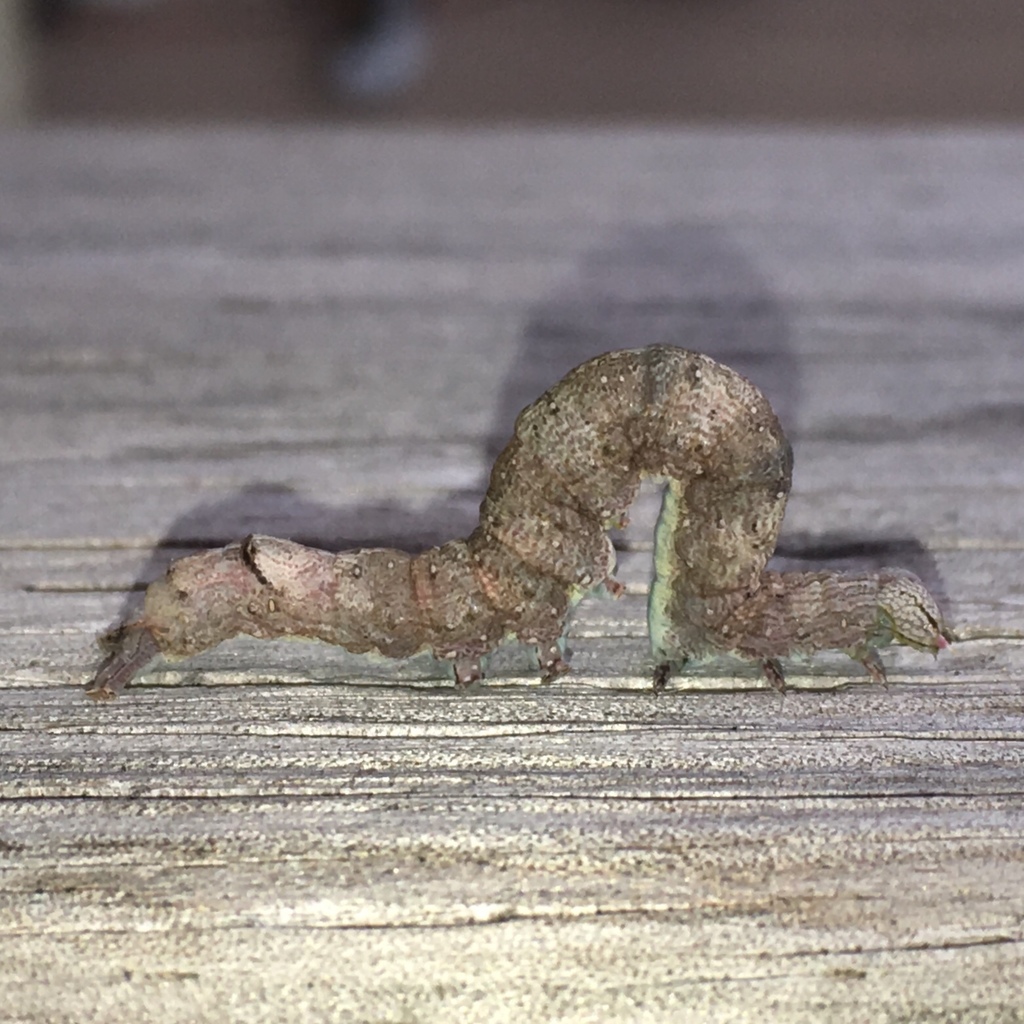
The larvae of this superbly secretive moth are also camouflaged, resembling twigs rather than leaves.
Maple Looper Moth larva (or caterpillar) demonstrating both its twig mimicking colouration and its looping movement. Photo by Dan MacNeal, used with permission.
The larvae, unsurprisingly, feed on Maple leaves (Crumb 1956), but bugguide.net lists Birch and Walnut as food plants as well (https://bugguide.net/node/view/3356).
I’m glad to have found and captured a photograph of this mysterious moth. A beautiful secret of the forest floor.
Keiper, Ronald. 1969. “Behavioral Adaptations of Cryptic Moths IV. Preliminary Studies on Species Resembling Dead Leaves”. Journal of The Lepidopterist’s Society 23: 4: 205-210.























 Norfolk Naturalist