After the Swallows, the most abundant and frequently encountered birds that I photographed on my recent Point Pelee trip were the New World Blackbirds (Icteridae). Unlike the swallows, I have seen and photographed all 3 of the Icterids I saw on this trip in my own backyard in Simcoe. There are 105 species of Icterids worldwide that range across North, Central and South America (Elphick 2019), so as always the species I encountered are the tip of this bird family’s iceberg.
Red-winged Blackbird (Agelaius phoeniceus):
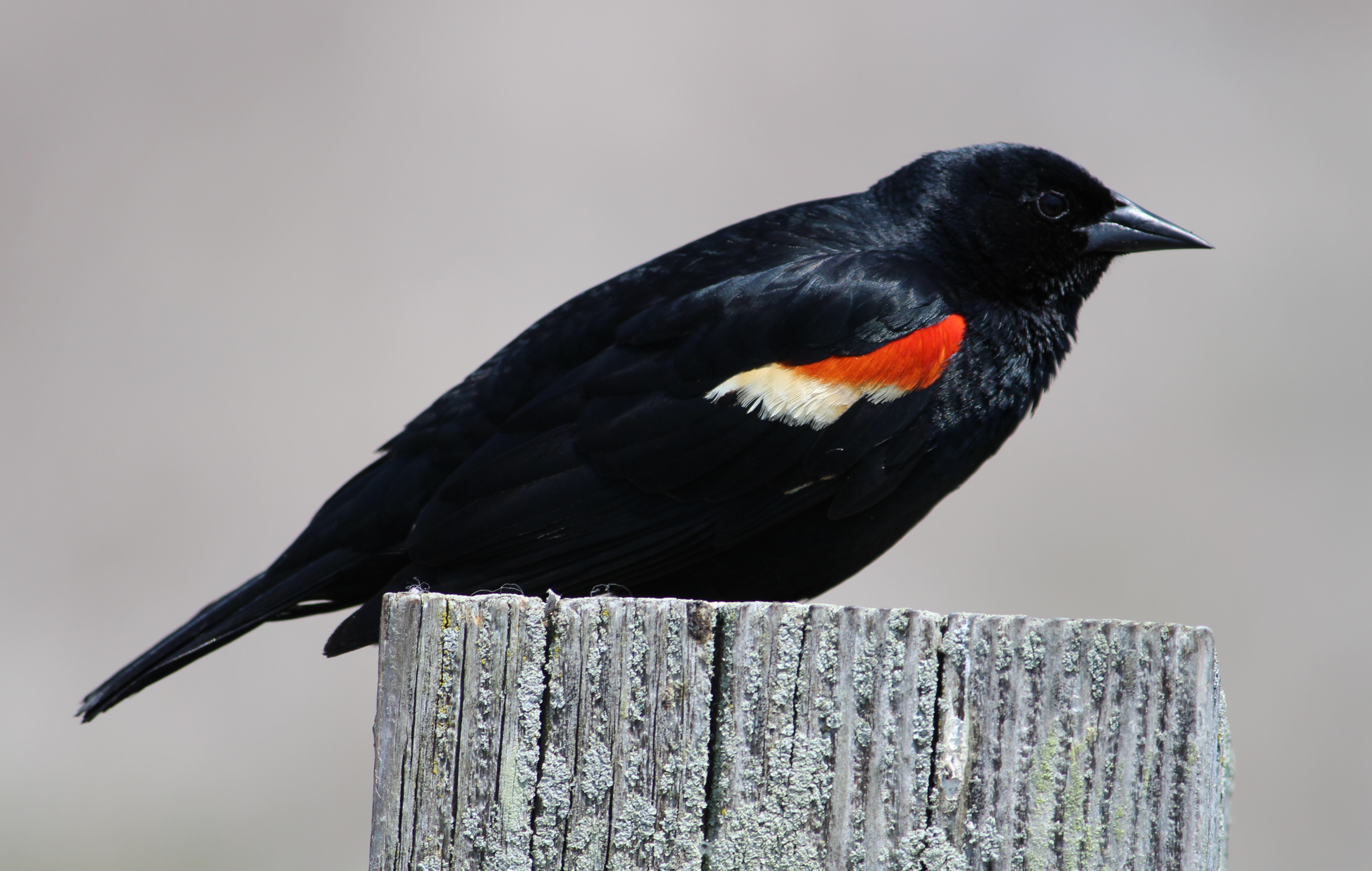
Not only are Red-winged Blackbirds abundant, they are also very noticeable thanks to their loud and frequent “Oh-ka-leeee!” calls and territorial behaviour. Males arrive earlier in the Spring to secure territories, and females arrive to survey the prospective male mates. Female Red-wings look strikingly different (we’ll see clear sexual dimorphism again with another species below), and it’s likely because the male and female blackbirds are under very different pressures from their very different behaviours. Besides being distinctly patterned, male and female Red-wings are also very different sizes, males being much larger. These differences are likely the result of the Red-winged Blackbird mating system, where male Red-wings fight and signal among themselves to establish territories and female Red-wings choose the male to join, but as always in biology, establishing the data is very difficult and there isn’t an easy answer. I’ve been reading The Red-Winged Blackbird by Les Beletsky and it’s fascinating how much research has been done on this widespread species, and yet even still there are so many mysteries about its behaviour and biology (Beletsky 1996).
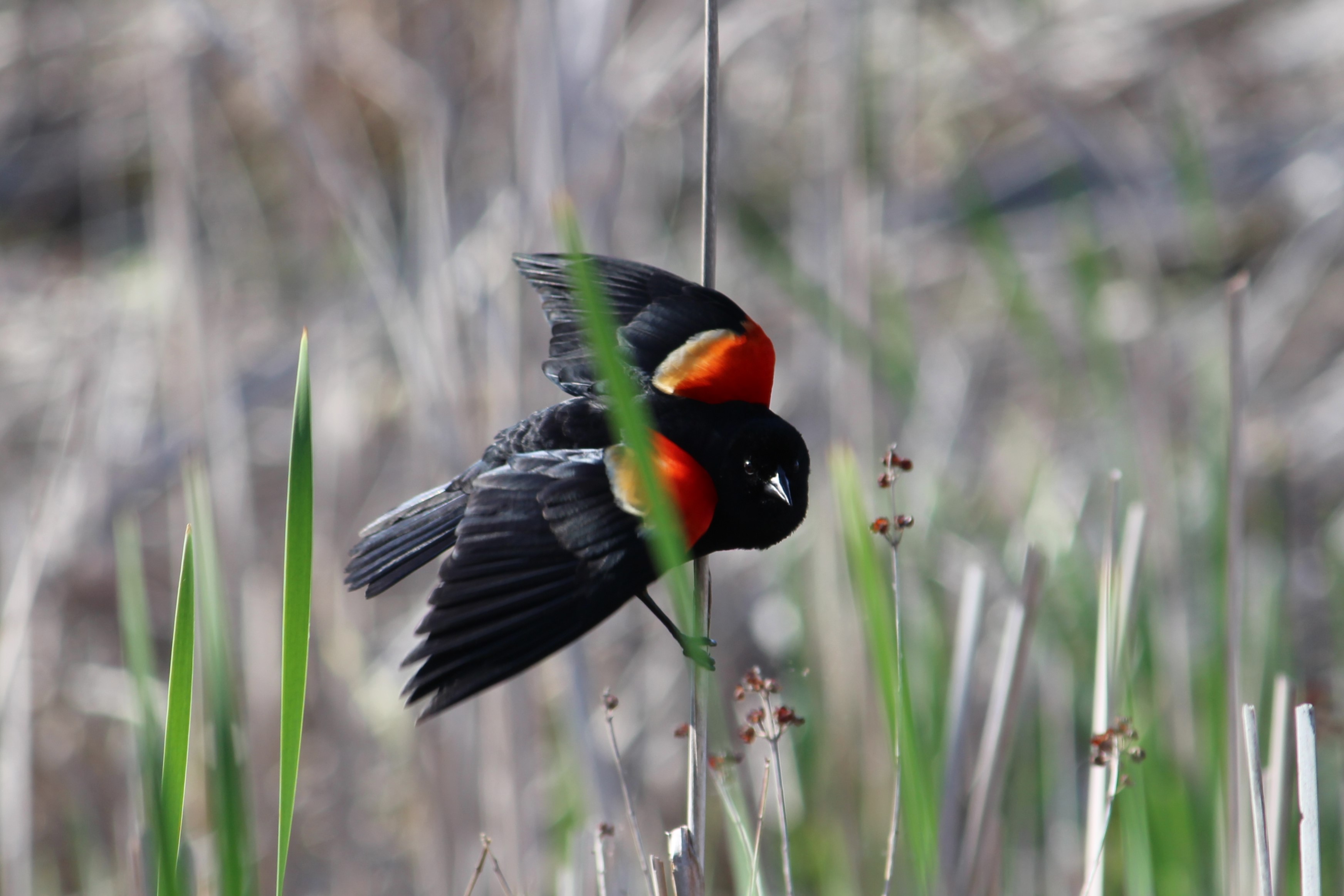
According to the ROM Field Guide to Birds of Ontario (Hughes 2001), Red-winged Blackbirds are year-round residents along the north shores of Lake Erie, but I believe they become less noticeable outside of the summer breeding season because they are no longer calling and pronouncing territories.
Common Grackle (Quiscalus quiscula):
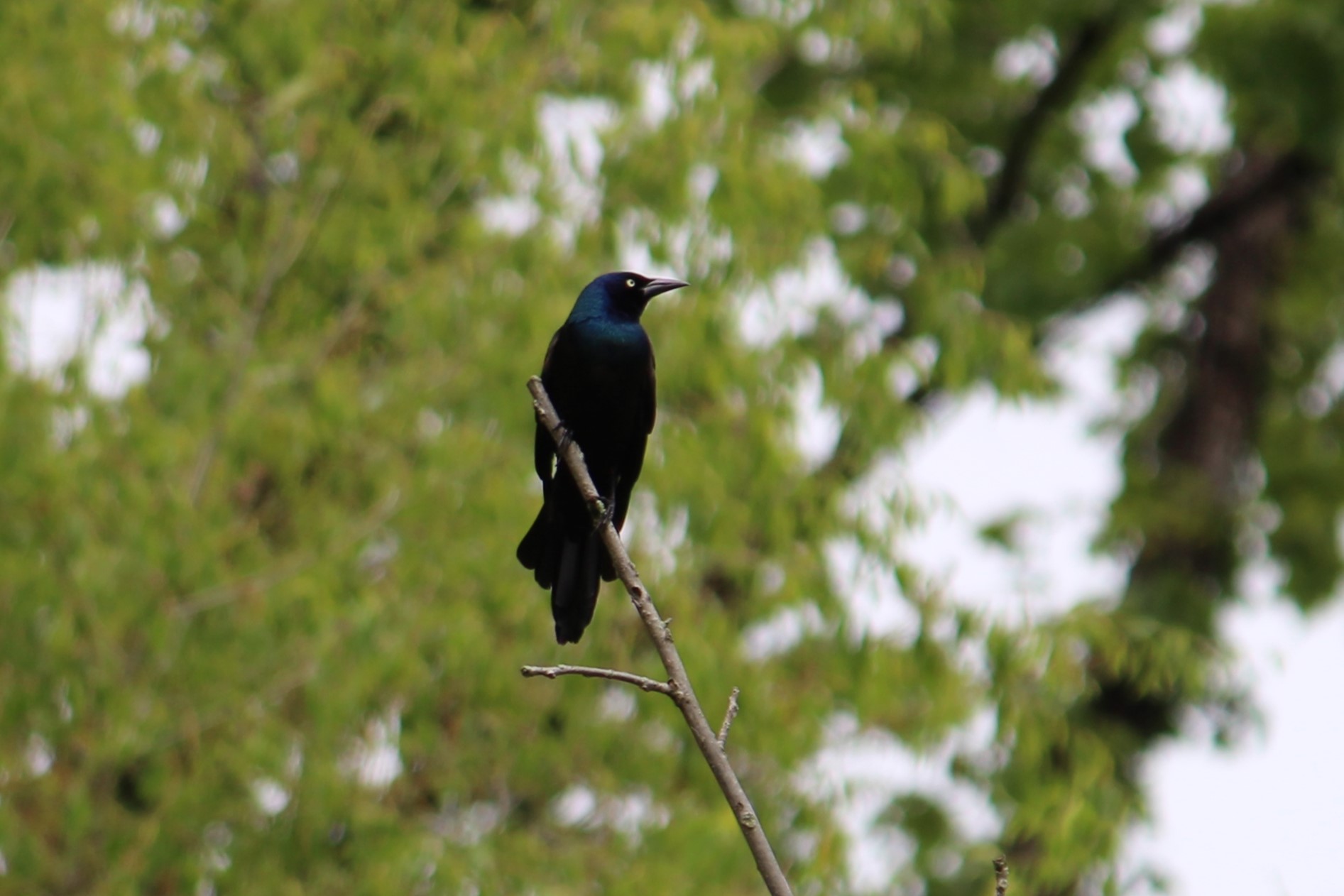
Common Grackles are a familiar sight and sound to many people. Like Red-winged Blackbirds, their call is harsh, metallic, and frequent. Grackles are year-round residents of Southern Ontario, feeding in grain fields during fall and winter (Bezener 2016). Apparently their diet is quite varied overall, as demonstrated in a list of food items from the National Audubon Society Field Guid to North American Birds: “insects, crayfish, frogs, mice, nestling birds, and eggs as well as grains and wild fruits” (Bull and Farrand 1994).
Baltimore Oriole (Icterus galbula):
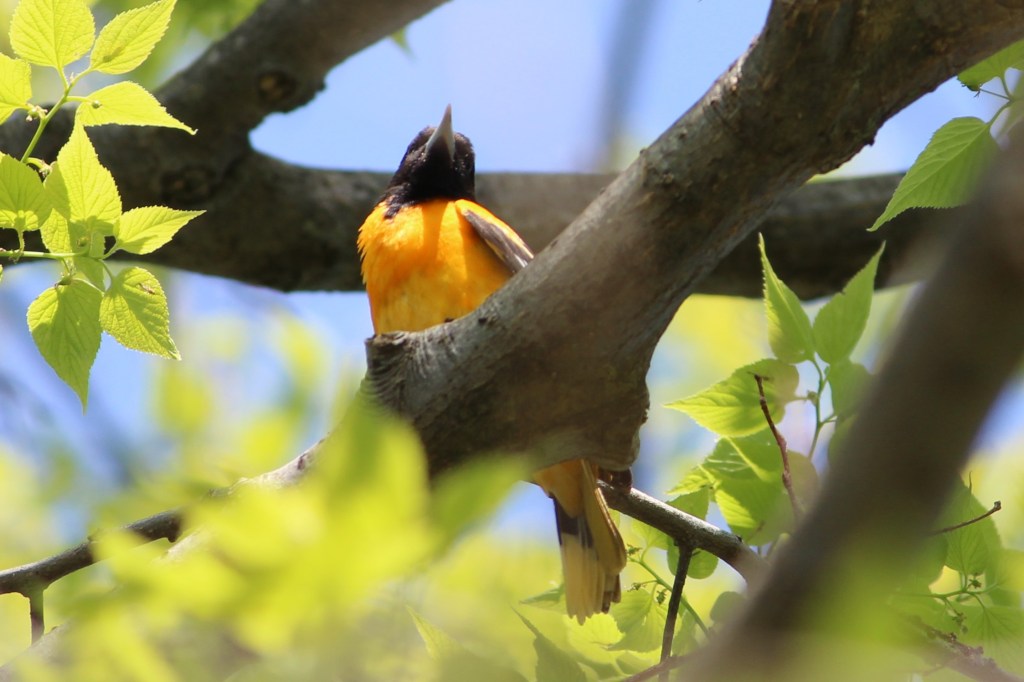
Orioles are a beautiful and welcome Spring migrant here in Southern Ontario. Of all the backyard birds that I have seen and photographed, Baltimore Orioles* seem to bring the Tropics north with them. Their brilliant colours, sharp and clear song, and fruit-seeking behaviour all seem to show how at-home they would be among the tropical rainforests they live in for half the year. Every year, I await the return of these beautiful birds to my backyard where they scoop up grape jelly in their long and thin beaks.
*Baltimore Orioles are named after the coat-of-arms of Cecil, the 2nd Baron Baltimore, who owned the state (then colony) of Maryland for a time (his coat-of-arms is featured on the Maryland flag). The heraldry is orange-and-black just like the plumage of the male Baltimore Oriole. “Oriole” likely comes from the Latin word for “golden” also in reference to the rich colours of these wonderful birds. The name Oriole was originally applied to a family of birds in Europe and Asia but was later used for some bright members of the New World Blackbird family (Icteridae). New World Blackbirds are named “Blackbirds” because the darkly coloured members of the group reminded Europeans of the Blackbirds (Turdus merula) back home, which are Thrushes (Turdidae). The Family name Icteridae comes from another colour reference, this time referring to the yellow-feathered members of this group (such as female Baltimore Orioles), ikteros is a Greek word for ‘yellow bird’ (Elphick 2019). Aren’t names fun?
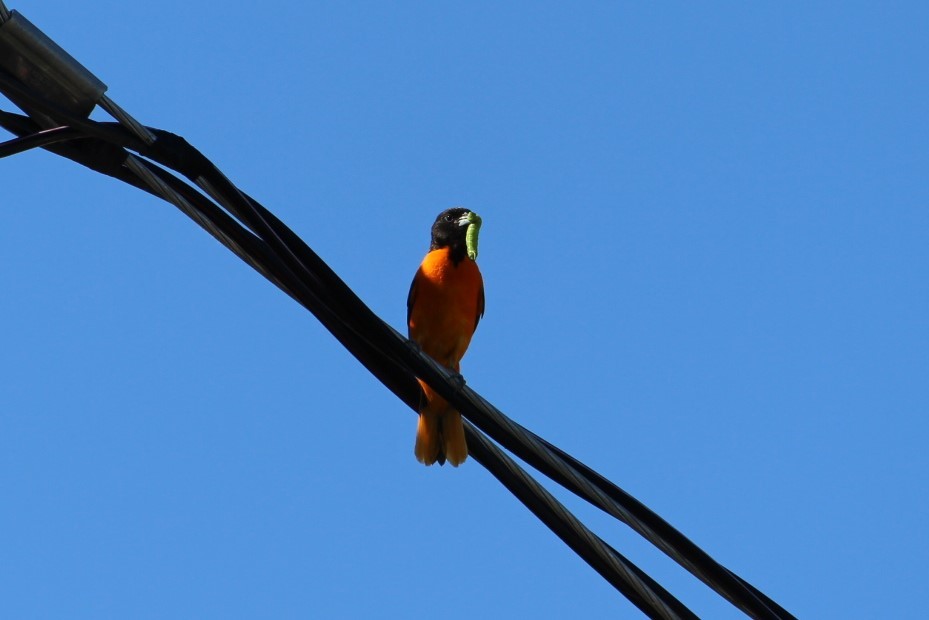
As with many fruit-eating birds (and for that matter, flower-drinking wasps), the adults can subsist on sugary foods but the young require protein and feed on insect prey brought to the nests by the parent birds. This is a male Baltimore Oriole with a large caterpillar in its beak. This photo was taken in my front yard in June 2020, the year Orioles were nesting in my birch tree. 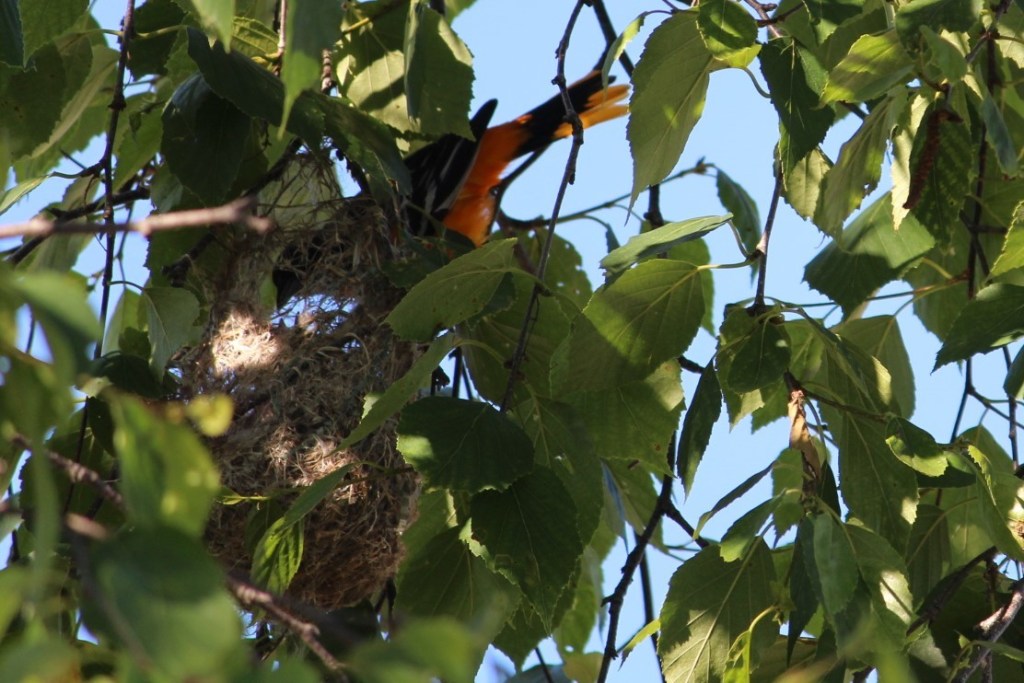
Here is the male Oriole delivering his caterpillar prey to his nestlings.
Baltimore Orioles fly all the way from South America (some winter as far north as Mexico) to my backyard in Southern Ontario, and they never cease to delight me with their song and bright colours.
That’s 2 Bird Families observed on my Point Pelee trip down! Only 20 or so more to go!
References:
Beletsky, Les. 1996. The Red-winged Blackbird: The Biology of a Strongly Polygynous Songbird. Academic Press.
Bezener, Andy. 2016. Birds of Ontario, New Edition. Lone Pine Publishing.
Bull, John, and Farrand, John Jr., 1994. Field Guide to North American Birds: Eastern Region. Chanticleer Press.
Elphick, Jonathan. 2019. The Handbook of Bird Families. Firefly Books.
For the previous post in this series, see:
–Birding Bonanza, Part 1: Hirundinidae
And for similar posts about bird observations, see:
–Warbler River (Algonquin Observations August 2023, Part 3)
–Port Burwell Observations, July 2023
–The American Woodcock in Literature and in Life
–Terns, by David Cabot and Ian Nisbet
–A Green Heron Stalks the Shallows














 Norfolk Naturalist